
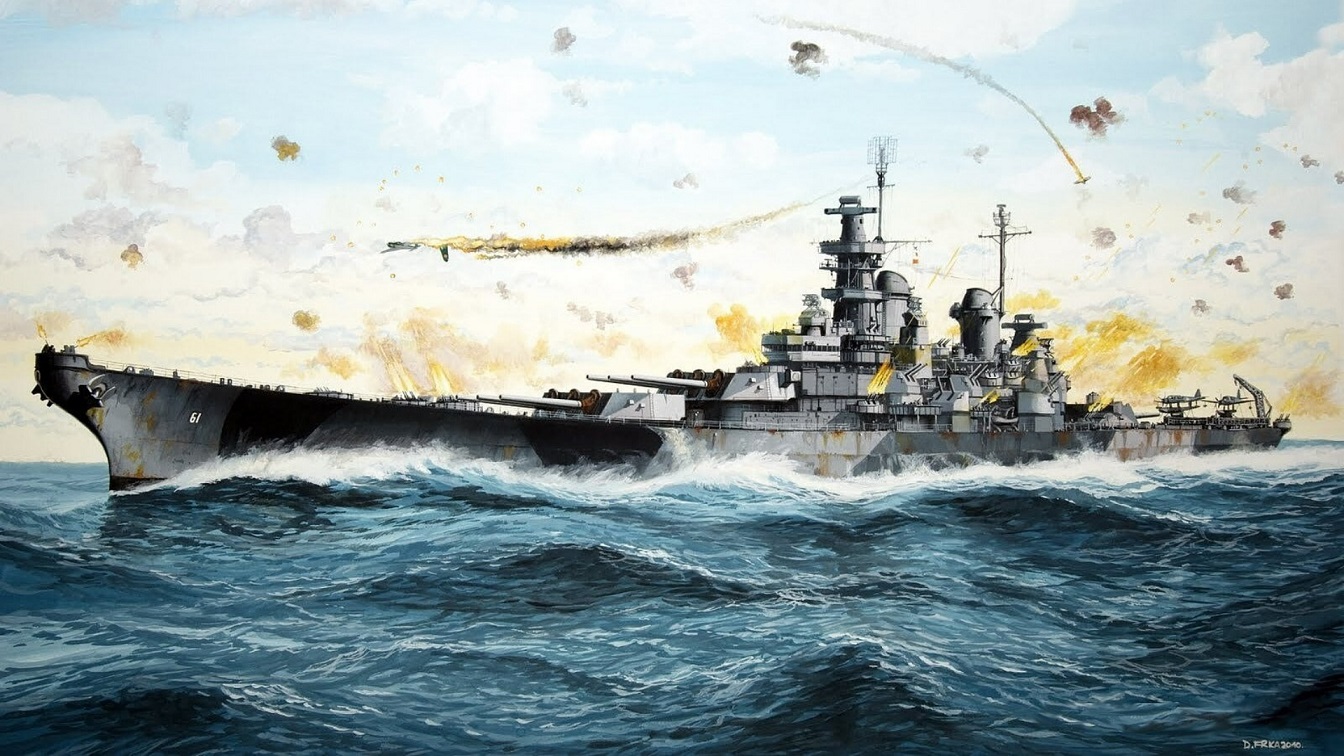
Could the Montana-Class Battleships Have Been the Trump-Class Battleships of their Day?
The star-crossed Montana-class battleships of the United States Navy provide us with one of the great “What if?/What might have been” (or, if you prefer, “coulda, shoulda, woulda”) stories of naval history. The intended successors to the Iowa-class battleships have to be considered the most successful battleships of all time, serving for 48 years across five conflicts.
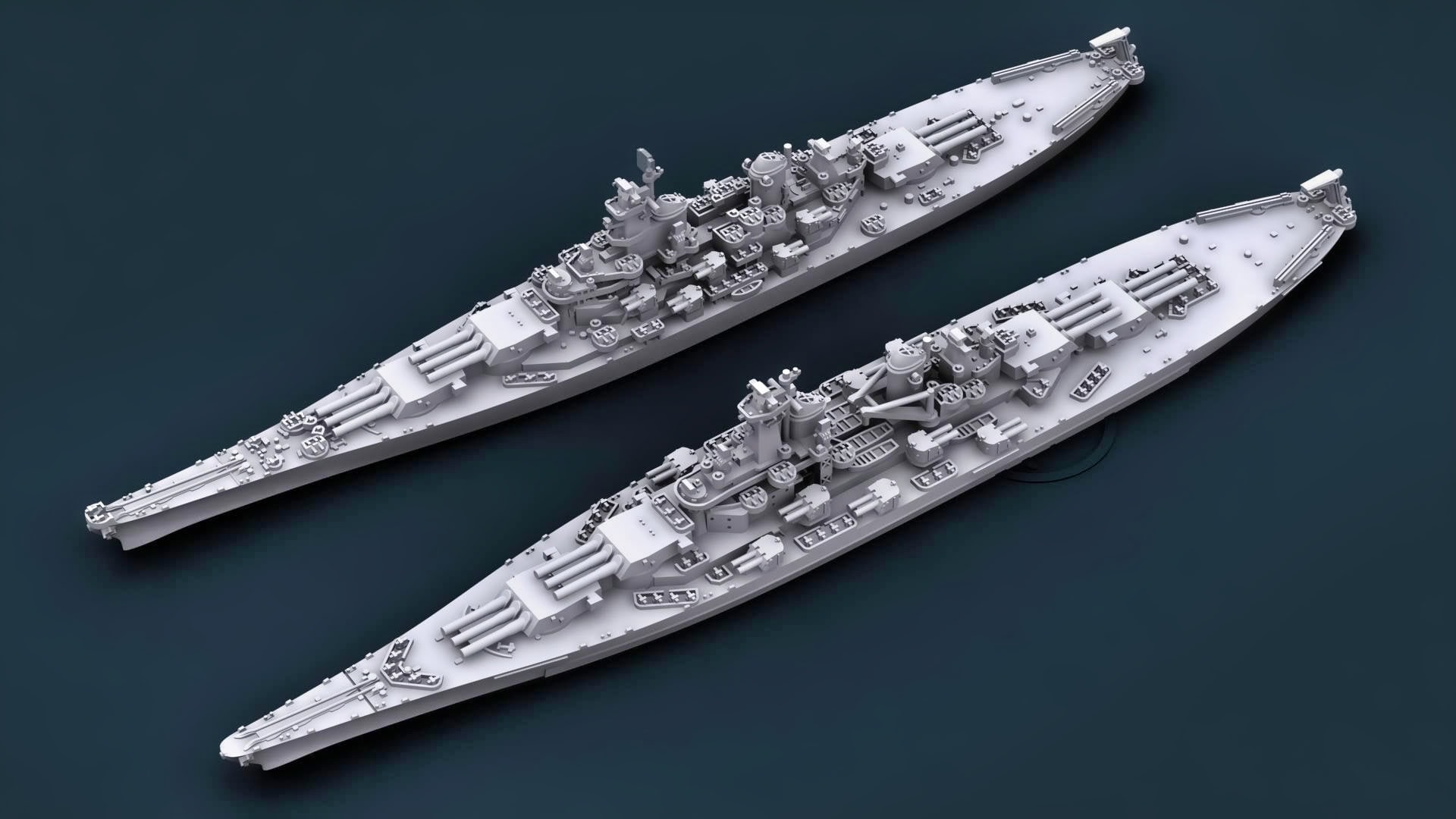
Montana-Class Battleship vs. Iowa-Class. Image Credit: Creative Commons.
Alas, the “Mighty Montanas” (an intentional wordplay on the extant “Mighty Mo,” i.e, the Iowa-class battleship USS Missouri [BB-63]) were never actually built. But now that US President Donald John Trump is proposing to revive the battleship concept via the Trump-class warships, AKA the BBG(X) program (“BB” as in battleship, “G” as in guided missile ship, and “(X)” as in not yet been fully developed), one cannot help but wonder: Could the Montana-class battleships turned out to be the Trump-class battleships of their time?
Fascinating Fearsome Premise: Montana-Class Concept
Named for “The Treasure State” (which, like “The Hawkeye State” of Iowav, is ironically a landlocked state that inherently lacks a coastline), the Montana-class battlewagons were the last battleships ever to be ordered by the US Navy, authorized under the Two Ocean Navy Act (AKA the Vinson–Walsh Act) shipbuilding program of July 1940 and funded in Fiscal Year 1941. Had they actually been built, the Montanas would’ve been nearly a third larger than their Iowa-class ancestors, with a hull length of 921 feet (280.41 meters), a beam width of 121 feet (36.88 meters), a draft of 36 ft (11 meters), and a full-laden displacement of 72,104 tons.
The Montana super battleships would have retained the 16-inch/50 caliber (40.6-centimeters) Mark 7 main guns of the Iowas, but with an added, deadly twist: three extra such firearms, for a dozen in total (two triple-turrets fore, two such turrets aft), and increased armor—21,000 tons with bulkheads at 18 inches of plating—for good measure.
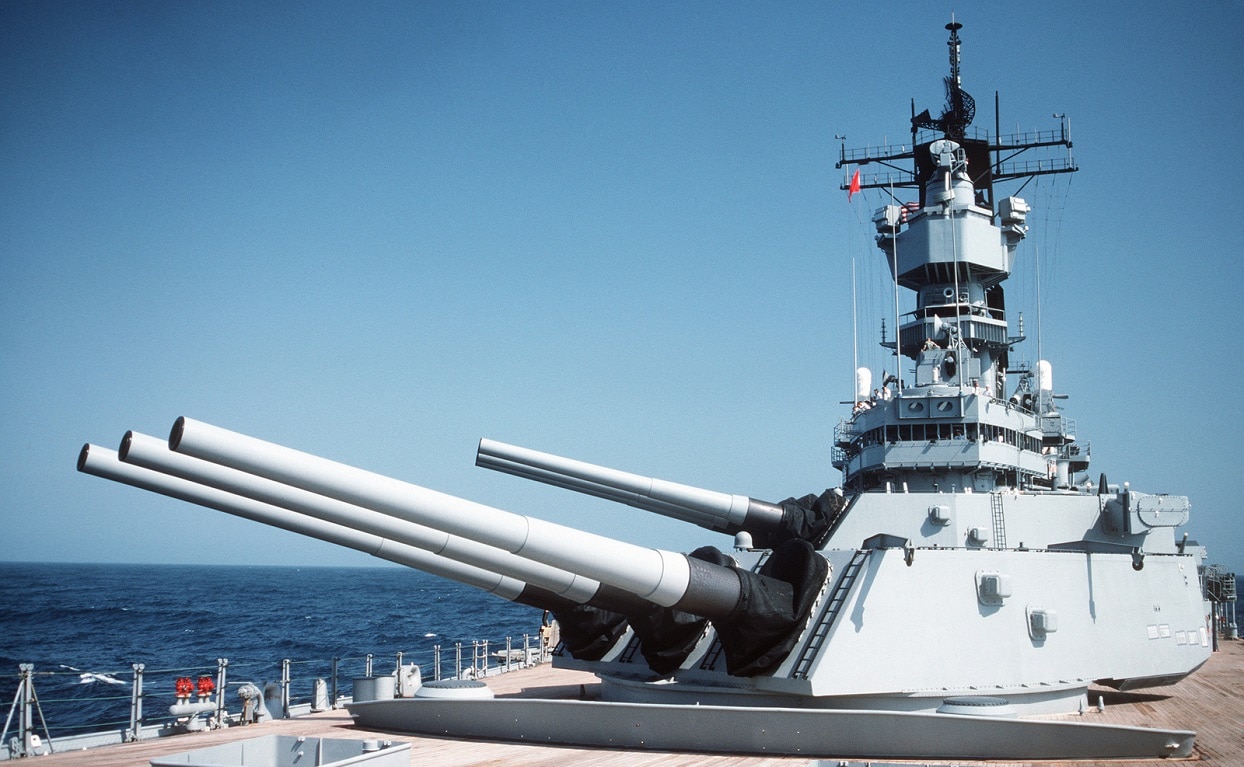
The No. 1 and No. 2 Mark 7 16-inch/50-caliber gun turrets are trained to starboard during the main battery gunnery exercise aboard the battleship USS IOWA (BB 61).
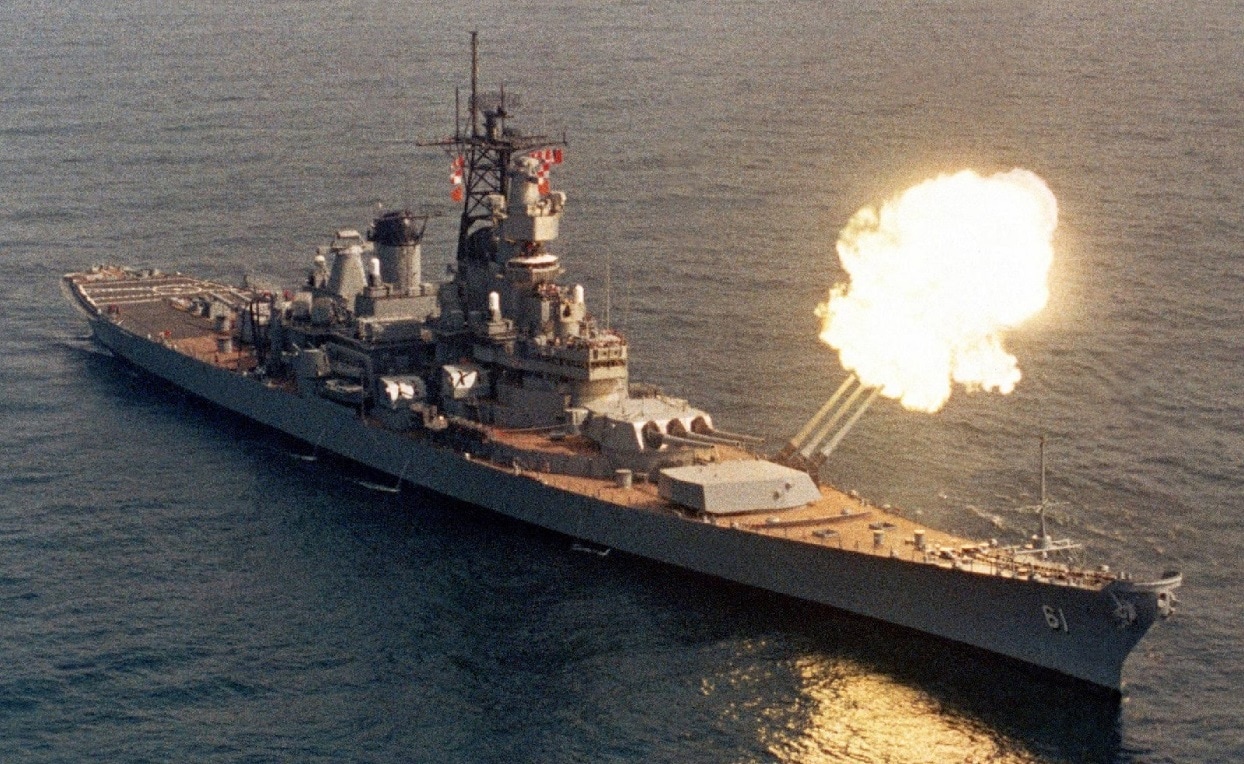
Image: Creative Commons.
The total crew complement would’ve amounted to 2,355 enlisted seamen and commissioned officers.
The Navy ordered a quintet of these would-be warships. The lead ship of the class, USS Montana (BB-67), would’ve been built at the Philadelphia Navy Yard along with the Ohio (BB-68), whilst Maine (BB-69) and New Hampshire (BB-70) were to be constructed at the New York Navy Yard in Brooklyn; and the Louisiana (BB-71) at the Norfolk Navy Yard in Portsmouth, Virginia.
What Went Wrong?
(In homage to Sam Neill as Captain 2nd Rank Vasily Borodin in his dying words to Captain 1st Rank Marko Ramius [Sir Sean Connery] in “The Hunt for Red October“: “I would like to have seen Montana…”)
Sadly, these ultra-promising battlewagons were killed in the proverbial womb, and the biggest reason for this (mechanical and fiscal) abortion was a literal and figurative sea change in naval warfare. It was starkly demonstrated during World War II (especially during the Battle of the Coral Sea and the Battle of Midway) that aircraft carriers had dethroned battleships as the predominant “capital ships” of naval power projection. Even with their bristling antiaircraft (“ack-ack”) guns, battleships were quite vulnerable to the ravages of carrier-borne dive bombers and torpedo bombers.
The Montana program’s fate was sealed by the ships’ speed, or lack thereof: a max speed of 28 knots compared with the 33-knot maximum speed capability of the Iowa class. This was not fast enough to keep up with the flattops.
Would They Have Lasted?
Had the Montanas actually come to pass, it seems reasonable to think that they would’ve had the same longevity as their Iowa-class predecessors, especially if they had demonstrated the same degree of “Semper Gumby” adaptability to modernized armament, as in:
-32 × BGM-109 Tomahawk Land Attack Missile (TLAM)/cruise missile launchers
-16 × RGM-84 Harpoon anti-ship missile launchers
-4 × 20 mm MK 15 Phalanx CIWS (close-in weapon system)
As proof of concept, during that Desert Storm swan song, USS Missouri (BB-63) fired 28 TLAMs in addition to 759 16-inch shells, whilst USS Wisconsin (BB-64) fired 24 of her own TLAMs in addition to 528 16-inchers, 881 5″ rounds; for good measure, “Big Wisky” also expended 5,200 20mm CIWS rounds.

Inside USS Iowa. Image Credit: Harry J. Kazianis for 19FortyFive.com

Inside USS Iowa. Image Credit: Harry J. Kazianis for 19FortyFive.com
Given the fact that the Montanas would’ve been significantly larger than the Iowas, they too would’ve had plenty of extra space to accommodate TLAMs, Harpoons, and Phalanxes. One can only imagine how much additional havoc (mental and physical) they would have wreaked upon (1) North Korean communist forces in the 1950s, (2) North Vietnamese communist forces in the 1960s and early 1970s, (3) Syrian/Druze forces in Lebanon in 1983, and (4) then-Iraqi dictator Saddam Hussein’s forces occupying Kuwait in early 1991.
What Might’ve Been and What Still Could Be: Montana-Class and Trump-Class Battleships Head-to-Head (and Side-by-Side?)
Going back to the question posed in the beginning segment of this article as to whether the Montanas could’ve been the Trumps of their day, if one goes by a strict size-to-size comparison, the answer would be “No.”
After all, even though if and when the BBG(X) battlewagons do get built, they’d be the largest USN warships since the Iowas, they would still pale in size in relations to the Montanas, with a comparatively displacement of 39,000 tons, a hull length of 840–880 feet, and, instead of a dozen16-inch guns, a single 32-megajoule electromagnetic railgun that would rely on sheer kinetic energy and precision strike capability to compensate what it lacks in bore size and gun barrel quantity.
(In fairness, the mechanical analog fire-control computers on the Iowa-class warships were remarkably advanced and accurate for their time, and presumably the Montana-class vessels would’ve carried over that same fire control system.)
Having said that…
For those of you who are fans of the alternate history genre of science fiction, like I am, imagine this intriguing scenario: Montana-class and Trump-class ships serving side-by-side to provide a mega-powerful one-two punch for US Navy seapower. As improbable as that sounds, consider this real-world US Air Force strategic bomber analogy: the septuagenarian, subsonic B-52 “BUFF” continues to serve alongside the supersonic, quadragenarian B-1B “Bone,” and the two complement each other nicely.
About the Author: Christian D. Orr, Defense Expert
Christian D. Orr is a Senior Defense Editor. He is a former Air Force Security Forces officer, Federal law enforcement officer, and private military contractor (with assignments worked in Iraq, the United Arab Emirates, Kosovo, Japan, Germany, and the Pentagon). Chris holds a B.A. in International Relations from the University of Southern California (USC) and an M.A. in Intelligence Studies (concentration in Terrorism Studies) from American Military University (AMU). He is also the author of the newly published book “Five Decades of a Fabulous Firearm: Celebrating the 50th Anniversary of the Beretta 92 Pistol Series.”