
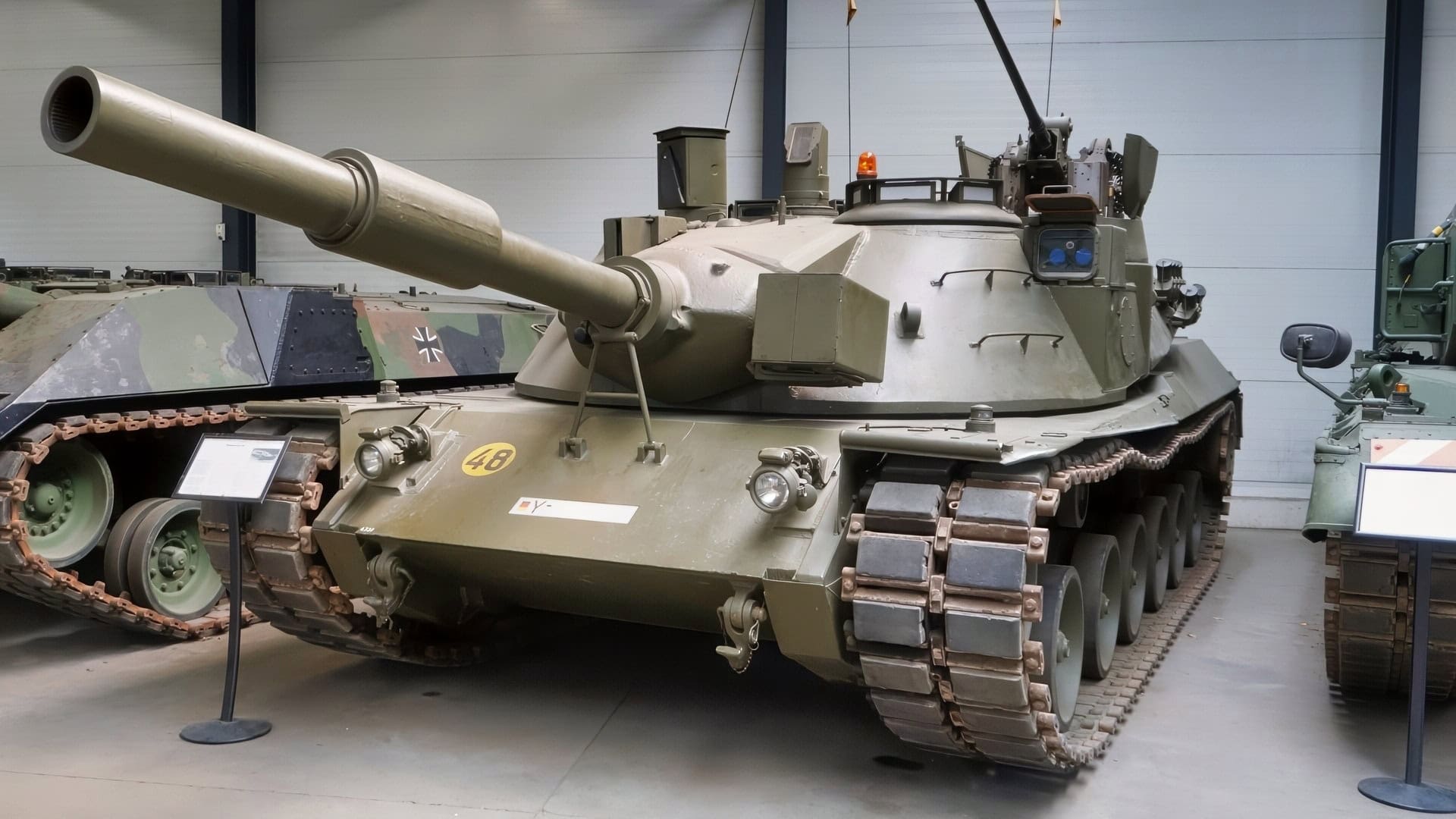
The MBT-70 was supposed to revolutionize NATO armored warfare.
Instead, the platform became a classic example of how an ambitious weapons program can fail when technological risk, conflicting requirements, and spiraling costs all collide.
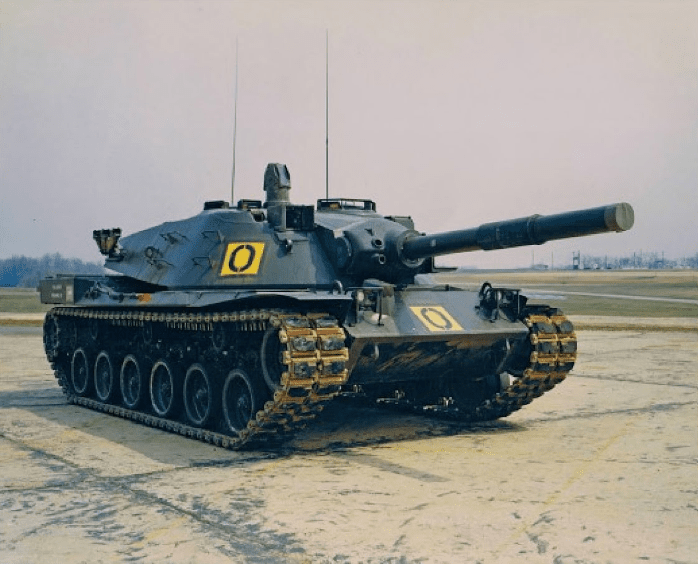
MBT-70 Creative Commons Image.
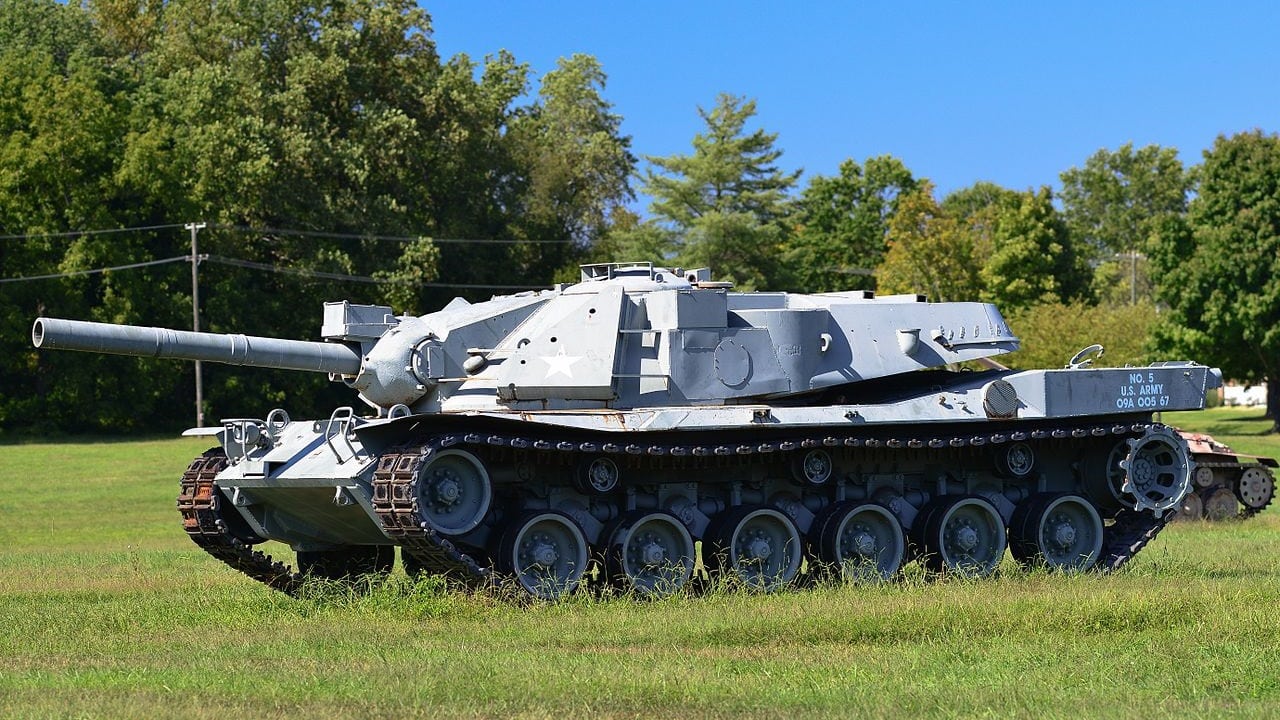
An interesting feature on this was that the driver was in the turret. Tanks and Artillery at The APG Ordnance Museum MBT-70 Main Battle Tank Specifications: MBT-70 Main Battle Tank Another MBT-70 Main Battle Tank can be found at the Military Museum of Southern New England in Danbury, CT Length: 22 feet 11 inches Width: 11 feet, 6 inches Height: 8 feet, 6 inches Crew: 3 Weight: 50 Tons Max Speed: 43mph Range: 400 miles Armor: Classified Powerplant: Continental AVCR 12 Cylinder Air Cooled Diesel 1,475hp Fuel Capacity: Gallons Armament: 152mm Main Gun/Missile System One 7.62mm coax Machine Gun Entered Service: 1967 (Prototype) Unit Cost: $305 million for the prototypes only.
Launched in 1963 as a joint US–West German program, the MBT-70 was intended to replace America’s M60 and Germany’s aging tanks with a standardized NATO main battle tank capable of defeating the enormous Soviet armed forces assembled on Europe’s eastern border.
On paper, the MBT-70 was an extraordinary machine, with a 152mm gun/missile launcher, an autoloader, an adjustable hydropneumatic suspension, advanced fire-control equipment, a three-man crew, and very high mobility.
It was supposed to be the tank of the future—and indeed, many of these concepts anticipated features that would be hallmarks of tanks in the late 20th and early 21st centuries.
The problem, however, was making all of these new technologies work simultaneously with 1960s technology—a feat made more difficult by asking US and German designers to collaborate.
Germany eventually left the program; the US tried to salvage the effort with the XM803 before Congress finally ended the whole thing in 1971.
Cold War Ambitions
The MBT-70 makes more sense when considered against the military realities of the early 1960s. The Cold War was in full swing.
NATO planners were realistically expecting to fight enormous formations of Soviet tanks across central Europe.
There was a pressing need for a next-generation NATO tank—something that could kill Soviet armor at long range, move rapidly across rough terrain, present a small target to the enemy, survive increasingly powerful anti-tank weapons, and fight effectively in the day rather than incremental improvement on existing designs.
Both the US and Germany were willing to attempt a generational technological leap. The resultant concept was certainly futuristic, but almost every innovation introduced an engineering problem.
Driver-in-the-Turret
One of the most famous innovations of the MBT-70, and indeed one of the most notorious quirks, came from the desire to make the tank extremely low-slung.
Instead of placing the driver conventionally in the hull, the designers put all three crewmen inside the turret.
The driver sat inside a special capsule that counter-rotated as the turret moved, theoretically keeping him pointed in the tank’s direction of travel. It was a clever idea, but it created difficult human factors problems.
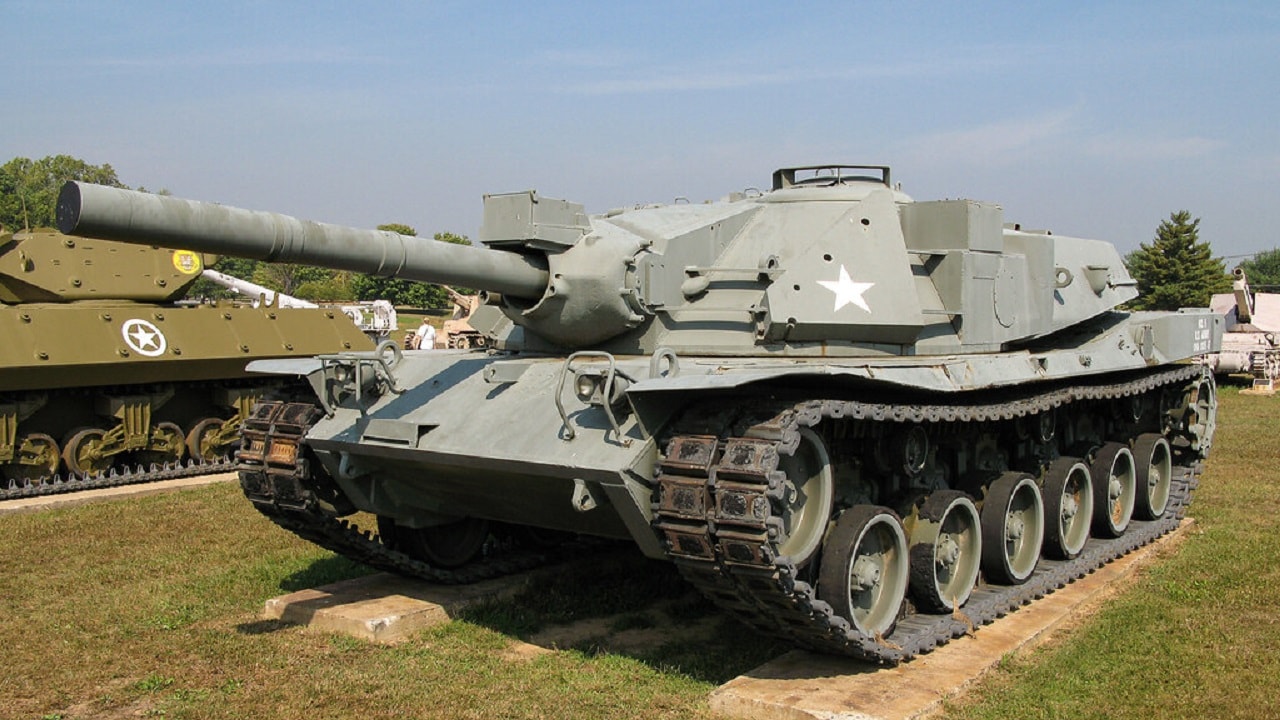
MBT-70 Tank. Image Credit: Creative Commons.
Namely, the arrangement tended to cause disorientation and motion sickness, particularly when the turret rotated independently while the tank maneuvered.
It also added another complex mechanical system to a vehicle already packed with them.
The idea kind of sums up the entire MBT-70 experiment: engineers accepted extraordinarily complex systems in an effort to obtain relatively narrow performance advantages.
Not All Bad
The MBT-70 wasn’t an outright failure; however, much of the technology proved quite useful.
The hydropneumatic suspension allowed the crew to alter the vehicle’s ground clearance—for example, lowering the tank to reduce its silhouette or raising it for additional cross-country clearance.
The autoloader, which reduced the crew from four to three, was highly efficient, and the sophisticated fire -control equipment was intended to improve the first-round hit probability.

MBT-70. Image: Creative Commons.
Also, the MBT-70 was exceptionally mobile for its era, reflecting NATO’s desire to move rapidly against Warsaw Pact formations.
Individually, the systems were glimpses of the future of tank design; collectively, however, they created an extremely complicated machine requiring technologies that hadn’t yet matured, all packed together and asked to work in unison for the first time.
Costs Killed the Dream
The technological difficulties might’ve been surmountable had the program remained affordable. It did not. By the end of the 1960s, projected unit costs had climbed to roughly $1 million per tank—several times the price of the M60 that the MBT-70 was supposed to replace.
That number was particularly problematic because a NATO–Soviet ground war required large numbers of tanks, so fielding a fleet capable of keeping pace with the Soviet horde would have been prohibitively expensive.
A technologically brilliant tank isn’t useful if the Army can’t afford to buy it.
About the Author: Harrison Kass
Harrison Kass is a writer and attorney focused on national security, technology, and political culture. His work has appeared in Tablet, City Journal, The Hill, The Spectator, and The Cipher Brief. He holds a JD from the University of Oregon and a master’s in Global & Joint Program Studies from NYU. More at harrisonkass.com.