

Key Points and Summary – The MBT-70 was a bold U.S.–West German bid to build a joint “super tank” to blunt Soviet armor in the Fulda Gap, replacing the M60 and Leopard 1.
-Packed with then-cutting-edge tech—exotic multilayer armor, hydropneumatic suspension, advanced sights, and a 152mm gun/missile system—it quickly became too complex, too heavy, and far too expensive.
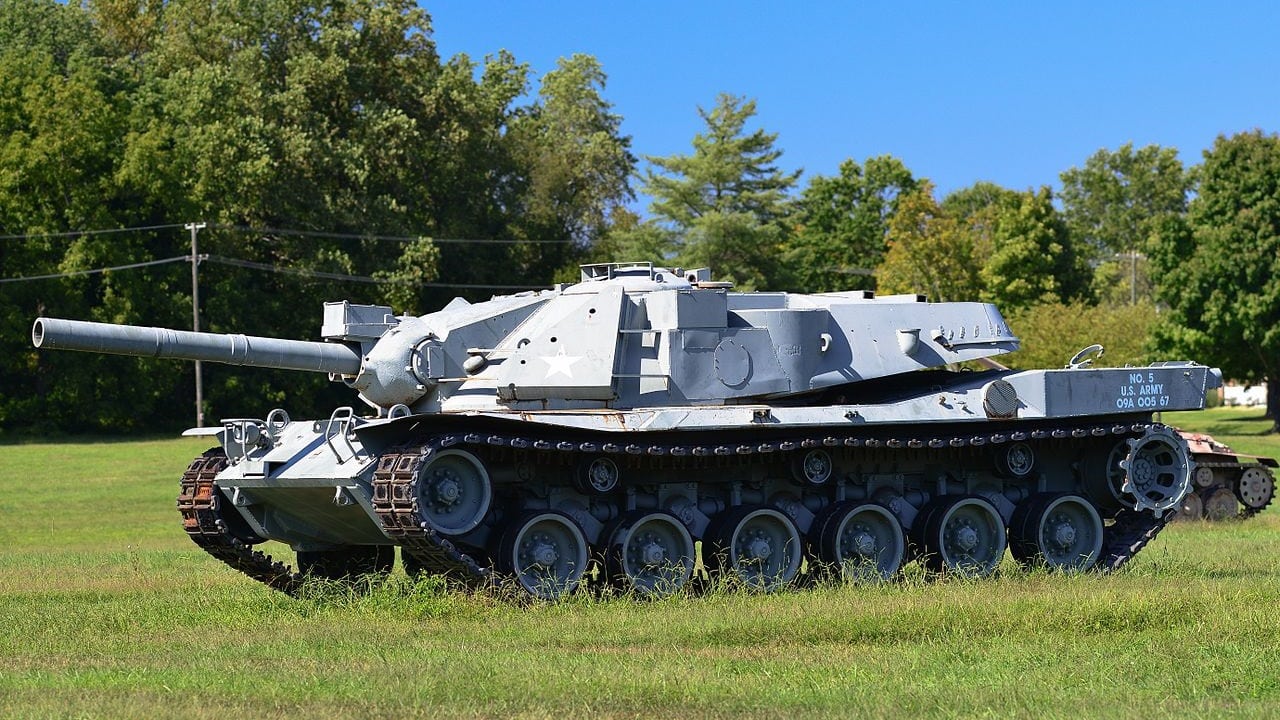
An interesting feature on this was that the driver was in the turret. Tanks and Artillery at The APG Ordnance Museum MBT-70 Main Battle Tank Specifications: MBT-70 Main Battle Tank Another MBT-70 Main Battle Tank can be found at the Military Museum of Southern New England in Danbury, CT Length: 22 feet 11 inches Width: 11 feet, 6 inches Height: 8 feet, 6 inches Crew: 3 Weight: 50 Tons Max Speed: 43mph Range: 400 miles Armor: Classified Powerplant: Continental AVCR 12 Cylinder Air Cooled Diesel 1,475hp Fuel Capacity: Gallons Armament: 152mm Main Gun/Missile System One 7.62mm coax Machine Gun Entered Service: 1967 (Prototype) Unit Cost: $305 million for the prototypes only.
-Language barriers, metric vs. SAE disputes, and dueling national designs only deepened the chaos. Canceled in 1971 after huge overruns, the “failed” MBT-70 still paid dividends, directly seeding two of the world’s best tanks: the M1 Abrams and Leopard 2.
In Three Words: Not a Fail?
The MBT-70 Tank, Missed It By …That Much
The MBT-70 tank program, developed jointly by the United States and West Germany, was a great idea born out of the Cold War. The program looked to replace both the American M60 Patton and the German Leopard I.
In the 1960s, tensions were rising between East and West, and there was a very real possibility that the Soviet Union, with its masses of armor, would attempt to blast its way through the Fulda Gap.
After WWII, the US gradually withdrew combat troops from West Germany to the United States. However, the Russians in East Germany stayed and had masses of motorized infantry and armored divisions with improved tank designs.
As the US gradually began to deploy more troops on West German soil to bolster NATO’s defense of Western Europe, numerical superiority posed a real threat.
American troops had the M-60 main battle tank, and the West Germans operated the Leopard 1. Both tanks had their vulnerabilities. So, the US and West Germany decided to build a tank together in 1963; since they’d be fighting against the Soviets, the idea made perfect sense.
Issues Cropped Up Almost Immediately
The joint project was called the “KPz-70 by the Germans and the ” MBT-70 by the Americans. The idea was to take two excellent tank-building countries, the US and Germany, and build a super tank that would rule the battlefield if the Soviets ever decided to cross the Fulda Gap.
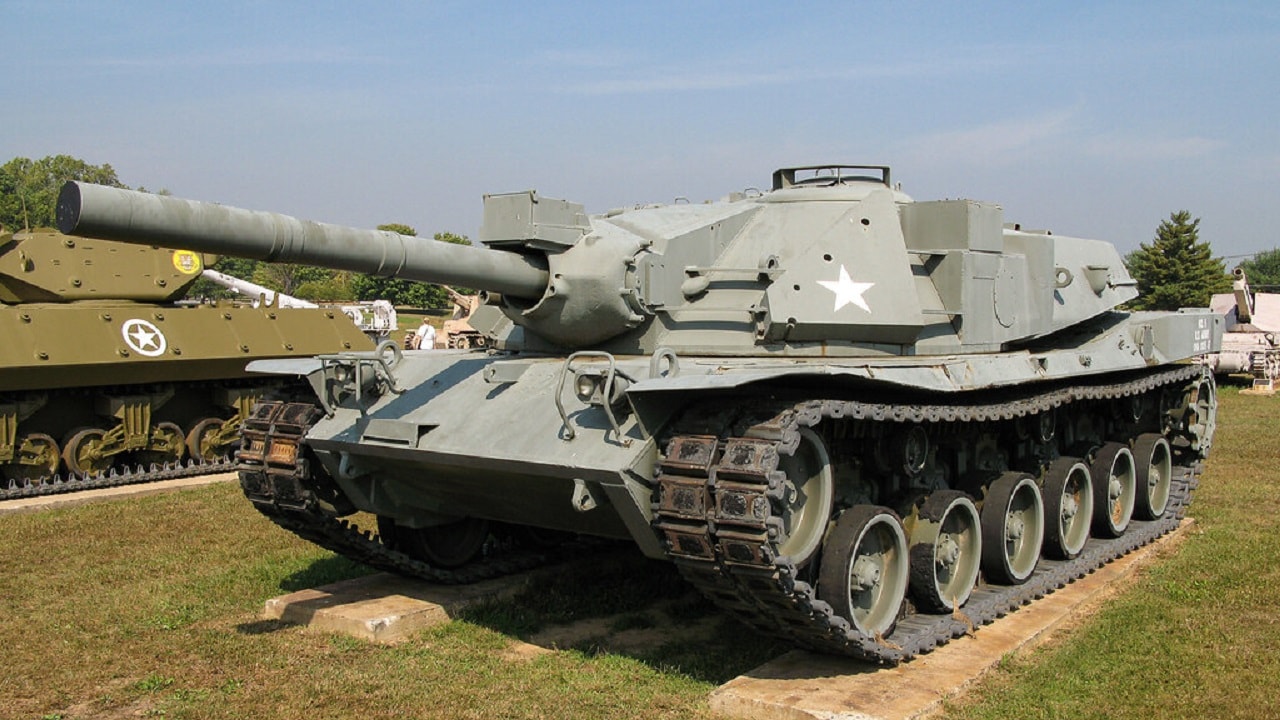
MBT-70 Tank. Image Credit: Creative Commons.
Immediately, troubles began between the two countries. One was a language barrier that hindered the open communication of ideas. As a result, rather than working together, they began a rivalry between the two camps. Disagreements ensued over engine power plants, main gun calibers, and whether to use metric or “SAE.”
Each side built its own version of the tank, prolonging testing and driving costs higher.
Agreements on Armor Protection and Suspension
The designers did agree on a couple of salient points. The armor would consist of two-layered layers. The outer layer would be cold-rolled steel, and the inner layer would be softer steel. The inner protective shell would be “steel-layered tungsten alloy…with uniform rolled steel armor.” This would protect the tank crews from the current Soviet anti-tank ammunition and anti-tank missiles.
The MBT-70’s suspension was far ahead of its time. It featured a hydropneumatic suspension that lowered the vehicle’s silhouette, making it difficult to target. The suspension could also be raised for better cross-country performance and on-road handling. This capability enabled the tank’s main gun to achieve a higher elevation for targets in built-up areas or cities.
Both agreed to power the tank with a rear-mounted diesel engine. The Americans opted for Continental AVCR 12 Cylinder Air-Cooled Diesel, which produced 1,475 horsepower, while the Germans wanted the MTU Diesel, which produced 1,500 horsepower. With either engine, the MBT-70 could race along roads at 43mph, making it the fastest tank in the world at the time.
However, crew and driver disorientation was an issue. The driver’s capsule was fixed in place, causing motion sickness because the driver’s view was not always aligned with the tank’s direction of travel.
Main Gun Differences
The Americans chose a far larger and more intriguing main gun. The 152-mm auto-loading main gun had the range to engage enemy targets outside the range of Soviet anti-tank missiles. The 152-mm gun could also launch its Shillelagh anti-armor missiles. A 20-mm anti-aircraft cannon could protect against airplanes and helicopters.
However, the 152mm main gun had several deficiencies. The Shillelagh missile never worked well with the fire control system. And the ammunition, as we saw with the smaller 152mm in the Sheridan light tank, was dangerous.
The round was attached to the combustible propellant charge. Often, shells did not burn through completely, leaving still-burning elements in the barrel—a dangerous condition that slowed follow-on firing. Heat and moisture adversely affected the rounds.
The Germans opted for the 120mm Rheinmetall. This was the better choice. Plus, the 20mm gun was too complex and never performed as well as the designers had hoped.
The tank did feature advanced sights. It also incorporated stabilized optics, new thermal/IR aids, a laser rangefinder, and a ballistic computer that promised first-round hits on the move, day or night.
Too Big, Too Heavy, And Too Expensive:
Ultimately, the tank weighed 54 tons, far more than the 46 tons envisioned for the MBT-70. This was an issue for bridges, especially in Germany, where the domestic rail transportation infrastructure was not equipped to carry tanks of this size.
The costs got out of control. The price rose to almost $1 million per tank, five times the original estimate. And with so many new pieces of equipment, problems with many of them ultimately arose, further driving up costs.
While the ideas were sound, all of the technology proved to be too much of a tech upgrade at once.
The Failure Spurred the Development Of Two Outstanding Tanks
The MBT-70 program, while a failure, also served as the impetus for two outstanding tank designs that have served each country well. So, perhaps the program wasn’t a failure after all.
By 1969, the Germans had pulled out of the program in favor of developing the very successful Leopard 2.
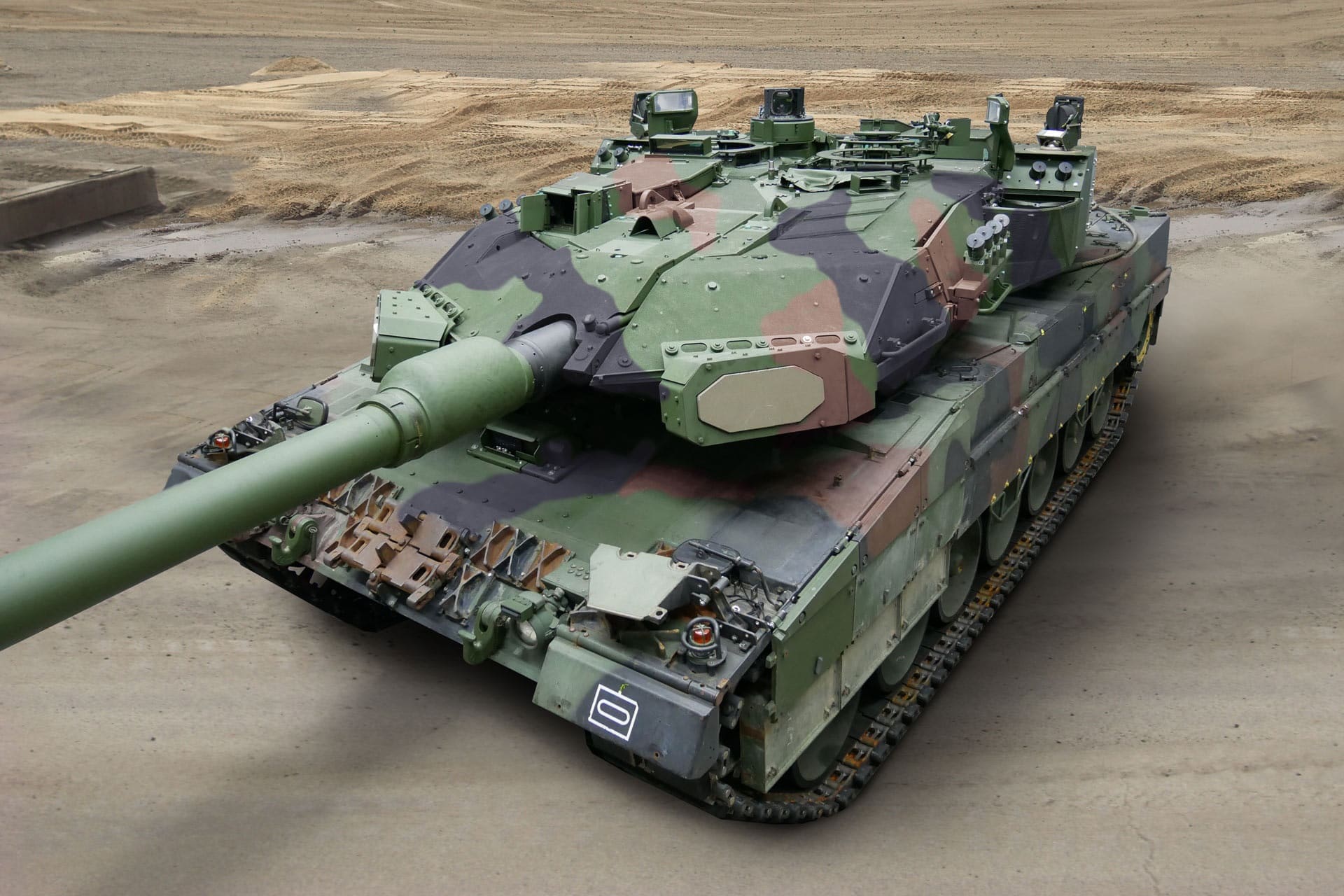
Leopard 2 Tank
Congress also had had enough and canceled the MBT-70 program at the end of 1971. The following month, the Army used the funds to begin developing the XM-1 tank, which became the iconic M1 Abrams tank. This tank and various upgrades have served the US Army for more than 40 years.
The M1 Abrams and the Leopard 2 are widely considered two of the best tanks in the world and are more than a match for Soviet and now Russian armor.
About the Author: Steve Balestrieri
Steve Balestrieri is a National Security Columnist. He served as a US Army Special Forces NCO and Warrant Officer. In addition to writing on defense, he covers the NFL for PatsFans.com and is a member of the Pro Football Writers of America (PFWA). His work was regularly featured in many military publications.