
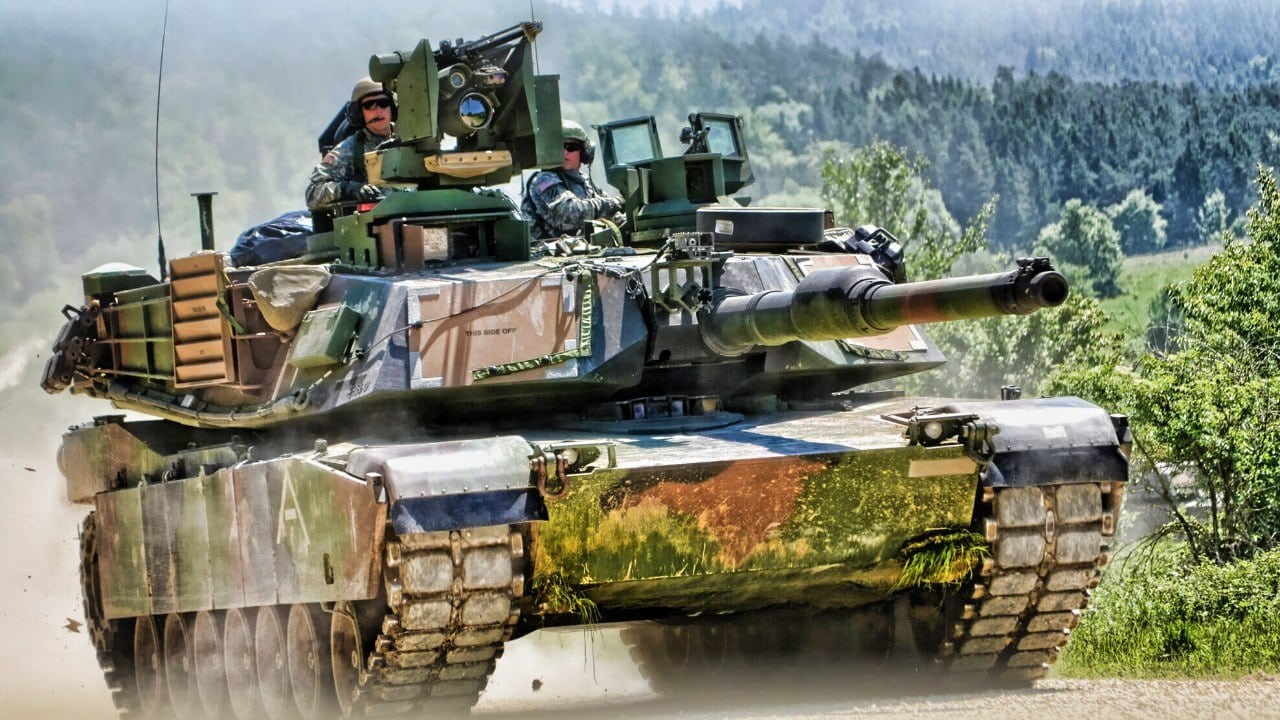
Article Summary – The M1 Abrams has defined U.S. armored power for four decades, from slaughtering Iraqi armor in Desert Storm to surviving IEDs and RPGs in Iraq and Afghanistan.
-Its Chobham armor, powerful main gun, and thermal sights made it dominant against Soviet-designed tanks and invaluable in urban fights.
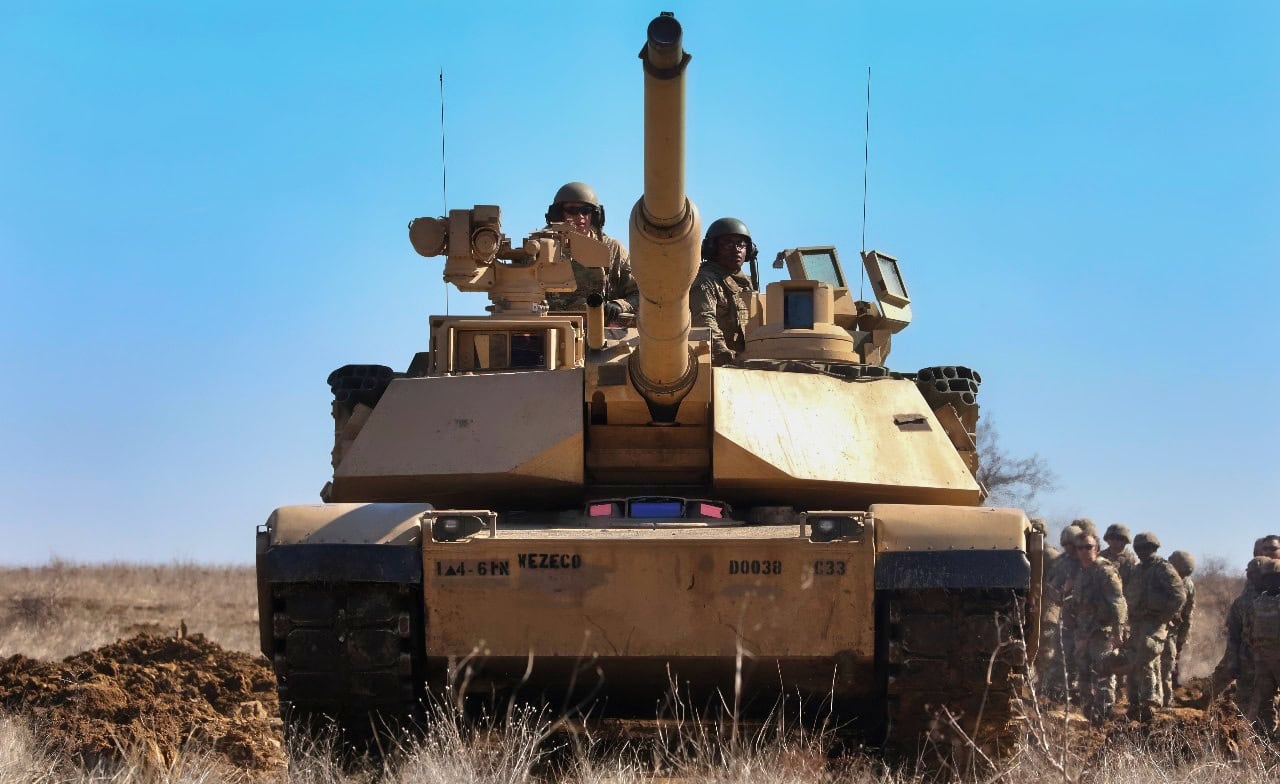
A U.S. Army M1 Abrams, assigned to 4th Battalion, 6th Infantry Regiment, 3rd Armored Brigade Combat Team, 1st Armored Division, fully emerges from the tank firing point to engage the simulated enemy at Novo Selo Training Area, Bulgaria, March 5, 2025. 1st Armored Division, a rotational force supporting V Corps, conducts training with engineers and tank operators in the European Theatre to maintain readiness and instill fundamental Soldier skills that are vital in maintaining lethality. (U.S. Army photo by Spc. Kyle Kimble)
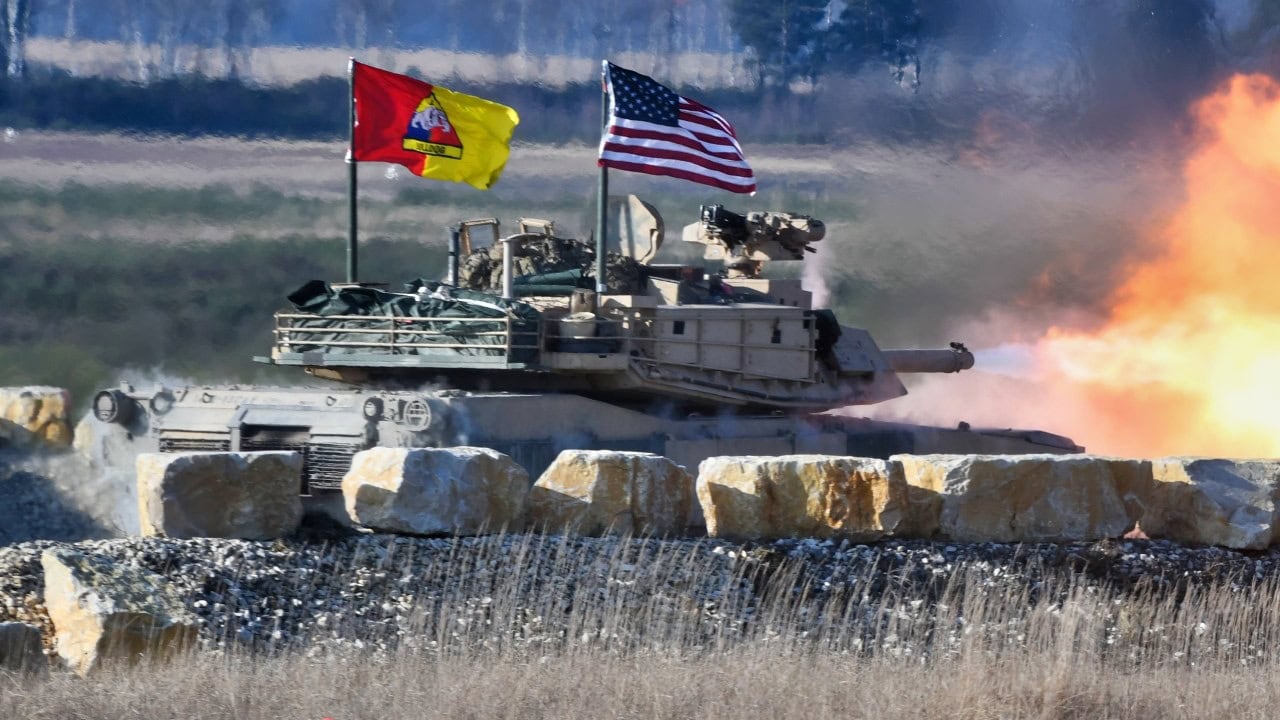
A U.S. M1 Abrams engages a target during the final event on Feb. 17, 2025 as part of the U.S. Army Europe and Africa International Tank Challenge at 7th Army Training Command’s Grafenwoehr Training Area, Germany. The USAREUR- AF International Tank Challenge builds tactical skills and enhances esprit de corps across the 11 teams from five participating allied and partner for peace nations. (U.S. Army photo by Sgt. Collin Mackall)
-But Ukraine changed the equation.
-For the first time, Abrams crews faced dense ISR, top-attack ATGMs, and FPV drones without reliable Western air or artillery cover, exposing the tank’s size, logistics burden, and new vulnerabilities.
-Even so, its combat record and crew survivability explain why the Abrams remains America’s flagship main battle tank.
The M1 Abrams’ Combat Record: From Desert Storm to Drones in Ukraine
The M1 Abrams, a third-generation American main battle tank, has been a cornerstone of U.S. armored forces since its introduction in the 1980s. Its combat performance has been tested and proven in various conflicts, from the Gulf War to Ukraine today. But how has the Abrams performed in its many combat excursions?
By examining the Abrams’ combat history, we can understand why the Abrams has been, and still is America’s greatest main battle tank.
Gulf War (1990-1991)
The M1 Abrams first saw combat during the Gulf War, where it played a pivotal role in Operation Desert Storm.
The tank’s advanced technology, including its Chobham composite armor and 105mm smoothbore gun (later upgraded to 120mm), gave it a significant edge over Iraqi forces equipped with older Soviet-era T-55 and T-62 tanks, as well as the T-72.
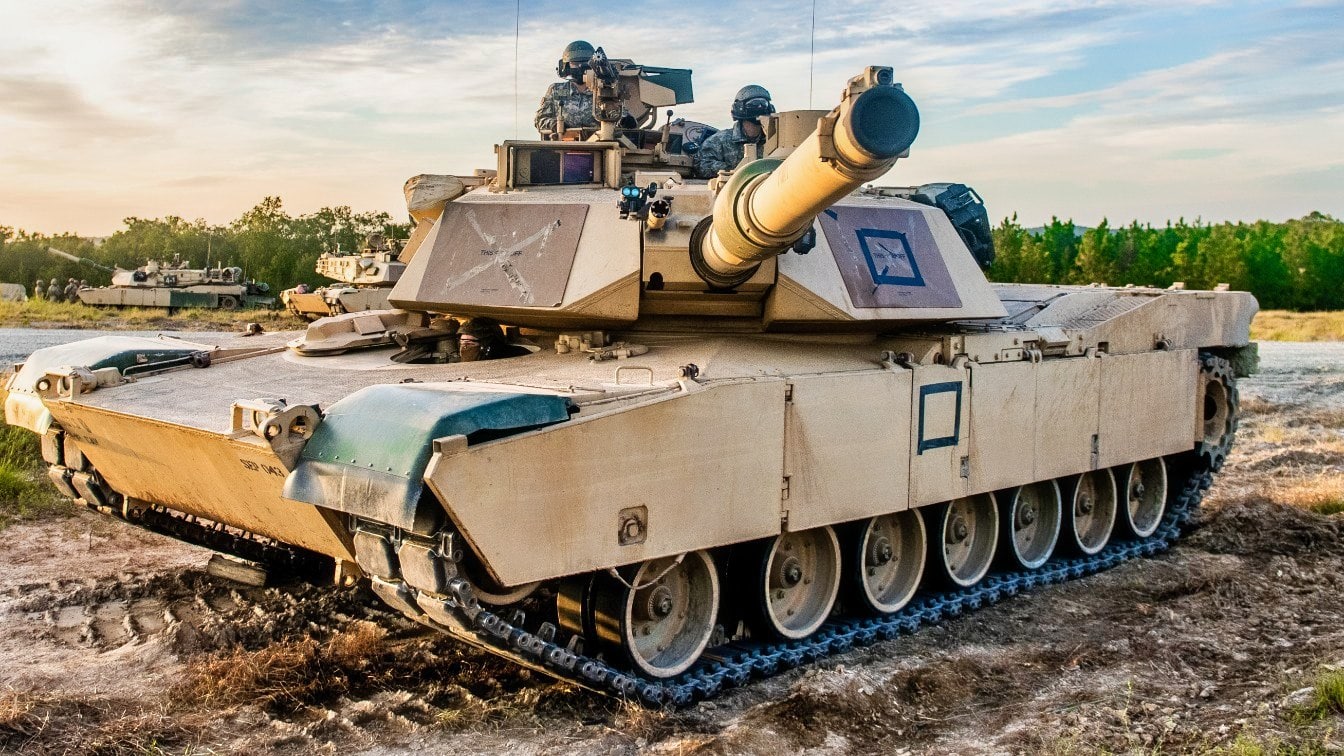
FORT BENNING, Ga. – Students in Armor Basic Officer Leader Course Class 20-005 conduct a platoon situational training exercise, Sept. 22, 2020, at Good Hope Maneuver Training Area on Harmony Church. Students train as both an attacking force and a defending force using the U.S. Army’s M1 Abrams Main Battle Tank. (U.S. Army photo by Patrick A. Albright, Maneuver Center of Excellence and Fort Benning Public Affairs)
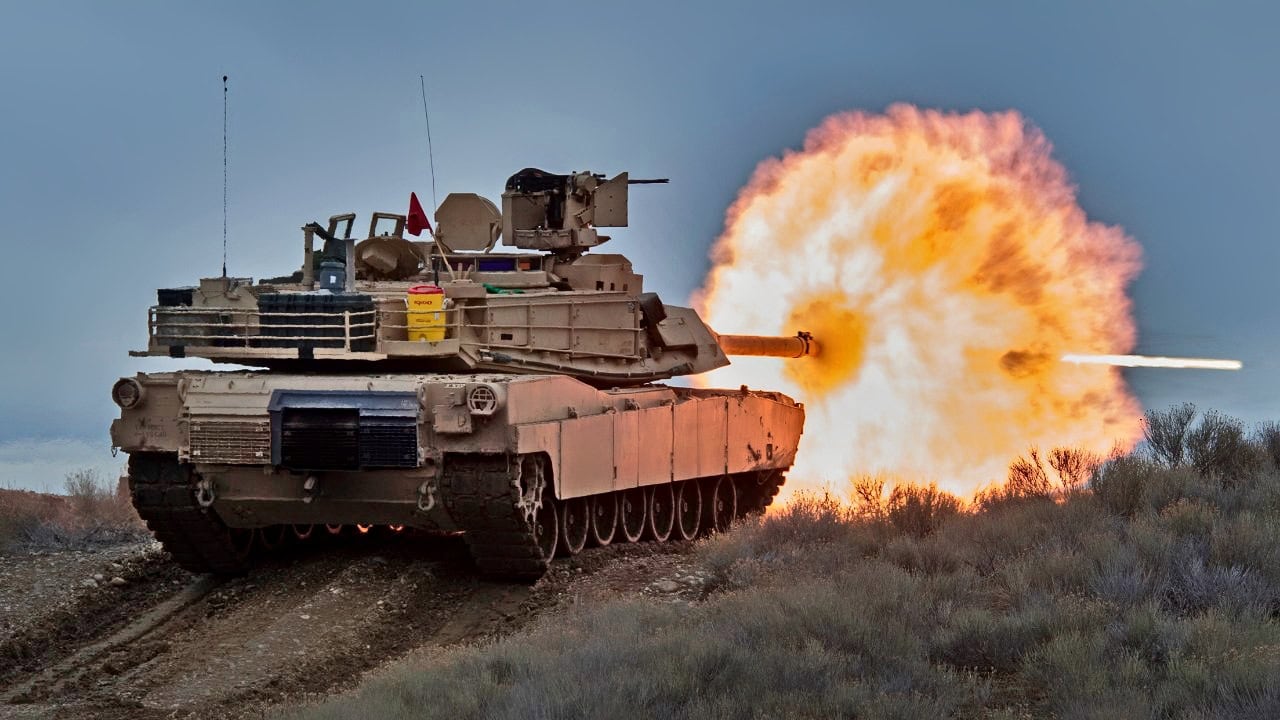
M1A2 Abrams Tanks from A Company, 2-116th Cavalry Brigade Combat Team (CBCT), Idaho Army National Guard run through field exercises on Orchard Combat Training Center (OCTC).
The Abrams demonstrated superior firepower, mobility, and survivability. Its ability to engage targets at long ranges with high accuracy was a game-changer.
The tank’s thermal imaging system allowed it to operate effectively in the desert’s harsh conditions, both day and night, the lack of which proved fatal for Iraqi tanks.
Despite its successes, the Abrams did face some challenges. High fuel consumption was a notable issue, requiring frequent refueling stops.
Additionally, the tank’s weight and size posed logistical challenges, particularly in terms of transportation and maintenance.
However, these drawbacks were outweighed by its combat effectiveness, as the Abrams proved to be a formidable adversary on the battlefield.
Iraq War (2003-2011)
The M1 Abrams was again deployed during the Iraq War, where it continued to showcase its strengths.
In urban combat scenarios, the tank’s heavy armor provided crucial protection against improvised explosive devices (IEDs) and rocket-propelled grenades (RPGs). The Abrams’ firepower and advanced targeting systems allowed it to engage enemy positions with precision, often from a safe distance.
However, the urban environment also highlighted some of the tank’s limitations. The Abrams’ size made it less maneuverable in narrow streets and alleys, and its weight caused significant wear and tear on infrastructure.
Despite these challenges, the Abrams remained a key asset for U.S. forces, providing essential fire support and protection in numerous engagements.
War in Afghanistan (2001-2021)
In Afghanistan, the M1 Abrams was used less frequently due to the mountainous terrain and the nature of the conflict, which often involved counter-insurgency operations rather than large-scale armored battles.
Nevertheless, when deployed, the Abrams provided valuable support in clearing fortified positions and providing overwatch for infantry units.
The tank’s advanced optics and fire control systems were particularly useful in identifying and engaging targets at long ranges, a critical capability in the vast and open landscapes of Afghanistan. However, the logistical challenges of operating such a heavy vehicle in remote and rugged terrain limited its widespread use.
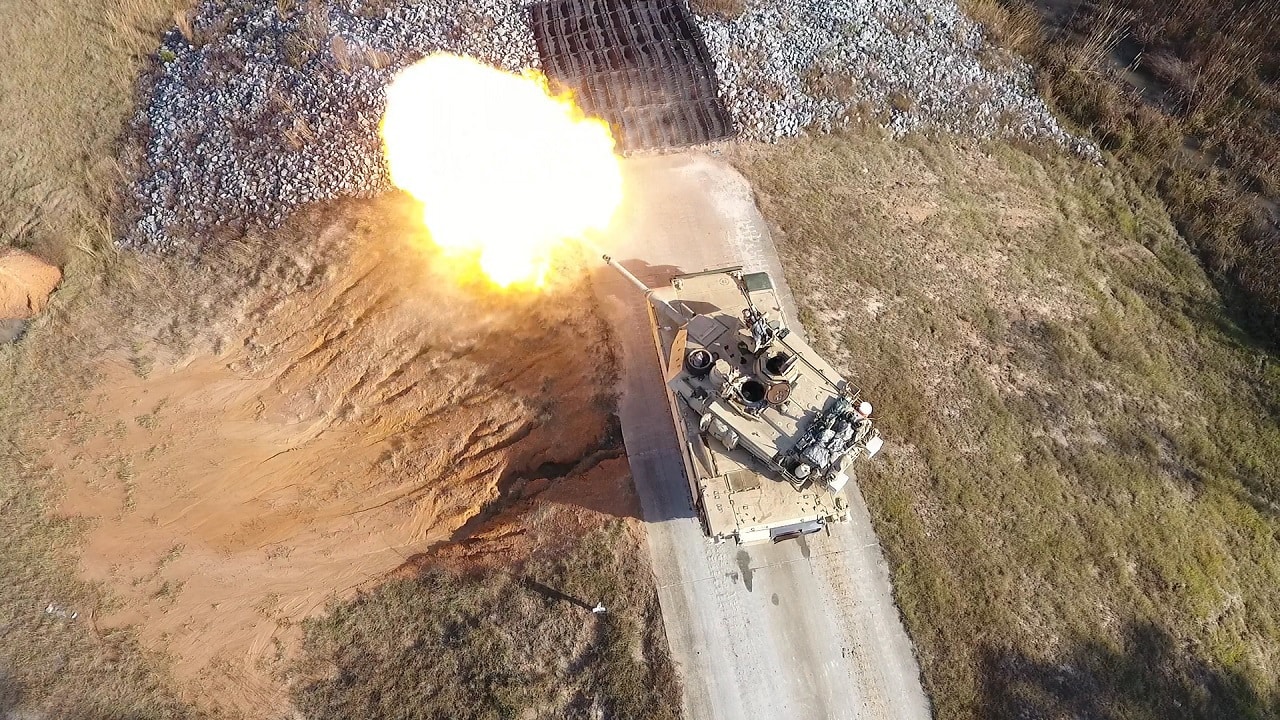
Aerial drone image of an M1A2 Abrams Main Battle Tank crew, from the 1st Armor Brigade Combat Team, 3rd Infantry Division, conducting Table VI Gunnery at Fort Stewart, Ga. December 6, 2016.
Recent Conflicts and Modernization
In recent years, the M1 Abrams has continued to evolve to meet new threats and operational requirements. The tank has been upgraded with improved armor, advanced electronics, and enhanced firepower.
The M1A2 SEPv3 variant, for example, features improved protection against IEDs and RPGs, as well as upgraded communications and networking capabilities.
The Abrams has also seen action in the Yemeni Civil War, where Saudi Arabian forces have used it against Houthi rebels. In this conflict, the tank has faced significant threats from modern anti-tank guided missiles (ATGMs), highlighting the ongoing need for continuous upgrades and adaptations to counter evolving threats.
M1 Abrams Tank Performance in the Russo-Ukrainian War
Most recently, the M1 Abrams has been deployed in the Russo-Ukrainian War, where it has been used by Ukrainian forces against Russian armored units. In the Abrams’ previous conflicts, the tank has always enjoyed technological superiority with infantry, air, and artillery support.
Ukraine, however, proved to be an entirely different battlefield.
For the first time, the Abrams found itself against an enemy with sophisticated ISR and anti-tank capabilities. Furthermore, without reliable air and artillery support, the tank found itself in a more vulnerable position than it had ever been.
The M1 Abrams took heavy casualties in Ukraine. It was reported that Ukraine has lost around 90% of the Abrams tanks that have been donated, a staggering loss to say the least. In an environment dominated by kamikaze drones and without air support, the tank was easy pickings for Russian anti-tank crews who had thoroughly studied the tanks weak points.
Takeaways: The Abrams’ Strengths and Weaknesses
Throughout its service history, the M1 Abrams has proven to be a highly effective and adaptable main battle tank. Its armor is top-notch and has improved the tank’s overall protection and survivability immensely. The tanks fire control system and thermal imaging systems make the Abrams highly accurate and extremely lethal on the battlefield. In the latter variants, its electronics help it to share and receive battlefield information seamlessly from other units, improving its battlefield awareness immensely. Its overall design puts crew safety above all making it one of the most survivable MBTs on the planet.
On the other hand, the Abrams’ weight and engine make it a logistical burden. It’s heavy weight makes it prone to tearing up local infrastructure and its engine requires frequent maintenance and refueling. Its armor, while still heavy and reliable, is no longer sufficient against modern ATGMs.
The Abrams is also vulnerable to FPV drones who can precisely strike its weak points. Tank is also very large; its distinct profile makes it easy to spot by enemies with any sophisticated ISR capabilities.
Overall, the Abrams has its weaknesses, but its previous combat performances testify to its many strengths.
Eventually, the Abrams will be replaced by a new tank, but until that time comes, the Abrams will continue to serve as America’s ever loyal workhorse.
About the Author: Isaac Seitz
Isaac Seitz, a Defense Columnist, graduated from Patrick Henry College’s Strategic Intelligence and National Security program. He has also studied Russian at Middlebury Language Schools and has worked as an intelligence Analyst in the private sector.