
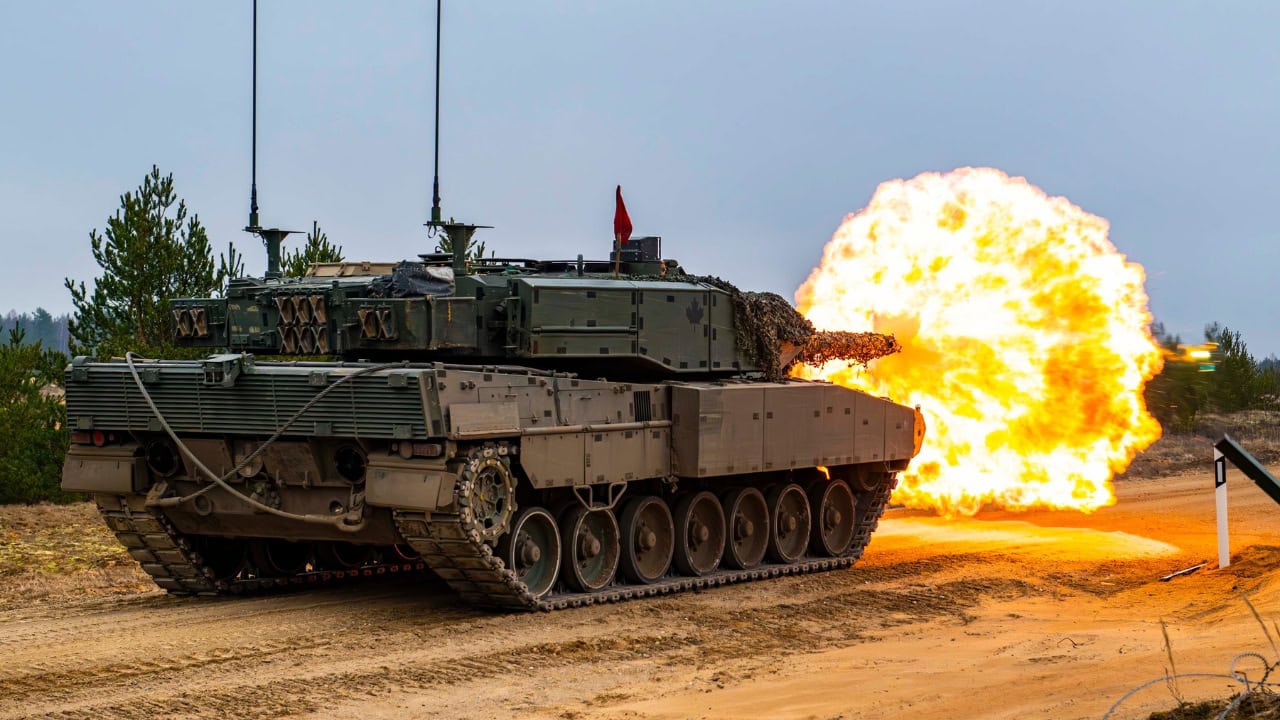
Key Points and Summary – Germany’s rollout of the Leopard 2A8, its first newly built main battle tank since 1992, marks a major political and military statement: heavy armor still matters in Europe’s new security era.
-But the debut comes with historical baggage.
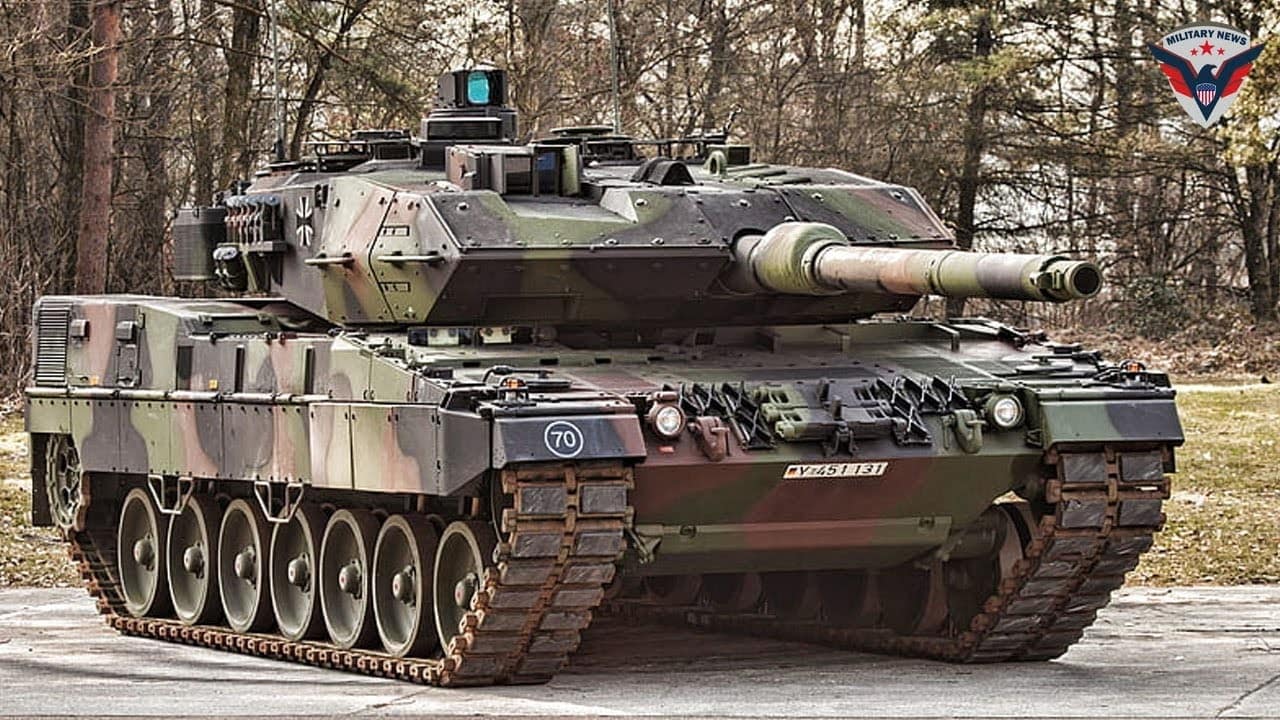
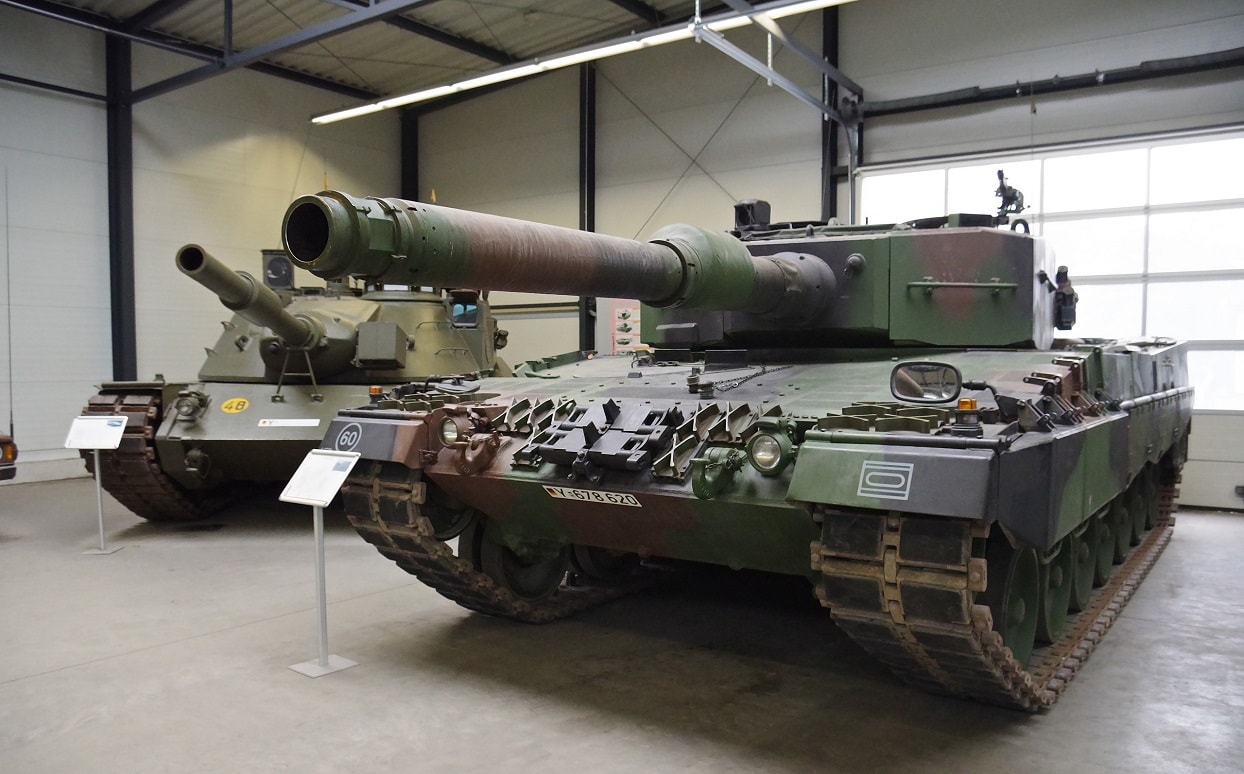
Leopard 2 Tank. Image Credit: Creative Commons.
-The article contrasts the 2A8 with the ill-fated U.S.–German MBT-70, a 1970s super-tank that tried to leap too far ahead with exotic guns, complex suspension, and divergent binational requirements—only to collapse under weight, cost, and sustainment problems.
-The lesson for Berlin and NATO: the Leopard 2A8 will only succeed if it delivers real-world reliability, affordability, and logistical practicality, not just promise on paper.
Germany Must Learn Lessons From History As Leopard 2A8 Debuts
In November 2025, Germany officially rolled out the Leopard 2A8 – its first newly built main battle tank (MBT) since 1992 – in a ceremony at the KNDS Deutschland plant in Munich.
The unveiling was a significant move for Germany and its armed forces, but it was also symbolic: it was, after all, a result of a broader shift in European defense posture.
The 2A8 represents renewed faith in a heavy armor platform in an era increasingly dominated by drones, cyber warfare, and long-range missiles, and the rollout comes at a time when analysts are increasingly questioning the value of main battle tanks.
But as NATO nations eye the 2A8 as their next armored backbone, the resurrection of this MBT-class – if we can really call it that – should not be taken for granted.
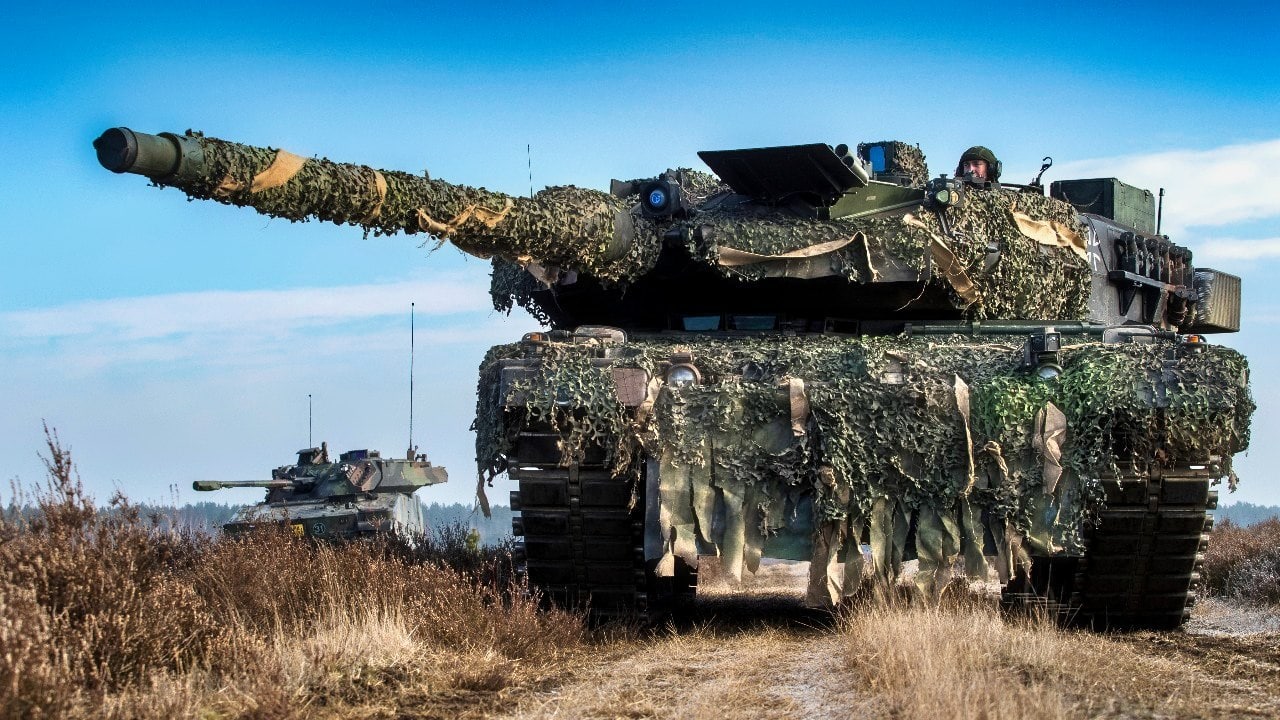
Germany Military Leopard 2 Tank.
2A8 has arrived, but its success is not guaranteed – and there are stories from the past that show how even promising platforms can fail. The MBT-70 is among them.
MBT-70 – Ahead Of Its Time?
In the early 1970s, the United States and West Germany, bound by their shared NATO commitments, saw a widening qualitative gap between their armed forces and looming improvements to Soviet tanks.
In response, the two countries agreed to jointly develop their own platform, which ultimately became the MBT-70 (known in Germany as Kampfpanzer 70). The tank was a universal main battle tank designed to replace the American M60 and the German Leopard I.
Unlike upgrades of existing designs – a method used to this day for all manner of military hardware – the MBT-70 was envisioned as a total generational leap.
The designers of the vehicle promised capabilities that seemed far-off and futuristic in the 1970s. It featured a massive 152 mm XM150 gun-launcher that would allow the tank to fire both conventional rounds and long-range guided missiles.
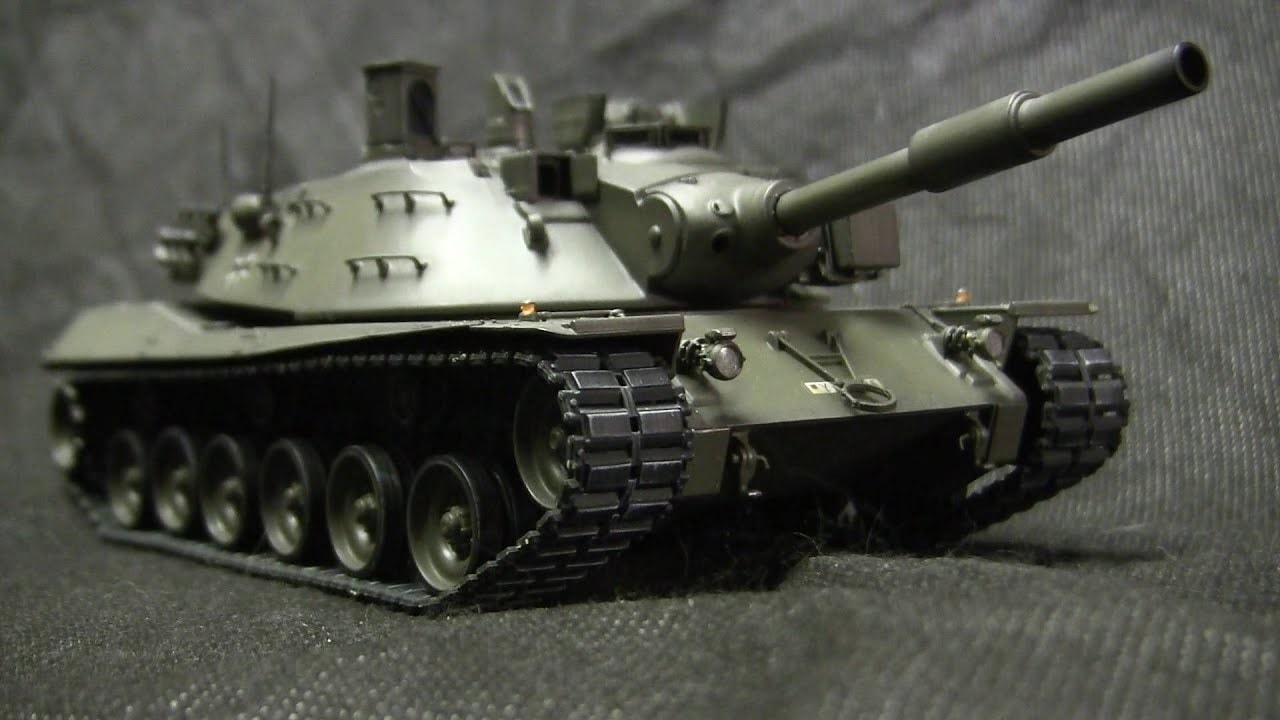
MBT-70. Image Credit: YouTube Screenshot.
It was also designed to include a hydropneumatic suspension system that would effectively enable the tank to “kneel” – meaning it could adjust its height.
The tank’s new suspension system also made it ideal for traversing rugged terrain, and its low profile enabled advancements in the hull.
Rather than housing the drive in the hull, as was common in traditional tanks, the entire crew would be housed in an oversized, drop-in turret.
During early testing, the MBT-70 demonstrated impressive ability. The tank outperformed the U.S. M60 in acceleration and cross-country speed, and agility tests even suggested that it could better traverse obstacle courses than contemporary tanks.
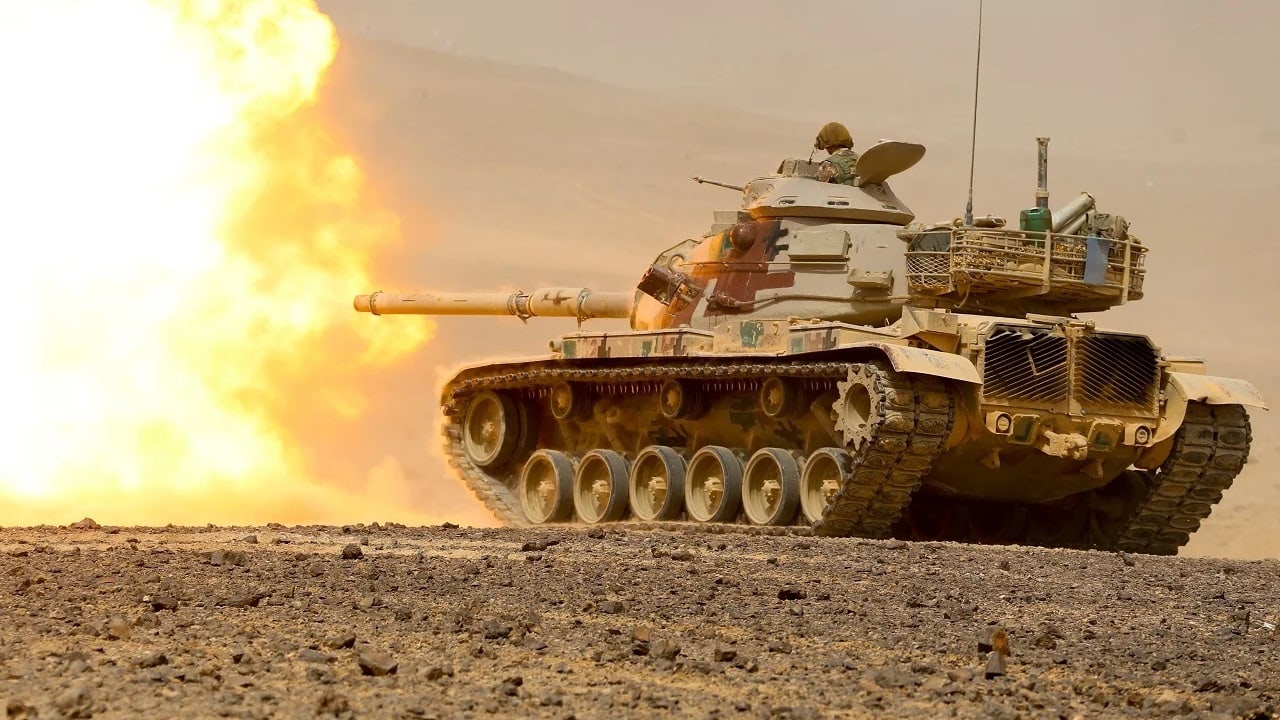
M60 Tank. Image Credit: Creative Commons.
For planners, the tank was great: it was the perfect combination of heavy firepower, protection, and mobility – all of which meant it would, in theory, dominate the battlefield for decades to come. It was the perfect solution to an emerging Soviet threat – but there were problems.
Did MBT-70 Arrive Too Early?
The MBT-70 was ambitious from the beginning – and it was overloaded.
There was a considerable number of innovations crammed into a single complex, expensive, and fragile package.
As the trials went on, planners began to realize there were problems, and cracks began to show.
For example, the turret’s rotational driver capsule began to cause disorientation among drivers, undermining what was meant to be a headline feature for the vehicle.
And then there was the 152 mm gun-launcher system. Ammunition design was unreliable in real-world conditions, with humidity and barrel heat leading to misfires.
Meanwhile, more features were still being added as time progressed and the tank’s weight began to balloon. The tank was initially anticipated to weigh somewhere in the region of 46-47 tons.
Still, by the end, the prototypes weighed more than 50 tons, which was too heavy for many of Germany’s bridges and transport infrastructure.
And as weight increased, so too did the cost – not just of the tanks, but of their maintenance and logistical demands. The entire project just became too busy, bloated, and difficult to manage.
MBT-70. Image: Creative Commons.
And the final nail in the coffin was the relationship between U.S. and German planners. Both countries’ militaries needed something different; they had different engineering standards, and expectations diverged as the tank grew in size and complexity.
By 1969, Germany withdrew from the program, and the U.S. soldiered on with the design until 1971, when Congress cut its funding.
The Leopard 2A8 succeeds because modern German engineers avoid the same structural problems that destroyed MBT-70: rising weight, excessive subsystem complexity, diverging requirements among partners, and sustainment demands that exceed real-world logistical capacity.
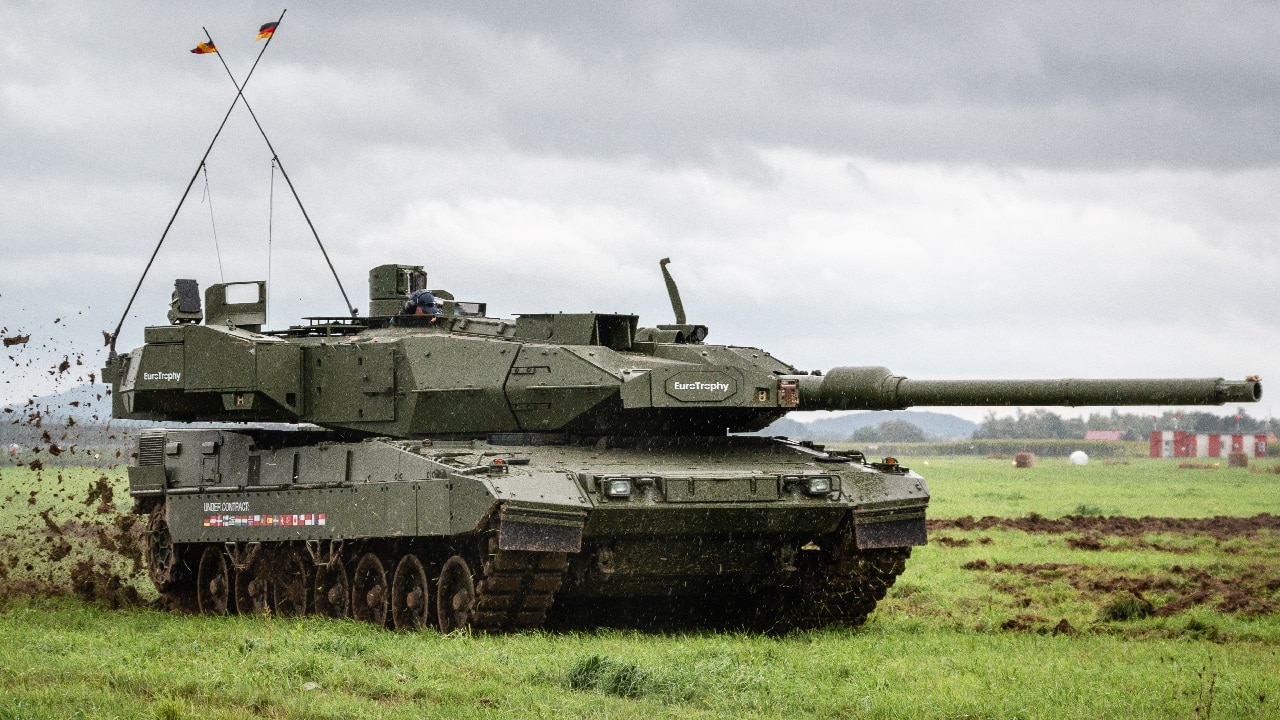
Leopard 2 Tank. Image Credit: Creative Commons.
The MBT-70 proved that a tank can outperform competitors on paper and still fail in the real world.
The 2A8 rollout, then, is a milestone – but its long-term success will depend on those fundamentals.
About the Author:
Jack Buckby is a British author, counter-extremism researcher, and journalist based in New York who writes frequently for National Security Journal. Reporting on the U.K., Europe, and the U.S., he analyzes and understands left-wing and right-wing radicalization and reports on Western governments’ approaches to the pressing issues of today. His books and research papers explore these themes and propose pragmatic solutions to our increasingly polarized society. His latest book is The Truth Teller: RFK Jr. and the Case for a Post-Partisan Presidency.