
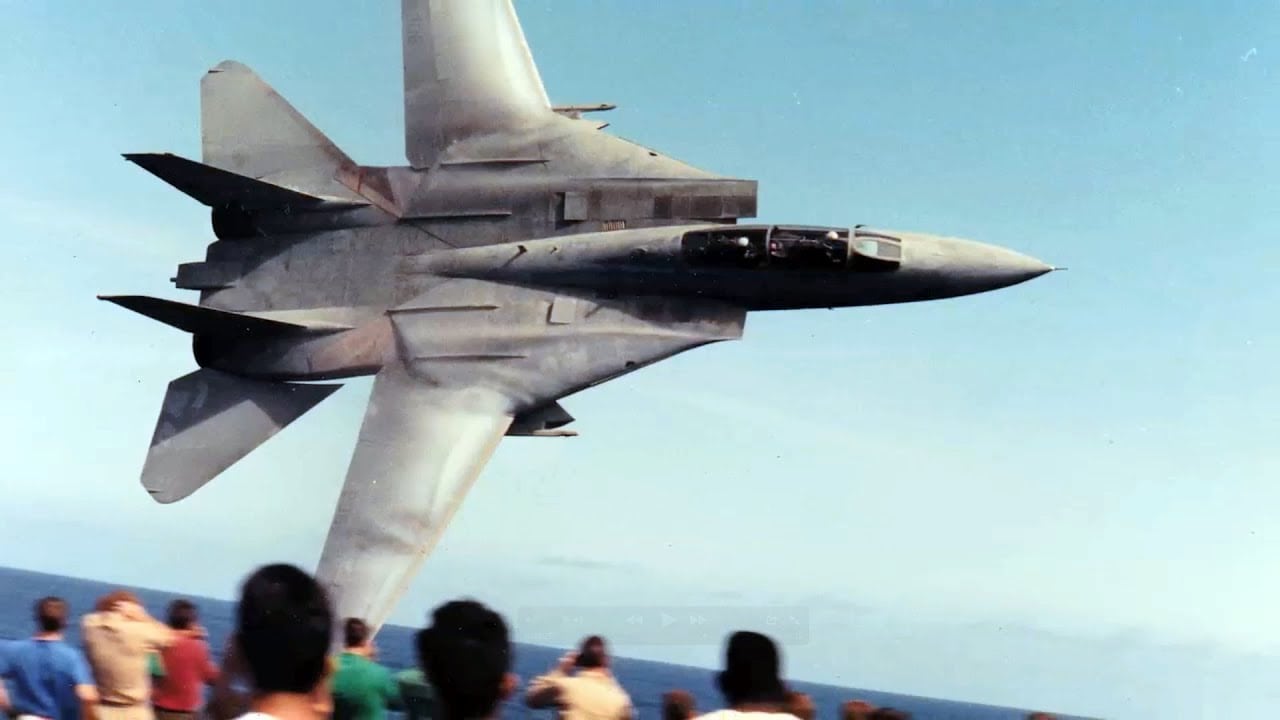
Iran’s F-14 Tomcats Were Declared Destroyed in March. The Evidence They All Died Is Thinner Than Israel Claimed: In March, after a wave of airstrikes on a base in central Iran, the Israel Defense Forces announced that it had destroyed the remaining fleet of Iranian F-14 Tomcats and assessed that Tehran no longer possessed an operational example of the world’s last flying Tomcat. Three months later, Iranian state media released footage presented as an F-14 returning from a mission, offered as proof that the aircraft Israel said it had wiped out were still in the air. Neither claim has been independently confirmed, and the gap between them is now part of a larger argument over what the air campaign against Iran actually destroyed. What is certain is that the Persian Tomcats, kept flying for more than four decades against every expectation, have reached the most precarious moment in their long and improbable history.
Note: We have visited many F-14 Tomcats over the years and included some of our best original photos in this article.
How Iran Became the Last Country Flying the F-14 Tomcat
The Tomcat reached Iran after a Soviet aircraft that the Shah could not catch. In the early 1970s, MiG-25 Foxbats were making high-altitude reconnaissance flights over Iranian airspace, and the Imperial Iranian Air Force wanted a fighter whose radar and missiles could reach them.
After President Richard Nixon visited Tehran in 1972 and offered the Shah access to advanced American hardware, Iran chose the F-14, drawn above all to its AN/AWG-9 radar and the long-range AIM-54 Phoenix missile, the only combination then available that could track and engage targets at the distances the mission demanded.
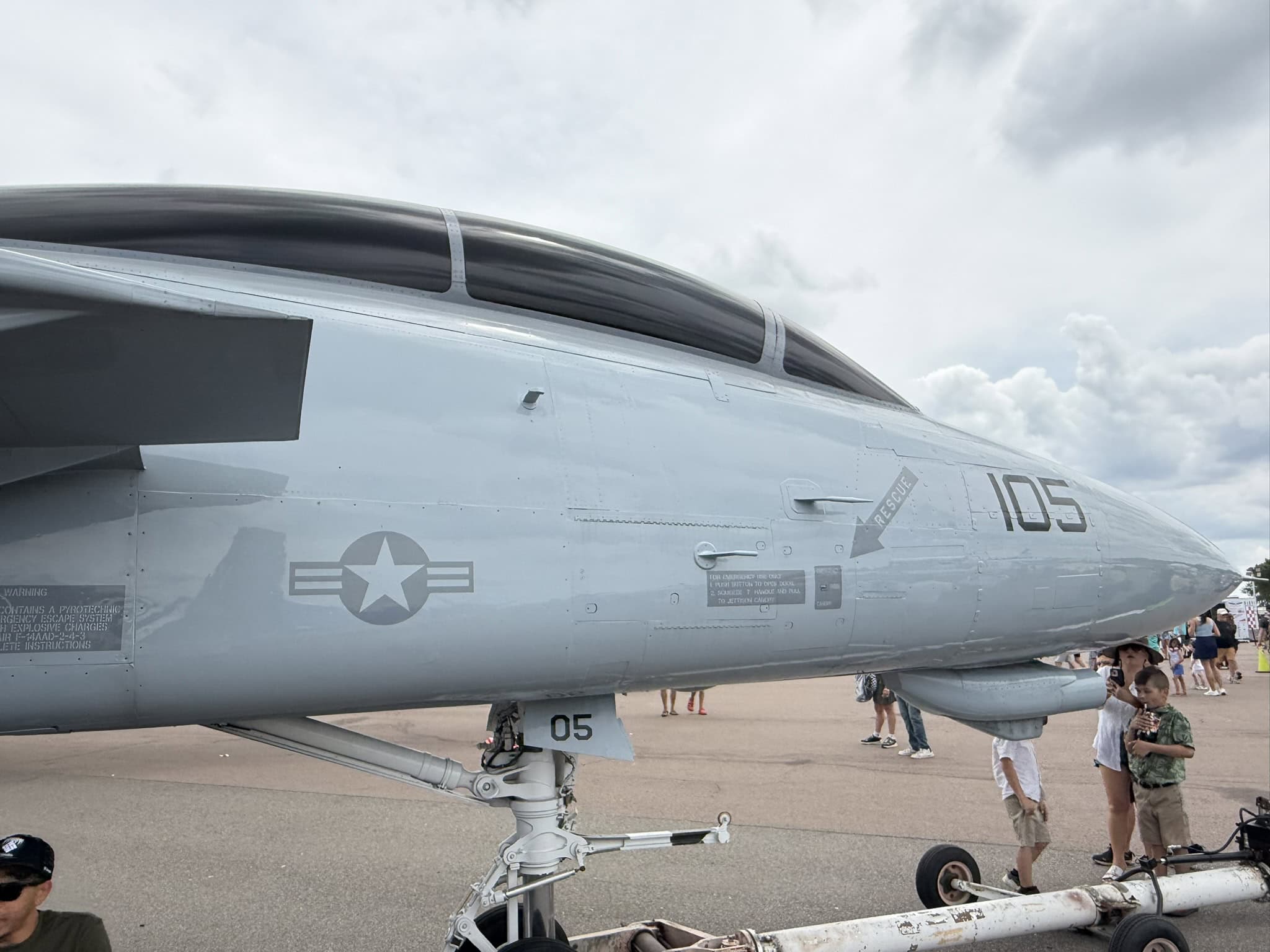
F-14D Tomcat from Lakeland, Florida Airshow. Image Credit: 19FortyFive.com. Taken on 4/19/2026.
Iran ordered 80 of the jets in 1974, becoming the only export customer the Tomcat would ever have, along with hundreds of Phoenix missiles, in a deal worth roughly two billion dollars. Deliveries began in 1976, and 79 aircraft had arrived by the time the Islamic Revolution swept the Shah from power in early 1979.
The 80th was held back by Washington and never shipped. When the U.S. embassy in Tehran fell, and American diplomats were taken hostage, the United States cut everything that kept the fleet running, spare parts, technical support, munitions, and training, and the manufacturer’s support vanished overnight. The expectation in Washington was that Iran’s Tomcats would be grounded within months. The U.S. Navy, which received the bulk of the production run, and Iran were the only two operators of the type.
Keeping the Tomcat Flying Under a Four-Decade Embargo
That expectation proved badly wrong, and the reason became one of the more remarkable sustainment stories in military aviation.
Cut off from Grumman, Iran kept its Tomcats airworthy through constant cannibalization of grounded airframes, a domestic spare-parts industry built largely on reverse engineering, and improvised fixes the original designers never imagined. When the stock of Phoenix missiles aged toward the end of their lives, Iran fielded its own derivative, the Fakour-90, drawing on the Phoenix and the guidance package of the older Hawk surface-to-air missile to keep the jets armed at long range.
The United States, meanwhile, worked to ensure Iran’s fleet would have nothing to draw on. After retiring its own F-14s in 2006, the Navy sent the surviving airframes to the boneyard at Davis-Monthan Air Force Base and shredded most of them, specifically to keep components out of Iranian hands.
Even so, Iran kept enough Tomcats flying to keep the type viable, drawing on improvised manufacturing and, over time, additive techniques to produce parts that had once required a foreign supply chain. The condition of the fleet was always uneven, and the AWG-9 radar at the aircraft’s heart suffered from poor serviceability, leaving the force split between jets with fully working radars and those with degraded systems. The aircraft nonetheless remained a fixture of Iranian air power and a point of national pride, an American weapon kept in service decades after the country that built it tried to ensure it could not be.
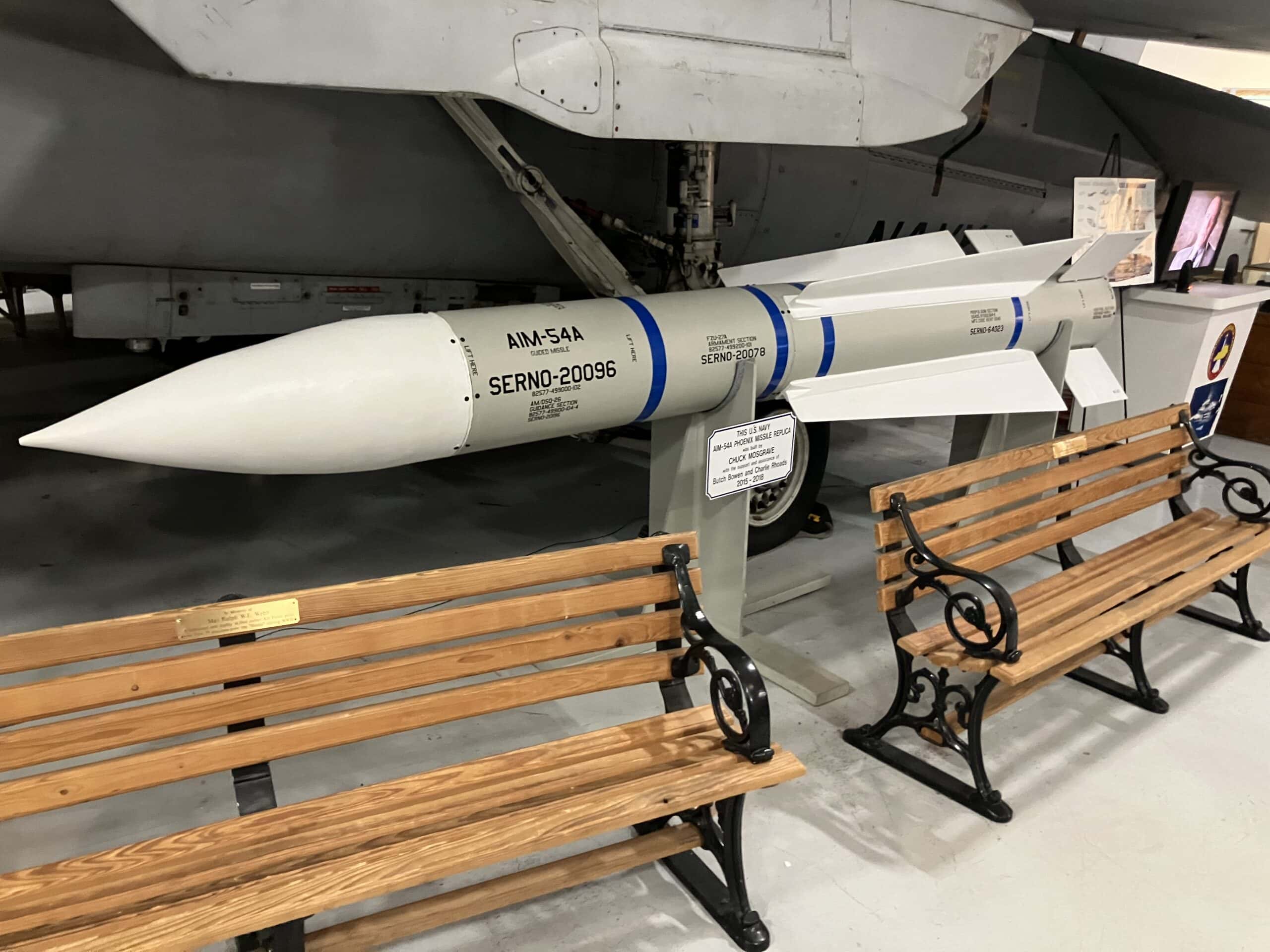
F-14 Tomcat Missile. 19FortyFive.com Image.
The F-14’s Combat Record in Iranian Service
The Tomcat earned its reputation in Iranian hands during the Iran-Iraq War of the 1980s, serving as a long-range interceptor and, by many accounts, as an airborne radar platform that helped direct other fighters. Iranian crews used the Phoenix at ranges Iraqi pilots could not match, and the mere presence of an F-14 on patrol was often enough to scatter Iraqi formations. The exact tally is impossible to pin down. The aviation historian Tom Cooper, who spent years interviewing Iranian veterans and cross-referencing records, documented roughly 130 claimed kills, of which independent analysts confirm around 55, against approximately four Tomcats lost in air-to-air combat, while Iran’s overall F-14 losses, including accidents, ran higher. Cooper has cautioned that a precise count is unattainable because wartime air force records were repeatedly altered for political and personal reasons.
The war also produced the type’s greatest pilots. Jalil Zandi is credited with roughly 11 victories, eight confirmed and three listed as probable, making him the highest-scoring F-14 pilot of any air force, ahead of any U.S. Navy crew. In one documented engagement in January 1981, an Iranian crew responding to intruders headed toward Kharg Island downed multiple Iraqi MiGs with a single Phoenix shot, the missile’s large warhead catching aircraft flying in close formation. The contrast with the American record is stark.
No U.S. Navy Tomcat pilot ever became an ace, and every Phoenix the Navy fired in combat missed, leaving the F-14’s entire air-to-air kill record with Phoenix missiles to Iranian crews.
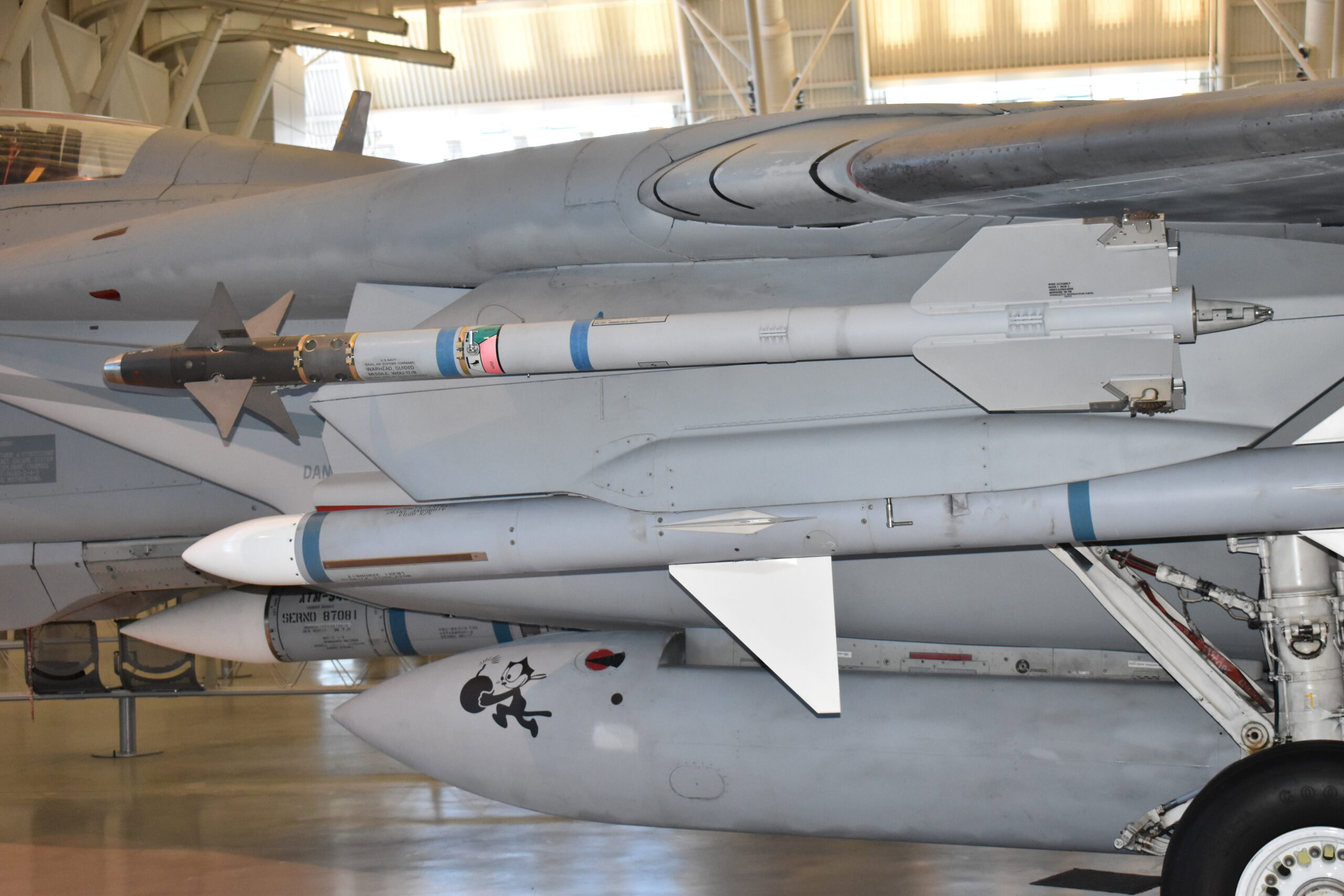
F-14 Tomcat at the Smithsonian. 19FortyFive.com original photo.
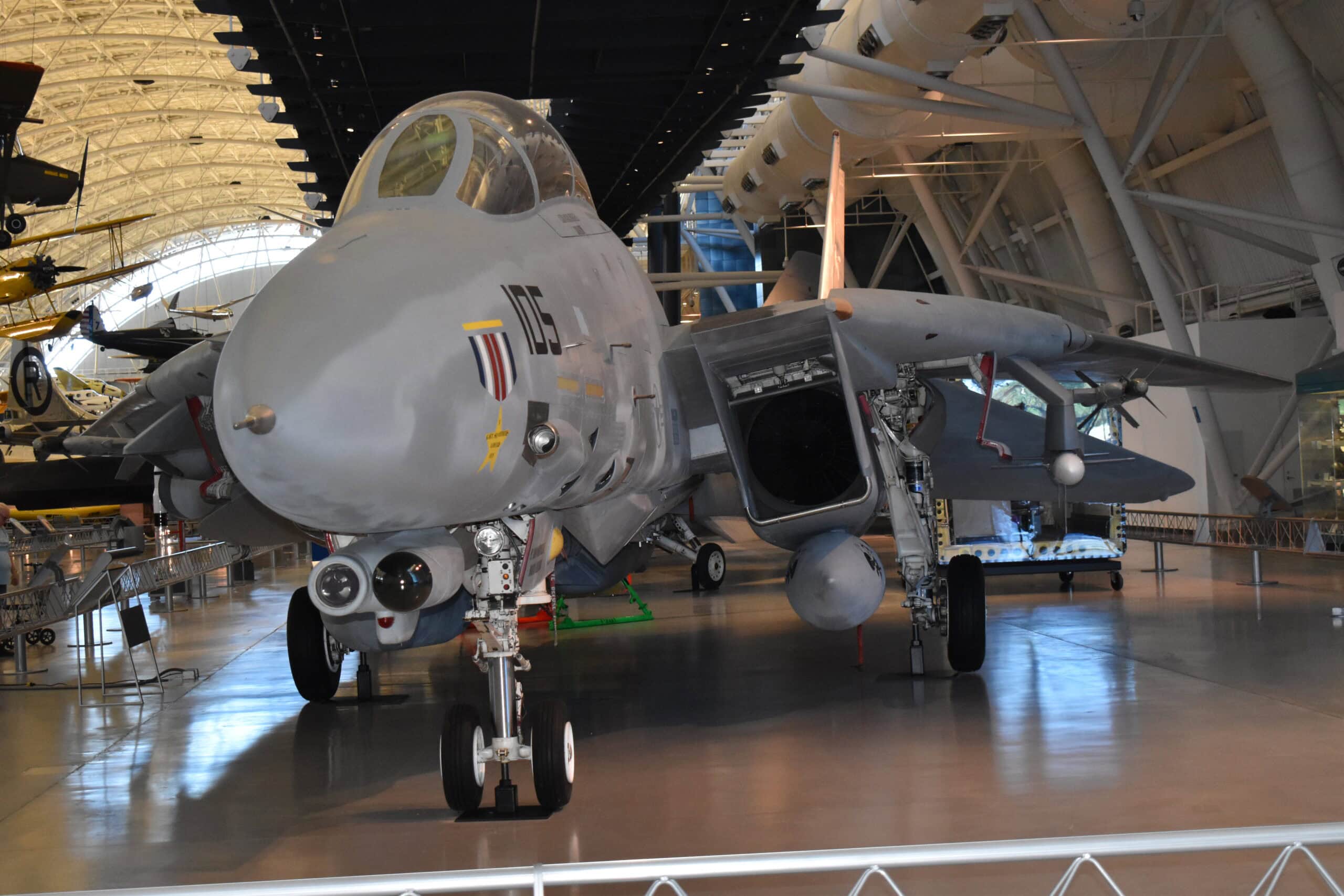
F-14 Tomcat at the Smithsonian. 19FortyFive.com original photo.

F-14 Tomcat at the Smithsonian. Image Credit: 19FortyFive.com
Israel Targets Iran’s F-14 Fleet at Isfahan
The fleet’s decline turned into something closer to a hunt once Israel began striking it directly. During the 12-Day War of 2025, the Israel Defense Forces released footage of strikes on Tomcats at Iranian air bases, including a June 2025 drone strike on two parked at a Tehran airfield, though satellite imagery indicated those particular aircraft had been sitting idle for years and were probably not operational. The far larger blow came in 2026. As part of the campaign that Israel calls Operation Roaring Lion and the United States calls Operation Epic Fury, which opened on February 28, Israeli aircraft struck the 8th Tactical Fighter Base near Isfahan on the night of March 7 into March 8. The base, home to the 81st, 82nd, and 83rd Tactical Fighter Squadrons, was the principal station for Iran’s entire Tomcat fleet.
The Israeli military announced that it had destroyed the F-14s stored there and concluded that Iran no longer had an operational Tomcat, but it released no imagery of the F-14 strikes themselves, and the IDF videos of Tomcats being hit that circulated afterward appeared to be older clips. Independent assessments relied instead on commercial satellite imagery from the firm Vantor.
Pre- and post-strike comparison images showed heavy damage across the base, and analysis of that imagery identified two, and more likely three, destroyed Tomcats along with at least ten other aircraft on the taxiways.
The Institute for the Study of War, reviewing the same imagery, counted about ten impact points and extensive cratering. How many F-14s were actually lost depended heavily on how many had been there to begin with, and the estimates varied enormously. One 2026 inventory listed 41 in service, a figure several analysts called a substantial overcount; others put the operational fleet at 20 to 25 aircraft out of perhaps 40 to 45 surviving airframes; Tom Cooper estimated closer to ten operational jets before the war, and only a single Tomcat had appeared at the 2024 Kish air show. Cooper also cautioned that some of the F-14 shapes shown destroyed in the imagery may have been wooden decoys, a complication that further muddied the count.

F-14 Tomcat at Aviation Museum of Kentucky. Taken on March 1, 2026. By Christian D. Orr.

F-14 Tomcat at Aviation Museum of Kentucky. Taken by 19FortyFive.com by Christian D. Orr.
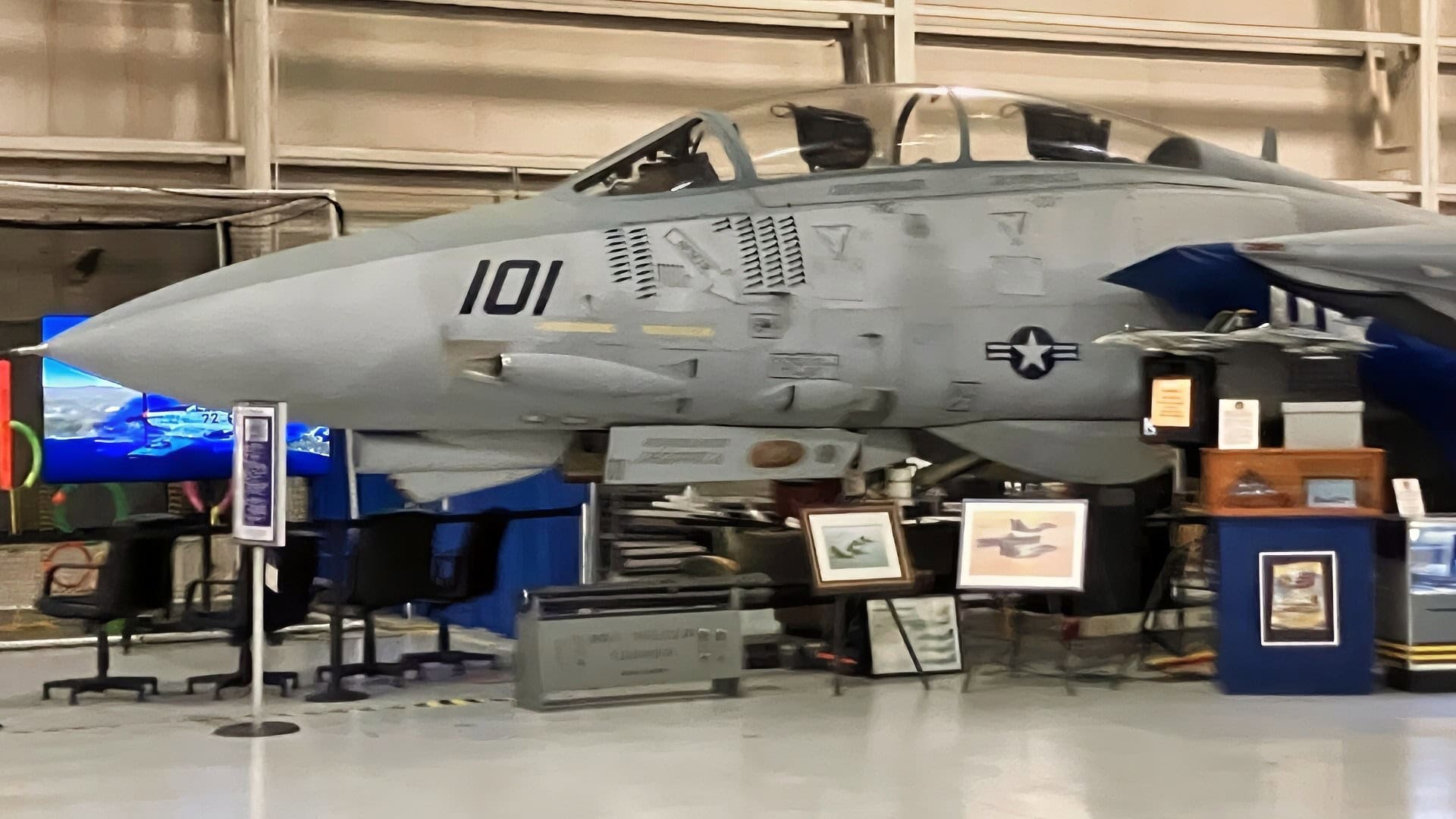
Aviation Museum of Kentucky F-14 Tomcat. Image Credit: 19FortyFive author Christian D. Orr. Taken on March 1, 2026.
The Footage That Muddied the Destruction Claim
For three months, the working assumption in much of the coverage was that the Isfahan strike had effectively ended the Tomcat’s worldwide operational life. Footage that surfaced on June 10 and was released through Iranian state media complicated that assumption. The clip was presented as showing an F-14 returning from a mission, and at least one analyst argued the release was a deliberate effort to demonstrate that Iran’s air force had survived despite Israeli and American claims that it had been destroyed. The evidence is far from settled.
The provenance and dating of the footage are disputed, with some accounts suggesting the clip may be older material rather than a current sortie, and no independent source has confirmed that Iranian Tomcats flew combat operations during the 2026 conflict. Iran has not acknowledged how many of its F-14s it lost, and Israel has not produced imagery to support its claim that all of them were destroyed. The result is a standoff between two unverified positions, an Israeli assertion of total destruction backed by no released strike footage, and an Iranian implication of survival backed by a clip that cannot be firmly placed in time. The improbable persistence of the type and the question of how many remain have been the subject of continued reporting.
Why Iran Still Values a 50-Year-Old Interceptor
A fighter that first flew in 1970 has obvious limits against modern stealth aircraft, and Iran does not appear to use its Tomcats to chase F-35s. The F-14’s value lies elsewhere. Its AWG-9 remains a powerful long-range radar, and the aircraft was the first in the world designed specifically to detect and engage threats at extreme distances, including cruise missiles, a mission it was built for to defend American carrier groups against Soviet bombers.
That radar is vulnerable to jamming against current Western fighters, which is why Iran has tended to employ the Tomcats in their traditional roles of long-range air defense, airspace patrol, and command and control, rather than close combat against superior aircraft. Against a fifth-generation fighter like the F-35, the disparity is severe: the Tomcat’s radar signature is orders of magnitude larger, and its sensors are generations behind; as earlier analysis of the type’s limits made clear, the F-14 was never built to survive that kind of fight. Iran’s operational choices reflect that reality.
The Maverick Act and an Unlikely Reversal
The strangest turn in the Tomcat’s story unfolded in Washington, almost at the same moment. On April 28, 2026, the U.S. Senate passed by unanimous consent a bill nicknamed the Maverick Act, after the F-14-flying protagonist of Top Gun, introduced by Senator Tim Sheehy and co-sponsored by Senator Mark Kelly, a former naval aviator, with a companion bill in the House from Representative Abraham Hamadeh.
The legislation would transfer three retired F-14s from storage to the U.S. Space & Rocket Center in Huntsville, Alabama, and direct the Navy to provide spare parts to make one of them flyable or display-ready, at no cost to the federal government. For nearly two decades, the United States had done the opposite, methodically shredding its retired Tomcats to keep their parts away from Iran. The rationale for the change was that the apparent destruction of Iran’s fleet had eased the security concern that drove the shredding policy in the first place.
The bill singles out three specific airframes by their Navy bureau numbers, and one of them carries real history. The aircraft designated BuNo 159437, known by the call sign Fast Eagle 107, took part in the January 1989 engagement over the Gulf of Sidra in which two Tomcats shot down two Libyan MiG-23s. Only a handful of F-14s remain in the Arizona boneyard out of the more than 630 that once flew with the Navy, and the legislation, which still needs to clear the House, would pull three of them out for preservation.
Returning any to the air would be a formidable undertaking after two decades in the desert, requiring deep structural inspection, the recovery of a long-defunct supply chain, and federal aviation certification for a complex swing-wing fighter, work the museum, not the government, would have to fund and manage. The mechanics of the transfer, including the requirement that any parts come from existing Navy stock with nothing newly purchased, are spelled out in the bill text.
The juxtaposition is hard to miss. The United States began preparing to return a handful of Tomcats to flight for display, on the logic that Iran’s jets had been knocked out, in the same season that Iran put out footage meant to show one of its own still flying.
The Tomcat’s reputation was forged decades ago, mostly by Iranian pilots flying an American aircraft against Iraqi MiGs, and its operational life may now be ending in a war against the country that built it, though even that is not certain.
The count of how many Iranian F-14s remain airworthy is unresolved, caught between an Israeli claim of total destruction supported by no released imagery, satellite analysis that found a handful of confirmed losses amid possible decoys, and an Iranian video that cannot be firmly dated.
How long the world’s last Tomcats keep flying, and whether any are still flying at all, are questions that neither an announcement from the Israeli military nor a single clip from Iranian state television has answered.
About the Author: Harry J. Kazianis
Harry J. Kazianis (@Grecianformula) was the former Senior Director of National Security Affairs at the Center for the National Interest (CFTNI), a foreign policy think tank founded by Richard Nixon based in Washington, DC. Harry has over a decade of experience in think tanks and national security publishing. His ideas have been published in the NY Times, The Washington Post, The Wall Street Journal, CNN, and many other outlets worldwide. He has held positions at CSIS, the Heritage Foundation, the University of Nottingham, and several other institutions related to national security research and studies. He is the former Executive Editor of the National Interest and the Diplomat. He holds a Master’s degree focusing on international affairs from Harvard University.

