
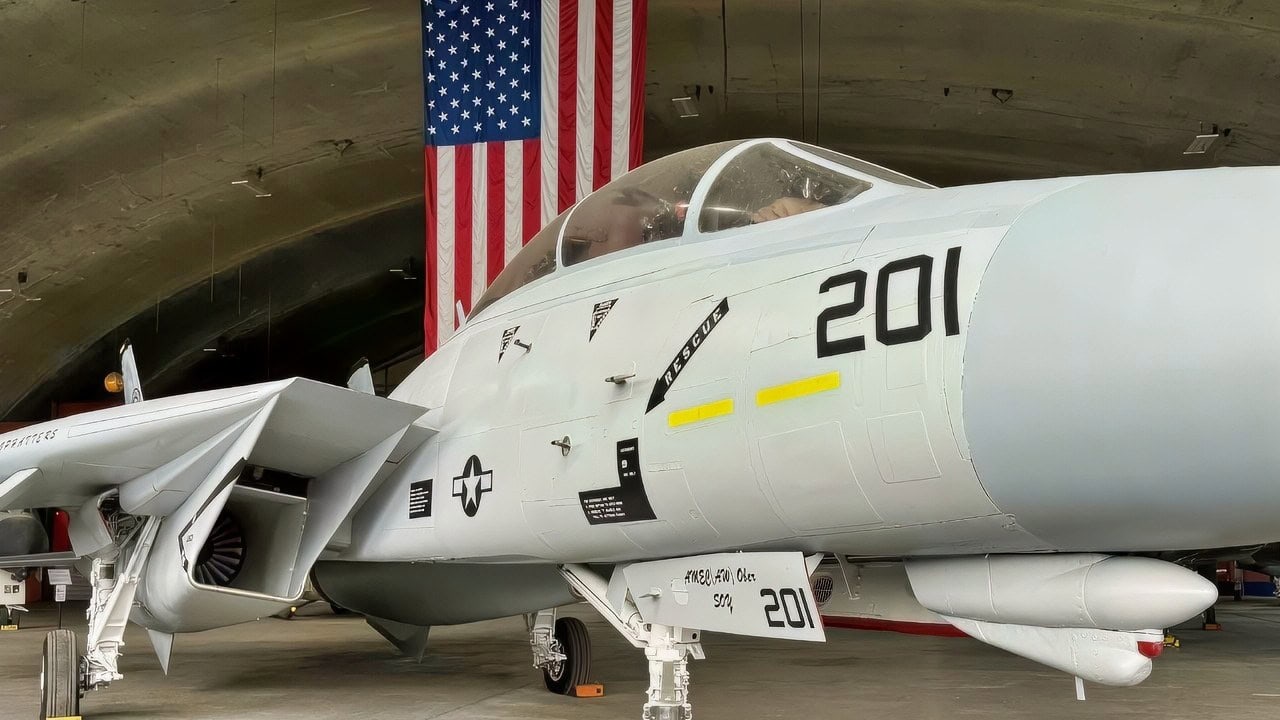
The F-14 Tomcat flew with bad engines for most of its career because it was saddled with a stopgap, the Pratt & Whitney TF30, after the engine it was actually designed around fell through — and it could not shake that stopgap for nearly three decades, through a failed interim upgrade, dozens of lost jets, a dead pilot, a congressional investigation, and a budget-starved replacement program that left much of the fleet flying the dangerous engine into the 2000s. The engine that finally fixed the Tomcat, General Electric’s F110, did not arrive in service until the late 1980s, and even then, the swap dragged on so slowly that the troublesome original outlived the jet’s entire combat reputation.
The full arc — from the engine the Tomcat was meant to have to the one that finally saved it — is the real story, and it is a case study in how a temporary compromise can outlast and nearly define an aircraft.
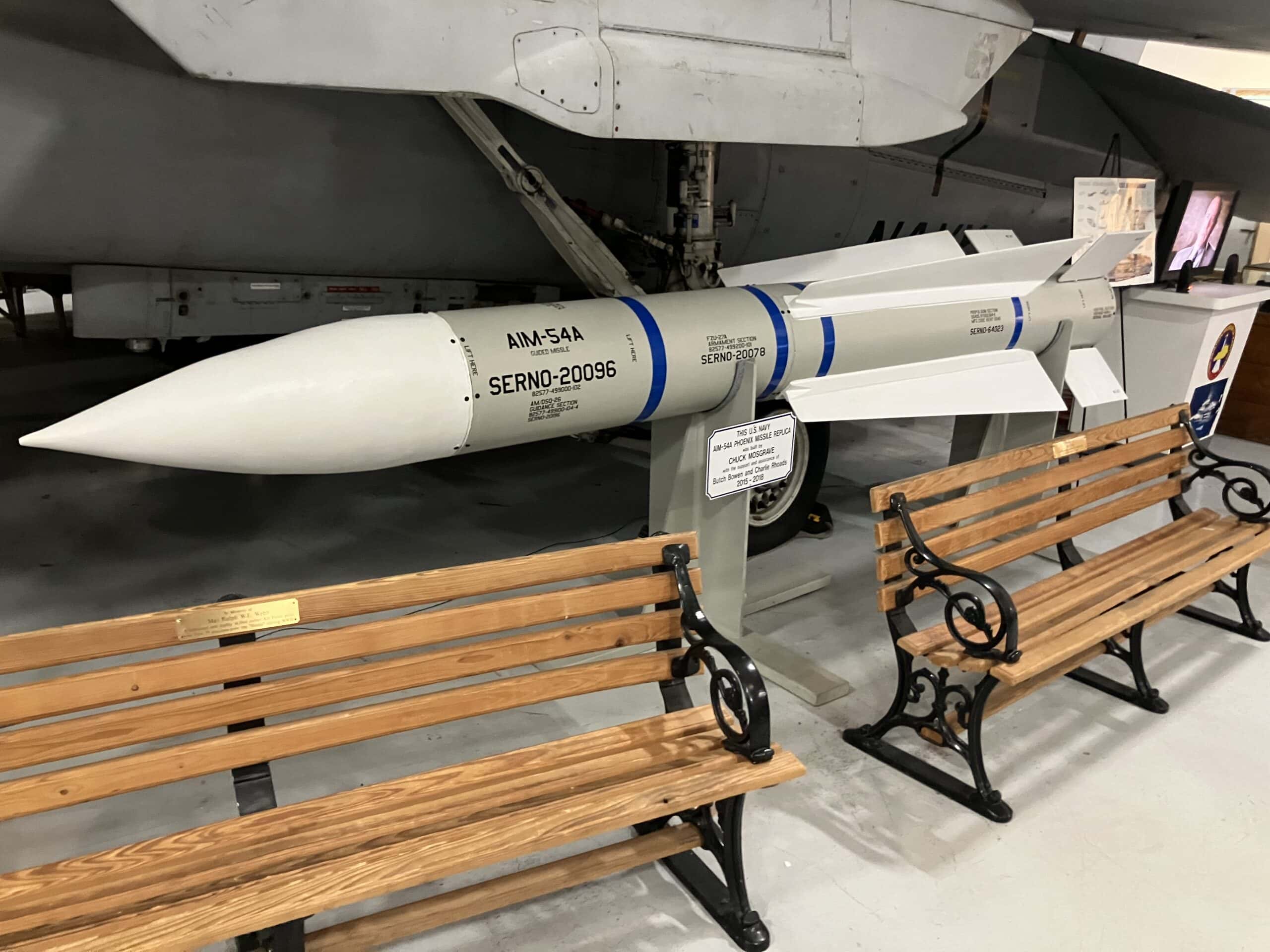
F-14 Tomcat Missile. 19FortyFive.com Image.
The Engine The F-14Tomcat Was Designed To Have: The Pratt & Whitney F401
The F-14 was never meant to fly with the TF30 as its permanent powerplant. When the Navy launched the program in the late 1960s, after the collapse of the troubled F-111B that was supposed to give the fleet a long-range missile carrier, it intended to power the new fighter with the Pratt & Whitney F401 — the naval variant of the F100 engine then being developed for the Air Force’s F-15. The F401 was the engine matched to the airframe’s ambitions, and it was real enough to be tested: a Pratt & Whitney F401-powered Tomcat flew as an early prototype in the 1970s.
The F401 never made it into the fleet. The engine ran into cost growth and reliability problems, and the program was ultimately canceled, leaving the Navy without the powerplant it had planned for.
Rather than delay the fighter, the Navy built the first F-14s around the TF30 instead — explicitly as a bridge-gap measure, an interim engine meant to get the Tomcat into service until something better came along. The defining sin of the F-14’s engine story is that the stopgap became permanent. The temporary engine stayed for the better part of the jet’s life, and the better engine the Navy kept promising itself took until the late 1980s to arrive and far longer to spread across the fleet.
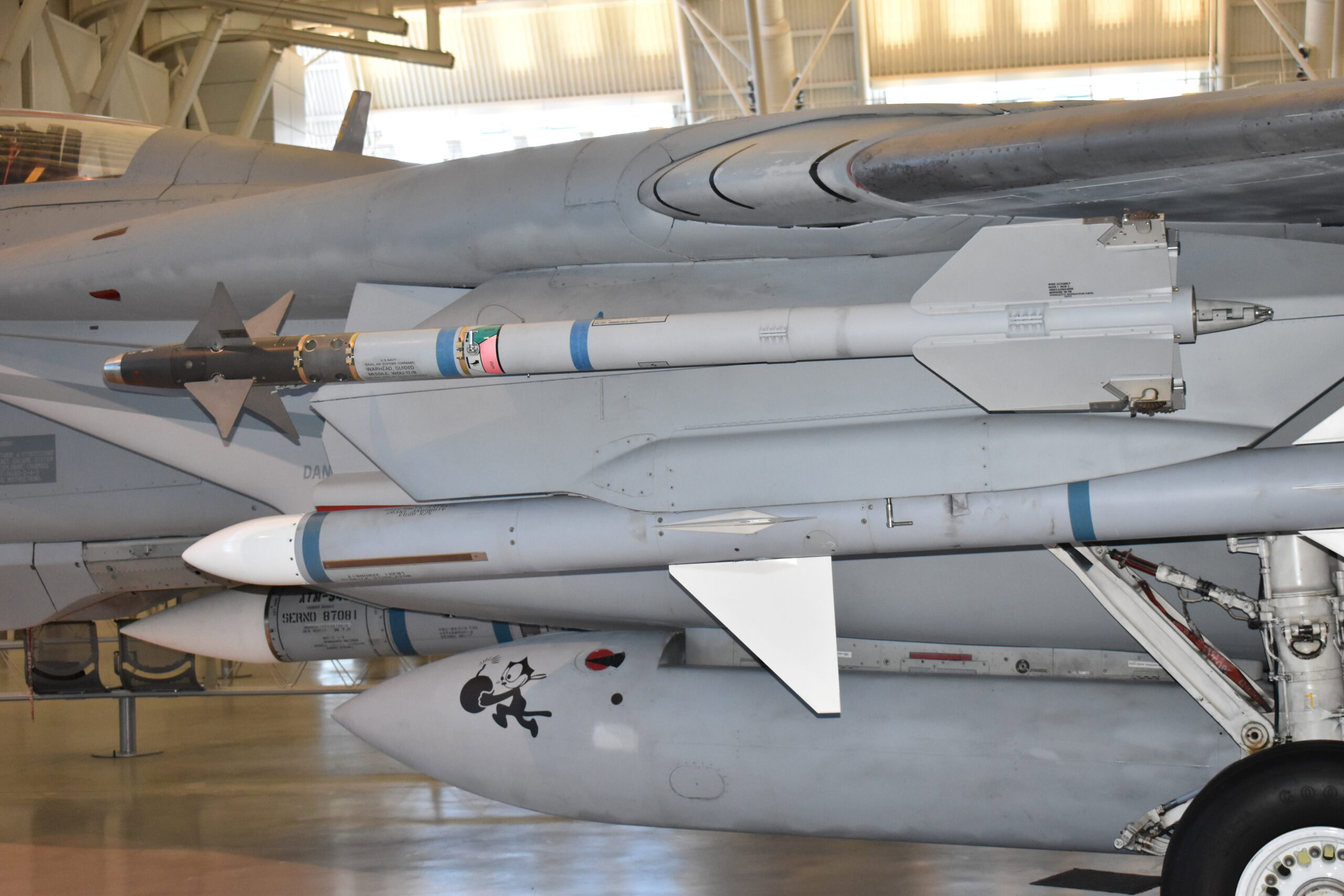
F-14 Tomcat at the Smithsonian. 19FortyFive.com original photo.
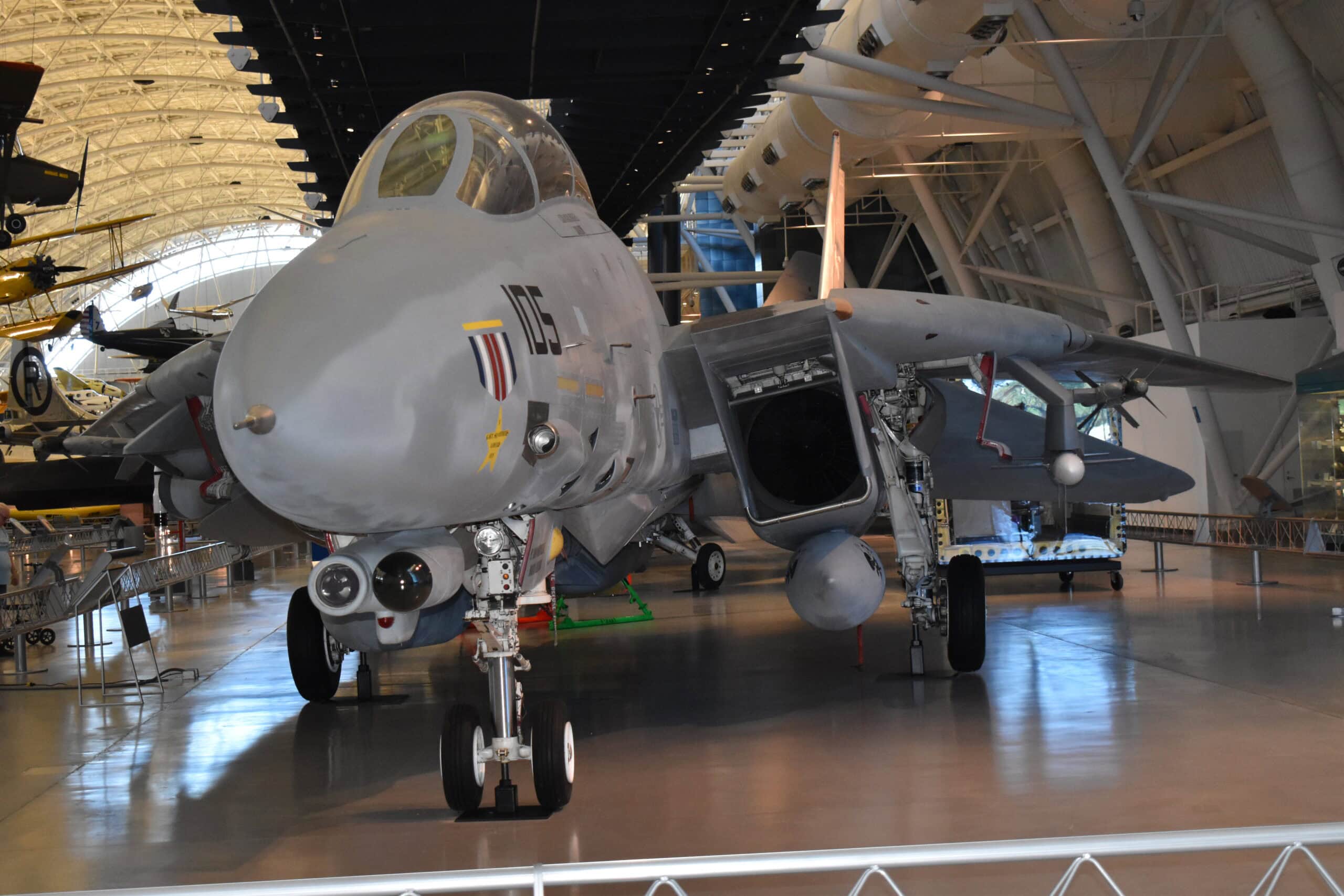
F-14 Tomcat at the Smithsonian. 19FortyFive.com original photo.
Why The TF30 Was The Wrong Engine: A Bomber’s Powerplant In A Dogfighter
The TF30 was not a weak engine, but it was the wrong engine for what the Tomcat had to do. It had been designed for the F-111, a long-range, low-level strike aircraft and bomber whose flight envelope was nothing like that of a carrier fighter. A bomber flies relatively straight and smooth, with gradual throttle changes; it does not routinely pull hard maneuvers or slam the throttles back and forth. A fleet-defense interceptor like the F-14 does exactly that, and the TF30 could not handle it.
Flown at high angles of attack or subjected to rapid throttle transients — the everyday reality of air combat maneuvering — the TF30 was prone to compressor stalls, disruptions of the airflow through the engine that could cause an abrupt loss of power. The problem worsened above 30,000 feet, and at certain altitudes, even the exhaust from launching the F-14’s own missiles could trigger a stall, a quirk that forced engineers to develop a bleed system to manage airflow during launches. Turbine-blade failures were frequent enough that the entire engine bay had to be reinforced to contain the damage when a blade let go. None of this was a secret inside the Navy.
The TF30 was originally rated as adequate for high-speed intercepts, but in the close-in, high-G regime where a fighter actually fights, it was a liability built into the airframe from the first production jet.
The Toll: Lost Jets, A Flat-Spin Failure Mode, And A Pilot’s Death
The mismatch had a body count, in airframes and in lives. By most accounts, the engine’s failures cost the Navy around 40 Tomcats, out of more than 150 F-14s lost to all causes over the program’s life, with the great majority of those losses being early TF30-powered A-models.
Navy Secretary John Lehman told Congress in the mid-1980s that the engine accounted for roughly 28 percent of all F-14 accidents and called the pairing “probably the worst engine-airplane mismatch we have had in many years.” The Navy’s own F-14 program coordinator at the time, Capt. Lee Tillotson, told the Washington Post that from the start, pilots were essentially taught “to fly the engine as a priority over flying the airplane” — a remarkable admission that crews had to nurse the powerplant rather than trust it.

National Naval Aviation Museum F-14. Image Credit: Creative Commons.
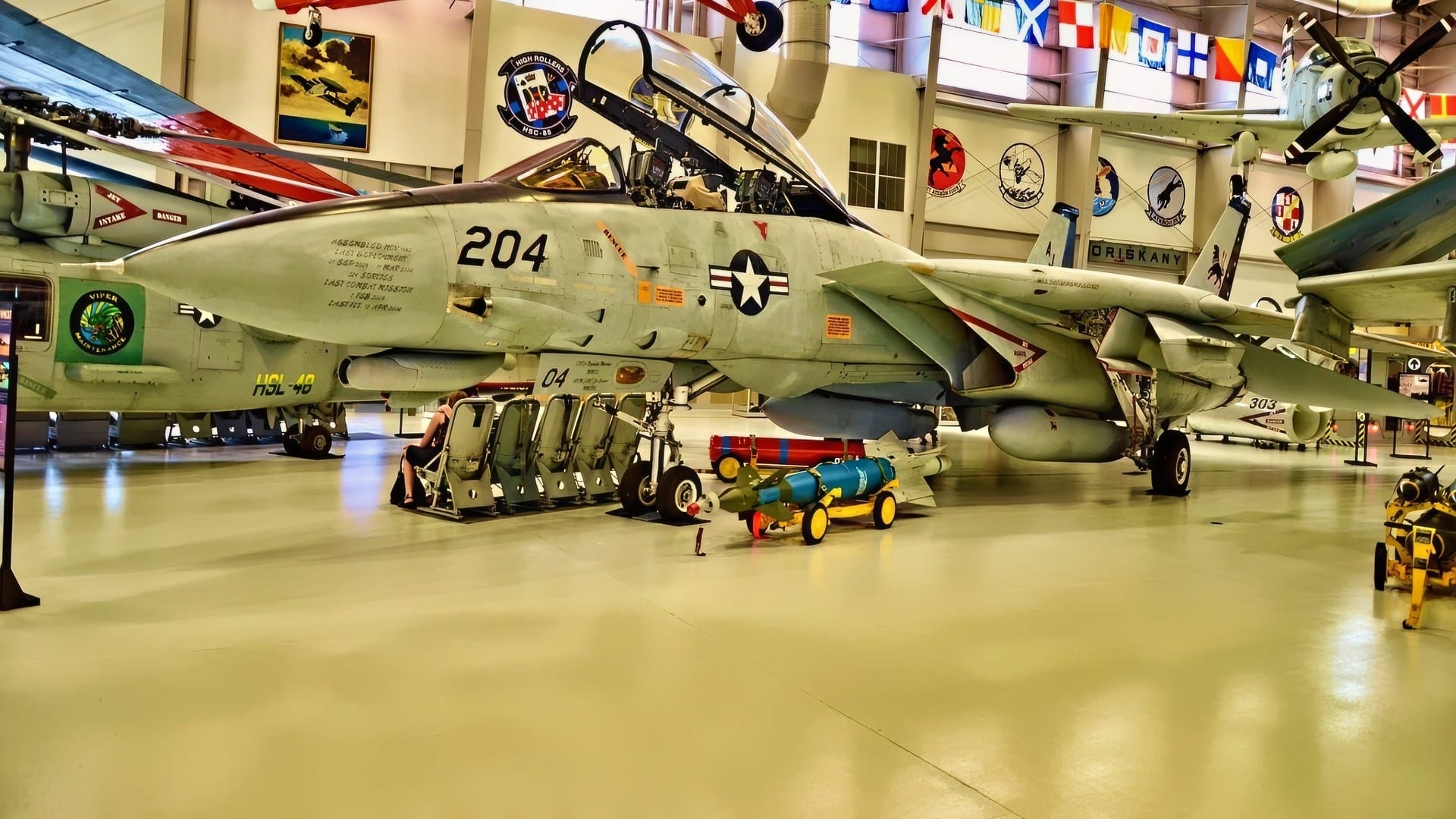
National Naval Aviation Museum. Image Credit: Creative Commons.
The single deadliest characteristic was the flat spin. The F-14’s two engines sat about nine feet apart, far out toward the edges of the wide fuselage, so when one engine stalled and lost thrust while the other kept running, the resulting asymmetry produced a violent yaw that could throw the aircraft into a flat spin — a stable, nose-level rotation that is extremely difficult, and sometimes impossible, to recover from.
That failure mode reached the wider public through the 1986 film Top Gun, in which the character Goose dies after the Tomcat departs controlled flight into a spin; the scene depicted a real TF30 danger, not a Hollywood invention.
The most prominent fatality attributed to the engine was Lt. Kara Hultgreen, the Navy’s first female carrier-based fighter pilot, who was killed on October 25, 1994, during a final approach to the carrier USS Abraham Lincoln. Her left engine suffered a compressor stall and lost power; her radar intercept officer ejected and survived with minor injuries, but Hultgreen did not survive.
The precise cause was the subject of painful public dispute at the time: some accounts of the Navy’s investigation concluded the engine failure was the central fault and explicitly set aside pilot error, while others described a sideslip on approach, with heavy rudder and a large yaw angle, that triggered the very kind of compressor stall the TF30 was notorious for. What is not in dispute is that the engine’s chronic vulnerability to stalls was at the heart of the accident, and that a more tolerant powerplant would have been far less likely to quit at the worst possible moment.
The Interim Fix That Didn’t Work: The TF30-P-414A
The Navy did try to fix the TF30 without replacing it, and the attempt is part of why the saga dragged on. The service moved through successive versions of the engine, and by the early 1980s, the improved TF30-P-414A had become the standard fit, incorporating changes — including more modern engine controls — intended to reduce the stalls. It helped at the margins, but it did not solve the problem because it was not a tuning issue. It was a fundamental mismatch between an engine designed for a bomber’s smooth flight and an airframe built for a fighter’s violence.
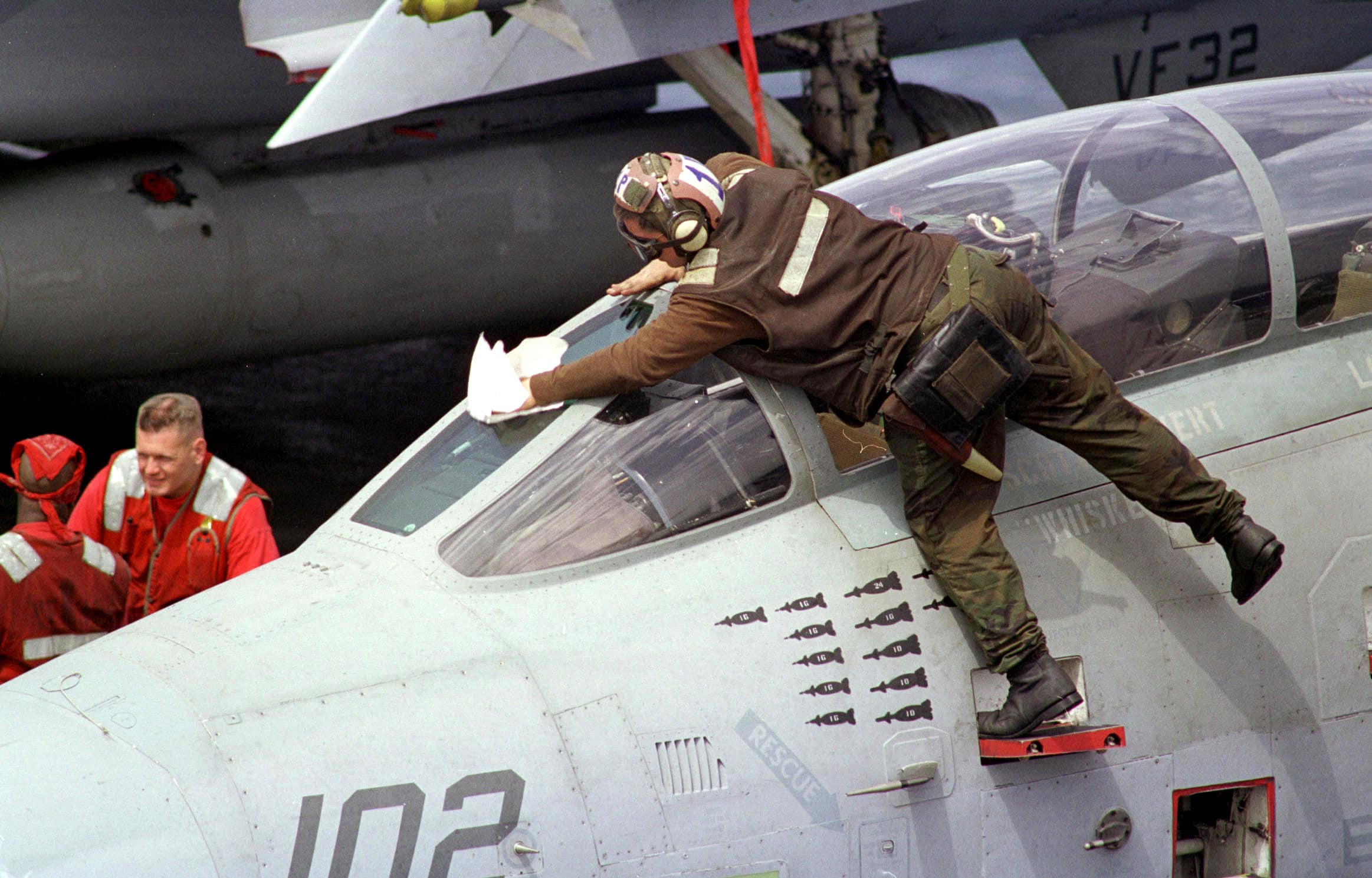
The plane captain of an F-14B Tomcat wipes down the canopy prior to flight operations from the flight deck of the USS Enterprise (CVN 65) on April 8, 1999. Enterprise and its embarked Carrier Air Wing 3 are on station in the Persian Gulf in support of Operation Southern Watch, which is the U.S. and coalition enforcement of the no-fly-zone over Southern Iraq.
(DoD photo by Airman Darryl I. Wood, U.S. Navy. (Released))
Tomcats continued to be lost to engine-related failures after the -414A became standard. The upgrade treated the symptoms while the underlying design flaw remained, and had the Navy tried to carry that engine forward into later, more demanding versions of the F-14, it would have capped the jet’s usefulness and might have forced an earlier retirement.
The interim fix bought time and modestly reduced the danger, but it confirmed what the Navy’s leadership already suspected: the Tomcat needed an entirely different engine, not a better-managed version of the wrong one.
The Real Fix: The General Electric F110 And The F-14B And F-14D
The cure arrived from a different manufacturer. In 1984, the Navy announced it would replace the TF30 with the General Electric F110-GE-400, and the new engine transformed the aircraft. The F110 delivered roughly 30 percent more thrust, eliminated chronic reliability problems, and reduced maintenance demands while increasing the frequency with which the jets could be flown.
It was reliable enough that the Tomcat could be launched from a catapult without lighting afterburners — something the underpowered TF30 jets generally could not do safely — and it let the F-14 cruise comfortably above 30,000 feet, which in the strike role gave the re-engined Tomcat substantially more range and time on station.
The difference showed up most vividly in the very failure mode that had killed crews. Grumman’s chief test pilot, Kurt Schroeder, explained in an interview published toward the end of the 1980s that with the F110, a departure from controlled flight was simple to recover: pulling the throttles back to idle took the thrust effects out of the equation, and because the F110 ran happily at idle, the aircraft recovered — whereas the TF30 did not run well at idle and could not be managed the same way.

F-14 Tomcat Fighter In a Museum Hanger
After years of teaching pilots to baby the engine, the Navy finally had a Tomcat whose crews could concentrate on flying the mission rather than the powerplant.
The new engine produced the variants most people picture when they think of the late-era Tomcat. An interim re-engined version kept the original avionics and was designated the F-14A+, then redesignated the F-14B in May 1991 — with 38 newly built and roughly 43 converted from existing F-14As. The definitive version, the F-14D delivered from 1990, paired the F110 with new APG-71 radar, digital flight controls, and other modern systems, again split between newly built airframes and conversions. The safety improvement was stark: where the TF30-powered A-models were lost by the dozens, only a small number of the F110-powered B and D models were ever lost — a contrast that put the blame squarely on the original engine rather than on the airframe or the men who flew it.
The Transition That Dragged On For Years
The most damning part of the replacement story is how long it took. The F110 began entering F-14 service in 1987 and 1988, but a yo-yoing budget made the fleet-wide swap painfully slow, and money, not engineering, set the pace. By 1996 — nearly a decade after the better engine had entered service — only 126 Tomcats in the fleet flew with the GE engine, while 212 were still flying on the troublesome TF30. TF30-powered F-14As remained in Navy service as late as 2004. The stopgap engine, in other words, outlasted the jet’s entire combat-legend era; the Tomcat was winning its reputation in the public imagination while a large share of the fleet was still strapped to the powerplant the Navy Secretary had called terrible a decade earlier.
The slow pace had consequences and eventually drew scrutiny from Congress, which opened an investigation into the F-14’s engines in 1995, spurred in part by the attention around Hultgreen’s death and the broader safety record. That pressure helped push the fix along, but it could not undo the lost years. When the Navy finally retired the Tomcat in 2006, handing its missions to the F/A-18E/F Super Hornet, the F-14 left service earlier than contemporaries like the F-15 and F-16 that entered service around the same time — and the decades of engine trouble, the maintenance burden, and the readiness costs that came with them were part of why the Navy was ready to let an iconic aircraft go.
The Verdict: A Temporary Compromise That Nearly Defined A Legend
The F-14’s engine saga is the clearest illustration of a hard lesson in military aviation: the best airframe paired with the wrong engine underperforms, and a compromise sold as temporary can shadow an aircraft for its entire life.
The Tomcat was a superb design — fast, long-legged, and built around a radar and missile combination no other fighter of its era could match — but for most of its career it was shackled to a powerplant meant for a bomber, and it paid for that mismatch in lost jets, lost lives, and a reputation among the people who flew it as a magnificent aircraft running on, as some crews put it, “two pieces of junk.” The fighter only became the fully capable machine of its legend once it finally received the General Electric F110, the engine it should have had from the start.
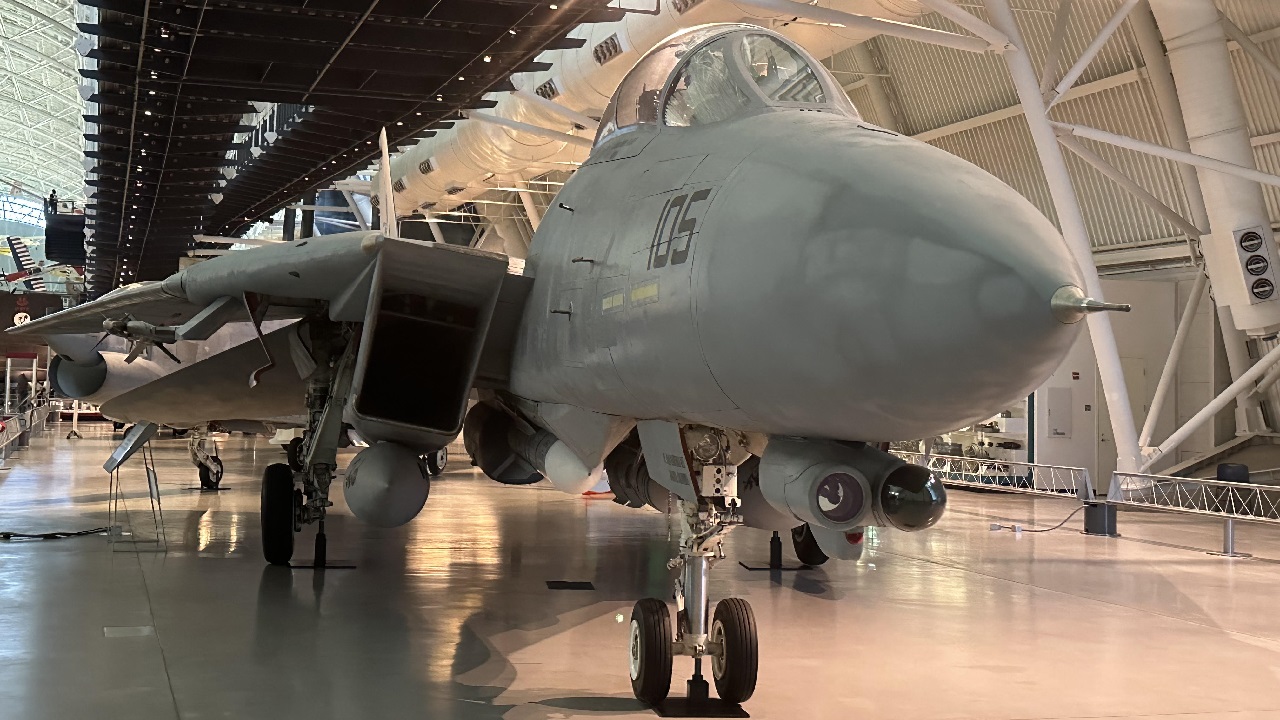
F-14 Tomcat. Image taken at National Air and Space Museum on October 1, 2022. Image by 19FortyFive.
The deeper lesson is about how the compromise persisted. The F401 was canceled to save money and avoid risk; the TF30 was accepted as a bridge; the interim -414A upgrade was bought instead of a real replacement; and even after the F110 proved itself, a constrained budget stretched the swap out over nearly a decade while pilots kept flying the dangerous engine.
None of those decisions looked catastrophic on its own, but together they kept the wrong engine bolted to one of the finest fighters America ever built for thirty years. The Tomcat earned its place in history despite its engines, not because of them — and it is worth remembering that the jet the world fell in love with on screen was, for much of its life, quietly fighting the powerplant under its own wings.
About the Author: Harry J. Kazianis
Harry J. Kazianis (@Grecianformula) was the former Senior Director of National Security Affairs at the Center for the National Interest (CFTNI), a foreign policy think tank founded by Richard Nixon based in Washington, DC. Harry has over a decade of experience in think tanks and national security publishing. His ideas have been published in the NY Times, The Washington Post, The Wall Street Journal, CNN, and many other outlets worldwide. He has held positions at CSIS, the Heritage Foundation, the University of Nottingham, and several other institutions related to national security research and studies. He is the former Executive Editor of the National Interest and the Diplomat. He holds a Master’s degree focusing on international affairs from Harvard University.

