
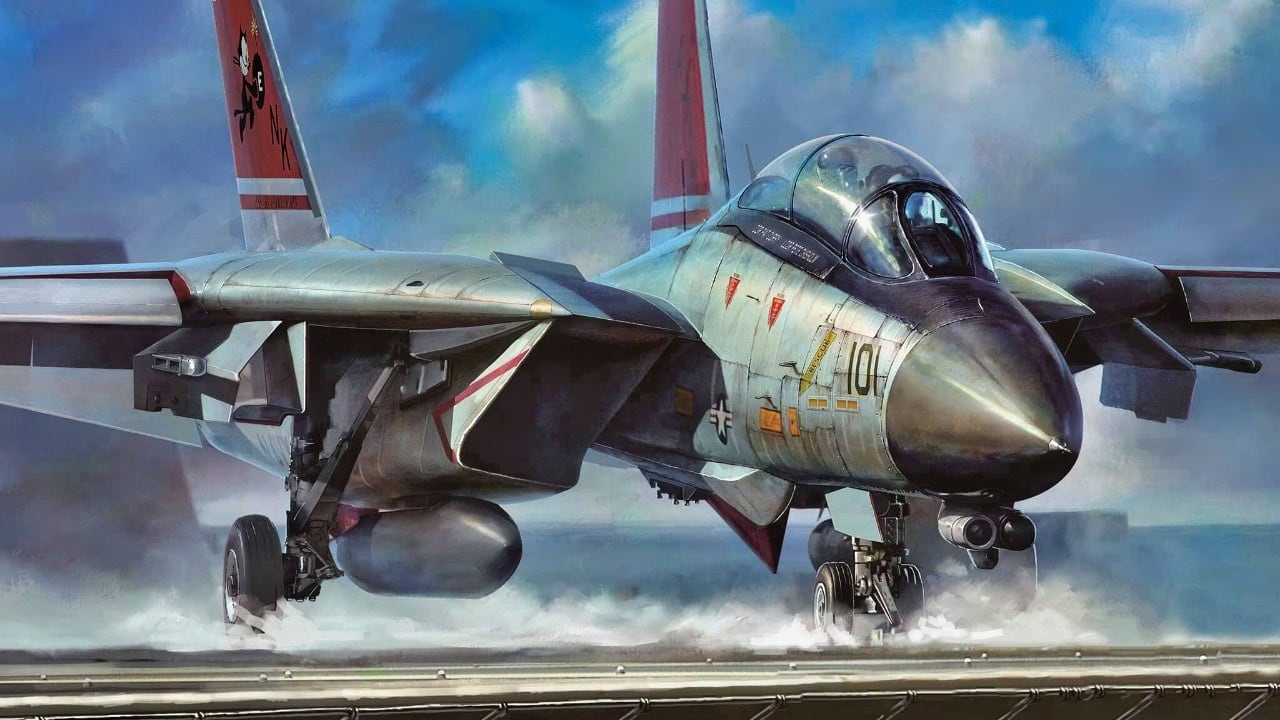
Summary and Key Points: The F-14 Tomcat and F-15 Eagle were launched within two years of each other, yet only the Eagle continued to evolve into today’s F-15EX.
-The Tomcat’s retirement in 2006 was driven more by sustainability than by performance: demanding maintenance, aging components, and recurring safety concerns that made every sortie expensive and risky.
-Even with standout strengths—Mach 2.3 speed, the AIM-54 Phoenix’s long reach, and variable-sweep wings—the platform became hard to keep reliable at scale.
-A modernized “Super Tomcat” might have helped bridge carrier-air gaps, but only if those core burdens were truly solved.
The F-14 Flew Mach 2.3—So Why Did It Retire in 2006 While the F-15 Keeps Flying?
The U.S. Navy’s F-14 and the U.S. Air Force’s F-15 Eagle are both fourth-generation jet fighters. The Tomcat made its maiden flight on September 22, 1974, and the Eagle on January 9, 1976. The Eagle has not been retired—even in the age of stealth fighters, with sixth-generation fighters soon to come, the Boeing F-15EX Eagle II still flies.
Could the F-14 have done the same? Did the Navy retire the Tomcat too soon?
When Was the Tomcat Retired?
The F-14 was officially retired on October 4, 2006, although the final flight took place on September 22 of that year, poetically coinciding with the 32nd anniversary of the warbird’s maiden flight. The particular Tomcat that took the final flight, an F-14D variant affectionately nicknamed “Felix 101,” is now preserved for posterity at the Cradle of Aviation Museum in Garden City, New York.
The Tomcat was last built in 1991—the same year the plane demonstrated its combat effectiveness yet again, this time in the Persian Gulf War—after a total production run of 712 airframes. (Production started in 1969, when the Vietnam War still raged.)
Why Was the Tomcat Retired?
Brad Hill went over the reasons for the Tomcat’s retirement in an October 17, 2024 article for SlashGear:
“Unfortunately, the classic fighter couldn’t keep up with the technology. …
“Then there were the maintenance costs the Navy had to consider, which were piling up after every sortie. …
“One would think that an older aircraft wouldn’t be as expensive to repair. However, when a plane requires anywhere between 30-60 hours of maintenance time for every hour of flight time, the bill gets to be a bit much. Virtually every vital component from the wing actuators to the radar electronics of the Tomcat continuously needed replacement. The Navy repurposed the platform in the late ’90s to use the LANTIRN system, which allowed it to fly low to the ground at night to attack ground targets. Unfortunately, that did not solve the maintenance problem, and almost a decade later, the iconic Tomcat was decommissioned.”
Safety issues also abounded: “When you’re flying faster than the speed of sound near 50,000 feet above the Earth’s surface, pilots want an aircraft they can rely on. All of a jet’s theoretical capabilities mean nothing if it can’t get you home safe after a routine flight without encountering adversaries. There was an instance in 1973 when a Tomcat shot itself out of the air. A missile didn’t release properly and instead launched debris into the engine’s intake, forcing the pilot and his Radar Intercept Officer (RIO) to eject.
“Furthermore, the F-14 was prone to what’s called a flat spin, where the jet will spin while it’s horizontal. The pilot and RIO have no choice but to eject when that occurs, but ejecting isn’t very safe under those conditions. We’ve all seen ‘Top Gun’ and remember the tragic scene where Goose dies in the same scenario. That was a very real possibility in real life.”
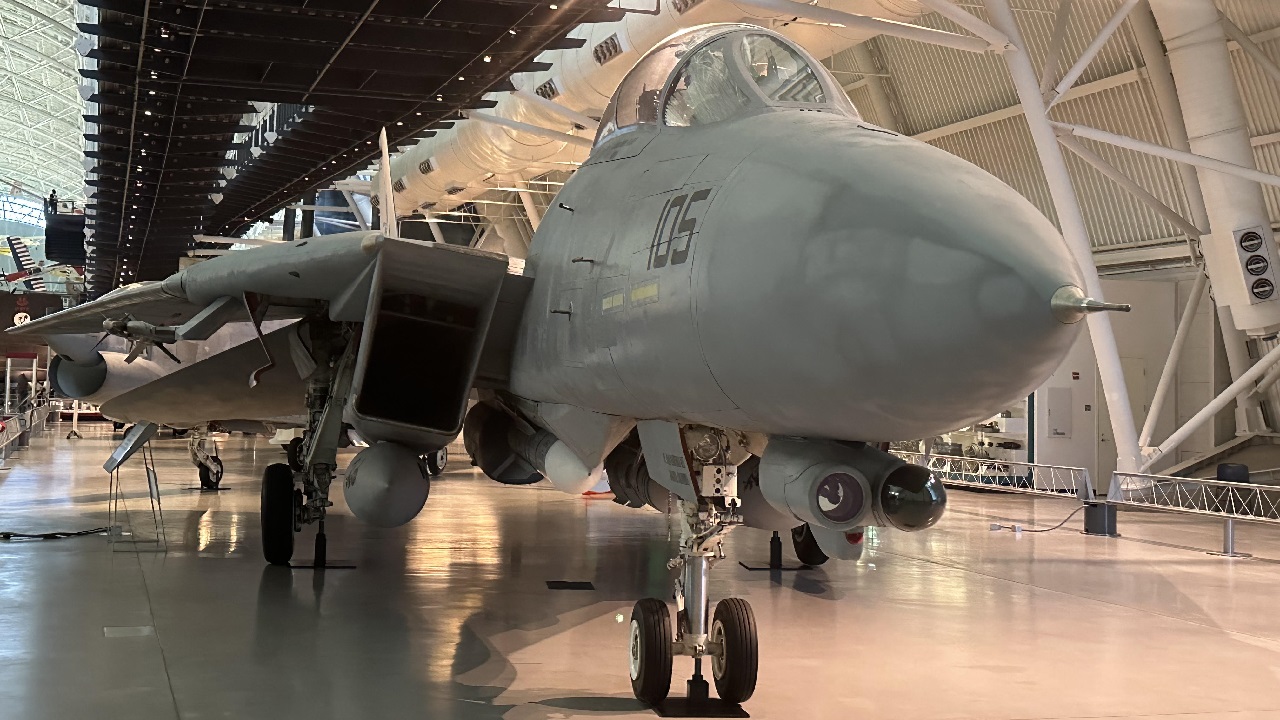
F-14 Tomcat. Image taken at National Air and Space Museum on October 1, 2022. Image by 19FortyFive.
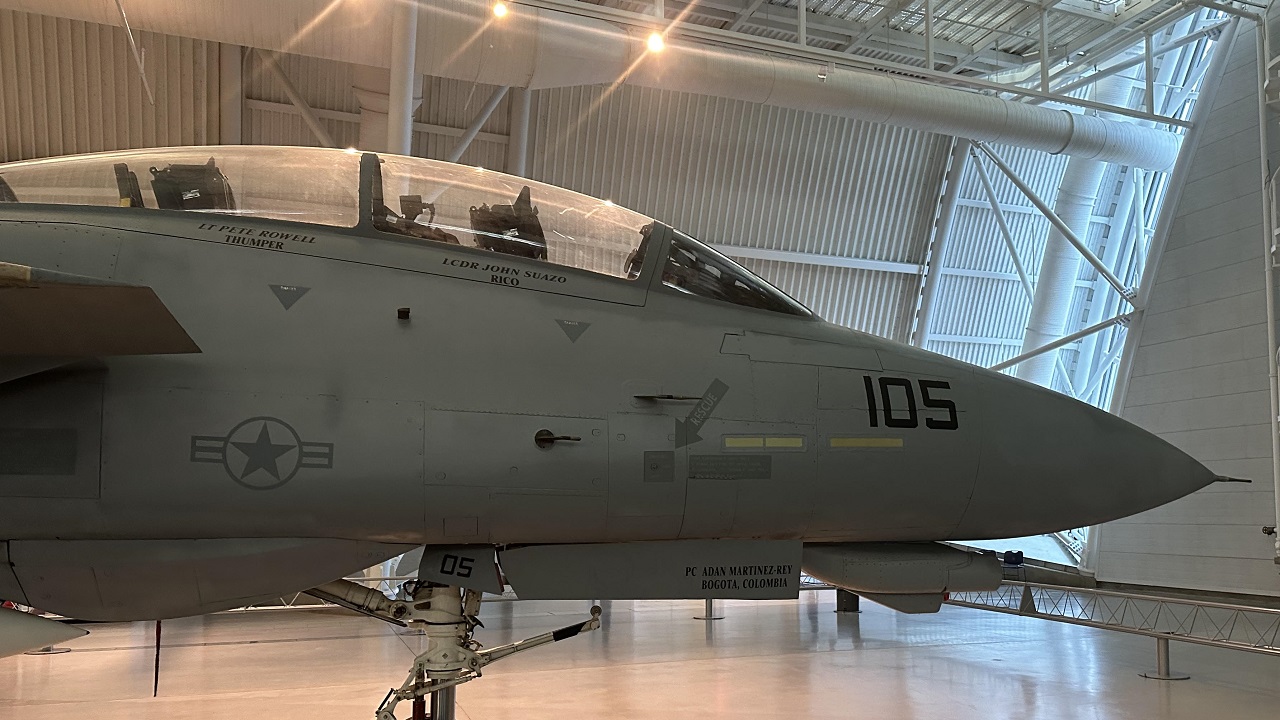
F-14 Tomcat. Image taken at National Air and Space Museum on October 1, 2022. Image by 19FortyFive.
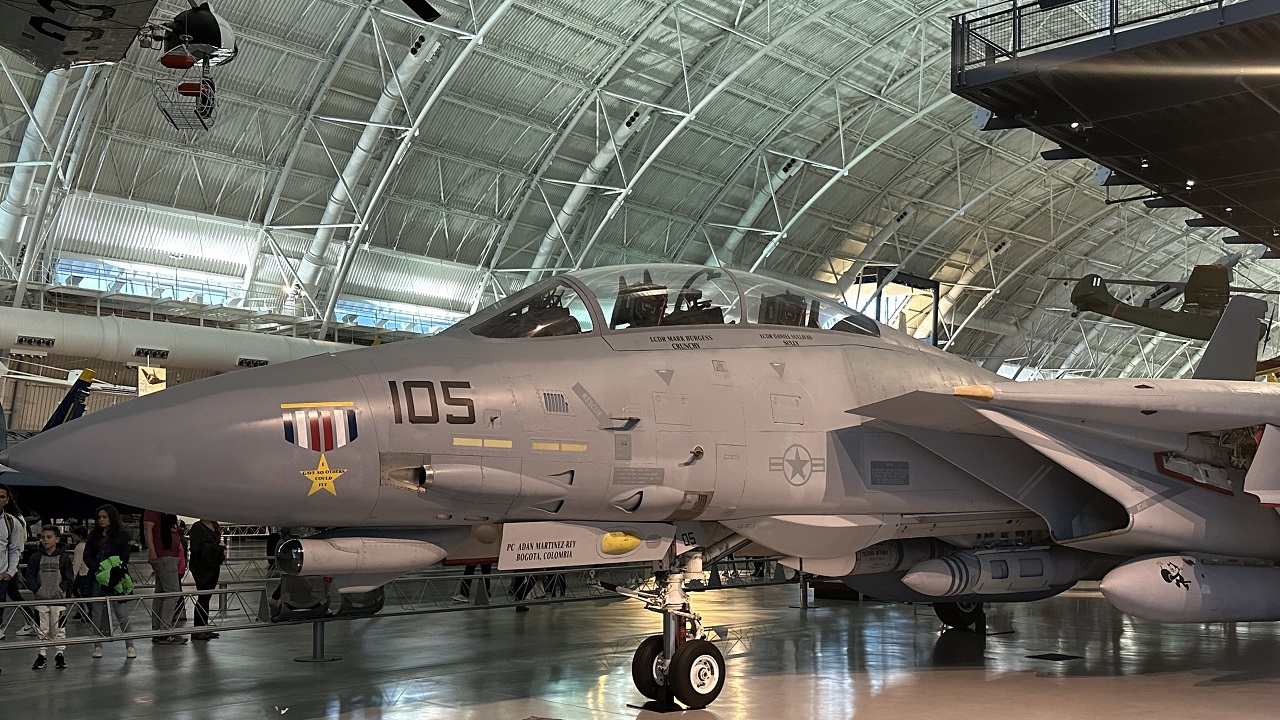
F-14 Tomcat. Image Taken at U.S. Air and Space Museum outside of Washington, D.C. Image Credit: 19FortyFive.com
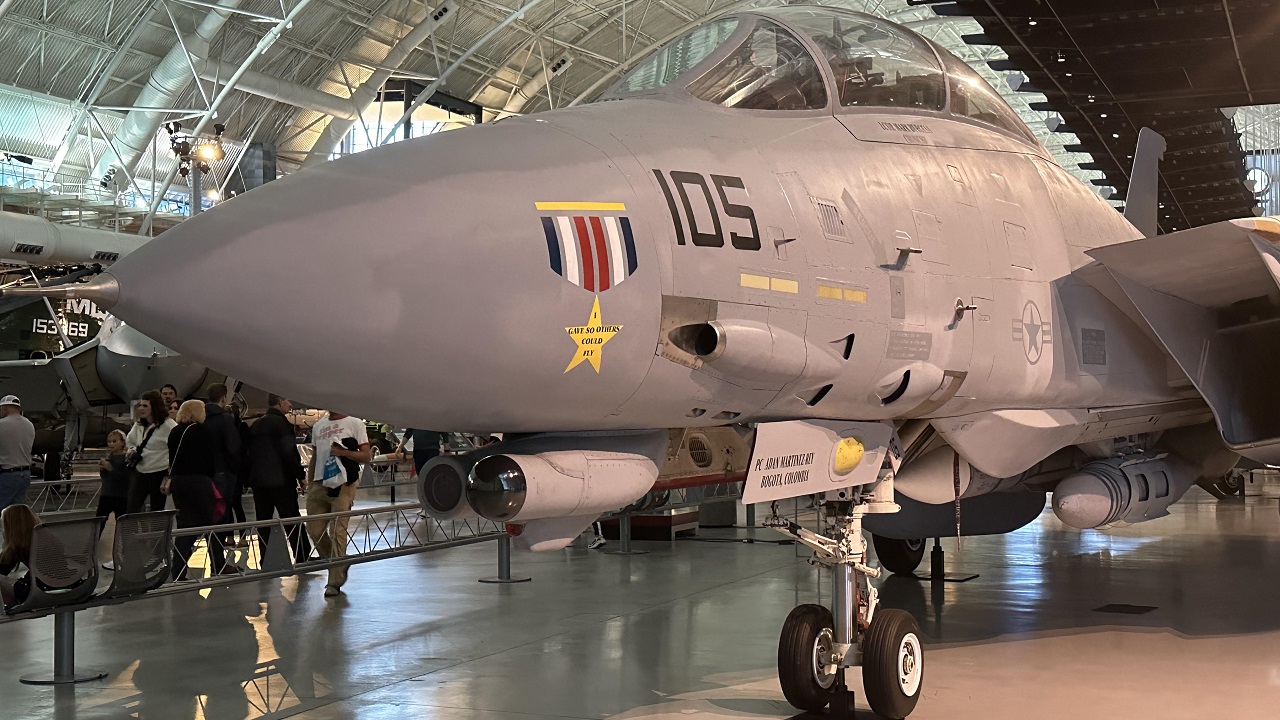
F-14 Tomcat. Image taken at National Air and Space Museum on October 1, 2022. Image by 19FortyFive.
F-14 Tomcat vs. F/A-18 Super Hornet: a Head-to-Head Comparison
The Super Hornet may lack the cool factor of the F-14, but it is safer, more reliable, and less expensive than the Tomcat. But how do these two warbirds stack up in other categories?
Tomcat Advantages:
-Greater speed: Mach 2.3 vs. Mach 1.8
-Superior target engagement distance: the Tomcat’s AIM-54 Phoenix missile could reach all the way out to 100 nautical miles, traversing that distance at Mach 5. As for the AIM-120 Advanced Medium Range Air-to-Air Missile (AMRAAM) wielded by the Super Hornet, impressive though it truly is, its maximum range tops off at 86 nautical miles.
-Multiple target engagement capability: On January 21, 1973, an F-14A crewed by Commander John R. “Smoke” Wilson Jr. and his radar intercept officer, Lieutenant Commander Jack Hawver, fired six Phoenix missiles against six different target drones simultaneously. This multi-targeting ability is meaningful considering China or Russia might try to overwhelm superior U.S. forces with sheer quantity in any potential war.
-Variable-sweep wings: The Tomcat’s wings offer multiple advantages, such as better low-speed lift, high-speed efficiency, fuel savings (although granted, this one’s relative, as the F-14 was still a gas guzzler), shorter takeoff & landing, tactical flexibility, and mission versatility.
Super Hornet Advantages:
-Safer, more reliable, more cost-effective, and less maintenance-intensive (as already mentioned).
-Better dogfight performance at slower speeds and shorter engagement distances: This helps make up for the lower max airspeed.
-Smaller radar cross-section: Though not a stealth fighter, the 4.5-generation F/A-18E/F does have a smaller radar signature than the F-14, thus providing a smaller target for enemy radar operators to lock in on, and improving the American aviators’ survival chances.
Tom “Trots” Trotter, a former naval aviator with experience in both warbirds, put it best, equating the Tomcat to an analogue platform, and the Hornet to a digital one.
As “Trots” tells the Fighter Pilots Podcast, “I think any Tomcat can give a Hornet a run, but you know, the Hornet’s way better in the phone booth. The slow fight, gunning a guy, going at a high angle of attack.”
Was the Tomcat Indeed Retired Too Early?
Recalling the F-15EX Eagle II, perhaps the F-14 could have continued to fly.
The Air Force still sees the Eagle II as a vital platform to mitigate the shortage of stealth fighters that resulted from the short-sighted 2009 decision to kill the F-22 Raptor after 187 airframes were built.
With the F/A-18E/F Super Hornet now being slated for retirement (the final fuselages are now being built)—and with the uncertain status of its eventual sixth-generation successor, the F/A-XX, a hypothetical 4.5-generation version of the would-be Super Tomcat might have filled in the gaps while the Navy slowly brought more F-35Cs online.
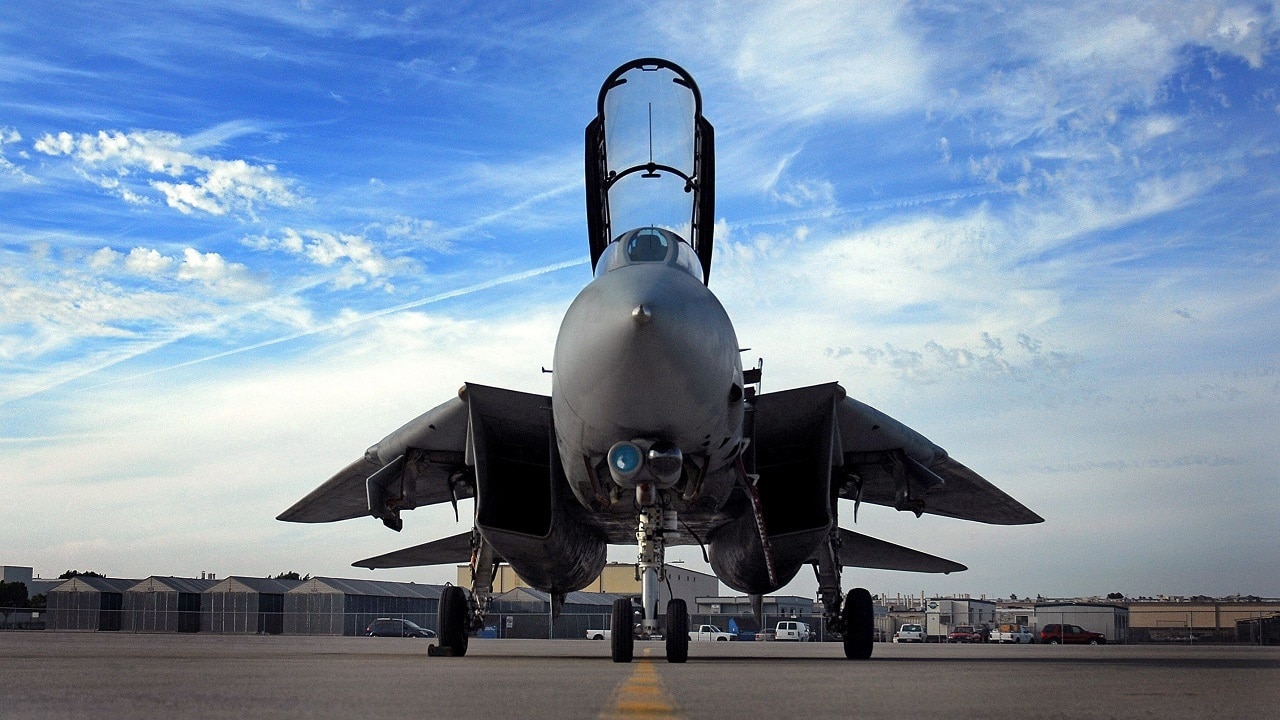
A U.S. Navy F-14D Tomcat aircraft from Fighter Squadron 31, sits on the flight line after completing its final flight at Naval Base North Island, San Diego, Calif., on Sept. 29, 2006. After 36 years of service, the Tomcat is being replaced by the F/A-18E/F Super Hornet aircraft.
As for the aforementioned reliability and safety issues, Northrop Grumman could have worked out some of the bugs in the system.
Oh, what might have been.
About the Author: Christian D. Orr, Defense Expert
Christian D. Orr is a Senior Defense Editor. He is a former Air Force Security Forces officer, Federal law enforcement officer, and private military contractor (with assignments worked in Iraq, the United Arab Emirates, Kosovo, Japan, Germany, and the Pentagon). Chris holds a B.A. in International Relations from the University of Southern California (USC) and an M.A. in Intelligence Studies (concentration in Terrorism Studies) from American Military University (AMU). He is also the author of the newly published book “Five Decades of a Fabulous Firearm: Celebrating the 50th Anniversary of the Beretta 92 Pistol Series.”