
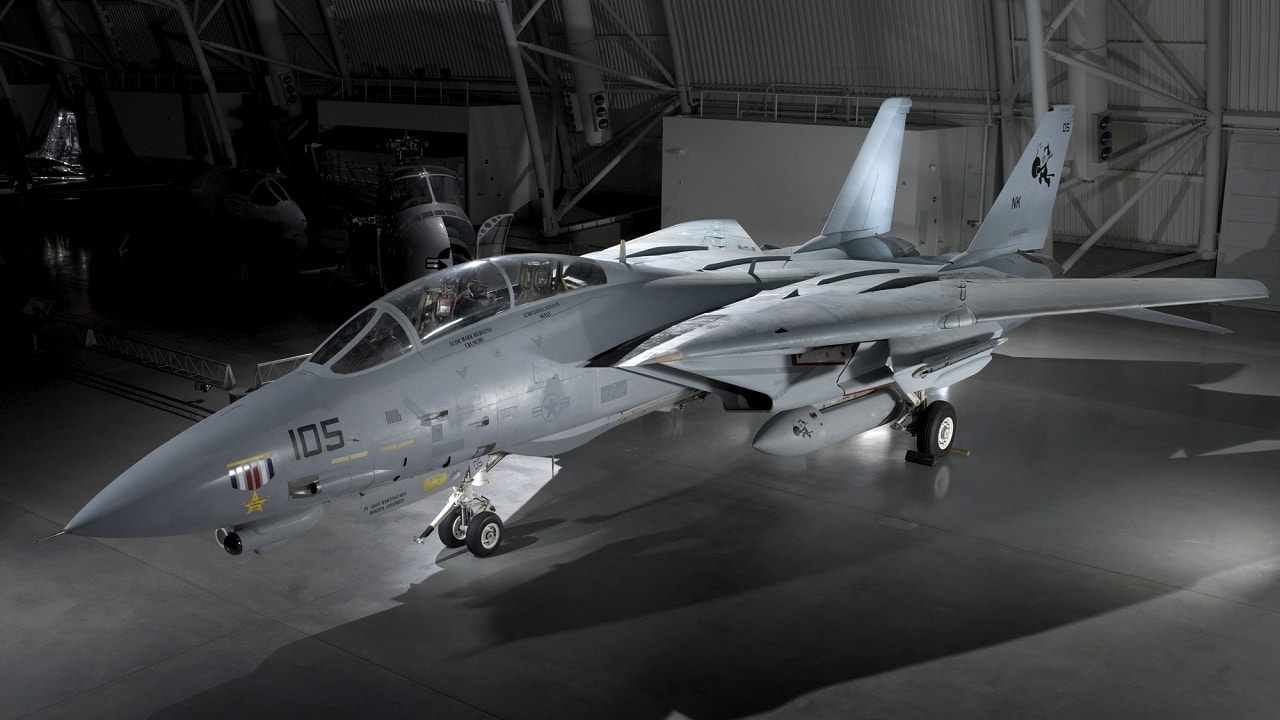
Key Points and Summary – The F-14D “Super Tomcat” was the final and most advanced evolution of the legendary fighter, featuring powerful GE F110 engines, a digital glass cockpit, and the upgraded AN/APG-71 radar.
-Despite correcting the flaws of earlier models and offering superior long-range interception and precision strike capabilities, the F-14D arrived just as the Cold War ended.
-With the Soviet threat gone and defense budgets shrinking, the Navy prioritized the cheaper, multirole F/A-18, leaving the high-maintenance but technically dominant Super Tomcat to become a victim of bad timing and shifting strategic priorities.
The Ultimate F-14: Why the Navy Retired the ‘Super Tomcat’ Despite Its Technical Dominance
The F-14D represented the ultimate evolution of the Tomcat lineage. The D-variant was not just a minor upgrade but a fundamentally modernized aircraft. Yet, the F-14D didn’t enter service until the Cold War had ended, when Navy aviation priorities were shifting, leaving the F-14D mostly irrelevant, despite its technical prowess.
What the F-14D was
Officially designated the F-14D “Super Tomcat,” the aircraft didn’t just feature an engine upgrade but a comprehensive avionics, sensor, and propulsion overhaul. Designed for fleet air defense as a long-range interceptor and later as a precision-strike platform, the F-14D was neither a multirole workhorse like the F/A-18 nor a stealth aircraft like the F-35C. Instead, the F-14D was optimized for range, speed, and situational awareness.
Historical context
The original F-14 was conceived to counter Soviet bombers and anti-ship cruise missiles. But the F-14A/B was limited; the TF30 engines had various issues, and the avionics were outdated by the end of the Cold War. The F-14D addressed these limitations—with new engines, a new digital cockpit, and improved radar.
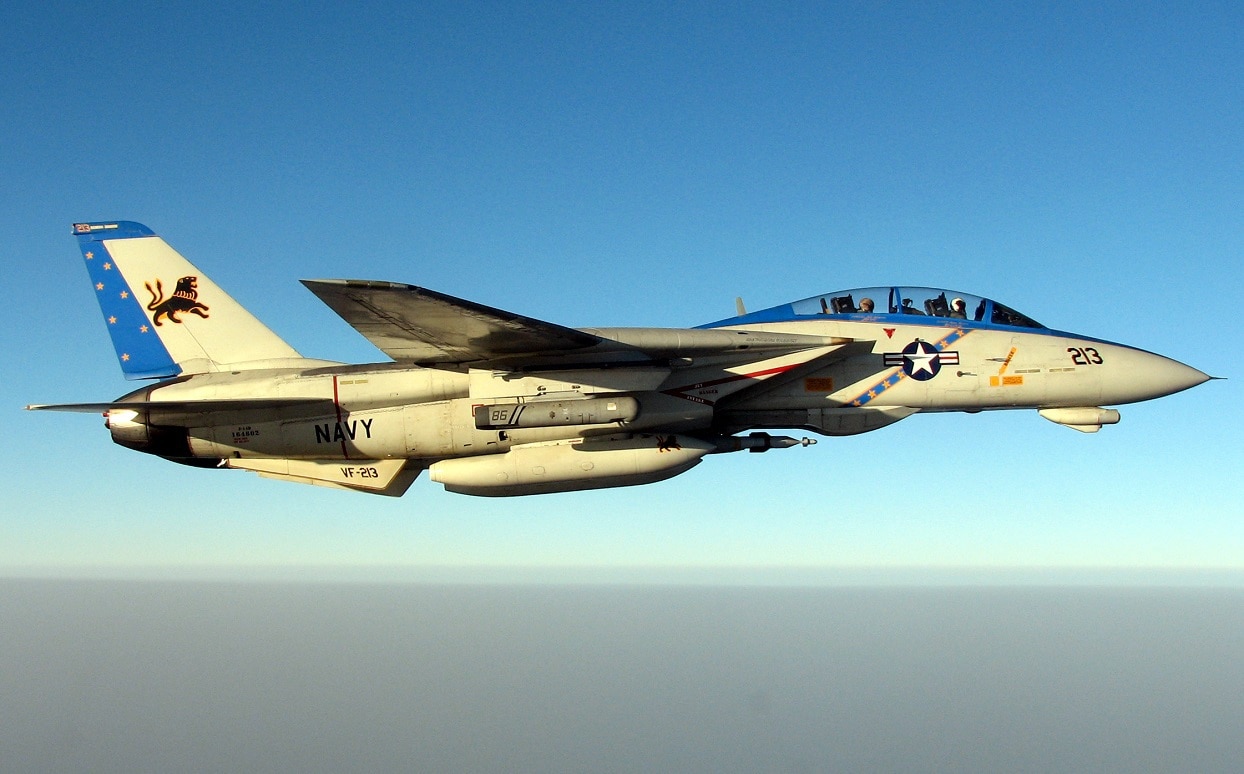
Persian Gulf (Oct. 10, 2005) A specially painted F-14D Tomcat, assigned to the ÒBlacklionsÓ of Fighter Squadron Two One Three (VF-213), conducts a mission over the Persian Gulf. VF-213 is assigned to Carrier Air Wing Eight (CVW-8), currently embarked aboard the Nimitz-class aircraft carrier USS Theodore Roosevelt (CVN 71). U.S. Navy photo by Lt.j.g. Scott Timmester (RELEASED)
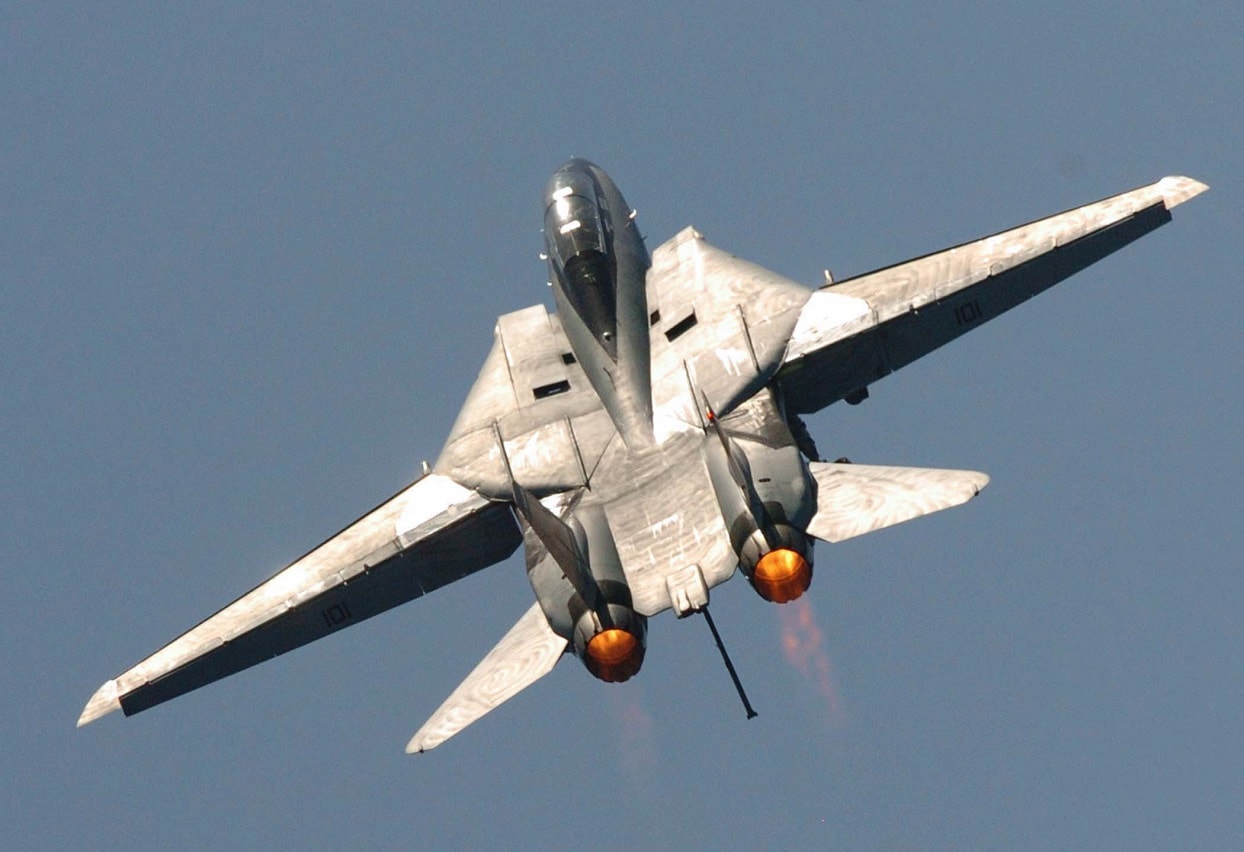
An F-14 Tomcat pulls up after performing a fly-by past the aircraft carrier USS Dwight D. Eisenhower (CVN 69) as the ship operates in the Atlantic Ocean on June 19, 2006. DoD photo by Petty Officer 2nd Class Miguel A. Contreras, U.S. Navy. (Released)
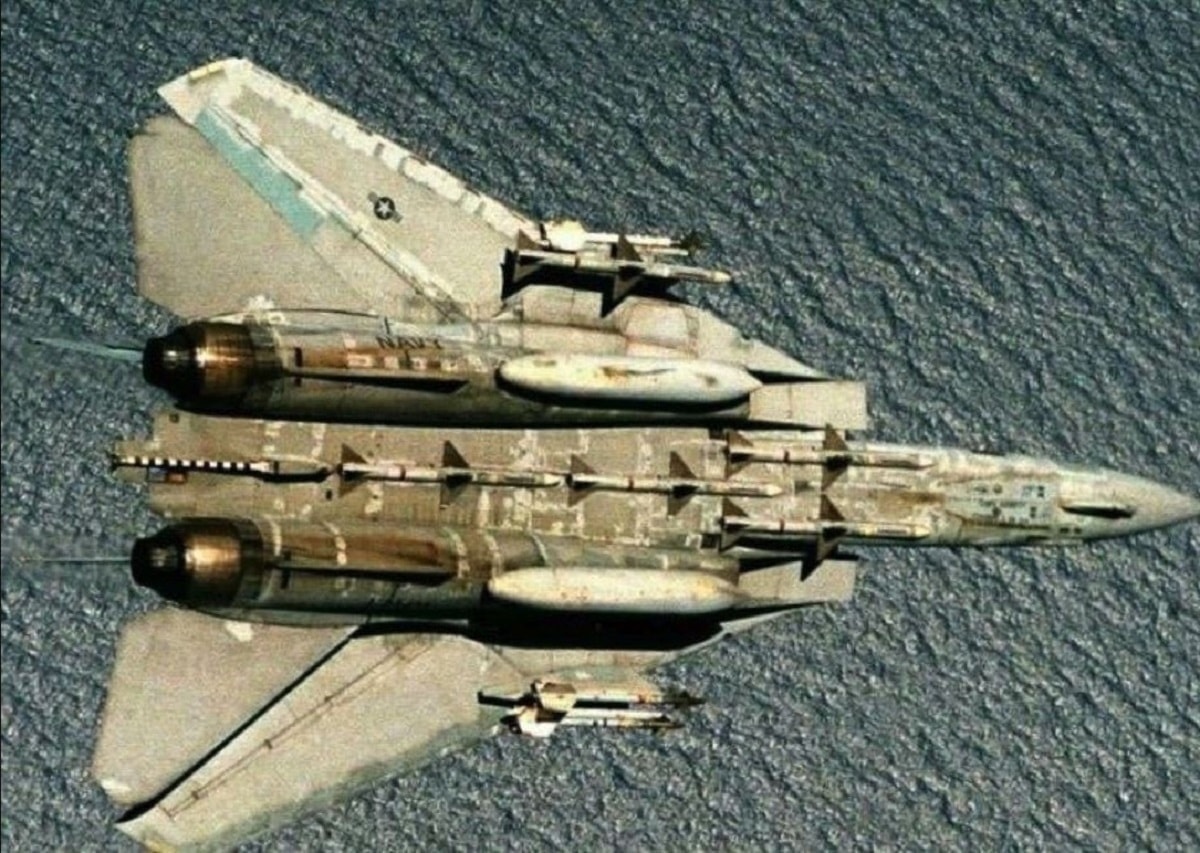
F-14 Tomcat
Development of the D-variant spanned the end of the Cold War and into the post-Cold War period. By the time the F-14D had matured, the threat environment had shifted. The Soviet Union no longer existed. And in the absence of the US’s mortal enemy, defense budgets constricted. On arrival, the F-14D seemed superfluous, despite its technical capabilities.
Technical profile
The F-14D benefited from upgraded engines, specifically the GE F110-GE-400, which offered a massive thrust increase and eliminated compressor stall issues that had plagued the TF30s. The radar was upgraded from the original AWG-9 to the AN/APG-71, which offered improved multi-target tracking and enhanced look-down/shoot-down capability.
The cockpit was transformed, with glass displays and partially digital flight controls, improving the crew’s workload management relative to earlier variants.
New weapons were integrated, including the AIM-54 Phoenix, AIM-120 AMRAAM (to a limited extent), and precision-guided munitions.
Still, the features that made the original F-14 valuable were retained, such as the variable-geometry wings and the ability to dominate in the long-range intercept role. But the finished product was a very different, far more capable aircraft than the earlier F-14s.
Tactical Employment
The primary missions of the F-14D were fleet air defense at extreme range. The F-14D had a unique strength: detecting and engaging threats far beyond visual range (BVR).
The two-crew concept was critical in this function, allowing the pilot to focus on flying and tactics, while the backseat RIO managed the sensors and weapons.
Later in life, the F-14D was even adapted for precision-strike missions and overland ISR support; the aircraft could act as both an airborne sensor node and a missile truck—departures from its original intent. Regardless of the exact mission, the F-14D excelled in scenarios where range and persistence mattered.
Falling Short
Yet the F-14D never reached its full potential. Procurement was truncated. Only 55 new F-14Ds were ever built, while a few more were converted from earlier models.
The aircraft was subject to an intensive maintenance regime, which reduced the upside—especially given the airframe’s aging.
The aircraft’s shortcomings were exacerbated by the Navy’s strategic shift, too, toward multirole simplicity, like the F/A-18, to lower operating costs in the post-Cold War fiscal environment, for which the F/A-18 was better suited; it offered the Navy easier sustainment and a higher sortie generation rate. So while the F-14D was exceptional in its own right, it was a difficult platform at scale.
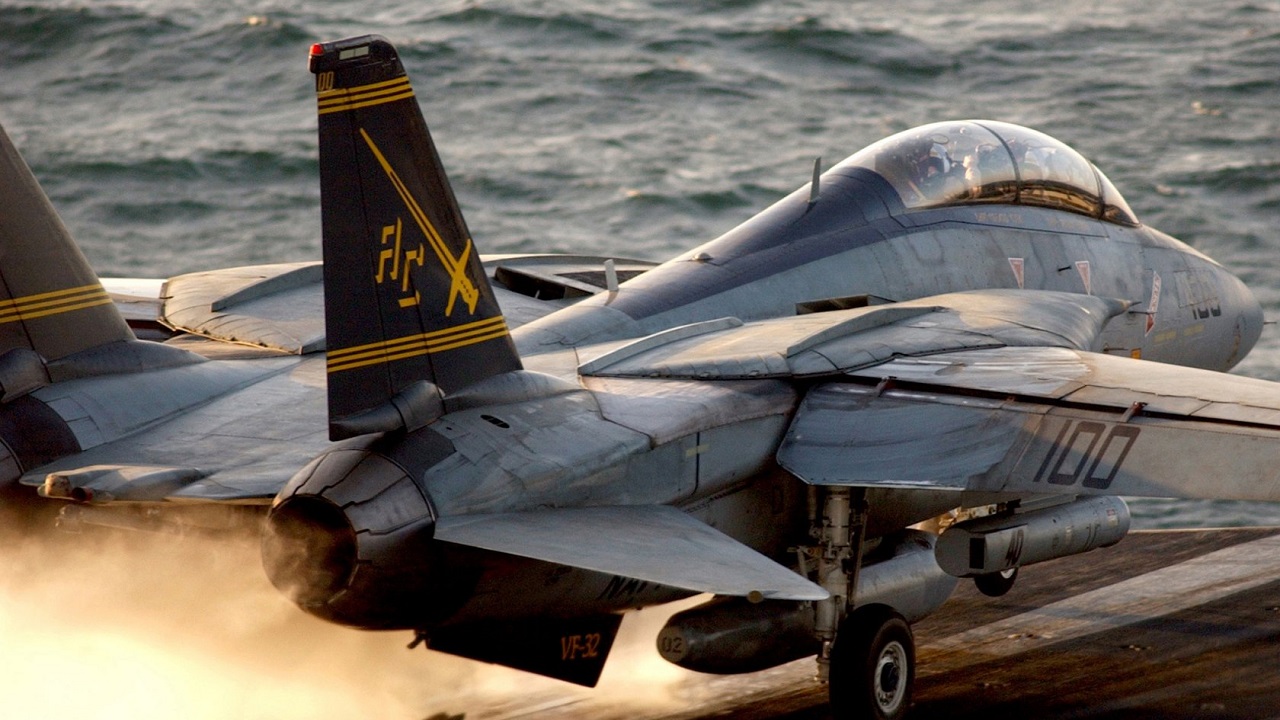
F-14 Tomcat. Image Credit: Creative Commons.
Strategic implications of the F-14D
The F-14D illustrated a recurring tension in military weapons development, between specialized dominance and scaled capability.
The aircraft embodied an air superiority philosophy and a long-range defense thinking. Still, its retirement signaled the acceptance of shorter-range air wings that relied more on tanking and networks.
The F-14D was not a failure. It was a victim of bad timing and shifting priorities—one of many weapons systems conceived during the Cold War, but only implemented after, during the less acute unipolar moment of the 1990s and early 2000s.
Still, the F-14D demonstrated concretely that the Tomcat design still had room to grow.
Today, the aircraft is remembered as an example of how the F-14 was intended to operate.
About the Author: Aviation Expert Harrison Kass
Harrison Kass is an attorney and journalist covering national security, technology, and politics. Previously, he was a political staffer and candidate, and a US Air Force pilot selectee. He holds a JD from the University of Oregon and a master’s in global journalism and international relations from NYU.