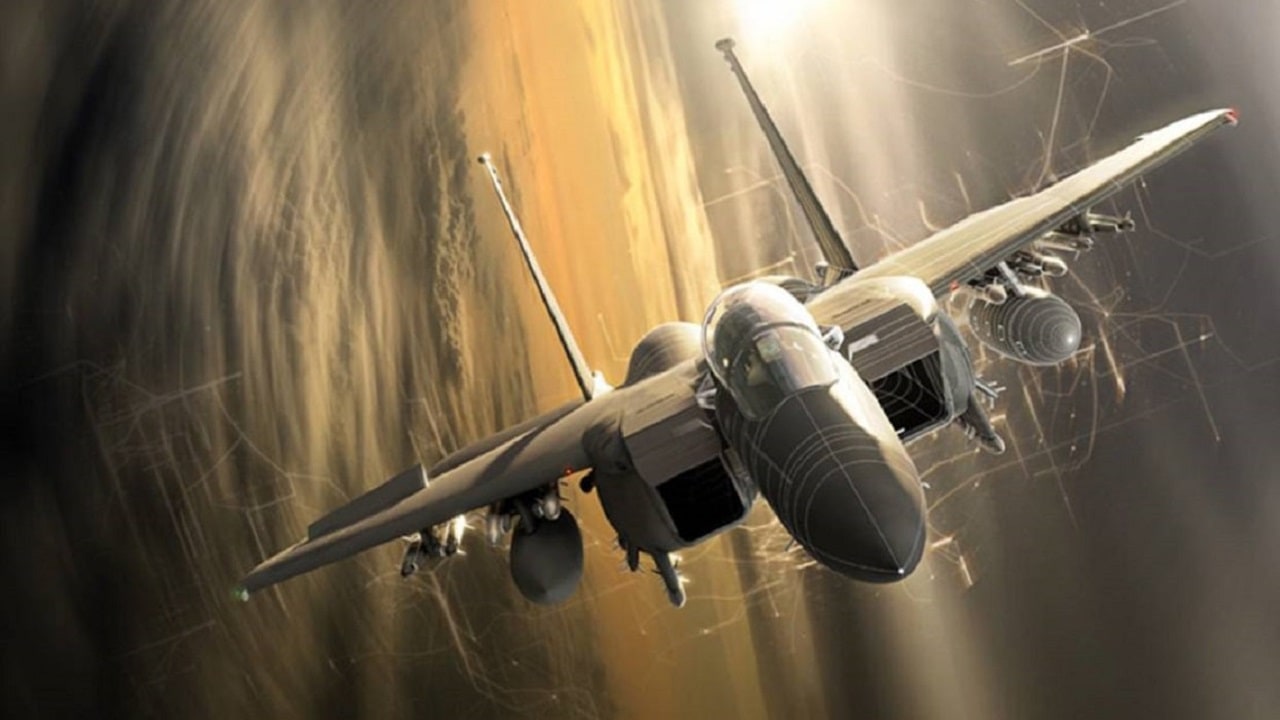
Summary and Key Points: A Pentagon report confirms the F-15EX Eagle II is effective in air-to-air combat against fifth-generation adversaries, leveraging superior speed, sensing, and jamming to complement stealthier platforms in complex air campaigns.
Inside the F-15EX Eagle II: The “Flying Computer” With 87 Billion Operations Per Second
Boeing’s F-15EX Eagle II was built to bridge the capabilities of fourth- and fifth-generation aircraft.
It features pure air speed, highly capable sensing, next-generation weapons, and an expansive payload. While not stealthy, the F-15EX is among the fastest fighter jets in the world, and it is now engineered with a paradigm-changing high-speed computer called Advanced Display Core Processor II capable of performing billions of tasks per second.
The abilities to fire hypersonic weapons, travel at speeds of Mach 2.5, and operate with a computer processor capable of 87 billion functions per second are just a few of the breakthrough attributes of the U.S. Air Force’s F-15EX.
Perhaps it should not be so surprising that a Pentagon report several years ago found the F-15EX can be effective in air-to-air combat against fifth-generation aircraft.
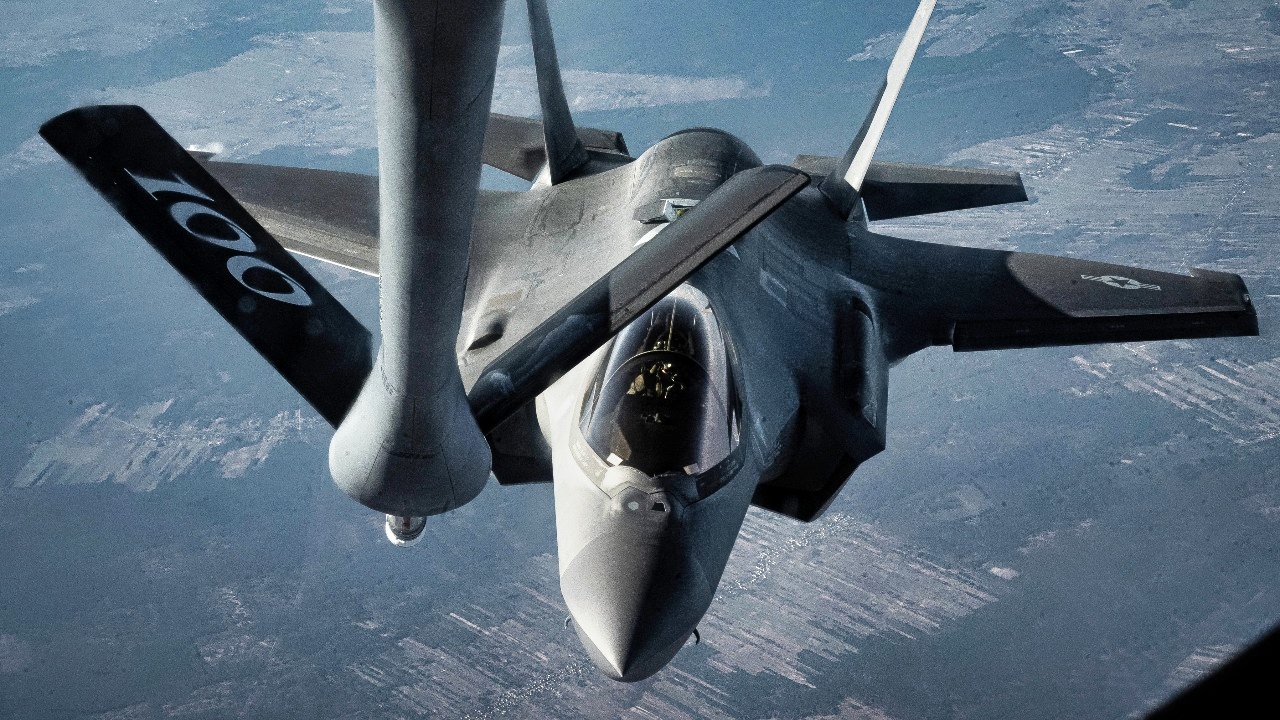
The 388th Fighter Wing’s F-35 Lightning II fifth-generation fighter prepares to receive fuel from a U.S. Air Force Boeing KC-135 Stratotanker attached to the 100th Air Refueling Wing in Eastern European airspace, Feb. 28, 2022. The KC-135 platform is key to enabling U.S. Air Forces in Europe – Air Forces Africa to project credible air power and air operations in concert with NATO allies and partners. (U.S. Air Force photo by Airman 1st Class Edgar Grimaldo)
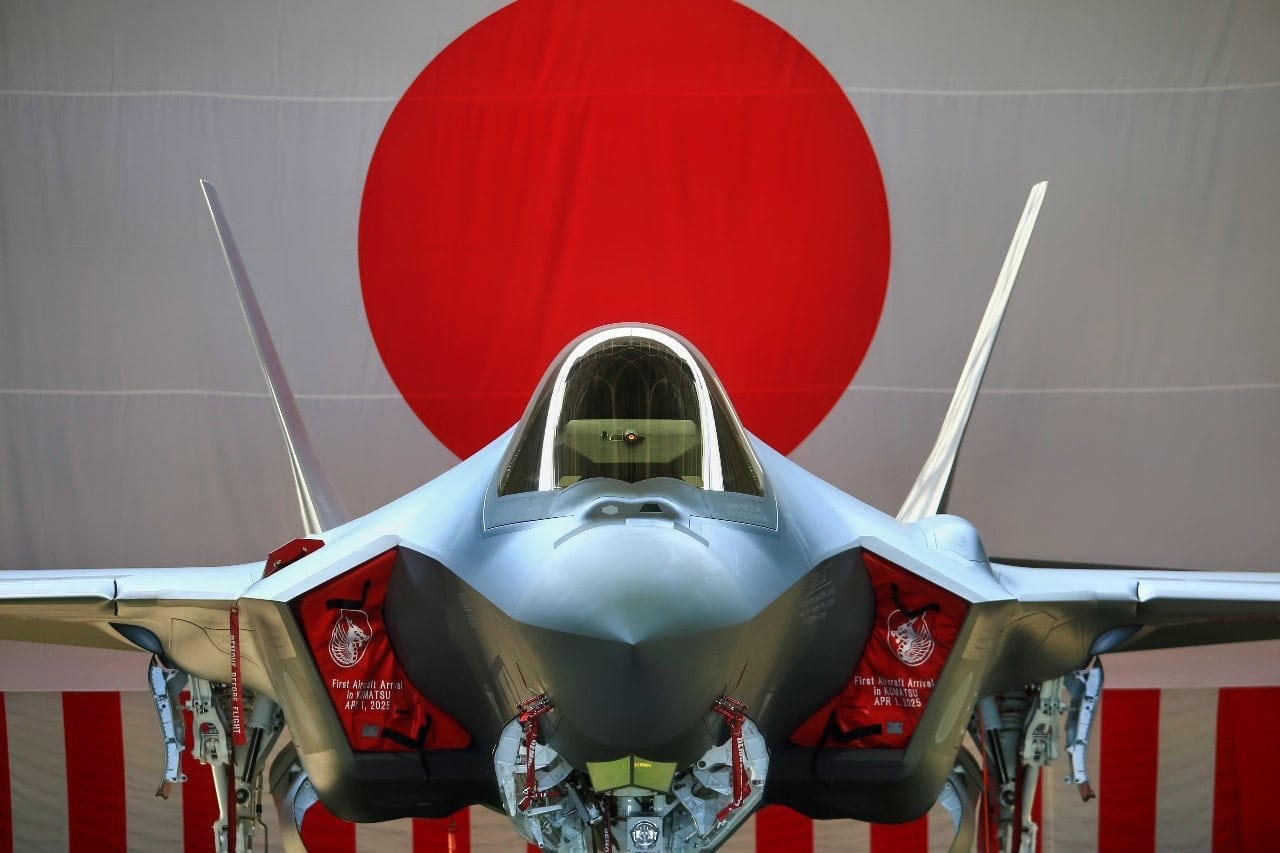
The Japan Air Self-Defense Force (JASDF) held an F-35 aircraft delivery ceremony at Komatsu Air Base, Japan, April 26, 2025. Japan received its first three F-35 aircraft in country, marking a historic milestone for the nation. Image provided to the F-35 Joint Program office by the JASDF.
F-15EX Eagle II Not Stealthy
As a fourth-generation air platform, the F-15EX seeks to add value to an air campaign by supporting stealthier fifth-generation aircraft with a hefty payload. The F-15EX provides target identification and high-speed maneuvering key to attack missions.
In development now for many years, Boeing’s F-15EX integrates a series of new technologies intended to propel the aircraft well-beyond typical fourth-generation capabilities. It is built with new radar, weapons applications, avionics, fire control, computing, and sensing.
A Department of Test & Evaluation report from several years ago highlighted some of the attributes of the F-15EX shown in testing.
“Against the level of threat tested, the F-15EX is operationally effective in all its air superiority roles, including defensive and offensive counter-air against surrogate fifth-generation adversary aircraft, as well as basic air-to-ground capability against the tested threats,” the report states.
F-15EX Speed and Sensing
What makes an F-15EX potentially competitive against fifth-gen aircraft starts with speed—air speed of the jet as well as high-speed computing—and continues through superior sensor range and fidelity. As mentioned, several years ago the F-15 was integrated with the fastest jet-computing processor in the world.
It enables highly effective networking, EW, radar, and threat warning systems, and helps the aircraft unlock its potentially paradigm-changing propulsion technologies and attack possibilities.
This could indeed make it a threat to even an F-35 or F-22 in air combat.
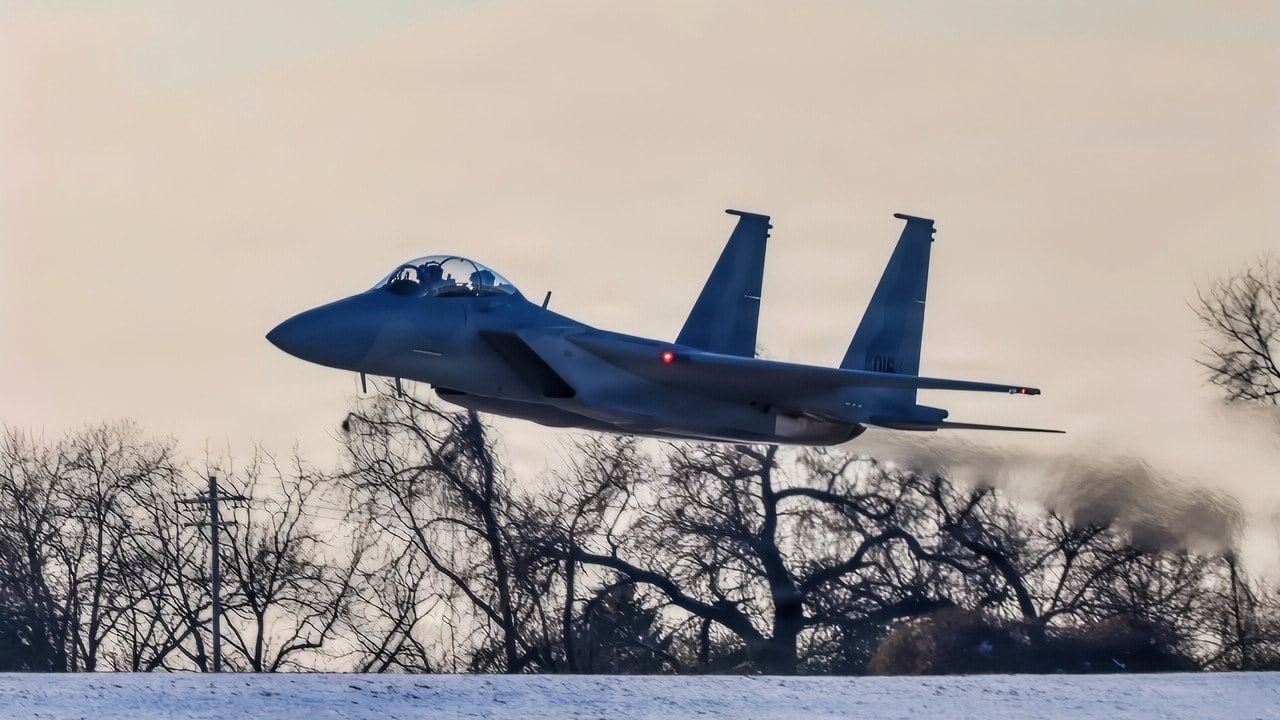
An F-15EX departs for Portland Air National Guard Base. The U.S. Air Force, in partnership with Boeing and the Defense Contract Management Agency, has resumed F-15EX Eagle II deliveries to the Portland Air National Guard Base, overcoming recent production delays. (Courtesy photo)
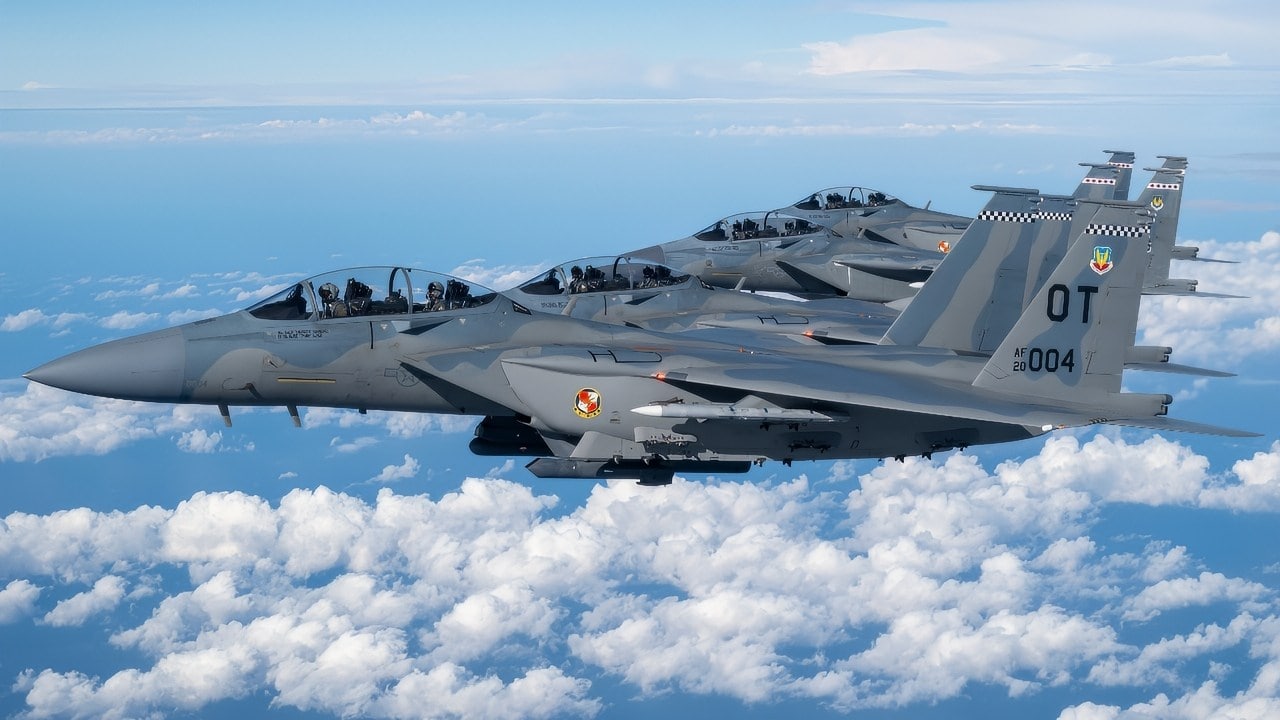
A formation of four U.S. Air Force F-15EX Eagle II fighter jets, assigned to Eglin Air Force Base, Florida, fly over the Gulf of America, Nov. 21, 2025. Secretary of the Air Force Troy Meink flew in the backseat of the lead jet as part of his visit to Eglin AFB. The flight oriented Meink to F-15EX tactics, techniques and procedures being developed and advanced by the 53d Wing to include weapons capacity, next-gen survivability, and next-generation radars, sensors and networking capabilities. (U.S. Air Force photo by Staff Sgt. Blake Wiles)
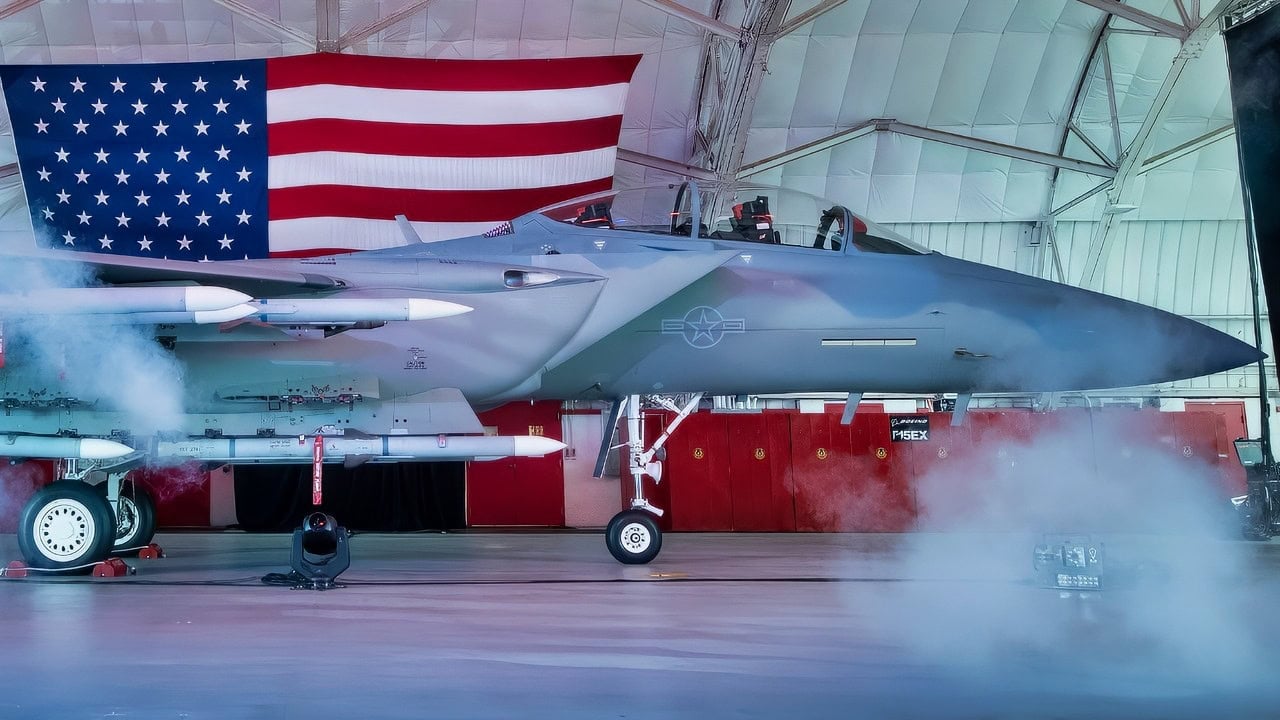
The Air Force’s newest fighter, the F-15EX Eagle II, was revealed and named during a ceremony April 7 at Eglin Air Force Base, Fla. The aircraft will be the first Air Force aircraft to be tested and fielded from beginning to end, through combined developmental and operational tests. (U.S. Air Force photo/Samuel King Jr.)

The F-15EX isn’t stealth, but it brings speed and massive payload—built for homeland defense, standoff strikes, and teaming with F-35s and drones.
Non-Stealthy F-15EX
With its speed of Mach 2.5, the F-15EX is faster than both the Mach-1.6 F-35 and Mach-2.25 F-22.
The F-15EX is not only engineered to attain new levels of thrust, but it also carries 12 missiles, which may include the AIM-120D, AIM-9x and standard JDAMS, among others.
While there have been significant software upgrades to the AIM-120D and AIM-9x that improve targeting guidance, jamming countermeasures, and explosives, some of the newer weapons could be even more groundbreaking. The F-15EX, for example, will eventually carry and fire air-launched hypersonic weapons.
An air-fired missile traveling at five times the speed of sound could eliminate an enemy’s ability to respond in time.
New F-15 Weapons
The Air Force has now also armed its F-15EX Eagle II with the well known Stormbreaker, a first-of-its kind air bomb able to find, track, and destroy moving targets from distances as far as 40 nautical miles in all weather conditions.
Not only does the Stormbreaker utilize a two-way data link enabling it to adjust course in flight according to a target’s movements, but the weapon is engineered with a tri-mode seeker. This targeting and sensing technology uses millimeter wave, infrared, and laser targeting guidance to track and eliminate targets.
The DOT&E report does mention that the F-15EX may not have been tested against the most advanced available threats. It may not be fully fair to compare it with an F-35.
But many analysts regard the F-35 as a so-called “flying computer” with superior fidelity, range, and integration in its sensing, radar, threat-warning, and information-sharing systems. This is quite similar to the description of the F-15EX Eagle II.
About the Author: Kris Osborn
Kris Osborn is the President of Warrior Maven – Center for Military Modernization. Osborn previously served at the Pentagon as a highly qualified expert in the Office of the Assistant Secretary of the Army—Acquisition, Logistics & Technology. Osborn has also worked as an anchor and on-air military specialist at national TV networks. He has appeared as a guest military expert on Fox News, MSNBC, The Military Channel, and The History Channel. He also has a Masters Degree in Comparative Literature from Columbia University.