Could an Upgraded F-14 “Super Tomcat” Still Fly Today With Lasers and Hypersonic Missiles?
Armed with lasers, hypersonic missiles, next-generation Active Electronically Scanned Array (AESA) radar and advanced electronic warfare (EW) capabilities, an upgraded F-14 21 “Super” could still fly today.
The prospect has precedent—many 1980s-era aircraft continue to fly and remain relevant in a modern threat environment thanks to continual upgrades. Airframes often remain viable for years beyond what is anticipated.
Service Life Extension Plans for legacy aircraft such as the F-16 and F/A-18 have extended the operational value of these fighter jets well beyond initial expectations. In fact, some might wonder how so many 1980s-era aircraft are still foundational elements of the U.S. Air Force fleet.
The answer is that air platforms can become almost entirely new systems through their upgrades.
Legacy Planes “Live”
Several bomber aircraft have had their lives so extended—planes including the B-52 and B-2— and so have a number of extremely valuable, high-performance fighter jets such as the F-15, F-16 and F/A-18. New avionics, computing, electronics, software, weapons interfaces, sensors, and radar can be upgraded on older airframes.
One of the best examples is the F-15EX. While expensive, this fighter is regarded as a highly valued 4.5-generation aircraft; it has some fifth-generation-like capabilities.
While not stealthy, the F-15EX operates with the world’s best onboard computing, advanced AESA radar, and the ability to integrate hypersonic weapons in the future.
Considering all this precedent, it might have made sense for the Pentagon to acquire Northrop’s F-14 21 “Super.” The Tomcat was a superior dogfighter, capable of speeds up to Mach 2.2.
The F-14 was a two-seat, high-speed attack jet capable of launching and returning to an aircraft carrier.
There is a strong argument for how, even today in the age of AI, a two-seat aircraft makes sense.

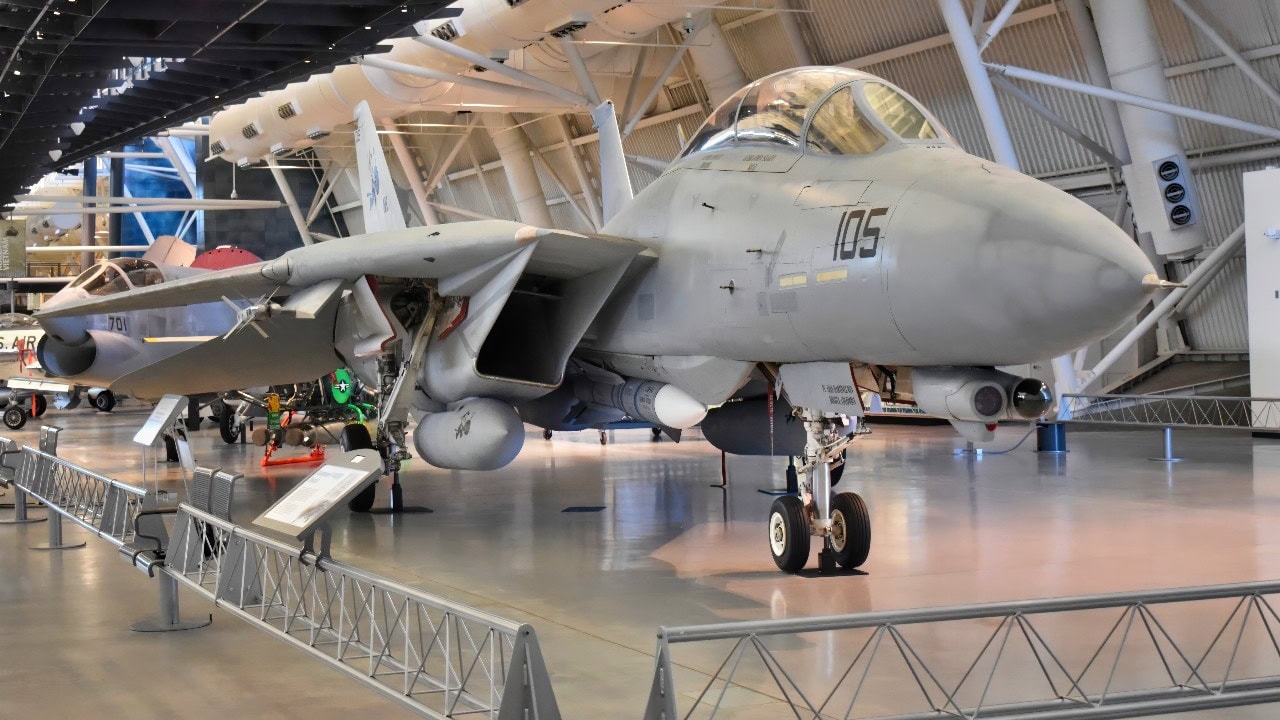
F-14 Tomcat Fighter in USS Intrepid Deck. Image taken late on 2025 by Jack Buckby for 19FortyFive. All Rights Reserved.
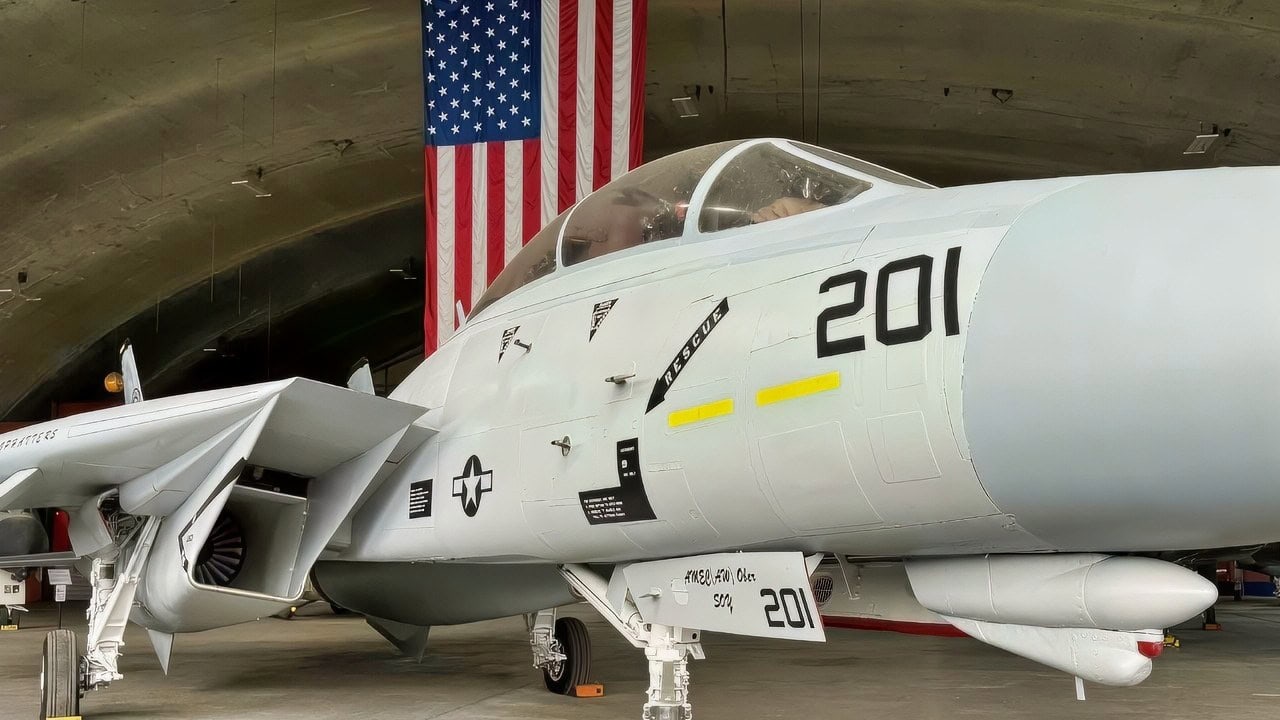
F-14 Tomcat Fighter U.S. Navy. 19FortyFive Field Research Image.

F-14 Tomcat in Museum. Image was taken by Jack Buckby for 19FortyFive.com. All rights reserved.
F-14 “Super” Control Drones
Consider manned-unmanned teaming—an aviator could control drones and sensors from the cockpit, bringing irreplaceable human decision-making to the forward edge of the drone fight. With a pilot in the front and an aviator or Radar Intercept Officer (RIO) in the back, workload was split efficiently during complex missions.
The RIO managed radar systems, targeting, and EW enabling the pilot to focus on flying and combat maneuvers. This crew coordination gave the Tomcat a significant edge during long-range engagements and closer-in high-stress combat scenarios.
F-14 Tomcat attributes
One of the F-14’s greatest strengths was its variable-sweep wing design. The wings could automatically change angle depending on speed and flight conditions, allowing the aircraft to excel in multiple roles.
With wings extended, the Tomcat could fly slow and remain stable during carrier takeoffs and landings. Swept back, the wings enabled high-speed flight, guaranteeing the F-14’s high performance in dogfighting and intercept missions.
The Tomcat was also well known for its use of long-range radar and missile technology. Its AN/AWG-9 radar was one of the most powerful fighter radars ever deployed, capable of tracking up to 24 targets at once and engaging six simultaneously.
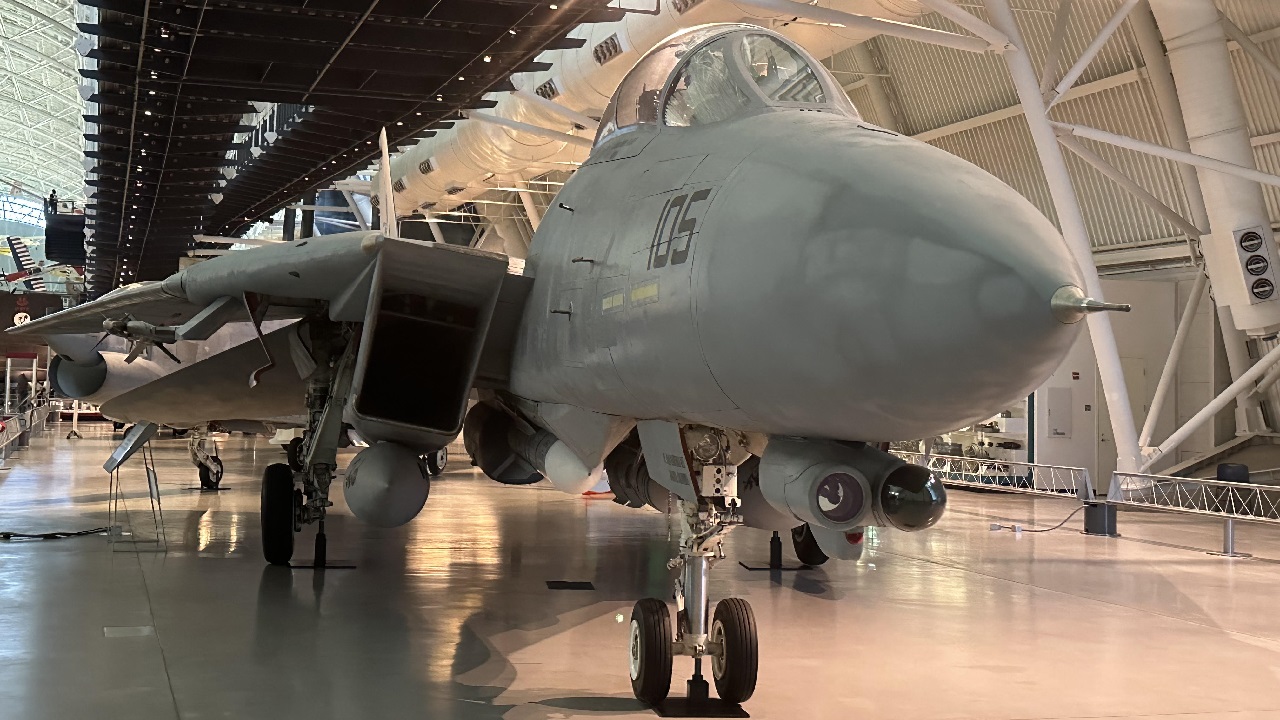
F-14 Tomcat. Image taken at National Air and Space Museum on October 1, 2022. Image by 19FortyFive.
Paired with the AIM-54 Phoenix missile, the F-14 could destroy enemy aircraft more than 100 miles away, far beyond visual range.
The concept with this weapons configuration was to enable carrier groups to neutralize threats before the latter could launch anti-ship missiles, fundamentally changing naval air defense.
All of these attributes could have been upgraded, sustained, and improved with an F-14 Super, which would be positioned to receive weapons-enhancing software upgrades along with new computing, sensing, communications technology, and radar.
About the Author: Kris Osborn
Kris Osborn is the President of Warrior Maven – Center for Military Modernization. Osborn previously served at the Pentagon as a highly qualified expert in the Office of the Assistant Secretary of the Army—Acquisition, Logistics & Technology. Osborn has also worked as an anchor and on-air military specialist at national TV networks. He has appeared as a guest military expert on Fox News, MSNBC, The Military Channel, and The History Channel. He also has a Masters Degree in Comparative Literature from Columbia University.