
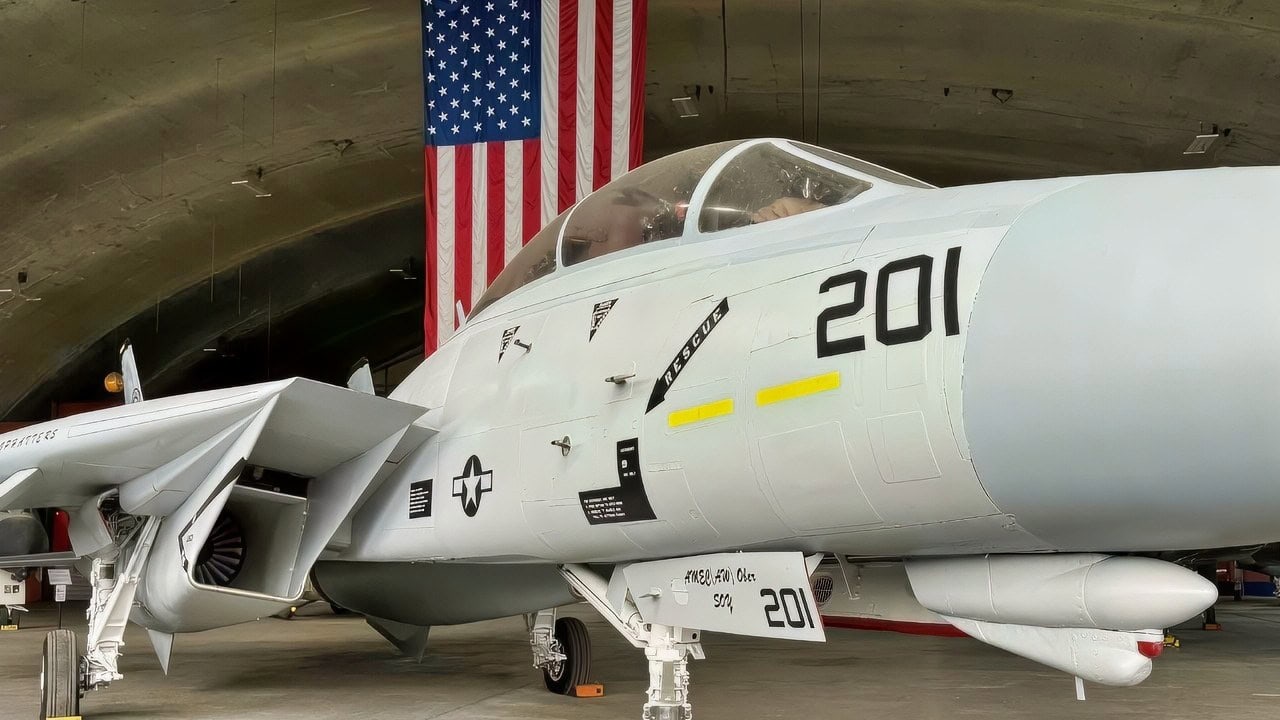
Summary and Key Points: Isaac Seitz, a Defense Columnist and Strategic Intelligence expert, explores the underappreciated close-quarters lethality of the Grumman F-14 Tomcat.
-While built for fleet defense with the AWG-9 radar and AIM-54 Phoenix, the Tomcat’s variable-sweep geometry provided a decisive edge in Basic Fighter Maneuvers (BFM).
-By analyzing the synergy between the pilot and the Radar Intercept Officer (RIO), Seitz details how the F-14 out-maneuvered contemporaries like the F-15 Eagle and F-16 Fighting Falcon at low speeds, leveraging high angle-of-attack (AoA) authority and F110 engine thrust to dominate the merge.
-Bonus: 19FortyFive has visited quite a few F-14 Tomcats over the years, and we have included many photos and original video to get a sense of what it is like to get close, like we have, to this U.S. Navy legend.
Variable-Sweep Magic: How the F-14 Could Out-Turn the F-16 in a Dogfight
The F-14 Tomcat is an almost universally beloved aircraft and an iconic Cold War fighter. Its variable-sweep geometry and unique profile make it instantly recognizable among other fighter jets of its class, and it was one of the Navy’s most beloved aircraft.
Today, the F-14 is remembered as a fleet defense interceptor whose primary goal was to protect carriers from missiles and enemy fighters. While all that is certainly true, the F-14 also had a number of other capabilities that are often underappreciated today.
For instance, many are unaware that Tomcat was a surprisingly competent dogfighter. Thanks to its aerodynamic design, a good pilot and Radar Intercept Officer (RIO) could take on pretty much any contemporary aircraft.
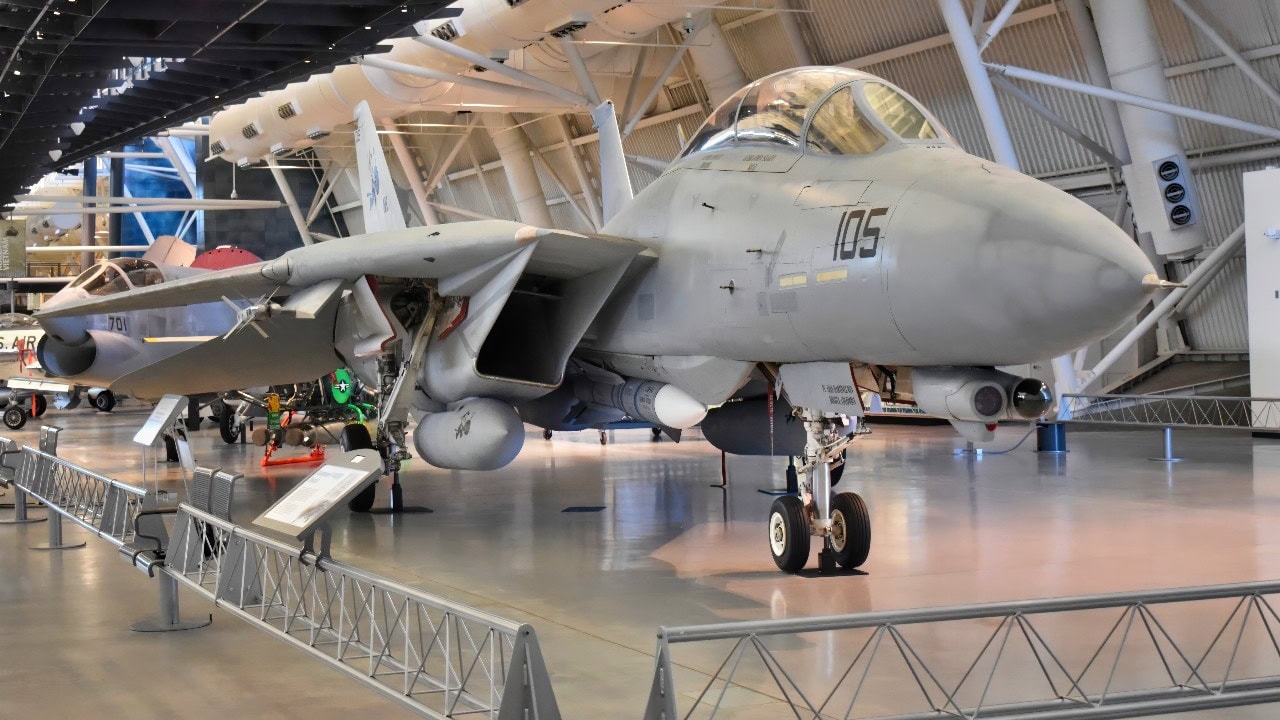
F-14 Tomcat. Image by 19FortyFive.com
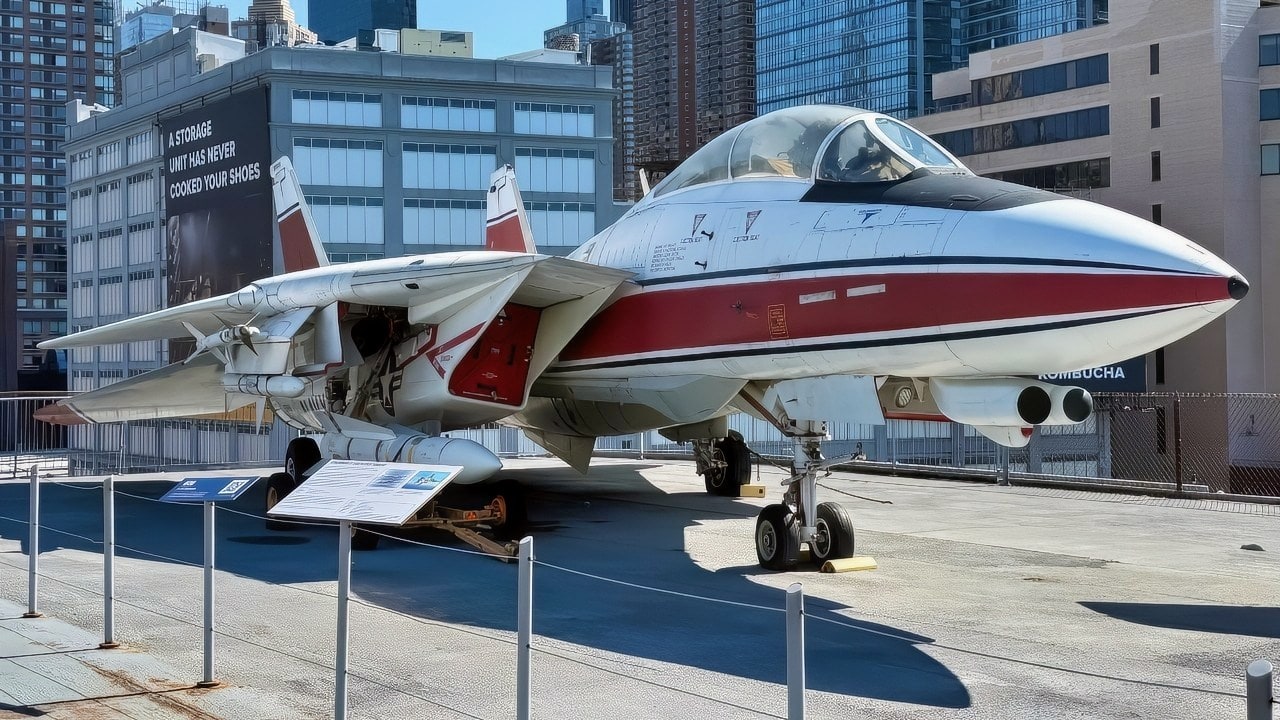
F-14 Tomcat Fighter in USS Intrepid Deck. Image taken late on 2025 by Jack Buckby for 19FortyFive. All Rights Reserved.

F-14 Tomcat in Museum. Image was taken by Jack Buckby for 19FortyFive.com. All rights reserved.
The Brilliant Engineering of the Tomcat
The Tomcat’s variable sweep geometry played an essential role in its agility. Unlike fixed-wing fighters that were forced to compromise between low-speed maneuvering performance and high-speed efficiency, the F-14 could transform its aerodynamic profile mid-flight.
With the wings fully extended at their minimal sweep angle, the aircraft produced tremendous lift and stability at low speeds, allowing pilots to execute surprisingly tight turns, high-angle-of-attack maneuvers, and rapid nose-pointing actions that often caught opponents off guard.
This made the Tomcat exceptionally dangerous in slow-speed, close-quarters engagements, where nimble control of the nose often mattered more than raw turn rate.
At the opposite end of the spectrum, sweeping the wings fully aft changed the F-14’s personality entirely. With the wings at maximum sweep, drag sharply decreased, and the aircraft became a powerful high-speed performer capable of rapid acceleration, sustained supersonic flight, and superior energy retention.
This allowed Tomcat pilots to initiate or disengage from fights on their own terms.
They could climb vertically, engage in high-speed slashing attacks, or convert altitude into energy, forcing adversaries into disadvantageous positions. Perhaps most importantly, the automatic flight-control system adjusted the sweep in real time based on speed, g-loading, and angle of attack, allowing pilots to focus on the flight without micromanaging wing geometry. This created an airplane that could excel as both a swift interceptor and a tight-turning knife fighter, depending entirely on what the moment demanded.
Why the F-14 was a Good Dogfighter
Another unique strength of the Tomcat lies in its two-person crew. While single-seat fighters like the F-16 required pilots to manage flying, radar, communications, and weapons simultaneously, the Tomcat split these responsibilities between the pilot and the Radar Intercept Officer. In the heat of a dogfight, the RIO provided vital information about the positions of adversaries, closure rates, weapon employment cues, and tactical threats.
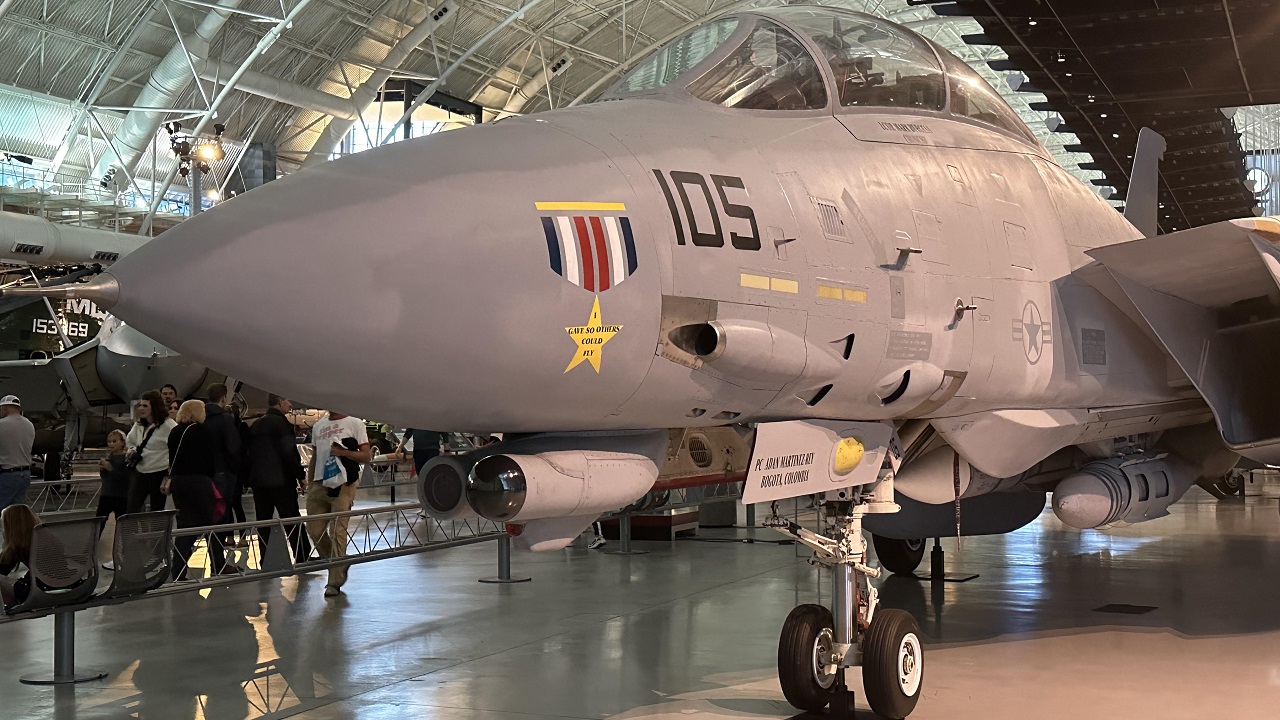
F-14 Tomcat. Image taken at National Air and Space Museum on October 1, 2022. Image by 19FortyFive.
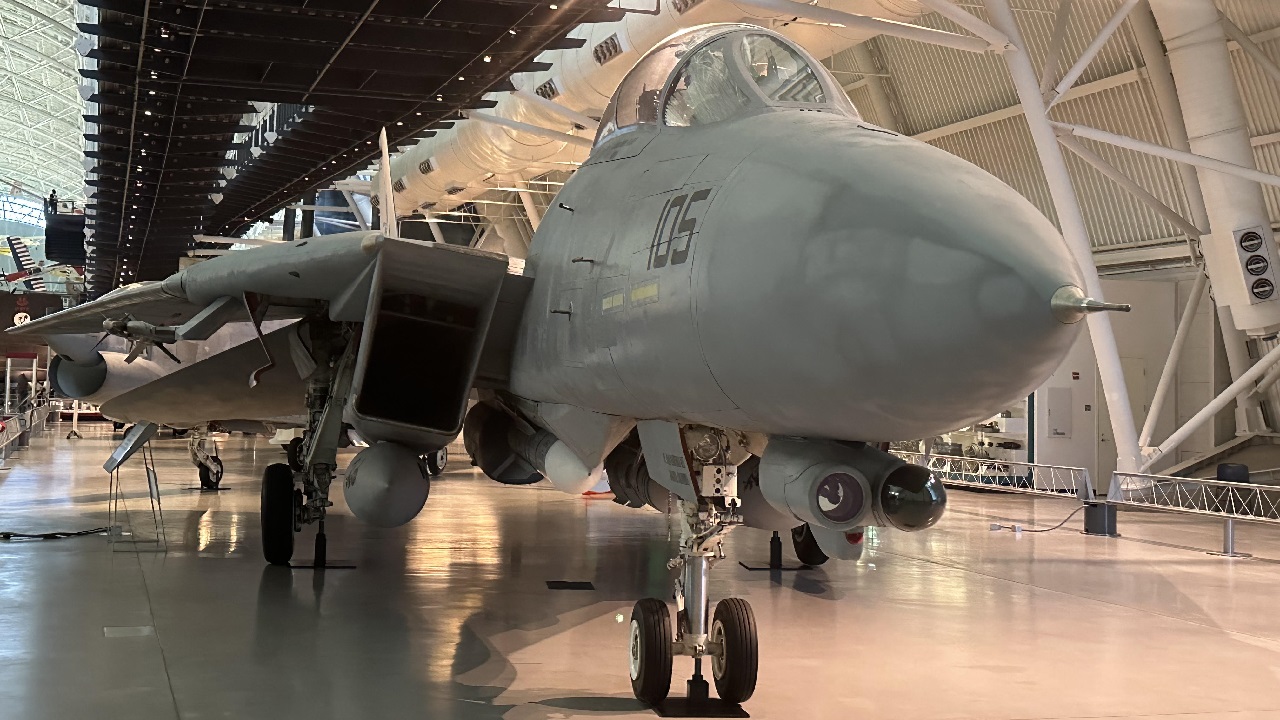
F-14 Tomcat. Image taken at National Air and Space Museum on October 1, 2022. Image by 19FortyFive.
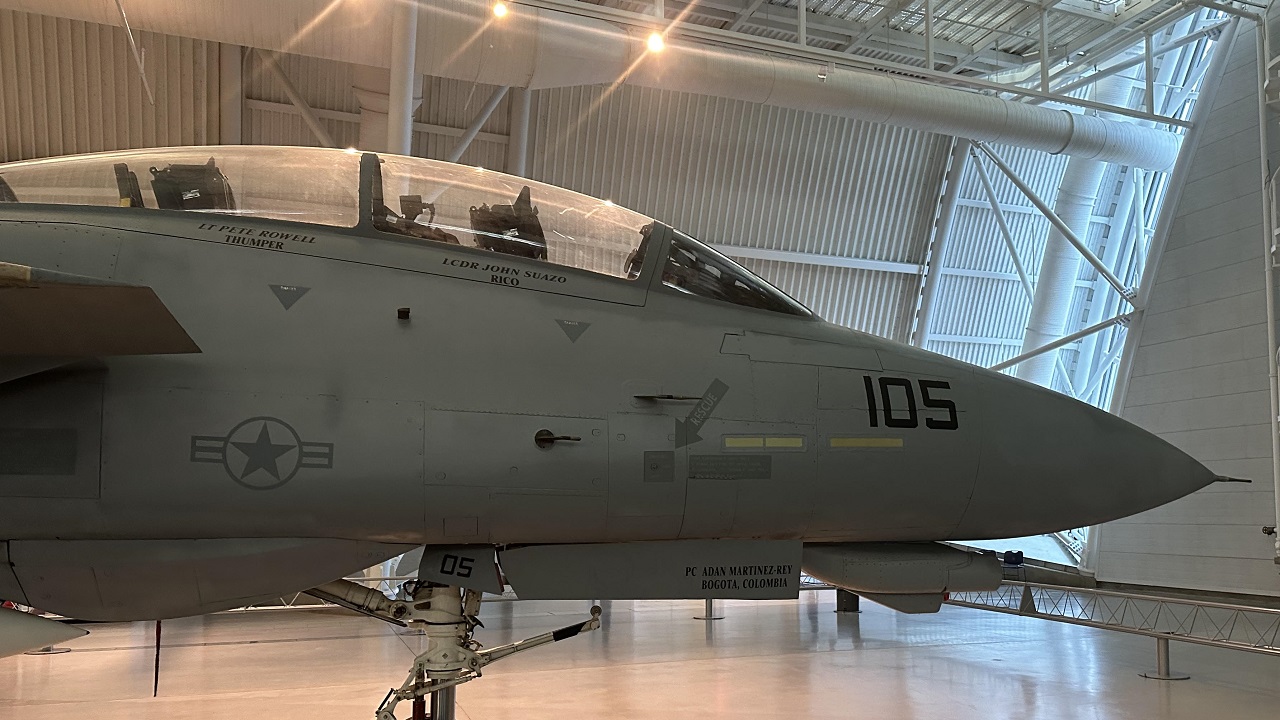
F-14 Tomcat. Image taken at National Air and Space Museum on October 1, 2022. Image by 19FortyFive.
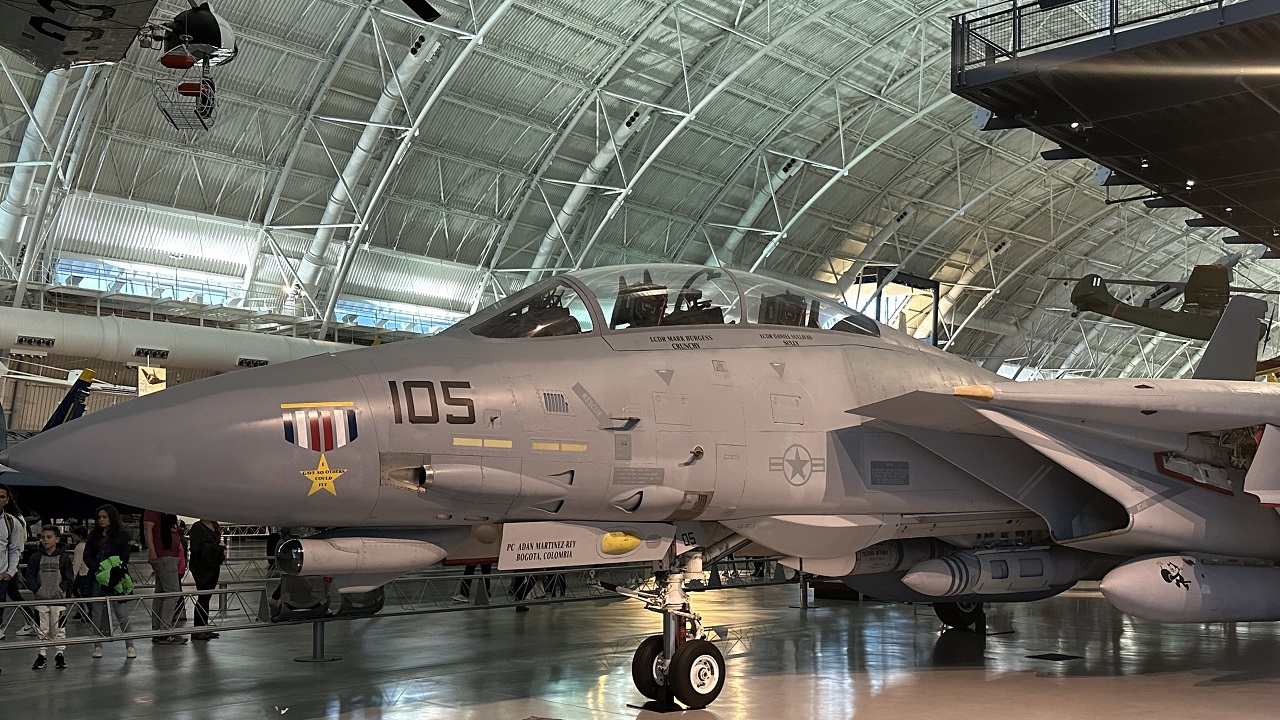
F-14 Tomcat. Image Taken at U.S. Air and Space Museum outside of Washington, D.C. Image Credit: 19FortyFive.com
This division of labor dramatically improved situational awareness.
The pilot could focus solely on flying the aircraft to its limits. At the same time, the RIO served as an additional brain dedicated to managing the sensor suite and navigating the complexity of a multi-aircraft engagement. Many Tomcat crews have commented that this teamwork was a decisive advantage during chaotic engagements where a single individual might be overwhelmed by task saturation.
The Tomcat’s avionics further contributed to its effectiveness in air combat. The AWG-9 radar, famous for its long-range, multi-target tracking ability, did more than support beyond-visual-range engagements. Even in close-in fights, it provided essential situational cues and could slave heat-seeking missiles toward targets the radar had acquired.
Later, Tomcats received infrared search-and-track systems, which provided passive target detection useful for identifying opponents during high-angle, hard-turning engagements where radar returns might be less reliable. Together, the radar and IRST provided Tomcat crews with a clearer picture of the tactical environment, even before visually merging with the enemy.
The Tomcat in Action
Further complementing the Tomcat’s dogfighting capabilities was its weapons suite. The AIM-9 Sidewinder provided reliable heat-seeking engagement capability, with later variants offering high off-boresight agility that complemented the Tomcat’s nose-pointing authority.
The AIM-7 Sparrow, though primarily a BVR weapon, could be used in certain within-visual-range situations where radar lock was maintained through maneuvering. Furthermore, the M61A1 Vulcan cannon offered a dependable final option in turning dogfights where missiles were no longer practical. Tomcat pilots trained extensively in gunnery, knowing that close-in engagements often devolved to who could place accurate fire during brief snapshot opportunities.
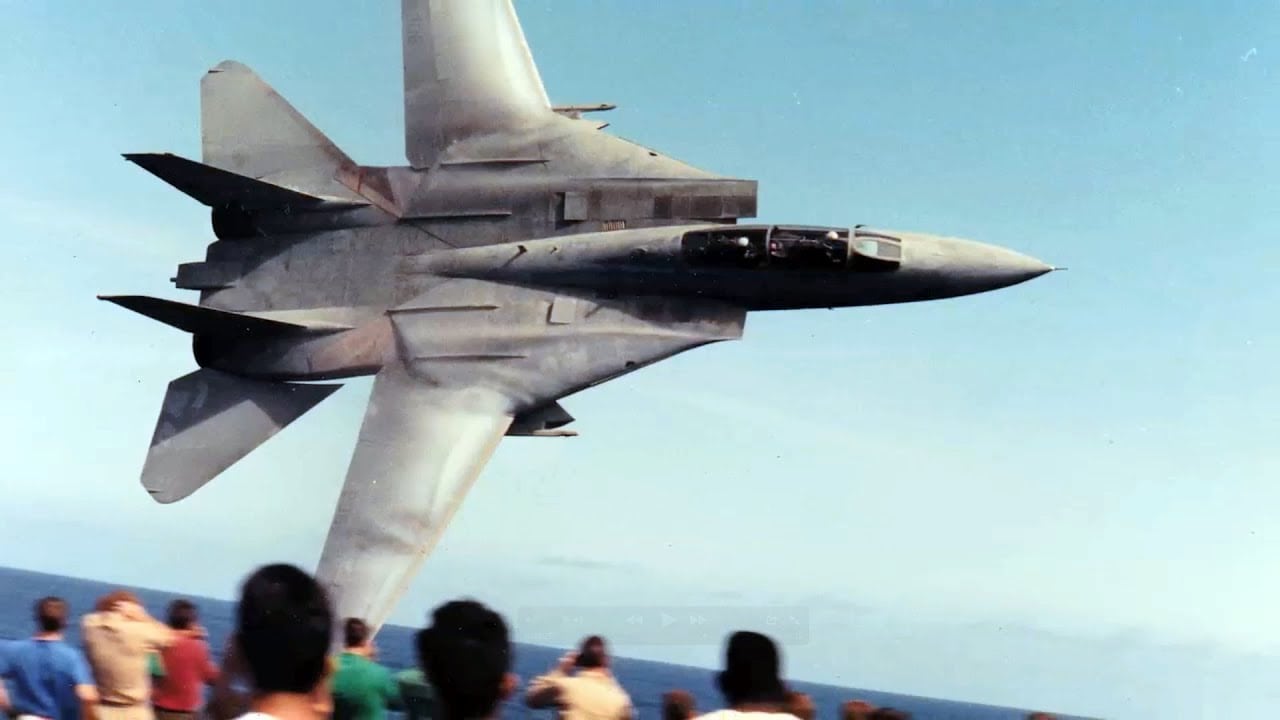
F-14 Banana Pass. Image Credit: Creative Commons.
One need only look at the F-14’s combat record to see how good it was in a fight. Iranian Tomcats during the Iran–Iraq War achieved numerous air-to-air victories, often against advanced opponents such as MiG-23s, MiG-25s, and Mirage F1s.
Even in the U.S. Navy, where Tomcats did not regularly engage in shooting wars against peer fighters, training exercises consistently showed the aircraft could hold its own against a diverse array of opponents, from nimble F-5s and A-4s to modern F-15s and F-16s.
Pilots often exploited the Tomcat’s slow-speed authority, forcing fights into tight turning contests where its variable geometry and high-lift devices provided a decisive edge.
Alternatively, they used the aircraft’s vertical acceleration to climb, bleed opponents’ energy, and then pounce with overwhelming advantage.
About the Author: Isaac Seitz
Isaac Seitz, a Defense Columnist, graduated from Patrick Henry College’s Strategic Intelligence and National Security program. He has also studied Russian at Middlebury Language Schools and has worked as an intelligence Analyst in the private sector.