

The United States Navy’s MQ-25A Stingray has just reached one of the most important milestones in its development, receiving Milestone C approval and clearance to enter Low-Rate Initial Production (LRIP).
The news means that the aircraft, built by Boeing, will enter the next stage of development and bring the Navy closer to fielding the world’s first-ever operational carrier-based autonomous aerial refueling aircraft.
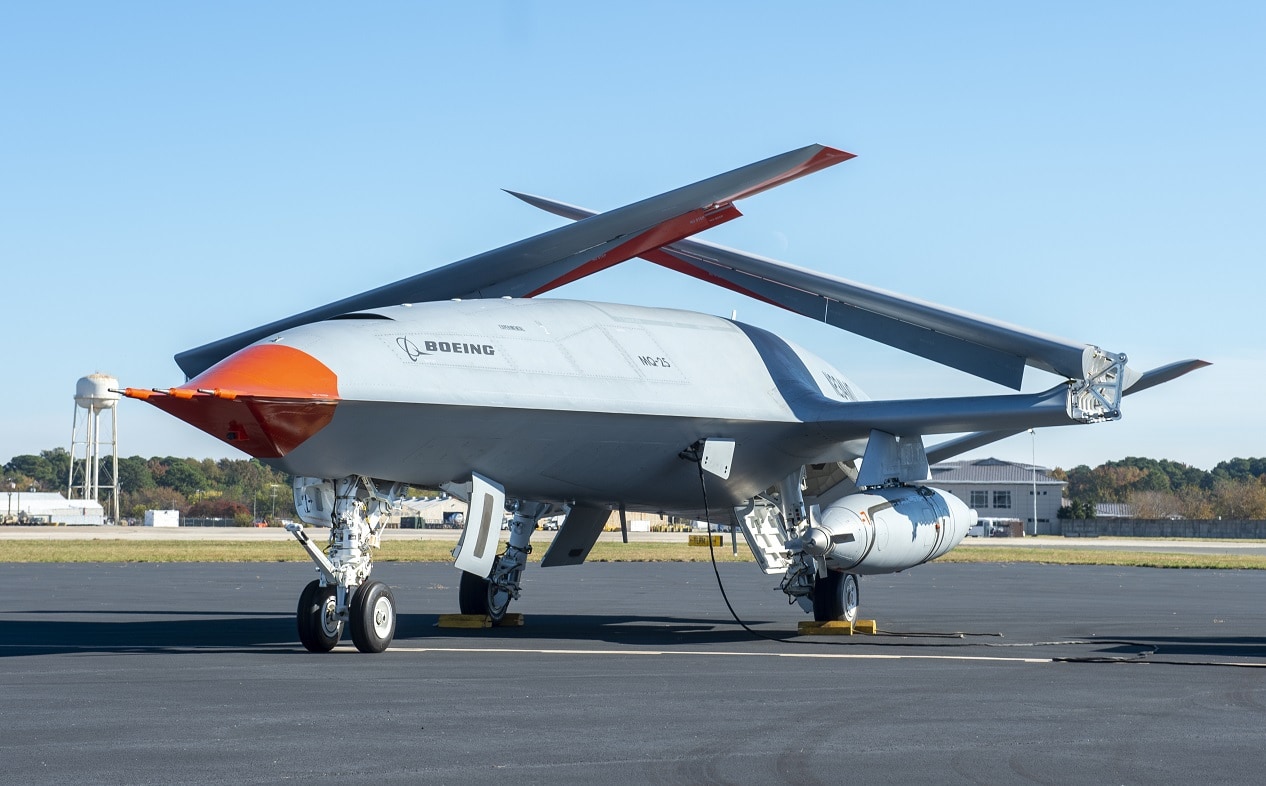
The U.S. Navy and Boeing conducted ground testing of the MQ-25 Stingray at Chambers Field onboard Naval Station Norfolk, Virginia. The MQ-25 Stingray is an unmanned aerial refueling aircraft. (U.S. Navy photo by Mass Communication Specialist 2nd Class Sam Jenkins)
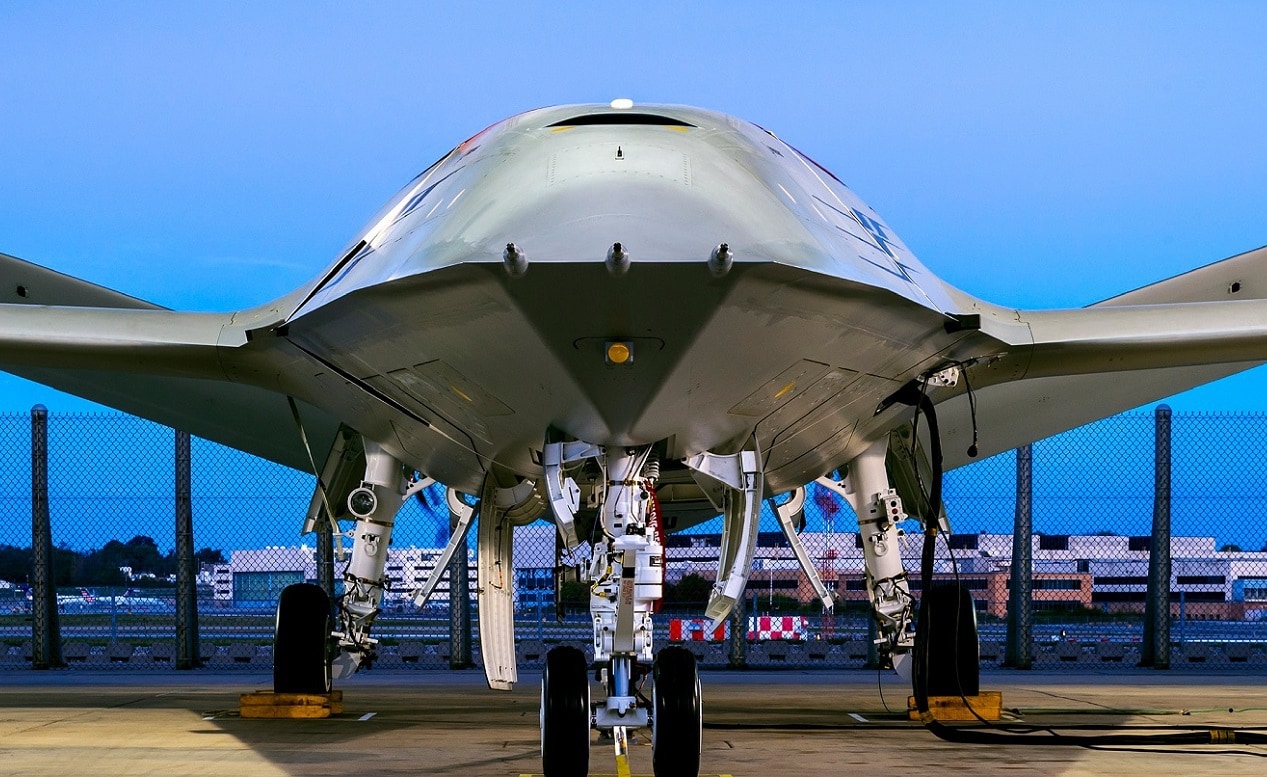
MQ-25. Image Credit – Creative Commons.
The program is significant and the product of rapidly changing global naval battlefield dynamics. American carriers are becoming vulnerable to new long-range anti-ship missiles and drones, and as a result, new assets like the MQ-25A Stingray are designed to change how they operate and extend the range of carrier air wings.
The new drone will free up carrier aircraft for combat missions and allow the United States to continue projecting power worldwide despite rapidly advancing autonomous and long-range drone technologies.
Years Of Development for MQ-25
In May, Boeing announced that, following a successful first flight in April, the U.S. Navy had reached Milestone C. In a press release, the vice president of the Boeing MQ-25 program, Troy Rutherford, described the news as “historic.”
“Boeing is honored to work alongside our U.S. Navy partner in achieving this historic milestone in the MQ-25A Stingray’s development life cycle,” Rutherford said, adding, “We remain focused on getting this game-changing unmanned aircraft into the hands of the fleet and integrated into the carrier air wing.”
During the roughly two-hour flight from Boeing’s facility in Illinois, the aircraft’s flight controls, navigation systems, and autonomous capabilities were validated, confirming that the aircraft operates as expected.
Earlier in the year, the aircraft had also completed its low-speed taxi testing.
The Navy will now award an initial production contract for three aircraft this summer, with options for additional aircraft that could bring the total batch to 11.
And while it’s good news for the program, it has, perhaps unsurprisingly, found itself behind schedule. Much like most modern weapons and aircraft programs, the program has fallen substantially behind, with initial timelines targeting Initial Operational Capability (IOC) in 2024. The aircraft is now expected to enter IOC in 2029.
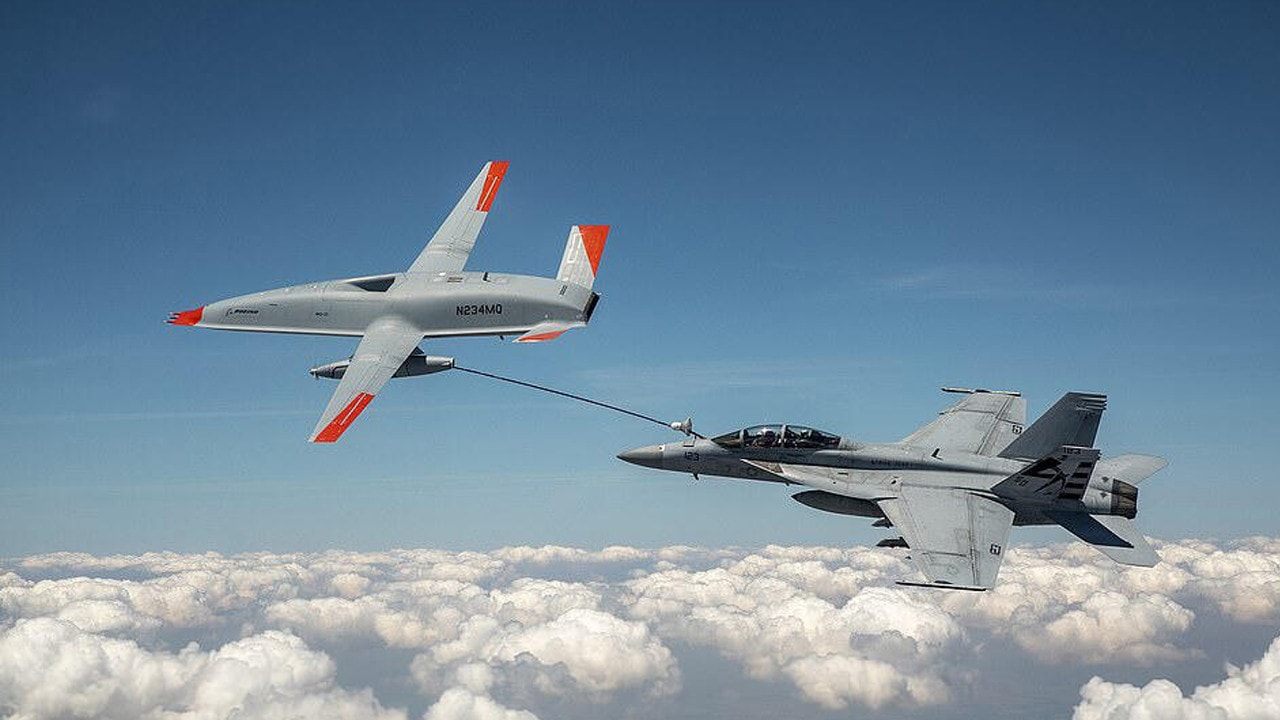
MQ-25. Image Credit: Boeing.
A Flying Gas Station
The MQ-25A Stingray is an unmanned carrier-based aircraft, but rather than serving as an attack drone, it is actually designed to refuel other aircraft in flight.
Developed for the U.S. Navy by Boeing, it is intended to operate from aircraft carriers and extend the range of fighters such as the F/A-18 Super Hornet and F-35C Lightning II.
The Stingray functions as an autonomous aerial tanker, taking over refueling duties currently performed by manned aircraft, freeing up other assets for combat missions and allowing carrier air wings to strike targets farther from the ship.
The MQ-25’s origins also date back decades, meaning this is not a product of recent advancements in drone technology.
Originally, the Navy sought a carrier-based unmanned aircraft that was capable of surveillance and strike missions under the Unmanned Carrier-Launched Airborne Surveillance and Strike (UCLASS) program.
But as concerns grew about carrier range and aircraft availability, the service turned its focus to aerial refueling.
The Carrier-Based Aerial Refueling System program was born out of that interest, and so too was the MQ-25 Stingray. In 2018, Boeing won the competition to produce their design.
The MQ-25 specifically solves a problem of F/A-18 Super Hornets being used as what’s known as “buddy tankers” – when a fighter jet is temporarily reconfigured to refuel other aircraft mid-air.
While the method serves an important purpose, it also forces expensive fighters to spend significant portions of their service lives refueling other aircraft rather than preparing for combat.
When the MQ-25 is deployed, it will enable those aircraft to be redeployed as fighters.
Technical Specifications
The Stingray is powered by a Rolls-Royce AE 3007N turbofan engine and also features autonomous flight controls. Unlike remotely controlled drones that require a pilot to control the aircraft, the MQ-25 is intended to execute missions autonomously while remaining under human supervision.
During testing, operators proved that the aircraft could operate successfully on its own, with remote human pilots also able to intervene if necessary.
The aircraft, however, manages navigation, propulsion, and flight management entirely on its own for the most part.
It can carry a significant quantity of fuel, too.
The MQ-25 is expected to carry approximately 15,000 pounds of fuel to Navy aircraft, extending the range of both the F-35C Joint Strike Fighter and the F/A-18 Super Hornet.
The aircraft has also demonstrated its ability to refuel multiple aircraft types during its testing.
The Navy ultimately plans to acquire over 70 MQ-25s, making it one of the largest carrier aviation modernization efforts currently underway.
The total program could eventually exceed $15 billion.
Once operational, it will play a critical role in helping U.S. military planners prepare for a potential conflict with China, whose expanding arsenal of long-range anti-ship missiles is expected to force U.S. aircraft carriers to operate farther from contested areas than they do now.
About the Author: Jack Buckby
Jack Buckby is a British researcher and analyst specializing in defense and national security, based in New York. His work focuses on military capability, procurement, and strategic competition, producing and editing analysis for policy and defense audiences. He brings extensive editorial experience, with a career output spanning over 1,000 articles at 19FortyFive and National Security Journal, and has previously authored books and papers on extremism and deradicalization.