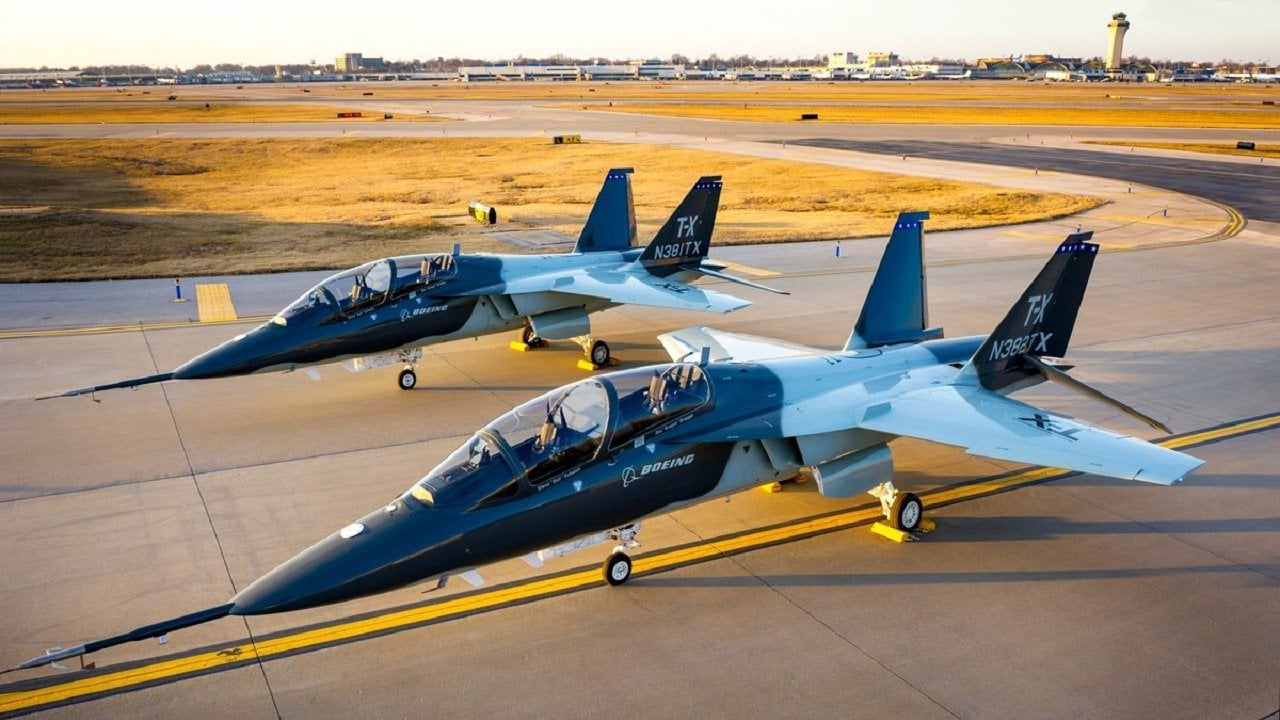
Warsaw, Poland – The Boeing Company has officially withdrawn its T-7A Red Hawk jet trainer aircraft from the United States Navy (USN) competition to replace the previous-generation McDonnell Douglas T-45 Goshawk carrier-capable trainer.
The announcement was made on 12 June 2026, meaning only two industry teams remain in the running for the Undergraduate Jet Training System (UJTS) contract.
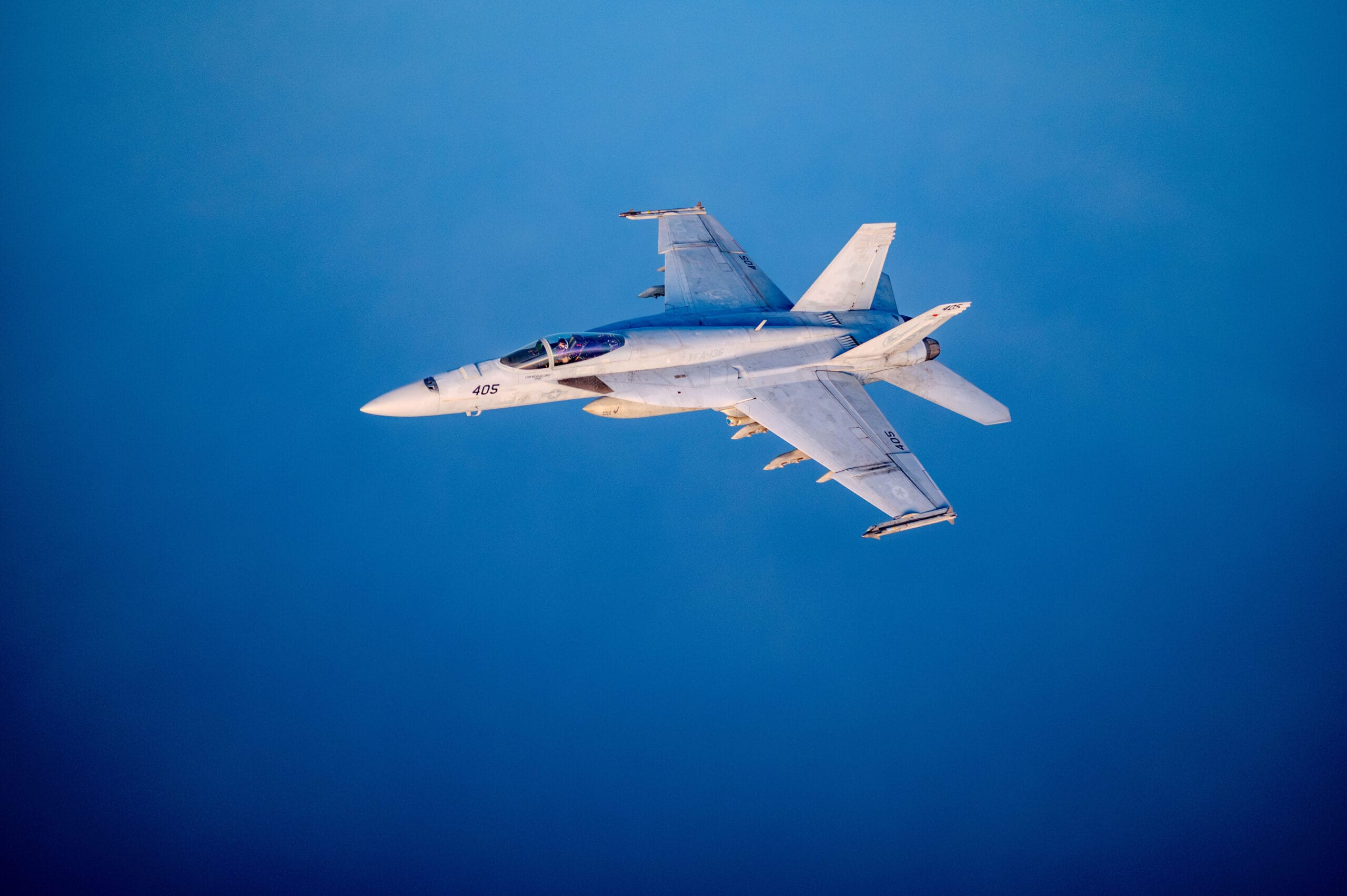
A U.S. Navy F/A-18 Super Hornet, assigned to the Harry S. Truman Carrier Strike Group, flies a mission over the U.S. Central Command area of responsibility, April 8, 2025. The HSTCSG is responsible for patrolling approximately 2.5 million square miles of ocean and includes the Arabian Gulf, Gulf of Oman, Red Sea, parts of the Indian Ocean and three critical choke points at the Strait of Hormuz, Suez Canal and Strait of Bab al-Mandeb. (U.S. Air Force photo by Staff Sgt. Jackson Manske)
Boeing was the second prime contractor to withdraw from the bidding. Bethesda, Maryland-based Lockheed Martin pulled out of the effort earlier this year, although the firm was bidding a version of the Korean Aerospace Industries (KAI) T-50, which the two companies would build in cooperation, rather than a model of its own design.
The Korean involvement in the program appears to have been one reason that LM dropped its bid in April 2026, just after the USN had released its final request for proposals (RFP) to US industry. The company’s official response was that it had “conducted a rigorous assessment of the UJTS solicitation and determined our offering would not be the best solution for this program due to the required level of US content and other reasons.”
In a similar vein, Boeing’s press release dated 12 June 2026 states that the T-7A does not meet the Navy’s specific requirements for the UJTS program. This decision also comes just weeks after the aircraft was cleared for low-rate initial production for the United States Air Force (USAF).
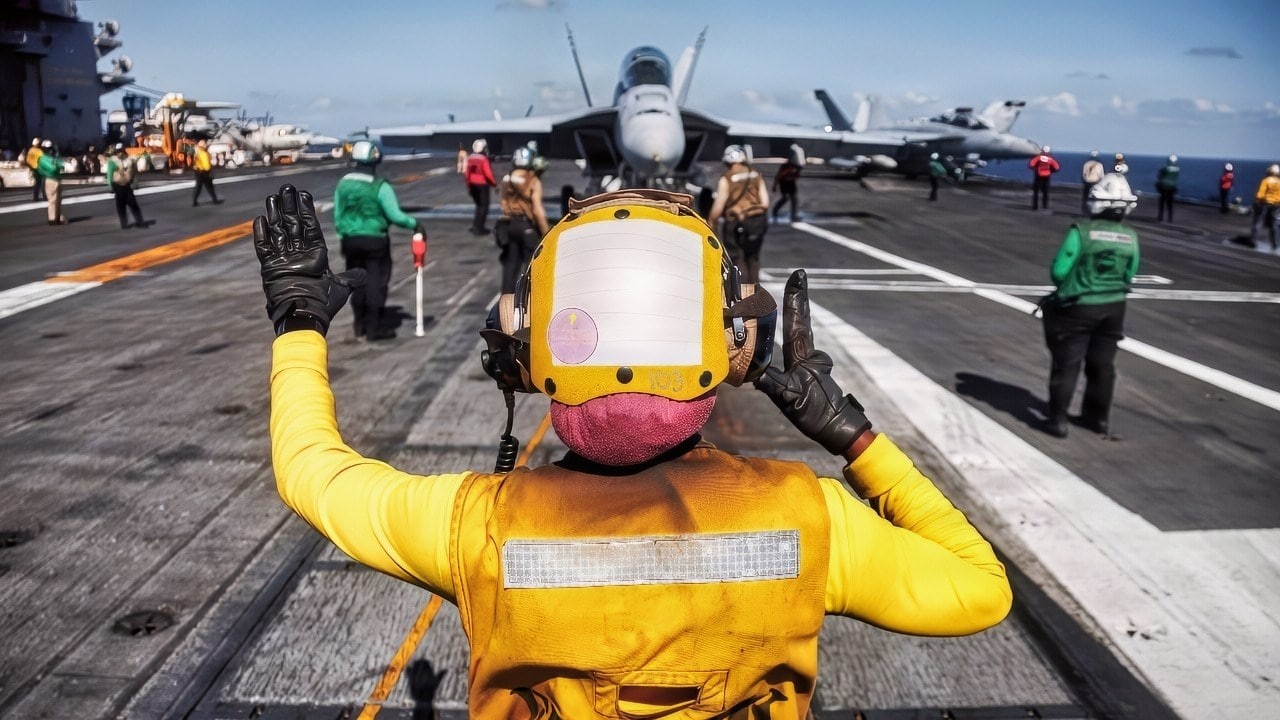
A U.S. Sailor signals to an F/A-18F Super Hornet aircraft, attached to Strike Fighter Squadron 213, on the flight deck of the world’s largest aircraft carrier, Ford-class aircraft carrier USS Gerald R. Ford (CVN 78), while underway in the Caribbean Sea, Feb. 5, 2026. U.S. military forces are deployed to the Caribbean in support of the U.S. Southern Command mission, Department of War-directed operations, and the president’s priorities to disrupt illicit drug trafficking and protect the homeland. (U.S. Navy photo)
No Overlapping Requirements
What Boeing is citing as the T-7A’s unsuitability for that design in meeting the USN requirements also shines a spotlight on the very little – if any – overlap between the training requirements of the two military service branches.
“This tells you that despite some rumors, there is little justification for the US Navy turning its F/A-XX program into procuring some version of the F-47,” the USAF’s 6th-generation fighter program, said a recently retired US senior flag rank officer familiar with both services’ 6th-generation fighter programs.
“No one in the US Navy or the Air Force wants to see another program where the two services end up buying two versions of the same aircraft – as they were forced to do with the F-35 – and that preference goes for the next-gen trainers as well.”
“After careful evaluation, we have determined that the T-7A does not meet the U.S. Navy’s Undergraduate Jet Training System requirements. We have therefore informed the Navy that we will not bid on the current RFP,” as read in part of the Boeing announcement.
The US firm’s official statement on why it would not compete for the Navy program also noted that its T-7A efforts were focused on its existing commitments to the aircraft and on tailoring its configuration to specific customer requirements.
Engine Requirements
Boeing’s press release did not go into any specific details about the technical requirements that the T-7A fell short of. But there are some reports that the aircraft’s powerplant was one of the major issues.
An unnamed Boeing spokesperson has told multiple media outlets that the GE Aerospace F404 engine would need to undergo an extensive long-cycle development program to meet the USN’s unique engine qualification requirements.
The time at which this level of redesign for the engine was so extensive that it would have put the T-7A well beyond the US Navy’s target date for Initial Operational Capability (IOC). This explanation, however, seems at odds with the USN’s actual use of the same engine for decades now.
F404 engines were used in the F/A-18A/B and C/D models from the 1970s onward, and the current F/A-18E/F Super Hornet uses the F414, a next-generation improvement of the same basic engine.
MORE – The F-16XL Fighter Was the Masterpiece the Air Force Passed On
MORE – Russia’s Nuclear Battlecrusier Took 3 Decades to Get a Refit
MORE – Dark Eagle: The Army Has a Mach 17 Missile
With both Boeing and Lockheed Martin out of the running, the competition is now down to two contractor teams. Sierra Nevada Corporation (SNC) is partnered with Northrop Grumman and General Atomics Aeronautical Systems Inc. to offer a “clean-sheet” aircraft design. Competing against them is a joint effort between Textron Inc. and Leonardo S.p.A., which is offering the M-346N, a modified version of the existing Leonardo M-346 Master trainer.
About the Author: Reuben F. Johnson
Reuben F. Johnson has thirty-six years of experience analyzing and reporting on foreign weapons systems, defense technologies, and international arms export policy. Johnson is the Director of Research at the Casimir Pulaski Foundation. He is also a survivor of the Russian invasion of Ukraine in February 2022. He worked for years in the American defense industry as a foreign technology analyst and later as a consultant for the U.S. Department of Defense, the Departments of the Navy and Air Force, and the governments of the United Kingdom and Australia. In 2022-2023, he won two awards in a row for his defense reporting. He holds a bachelor’s degree from DePauw University and a master’s degree from Miami University in Ohio, specializing in Soviet and Russian studies. He lives in Warsaw.