
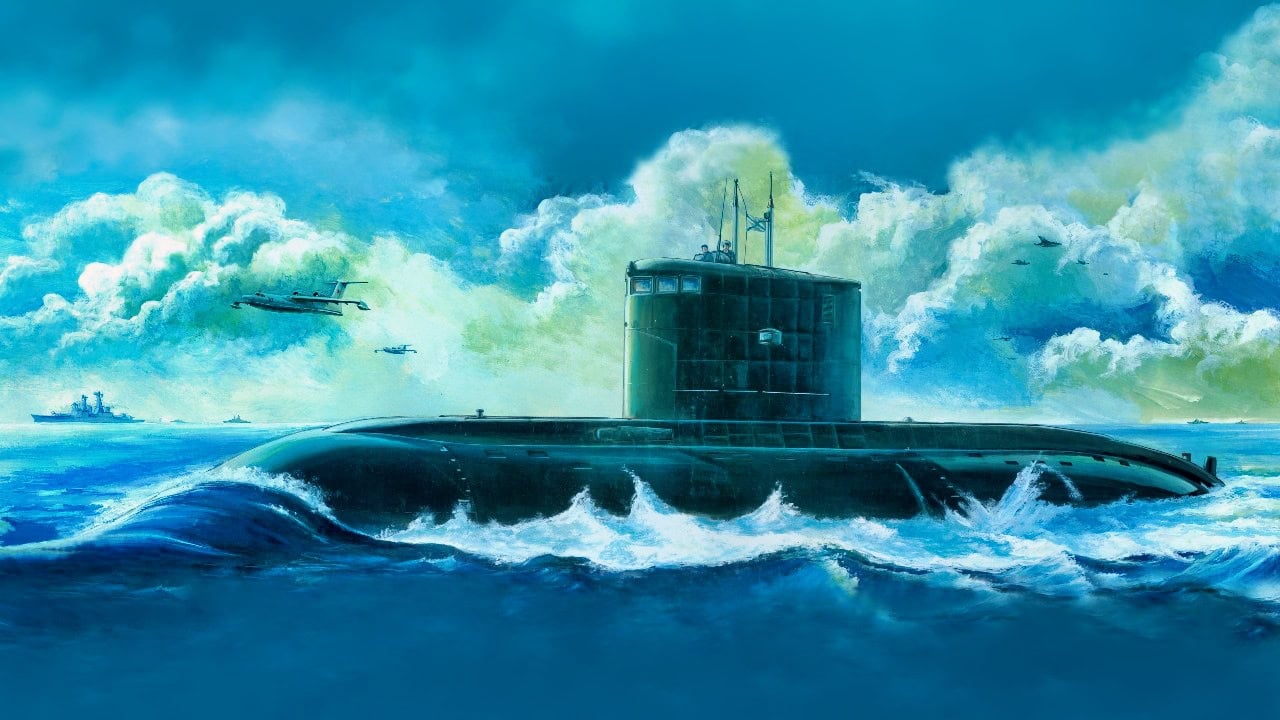
Summary and Key Points: The Kilo-class diesel-electric attack submarine was designed by the Soviet Union in the 1970s and remains in production today, in part because the intended successor, the Project 677 Lada class, suffered delays and failed to meet expectations. More than seventy Kilos have been built over four decades and more than sixty remain in service with the navies of Algeria, China, India, Iran, Myanmar, Poland, Vietnam and Russia. Vietnam contracted for six improved boats delivered between 2013 and 2017.
The Black Hole Submarines: Meet the Kilo-Class
Kilo-class Submarine. Image Credit: Creative Commons.
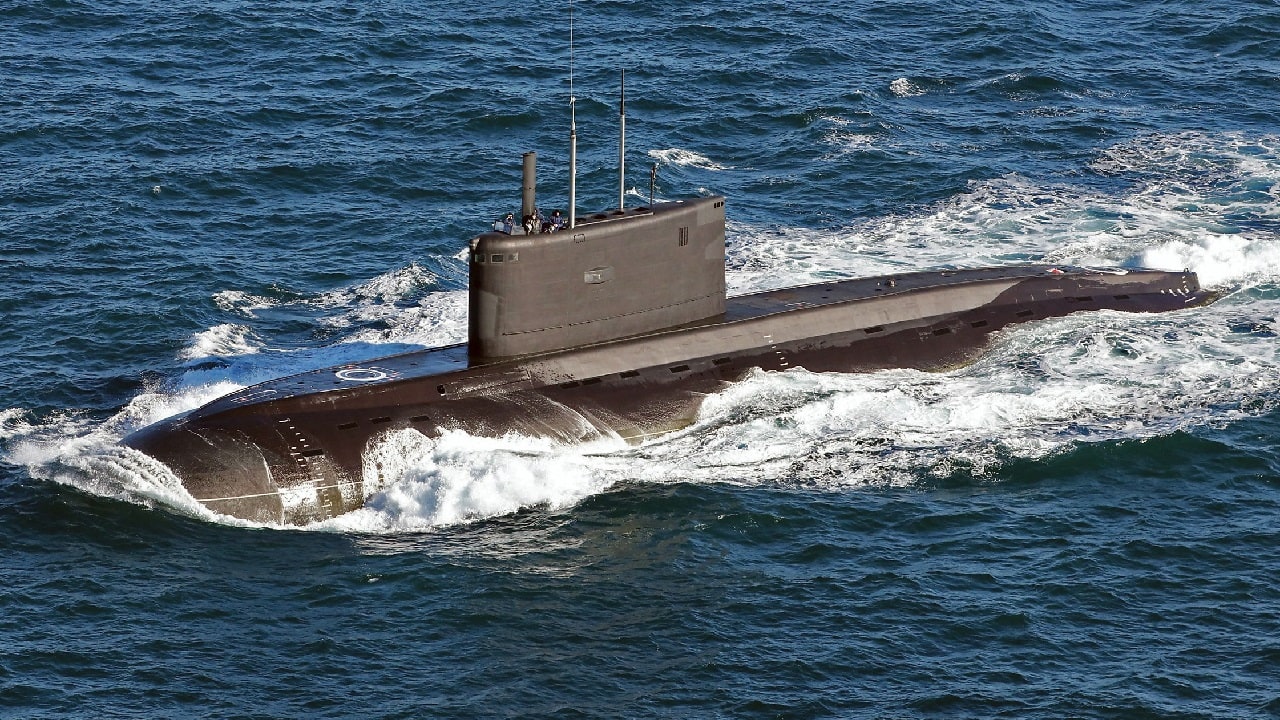
Pictured is a Kilo-Class Russian Submarine in the English Channel. The image was taken from Royal Navy Wildcat HMA2 Helicopter of 815 Naval Air Squadron. Kilo class is the NATO reporting name for the diesel-electric attack submarine.
Russia’s Kilo-class submarines, diesel-electric attack boats designed by the Soviet Union in the 1970s, were intended for coastal defense but remain a crucial asset in the Russian Navy.
Despite being an older design, the Kilo-class has been modernized over the decades, such as the Project 636 Varshavyanka, also known in NATO as the “Improved Kilo class of submarines, in addition to Project 677 Lada.
Nicknamed “The Black Hole” for their reported stealth, the modern Project 636.3 Improved Kilos combine diesel-electric stealth with long-range Kalibr cruise missiles, torpedoes, and mines, allowing Russia to threaten both ships and land targets from littoral waters.
The Very Successful Kilo-Class Was Sold To China, Vietnam, And Iran
“Russia’s Kilo-class diesel-electric submarine is one of the most successful naval programs in modern history. More than 70 Kilo-class units have been built during the past 40-plus years, and more than 60 remain in service with the navies of Algeria, China, India, Iran, Myanmar, Poland, Vietnam, and Russia,” wrote USNI writer Eric Wertheim.
China ordered its first two Project 877EKM Kilo-class submarines (commissioned in 1994–1995 and retired/scrapped by 2021). In 1996, China ordered two more upgraded Project 636 Kilo-class submarines.
In 2002, Beijing signed a deal for an additional eight upgraded Project 636 submarines, completing the purchase of 12 total vessels. They are used for littoral (coastal) defense in the shallow waters of the South China Sea.

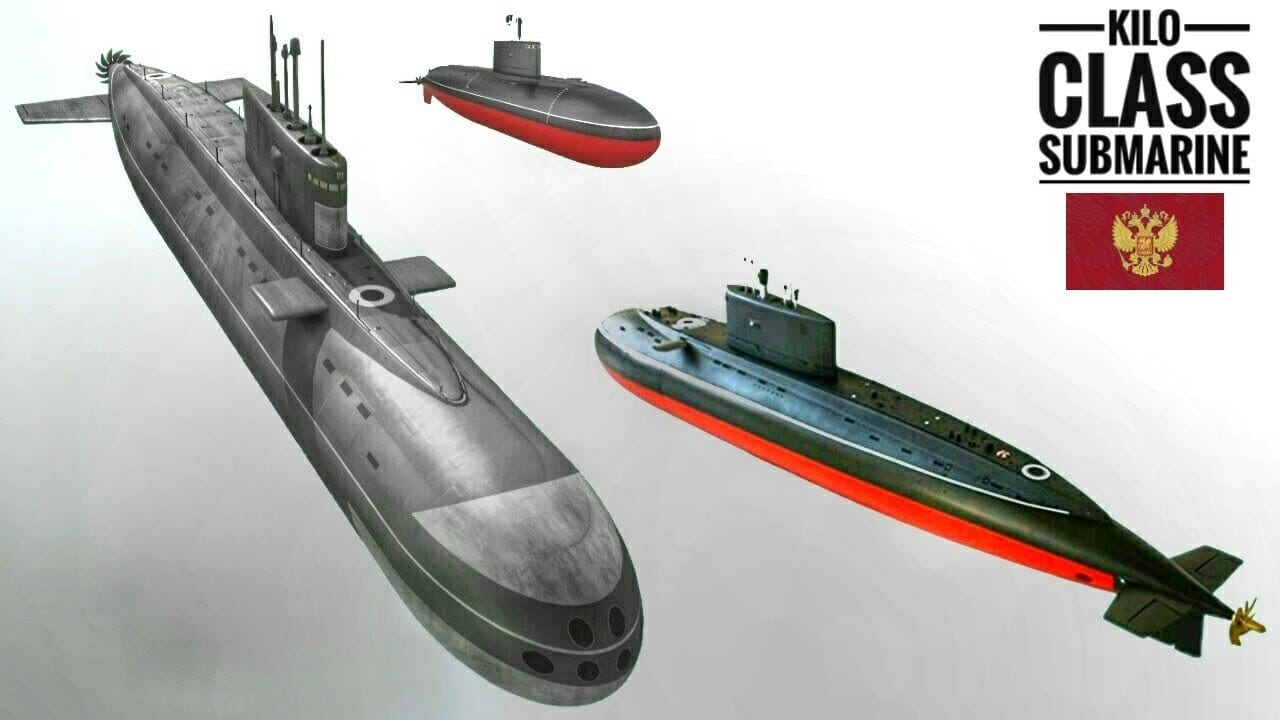
Kilo-Class Submarine Fleet. Image Credit: Creative Commons.
In 2009, Vietnam signed a $1.8 to $2 billion contract with Russia to buy six Project 636 Improved Kilo-class diesel-electric submarines. Deliveries ran from 2013 to 2017, significantly boosting Vietnam’s naval deterrence in the region.
Additionally, the deal includes training programs for the Vietnamese naval crew in Russia. This deal was the largest of all Russian naval equipment exports.
Russia sold three Project 877EKM Kilo-class diesel-electric submarines to Iran between 1992 and 1996. Known as the Tareq class in Iran, these quiet attack submarines cost roughly $250 to $600 million each and are based at Bandar Abbas to patrol the Persian Gulf and Gulf of Oman.
Right at the outset of Operation Epic Fury, US airstrikes targeted Iranian naval and submarine forces, and by early April, the White House said that U.S. operations had eliminated Iran’s submarine fleet, suggesting that its Kilo-class submarines were no longer a threat to US naval assets or shipping in the Strait of Hormuz.
Ukraine Sank The Kilo-Class Submarine Rostov-on-Don
Ukraine has claimed that it has launched a new, previously unreported “Sub Sea Baby” underwater drone and sank a Russian Kilo-class submarine during a missile strike on the port city of Sevastopol in occupied Crimea on August 2, 2024.
The submarine was previously damaged in a prior strike in September 2023, repaired by Russia, and subsequently sunk at its berth during the 2024 operation according to the Security Service of Ukraine (SBU).
In a press release, the SBU said “a Russian submarine of the class 636.3 ‘Varshavyanka’” was struck and “suffered critical damage and was actually put out of action.”
The modified sea drones have been given an extended range that allows them to cover over 1,500 kilometers (930 miles), a significant upgrade from their previous range of 600 miles, the SBU said in a statement shared on the Telegram messaging app.
The drones can carry up to 2,000 kilograms (4,400 pounds) of cargo and have reinforced engines and a modern navigation system.
“This was a joint operation of the 13th Main Directorate of Military Counterintelligence of the SBU and the Naval Forces of Ukraine,” the press release said.
The Russian Kilo-Class Submarines Specs
The first Kilo-class submarines entered service in the early 1980s. In the following decades, construction has taken place at multiple Soviet/Russian shipyards, progressing from the 877 design in the 1980s to the lengthened 636 design in the 1990s.
The 636, often called the Improved Kilo or Kilo II submarine, incorporated a range of enhancements. The 636 submarines featured improved quieting, propulsion, and automation.
Beginning in the 2010s, the 636 was further upgraded into the current variant, the Kilo Project 636.3, also known as the Improved Kilo II.
The design proved popular when the follow-on Lada-class submarine (Project 677) suffered delays and failed to meet expectations.
The Kilo’s design displaces roughly 2,350 tons surfaced and 3,100 tons submerged, though some sources place the figure as high as 3,950 tons.
Kilo II submarines are 242 feet long with a 32.5-foot beam and 20-foot draft. They are powered by two diesel generators with a single seven-bladed fixed-pitch propeller.
This provides a top speed of 17 knots surfaced or 20 knots submerged. The submarines have a 45-day endurance and operate with a crew of 52. Maximum diving depth has been reported as 984 feet.
The improved sonar systems have reduced the number of operators needed by automating the use of a single console.
Anechoic tiles are fitted to absorb the sound waves from the active sonar, resulting in reduced and distorted return signals.
These tiles also help lessen the sounds emitted by the submarine, thereby extending the range at which the sub may be detected by passive sonar.
Because they are diesel subs, Kilo-class boats have a short endurance of about 45 days.
They must surface or snorkel to recharge batteries. Kilo-class boats have a range of only 400 miles submerged and 7,500 miles while snorkeling.
However, thanks to its quiet internal machinery, vibration- and noise-isolation systems, and anti-acoustic rubber coating on the outer hull, the Kilo class remains entirely capable of slipping past modern detection systems.
Kilo-Class Submarine’s Armaments
Kilo-class submarines are fitted with six 21-inch bow torpedo tubes that can launch missiles, torpedoes, or naval mines.
Many Kilo-class submarines have been outfitted to launch Kalibr missiles from their torpedo tubes for long-range land attack or anti-ship operations. The submarines have space to carry a maximum of 18 torpedoes or 24 naval mines.
Only four Kalibr missiles can be carried as part of the Kilo armament mix. Russia’s Improved Kilo II–class submarines conducted long-range attacks against Islamic State targets in Syria during 2015.
Since 2022, Russian Black Sea Fleet 636.3 submarines have made extensive use of the Kalibr missile to attack Ukraine.
About the Author: Steve Balestrieri
Steve Balestrieri is a National Security Columnist. He served as a US Army Special Forces NCO and Warrant Officer. In addition to writing on defense, he covers the NFL for PatsFans.com and is a member of the Pro Football Writers of America (PFWA). His work was regularly featured in many military publications