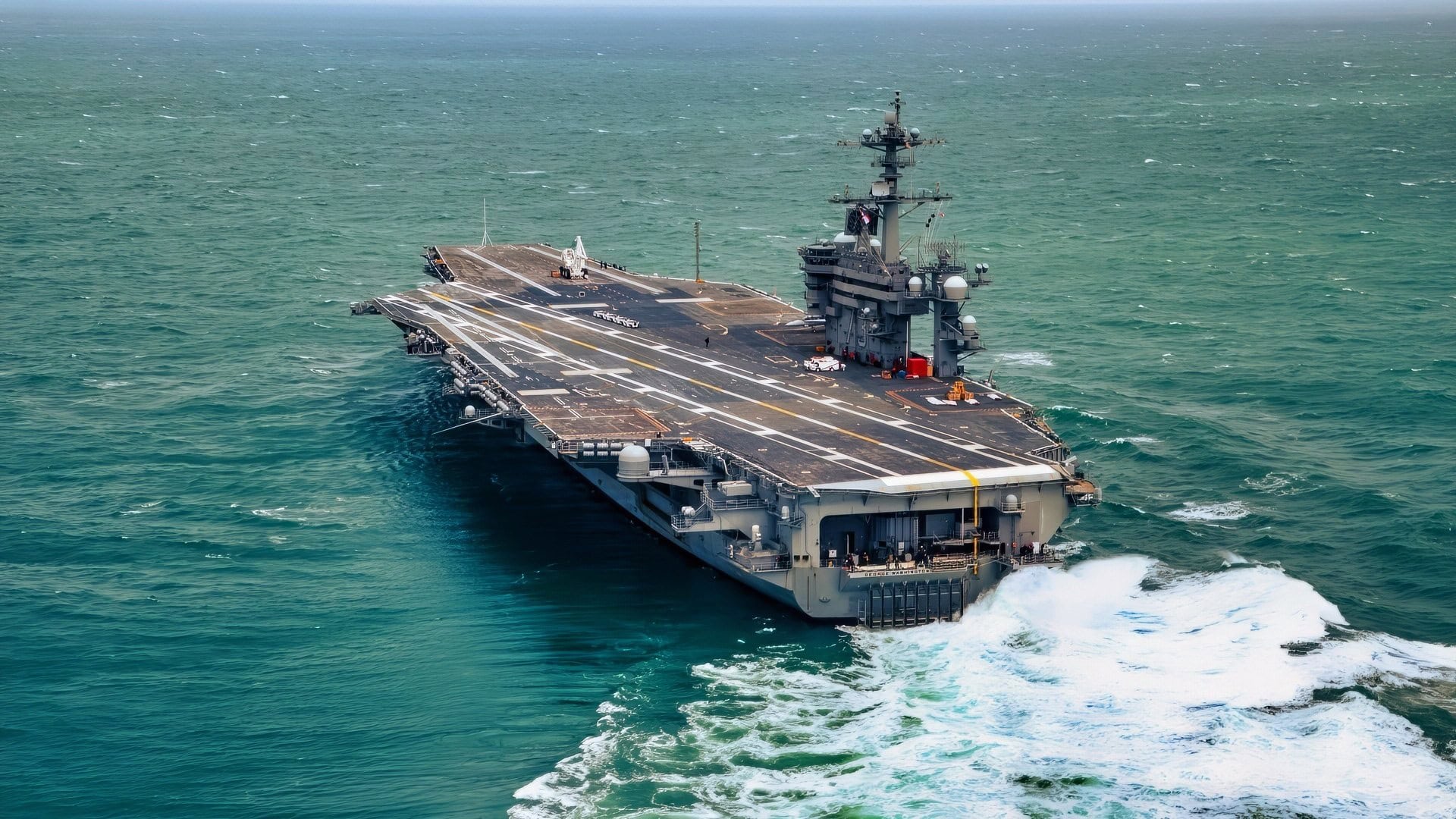
Just when it seemed as though the international scene could not get more violent and chaotic, what with the Ukraine War and the Iran War eating up everyone’s attention, the USS George Washington, a Nimitz-class aircraft carrier, and its attendant Carrier Strike Group (CSG) entered the South China Sea (SCS) earlier this week, as tensions between the People’s Republic of China (PRC) and the Philippines intensified.
Apparently, tensions between Beijing and Manila are flaring over two recent encounters at sea in disputed waters.
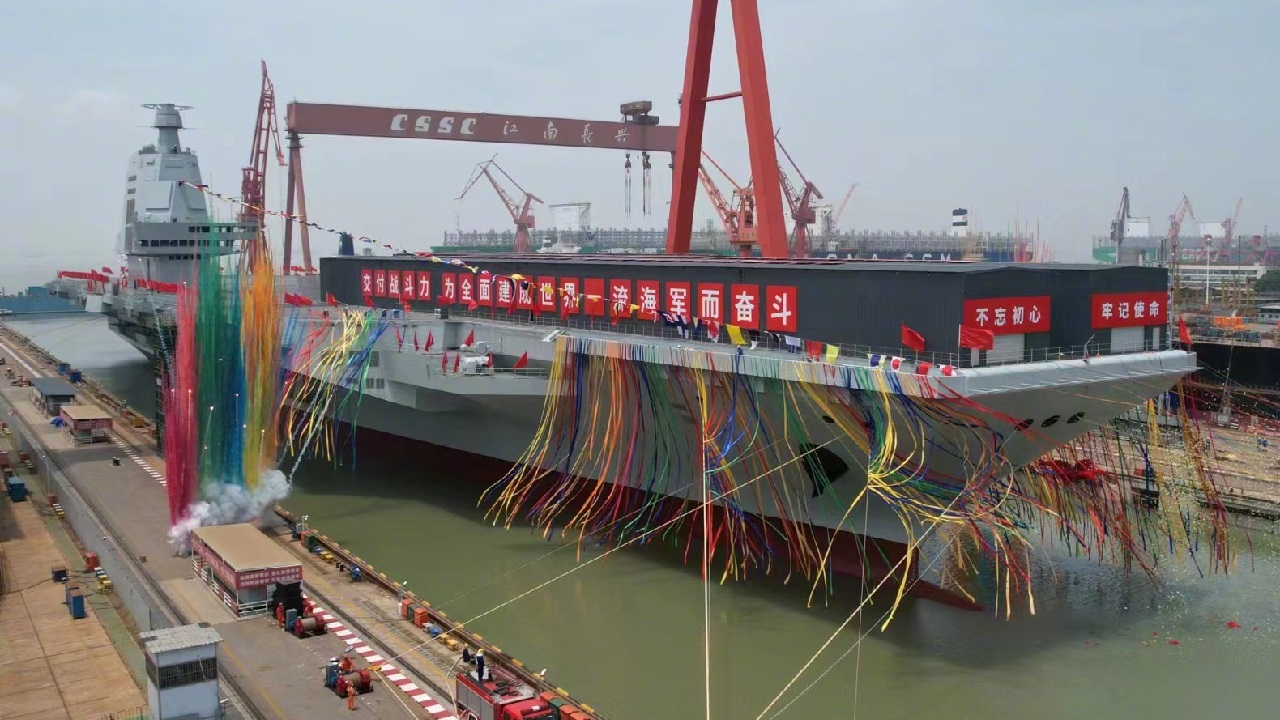
Fujian, China’s New Aircraft Carrier. Image Credit: Chinese Internet.
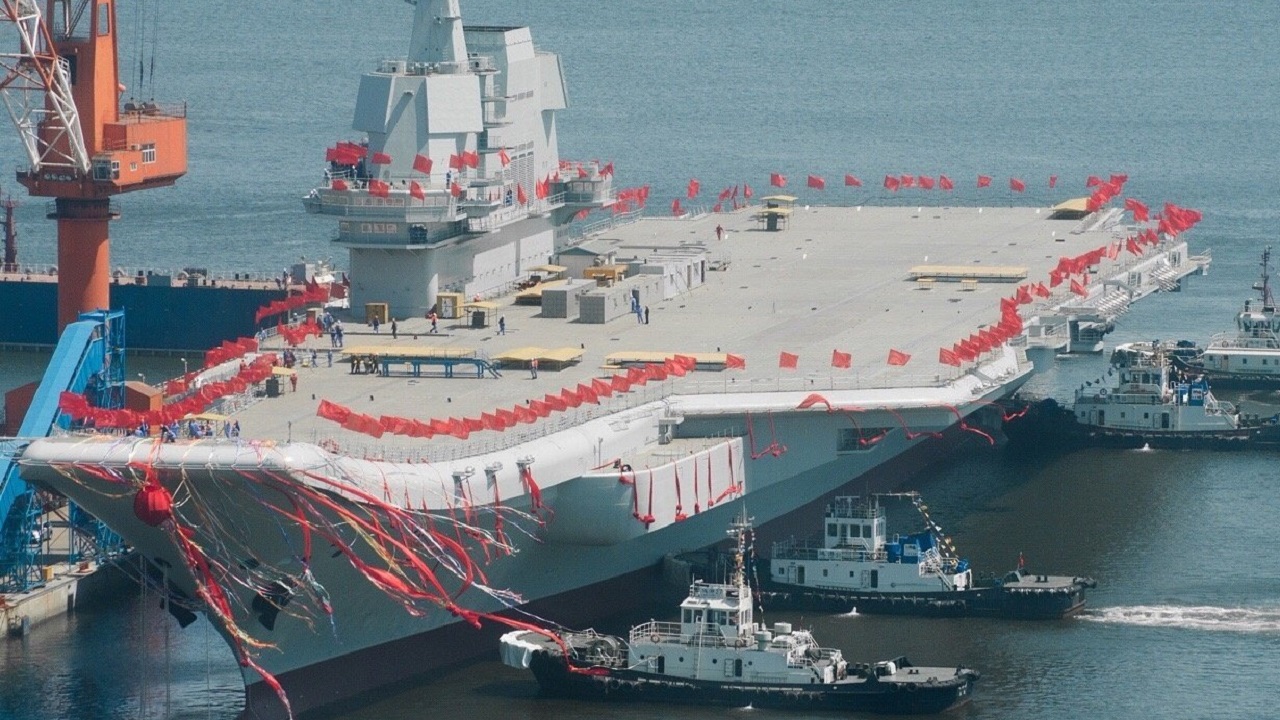
Fujian, China’s new aircraft carrier. Image Credit: Chinese Internet.
Thus, Washington’s decision to send one of its fully operational aircraft carriers, at a time when the Middle Eastern and European theaters of the global conflagration are demanding so much more attention from Washington policymakers, indicates how badly the global situation is breaking down.
Plus, the SCS, in some ways, is just a hop-skip away from the CENTCOM Area of Responsibility (AOR). So, even if the brewing crisis between Beijing and Manila did abate, the George Washington and its CSG would be near enough to the Mideast that it could backstop whatever greater level of escalation the Americans have planned there.
The carrier was already in the region, as it was participating in the Valiant Shield 2026 exercises alongside Japanese forces.
Why Was the Carrier Deployed?
The deployment came just days after confrontations involving Chinese and Philippine vessels near contested maritime features.
Asia’s regional crisis started on July 27. At that time, the Chinese Coast Guard dispatched one of their tiny inflatable boats near the Second Thomas Shoal.
Once on-site, Chinese Coast Guard elements engaged in what amounted to a melee with Philippine Coast Guard elements, resulting in a member of the Philippine Coast Guard being bludgeoned with a wooden baton. That Philippine Coast Guard member is set to make a full recovery.
Washington quickly condemned the incident, describing it as “destabilizing.” Of course, left unsaid was that Washington’s Valiant Shield exercise was viewed by Beijing as provocative, so in a sense, both major powers are destabilizing the local scene there.
A second confrontation occurred on July 24 near the contested Scarborough Shoal. Philippine officials said China Coast Guard vessels fired water cannons at ships belonging to the Philippine Coast Guard and the Bureau of Fisheries and Aquatic Resources.
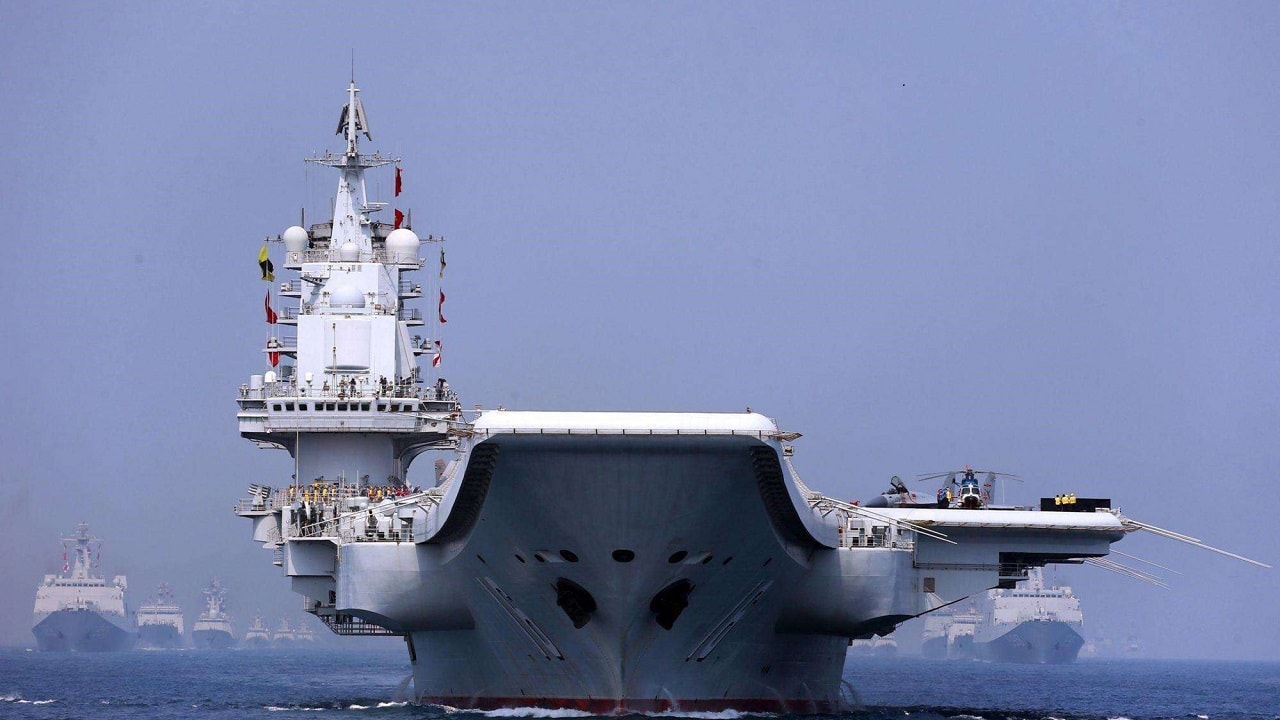
A Chinese Aircraft Carrier on the high-seas. Image Credit: Chinese Internet.
This incident signals a continued escalation in maritime disputes between Beijing and Manila, increasing regional tensions over territorial claims in the SCS.
American officials insist that the arrival of the CSG is unrelated to the ongoing crisis in the SCS between China and the Philippines. It is doubtful that Beijing (or Manila, for that matter) views it that way.
Understanding the Dispute in the SCS
Per the United States Naval Institute, US Ambassador to the Philippines Lee Lipton said the CSG’s capabilities, including embarked F-35 aircraft, demonstrate Washington’s commitment to freedom of navigation and overflight while challenging (what Washington views as) excessive maritime claims by Beijing.
Secretary of State Marco Rubio further demonstrated support for the movement during an Association of Southeast Asian Nations (ASEAN) foreign ministers’ meeting.
Rubio said the United States remained committed to its treaty obligations and highlighted that a US Coast Guard vessel already operating nearby helped separate opposing forces and assisted with evacuating the injured Philippine servicemember for medical treatment.
He said Washington would not abandon its allies in the region.
A Mutual Defense Treaty binds the Philippines and America together. However, there is some dispute as to the extent to which the treaty governs US-Philippine relations.
Most US defense officials argue that the treaty, in fact, includes attacks on the Philippines in the SCS. Thus, the entire crisis could soon escalate into a major geopolitical concern.
China claims most of the SCS through its expansive “nine-dash line” (Cow’s Tongue), a position long rejected by the Philippines and other ASEAN members.
Beijing maintains coast guard and other maritime militia patrols throughout the disputed areas despite the competing claims from the Philippines, Vietnam, Malaysia, Brunei, and Taiwan.
The US Position — Ready for Escalation?
Technically, the US does not take a position on sovereignty claims in the SCS. But the constant freedom of navigation operations (FONOPS) the US Navy conducts in the region, as well as the persistent engagement at the diplomatic level with these issues, underscores a real concern by the Americans about this matter.
At some point, given the current global geopolitical tensions, it stands to reason that this ancillary matter (from Washington’s perspective) could easily devolve into yet another hotspot on a growing list of global geopolitical hotspots.
The United States does not take a position on sovereignty claims but regularly conducts naval operations challenging what it considers unlawful maritime restrictions.
Given the current tensions, this incident could quickly escalate into a broader conflict, emphasizing the importance of regional stability and the risks of escalation.
About the Author: Brandon J. Weichert
Brandon J. Weichert is Senior National Security Editor. He also manages The Weichert Brief on Substack. Weichert also hosts “National Security Talk” on Rumble. He is the author of four bestselling national security books, the most recent of which is A Disaster of Our Own Making: How the West Lost Ukraine (Encounter Books). Follow him via Twitter/X @WeTheBrandon.