
The fragile ceasefire between Iran and the United States looks as tenuous as ever as tensions in the Strait of Hormuz have become more intense. Both sides are at each other’s throats, competing for control. On April 5, the Americans tried to open the strait. Cargo ships are trying to pass through unscathed, but violence persists. The United Arab Emirates has said that Iran has launched missiles and drones at the country’s oil facilities.
Iran is as defiant as ever. The Associated Press reported that the head of Tehran’s negotiating team and its parliament’s speaker said that America is undermining peace efforts and that Iran would respond militarily to U.S. provocations.
Strait of Hormuz Crisis: It’s Been an Action-Packed Week Already
The U.S. Department of Defense said that two American-flagged cargo ships had made it through the strait on May 4 and that the U.S. Navy had destroyed more than six Iranian swift boats. Iran claimed two of its commercial vessels were also sunk in an action that reportedly killed five civilian mariners.
Can the Ceasefire Hold?
Secretary of Defense Pete Hegseth said Tuesday that the ceasefire is still holding. The United States’ operation to keep the strait open is called Project Freedom, and the Navy will escort allied shipping through the strategic waterway. CBS News reported that this will be a “temporary” action.
CBS also said that the Navy had to defend itself against a flight of missiles while accompanying the merchant vessels.
The U.S. Military is Ready to Defend Itself
“We expected there would be some churn at the beginning, which happened, and we said we would defend and defend aggressively, and we absolutely have,” Hegseth told journalists.
Hegseth said “Iran knows” the U.S. military is ready to execute Project Freedom, “and ultimately the president’s going to make a decision whether anything were to escalate into a violation of a ceasefire. But certainly we would urge Iran to be prudent in the actions that they take to keep that underneath this threshold.”

STRAIT OF HORMUZ (Nov. 12, 2021) Guided-missile destroyer USS O’Kane (DDG 77) performs a Strait of Hormuz transit with the amphibious assault ship USS Essex (LHD 2), Nov. 12. Essex and the 11th Marine Expeditionary Unit are deployed to the U.S. 5th Fleet area of operations in support of naval operations to ensure maritime stability and security in the Central Region, connecting the Mediterranean and the Pacific through the western Indian Ocean and three strategic choke points. (U.S. Navy photo by Mass Communication Specialist 1st Class Joe Rolfe)
Look Out for War to Spark Again
Chairman of the Joint Chiefs of Staff General Dan Caine also addressed the media with Hegseth. Caine said that the United States is ready to begin a shooting war if Iran continues with its aggression.
“No adversary should mistake our current restraint with a lack of resolve,” he said. Caine explained that the Navy guided missile destroyers are “detecting and defeating Iranian threats.” The general claimed that at least 100 warplanes are patrolling the Strait. In total, the United States has over 15,000 personnel in the Central Command area of responsibility.
“Commercial vessels that transit through the area will see, hear, and frankly feel U.S. combat around them — on the sea, in the skies, and on the radio,” Caine said at the briefing.
Economic Blow Back
West Texas Intermediate crude was $102 as of 10 a.m. on May 5. Americans are concerned about pain at the pump. The Trump administration said the price of oil will fall as soon as the crisis in the Strait of Hormuz abates. Fertilizer is also scarce because it needs to be shipped through the strait.
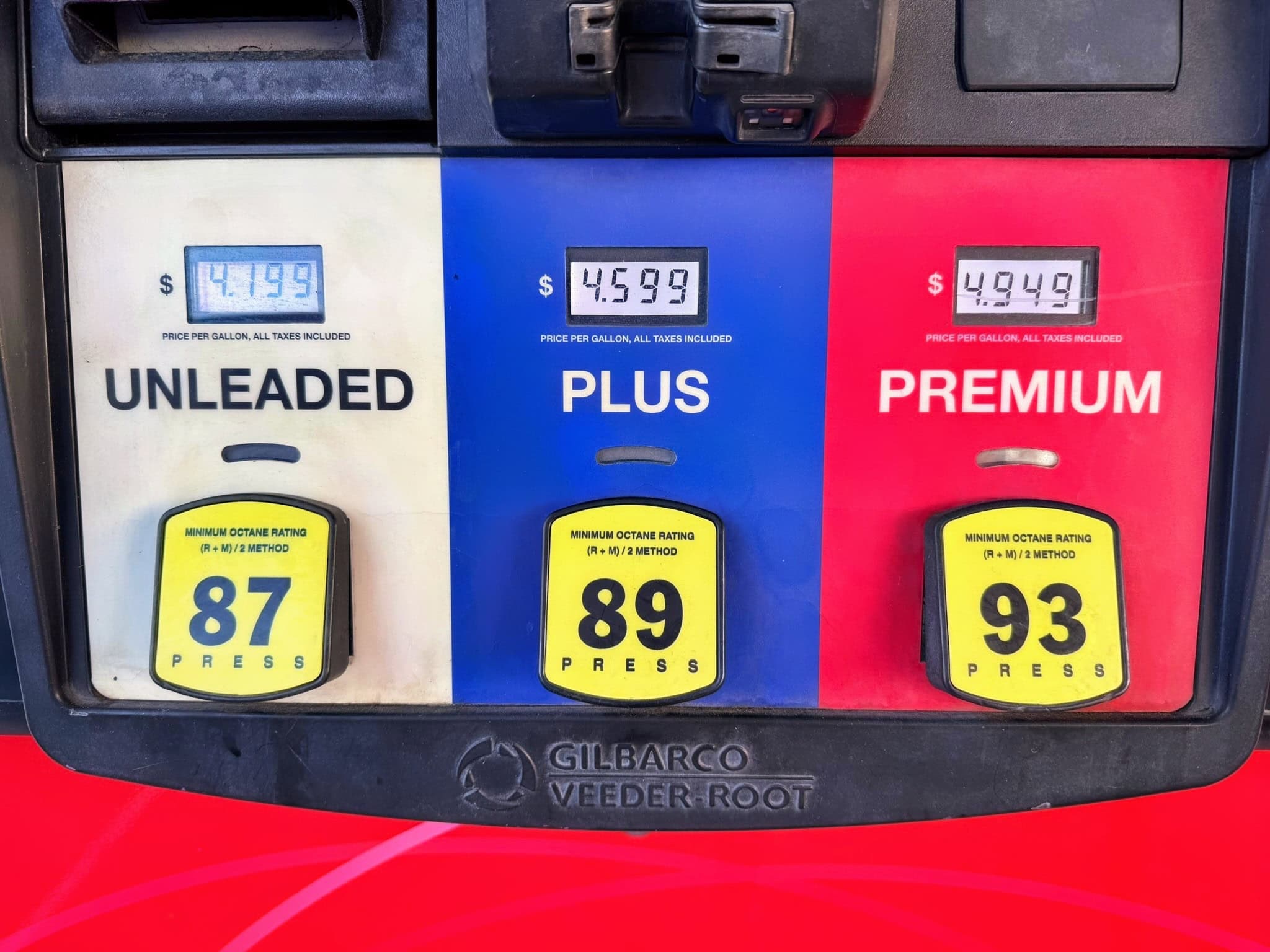
Gas Prices in Lakeland, Florida. Image Credit: 19FortyFive.com
Where Are U.S. Allies?
It is unclear whether other countries will assist in escorting civilian ships through the waterway. President Donald Trump has been frustrated that NATO allies have not assisted the Americans in their war that European countries believe is a military adventure. However, energy prices have been high on the continent, leading to frustration among NATO members.
A South Korean ship was hit by Iranian fire on May 4, and Trump called on the South Korean military to participate in the escort project. However, it appears that the Americans may have to go it alone.
Iran Gets a ‘Vote’ In This Crisis
“So now we’ve seen the U.S. take this position that it’s going to reopen the strait. The Pentagon press conference just now aimed to send the message that everything’s fine and the Strait is open. The U.S. isn’t the only one that gets a vote in that because they still have to make sure the ships want to actually go through it, that they trust the U.S. can protect them, and insurers are willing to take that chance,” Patty Culhane wrote for Al Jazeera.
Could the War Restart Today?
Escorting friendly ships is a risky operation. The Iranians are liable to launch missiles and drones, and the United States will likely fire back, ending the ceasefire.
Iran has the wherewithal to keep the pressure on civilian shipping and keep most of the strait closed. The situation is changing by the hour, and there could be casualties and a resumption of the war. If an American ship is damaged or destroyed, Trump’s national security team is liable to order the war to resume.
What if Trump decides to declare victory and remove forces from the Strait? This would allow Iran to create a traffic snarl and close the waterway again for weeks, if not months. However, the United States appears to be in this for the long haul, and it will frustrate many Americans who have told pollsters they are against the war.
What Is the State of Stock Prices On This News?
Peace negotiations appear to be on hold as the United States’ escorting project unfolds. Financial markets will be reacting to what happens. The S&P 500 opened slightly higher on May 5, but could dive on news that more violence breaks out in the Strait.
Diplomacy Needs to Save the Day
If there is any time for diplomacy, it is now. Though there is officially a ceasefire, it could break at any moment, leading to more U.S. air strikes on Iranian missile, drone launching targets, and swift boat launch sites.
We will keep you updated throughout the day on developments in the Strait of Hormuz. This is one of the biggest flashpoints in recent years. Both the United States and Iran have itchy trigger fingers, and it will take only one hit on an American ship for new attacks against Tehran.
About the Author: Dr. Brent M. Eastwood
Author of now over 3,500 articles on defense issues, Brent M. Eastwood, PhD, is the author of Don’t Turn Your Back On the World: A Conservative Foreign Policy and Humans, Machines, and Data: Future Trends in Warfare, plus two other books. Brent was the founder and CEO of a tech firm that predicted world events using artificial intelligence. He served as a legislative fellow for US Senator Tim Scott and advised the senator on defense and foreign policy issues. He has taught at American University, George Washington University, and George Mason University. Brent is a former US Army Infantry officer. He can be followed on X @BMEastwood.