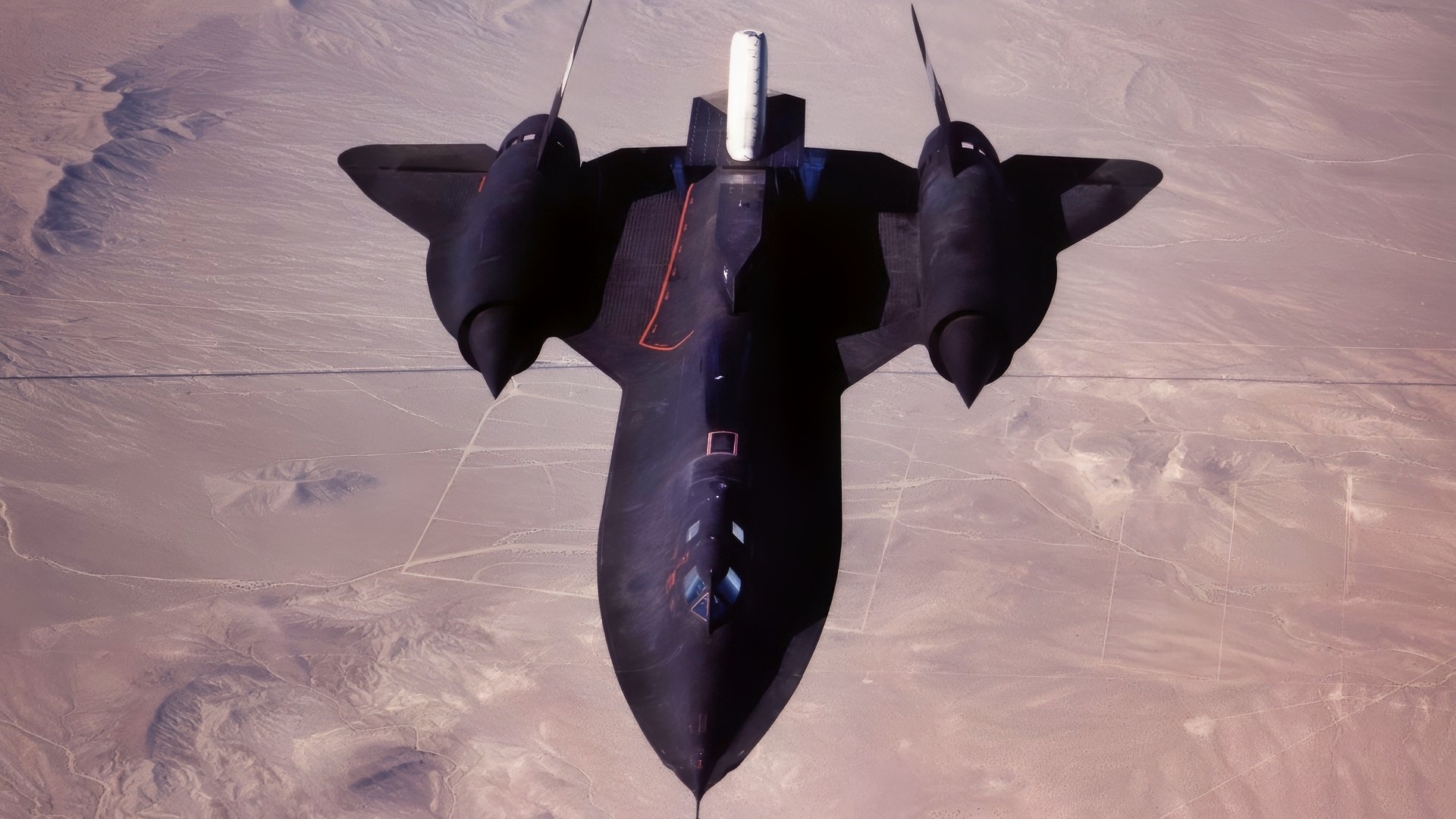
How the SR-71C Was a “Frankenstein” Plane Cobbled Together From Two Other Planes – Everyone knows the SR-71 Blackbird is one of the most incredible and innovative planes ever designed. Its triangular, all-black appearance still conjures the imaginations of aviation enthusiasts everywhere. Legendary Lockheed Skunk Works engineer Clarence “Kelly” Johnson designed the plane. Blackbird was made for one thing: to outrun Soviet air defenses and interceptors so the plane could capture detailed surveillance of the USSR’s most sensitive areas.
SR-71C: A Frankenstein Plane

SR-71 Art from U.S. Government Archive.
But one SR-71 variant caught everyone’s attention. Harrison Kass at The National Interest once called it a “Frankenstein” aircraft.
Lockheed engineers dubbed this variant “The Bastard.” Designated SR-71C, serial number 61-7981, this specific plane was built from components of two different aircraft. Indeed, the SR-71C was the only variant of its type and the last SR-71 ever manufactured.
Lockheed engineers cobbled the SR-71C together from two different aircraft. So, the SR-71C’s forward fuselage derived from an engineering mock-up never meant to fly, and its rear section came from an experimental interceptor. Because of its unique attributes, this SR-71 version suffered serious handling problems.
On January 11, 1968, one of the United States Air Force’s two SR-71B trainers crashed. That was a specialized training variant of the SR-71A reconnaissance aircraft. Both required two crewmembers to operate. The trainer had a raised rear cockpit that gave the instructor pilot improved forward visibility. It was key to safely training new Blackbird pilots to operate a plane unlike anything else in existence at the time (and still unique today).
The Air Force needed another aircraft to support the essential training program for potential Blackbird pilots. At the same time, the Air Force couldn’t build a new SR-71B from scratch because of cost and production limits.
That’s when Lockheed got creative and combined two different planes into one. By taking the fuselage from the mothballed YF-12A interceptor prototype, engineers had a basis for creating the SR-71C.
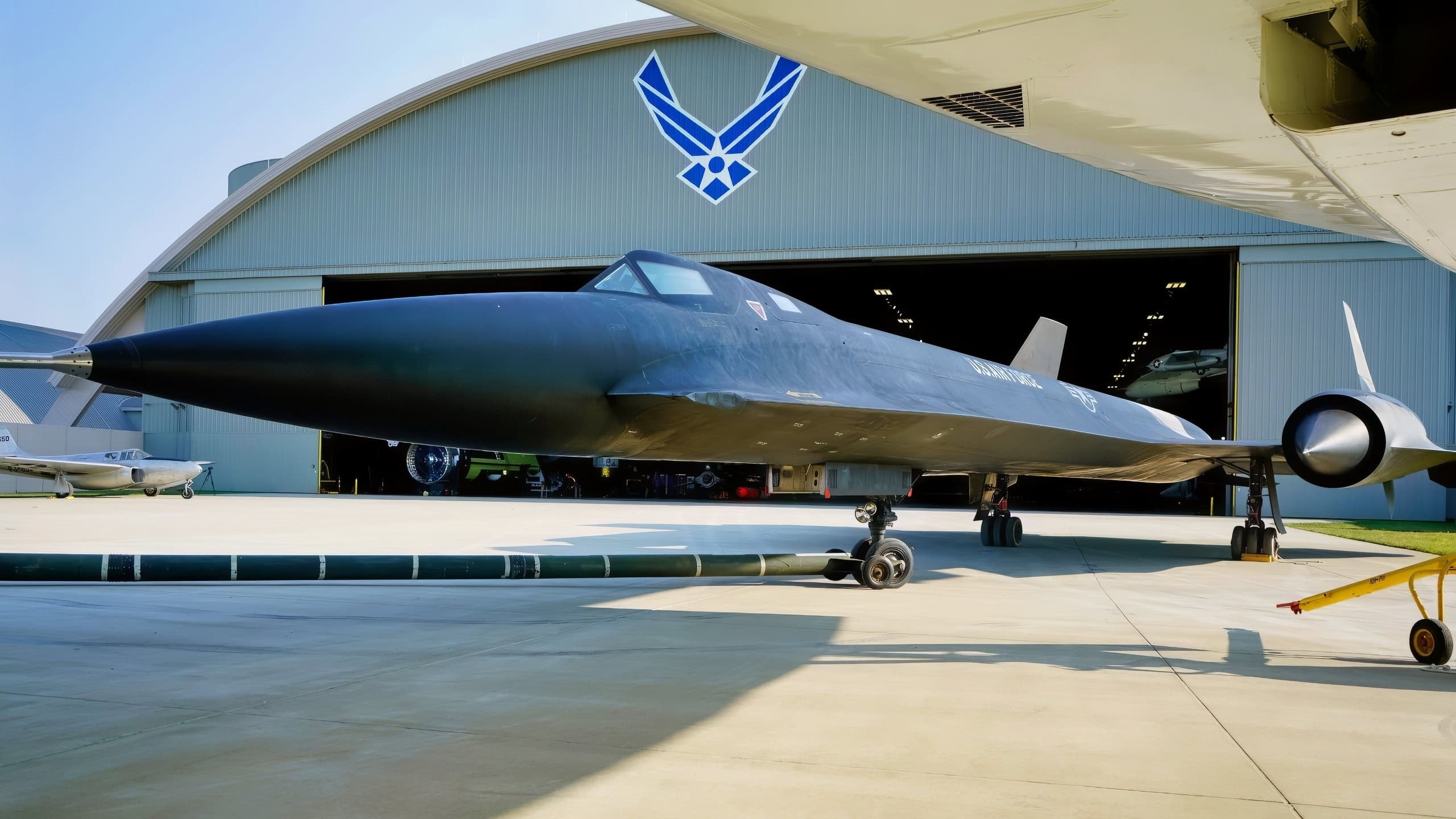
The YF-12 was developed in the 1960s as a high-altitude, Mach 3 interceptor to defend against supersonic bombers. Based on the A-12 reconnaissance aircraft, the YF-12A became the forerunner of the highly-sophisticated SR-71 strategic reconnaissance aircraft. Image Credit: Creative Commons
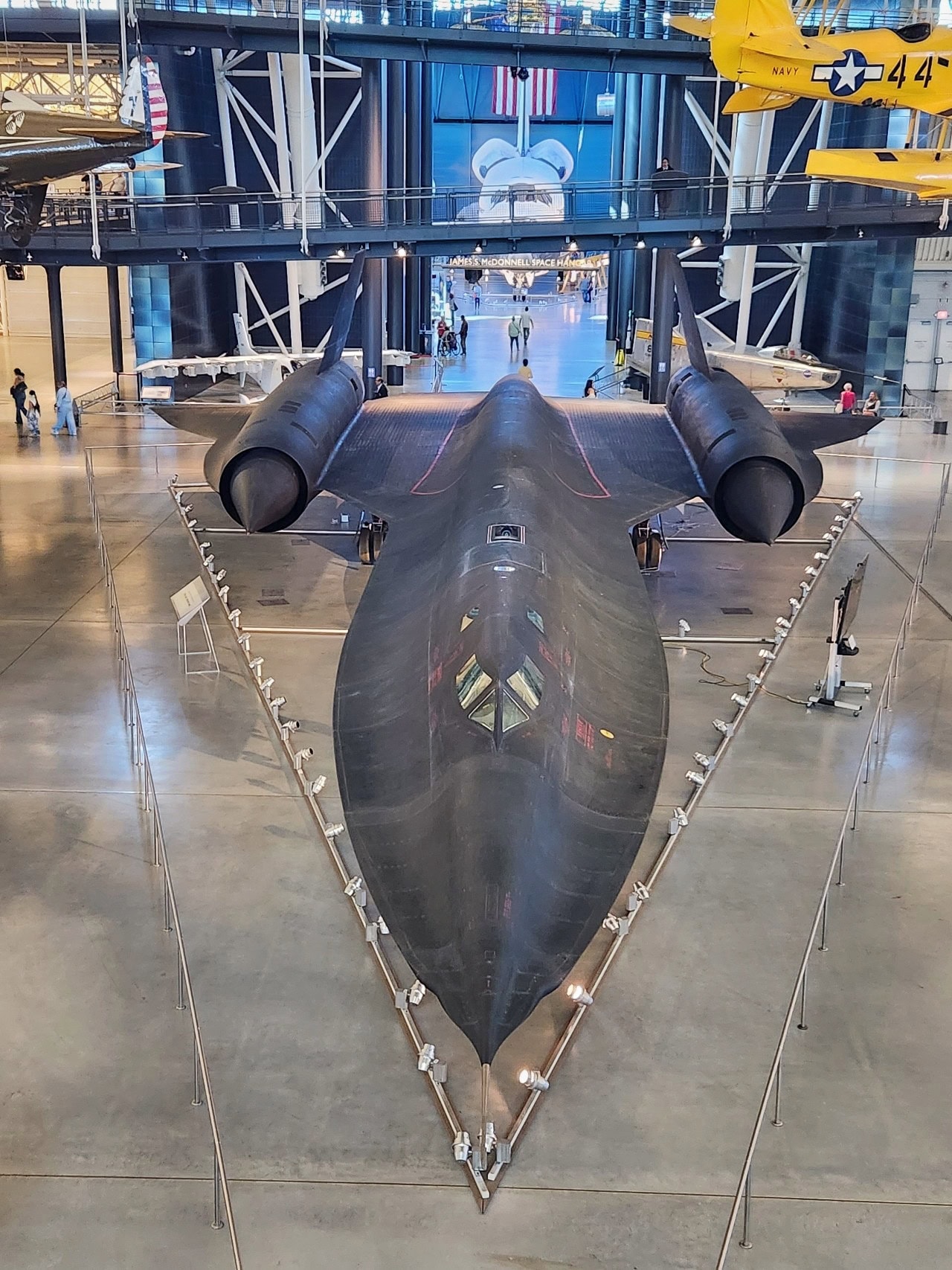
Longshot of SR-71. Image Credit: 19FortyFive.com

SR-71 Blackbird at the Smithsonian 19FortyFive.com Photo
On March 14, 1969, Lockheed test pilot Robert J. Gillibrand flew the SR-71C for the first time. Steve Belgeau served as the reconnaissance systems officer (RSO) for the maiden flight. The two Lockheed test pilots experienced dangerous, unusual handling during the flight.
Problems with the SR-71C’s trim and subsequent control issues alerted the Lockheed crew that something was drastically wrong with this hybrid–Frankenstein–Blackbird’s configuration.
A Freakshow In the Sky
The issues that arose from the SR-71C’s configuration might have seemed minor on any other plane. But the Blackbird was no ordinary plane. It wasn’t even just another warplane.
This system was an engineering miracle.
Made of titanium that expanded by several inches at top speed, the system had to be specially designed to accommodate that expansion. It required special Jet Propulsion-7 (JP-7) fuel. The plane burned so hot at top speed that its internal systems risked overheating, so JP-7 fuel also served as coolant as it passed to the engines.
One wrong move and the entire plane could destroy itself. Now add the unintended problems of a hybridized bird like the SR-71C, and you’re talking serious problems.
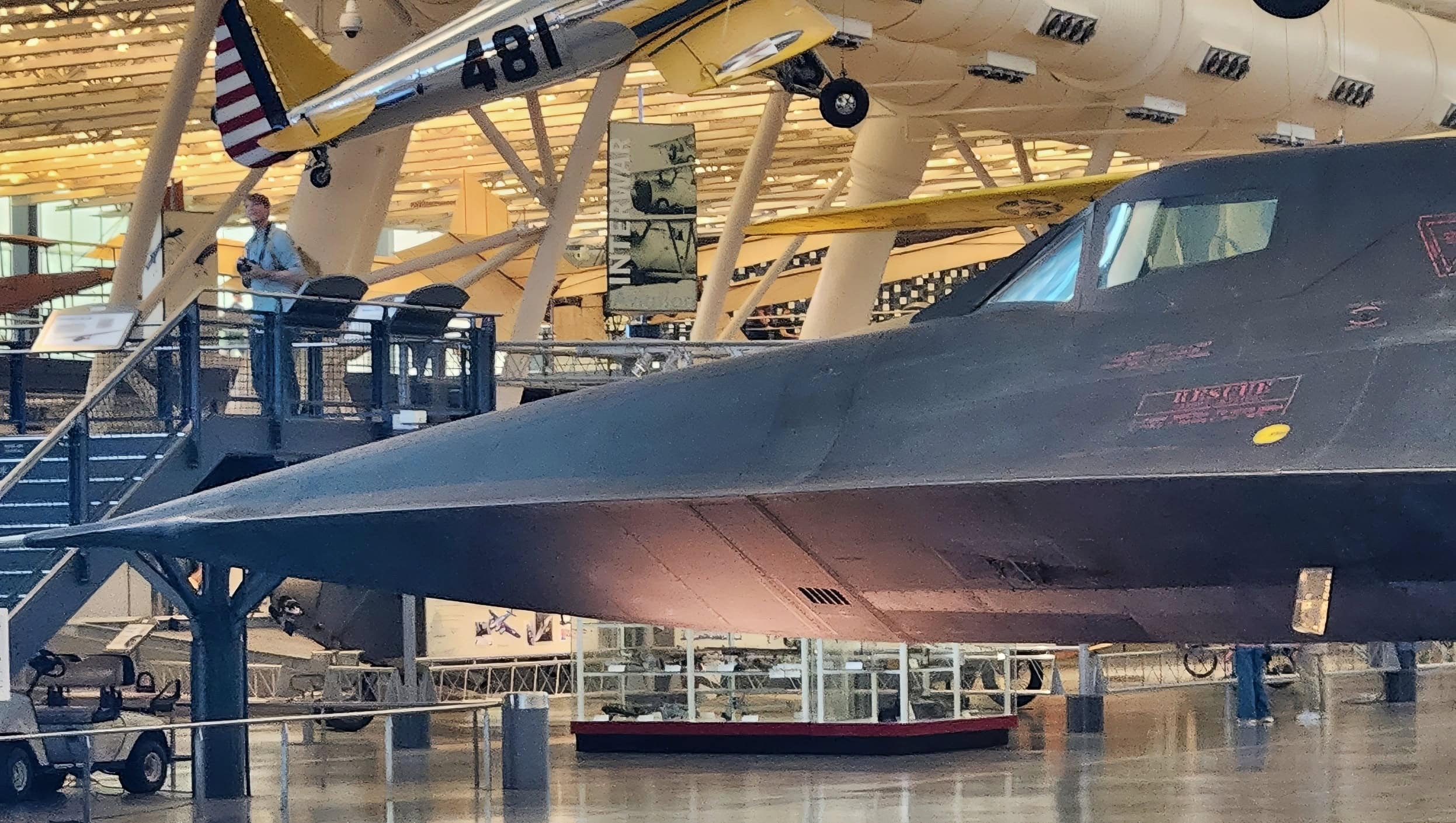
SR-71 Blackbird at Smithsonian. Image Credit: 19FortyFive.com
The SR-71 generally relied on its integrated airframe, propulsion system, flight controls, and highly sophisticated engine inlet mechanisms to keep it from flying apart.
Two powerful Pratt & Whitney J58 engines generated 32,500 pounds of thrust each (with afterburners operating). Once the plane reached speeds exceeding Mach 3, the variable-geometry inlet system controlled airflow and ensured peak engine performance.
If one inlet malfunctioned, the plane would endure aerodynamic drag and become unstable. So, during Air Force acceptance testing at Edwards Air Force Base, test pilots flew the SR-71C 16 times over several weeks to identify the source of its problems.
They discovered that the variable inlets and their associated bypass doors weren’t properly synchronized. The aircraft also required rudder trimming that increased aerodynamic drag.
How a Piece of String Proved Expensive Flight Controls Wrong
Engineers began running experiments to make the SR-71C viable because the Air Force required a training plane. One experiment Lockheed ran on the SR-71C involved placing a Nomex yarn indicator on the aircraft to visualize airflow as it flew.
Meanwhile, the cockpit’s beta indicator showed that the plane was flying with around four degrees of yaw. By contrast, the yarn stayed centered the whole time, meaning the plane was aligned with the correct airflow.
It was an instrumentation problem. Lockheed fixed the problem, and the SR-71C’s flight performance improved considerably.
After that, the SR-71C was a good replacement for the lost SR-71B trainer, except that it lacked one of its predecessor’s fuel tanks.
That was unusual because the Blackbird required midair refueling to support its long-distance reconnaissance missions.
Nevertheless, the SR-71 was a close enough approximation to the SR-71B that the Air Force could rest easy knowing it had two functional trainers again.
Limited Flight Time
Because operating even trainer planes was expensive, the Air Force flew the SR-71C little.
The Frankenstein SR-71C helped acclimate new Blackbird pilots and support other limited mission sets, but the airframe’s maintenance and logistical costs meant the Air Force used it sparingly.
The Air Force removed the SR-71C from flying status on June 24, 1976.
Today, the SR-71C sits at the Hill Aerospace Museum at Hill Air Force Base, a reminder of a time when the Air Force had one of the most unusual and successful long-range, Mach 3 reconnaissance platforms out there (and how innovative Lockheed had to be to support that decades-long program throughout the Cold War).
About the Author: Brandon J. Weichert
Brandon J. Weichert is the Senior National Security Editor at 19FortyFive.com. He also manages The Weichert Brief on Substack. Weichert is the co-host for The Mario Nawfal Show on Twitter/X. He is the author of four bestselling national security books, most recently A Disaster of Our Own Making: How the West Lost Ukraine (Encounter Books). His next book, Fortress Americas: A New Monroe Doctrine (Tucker Carlson Books), is due out December 8. Follow him via Twitter/X @WeTheBrandon.