
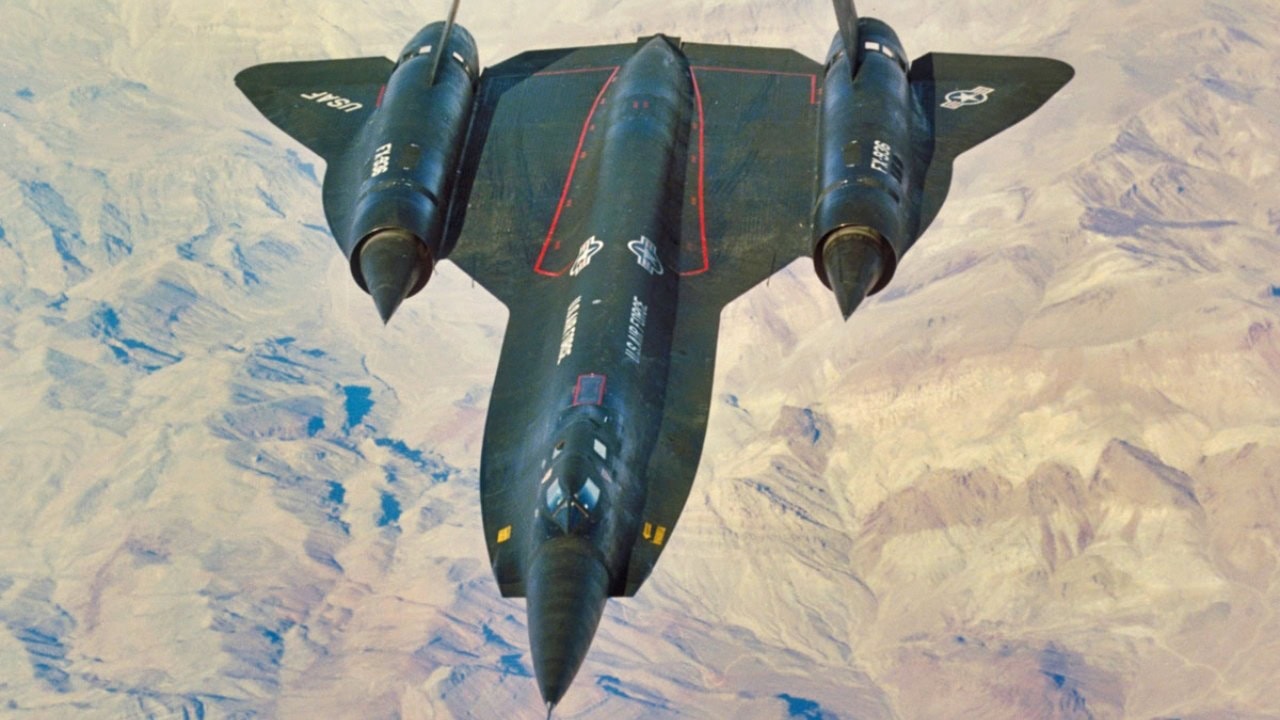
We Visited a YF-12A – Please See the Pictures We Took Below: Somewhere over the western United States in the mid-1960s, a Lockheed YF-12A travelling at Mach 3.2 and 75,000 feet fired a missile at a QB-47 drone flying about 500 feet above the ground, and hit it. That is close to fourteen miles of vertical separation, against a target buried in ground clutter, from an aircraft moving faster than any interceptor before or since. The YF-12 was the armed version of the Blackbird — the same titanium airframe as the CIA’s A-12 and the later SR-71, with the cameras replaced by the Hughes AN/ASG-18 radar and a bay full of AIM-47 Falcon missiles. The Air Force wanted 93 of them. It got none.
The YF-12A Explained
As the Pentagon accelerates work on hypersonic weapons, next-generation interceptors, and high-speed strike systems intended to survive inside increasingly dangerous Chinese and Russian air defense networks, the U.S. military is once again confronting a problem Lockheed’s Skunk Works attempted to solve more than sixty years ago: how to survive and fight in heavily defended airspace when conventional aircraft may no longer be fast enough.
Long before today’s Pentagon debates about whether future aircraft may need to combine stealth with extreme speed to survive increasingly sophisticated air defense systems, Lockheed had already built the YF-12A, a Mach 3 interceptor derived from the CIA’s secret A-12 reconnaissance aircraft and closely related to the later SR-71 Blackbird.
Developed for the U.S. Air Force during the 1960s and tested at Edwards Air Force Base in California, the aircraft was designed to destroy Soviet bombers at extreme range, altitude, and speed using long-range missiles and one of the most advanced airborne radars ever created.
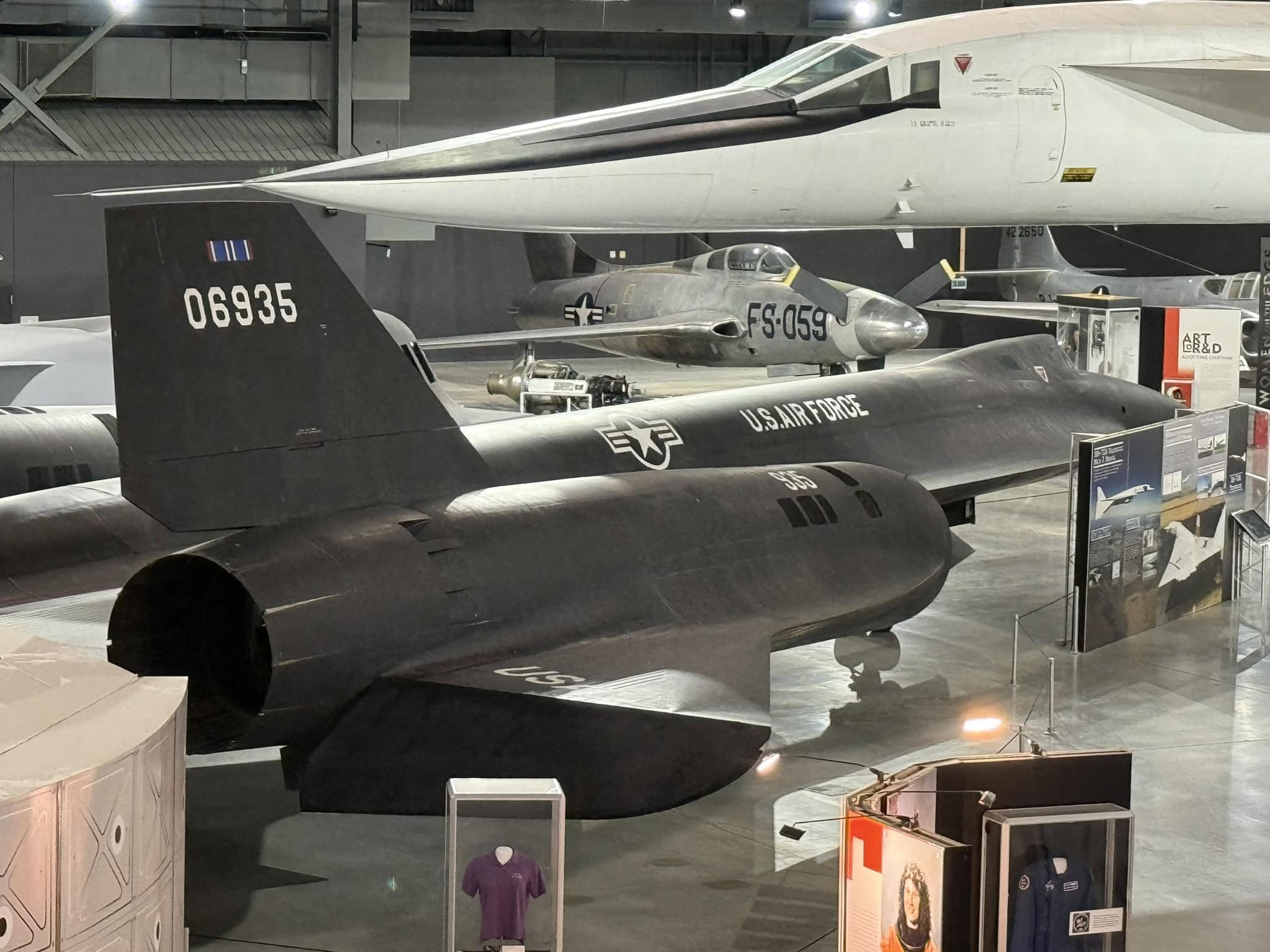
YF-12A. Image taken by Harry J. Kazianis at National Museum of the Air Force for 19FortyFive.com
The Air Force planned to procure an operational production variant, the F-12B, but Defense Secretary Robert McNamara ultimately canceled the program as Vietnam War costs rose and Pentagon priorities shifted toward ballistic missiles and nuclear deterrence.
The Armed Version of the SR-71 Blackbird
The YF-12A was not simply an experimental offshoot of the SR-71 program. It was part of the same Blackbird family developed by Lockheed’s Skunk Works under famed aerospace engineer Clarence “Kelly” Johnson.
The CIA’s A-12 OXCART reconnaissance aircraft came first, followed by the armed YF-12 interceptor variant and eventually the SR-71 strategic reconnaissance aircraft operated by the U.S. Air Force.
All three aircraft shared major structural and aerodynamic characteristics, including long chines, sharply swept delta wings, and extensive titanium construction required to withstand sustained Mach 3 flight.
YF-12A. 19FortyFive.com Image from National Museum of the U.S. Air Force.
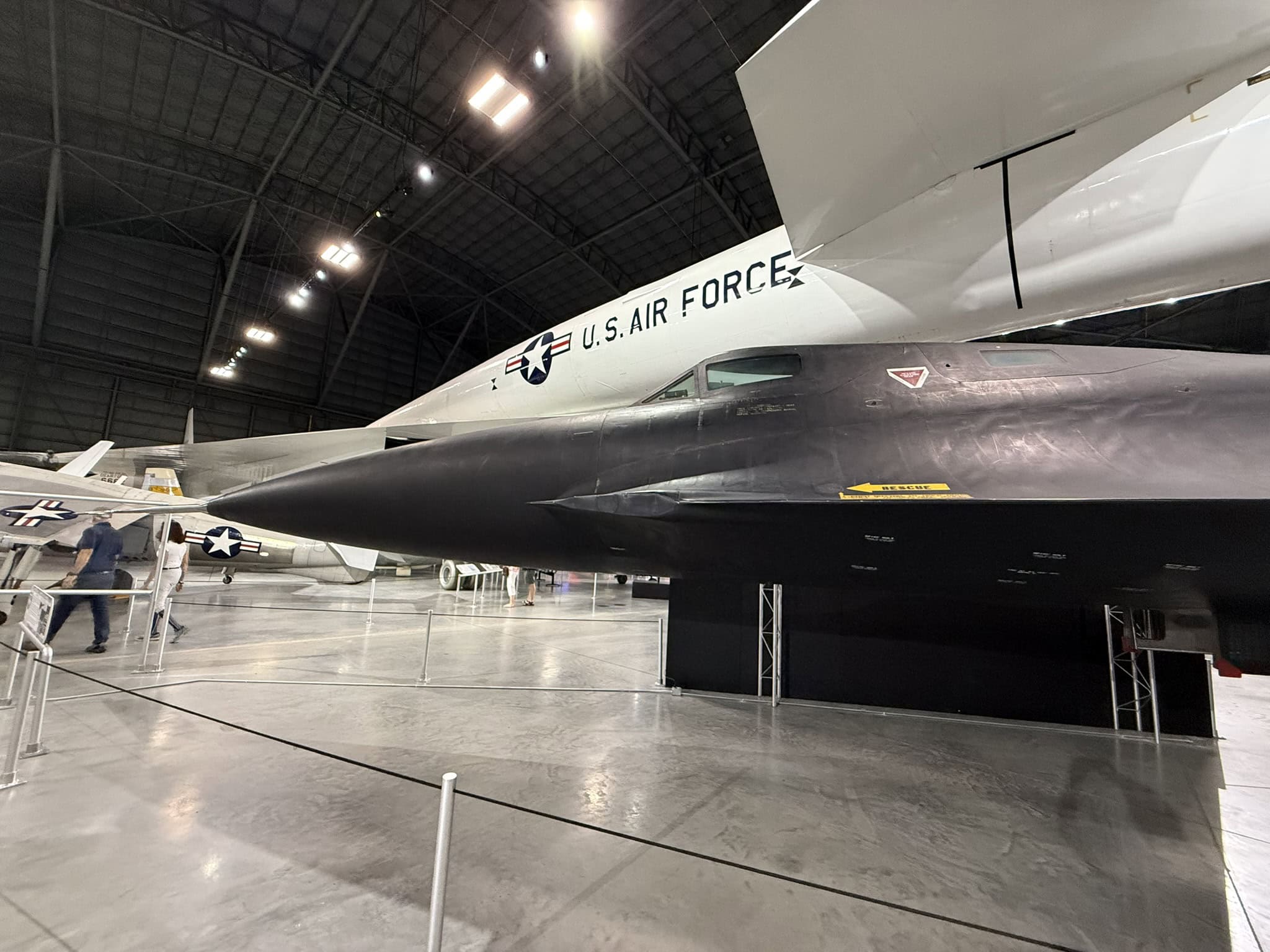
YF-12A. 19FortyFive.com Image from National Museum of the U.S. Air Force.
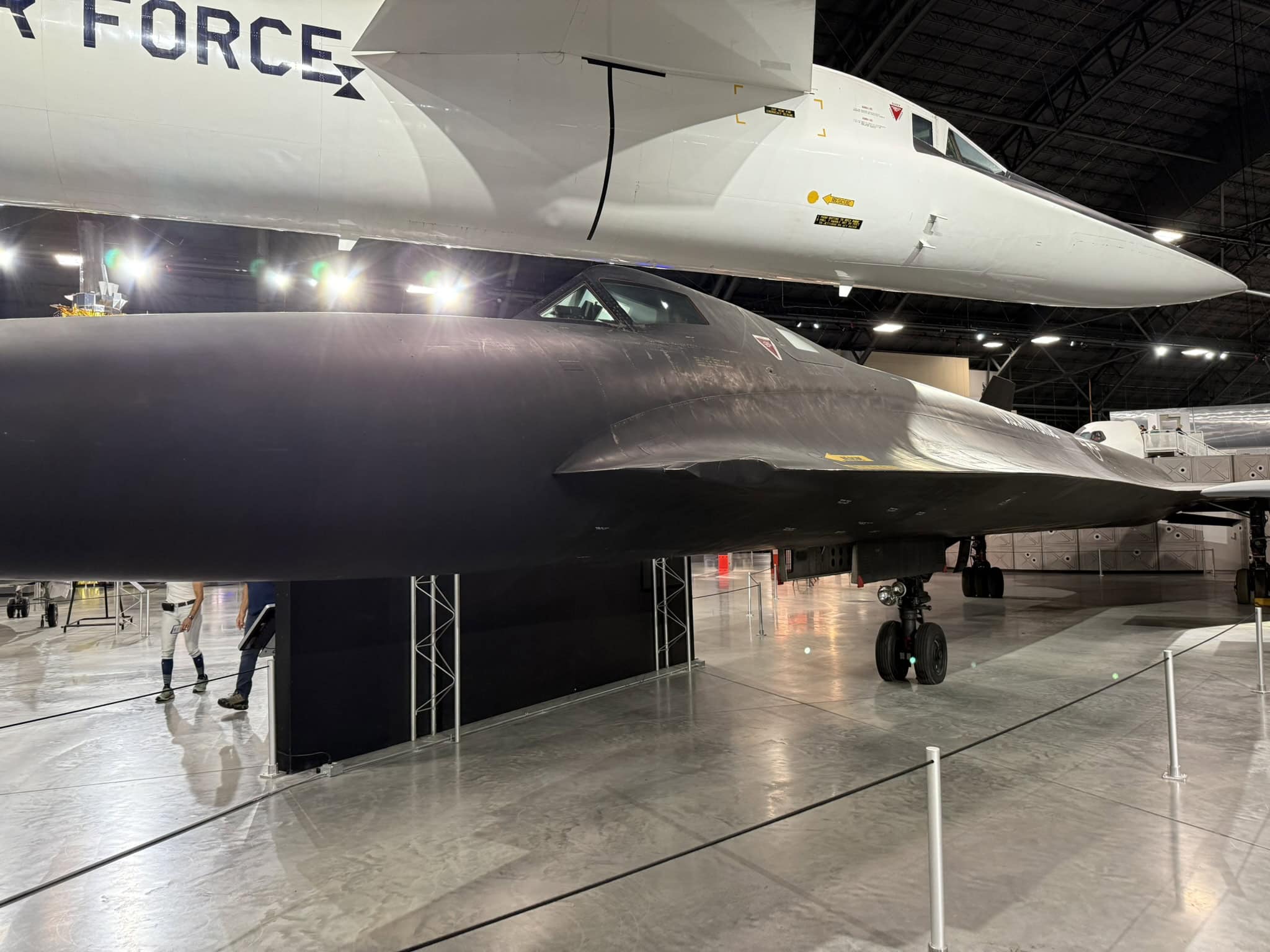
YF-12A. Image taken by Harry J. Kazianis at National Museum of the Air Force for 19FortyFive.com
The aircraft appeared at a time when American defense planners were deeply concerned about the possibility of Soviet long-range nuclear bomber attacks against the continental United States.
Existing interceptors, such as the Convair F-106 Delta Dart, were increasingly viewed as insufficient to counter future threats posed by faster bombers and cruise missiles.

An air-to-air right side view of an F-106 Delta Dart aircraft after firing an ATR-2A missile over a range. An auxiliary fuel tank is on each wing. The aircraft is assigned to the 194th Fighter Interceptor Squadron, California Air National Guard.
Lockheed’s solution was effectively a Mach 3 missile carrier capable of rapidly climbing above 80,000 feet, detecting targets hundreds of miles away, and launching long-range air-to-air missiles before enemy bombers approached American airspace.
Unlike the reconnaissance-focused A-12, the YF-12 replaced camera systems with the Hughes AN/ASG-18 fire-control radar and internal weapons bays carrying AIM-47 Falcon missiles.
The radar itself was also revolutionary for the era. It became one of the first airborne systems capable of look-down/shoot-down target tracking at very long ranges – meaning it could detect and engage aircraft flying low against the background clutter of the ground below, something many earlier airborne radars struggled to do reliably.
Built for Speed and Missile Warfare
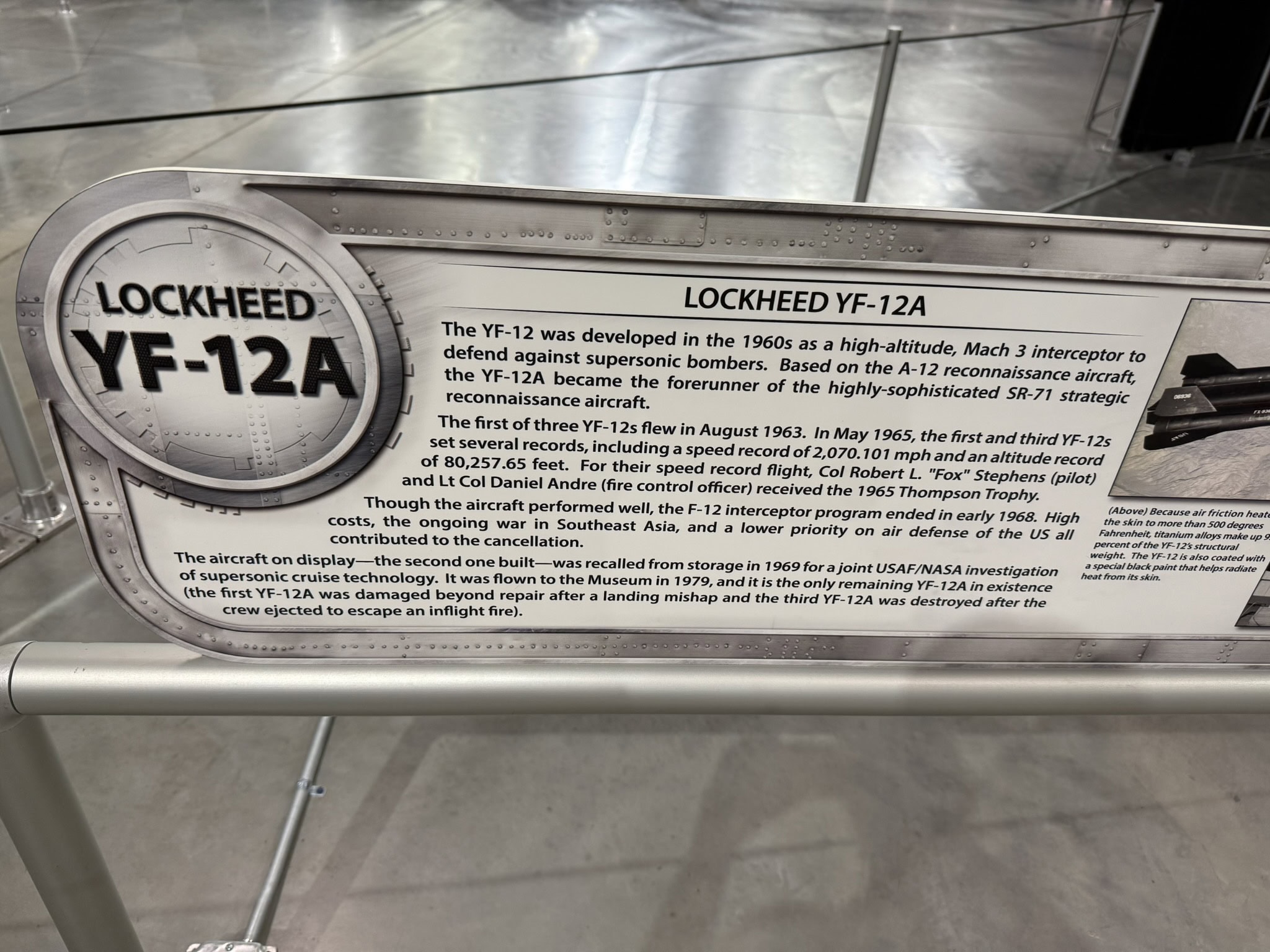
The YF-12 was designed around an idea that seems very modern even today: survivability through speed rather than maneuverability alone. NASA records describe how the aircraft achieved a speed record of 2,070 mph and an altitude record exceeding 80,000 feet during testing in 1965.
At operational speeds above Mach 3, the aircraft’s titanium skin heated up dramatically during flight, forcing Lockheed engineers to work on solving unprecedented structural and thermal problems. It was, in many ways, a revolutionary program.
The interceptors’ missile tests were also equally remarkable. According to Air Force Materiel Command, the YF-12 successfully conducted multiple AIM-47 launches between 1965 and 1966.
In one of the most famous demonstrations, a YF-12 traveling at Mach 3.2 and 75,000 feet successfully fired a missile at a low-flying QB-47 target aircraft operating roughly 500 feet above the ground.
Many of the concepts behind the YF-12 are relevant today and overlap with current Pentagon concerns regarding Chinese anti-access and area-denial networks and plans. Chinese military strategy increasingly leans on dense integrated air defenses and long-range radar coverage, as well as missile systems designed to prevent U.S. aircraft from operating freely near Taiwan or elsewhere in the Indo-Pacific.
As a result, American defense planners have renewed interest in aircraft and weapons capable of crossing defended airspace at extremely high speed. Lockheed’s long-discussed SR-72 concept and the ongoing Pentagon hypersonic programs reflect this shift back toward speed-based survivability.
Why McNamara Killed the F-12B
Despite its performance, the operational F-12B never entered production. The program’s cancellation occurred under Defense Secretary Robert McNamara during the Johnson administration.
By the late 1960s, the Pentagon’s strategic priorities were changing rapidly. Intercontinental ballistic missiles increasingly replaced bombers as the primary nuclear threat facing the United States, reducing emphasis on expensive continental air-defense interceptors. At the same time, the Vietnam War was consuming enormous defense resources while the Pentagon pursued other major aerospace programs, including the F-111.
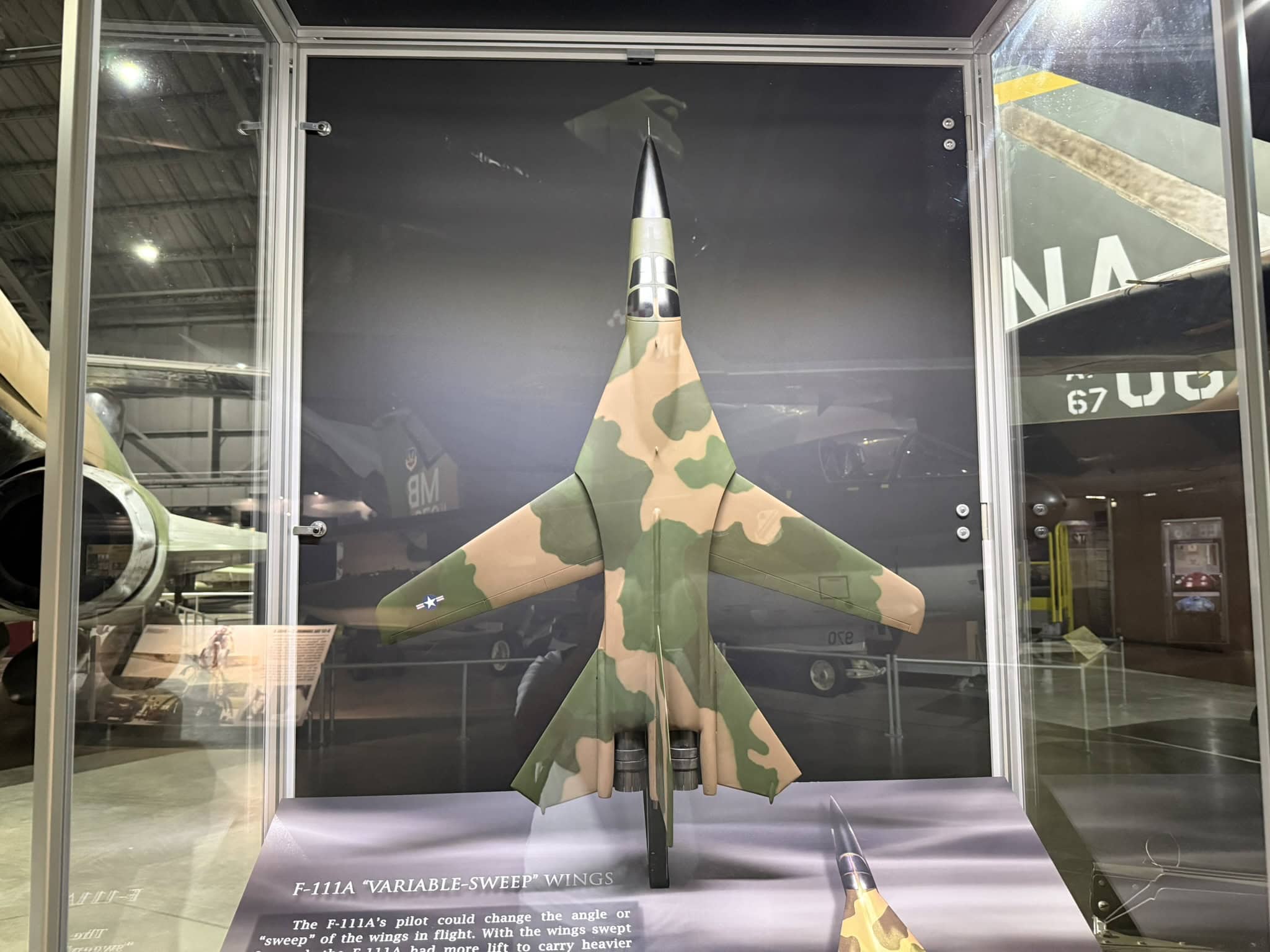
F-111 On Display at the National Museum of the U.S. Air Force. Take on July 19, 2025 by Harry J. Kazianis for 19FortyFive.com
The Air Force reportedly sought to procure 93 F-12B aircraft, but McNamara ultimately viewed the program as too expensive for a mission area that was losing strategic importance.
About the Author: Jack Buckby
Jack Buckby is a British researcher and analyst specializing in defense and national security, based in New York. His work focuses on military capability, procurement, and strategic competition, producing and editing analysis for policy and defense audiences. He brings extensive editorial experience, with a career output spanning over 1,000 articles at 19FortyFive and National Security Journal, and has previously authored books and papers on extremism and deradicalization.