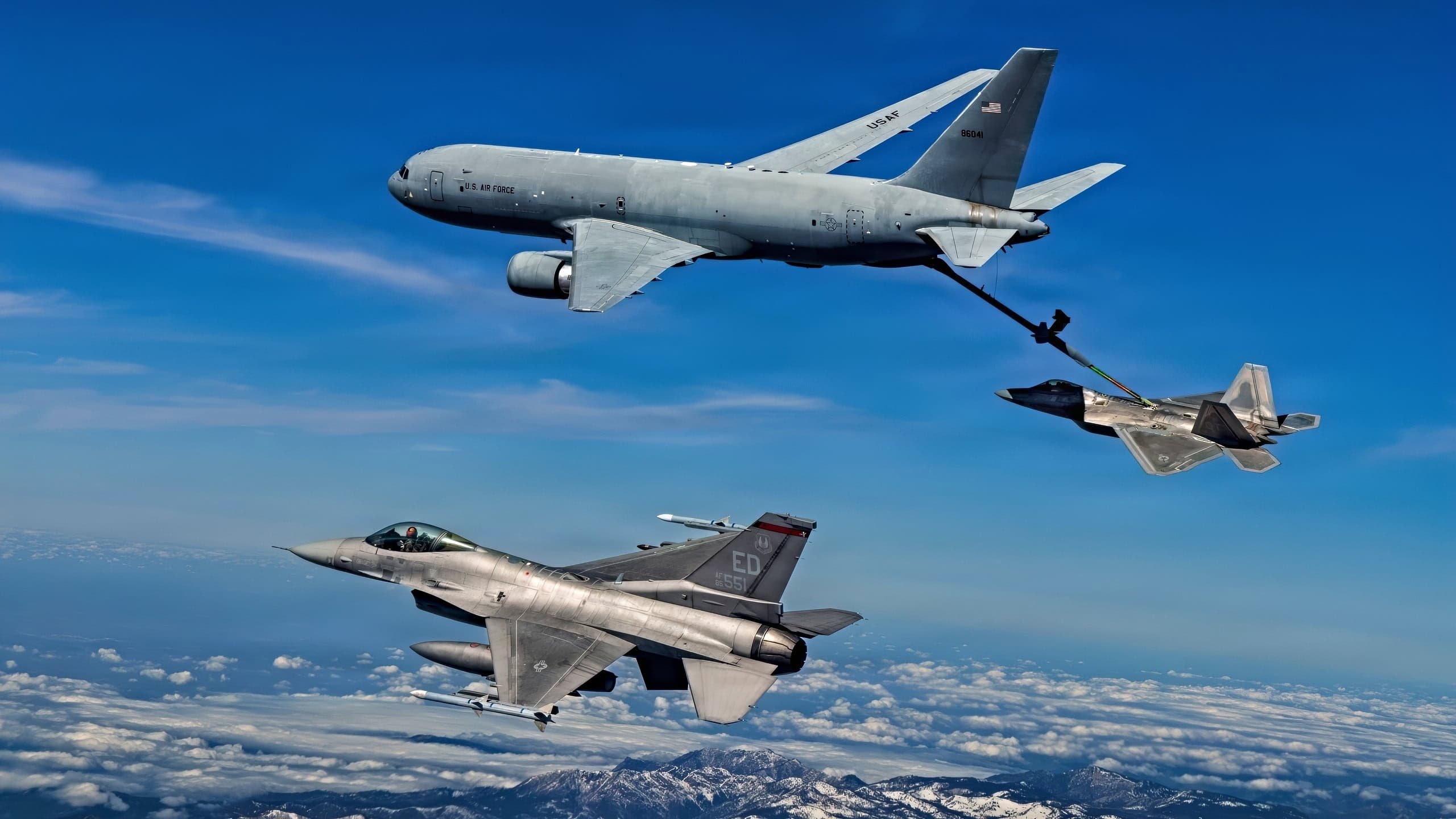
Warsaw, Poland – The defense division of the US Boeing company is currently flight-testing an updated remote vision system to address deficiencies in the newest airborne tanker aircraft, the KC-46A. Both the KC-46A, a tanker based on the 767 passenger aircraft, and the KC-135, developed from the previous-generation 707 airliner, continue to fail to meet mission goals.
These shortcomings stem from numerous ongoing quality-control problems, parts failures, component shortages, and other issues. These were the findings of a new Government Accountability Office (GAO) report on the program, dated 10 June 2026.
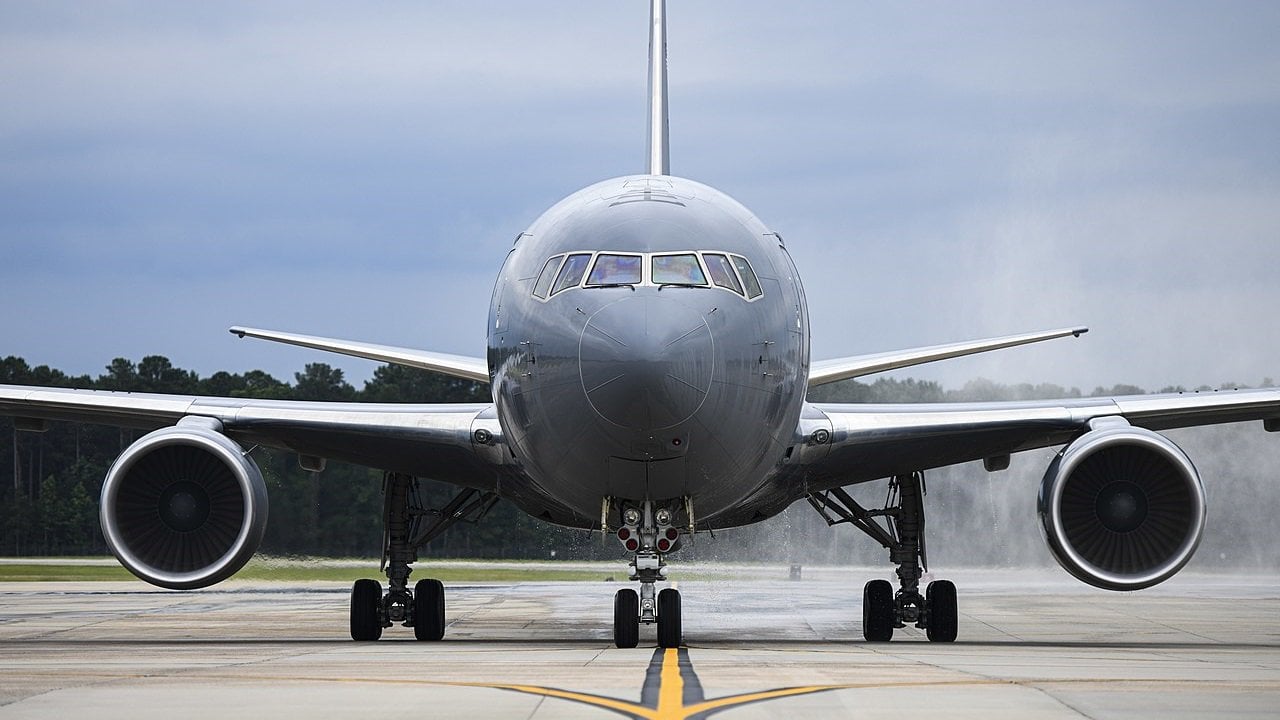
The first KC-46A Pegasus lands at Seymour Johnson Air Force Base, North Carolina, June 12, 2020. The KC-46A Pegasus is a widebody, multirole tanker that can refuel all U.S., allied and coalition military aircraft compatible with international aerial refueling procedures. (U.S. Air Force photo by Senior Airman Jacob B. Derry)
Ongoing problems with the new 767-based tankers are causing the aircraft to be frequently declared not mission-ready, which still requires the US Air Force (USAF) to rely heavily on the old KC-135s. Pressing these aging aircraft into service, when some of them should be on the path to retirement, is causing more component failures on those jets, according to the same GAO report commissioned by the US Congress.
The USAF is now reportedly dealing with “increased failure” of avionics and other computer components on the older aircraft. These failures are also contributing to the USAF’s inability to maintain the minimum number of tankers available at any given time.
“From fiscal year 2019 through fiscal year 2025, the air force did not meet its availability and capability standards for the aerial refueling tanker fleet,” the report reads.
Since 2019, the USAF has been overhauling its tanker fleet, which has involved retiring all of its old DC-10-based KC-10 tankers and replacing them with KC-46As, for a total of 84 aircraft at the end of 2025.
Never-Ending Problems
For years, the USAF and Boeing have been working to resolve the KC-46’s quality problems, the most prevalent of which have been with its refueling boom and the Remote Vision System (RVS) that crews use to position the boom.
These setbacks have cost Boeing more than $8 billion in program cost overruns.

KC-46 tanker. Image: Creative Commons.
Boeing and the USAF insist they are addressing these and other problems, but the GAO report states that numerous major issues remain unresolved. The KC-46A fleet “has experienced critical parts failures that occurred much earlier than anticipated”, reads the report.
According to the document, as of February, there remain three “critical deficiencies” related to the boom or vision system, in addition to electrical failures and “airframe cracks and other structural issues”.
“The air force concurred with the report’s recommendations and is aggressively working to resolve readiness challenges,” the USAF told international aerospace media outlets. “The tanker fleet remains a cornerstone of US power projection, actively delivering vital refuelling support around the globe,” reads the service’s statement.
A New RVS Design
Boeing says it has started flight testing a new RVS 2.0 version of the system and that this change will improve the KC-46A readiness numbers.
“We believe we have fixed the RVS system,” said the USAF Secretary Troy Meink during a 9 June Senate hearing. He continued by saying that the 2.0 version is “performing magnificently” and should be introduced onto the Boeing production line in 2028.
“We’ve made a lot of progress demonstrating the system’s maturity and reliability,” Boeing stated regarding the RVS 2.0. “We have completed the initial phase of flight testing that keeps us on the path toward certification. We’re in lockstep with the Air Force on the timeline.”
In May, the USAF also said it had reached broader terms with Boeing to “resolve systemic” KC-46A readiness issues, including accelerating RVS 2.0 deployment and addressing issues affecting already produced jets. It aims to boost readiness more than 20% by 2030.
In the meantime, the USAF is increasing its KC-46A acquisitions. In the same 9 June testimony, Meink stated the USAF’s Fiscal Year 2027 budget will result in “essentially maxing out” Boeing’s production line capacity. The current agreements with the USAF and Boeing could result in the force receiving 263 KC-46A aircraft.
About the Author: Reuben F. Johnson
Reuben F. Johnson has thirty-six years of experience analyzing and reporting on foreign weapons systems, defense technologies, and international arms export policy. Johnson is the Director of Research at the Casimir Pulaski Foundation. He is also a survivor of the Russian invasion of Ukraine in February 2022. He worked for years in the American defense industry as a foreign technology analyst and later as a consultant for the U.S. Department of Defense, the Departments of the Navy and Air Force, and the governments of the United Kingdom and Australia. In 2022-2023, he won two awards in a row for his defense reporting. He holds a bachelor’s degree from DePauw University and a master’s degree from Miami University in Ohio, specializing in Soviet and Russian studies. He lives in Warsaw.