
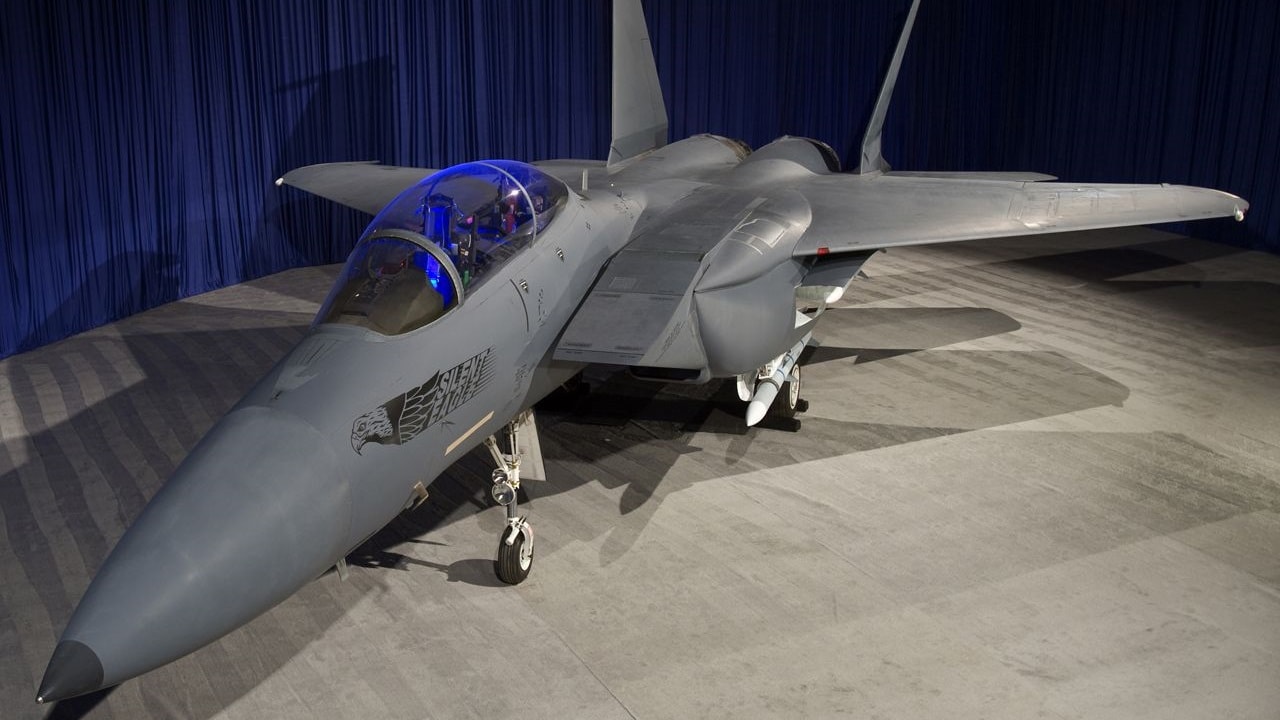
F-15SE Silent Eagle: The Stealth F-15 Boeing Built And Nobody Bought: Back when I was the Editor of the Diplomat in the early 2010s, I was very much of the mindset that a stealth F-15 fighter was very much possible, and we did a fair amount of work on what we thought was possible. As one senior Japanese Air Self-Defense Force offical told me at the time: “[T]he F-15 is an amazing fighter, if it came in a stealth configuration, Boeing would have a hit on its hands.”
Boeing officials also told me back in 2011 that they thought the bad press on the F-35 “gives us an opening we can fly a stealth F-15 right through.”
And yet, it did not exactly happen the way anyone thought it would. The F-15SE Silent Eagle was a stealth-enhanced variant of the F-15E Strike Eagle that Boeing pitched between 2009 and 2013 as a fourth-generation-plus alternative to the Lockheed Martin F-35 on the international fighter export market.
It was built around three core stealth modifications: conformal weapons bays that carried munitions internally rather than on external pylons, twin vertical stabilizers canted outward at 15 degrees to deflect radar returns, and radar-absorbent material applied across the airframe to reduce the overall radar cross-section.
It was offered to South Korea, Saudi Arabia, Israel, Japan, and Singapore. None of them bought it. The program ended without producing a single combat-coded airframe. I was disappointed, to say the least.
A U.S. Air Force offical was pretty clear about the fighter’s chances when he looked back on the history with me yesterday in preparation for this article: “The F-15SE Silent Eagle never had any sort of chance.” This is the story of why that is.
The Origin: Boeing Needed A Stealth F-15, Or It Was Going To Lose The Export Market
In the late 2000s, Boeing’s tactical fighter business faced a structural problem that was worsening each year.
The F-15 Eagle was — and remains — the most successful fighter in modern aviation history, with a combat record of roughly 104 air-to-air kills against zero losses.
The basic airframe had been in production since 1972. Boeing had built F-15 variants for the United States Air Force, the Israeli Air Force, the Royal Saudi Air Force, the Japan Air Self-Defense Force, the Singapore Air Force, and the Republic of Korea Air Force.
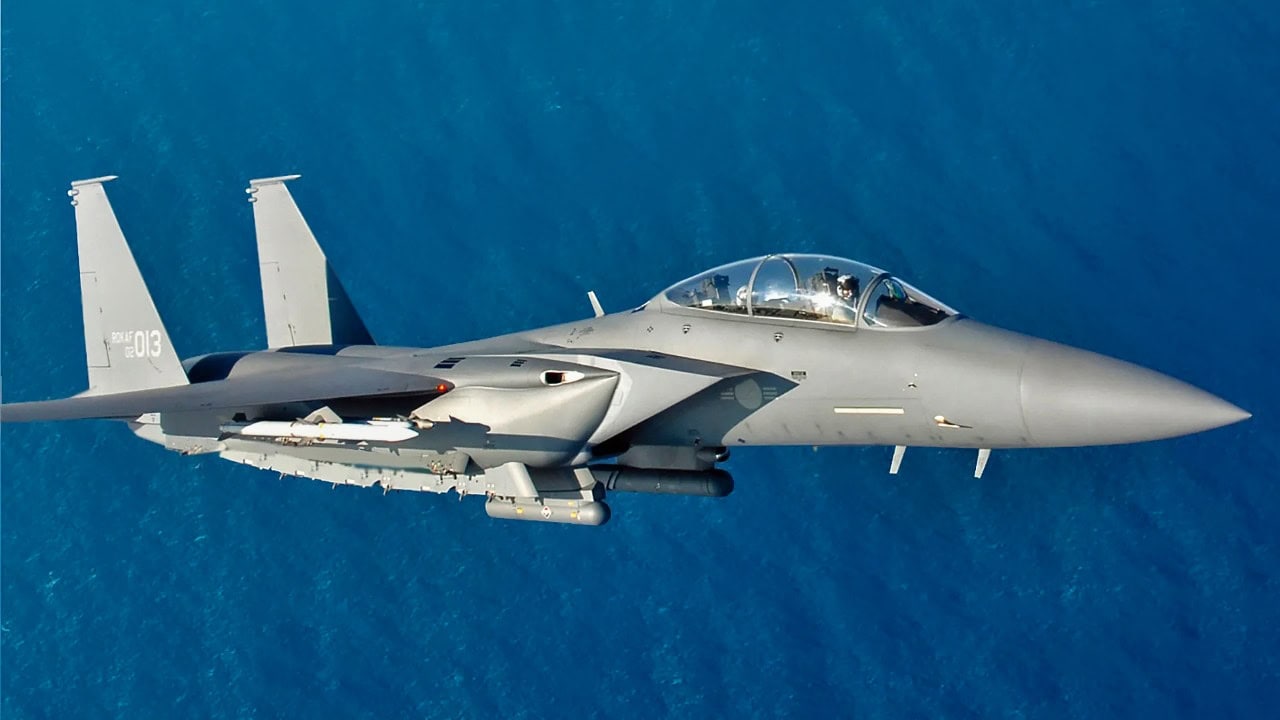
F-15K Slam Eagle. Image Credit: ROK Air Force.
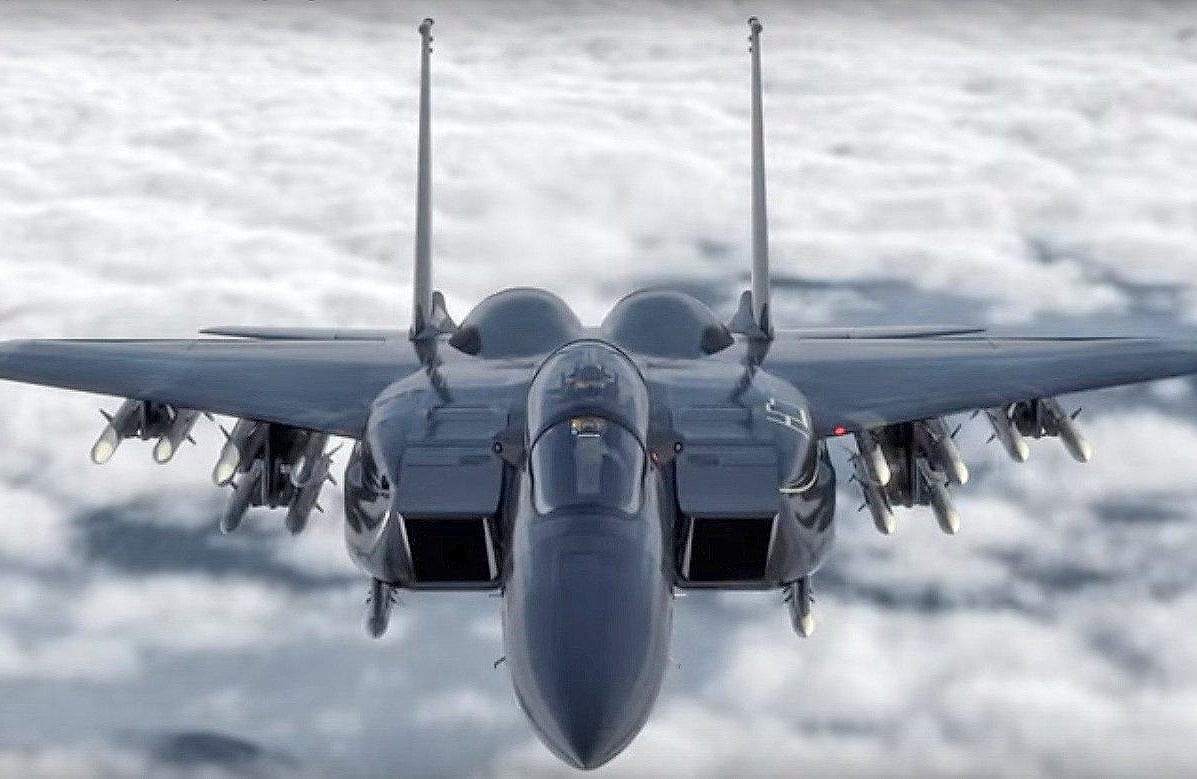
F-15K Image: Creative Commons.
The F-15K Slam Eagle had won South Korea’s first two F-X fighter competitions outright.
But the global market for new fighters was bifurcating.
Lockheed Martin’s F-35 Lightning II — a true fifth-generation, all-aspect stealth aircraft — was beginning to enter the export market as a credible competitor for high-end customers who had historically been F-15 buyers. Eurofighter, Dassault, and Saab were carving up the middle of the market with cheaper fourth-generation alternatives. Russia’s Su-35 and Sukhoi’s emerging T-50/PAK FA program promised low-end stealth at price points the West could not match.
Boeing needed an answer.
Either it added stealth features to the F-15, or it watched its export business collapse over the next decade as customers migrated to the F-35.
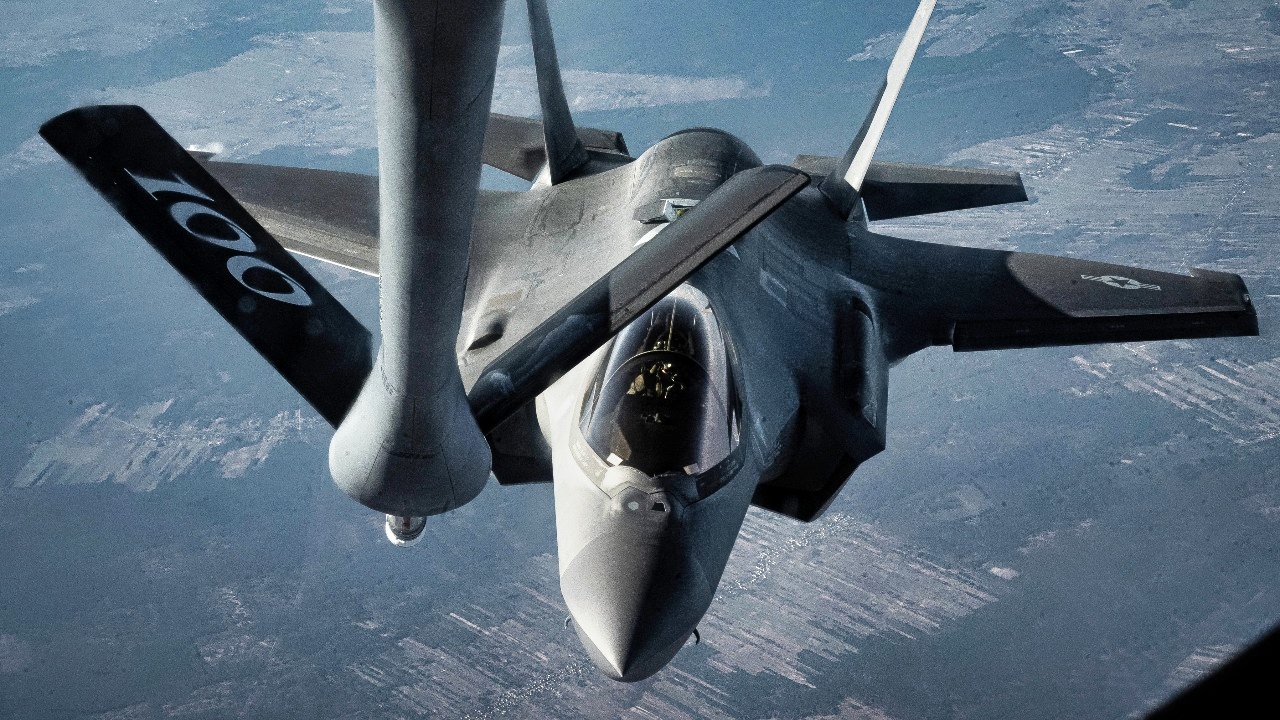
The 388th Fighter Wing’s F-35 Lightning II fifth-generation fighter prepares to receive fuel from a U.S. Air Force Boeing KC-135 Stratotanker attached to the 100th Air Refueling Wing in Eastern European airspace, Feb. 28, 2022. The KC-135 platform is key to enabling U.S. Air Forces in Europe – Air Forces Africa to project credible air power and air operations in concert with NATO allies and partners. (U.S. Air Force photo by Airman 1st Class Edgar Grimaldo)
Boeing officials told me over and over again that they had a solution to the problem and believed it could drive billions in new revenue.
What Boeing Actually Built
Boeing unveiled the F-15SE concept on March 17, 2009, with a flight demonstrator built from the first production F-15E airframe (serial number 86-0183).
The demonstrator made its maiden flight in July 2010 and successfully launched an inert AIM-120 AMRAAM from a conformal weapons bay later that same year, validating the basic internal-carriage concept.
The package was specific and constrained.
Boeing recognized that turning a 25-square-meter radar cross-section airframe into a true stealth aircraft was impossible without a clean-sheet redesign that would have cost more than starting over. Instead, the F-15SE focused on reducing frontal-aspect radar return — the signature an enemy fighter or air defense radar would see from the front — while accepting that the aircraft would remain detectable from the side and rear.
The conformal weapons bays replaced the conformal fuel tanks that Strike Eagle pilots had relied on for extended range, allowing internal carriage of AIM-120 AMRAAMs and AIM-9 Sidewinders for air-to-air missions. The 15-degree canted tails reduced the rear-aspect radar return that the standard F-15’s vertical stabilizers had always produced. The radar-absorbent coating addressed leading-edge returns from the wings, nose, and engine inlets.
The aircraft retained the F-15E’s twin Pratt & Whitney F100 engines, its Mach 2.5 top speed, its 81,000-pound maximum takeoff weight, and the AN/APG-82 active electronically scanned array radar that had been developed for the U.S. Air Force F-15E fleet.
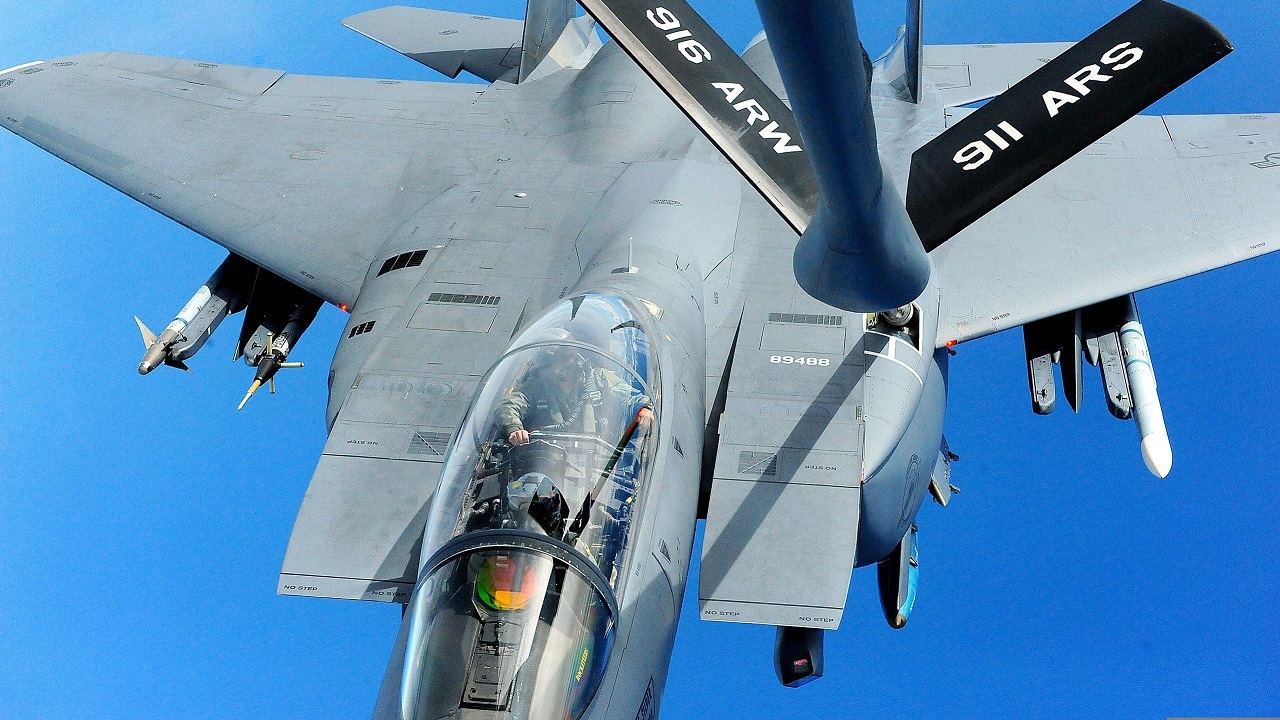
F-15E fighter. Image Credit: Creative Commons.
Avionics included the BAE Systems Digital Electronic Warfare System, Link-16 datalinks, a large-area cockpit display measuring 11 by 19 inches, and integration with the Joint Helmet-Mounted Cueing System.
Per-aircraft cost: approximately $100 million, equivalent to roughly $145 million in today’s dollars.
Who Boeing Pitched It To
The F-15SE was built specifically for the export market. Boeing identified five primary customers and pursued each of them in parallel through 2010-2013.
South Korea was the centerpiece of the campaign. The Republic of Korea’s F-X Phase III competition, launched in early 2012, was a $7.3 billion program for 60 new fighters to replace aging F-4 Phantoms and F-5 Tigers. Boeing pitched the F-15SE against Lockheed Martin’s F-35A and the Eurofighter Typhoon. The U.S. Department of State approved the F-15SE for export to South Korea in 2010 — the first time the Pentagon had cleared the variant for any foreign sale.
Saudi Arabia was approached as a parallel customer alongside the existing discussion of upgrading the F-15S fleet. Boeing positioned the F-15SE as a complement to the F-15SA Advanced Eagle program that the Royal Saudi Air Force was already negotiating.
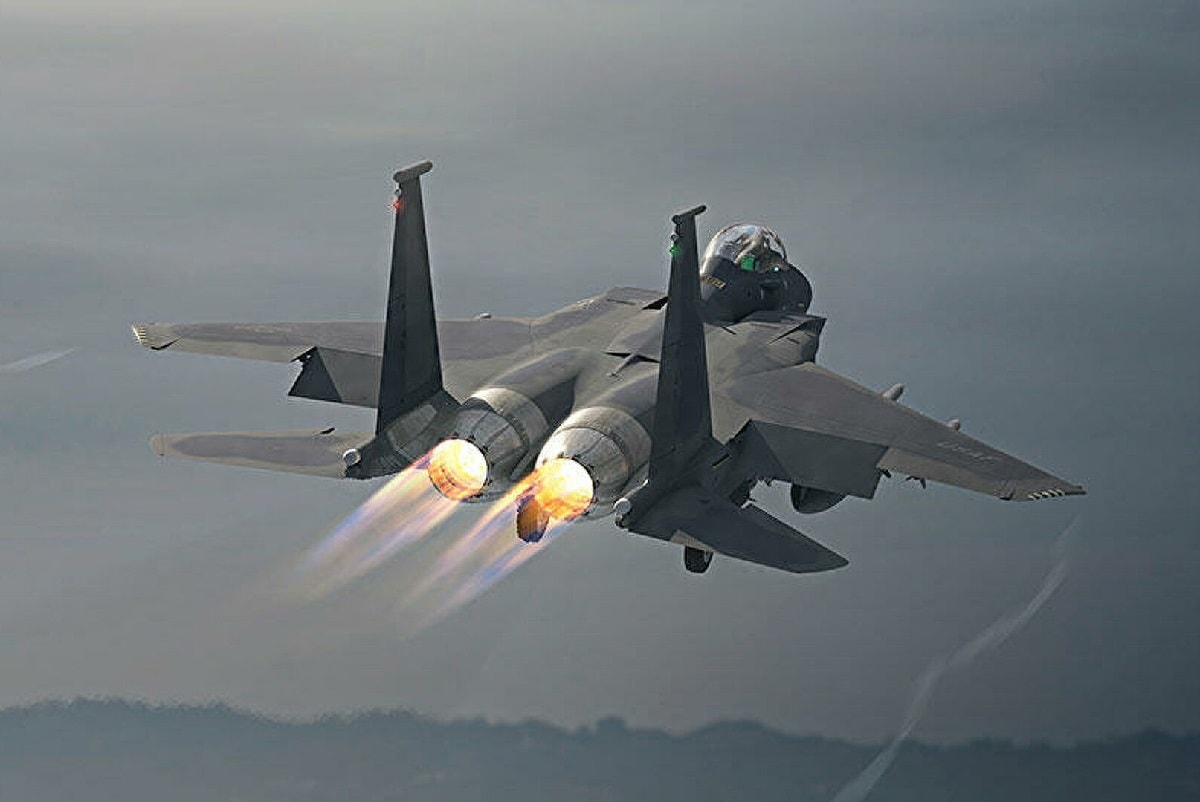
Boeing F-15EX Eagle II. Artist Image from Boeing.
Israel was offered the F-15SE through bilateral channels in 2010, with Boeing positioning it as a higher-end alternative to additional F-15I Ra’am orders.
Japan was a target of the Japan Self-Defense Forces’ F-X program, which ultimately won by the F-35A.
Singapore was approached as a follow-on customer to the existing F-15SG fleet.
Boeing also signed a November 2010 memorandum of understanding with Korea Aerospace Industries for KAI to design and manufacture the F-15SE’s conformal weapons bays — a risk-sharing arrangement that was supposed to lower per-unit costs and lock in South Korean industrial participation regardless of which fighter Seoul ultimately selected.
Why It Failed
The F-15SE failed for one specific reason: customers did not want a halfway stealth aircraft.
They wanted either a cheap fourth-generation fighter or a true fifth-generation stealth platform, and the F-15SE was neither.
The decisive blow came on September 24, 2013. South Korea’s Defense Acquisition Program Administration, after the F-15SE had emerged as the sole qualifying bidder in the F-X Phase III competition, rejected the Boeing offer outright.
DAPA spokesman Baik Yoon-hyung announced that the agency had decided “not to select the sole remaining candidate” based on evaluation of capabilities and cost. Fifteen retired Republic of Korea Air Force chiefs had signed a public petition opposing the selection of the F-15SE on the grounds that the aircraft lacked true stealth capabilities appropriate to the emerging Northeast Asian threat environment. South Korea restarted the competition. It selected the F-35A.
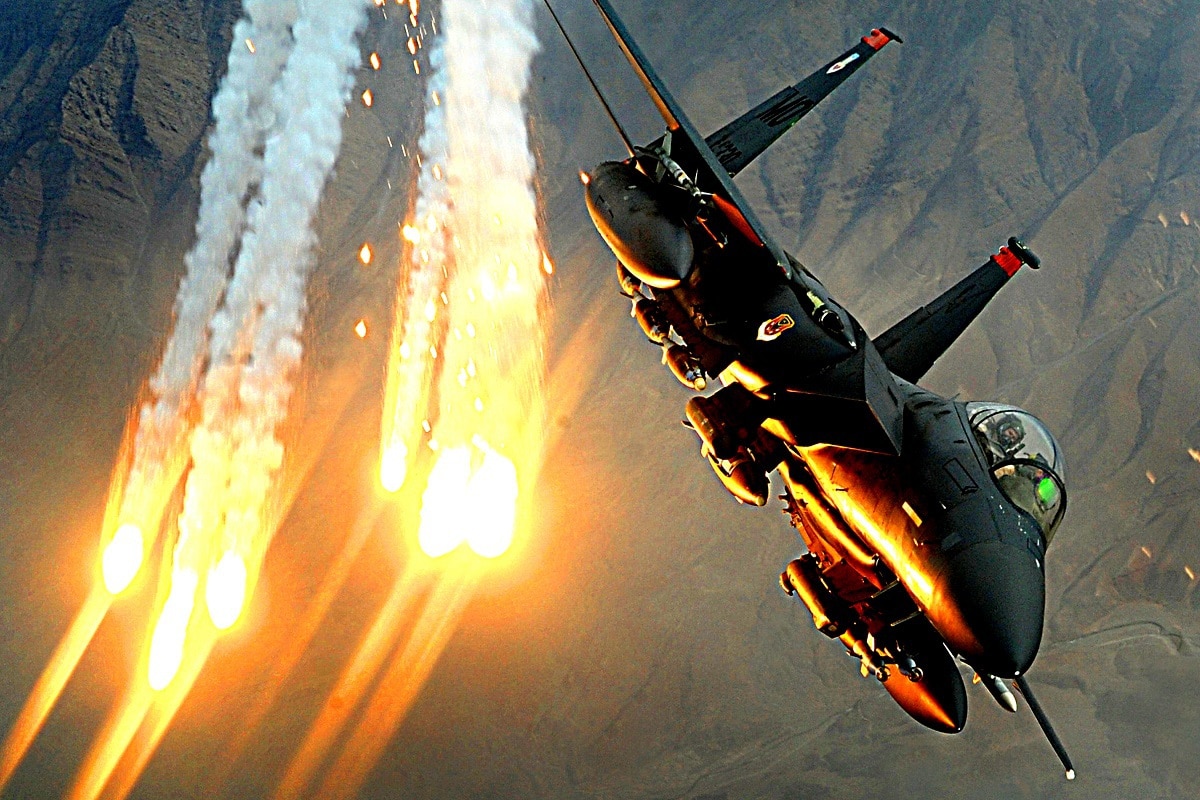
An F-15E Strike Eagle from the 391st Expeditionary Fighter Squadron at Bagram Air Base, Afghanistan, launches heat decoys Dec. 15 during a close-air-support mission over Afghanistan. (U.S. Air Force photo/Staff Sgt. Aaron Allmon)
The Saudi rejection followed a similar pattern: rather than buying the F-15SE, Riyadh opted for the F-15SA Advanced Eagle, a non-stealth variant that retained conformal fuel tanks and external weapons carriage but added AESA radar and digital cockpit upgrades from the F-15SE program. Israel, Japan, and Singapore all selected the F-35.
When Boeing’s F-X Campaign Director Howard Berry was asked in 2013 about the generational gap, he responded that Boeing preferred not to use the distinction, arguing that “the definition seems to change on a daily basis.” That framing failed to land with customers who were specifically buying based on the generational distinction.
The technical reason the F-15SE failed was that its stealth was optimized for air-to-air missions — the frontal-aspect radar cross-section reduction was useful for engaging enemy fighters but did little to help the aircraft survive in the kind of integrated air defense environments that fifth-generation fighters were specifically designed to penetrate.
The F-22 and F-35 offered all-aspect stealth, sensor fusion across multiple onboard systems, and the kind of low-probability-of-intercept communications that the F-15SE’s bolt-on improvements could not match.
The financial reason was simpler. At roughly $100 million per aircraft, the F-15SE was only modestly cheaper than the F-35A, which was projected to cost $176 million per aircraft at the time of the South Korean decision but was already on a clear cost-reduction trajectory as Lockheed Martin scaled production. Customers calculated that paying somewhat more for true stealth was a better long-term investment than saving a fraction on a halfway solution.
What Survived Enter F-15EX Eagle II
The F-15SE never went into production. The flight demonstrator was eventually returned to F-15E configuration. No combat-coded F-15SE airframes were ever built.
The technology, however, did not die. The conformal weapons bay concept, the canted vertical stabilizers, and elements of the radar-absorbent material treatment were folded into Boeing’s subsequent F-15 development work. The Saudi F-15SA, the Qatari F-15QA, and ultimately the F-15EX Eagle II that the U.S. Air Force selected in 2018 all carry features that were first developed for the Silent Eagle.
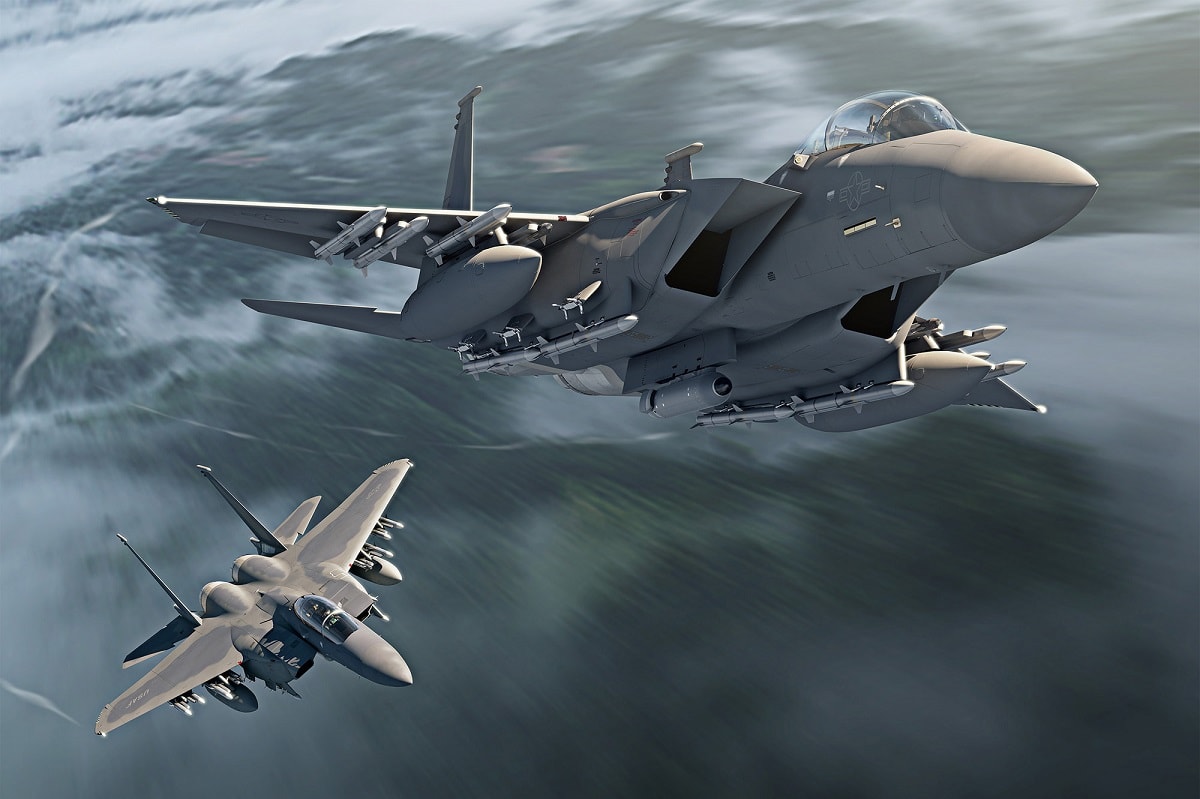
Two Boeing F-15EX fighters armed with air-to-air missiles. Image Credit: Boeing.
Boeing F-15EX Eagle II. Artist Image from Boeing.
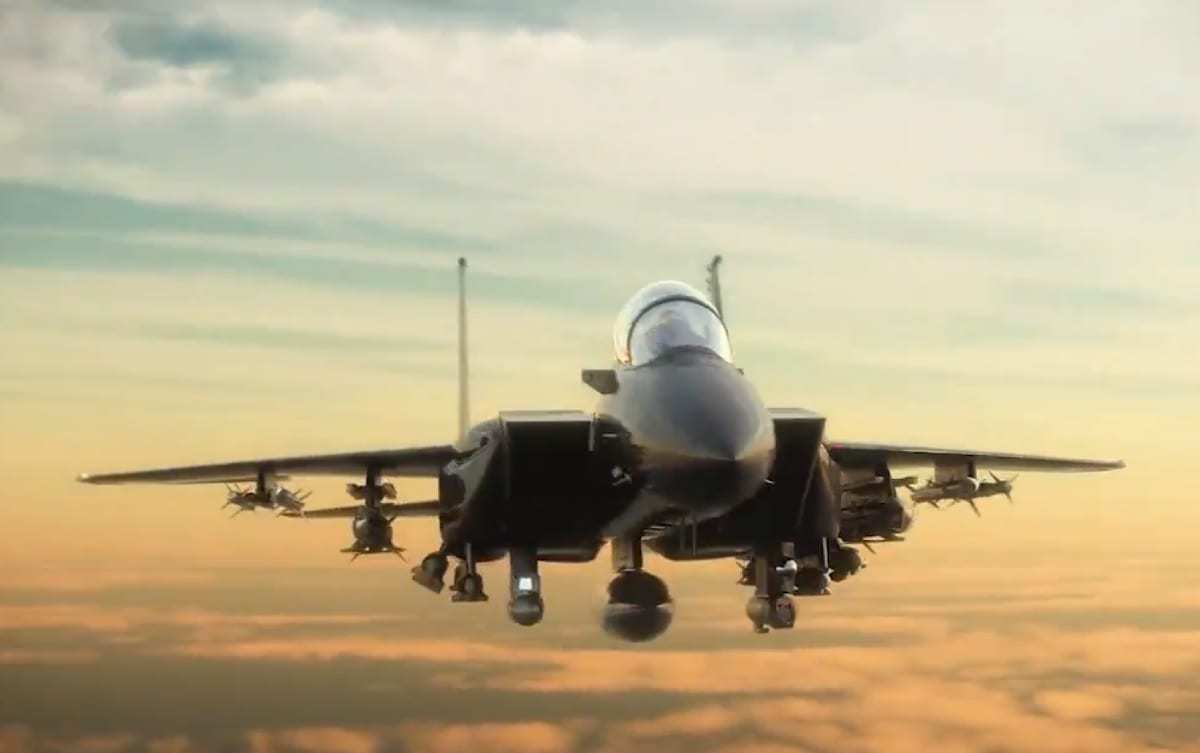
F-15EX Screenshot from Boeing Video
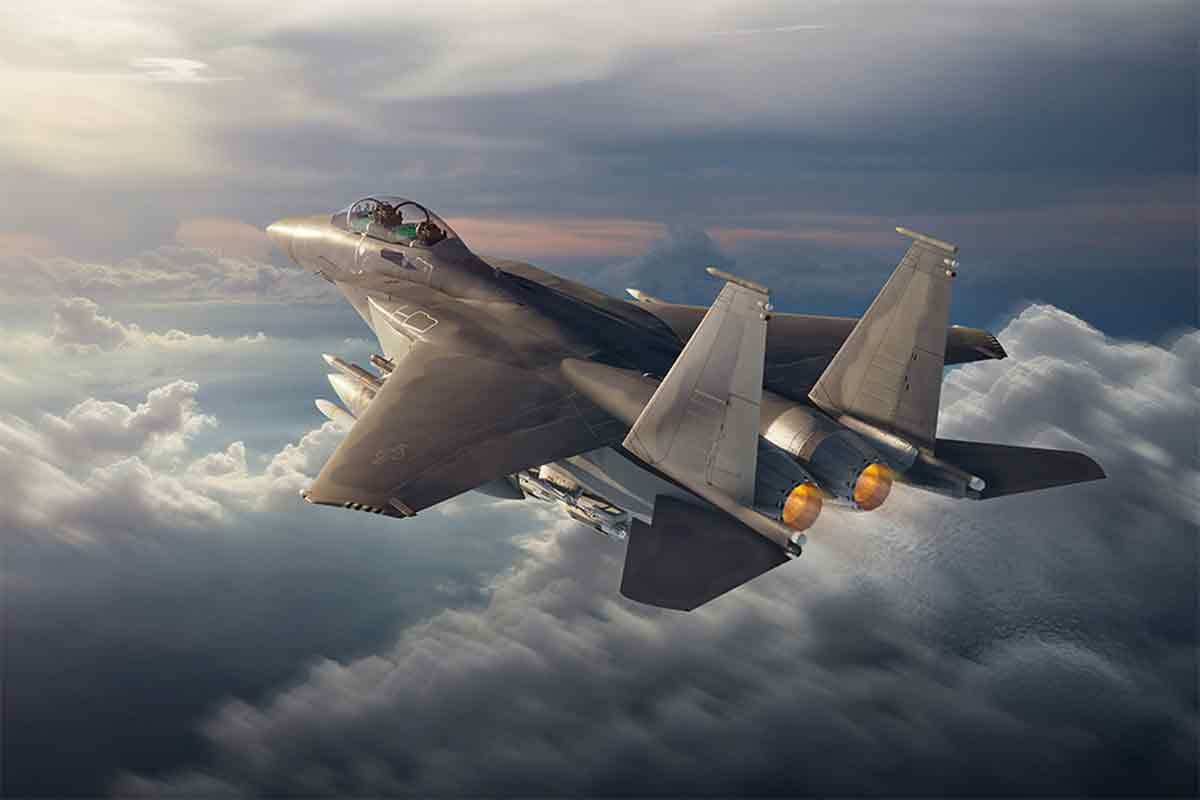
F-15EX Eagle II (Image: Boeing)
The F-15EX, which entered operational U.S. Air Force service in July 2024, is in many ways the production aircraft the F-15SE was supposed to be — minus the explicit stealth features, plus the avionics, AESA radar, large-area display, fly-by-wire flight control, and weapons-integration improvements that the Silent Eagle program had developed.
And, to be frank, I am a big fan of this fighter. At present, we have requested Boeing to tour the F-15EX Eagle II factory. I hope they approve.
In that sense, the F-15SE was less a failed fighter program than a failed marketing exercise. The aircraft Boeing actually built worked. The customers Boeing was selling to had already moved on. By the time the demonstrator made its first flight in July 2010, the international fighter market had crystallized around either fully stealthy or fully cost-optimized platforms — and the F-15SE could not credibly position itself as either.
What killed the F-15SE Silent Eagle was not the aircraft. It was the moment.
About the Author: Harry J. Kazianis
Harry J. Kazianis (@Grecianformula) was the former Senior Director of National Security Affairs at the Center for the National Interest (CFTNI), a foreign policy think tank founded by Richard Nixon based in Washington, DC. Harry has over a decade of experience in think tanks and national security publishing. His ideas have been published in the NY Times, The Washington Post, The Wall Street Journal, CNN, and many other outlets worldwide. He has held positions at CSIS, the Heritage Foundation, the University of Nottingham, and several other institutions related to national security research and studies. He is the former Executive Editor of the National Interest and the Diplomat. He holds a Master’s degree focusing on international affairs from Harvard University. Kazianis is Editor-In-Chief of 19FortyFive.

