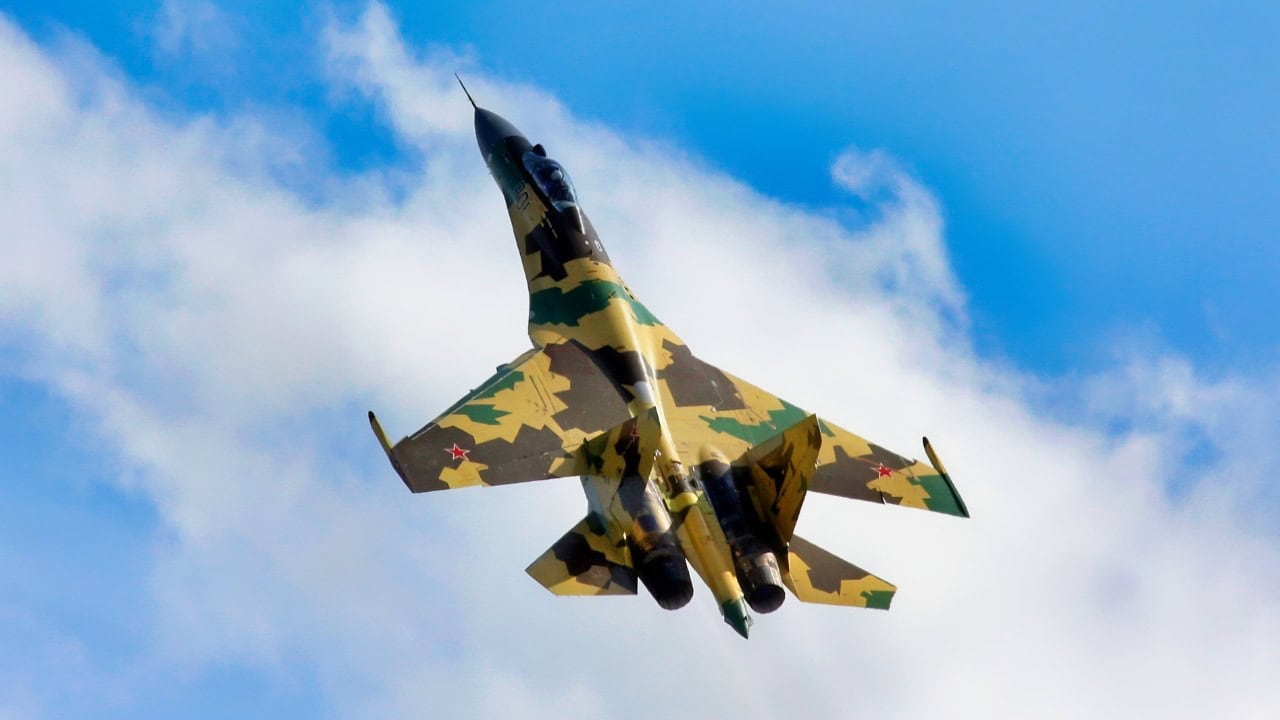
Russia’s Su-35 Fighter Will Never Be Stealth, But It Can Cause a Lot of Trouble
The Sukhoi Su-35 “Super Flanker” proves that while Russia can still build lethal, high-performance fighters, modern air warfare is no longer decided by maneuverability or raw kinematics. Instead, modern air power is decided by stealth, networks, and systems integration.
The Su-35 is Russia’s most important and capable operational fighter. Of course, it is not truly fifth-generation. Then again, given how the Ukraine War has progressed, it seems unlikely that fifth-generation warplanes are as important as simply having massive numbers of lesser advanced warplanes that are cheaper and easy to replace.
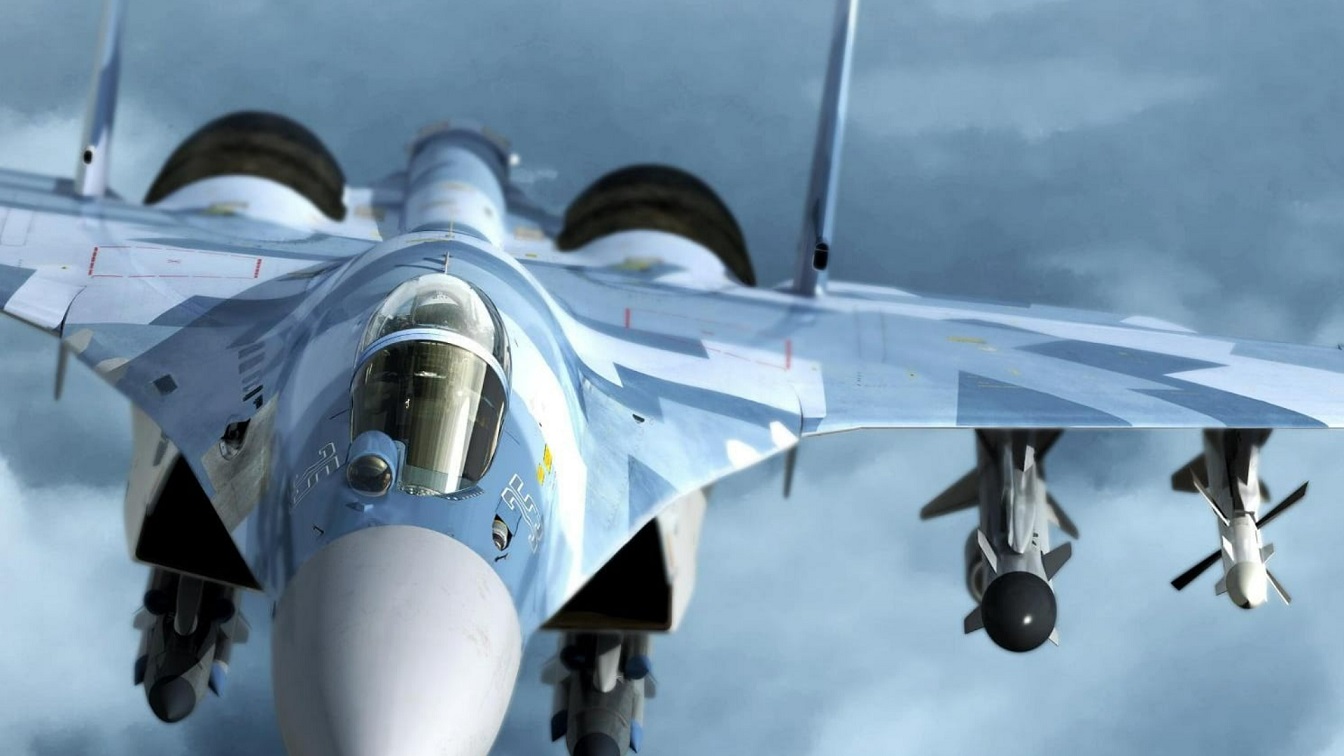
Su-35. Image Credit: Creative Commons.
Classified as a fourth-generation-plus-plus warplane, the Su-35 is essentially a radically modernized version of the Su-27. It serves as Russia’s primary air superiority jet and is designed as a stopgap for the country’s limited Su-57 fleet.
The Real Strength: Long-Range Kill Capability
When compared to fifth-generation warplanes, the Su-35 doesn’t stack up in terms of stealth or survivability. But the Su-35 has range. And in the highly contested environment of Ukraine, where complex layers of air defenses provided by NATO have wreaked havoc on Russian air power, having a modern jet with good range is key.
As the Russians seek to take advantage of the Su-35’s impressive range, they have added weapons such as the R-37M missile, which can travel between 200-400 kilometers, to increase the overall strike range. These systems have been instrumental in allowing Russia to keep some distance from the destructive Ukrainian air defenses. In the process, they show why standoff munitions and long-range capability are so key in modern warfare.
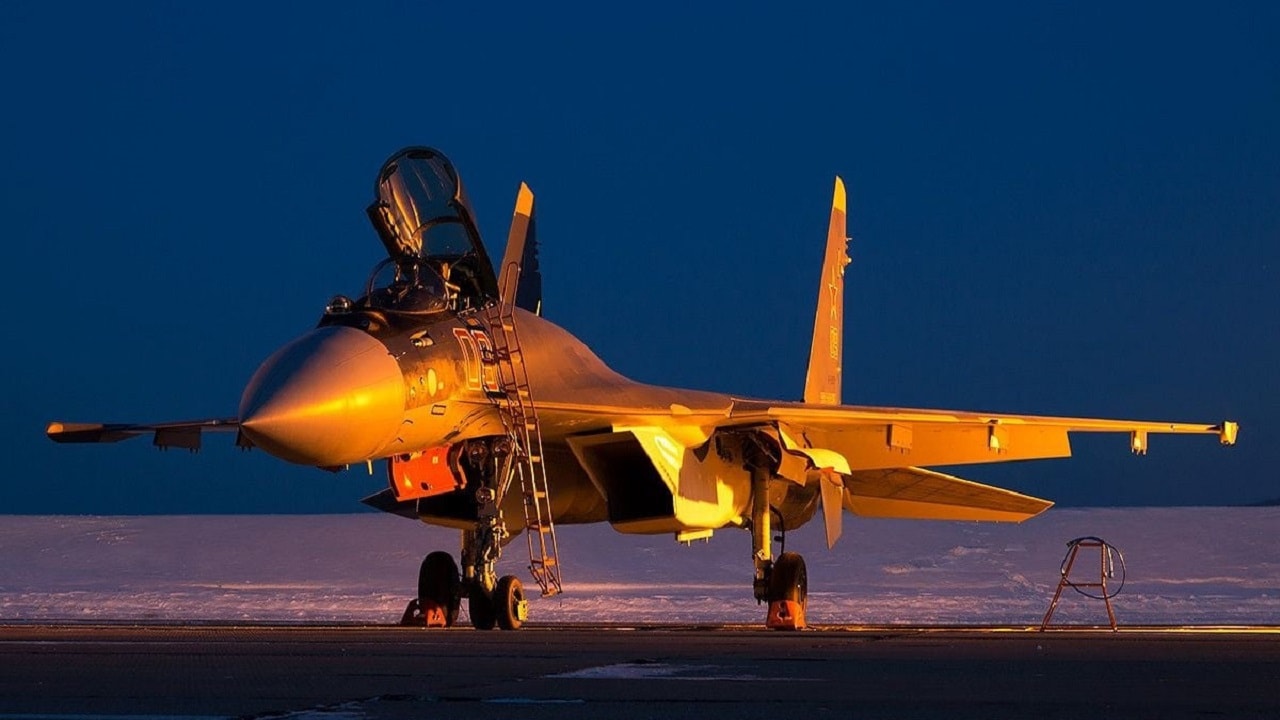
Russian Air Force Su-35. Image Credit: Creative Commons.
Russia is working on ways to integrate hypersonic weapons into the bird, too. Essentially, the Su-35 is optimized for breaking apart the networked defenses of any Western airpower—not just destroying their enemies’ airpower.
Another way to look at the Su-35 is as a flying missile truck. This bird carries up to 12 missiles. Its radar detection range extends to 350 kilometers. The Su-35 has an advanced electronic warfare (EW) suite. It is built to fire first, saturate targets, and disrupt enemy targeting.
A Dogfighter Without a War
What’s more, the Su-35 is likely one of the most agile fighters ever built. It possesses thrust-vectoring engines, is capable of cobra and post-stall maneuvers, and has superior within-visual-range performance. So, if a fight ever got within close range of these birds, it is likely that the Su-35 could outmaneuver many Western jets.
The Su-35 sacrifices survivability for performance. It has a large radar cross-section, meaning that it is easily detected by modern radar networks—there’s no true low-observable design. Against a U.S. F-22 Raptor or F-35 Lightning II fifth-generation warplane, it is likely that the Su-35 would be detected well before it ever detected the Americans.
Modern air combat is essentially all about who shoots first in a dogfight or a bombing run. Thus, the Su-35’s agility may never matter in a dog fight —it could be killed before it even sees its opponent.
Ukraine Proves the Limits of Performance Alone
Still, the Su-35 fits nicely in with Russia’s broader doctrine that emphasizes long-range fires, standoff engagement, and gradual attrition. Russia isn’t trying to win air supremacy outright. Instead, Moscow merely wants to grind down their enemy’s capability over time.
The jet struggles in a modern integrated battlespace. The Su-35 in Ukraine has been shot down by Patriot missile systems and other Ukrainian air defenses.
The Su-35 represents the last evolution of maneuver-centric air combat. Effectively, what the Russians are saying is that agility no longer equals dominance. What’s more, sensors plus networks plus stealth equals dominance.
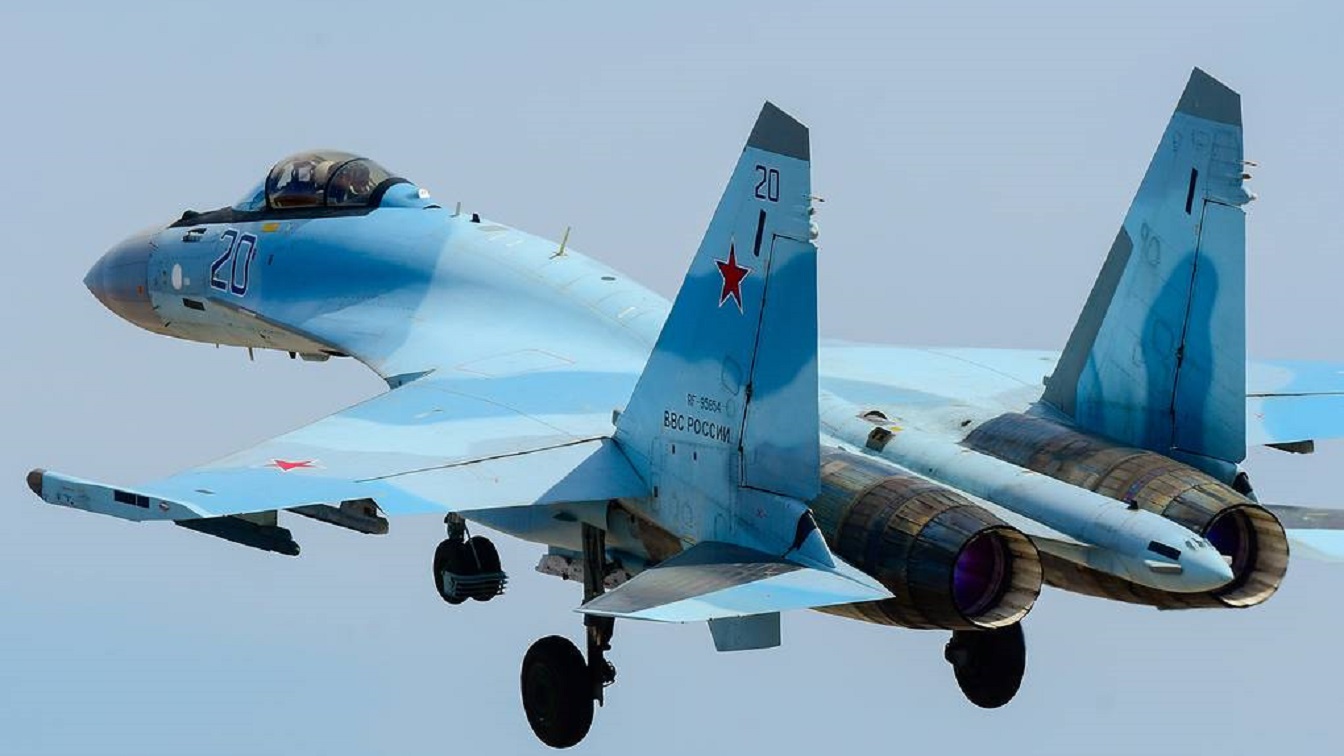
Su-35S fighter. Image Credit: Russian State Media.
Russia’s Su-35 is not a failure but a warning. It demonstrates that legacy designs can still be lethal, long-range weapons that can offset any technological gaps, but ultimately, wars are no longer won by the best warplanes or aircraft. Instead, they are won by the best networks, logistics, and industrial base.
The End of the Dogfighting Era.
Far from being a relic, then, the Su-35 proves that even without stealth, a well-armed, well-flown platform can still impose high costs on its enemy, while shaping the battlefield. But it also underscores the unforgiving nature of modern warfare.
Given how sensors, networks, and industrial capacity have been driven to the forefront by the Ukraine War, it is fair to say that, despite not having the best technological accoutrements, the Su-35 remains a top contender for the best warplane in the world.
MORE – Russia Has Built 30 Su-57 Stealth Fighters: The F-35 is 1,300 Strong and Adding More by the Day
MORE – The U.S. Navy’s New $15,000,000,000 Columbia-Class Nuclear Submarine Is Way Behind Schedule
About the Author: Brandon J. Weichert
Brandon J. Weichert is the Senior National Security Editor at 19FortyFive.com. Recently, Weichert became the editor of the “NatSec Guy” section at Emerald.TV. He was previously the senior national security editor at The National Interest. Weichert is the host of The National Security Hour on iHeartRadio, where he discusses national security policy every Wednesday at 8pm Eastern. He hosts a companion show on Rumble entitled “National Security Talk.” Weichert consults regularly with various government institutions and private organizations on geopolitical issues. His writings have appeared in numerous publications, among them Popular Mechanics, National Review, MSN, and The American Spectator. And his books include Winning Space: How America Remains a Superpower, Biohacked: China’s Race to Control Life, and The Shadow War: Iran’s Quest for Supremacy. Weichert’s newest book, A Disaster of Our Own Making: How the West Lost Ukraine, is available for purchase wherever books are sold. He can be followed via Twitter/X @WeTheBrandon.