
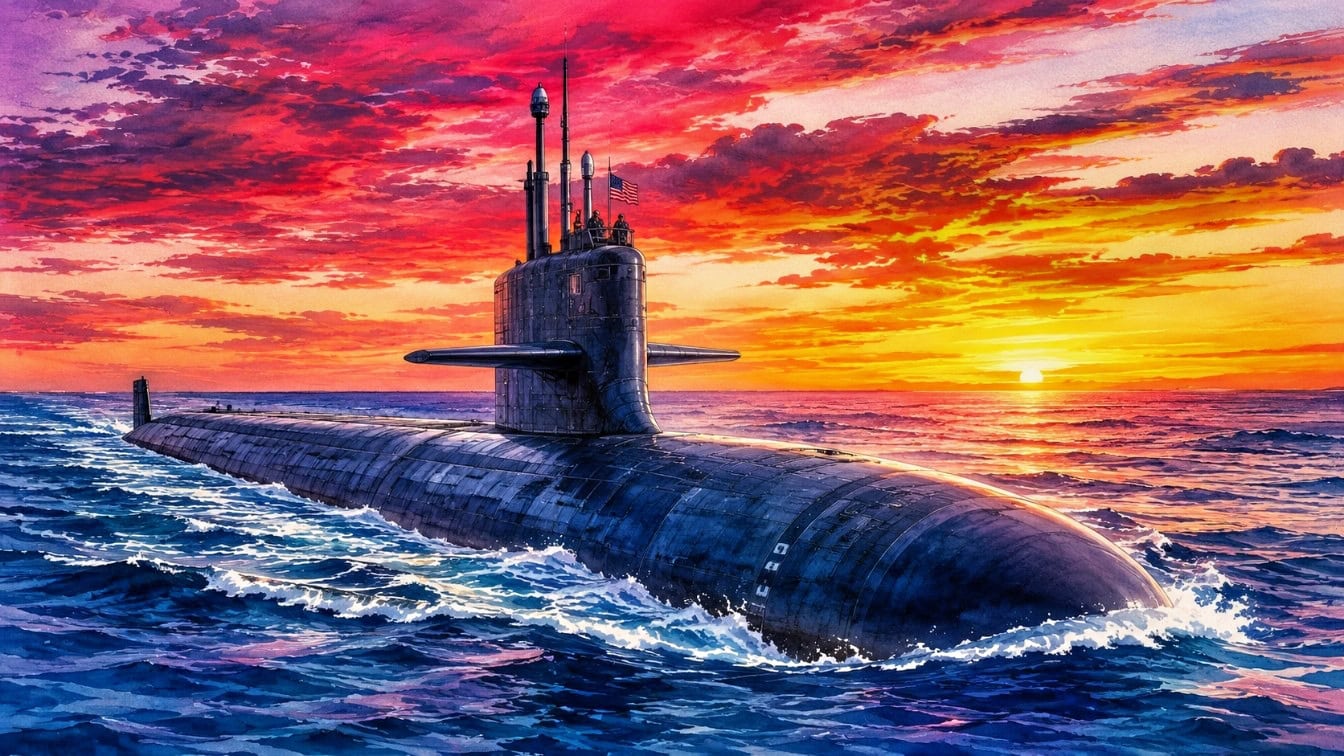
The SSN(X) is the U.S. Navy’s planned next-generation attack submarine — designed to combine the speed and firepower of the Seawolf class, the stealth of the Virginia-class, and the endurance of the Columbia-class into the most lethal undersea platform ever built — and it has already slipped from a planned 2031 start to 2035 and now to 2040, before a single boat has been ordered, at a projected cost of up to $8.7 billion each. The reason for the delay is the uncomfortable part: the submarine-industrial base that would build the SSN(X) currently cannot build the Virginia-class boats it already has on schedule, so the Navy keeps deferring the wonder-sub and buying more Virginias instead.
The deeper question the program raises is not whether the SSN(X) would be a great submarine. It is whether the modern Navy, with a documented record of new ship classes that arrive late, over budget, or broken, can still build a great new class of warship at all.
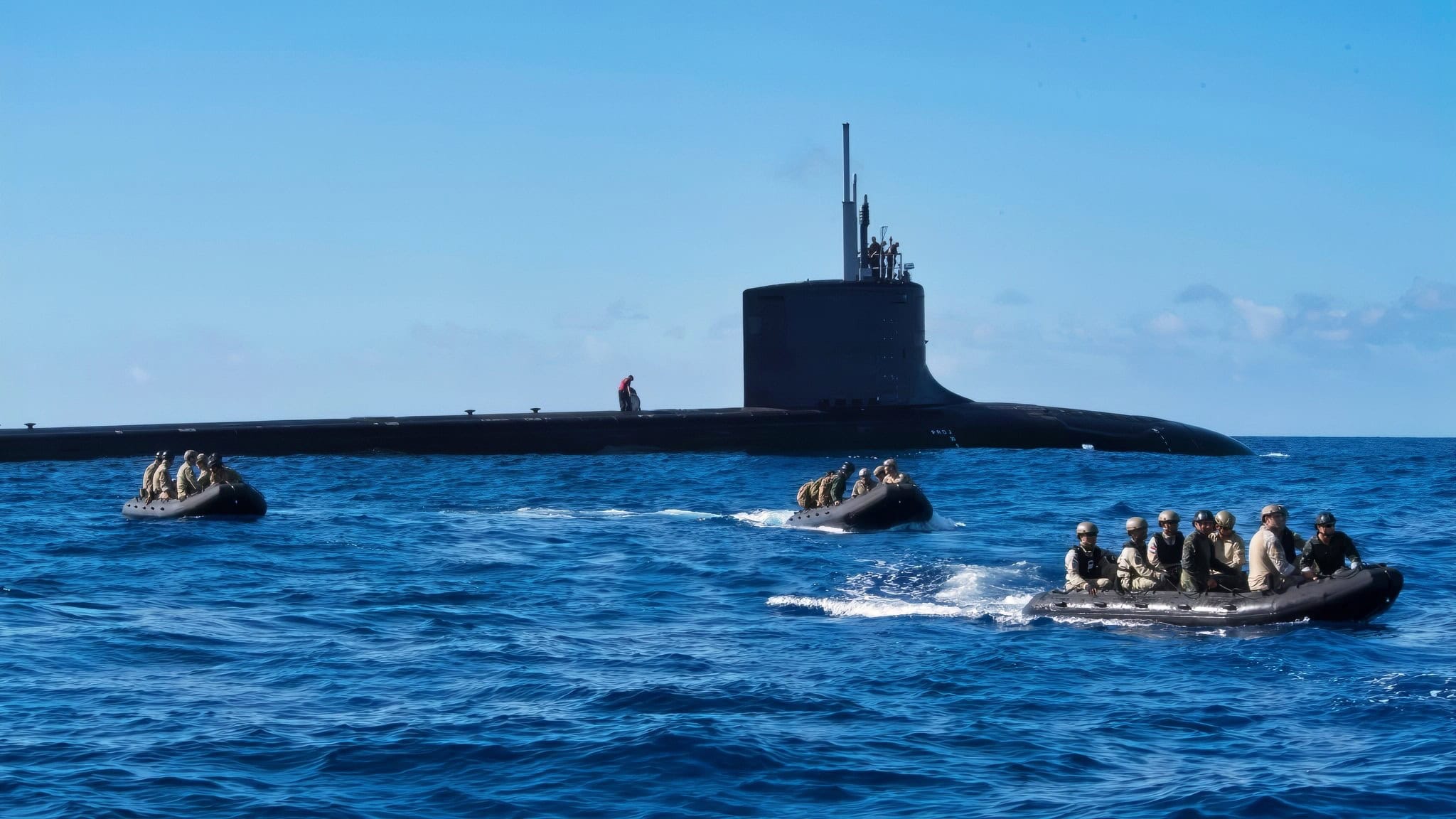
PEARL HARBOR (July 9, 2018) – Multi-national Special Operations Forces (SOF) participate in a submarine insertion exercise with the fast-attack submarine USS Hawaii (SSN 776) and combat rubber raiding craft off the coast of Oahu, Hawaii during Rim of the Pacific (RIMPAC) exercise, July 9. Twenty-five nations, 46 ships and five submarines, about 200 aircraft, and 25,000 personnel are participating in RIMPAC from June 27 to Aug. 2 in and around the Hawaiian Islands and Southern California. The world’s largest international maritime exercise, RIMPAC provides a unique training opportunity while fostering and sustaining cooperative relationships among participants critical to ensuring the safety of sea lanes and security of the world’s oceans. RIMPAC 2018 is the 26th exercise in the series that began in 1971. (U.S. Navy photo by Lt. j.g. Michelle Pelissero)
The SSN(X) Promise: The Most Lethal Attack Submarine Ever Designed
The pitch for the SSN(X) is ambitious to the point of being a wish list. The Next-Generation Attack Submarine is envisioned to fuse the best attributes of the three most capable submarines America has built or is building — the rapid-attack firepower of the Cold War Seawolf class, the quieting and stealth of the current Virginia class, and the operational endurance of the Columbia-class ballistic-missile boats — into a single hull.
According to the Navy’s descriptions, the new boat would emphasize stealth, intelligence-gathering, larger torpedo payloads, and advanced connectivity with unmanned undersea systems, making it both a heavily armed hunter and a command node for the robotic submarines the Navy expects to field alongside it.
It would also be big. The Congressional Budget Office’s analysis assumes the SSN(X) would have a submerged displacement of about 10,100 tons, roughly 11 percent larger than the Seawolf design and substantially bigger than the roughly 7,800-ton early Virginia boats it is meant to succeed.
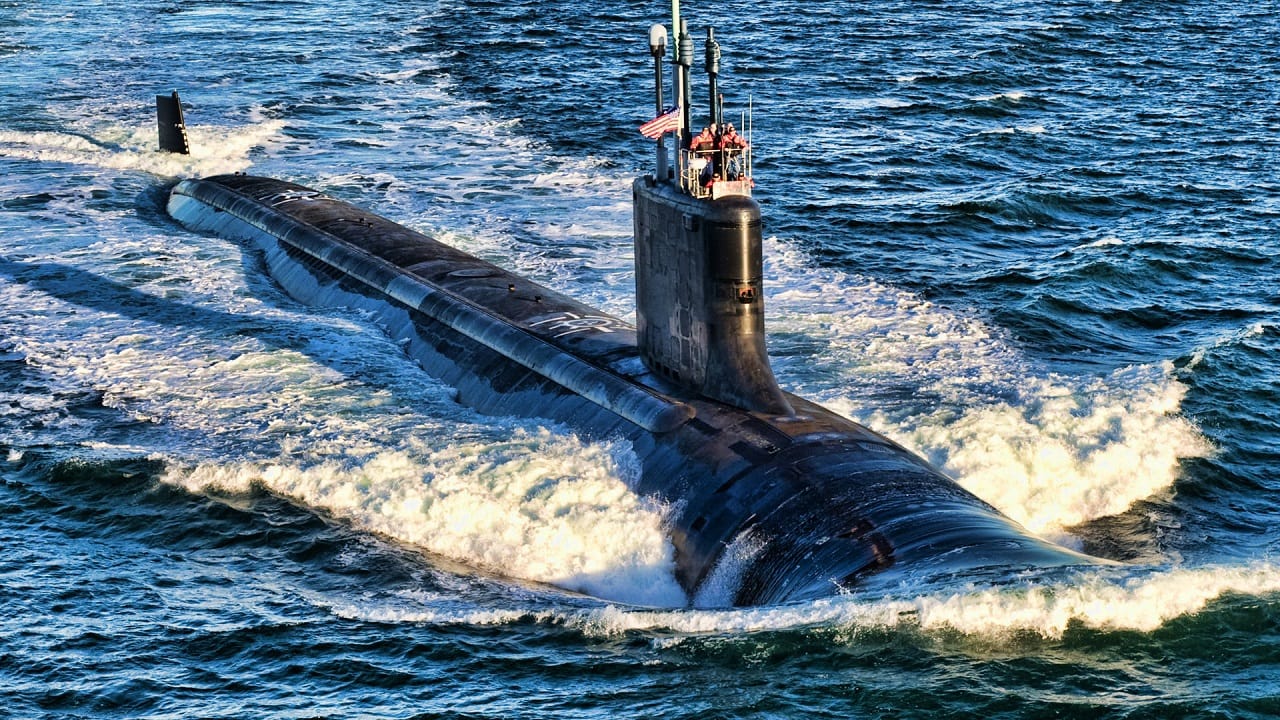
US Navy Attack Submarine. Image Credit: Creative Commons.
The SSN(X) is intended first to supplement and then to replace the Virginia class, which the Navy has been procuring since 1998, and it is being designed for great-power competition against peer adversaries — China above all — rather than the counterterrorism-era missions that shaped earlier boats. On paper, it is the apex predator of the undersea domain. The problem is everything between the paper and the fleet.
The SSN(X) Delay And The Cost: 2031 To 2035 To 2040
The SSN(X)’s schedule has moved in one direction only, and the cost has followed. The program was originally expected to begin procurement around 2031, slipped to 2035 because of cost and budget pressure, and then slipped again: the Navy’s FY2025 budget submission deferred the first SSN(X) from FY2035 to FY2040, a five-year delay that the Congressional Research Service attributed directly to limitations on the Navy’s total budget.
The FY2026 budget request included several hundred million dollars in research and development to keep the design effort moving, but the timeline has not improved, and procurement of the first boat now sits in the early 2040s.
The cost estimates are staggering for a submarine that does not yet exist on paper in final form. A January 2025 Congressional Budget Office report put the SSN(X)’s average unit procurement cost at $7.1 billion by the Navy’s estimate, and $8.7 billion by CBO’s — the CBO figure is roughly 23 percent higher than the Navy’s, and both in constant dollars that will almost certainly climb.
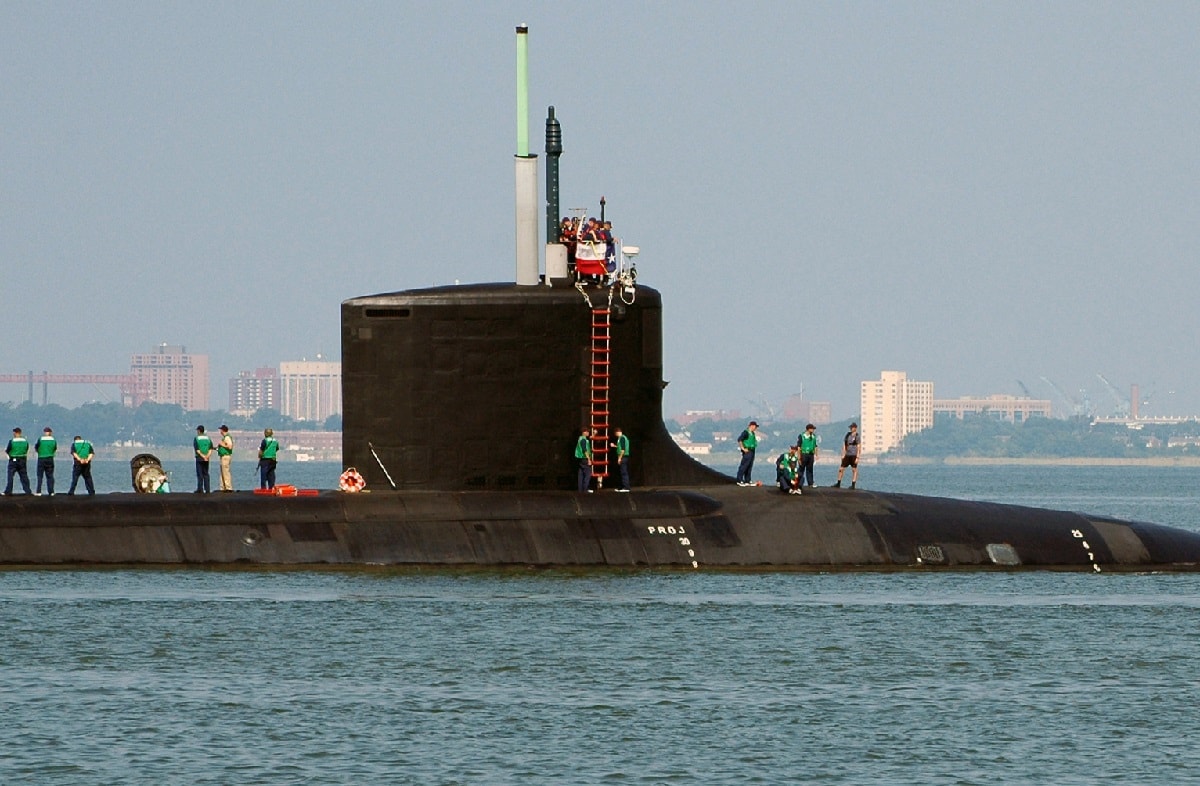
U.S. Navy Sailors stationed aboard the Virginia Class New Attack Submarine Pre-Commissioning Unit (PCU) TEXAS (SSN 775) stands topside as the boat gets underway from Naval Station Norfolk, Va., Aug. 22, 2006. TEXAS is the second Virginia Class submarine built and the first major U.S. Navy combatant vessel class designed with the post-Cold War security environment in mind. TEXAS will be commissioned Sept 9, 2006 in Galveston, Texas. (U.S. Navy photo by Mass Communication Specialist Seaman Kelvin Edwards) (Released)
That is roughly double the cost of a Virginia-class boat, and because the design is still in early development, with requirements being refined, the actual figure is a matter of speculation rather than fact.
There is even an open question about the boat’s propulsion: the Navy and Congress have weighed whether to shift from highly enriched uranium to low-enriched uranium reactors, a change that could carry cost or safety implications but also technical hurdles, which means even the reactor at the heart of the boat is not a settled matter. A submarine that has slipped nine years in planning, doubled in projected cost, and has an unsettled powerplant is not yet a program so much as an aspiration.
Why The Navy Just Keeps Buying Virginias Instead
The most revealing fact about the SSN(X) is what the Navy is doing in its place: buying more of the submarine it already builds, because that is the bird in the hand. Virginia-class boats fitted with the Virginia Payload Module have an estimated procurement cost of more than $4 billion each, rising to more than $5 billion under the FY2026 budget, and they are a known, in-production quantity rather than a clean-sheet gamble
. Deferring the SSN(X) and pouring money into continued Virginia production is the low-risk choice for a Navy that cannot afford a new bet.
The reason it cannot afford the best is a bottleneck that explains the entire program. Only two shipyards in the country can build nuclear-powered submarines — General Dynamics Electric Boat in Groton, Connecticut, and Quonset Point, Rhode Island, and Huntington Ingalls’ Newport News Shipbuilding in Virginia — and those two yards are already failing to keep up with existing demand. The Virginia program was meant to deliver two boats a year, but the actual production rate has never reached 2.0 and since 2022, has been limited to about one boat annually, running closer to 1.2 or 1.3.
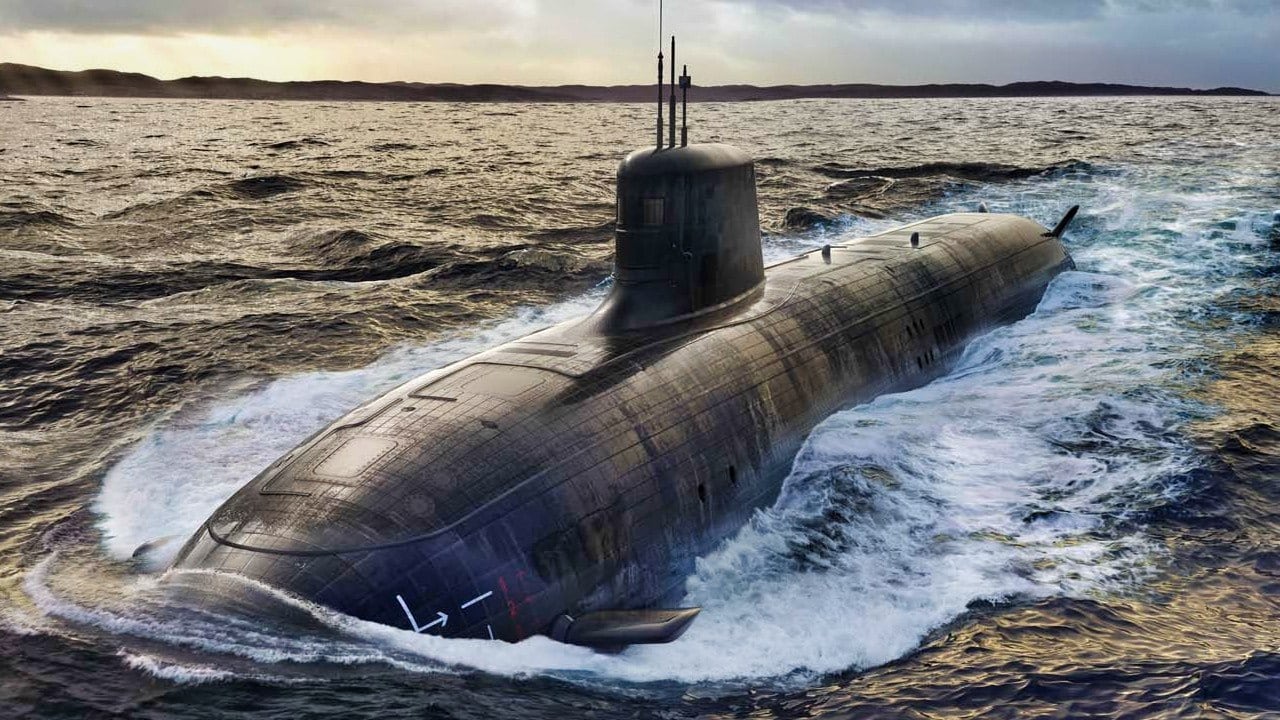
SSN-AUKUS Submarine. Image is Creative Commons Artist Rendering.
The recovery is slipping too: the Chief of Naval Operations, Adm. Daryl Caudle, told appropriators in May 2026 that the yards would not hit the two-a-year rate until around 2032, a significant delay from the 2028 target his predecessor had set. The constraint is not money alone but people and capacity — nuclear-certified welders and trades that take years to train, a limited supplier base for reactor components, and finite drydock space.
That strain is about to get worse, not better, because of competing demands on the same two yards. The Navy is simultaneously building the Columbia-class ballistic-missile submarines, its single highest priority, which eat the scarcest skilled labor and the same supplier base. The CBO warned that the Navy currently takes about ten years to build a submarine, and that for a decade in the 2030s and 2040s, four types of submarines would be in production at once while the Navy is already experiencing substantial cost overruns and missed deliveries on the boats it builds now — adding that piling new classes into that pipeline could further tax the yards beyond their ability to manage.
On top of all that sits AUKUS: under the security pact, the United States has committed to selling several Virginia-class boats to Australia in the 2030s, and the CRS notes a fourth and perhaps fifth Virginia would be sold to Australia if Australia’s own construction lags. However, the latest information we have is that used Virginia-class boats will be sold to Canberra. Still, those older boats would still need to be replaced.
The Uncomfortable Track Record: Zumwalt, LCS, Ford, Constellation
The case for skepticism about the SSN(X) is not really about submarines. It is about the modern Navy’s documented pattern of promising revolutionary new ship classes and then delivering them late, wildly over budget, or hobbled by technology that was not ready. The Government Accountability Office has been blunt about it, citing the failures of the Littoral Combat Ship, the Zumwalt-class destroyer, and the Constellation-class frigate as examples of what goes wrong, and noting that since 2015 it has made 90 recommendations to improve Navy shipbuilding, of which the Navy has fully or partly addressed only 30, while 60 remain unaddressed.
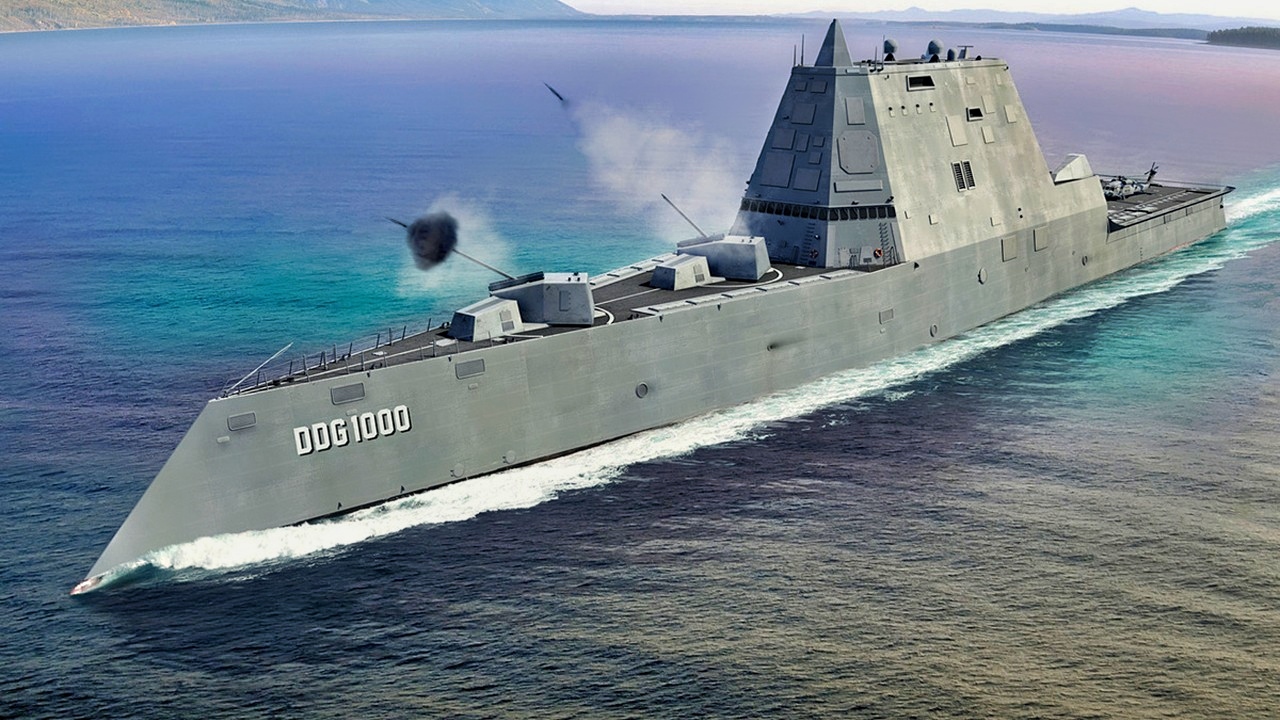
Zumwalt-Class U.S. Navy Destroyer. Image Credit: Creative Commons.
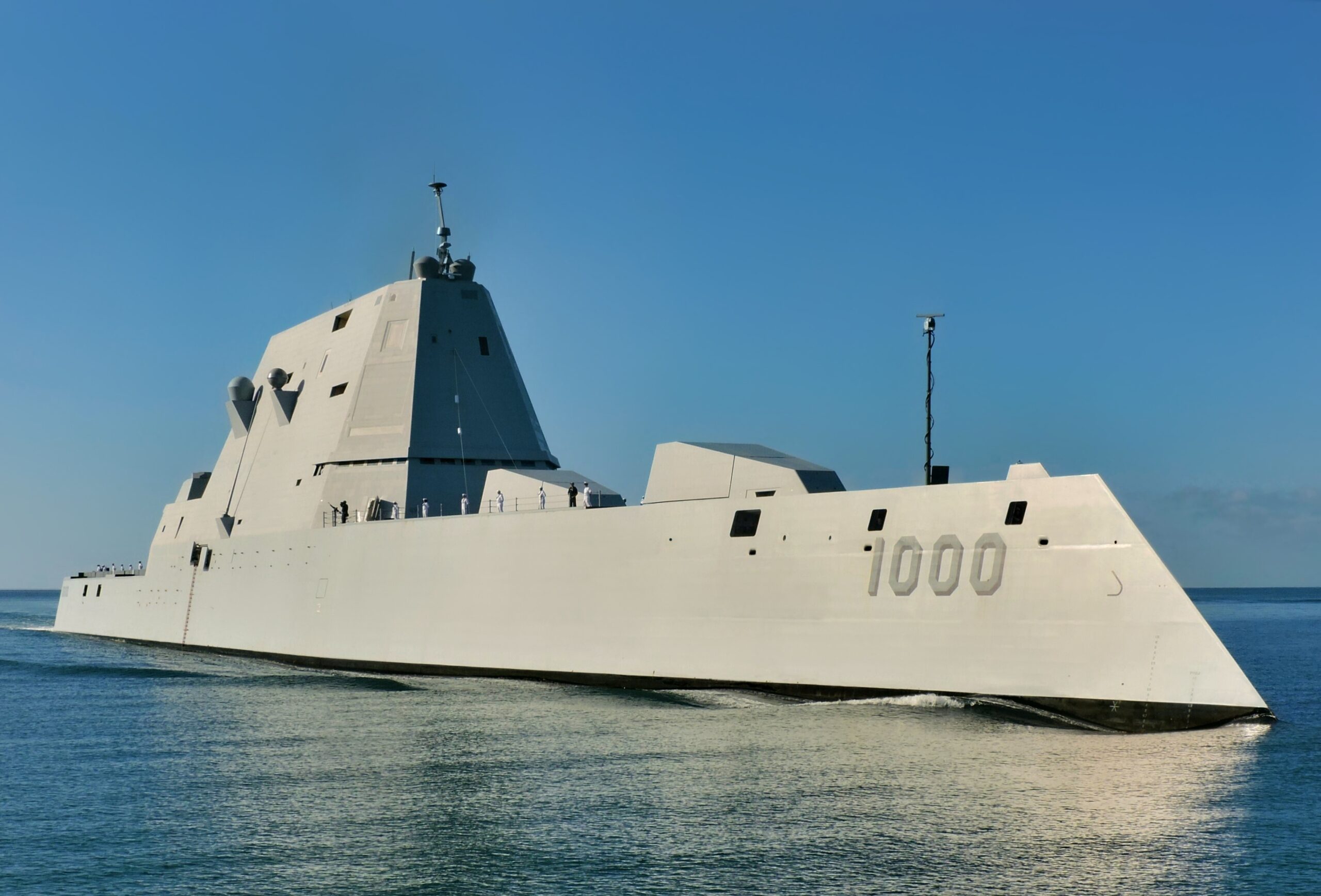
Zumwalt-Class Destroyer U.S. Navy. Image Credit: Creative Commons.
Each program tells a version of the same story. The Zumwalt destroyer was truncated from a planned 32 ships to just three after costs exploded, and its centerpiece Advanced Gun System was left without affordable ammunition, the guided rounds so expensive the Navy never bought them; the three ships are now being re-roled as hypersonic-missile launchers, an expensive search for a reason to exist after the original one evaporated.
The Littoral Combat Ship was built fast and retired early, with multiple hulls decommissioned after only a handful of years in service, and the modular mission packages that were its whole concept arriving late or not at all. The Ford-class carrier ran years late and billions over its budget, with new technologies like the electromagnetic catapults and the advanced weapons elevators taking years to work — though, in fairness, the Ford eventually deployed and those systems came good, making it a painful-but-delivered story rather than a permanent failure.
The Constellation-class frigate is the freshest and most damning example, because it was supposed to be the easy win. After the LCS and Zumwalt disasters, the Navy deliberately chose the low-risk path: adapt a proven, in-service European design, the Franco-Italian FREMM frigate, to avoid first-in-class development risk. It did not work. The GAO found that the Navy began construction before the design was complete, with the frigate’s 3D design still incomplete more than a year after construction began, an approach inconsistent with the leading practice of finishing the design before cutting steel.
Design instability drove weight growth and schedule slips; the program’s reported design-completion figure of 92 percent was later restructured to reveal that actual progress was significantly less than claimed, and the modifications to the “proven” hull grew so extensive that the commonality with the parent design collapsed. The result, after the program was meant to deliver up to 20 frigates, the Navy effectively truncated it to a handful of ships, a mini-class echoing the Zumwalt reduction. The common thread across all four is unmistakable — requirements the service could not sustain, immature technology layered onto them, optimistic baselines, and an industrial base too thin to absorb the churn.
The SSN(X) is being promised into precisely that record.
The Honest Counterweight: Submarines Are The One Thing The Navy Builds Well
The case is not all on one side, and an honest assessment has to give the counterargument real weight. The submarine community is the Navy’s best acquisition performer by a wide margin, and the Virginia-class — for all its rate problems — is a genuine success story.
The Virginia boats are capable; they have been delivered at costs far closer to plan than the surface-fleet disasters, and the program has built more than two dozen of them without the design fiascos that wrecked the Zumwalt, the LCS, and the Constellation. The rate shortfall is a problem of capacity, not of competence: the yards know how to build a good Virginia, they simply cannot build enough of them fast enough. That is a meaningfully different failure from designing a ship that does not work.
So there is a real case that submarines are the one domain where the Navy can still pull off something ambitious, because the people who build them have not lost the thread the way the surface-combatant community has.
The honest tension is this: the SSN(X) would be the most ambitious leap in American submarine design in a generation — a clean-sheet, 10,000-ton boat with new propulsion and new systems — attempted by a yard base that is already maxed out and missing its targets on the proven design. The question is whether the submarine community’s strong record survives that stretch, or whether the SSN(X) becomes the program where even the submariners, asked to do too much with too little capacity, finally produce a boat that arrives like a Zumwalt. The record says the people are good; the record also says the system around them is brittle.
The Verdict: Can The Navy Still Build A Great New Submarine At All?
The SSN(X) sits at the intersection of two true things.
The first is that the submarine force is where the United States still holds a clear advantage over China, and the SSN(X) is meant to extend that edge into the second half of the century — even as the CRS warns that the delay could threaten American undersea superiority just as China expands its own submarine fleet, building boats at a rate that, by the assessment of the Indo-Pacific commander, already outpaces American output.
The second is that the Navy’s recent history of new ship classes is a catalog of cost growth, schedule slips, and broken promises, and the SSN(X) is being launched into that history from an industrial base that cannot keep up with the work it already has.
That is why the real question is not whether the SSN(X) would be a great submarine. Given enough money and time, the Navy’s submarine designers could very likely build the boat they are describing.
The question is whether the Navy can still build a great new class of warship at all — whether it can finish a clean-sheet design on schedule, hold its cost, and deliver it from two overloaded shipyards already straining under Columbia, Virginia, and the AUKUS commitment, without the program slipping into the same pattern that produced three surface-combatant failures in a row.
The boat on paper is formidable. The path from paper to fleet is where the modern Navy’s programs go to die, and until the service proves it can build the submarines it has already promised, the deadliest attack submarine ever designed will remain exactly that — a design.
About the Author: Harry J. Kazianis
Harry J. Kazianis (@Grecianformula) was the former Senior Director of National Security Affairs at the Center for the National Interest (CFTNI), a foreign policy think tank founded by Richard Nixon based in Washington, DC. Harry has over a decade of experience in think tanks and national security publishing. His ideas have been published in the NY Times, The Washington Post, The Wall Street Journal, CNN, and many other outlets worldwide. He has held positions at CSIS, the Heritage Foundation, the University of Nottingham, and several other institutions related to national security research and studies. He is the former Executive Editor of the National Interest and the Diplomat. He holds a Master’s degree focusing on international affairs from Harvard University.

