
Turkey’s decade-long S-400 standoff with Washington may be breaking, with a pro-government Turkish columnist reporting the Russian-made missile systems have been sold to a Gulf buyer, either the United Arab Emirates or Qatar, to clear the legal path back to the F-35. Three days later, no capital has confirmed it, but the Kremlin has acknowledged talks over the systems’ fate. If the sale is real, it solves Ankara’s problem by moving Russian radars next door to the largest American base in the Middle East, in the middle of a shooting war with Iran.
The report came from Hürriyet columnist Abdulkadir Selvi on July 10: “the S-400s have been sold to a third country,” a Gulf country, with the announcement expected that same day and last details resolved by midnight, some sources pointing to the UAE and others to Qatar. The promised Friday announcement never came, and as of this writing, neither Ankara, Washington, Moscow, Abu Dhabi, nor Doha has confirmed or denied the sale. What is confirmed is harder to dismiss: the Kremlin publicly acknowledged it is in contact with Turkey over the fate of the systems, with spokesman Dmitry Peskov, quoted by Reuters, calling the matter “extremely sensitive.” Russian consent is required for any re-transfer, which is why every previous version of this idea died on the table.
Ankara’s Three-for-One
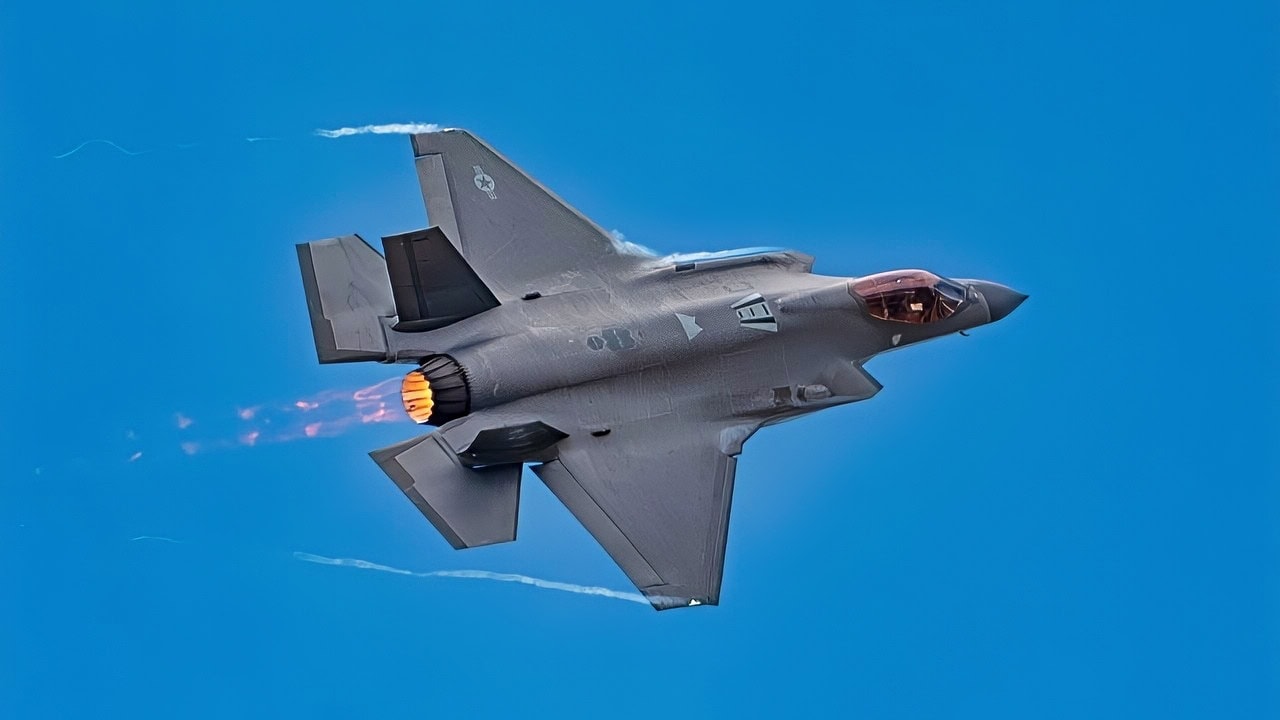
Turkish reporting frames the play as a triple win: CAATSA sanctions lifted, American F110 engines released for the homegrown KAAN fighter that cannot fly without them, and the door reopened to the F-35, from which Turkey was expelled in 2019 and for which it has six jets already built and paid. The moment matters because of what just happened in Ankara. Trump attended the July NATO summit there, praised Erdogan’s loyalty, and asked aloud why he would not readmit Turkey, yet left the summit without reinstating Ankara, telling reporters he had not “made up his mind” and leaving the prohibition in place. The S-400 sale report landed two days later, which is the logic of it: under Section 1245 of the 2020 defense authorization act, F-35 transfers to Turkey are barred until Washington certifies Ankara no longer possesses the S-400, and lifting sanctions requires a formal presidential notification to Congress that the systems are non-operational, gone, and that Turkey has pledged no similar Russian deals, with lawmakers able to force a vote and a 90-day review attached to any third-party transfer.
Moscow’s Veto and Jerusalem’s Phone Call
Two capitals can still kill this. Russia holds the contractual consent, and its choice is genuinely open: Erdogan reportedly floated simply returning the systems to Putin late last year, and analysts note Moscow may see more value in slow-walking approval to keep Ankara off balance than in blessing a sale. Israel is working the other side. Prime Minister Netanyahu phoned Trump on Thursday to object, citing Erdogan’s rhetoric against Israel, while Greece’s prime minister voiced his own opposition and got a public jab from Erdogan, who told reporters, “Keep watching us.” Congress is the third veto: lawmakers have long-standing objections to trusting Ankara with the jet, and notably once voted on disapproving F-35 sales to the UAE itself, the same UAE that may now receive the S-400 instead, while Israel’s concerns about the F-35’s sensitive technology have shadowed every round of this saga.
Why a Gulf State Wants Russian Missiles Now
The demand side is the war. Iranian missiles and drones have repeatedly targeted American bases in Qatar, the UAE, and four other states across the region as the Hormuz conflict grinds on, and the American interceptor umbrella is thinner than advertised, with half the THAAD stockpile expended, nearly half the Patriots, and no THAAD deliveries at all forecast in 2026. For Gulf states that watched their skies become the battleground, any long-range air defense on the market looks attractive while American magazines run low.
The honest caveats: the S-400 is an expensive answer to cheap drones, its integration with American-built Gulf air defense networks would be a genuine headache, and its combat record against ballistic missiles is thin.
The Problem That Moves Instead of Disappearing
What is the paradox at the center of this deal? Turkey was expelled from the F-35 because, as the Pentagon put it in 2019, the jet “cannot coexist with a Russian intelligence collection platform.” Selling the S-400 to Doha or Abu Dhabi does not remove that platform from the F-35’s world; it relocates it beside Al Udeid Air Base, the hub of American airpower in the region, in countries stitched into U.S. air defense networks.
Foundation for Defense of Democracies’ Sinan Ciddi puts the verdict in the title of a recent analysis: the sale solves Turkey’s problem, not Washington’s. Until a buyer is named, Moscow consents, and a presidential letter reaches Congress, this remains a reported deal, and the announcement Ankara’s press promised for Friday has still not come.
MORE: The Navy Will Soon Have Mothership ‘Drone’ Nuclear Submarines
About the Author: Harry J. Kazianis
Harry J. Kazianis (@Grecianformula) was the former Senior Director of National Security Affairs at the Center for the National Interest (CFTNI), a foreign policy think tank founded by Richard Nixon based in Washington, DC. Harry has over a decade of experience in think tanks and national security publishing. His ideas have been published in the NY Times, The Washington Post, The Wall Street Journal, CNN, and many other outlets. He has held positions at CSIS, the Heritage Foundation, the University of Nottingham, and several other institutions related to national security research and studies. He is the former Executive Editor of the National Interest and the Diplomat. He holds a Master’s degree focusing on international affairs from Harvard University.