
Key Points and Summary – The piece argues Trump’s Greenland fixation is less about impulse and more about geography, basing, and great-power competition.
-It frames European anxiety after the Venezuela raid, then pivots to Greenland’s long-standing strategic value: U.S. wartime basing, the continued role of Pituffik/Thule in missile warning and space surveillance, and Greenland’s position near the GIUK Gap used to track Russian movement in the North Atlantic.
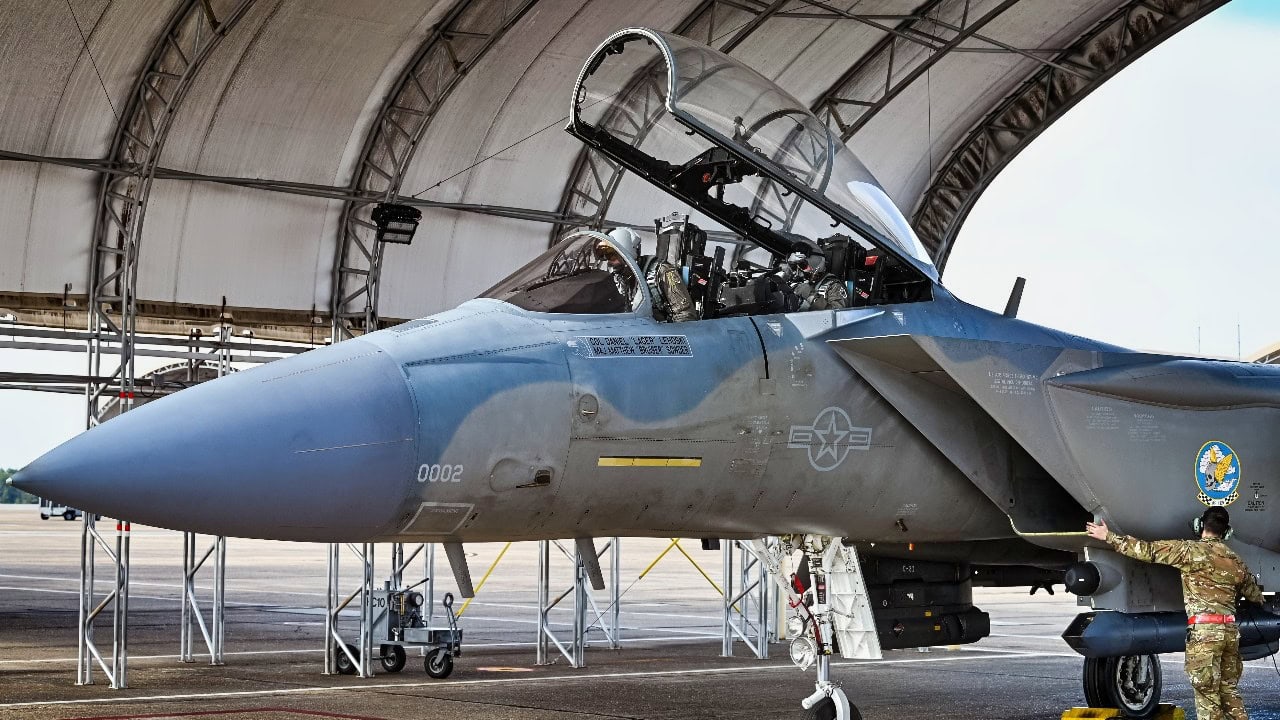
U.S. Air Force Maj. Aaron Eshkenazi, F-15EX Test Director for the 84th Test and Evaluation Squadron, performs preflight procedures for the F-15EX with Lt. Gen. Michael Koscheski, deputy commander of Air Combat Command, at Eglin Air Force Base, Florida, January 29, 2025. During his visit, Koscheski gained valuable insights from the 84th TES and 85th TES to help inform future decisions regarding the platform. The future F-15 fleet will complement 5th generation aircraft, bringing substantial additional capacity for over-sized long-range fires, sensors, and electronic warfare capabilities to defend critical locations in highly contested areas. (U.S. Air Force photo by 1st Lt. Rebecca Abordo)
-It also emphasizes a warming Arctic as a new trade and security arena, with Russia and China seeking influence, and Greenland’s rare-earth potential as a supply-chain prize.
Why Is President Trump So Obsessed With Greenland?
The United States raid into Venezuela that resulted in the capture and arrest of Nicolas Maduro has European leaders on edge. Many are greatly concerned that the United States will now turn its attention to Greenland.
European leaders on Tuesday issued a joint statement to push back against US President Donald Trump’s renewed interest in Greenland, saying Arctic security must be a collective effort, not solely a US one.
During a press conference last weekend after the operation in Venezuela, President Trump piqued interest in his comments that the US needed Greenland “very badly”.
Greenland’s Prime Minister, Jens-Frederik Nielsen, also made a strong statement, calling on the president to abandon his “fantasies about annexation” and accusing the US of “completely and utterly unacceptable” rhetoric. “Enough is enough,” he added.
This latest statement was signed by Danish Prime Minister Mette Frederiksen, French President Emmanuel Macron, German Chancellor Friedrich Merz, British Prime Minister Keir Starmer, and the leaders of Italy, Spain, and Poland.
“The Kingdom of Denmark – including Greenland – is part of NATO,” the statement said, according to a letter published by Denmark’s Prime Minister’s Office on X (formerly Twitter).
“Security in the Arctic must therefore be achieved collectively, in conjunction with NATO allies, including the United States, by upholding the principles of the UN Charter, including sovereignty, territorial integrity, and the inviolability of borders. These are universal principles, and we will not stop defending them,” they continued.
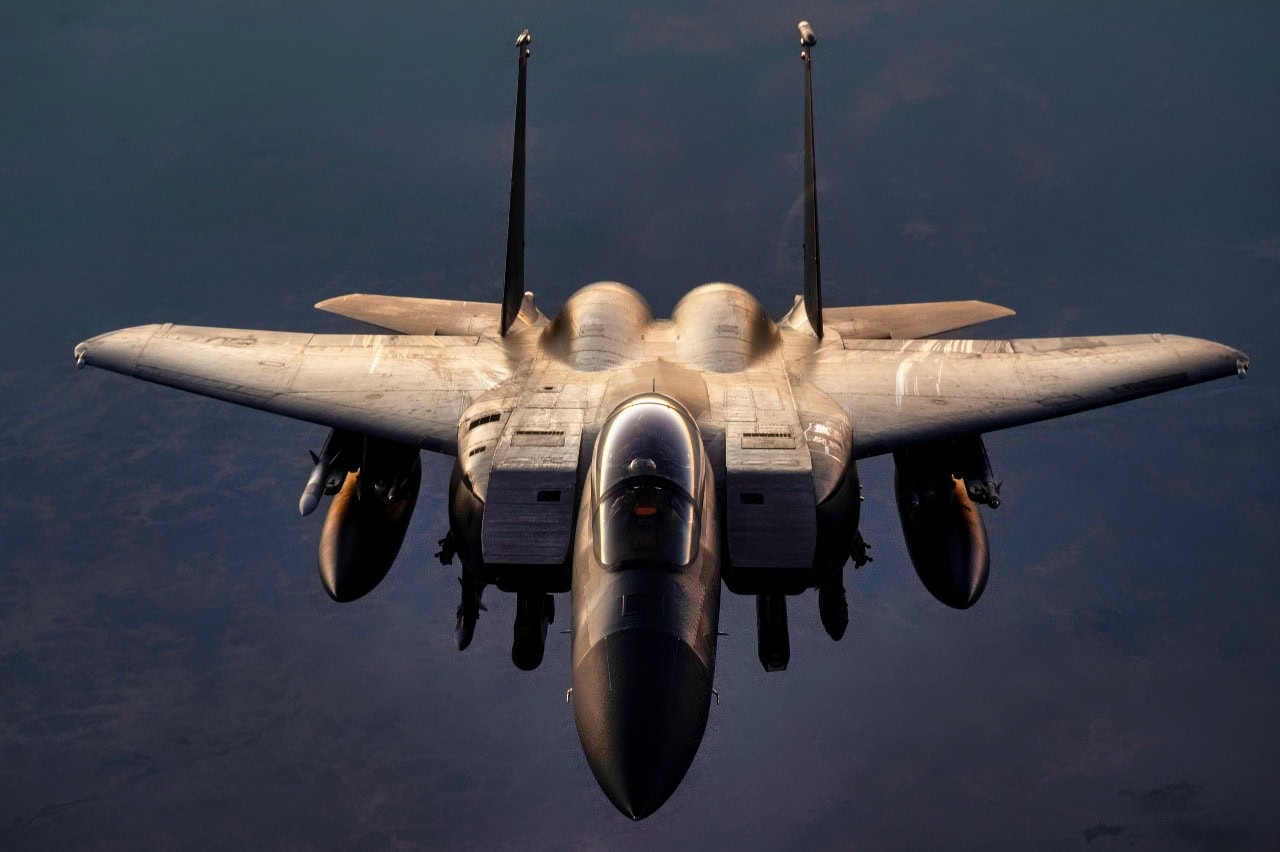
A U.S. Air Force F-15E Strike Eagle flies over the U.S. Central Command area of responsibility, Jan. 7, 2025. The F-15E’s superior maneuverability and acceleration are achieved through its high engine thrust-to-weight ratio and low-wing loading. (U.S. Air Force photo by Staff Sgt. William Rio Rosado)
“Greenland belongs to its people. It is for Denmark and Greenland, and them only, to decide on matters concerning Denmark and Greenland.”
Greenland Has Been a Key Area Of US Defense Since WWII
With the US reducing its NATO footprint in Europe and elsewhere, Trump has said since his first administration that the Europeans have to address their security issues more than they have. The US has driven itself deep into debt in the past 80 years since the end of World War II.
However, the change in philosophy centers around the US, establishing choke points that could threaten its hegemony in the hemisphere. The US is trying to strengthen its territorial core by protecting its interests with the Atlantic and Pacific Oceans as large buffers. That is why Canada, the Panama Canal, and Greenland figure so prominently in the president’s comments.
Denmark has occupied the island, about 80 percent of which is covered in ice, for about 300 years. During World War II, after Nazi Germany invaded Denmark, the US invaded and established bases there for communications and military airfields; its location also served as a critical refueling stop and staging point for aircraft flying from North America to the war in Europe, helping bridge the mid-Atlantic air gap.
After the war, American military units remained in Greenland. Pituffik Space Base, formerly known as Thule Air Base, has been operated by the US ever since. The base supports missile warning, missile defense, and space surveillance operations for the US and NATO.
Greenland also guards part of the GIUK Gap (Greenland, Iceland, United Kingdom), where NATO monitors Russian naval movements in the North Atlantic.
The International Institute for Strategic Studies (IISS) characterizes the GIUK Gap as follows:
“The naval importance of the naturally inhospitable waters of the Denmark Strait between Greenland and Iceland, and those of the Norwegian Sea and the North Atlantic between Iceland, the Faroe Islands, and Scotland, predated the Cold War. Aside from the extreme confines of the English Channel, these sea lanes are the gateway between northern European waters and the broad reaches of the Atlantic and beyond. Yet the GIUK Gap assumed a new, and evolving, symbolism and significance during the Cold War.”
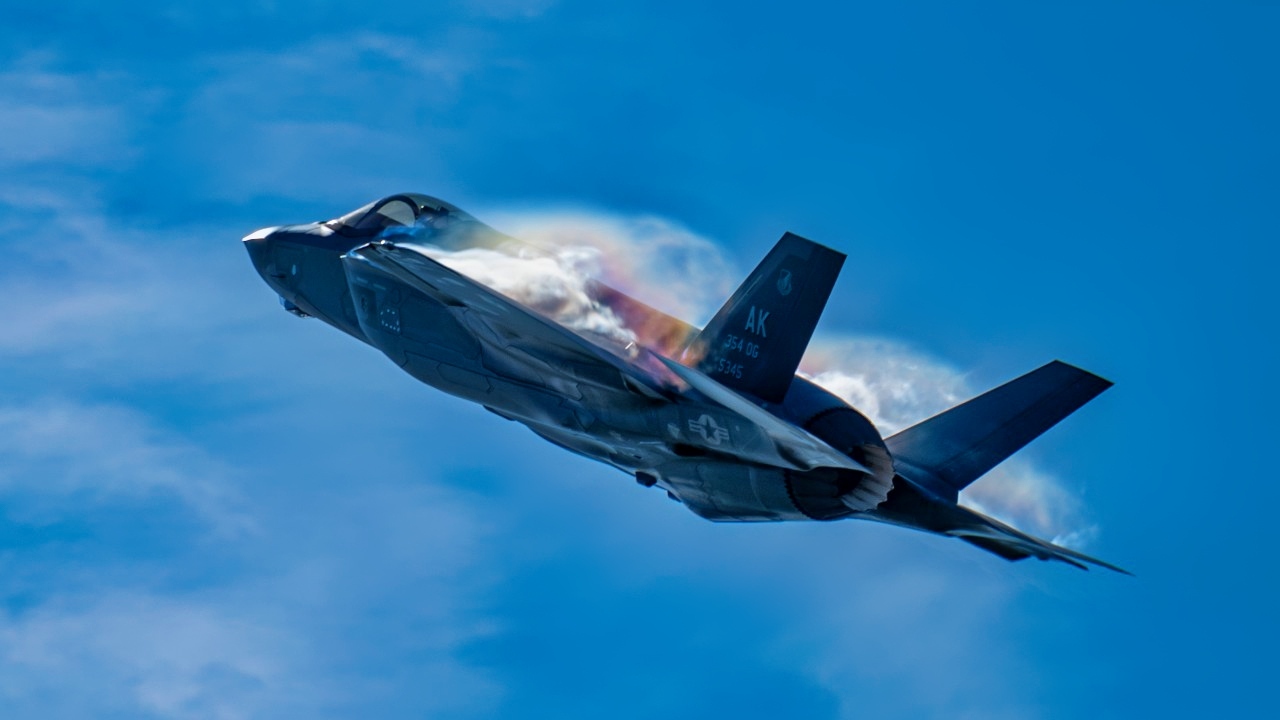
U.S. Air Force Maj. Kristin “BEO” Wolfe, F-35A Lightning II Demonstration Team pilot and commander, flies an aerial performance for the 2021 Arctic Lightning Air Show, July 30, 2021, Eielson Air Force Base, Alaska. The F-35 Demonstration Team utilized F-35s from the 354th Fighter Wing in order to showcase the combat capability of the Pacific Air Force’s newest F-35 units. (U.S. Air Force photo by Capt. Kip Sumner)
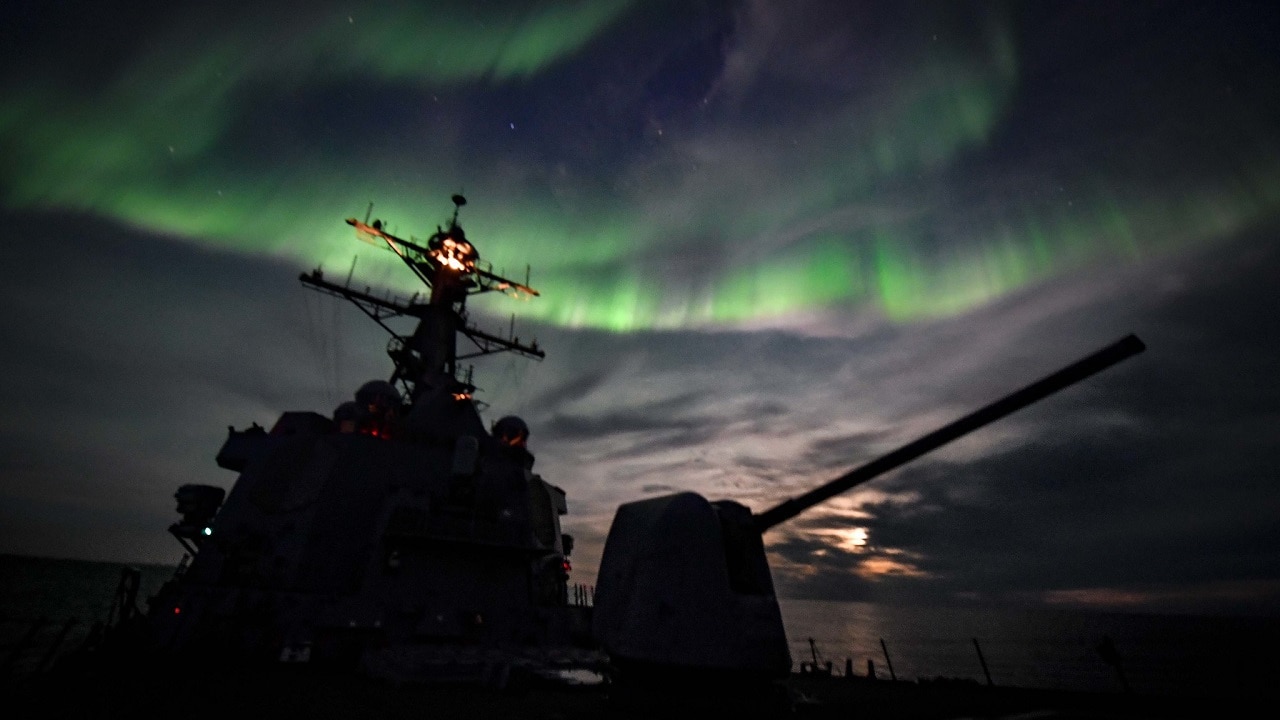
ARCTIC CIRCLE (Sept. 5, 2017) The Arleigh Burke-class guided-missile destroyer USS Oscar Austin (DDG 79) transits the Arctic Circle Sept. 5, 2017. Oscar Austin is on a routine deployment supporting U.S. national security interests in Europe, and increasing theater security cooperation and forward naval presence in the U.S. 6th Fleet area of operations.
The Panama Canal, built by the US in the early twentieth century, vastly shortened the travel between the Atlantic and Pacific Oceans.
The Arctic Is the Next Contested Area of the World
Greenland is located to the northeast of Canada. The largest island in the world, it is about 836,000 square miles, about the size of Sweden, and much of it is covered by the Greenland Ice Sheet. With the Polar ice caps receding, it is now a northern trade route, shorter than the southern trade route that travels through the Suez Canal, and links Europe and Asian trade.
But as the Arctic’s ice sheet thins, the Russian and Chinese militaries have also eyed it as a strategic gateway for international trade and military control. That’s why the US has had bases there since World War II.
Greenland is also a rich source of rare earth minerals, a key component of mobile phones, computers, batteries, and other high-tech gadgets that are expected to power the world’s economy in the coming decades.
Currently, the demand for these minerals, of which China controls about 70 percent, far outstrips supply, keeping their costs high.
China declared itself a “near-Arctic state” in 2018 to gain greater influence in the region. China has also announced plans to build a “Polar Silk Road” as part of its global Belt and Road Initiative, which has created economic links with countries around the world.
The rhetoric about President Trump obsessing over Greenland is mainly political; in truth, the United States has been keenly interested in Greenland since the 19th century, following the purchase of Alaska in 1867.
What many forget is that in 1946, President Harry S. Truman formally offered to purchase Greenland from Denmark for $100 million in gold. The proposal reflected defense priorities rather than expansionist ideology. Denmark declined, but cooperation continued, allowing the United States to maintain a military presence.
About the Author: Steve Balestrieri
Steve Balestrieri is a National Security Columnist. He served as a US Army Special Forces NCO and Warrant Officer. In addition to writing on defense, he covers the NFL for PatsFans.com and is a member of the Pro Football Writers of America (PFWA). His work was regularly featured in many military publications.