
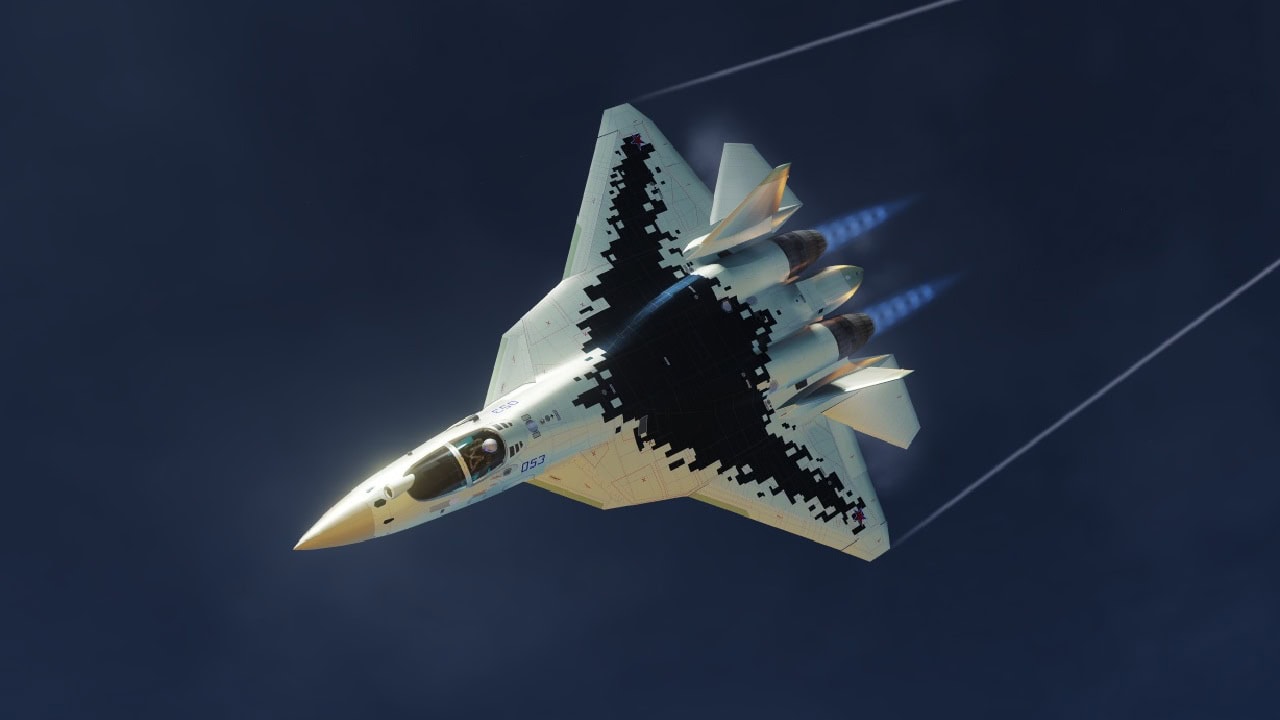
Summary and Key Points: Russia’s Su-57 “Felon” is a controversial fifth-generation fighter designed to counter U.S. stealth aircraft, but its design choices sit between hype and dismissal.
-The aircraft emphasizes flight performance and extreme maneuverability alongside a “stealth-plus-agility” approach, using internal weapon bays and signature-management shaping without chasing the ultra-low observable standard associated with Western platforms.
-The piece highlights the Felon’s evolving propulsion path, from early engines to newer powerplant development intended to boost supercruise and efficiency, as well as a sensor suite built around multi-band radar arrays, infrared search-and-track, and electronic warfare.
-The largest constraint is production capacity: limited numbers and an uneven industrial base continue to shape how much real combat power the Su-57 can deliver.
Russia’s Su-57 Explained: Great Maneuverability, Questionable Stealth, And A Weak Industrial Base
The Sukhoi Su-57 “Felon” is Russia’s first fifth-generation stealth fighter. It was conceived as a response to U.S. stealth fighters such as the F-22 and F-35.
The Su-57 is a highly divisive aircraft among aviation enthusiasts. In Western circles, the Felon is often derided for its lesser stealth capabilities and its immature industrial base. In Russian circles, the Su-57 is touted as the best aircraft in the entire world, one superior to every Western aircraft, including the F-22.
So, what is the truth about Russia’s stealth fighter? Is it as great or terrible as many say it is? In reality, the Su-57 sits somewhere in the middle. The way it was designed brings a set of advantages and disadvantages. Specifically, itt prioritizes flight performance and maneuverability over stealth.
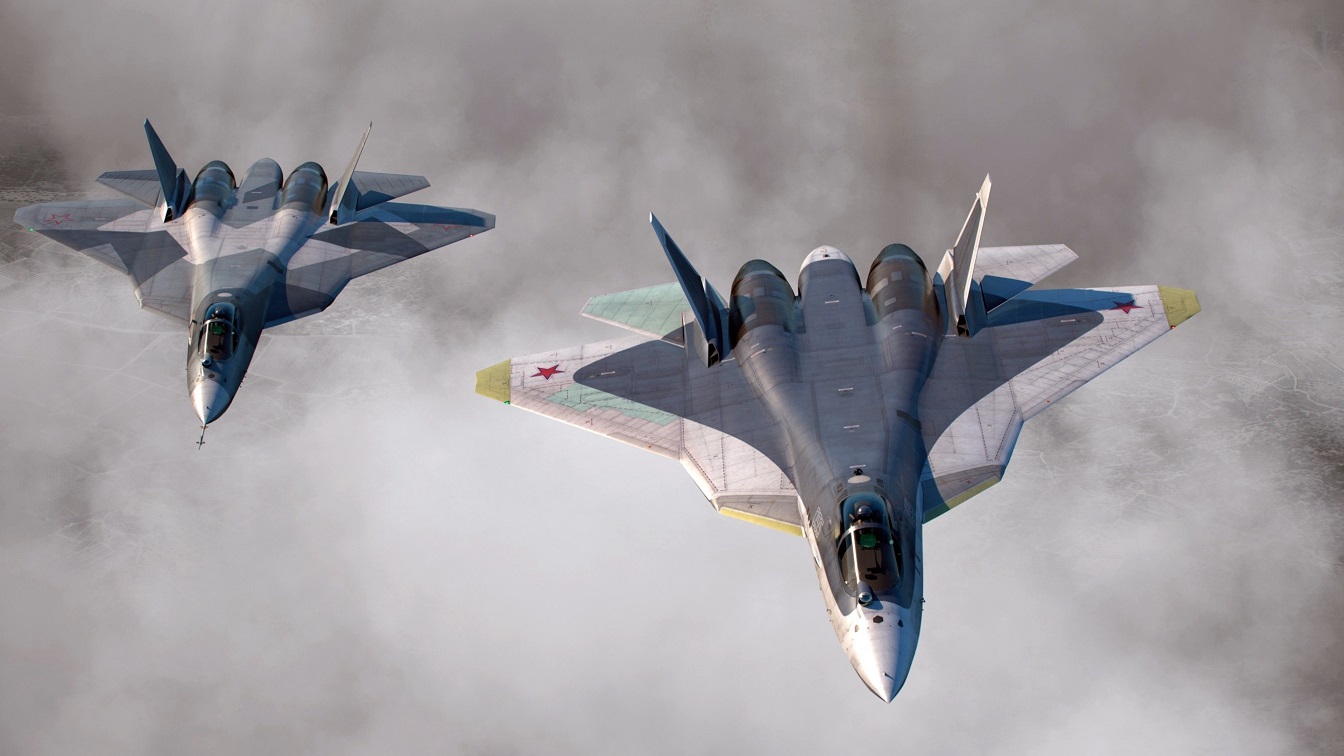
Su-57 stealth fighter. Image Credit: Artist Rendition.
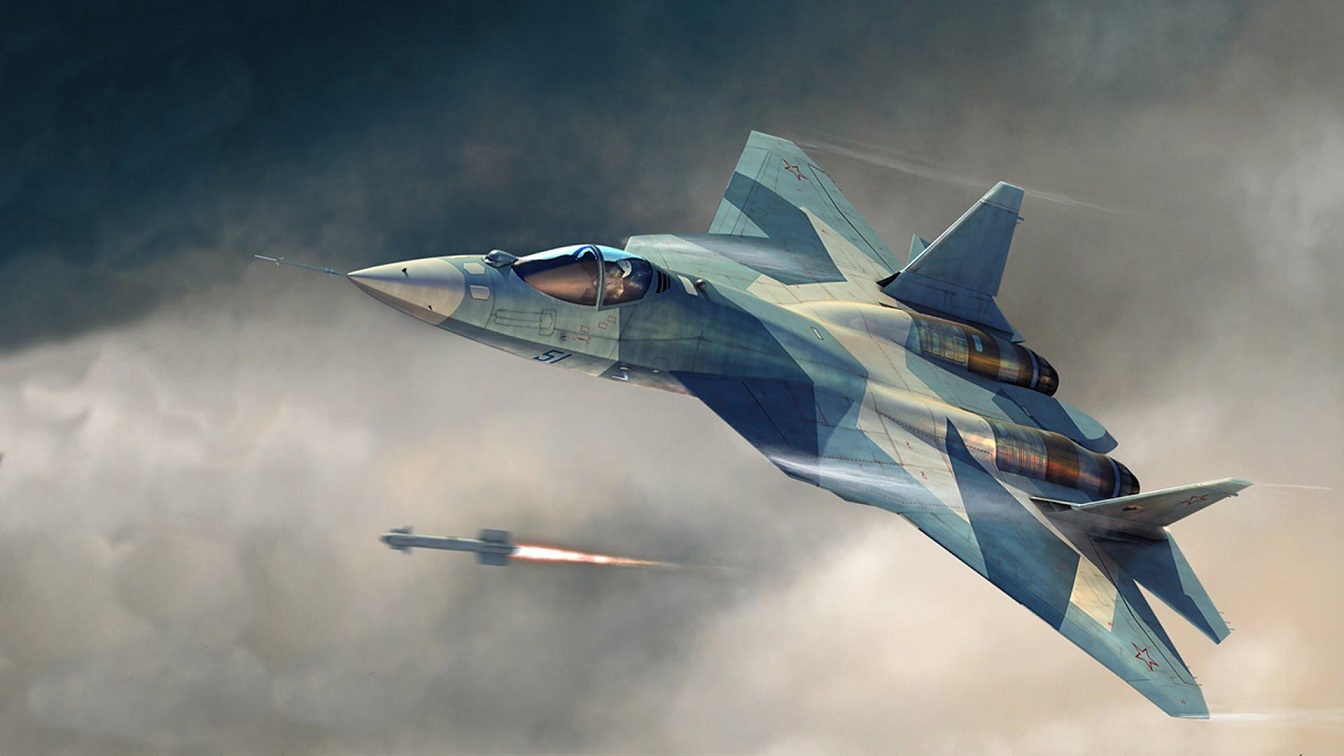
Su-57 artist rendering. Image Credit: Creative Commons.
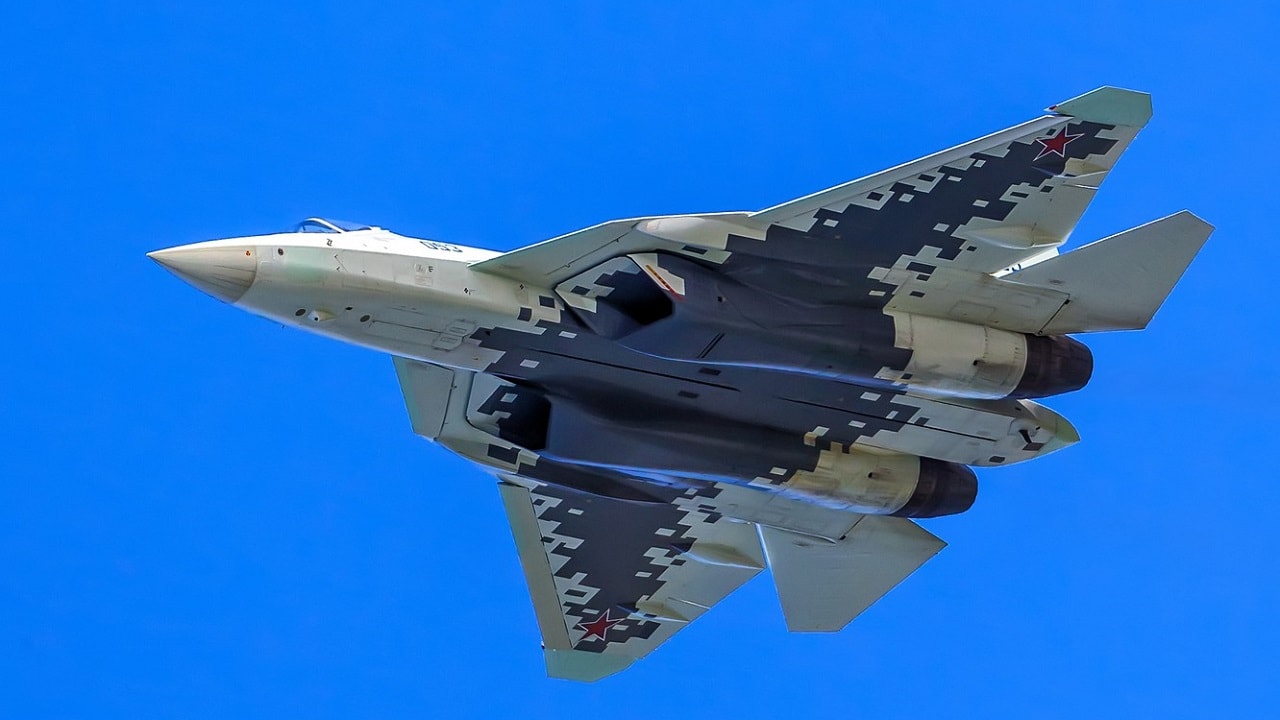
Su-57 stealth fighter. Image Credit: Creative Commons.
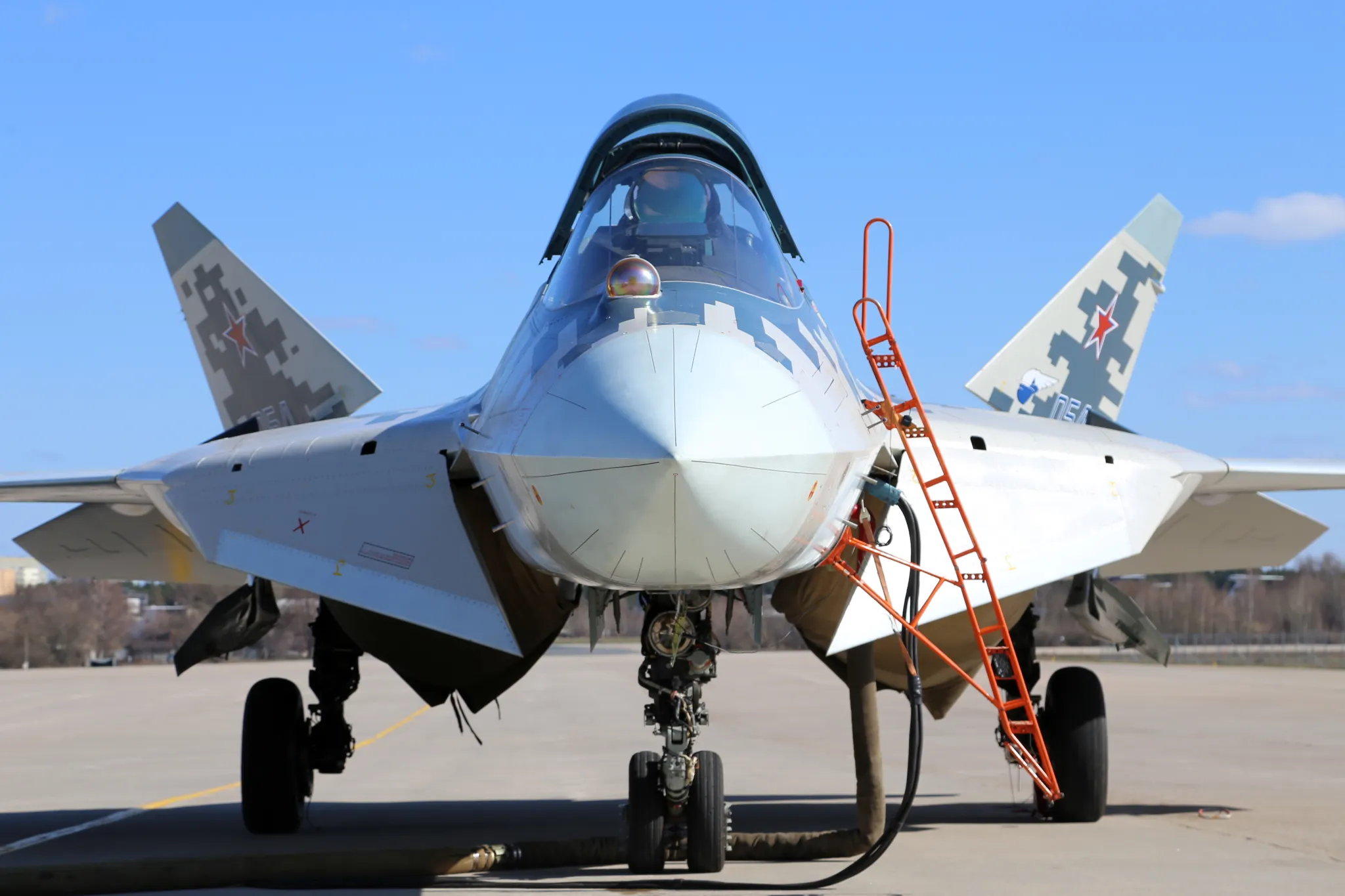
Russia’s Su-57 Stealth Fighter. Image Credit: Creative Commons.
How the Su-57 Gets Its Excellent Maneuverability
Even among the most ardent detractors of the Su-57, no one denies the Felon excels in maneuverability. The Su-57 adopts a blended wing-body planform with careful edge alignment and internal-systems integration to suppress radar returns while preserving aerodynamic authority for extreme maneuvers.
The airframe incorporates extensive composites alongside aluminum-honeycomb structures to reduce mass and manage the radar signature—an approach that becomes even more pronounced in the upgraded Su-57M1 configuration that Russia announced in 2024.
In terms of size, the aircraft measures roughly 14.8 meters in length, with a 9.8-meter wingspan and a height of about 4.6 meters. These dimensions place it between the F-22 and F-35 in footprint, while aligning with Russia’s preference for a larger internal volume to accommodate fuel and weapon bays.
The aircraft’s signature-management philosophy trades the extremely low reputed frontal radar cross-section (RCS) of the F-22 for a more flexible “stealth-plus-agility” profile. Some sources estimate that the aircraft’s frontal RCS measures at around 0.1-1.0 square meters depending on the band, though the actual signature remains unknown.
Engines: The Felon’s Ever-Evolving Powerplant
Of course, the Su-57’s maneuverability is also aided by its engines, which offer a high amount of thrust. Early operational aircraft fielded the AL-41F-1, a heavily modernized derivative of engines used by the Su-35, an engine that did not fully deliver on the program’s long-promised thrust-to-weight, fuel consumption, and thermal-signature goals.
The transformational change centers on the long-developing AL-51F-1 (or Izdeliye 30 as it is known in Russia), which is Russia’s first clean-sheet fighter engine in more than four decades. The new engine is intended to improve every aspect of the aircraft’s flight performance, from supercruise to climb rate, while lowering maintenance demands and enabling more power-hungry sensors and electronic warfare suites.
In December 2025, Russia announced a further propulsion milestone when a Su-57 prototype completed its first flight with two production-series “Product 177” engines. Product 177 is described as a fifth-generation powerplant aimed at boosting thrust, efficiency, and reliability for future variants.
According to Rostec, this was the start of a new test phase aligned with the type’s modernization path. This progression reinforces the expectation that late-block Su-57s and the Su-57M1 will achieve robust supercruise performance and improved range-payload tradeoffs. A twin-seat version of the aircraft is also reportedly in the works, with a prototype expected to fly sometime this year.
Other Specs and Capabilities
The Su-57’s internal weapons carriage is central to its low-observable approach. Wing-root bays and a sizable centerline bay are designed to house beyond-visual-range air-to-air missiles (BVRAAMs) and precision-guided munitions while preserving stealth.
External hardpoints are available and can be installed when radar signature is a lesser concern than the need for greater mass and variety of stores. The platform’s multirole loadout catalog includes modernized R-77-family BVRAAMs; agile short-range infrared missiles for close-in engagements; and an array of air-to-surface options, from guided bombs to standoff cruise and anti-ship missiles. Western assessments conclude Russia also is planning for a future nuclear-capable, air-launched system akin to the Kinzhal family.
While the Su-57 is no F-35, its avionics are more advanced than people give credit. It employs a distributed, multi‑band sensor suite that reportedly includes active electronically scanned arrays on and around the nose; L‑band arrays embedded in the wing roots that can aid in detecting certain stealthy targets; an infrared search‑and‑track system for passive air‑to‑air detection; and an integrated electronic warfare complex designed for jamming, deception, and survivability against modern surface-to-air missile networks.
The Su‑57M1, presented in mid‑2025, emphasizes computational throughput, sensor fusion, and AI‑assisted decision support, with messaging around loyal-wingman teaming as a core feature of future Russian air combat doctrine.
Industrial Base: The Su-57’s Biggest Weakness
The biggest enemy of the Su-57 is not the F-22 or the F-35—it is Russia’s industrial base, which still struggles to produce fifth-generation aircraft. As of December 2023, open-source tracking counted 32 aircraft produced, including 10 prototypes.
Some Russian sources claim that around 50 units have been produced, plus prototypes.There is no official confirmation of this information, so take these claims with a grain of salt. Either way, production on Russia’s first fifth-generation aircraft lags far behind the U.S. or China.
About the Author: Isaac Seitz
Isaac Seitz, a Defense Columnist, graduated from Patrick Henry College’s Strategic Intelligence and National Security program. He has also studied Russian at Middlebury Language Schools and has worked as an intelligence Analyst in the private sector.