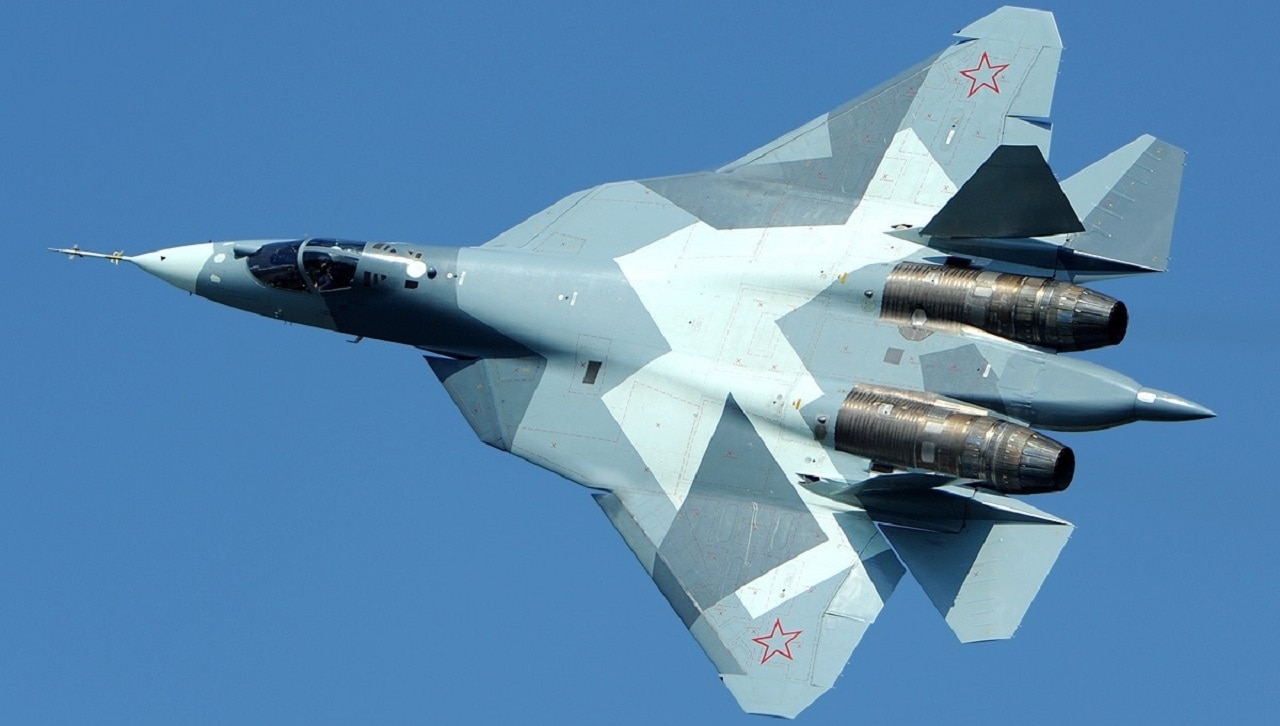
An “Indian-Friendly” Su-57 Could Be a Different Jet—And Twice the Price
Once considered a long shot for an export sale, India remains a sought-after customer for Russia’s Sukhoi Su-57 5th-generation fighter. Almost a decade ago, India declined a substantial Russian offer to co-produce the aircraft locally. Still, New Delhi demurred, citing the many modifications it sought as problematic.

Su-57 Felon Fighter from Russian Air Force.

Su-57 and Su-75 Checkmate Russian Air Force.
But an extensive lobbying effort in recent months has pushed the idea of an Indian variant of the aircraft to the forefront of discussions of the future development of the Indian Air Force (IAF). In a visit to India at the beginning of December 2025, Russian President Vladimir Putin himself was hawking the aircraft to the Indian Prime Minister Narendra Modi -and calling in the head of the Russian national aircraft manufacturing consortium to be the closer.
The Russian United Aircraft Corporation (OAK) CEO, Vadim Badekha, said this past week that a Su-57E version for India would be produced with “maximum use of Indian industry and Indian systems.” This represents a marked change in the strategy Moscow has been using to sell the aircraft, as well as in its efforts to reach an accommodation with the “Make in India” initiative, which is the overriding requirement for any foreign-made weapon system.
In past years, a Su-57 sale has been accompanied by a very restrictive export control regime, and the aircraft has been presented as an “as-is, take it or leave it” proposition. It was intended to be sold like an F-35, as a one-size-fits-all weapon system that would not require modifications to meet specific local requirements.
Localization and a Hybrid Aircraft
Instead, the Indian Su-57E will be a significantly localized India-Russia industrial initiative that makes the most of Indian-made subsystems and modifications to the original design. Those discussions come on the heels of confirmation that negotiations with India are geared toward agreeing on a license-production deal for the Su-57 fifth-generation fighter.
Those discussions have now reached the level of advanced technical dialogue involving the major Indian state-owned defense firms being responsible for design and configuration development. Indian sources commenting in Western publications are now openly discussing the Su-57 being used in frontline squadrons and replacing the Su-30MKI aircraft on some of the IAF’s higher-priority missions.
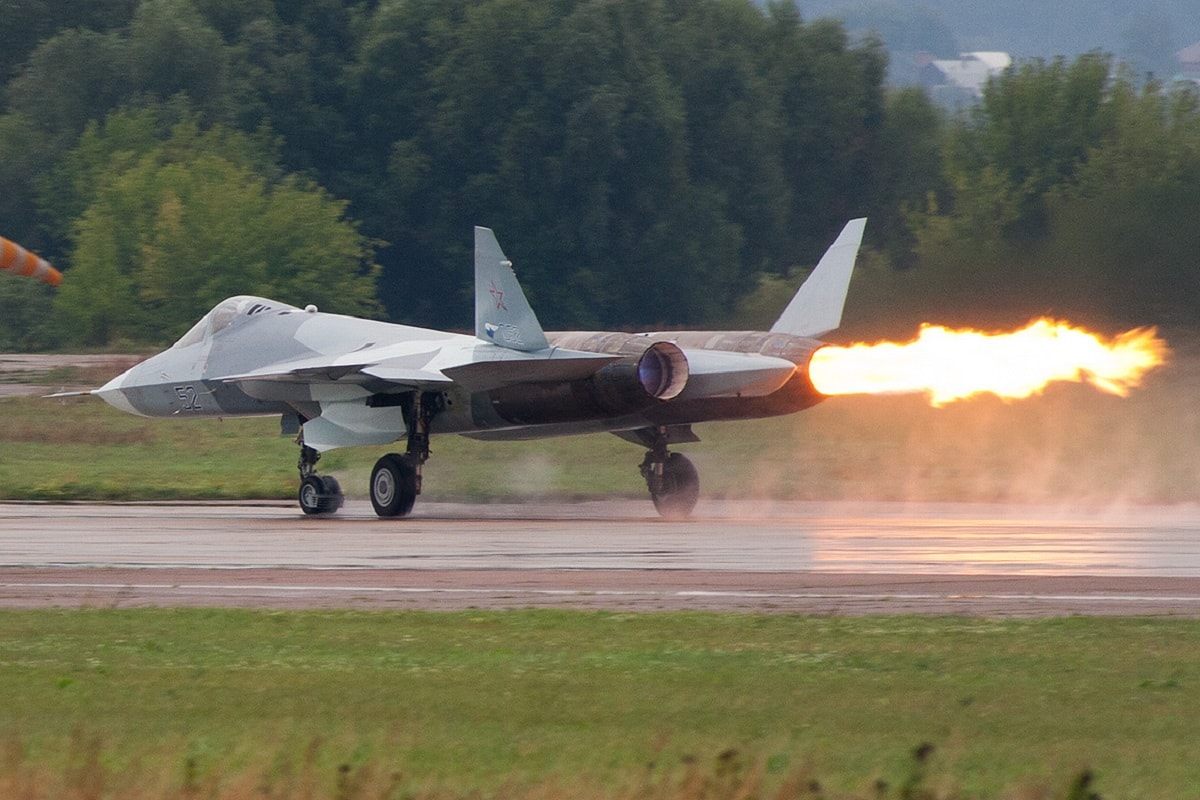
Image of Russia’s Su-57 fighter. Creative Commons.
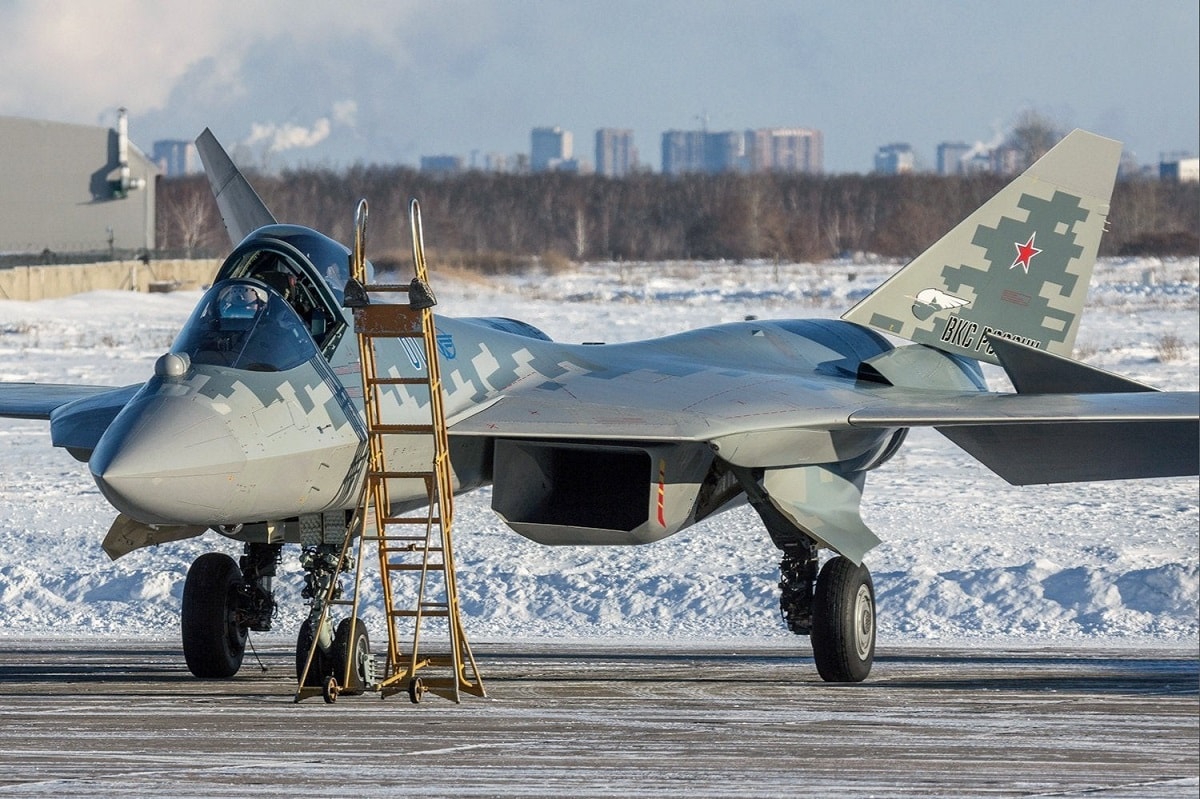
Su-57 Felon. Image Credit: Creative Commons.
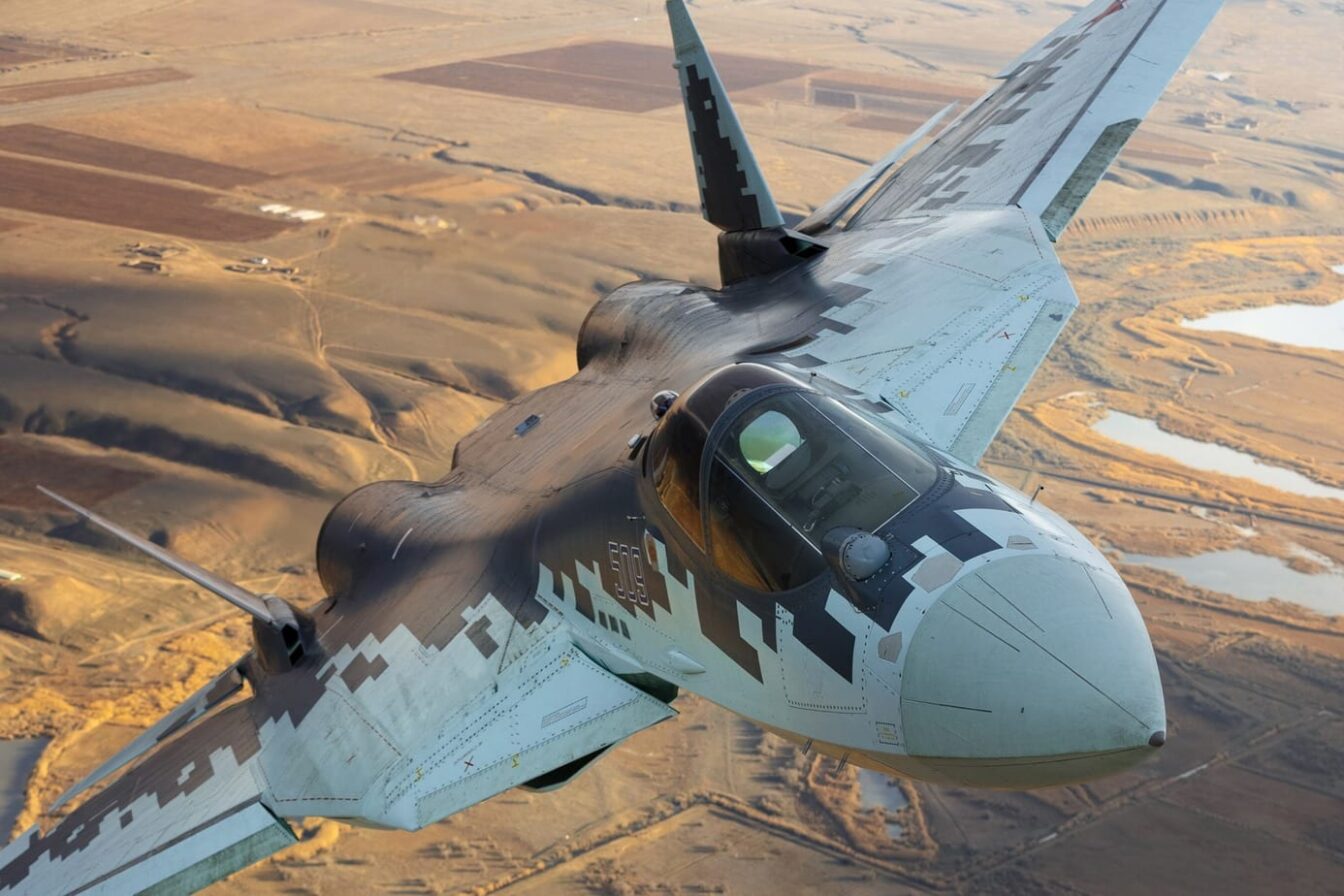
Russia’s Su-57 Felon Stealth Fighter.
According to sources in New Delhi, there are three main options for India’s procurement of the aircraft. One of these would be the previously advocated “off the shelf” procurement of a limited number of aircraft built on the production line in Russia.
This option would not be unlike the acquisition more than a decade ago of 36 Rafale aircraft produced by Dassault at its facility in Bordeaux. Those kinds of procurements can be pricey, however. Those initial 36 aircraft ended up costing US $9 billion – out of a total program budget for 126 aircraft of only $10.5 billion – causing many to ask how to pay for the other 90 aircraft to fill out the program.
One of the other two possibilities would be the license production of the Su-57 aircraft in India, but with only a limited number of changes to the original design. These might involve modifications to make the aircraft adaptable to the integration of Indian-made weapons or the creation of new mission profiles by modifying the aircraft’s source code.
A Far More Expensive Option
The most uncharacteristic and rather ambitious scenario would be a joint development program. That initiative would begin with the dozens of design changes requested by the IAF, which are being developed by both parties.
Specific and separate roles would be assigned to the Russian and Indian design teams. This process would also require Indian industry to play the most substantive role. Significant changes would also be made to adapt the Su-57 to integrate locally designed Indian subsystems.
Those projecting how the program would be conducted suggest that the first two to three squadrons of Su-57E would be the standard Russian configuration. At the same time, an Indian production line is simultaneously being set up.
Once this happens, the Indian-built aircraft would be highly tailored to the point that, once all the design changes desired by the IAF are implemented, it would be a completely different aircraft, even more so than the Su-30MKI, which is a very different aircraft from the Russian-built Su-30SM.
One recent assessment of what an “Indian-friendly” Su-57 would look like states that the “inclusion of Indian mission computers, software-defined radios, secure data links, and indigenous identification-friend-or-foe systems would further ensure seamless interoperability with the Indian Air Force’s network-centric warfare doctrine, while preserving data sovereignty and insulating operational information from external oversight.”
But while these Indian-specific derivatives of these Russian fighters are a better fit for the IAF’s requirements, they are also very pricey.
Most available data indicate that the Su-30MKI costs twice as much as the Russian Su-30SM.
Should a Su-57 for India end up costing twice as much, the IAF may reassess its plans to procure many of these specialized variants.
About the Author: Reuben F. Johnson
Reuben F. Johnson has thirty-six years of experience analyzing and reporting on foreign weapons systems, defense technologies, and international arms export policy. Johnson is the Director of Research at the Casimir Pulaski Foundation. He is also a survivor of the Russian invasion of Ukraine in February 2022. He worked for years in the American defense industry as a foreign technology analyst and later as a consultant for the U.S. Department of Defense, the Departments of the Navy and Air Force, and the governments of the United Kingdom and Australia. In 2022-2023, he won two awards in a row for his defense reporting. He holds a bachelor’s degree from DePauw University and a master’s degree from Miami University in Ohio, specializing in Soviet and Russian studies. He lives in Warsaw.