Summary and Key Points: Reuben F. Johnson, a veteran defense analyst and Casimir Pulaski Foundation director, evaluates the “F-22 Raptor 2.0”.
-Following Boeing’s victory in the F-47 (NGAD) tender, Lockheed Martin is porting advanced R&D into existing 5th-generation platforms.
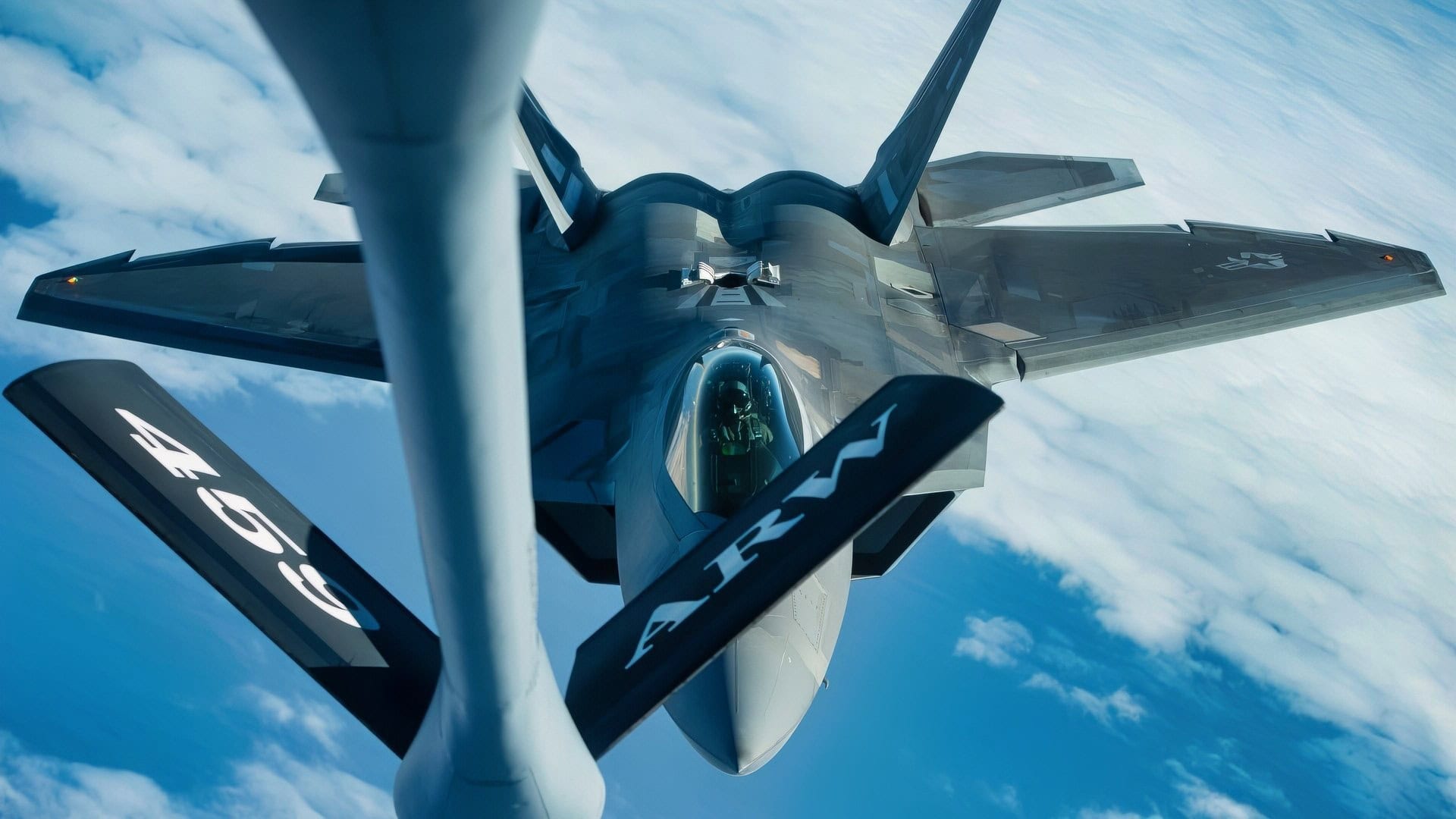
An F-22 Raptor from the Hawaii Air National Guard’s 199th Fighter Squadron, conducts aerial refueling with a KC-135 Stratotanker near Joint Base Pearl Harbor-Hickam, Hawaii, Jan. 15, 2019. The F-22 Raptors conducted interoperability training with the B-2 Spirit bomber deployed here from Whiteman Air Force Base, Missouri. The bombers and more than 200 Airmen are deployed in support of U.S. Strategic Command’s bomber task force mission. Bomber aircraft regularly rotate through the Indo-Pacific region to integrate capabilities with key regional partners and maintain a high state of aircrew proficiency. (U.S. Air Force photo by Master Sgt. Russ Scalf)
-This 19FortyFive report explores the integration of stealthy external fuel tanks and IRST pods to extend the Raptor’s range and sensor fusion in the Indo-Pacific.
-The analysis weighs these hardware upgrades against AI-based emission processing and the challenges of upgrading the F-22’s legacy federated systems to compete with China’s J-20 and J-35A/B stealth fighters.
Raptor 2.0: Lockheed Martin’s Plan to Transform the F-22 Fighter into a 6th-Generation Bridge
Among the recently reported AI-based improvements for the US F-35 are methods for significantly improving the recording, processing, and analysis of emissions present in the aircraft’s airspace. This data greatly enhances the aircraft’s role as an airborne battle management node.
Should this upgrade deliver the desired results, it could be a revolutionary change in how electronic warfare systems record emissions and share analysis results across an entire fleet of aircraft. This AI upgrade, it should be noted, is greatly facilitated by the F-35’s open-architecture infrastructure.
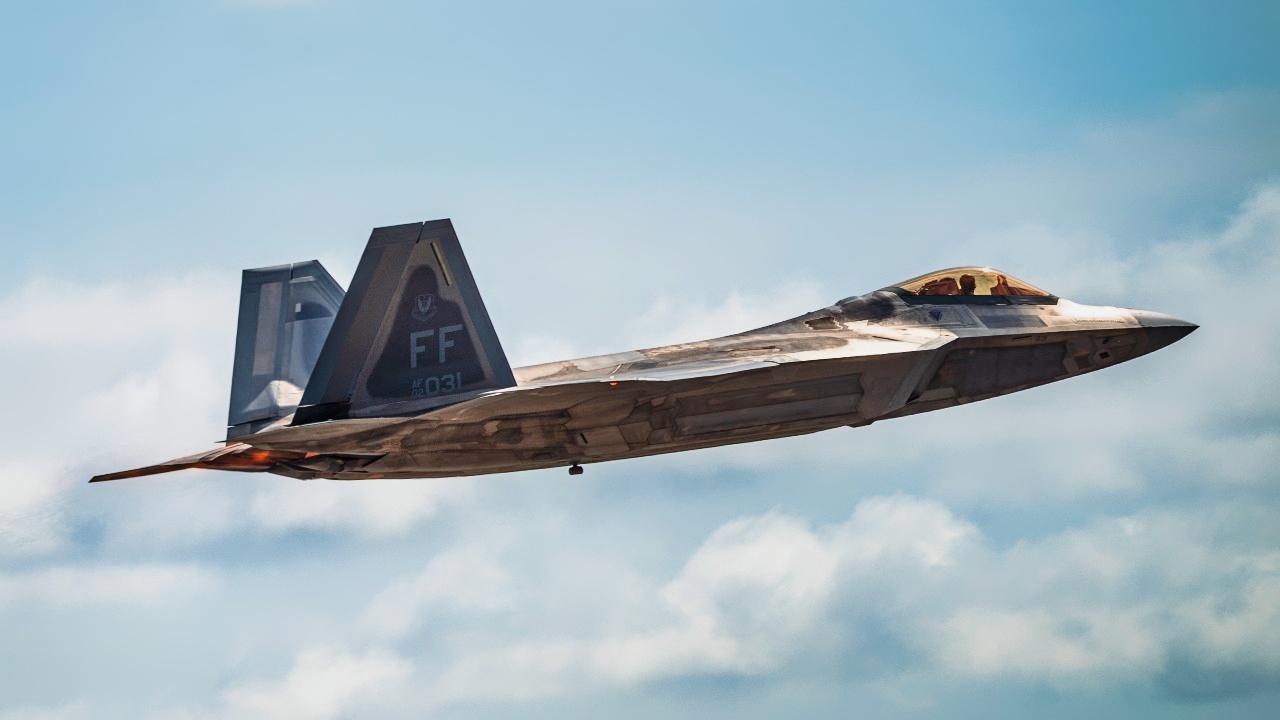
A U.S. Air Force F-22 Raptor assigned to the 71st Fighter Squadron, Joint Base Langley-Eustis, Virginia, takes off during Checkered Flag 25-2 at Tyndall Air Force Base, Florida, May 8, 2025. Air Combat Command’s Checkered Flag exercise simulates the full mobilization and deployment cycle, ensuring unit readiness for contingency operations. (U.S. Air Force photo by Airman 1st Class Zeeshan Naeem)
That F-35 generation of onboard aircraft systems has been described as creating a “behavioral path to 6th-generation air power.”
As described in a recent article that tracks the 5th-generation and beyond development of air power, the future of airborne warfare is one in which “stealth, sensor fusion, and information dominance would define a new era of air combat. The aircraft itself became a flying information node, integrating data from multiple sources and distributing targeting information across the battlespace.”
In July 2025, after Lockheed Martin (LM) lost the F-47 tender to Boeing, the company announced the development of the Fifth Generation Plus, also referred to as a “Ferrari variant” of the F-35. The concept for the aircraft is that it would, according to the company’s CEO Jim Taiclet, be a bridge from “today’s 5th-generation air power to the 6th- generation NGAD,” represented by the F-47.
The Tip of the Spear
But the question is what about LM’s other famous — albeit older — 5th-generation fighter, the F-22. This aircraft has been characterized by more than one moniker over the years. The “machine that can sweep the skies” clear of enemy aircraft is one. The “tip of the spear” of American airpower is another.
Taiclet also briefly addressed that issue, saying, “We’re going to port a lot of our own NGAD R&D over to the F-35 and potentially over to the F-22 as well.”
But one complication is that the F-22 is not of the same generation as the F-35 in terms of open-architecture design.
Rather, as the F-22 has been described, it is the “last of the generation of ‘federated systems’ in which onboard systems had to all be integrated to one another” and then paired to an onboard mission computer.
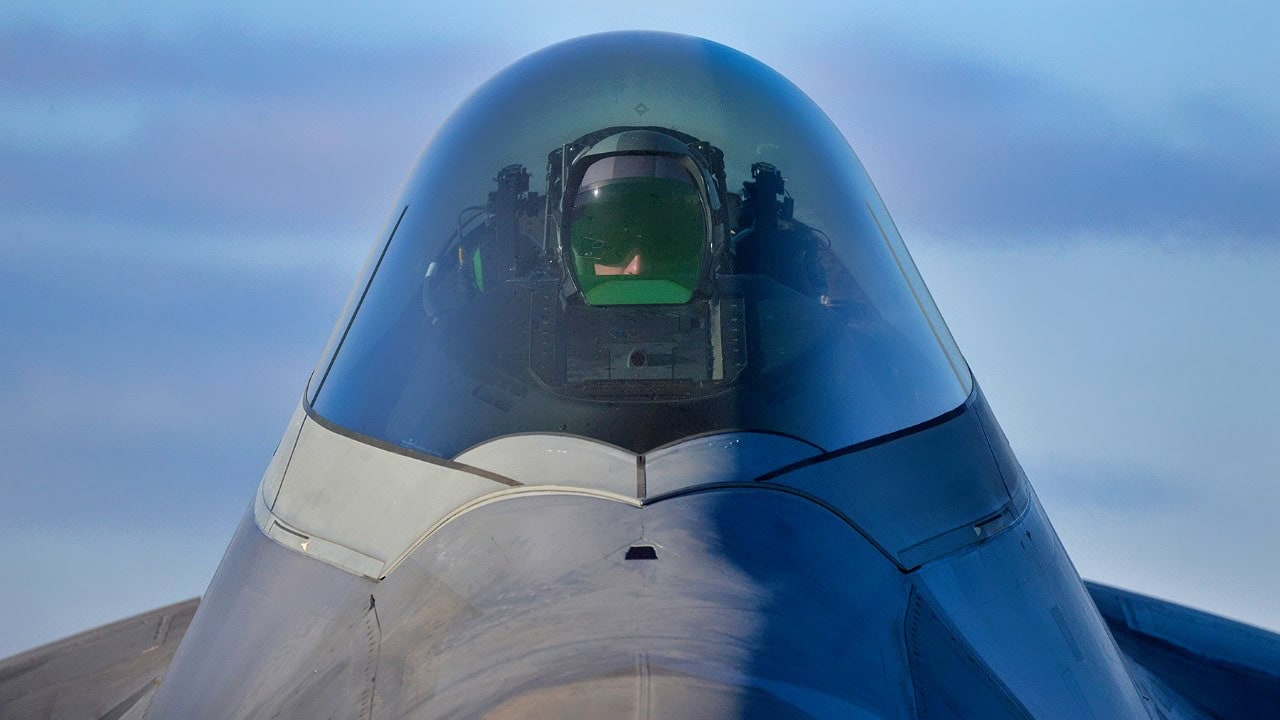
Maj. Philip “Stonewall” Johnson, 514th Flight Test Squadron F-22 test pilot, sits in the last F-22 Raptor to complete the F-22 Structural Repair Program Nov. 24, 2020, prior to performing a functional check flight with the aircraft at Hill Air Force Base, Utah. The 574th Aircraft Maintenance Squadron processed 135 F-22s through the program by performing structural modifications to increase total flying hour serviceability on each aircraft by 8,000 hours. (U.S. Air Force photo by Alex R. Lloyd)
However, there are still plans for the F-22 to receive some integration of AI technology for data processing and threat emissions identification, as described for the F-35.
But what has been shown thus far is that planned upgrades for the F-22 have more to do with external add-ons to the aircraft.
That part of the concept of improvements for the twin-engined aircraft was presented this week at the Air & Space Forces Association’s annual Warfare Symposium in Colorado.
The Raptor 2.0
During the symposium, LM presented a scale model of what had been dubbed “F-22 Raptor 2.0,” equipped with stealthy external fuel tanks and underwing infrared sensor pods. The stealthy external fuel tanks are advertised as increasing the F-22’s range without compromising the aircraft’s low radar cross-section (RCS).
These concept fuel tanks were seen two years ago when an F-22 was photographed flying with them on underwing stations. They have been designed with non-radar-reflecting shapes that significantly increase the aircraft’s range with minimal degradation of its stealth properties.
These fuel tanks, however, are not 100 per cent foolproof and are stealthy to the degree necessary while the aircraft is still at long range from any enemy radar nets or other sensor networks. According to other reports, the fuel tanks themselves are often discarded before reaching any heavily defended airspace.
However, LM says they are still confident in the stealth profile of these external fuel tanks that, in some scenarios, the F-22 could enter direct combat with the tanks still attached.
The other major external change is the set of stealthy pods equipped with an advanced infrared search-and-track (IRST) system. Stealthy pods similar to these were part of the F-22 Raptor’s initial design profile decades ago, but they were ultimately discarded due to cost constraints.
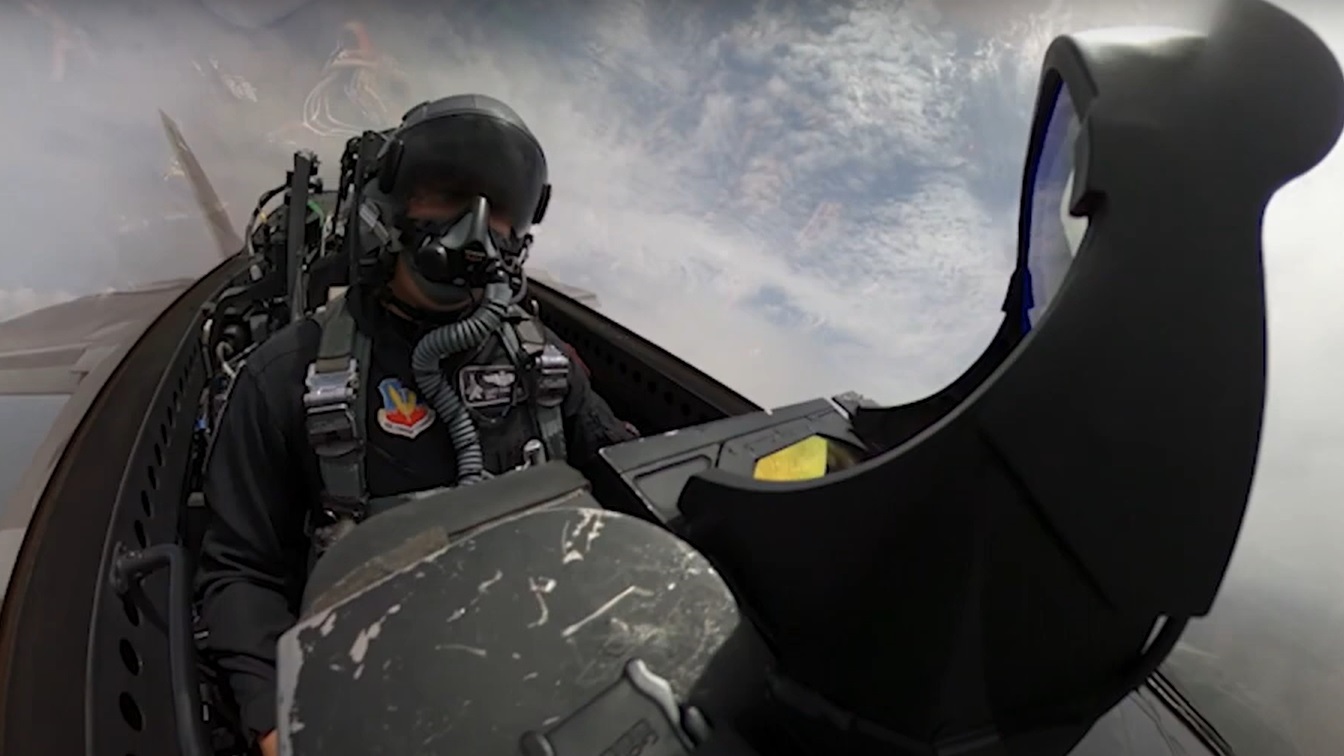
Maj. Joshua “Cabo” Gunderson, F-22 Demo Team pilot and commander, preforms a F-22 Raptor demonstration at the Space Coast Int. Air Show, May 22, 2022, with this video taken from inside the cockpit of an F-22.
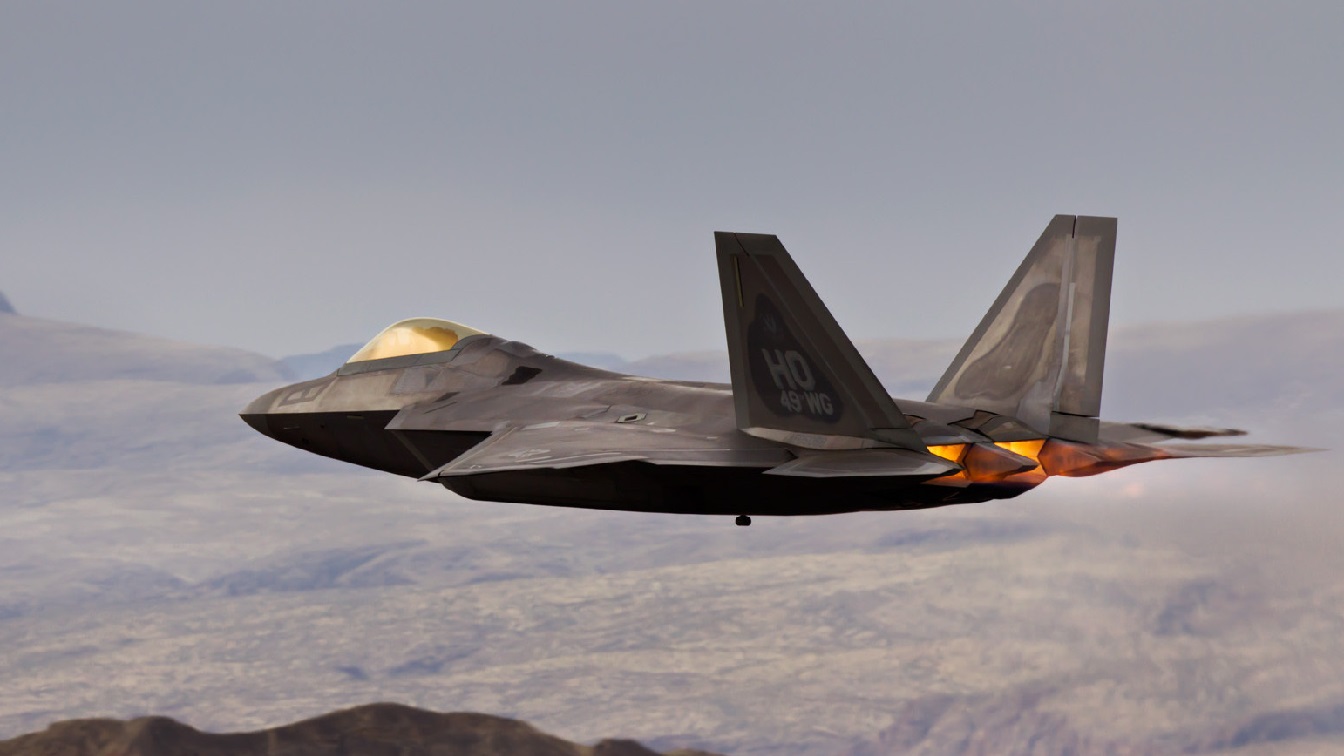
F-22 Raptor. Image Credit: Creative Commons.
These newly introduced IRST pods can be used to detect stealthy targets, a major concern in the Indo-Pacific theatre. The People’s Republic of China (PRC) has already fielded over 300 Chengdu J-20 stealth fighters, and projections indicate that the PLAAF could ultimately have 1,000 of this model in service.
The competing design centre in Shenyang has also produced a smaller, stealthy aircraft, the J-35A, and a carrier-capable variant, the J-35B.
Because of advanced datalinking capabilities, the US Air Force does not envision equipping the entire F-22 fleet with these stealthy IRST pods. A select number of F-22s fitted with them can distribute that data to numerous other aircraft.
These and other enhancements are a response to the growing realization that aircraft operating in the Indo-Pacific theatre will need to operate at extended ranges. These long distances between bases and potential combat zones are among the factors driving demand to increase the endurance of tactical aircraft, without compromising survivability.
LM may not be the company that will build the 6th-generation fighter for the USAF. But it will play an active role in upgrading 5th-generation aircraft to perform many of the missions demanded of them in that future-generation air combat environment.
About the Author: Reuben F. Johnson
Reuben F. Johnson has thirty-six years of experience analyzing and reporting on foreign weapons systems, defense technologies, and international arms export policy. Johnson is the Director of Research at the Casimir Pulaski Foundation. He is also a survivor of the Russian invasion of Ukraine in February 2022. He worked for years in the American defense industry as a foreign technology analyst and later as a consultant for the U.S. Department of Defense, the Departments of the Navy and Air Force, and the governments of the United Kingdom and Australia. In 2022-2023, he won two awards in a row for his defense reporting. He holds a bachelor’s degree from DePauw University and a master’s degree from Miami University in Ohio, specializing in Soviet and Russian studies. He lives in Warsaw.