
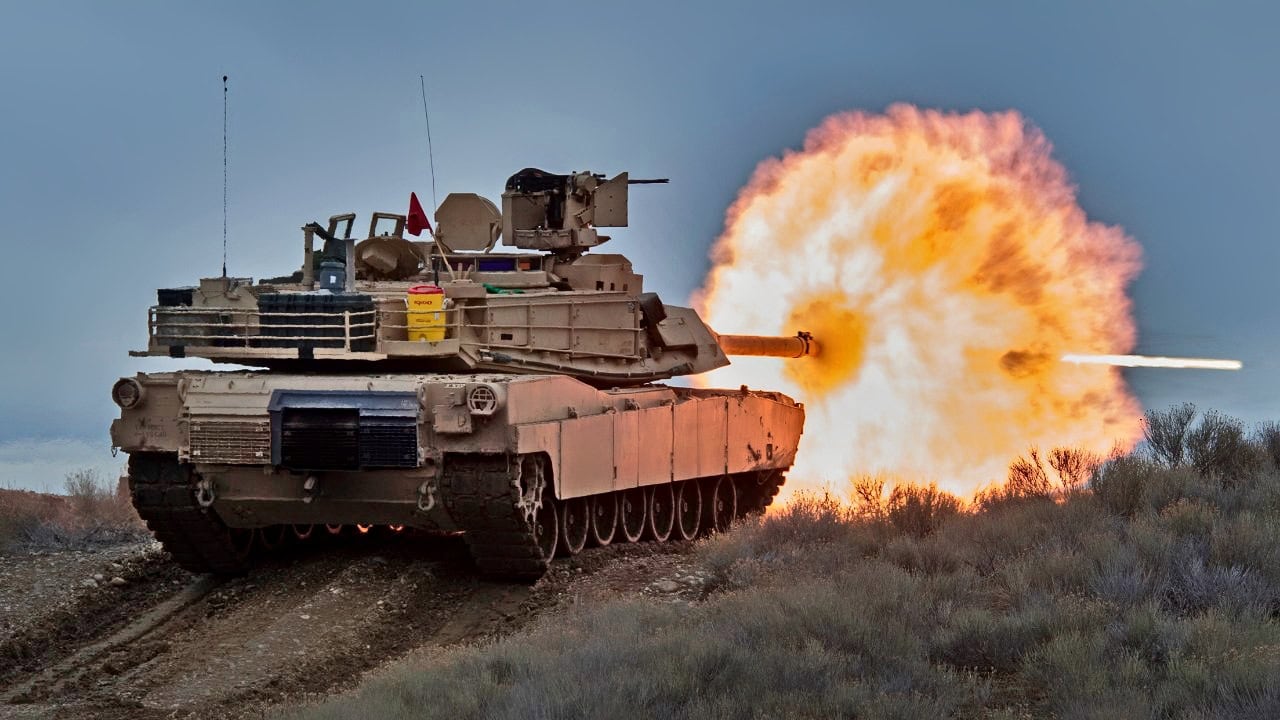
The British Army has sought to address several obsolescence issues and modernize its vehicle fleets. Attention turned to the venerable but aging Challenger 2 main battle tank (MBT), which has been in service since 1998 and now needs either an upgrade or outright replacement.
M1A2 vs. Challenger 3
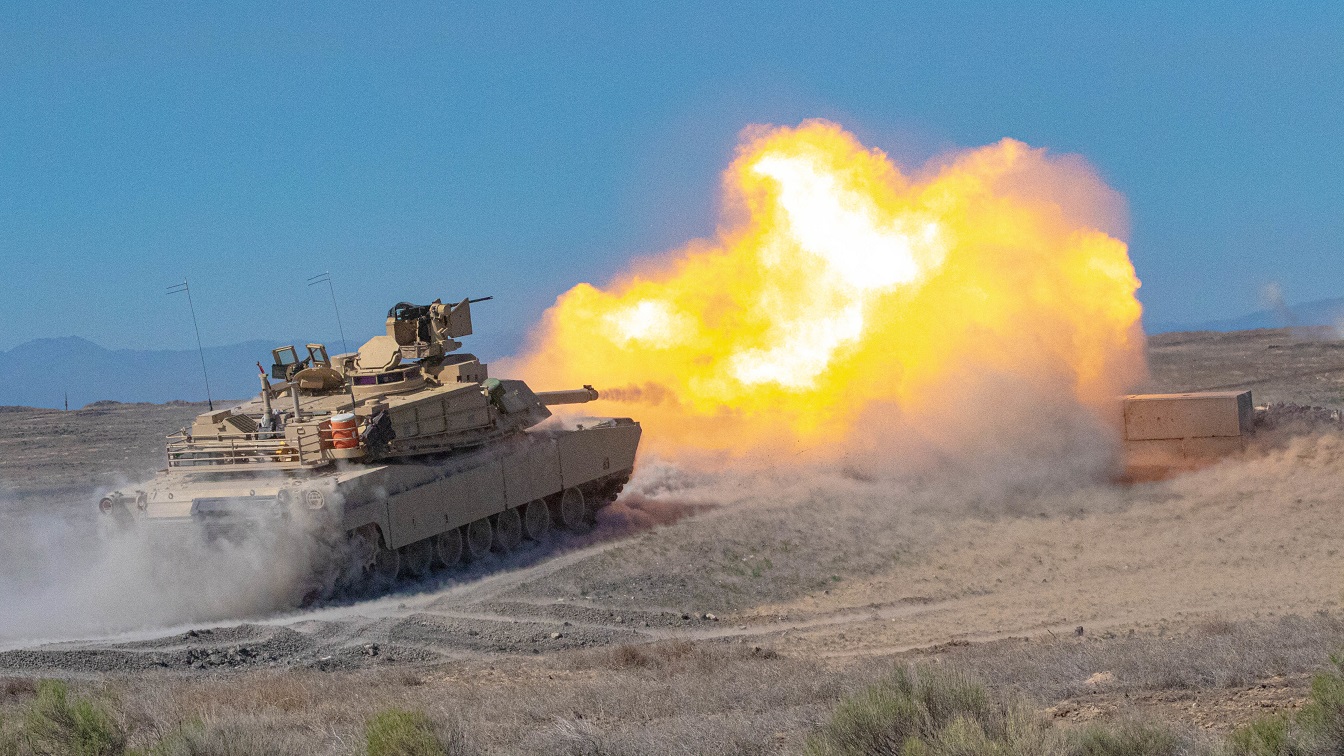
Oregon Army National Guard M1A2 Abrams battle tank with Alpha Troop, 3rd Squadron, 116th Cavalry Regiment, engages a target at a firing range during annual training at the Orchard Combat Tranining Center near Boise, ID, June 19, 2021. Soldiers trained in their military occupational specialties during annual training. (National Guard photo by Spc. Dominic Trujillo, 115th Mobile Public Affairs Detachment)
Most problematic was the uniqueness of the Challenger 2’s main gun, a rifled L30A1 that no other NATO military force operated. The solution was to bring Rheinmetall’s L55A1 120mm smoothbore gun into service, which has become ubiquitous throughout the Alliance.
Challenger 3 Is Born
In May 2021, Rheinmetall BAE Systems Land (RBSL) was awarded an £800m ($995.9m) contract by the UK Ministry of Defence (MoD) to upgrade 148 Challenger 3 (CR3) MBTs for the British Army.
The Challenger 3 main battle tank represents a giant leap forward in military technology. It boasts advanced armor, active protection, and a powerful new 120mm smoothbore cannon.
UK Defence Secretary Grant Shapps said: “In a more dangerous world, the need for vehicles such as the Challenger 3 is imperative, as the threats facing the UK evolve. This tank will be at the heart of the British Army’s warfighting capabilities and will be integral to the UK’s deterrence.”
The Challenger 3 will be powered with the same 1200 horsepower as the Challenger 2 model. This engine is a step down from the 1500 horsepower power packs of the Leopard and Abrams. For its size, it is underpowered.
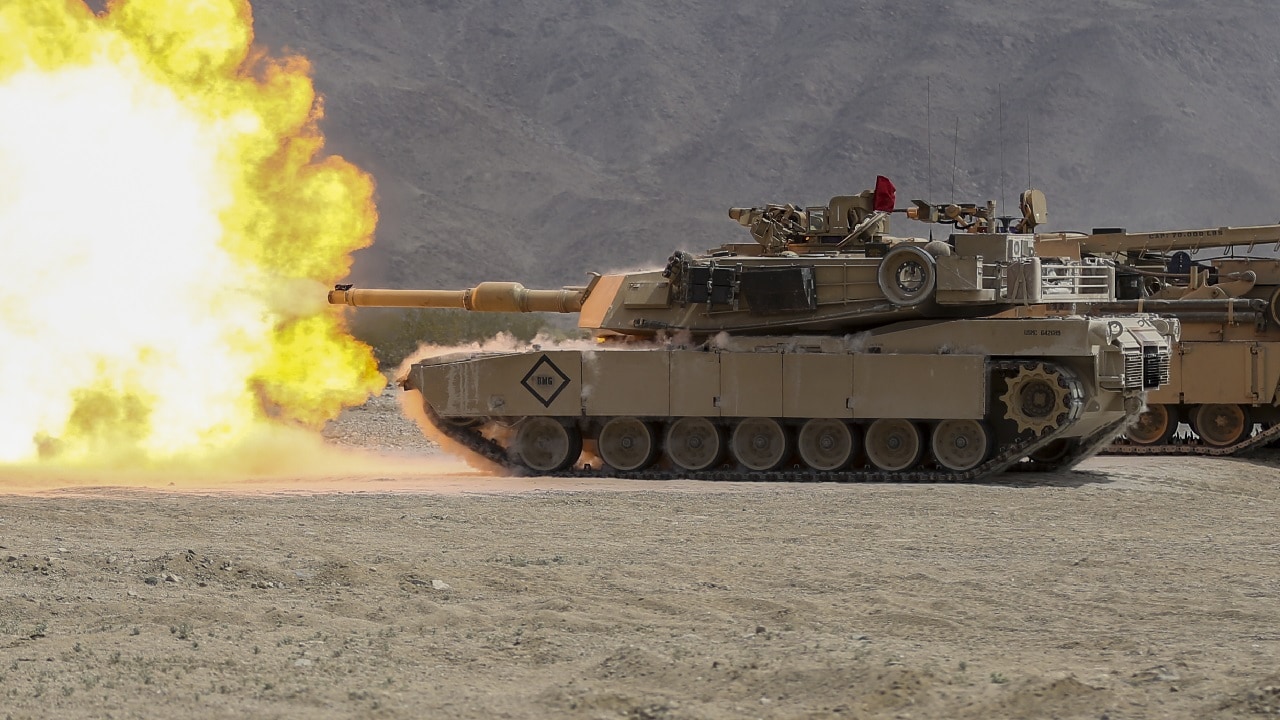
An M1 Abrams Tank fires off a round as a demonstration during 1st Tank Battalion’s Jane Wayne Spouse Appreciation Day aboard the Marine Corps Air Ground Combat Center, Twentynine Palms, Calif., April 3, 2018. The purpose of the event is to build resiliency in spiritual well being, the will to fight and a strong home life for the 1st Tanks Marines and their families. (U.S. Marine Corps photo by Lance Cpl. Rachel K. Porter)
The most significant limiting factor for the Challenger is its numbers. The British Army is only expected to build 148 of these tanks.
The tank is undoubtedly designed to support NATO efforts in deterring Russia in the event of war. But how does the Challenger 3 compare to the US Army’s M1A2 SEPv3 Abrams MBT?
The M1A2 SEPv3 Abrams, America’s Workhorse
The Abrams has been the backbone of the US Armored forces for more than 40 years, and they aren’t going anywhere. The new version offers enhanced protection, survivability, and higher lethality than its predecessors.
The tank also features various technological advancements, including improved armor, communications, reliability, sustainment, and fuel efficiency.
The main gun fitted on the MBT is an M256 120mm smoothbore cannon, which can fire M829A4 advanced kinetic energy and advanced multi-purpose (AMP) rounds to defend armored vehicles, personnel, and low-flying aircraft.
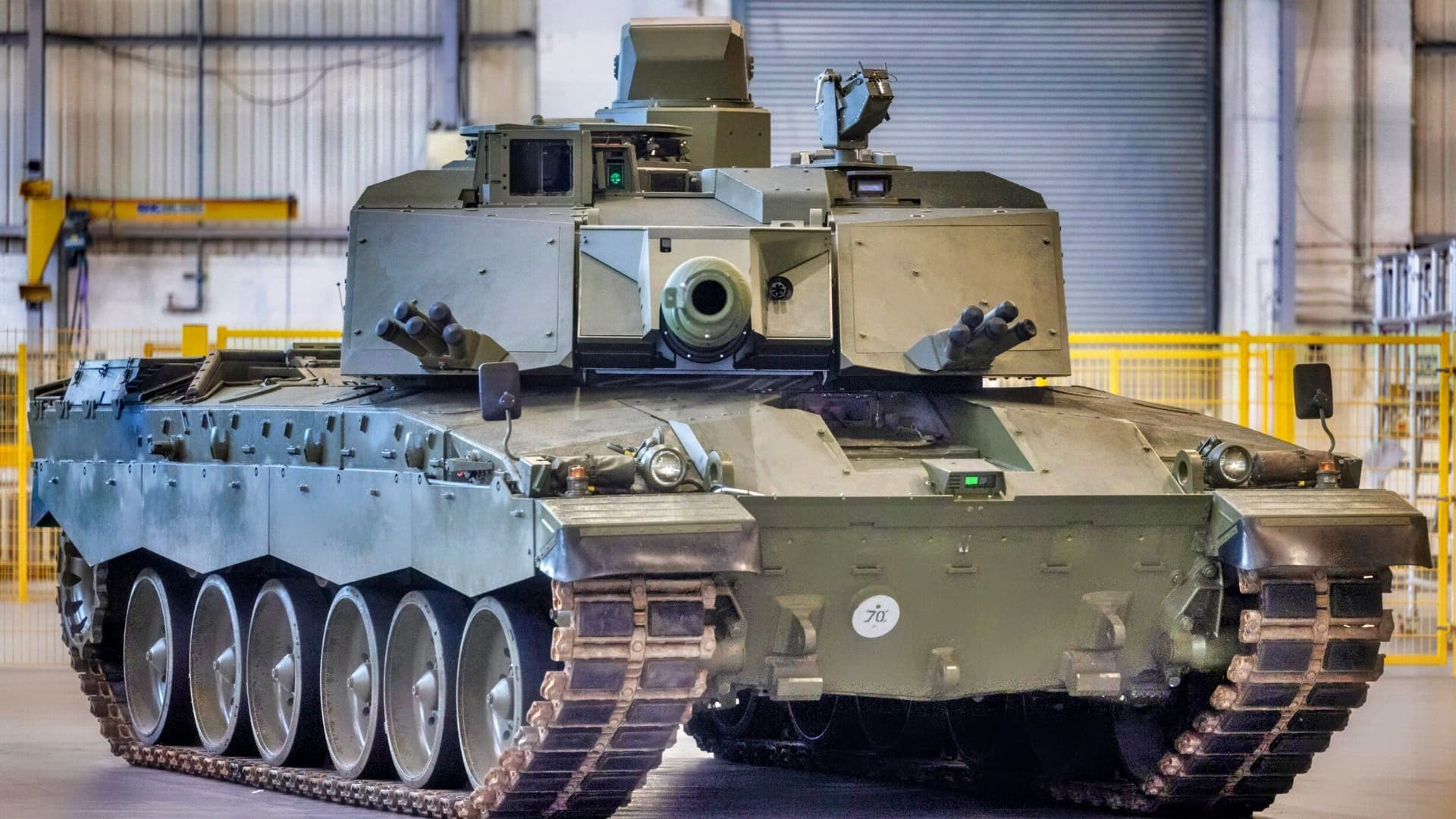
Challenger 3 Tank. Image Credit: British Government.
The tank features a low-profile Common Remotely Operated Weapon System (CROWS) with a .50 caliber machine gun. A 7.62mm M240 machine gun is also mounted coaxially with the main gun.
The M1A2 SEPv3 is powered by a Honeywell AGT1500 gas turbine engine, which produces 1,500 hp of power.
The M-1A2 SEPv3 has integrated the line-replaceable module technology to enable easier fleet maintenance.
Which Tank Tips The Scales As The Better Main Battle Tank?
Regarding armor protection, the new Challenger 3 gets the nod here, but only in the turret area. The Challenger 3’s hull is vulnerable, while the front hull plate, directly in front of the driver, is flat with no angle whatsoever. The design of where to put the ready rack of main gun ammunition was positioned right behind the front glacis plate. It was a curious position, but it is what it is.
The M1A2 is much more mobile, and, as we wrote earlier, the Challenger 3 is slightly underpowered. When all the upgrades are installed, it weighs 75 tons. The Abrams AGT 1500 adds some zip to the Abrams, but it is a gas guzzler. The Challenger 3, with its diesel engine, is much more fuel efficient.
The Challenger 3 is armed with the 120mm L55 gun, which is longer and more accurate than the US M256. The Challenger CR3 uses third-generation CITV thermal sights, which the US has upgraded on the SEPv3.
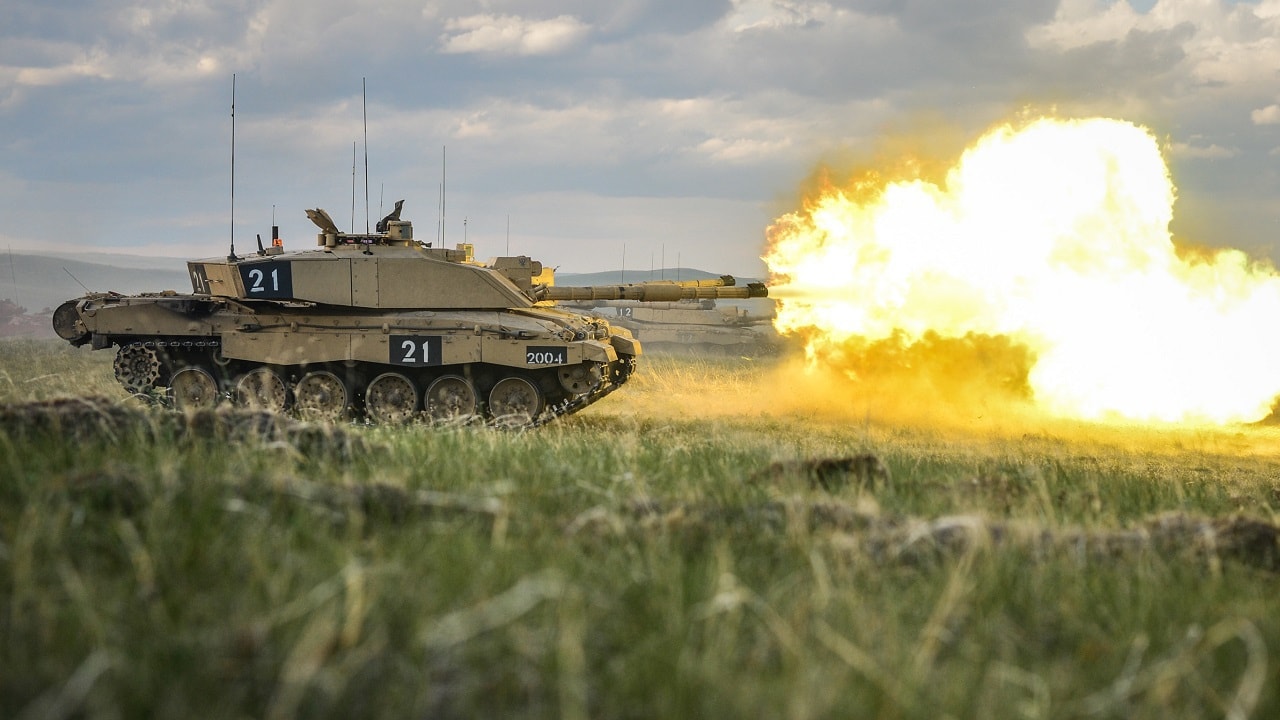
A Challenger 2 Main Battle Tank of the Royal Welsh Battle Group on Exercise Prairie Storm at the British Army Training Unit Suffield (BATUS) in Canada.
The prairie of Alberta has provided an excellent opportunity for the British Army to train on a large scale since 1972. The British Army Training Unit Suffield (BATUS) is an organisation situated on one of the most sparsely populated areas of the Alberta plain.
BATUS is equipped with in excess of 1000 vehicles including a full complement of Challenger 2 tanks and Warrior Infantry Fighting Vehicles. Each year a Regiment is sent there for six months to take the part of the ‘enemy’ for the other Regiments that are there to train each year.
Australian Army Warrant Officer Class One (WO1) Bernie Maus, part of Land Systems Division, said the SEPv3’s most significant upgrade was a commander’s independent thermal viewer. This sighting system operates separately from the turret.
“If my main gun is facing 3 o’clock, I can scan in another direction and quickly bring the main gun on target without needing to direct the gunner,” Maus said.
“That’s a huge upgrade to the system.”
Overall, the M1A2 SEPv3 gets the nod over the Challenger 3, but the new tank is a big step up for the British, who need more than the 148 planned. As it is right now, they’ll need support from their NATO allies if war with Russia ever commences.
About the Author:
Steve Balestrieri is a 19FortyFive National Security Columnist. He served as a US Army Special Forces NCO and Warrant Officer. In addition to writing for 19FortyFive, he covers the NFL for PatsFans.com and is a member of the Pro Football Writers of America (PFWA). His work was regularly featured in many military publications