
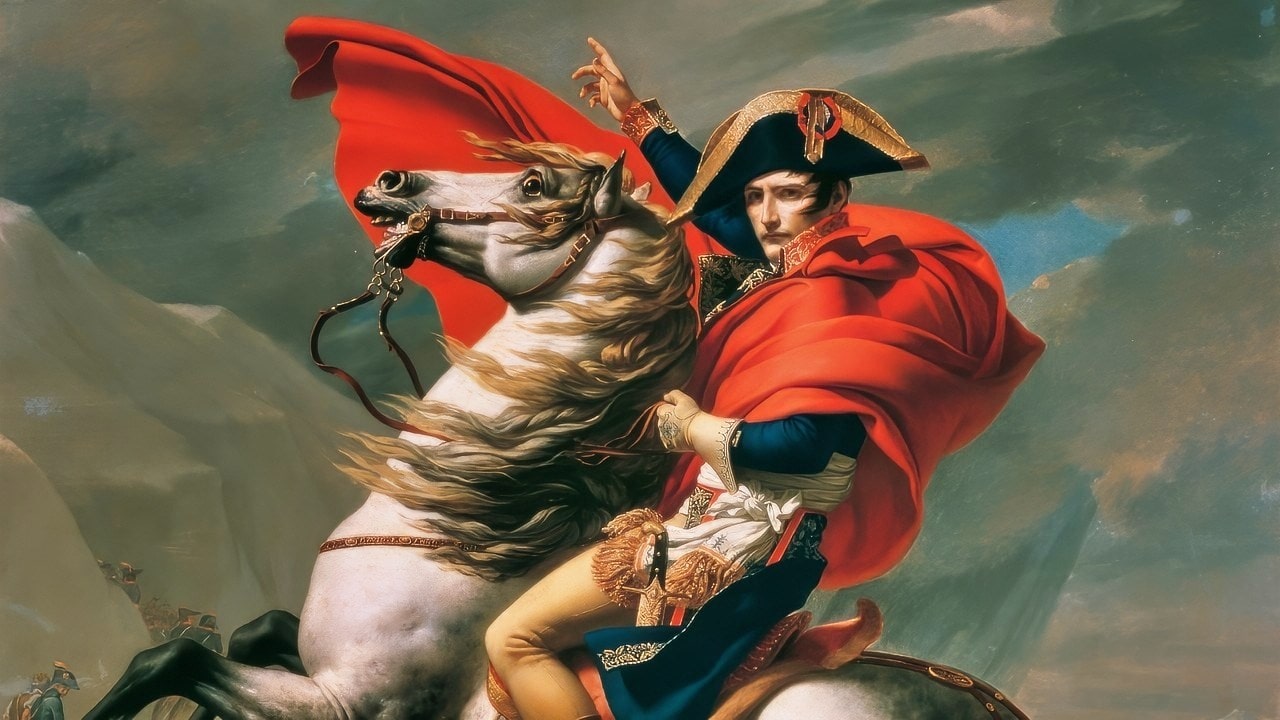
Synopsis: Napoleon Bonaparte’s legend wasn’t born at Waterloo—it was forged much earlier, when a Corsican outsider learned to turn speed, discipline, and battlefield psychology into decisive wins. His famous quotes explain much of his philosophy on war and more.
-This brief profile tracks his rise from Ajaccio to France’s military schools, his early revolutionary-era breakthroughs, and the three victories that cemented his reputation: Austerlitz, Jena-Auerstedt, and Friedland.
-Each battle showcases a recurring Napoleon pattern: lure the enemy into the wrong fight, strike where the line breaks, and turn operational momentum into political results. Even in defeat, his name became shorthand for military genius.
Napoleon Has a Message 1 Quote: Soldiers Win Battles—Leaders Own the Blame and Credit
“Soldiers generally win battles; generals get credit for them.”—That quote belongs to Napoleon Bonaparte, who, 204 years after his death, arguably remains France’s all-time greatest military hero (with all due respect to Charles de Gaulle and Marshal Philippe Leclerc de Hauteclocque).
That quote may sound a bit surprising given Napoleon’s imperious nature (after all, he held the title of Napoleon I, Emperor of the French), but “Boney” (a nickname uttered by Lieutenant-Colonel Richard Sharpe [Sean Bean] and his soldiers in the fictitious Sharpe TV series) actually had a strong egalitarian streak about him. We now embark on a brief bio of Napoleon; we don’t expect to reveal anything new or profound within the confines of a 1,000-word article, but we shall focus on his early life and three greatest military victories.
Early Life and Initial Military Career
He was born Napoleone di Buonaparte on August 15, 1769, in Ajaccio, Corsica, France, to a parentage of Italian origin, Carlo Maria Buonaparte and Maria Letizia Ramolino. He moved with his parents to mainland France in January 1779, and that May he entered the École de Brienne, a military academy in Brienne-le-Château (approximately 2 hours from Paris).
Napoleon was commissioned as an officer in the French Royal Army in 1785, at the mere age of 16. (To put that in perspective for you, a typical present-day graduate of one of America’s service academies is typically 21 or 22 years old at the time of their commissioning). The ambitious young officer supported the French Revolution in 1789 and promoted its cause in Corsica, rising rapidly through the ranks after winning the siege of Toulon in 1793 and defeating royalist insurgents in Paris on 13 Vendémiaire in 1795.
Three Greatest Military Victories
To narrow things down to Napoleon’s three most significant military victories, we turn to Praise Ojo’s September 21, 2018, article for War History Online. In chronological order, we thus come up with:
The Battle of Austerlitz, December 2, 1805.
As Ojo describes it, “Shortly after the War of the Third Coalition began in 1805, Napoleon, who was now the Emperor of France and King of Italy, knew he had to quell the enemy forces of Austria, Russia, and Prussia before they could team up against him. He knew full well that if they did, they would be almost impossible to stop.” Not only did the Emperor succeed in his venture (losing a mere 8,500 of his own troops killed or wounded in exchange for 16,000 enemy soldiers killed or wounded), but in the aftermath of the battle, the Holy Roman Empire was dissolved, and the Confederation of the Rhine was created.
The Battle of Jena-Auerstedt, Prussia, October 14, 1806.
To quote Ojo again, “When the War of the Fourth Coalition began in 1806, Napoleon’s forces were pitched against the Prussian forces of Frederick Louis on October 14. The battle was so named because it occurred in two different locations on the same day, and although the two battles never merged into one, they were both decisive victories for Napoleon’s army.” When all was said & done, the combined forces of Prussia and Saxony suffered 41,000 casualties, while Bonaparte’s forces suffered 12,600, and Le Grande Armée occupied Prussia.
The Battle of Friedland, Prussia, June 14, 1807.
This one also took place during the War of the Fourth Coalition: “Arriving on the battlefield at 2:00 pm, Napoleon led reinforcements to hold the French positions in the Prussian villages that overlooked the Alle River. After leading the Russians to believe that their army of 60,000 greatly outnumbered the French troops, Napoleon ordered General Jean Lannes [known as one of the few true friends to Napoleon] with a small portion of the French troops to pursue the retreating Russian army.” The Russians ended up suffering 20,000–40,000 casualties versus a mere 8,000–10,000 losses for the French. Interestingly enough, the battlefield is located in modern-day Kaliningrad Oblast, near the town of Pravdinsk, Russia.
Napoleon’s Lasting Legacy
Napoleon I died of stomach cancer on May 5, 1821, at Longwood, Saint Helena Island, where he had been exiled following his defeat by the Duke of Wellington at the Battle of Waterloo and his abdication as Emperor of France. His burial site is on the grounds of Hôtel National des Invalides in Paris.
(By freaky coincidence, May 5 would turn out to be an unpleasant anniversary for France in more ways than one, as on May 5, 1862, Mexico would win a shocking victory against the forces of France’s Second Empire under Napoleon III—Bonaparte’s paternal nephew—at the Battle of Puebla. Of course, today Mexicans celebrate the battle as Cinco de Mayo.)
It would be a gross understatement to say that Napoleon is one of the most studied and written-about military leaders of all time. Moreover, the name Napoleon became a generic term for a military genius.
For example, before his eventual fall from grace, American Civil War Union Army General George Brinton McClellan was hailed as a “Young Napoleon.” (Meanwhile, in the “North and South” ABC-TV miniseries franchise, the villainous Elkanah Bent [Philip Casnoff] fancies himself as an American Napoleon.)
Needless to say, Monsieur Bonaparte has been portrayed many time in cinema and television; arguably the top three most famous actors to play the iconic role were Rod Steiger (in the 1970 film “Waterloo”), Armand Assante (in the 1987 ABC-TV miniseries “Napoleon and Josephine: A Love Story”), and Joaquin Phoenix (in the 2024 motion picture “Napoleon”). (Okay, fine, the relatively unknown Terry Camilleri had a pretty hilarious portrayal of Napoleon I in the 1989 comedy “Bill & Ted’s Excellent Adventure” [starring a then-25-year-old Keanu Reeves as co-titular Ted].)
Last but not least (at least from a foodie’s standpoint, that is), there is even a pastry named in his honor.
About the Author: Christian D. Orr, Defense Expert
Christian D. Orr is a Senior Defense Editor. He is a former Air Force Security Forces officer, Federal law enforcement officer, and private military contractor (with assignments worked in Iraq, the United Arab Emirates, Kosovo, Japan, Germany, and the Pentagon). Chris holds a B.A. in International Relations from the University of Southern California (USC) and an M.A. in Intelligence Studies (concentration in Terrorism Studies) from American Military University (AMU). He is also the author of the newly published book “Five Decades of a Fabulous Firearm: Celebrating the 50th Anniversary of the Beretta 92 Pistol Series.”