
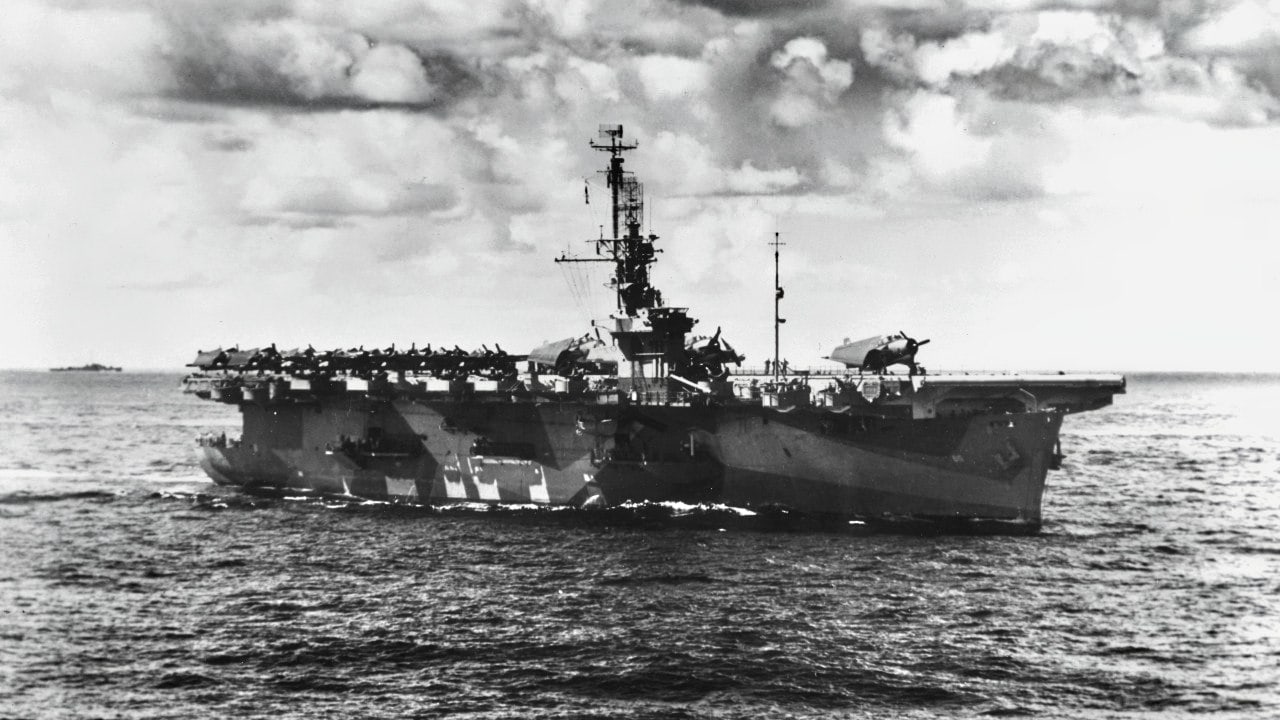
Key Points and Summary: The Casablanca-class escort carrier (CVE) was the unsung hero of WWII, mass-produced by industrialist Henry Kaiser to overwhelm the Japanese Navy.
-The Production Miracle: Kaiser revolutionized shipbuilding, churning out 50 carriers in just two years—one every three weeks—using assembly-line techniques.
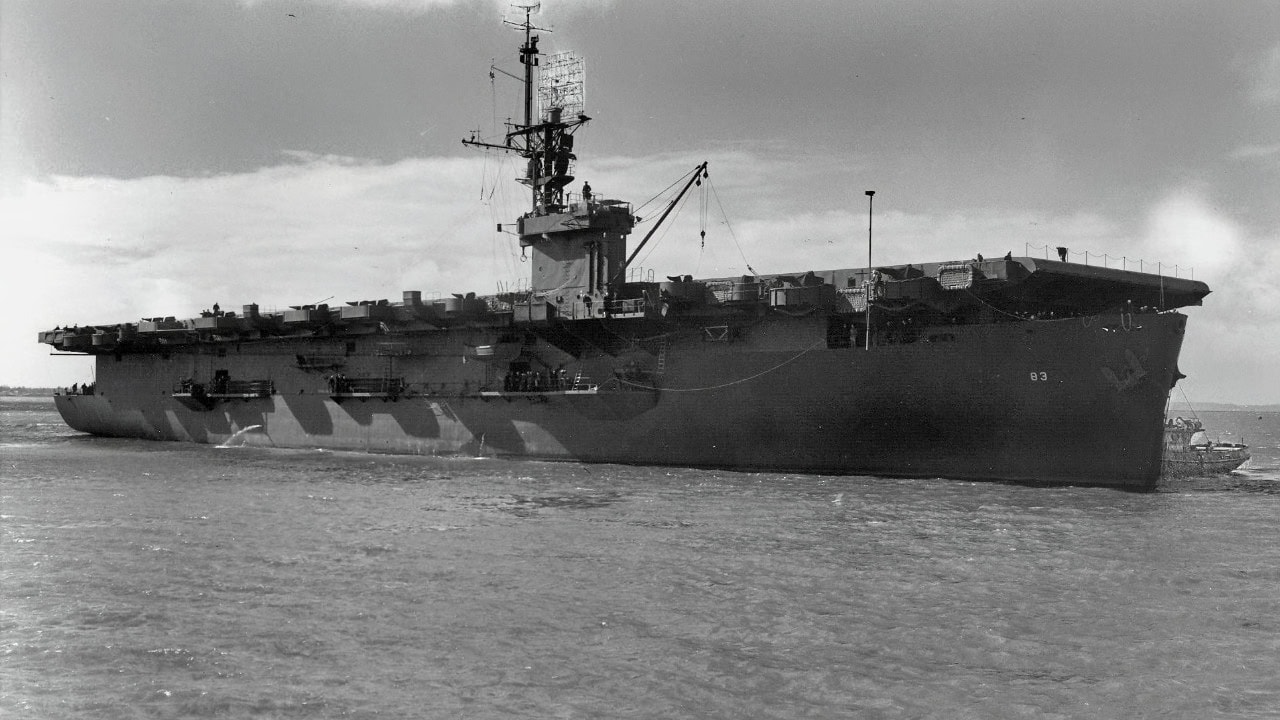
Casablanca-Class Aircraft Carrier
-The “Jeep Carrier”: Though small (10,000 tons) and derided as “Combustible, Vulnerable, and Expendable,” they filled the critical gap in air cover for amphibious landings.
The Legend: At the Battle off Samar, the tiny “Taffy 3” task force of Casablanca carriers and destroyers held off the massive Japanese center force, including the battleship Yamato, in one of naval history’s greatest last stands.
The Small, Casablanca-Class Aircraft Carriers Of World War II
In 1942, during the early days of the United States’ involvement in World War II, the US Navy was in dire need of more aircraft carriers. Fighting a war in the Atlantic and Pacific was a daunting challenge.
To meet the Navy’s needs, an intriguing idea was floated to convert existing C3 cargo hulls into smaller aircraft carriers.
When we think of World War II aircraft carriers, images of the USS Enterprise, Lexington, Yorktown, Hornet, and many more come to mind, which crippled the Japanese Imperial Navy in the march across the Pacific after the devastating losses suffered at Pearl Harbor. By the time Japan surrendered unconditionally at Tokyo Bay, its navy had been swept from the seas.
But the most prevalent carriers built by the United States during the war weren’t the mighty Essex carriers who carried the fight to the Japanese, but the tiny Casablanca-class Escort carriers (CVE).
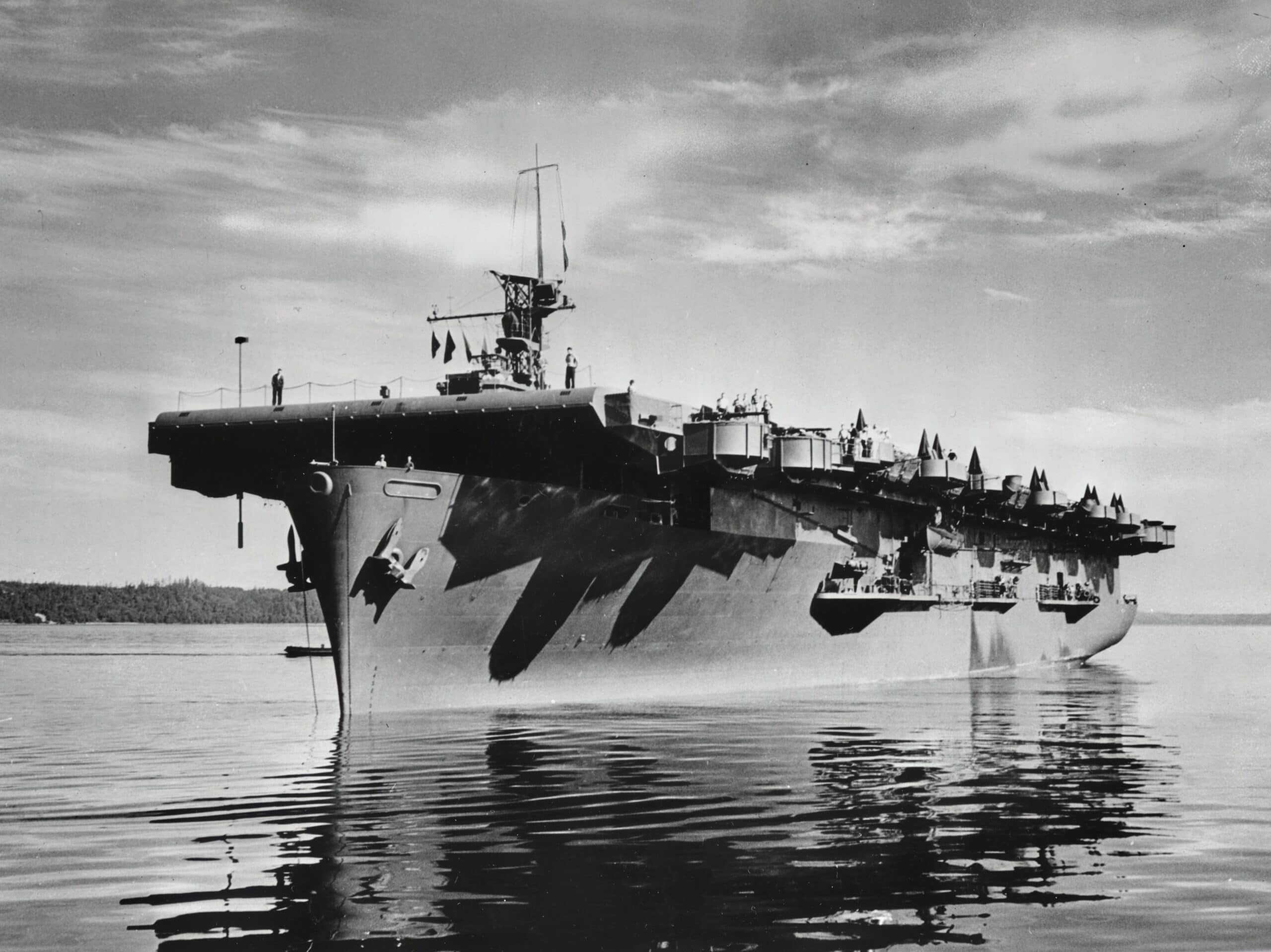
Casablanca-Class.
The Casablanca class was called many derisive names by the sailors of the Essex class, including “Jeep carrier, “Kaiser’s Coffins,” and “Baby Flattops.” CVE was sarcastically said to stand for “Combustible, Vulnerable, and Expendable,” but that all changed after the battle of the Philippine Sea.
Henry Kaiser Mastered Fast Shipbuilding In WWII:
When you hear the name Henry Kaiser of “Kaiser Permanente” fame, the thought of shipbuilding wouldn’t necessarily come to mind. But it should. Kaiser was the Henry Ford of shipbuilding. He revolutionized shipbuilding by establishing an assembly-line technique in his shipyards.
When the US mobilized nearly 7 million men during the war, the enormous military needed to be resupplied, a colossal undertaking. Kaiser built Liberty and Victory-class merchant ships.
Kaiser cut the construction time from months to just days. Overall, 2,710 Liberty ships were built during the war years. Kaiser’s shipyards built 1,490 of them. He also built warships for the Navy, including Landing Ship Tanks (LSTs) and T-2 tankers for carrying fuel.
Kaiser Amazingly Built 50 Escort Aircrft Carriers in Just Two Years:
In a fantastic feat of shipbuilding, Kaiser’s shipyards churned out 50 Escort Carriers from 1943 to 1944. An Essex-class carrier took about 20 months to build. Which itself was a fantastic manufacturing feat. Kaiser could build a Casablanca-class escort carrier in three months.
Kaiser’s mass-production methods proved invaluable, and the sheer numbers of Casablanca-class carriers eased the heavy load on Essex-class carriers.
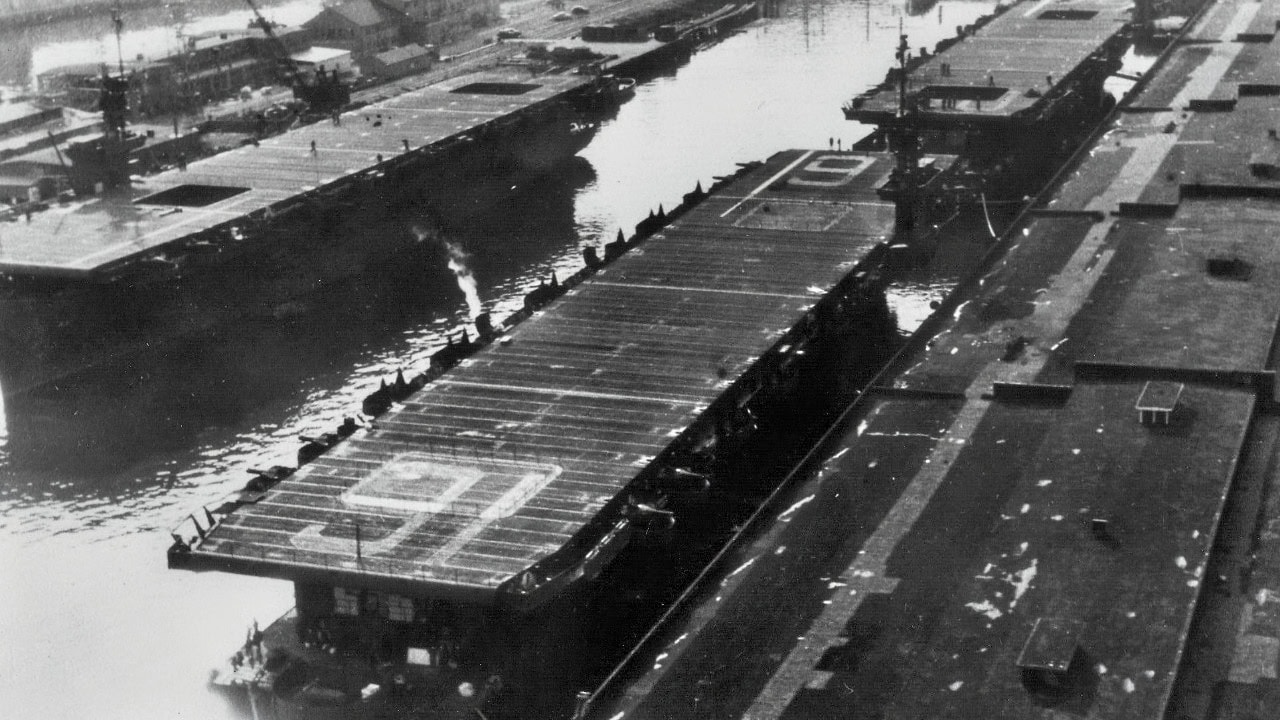
Casablanca-Class Escort Aircraft Carrier.
The Casablanca-class was designed from the outset for mass production. Each ship measured 512 feet in length, with a beam of 65 feet at the waterline and 108 feet overall. They had a draft of 22 feet 6 inches and displaced about 10,400 tons under standard load, increasing to over 15,000 tons when fully loaded.
The Casablanca Escort Aircraft Carriers Concept Began Long Before WWII:
The idea for smaller “Escort-carriers” started with the Brits. It has been discussed in the US Navy since 1927, when LtCdr Bruce G. Leighton prepared a paper analyzing the problem. He titled it “Light Aircraft Carriers, A Study of their Possible Uses in So-Called ‘Cruiser Operations,’ Comparison with Light Cruisers as Fleet Units.” He advocated building smaller carriers by converting cruiser hulls.
But his idea never went anywhere. After Pearl Harbor, much of that thinking changed. President Franklin D. Roosevelt was a fan of the concept, and the escort carrier was born.
Initially designed for convoy escort duty, the Casablanca class accompanied the larger fleets on island-hopping campaigns, with just a small number designated for convoy duty in the Atlantic for ASW (anti-submarine warfare) duty.
Taffy 3 And The Battle Of the Philippine Sea:
The small escort carriers earned their stripes in the Battle of the Philippine Sea in late 1944. The Japanese planned a large deception operation in an attempt to pull the American aircraft carriers away from the landings on Luzon and then sink the support ships with Japan’s battleships and heavy cruisers.
On the first day of battle on October 25, 1944, after taking a beating, the Imperial Japanese Navy’s First Mobile Striking Force, under the command of Takeo Kurita, appeared to be retreating westward. Admiral Bull Halsey had taken the bait of a ruse by Japan’s carriers and took off for them.
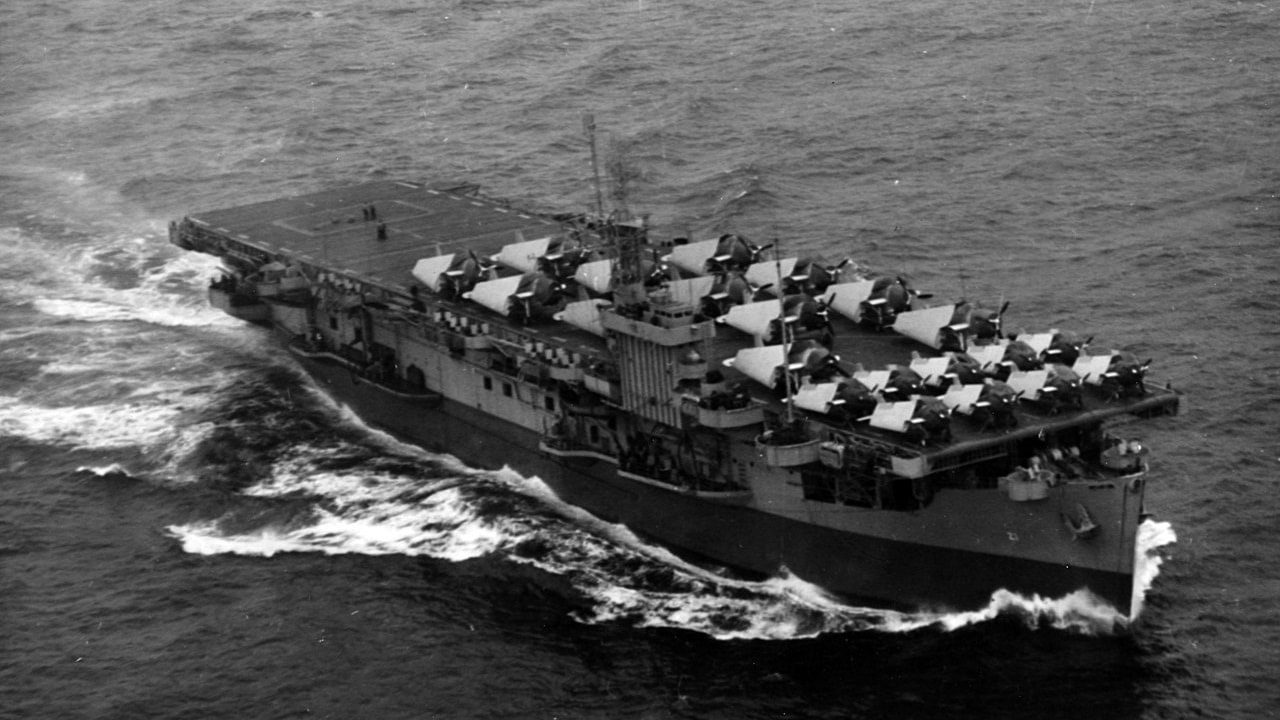
Casablanca-Class: The U.S. Navy escort carrier USS Block Island (CVE-21) underway Atlantic Ocean, off the mouth of Chesapeake Bay, shortly after leaving Norfolk, Virginia (USA), on 15 October 1943. She left for her first anti-submarine cruise, with aircraft from Composite Squadron 1 (VC-1) on deck: 9 General Motors FM-1 Wildcats (forward) and 12 Grummen TBF-1C Avenger. The photo was taken by a blimp of squadron ZP-14.
This left the tiny task force, call sign Taffy 3, alone to protect the invasion beaches. Taffy 3 consisted of six escort carriers, (Fanshaw Bay, St. Lo, White Plains, Kalinin Bay, Kitkun Bay, and Gambier Bay), three destroyers, and four destroyer escorts.
Taffy 3 was intended to provide shore support and anti-submarine patrols and did not have guns capable of penetrating the Japanese armor of their battleships and heavy cruisers.
But during the night, Kurita’s task force turned around and headed straight for Taffy 3. Kurita’s force consisted of four battleships, six heavy cruisers, two light cruisers, 11 destroyers, and 36 aircraft (in a kamikaze attack). Kurita’s flagship was the Yamato, the largest battleship ever built with 18-inch guns.
Kurita mistakenly thought he was engaging the Essex carriers of Halsey’s fleet. He opened fire at daybreak. The thinly armored escort carriers retreated into a rain squall and launched their aircraft.
Three destroyers led by the USS Johnston and the Destroyer Escort USS Samuel B. Roberts raced into the teeth of the Japanese fleet, firing everything they had and launching torpedoes. It was an amazing feat of bravery by “The Last Stand of the Tin Can Sailors.”
The Japanese mistook the destroyers for cruisers and the destroyer escorts for destroyers. One armor-piercing shell ripped right through the Roberts and out the other side without exploding because they were so thin-skinned.
The Johnston raked the cruiser Kumano’s superstructure with gunfire and hit her with four torpedoes, one of which blew the bow off. But she was blasted by the 18-inch guns of the Yamato. The Yamato reported sinking a cruiser. But the Johnston, although mangled, was not sunk. Johnston made two more dashes, lighting up the battleship Haruma with 15 hits, and then at a cruiser.
The escort carrier Gambier Bay and the destroyer Hoel were sinking. The two fleets were a jumbled mess with smoke and rain squalls masking visibility. Three American ships, the Johnston, the Heerman, and the Roberts, nearly collided. Captain Ernest Evans, commander of the Johnston, ordered the crew to abandon ship. He left with them but was never seen again. He was posthumously awarded the Medal of Honor.
So impressed were the Japanese by the bravery of Johnston’s crew that survivors in the water saw the captain of a Japanese destroyer salute as they passed by.
But then Taffy 3’s aircraft arrived on the scene. Kurita believed he was under attack by the larger eEssex-Class: 24 Aircraft Carriers That Made the US Navy a Superpower because of the ferocity of the American air strikes. The destroyers had severely crippled or sunk four cruisers. Kurita had lost tactical control. Believing he had sunk two Essex carriers and several support ships, he broke off for the San Bernadino Strait.
Later that day, Halsey’s force sank four Japanese aircraft carriers that they were pursuing.
The Escort Carriers And Destroyers Paid A Heavy Price:
American losses for the small Taffy 3 task force were heavy. There were 1,161 killed or missing. A further 913 were wounded, two escort carriers (Gambier Bay and the St. Lo), two destroyers, one destroyer escort sunk, 23 aircraft lost, four escort carriers damaged, one destroyer damaged, two destroyer escorts damaged.
The Japanese lost three heavy cruisers sunk, and 11 aircraft were lost. Two battleships damaged, three heavy cruisers damaged, one destroyer damaged, 2,700+ killed and wounded.
The Japanese had achieved surprise, but the courageous men aboard the tin cans and the Kaiser coffins had defeated the much heavier armed Japanese Fleet.
The Navy’s Letter To Henry Kaiser:
In a testament to the valuable role of Kaiser’s Escort Carriers, Ernest J. King, Fleet Admiral of the U.S. Navy, wrote to Henry J. Kaiser on February 24, 1945:
“Dear Mr. Kaiser:
“Thanks for your note of February 17th. Needless to say, I am as pleased as you are by the fine battle performance of the escort carriers.
Mere ‘Jeep Carriers,’ indeed.”
About the Author: Steve Balestrieri
Steve Balestrieri is a National Security Columnist. He served as a US Army Special Forces NCO and Warrant Officer. In addition to writing on defense, he covers the NFL for PatsFans.com and is a member of the Pro Football Writers of America (PFWA). His work was regularly featured in many military publications.