Key Points and Summary – Sweden’s Gotland-class submarines made headlines in 2005 by sneaking inside the USS Ronald Reagan’s defenses, proving how dangerous small AIP-powered boats can be.
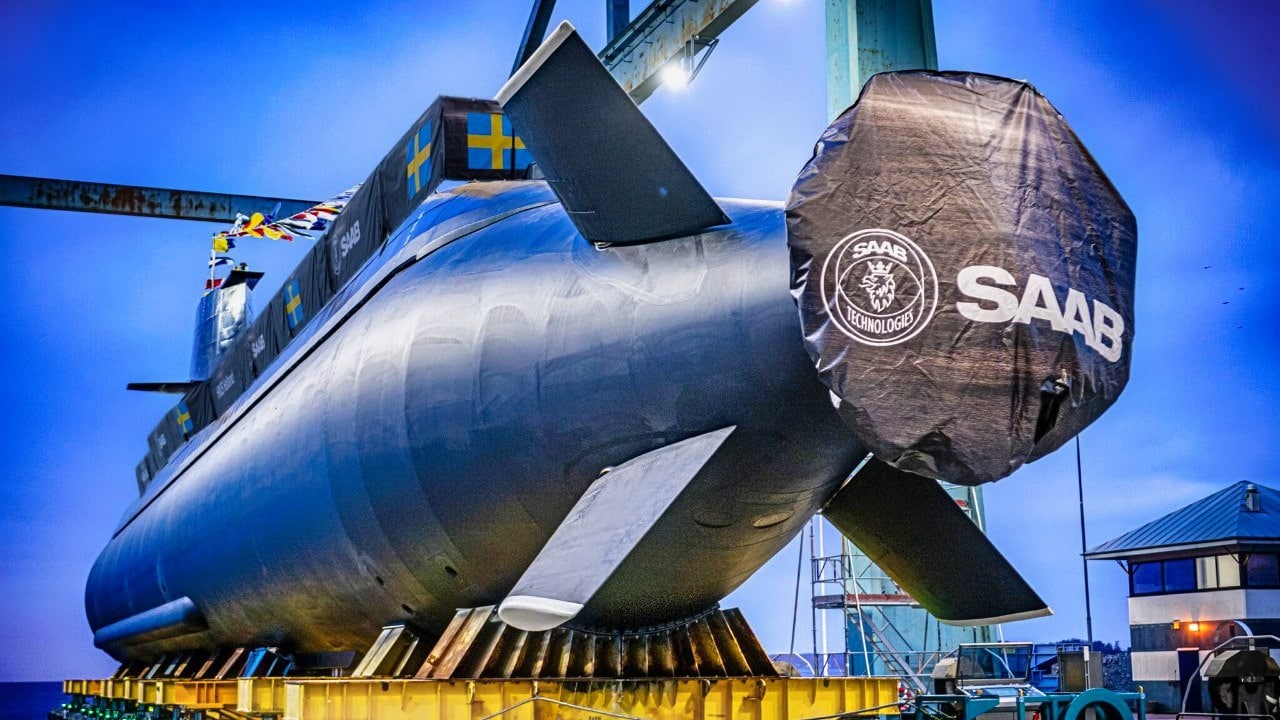
-Now Saab is taking that formula several steps further with the new Blekinge-class, also known as A26.
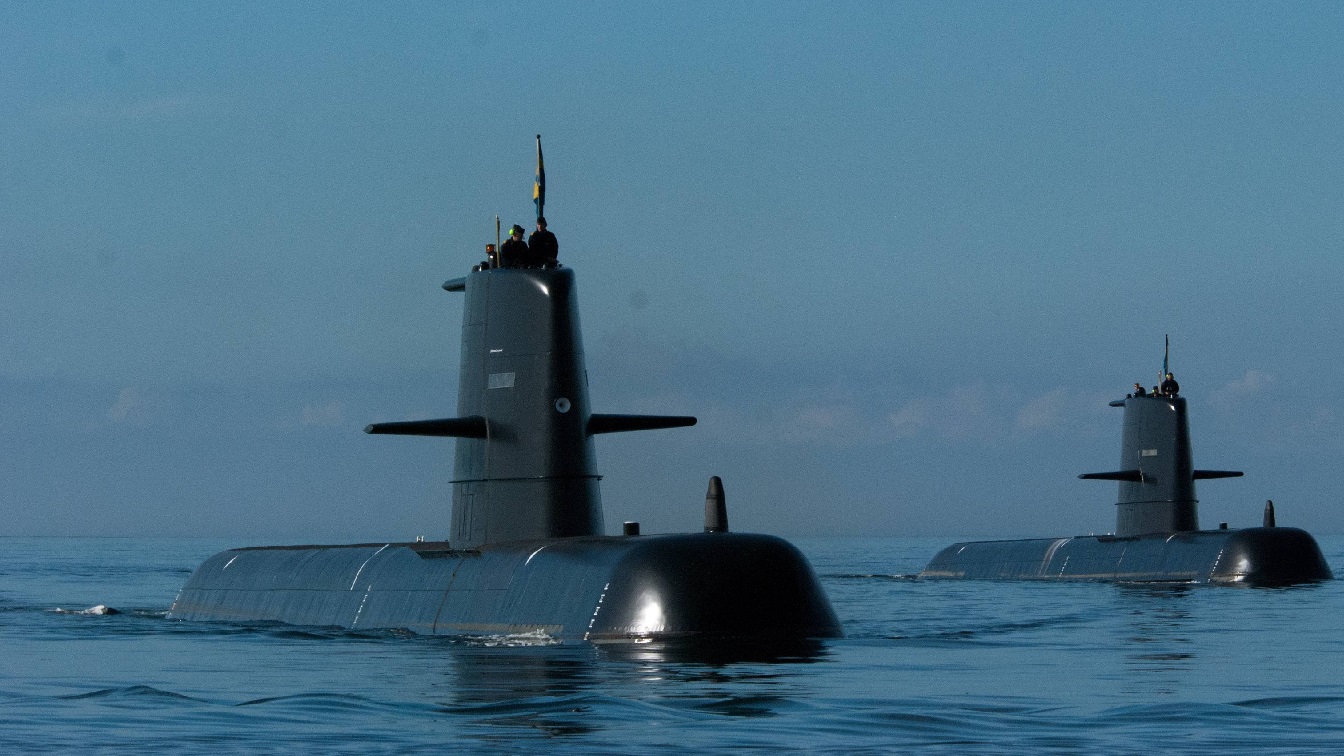
Gotland-class Submarine.
-Larger and more capable than Gotland, the A26 keeps Stirling air-independent propulsion but adds improved stealth, quieter signatures across the spectrum, and a more flexible combat system.
-Optimized for littoral warfare yet increasingly credible in blue water, the Blekinge-class is designed for anti-ship and ASW roles, special operations, and ISR—cementing Sweden’s reputation as a world-class non-nuclear sub builder.
The Gotland-Class Submarine: From Updates to New AIP Submarine Class
Sweden’s own home-grown submarine builder enjoys an established track record of building relatively small submarines that, despite their small size and conventional, non-nuclear propulsion, are extremely quiet and therefore effective.
A great deal of ink has been spilled covering the submarine’s technical characteristics as well as some of the high-profile feats the Swedish submarines have managed during training exercises.
One series of exercises with the United States Navy in 2005 made waves when one of Sweden’s Gotland-class submarines snapped several photographs of an American aircraft carrier, the USS Ronald Regan.
The photographs, taken from the submarine’s periscope, showed that the diminutive Swedish submarine had evaded the aircraft carrier’s defenses and would have been able to fire torpedoes at the American carrier.
It was, needless to say, quite the feat for a small, non-nuclear submarine.
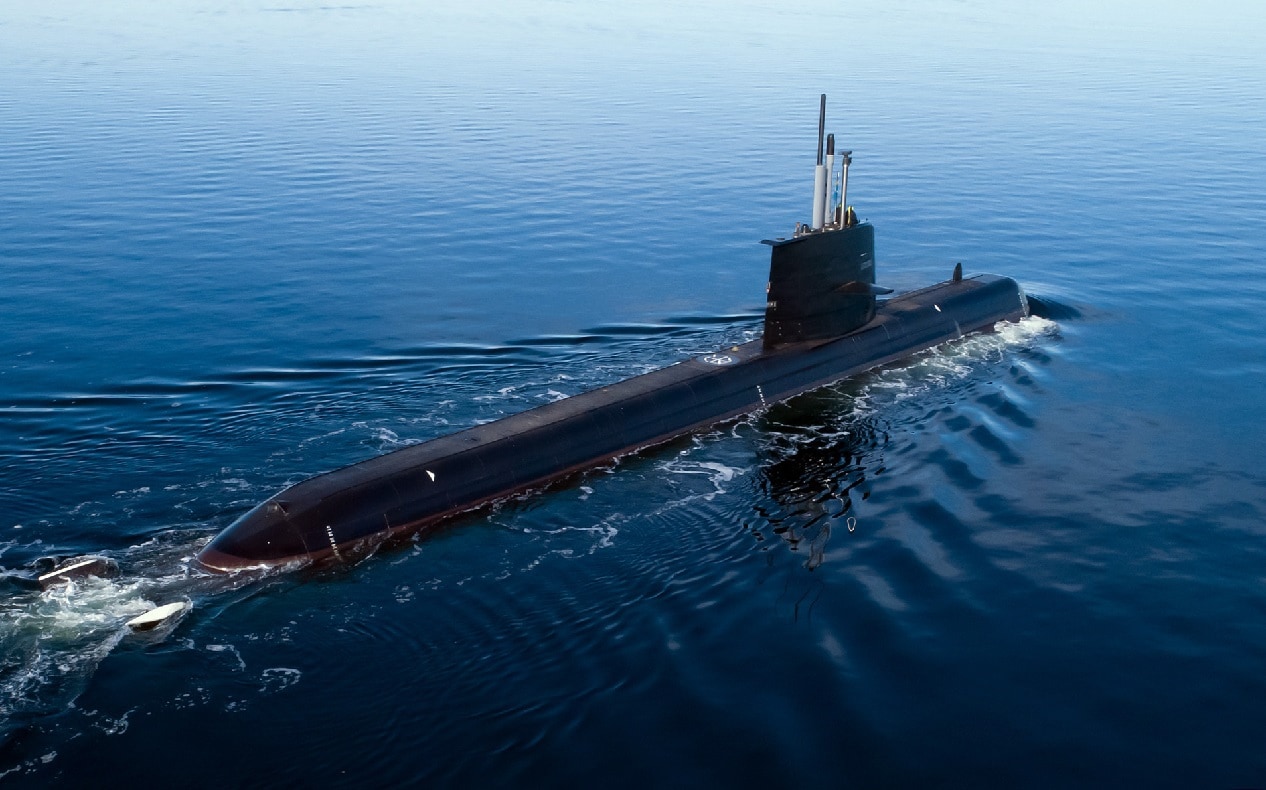
Image of Gotland-class Submarine.
Sweden’s Gotland-class submarines are regarded as very quiet, made possible by their air-independent propulsion, which enabled them to circumvent Regan’s anti-submarine warfare assets.
In fact, the feat was so impressive that the United States asked the Swedish Navy if it could lease the submarine — along with its Swedish crew — to both evaluate the submarine’s capabilities and hone its own anti-submarine warfare capabilities.
While that exercise two decades ago still manages to stir debate today, Saab’s submarine capabilities have advanced significantly since the 2005 feat. Saab explains that “the Gotland-class submarines HMS Gotland and HMS Uppland have finished their mid-life upgrades (MLU) — making sure tomorrow’s challenges are met.
The changes result in increased performance, improved stealth capabilities as well as increased navigation, combat, comms and ship control capabilities.”
The Gotland-Class, But Better?
However, those submarines will be complemented in the future by a new class of submarine: Sweden’s Blekinge-class submarines.
Saab also explains that the new sub is an evolutionary design that incorporates several incremental improvements rather than being a completely fresh submarine design. “Many systems used in the vessels’ MLU are paving the way for Blekinge-class (A26) submarine cutting edge capabilities,” Saab said. “This makes the Gotland-class a step in the evolutinonary chain of submarines.”
Sweden’s Blekinge-class is the next generation of Saab’s submarines. At first, they won’t replace the older Gotland-class hulls, but sail alongside them until the Gotlands are taken out of Swedish service and retired.
Needless to say, the Blekinge-class offer several advantages over their older, though capable, predecessors.
One naval affairs expert, H I Sutton, outlines the Blekinge-class’s unique capabilities. “The A-26 is one of the most advanced and forward-looking non-nuclear submarine designs in the world. The baseline version is optimized for littoral combat where larger nuclear-powered attack submarines are at their weakest, and larger derivatives are steadily enhancing its blue-water credentials also.”
He also adds that “Swedish submarines have a tradition of being relatively small to suit their Baltic primary operating environment, and feature very high levels of automation resulting in very small crews. They also pioneered the modern wave of Air Independent Power (AIP, also known as Air Independent Propulsion). More subtle design features include the carriage of 400mm lightweight torpedoes. Unlike other lightweight torpedoes these are wire guided and can be mass-fired.”
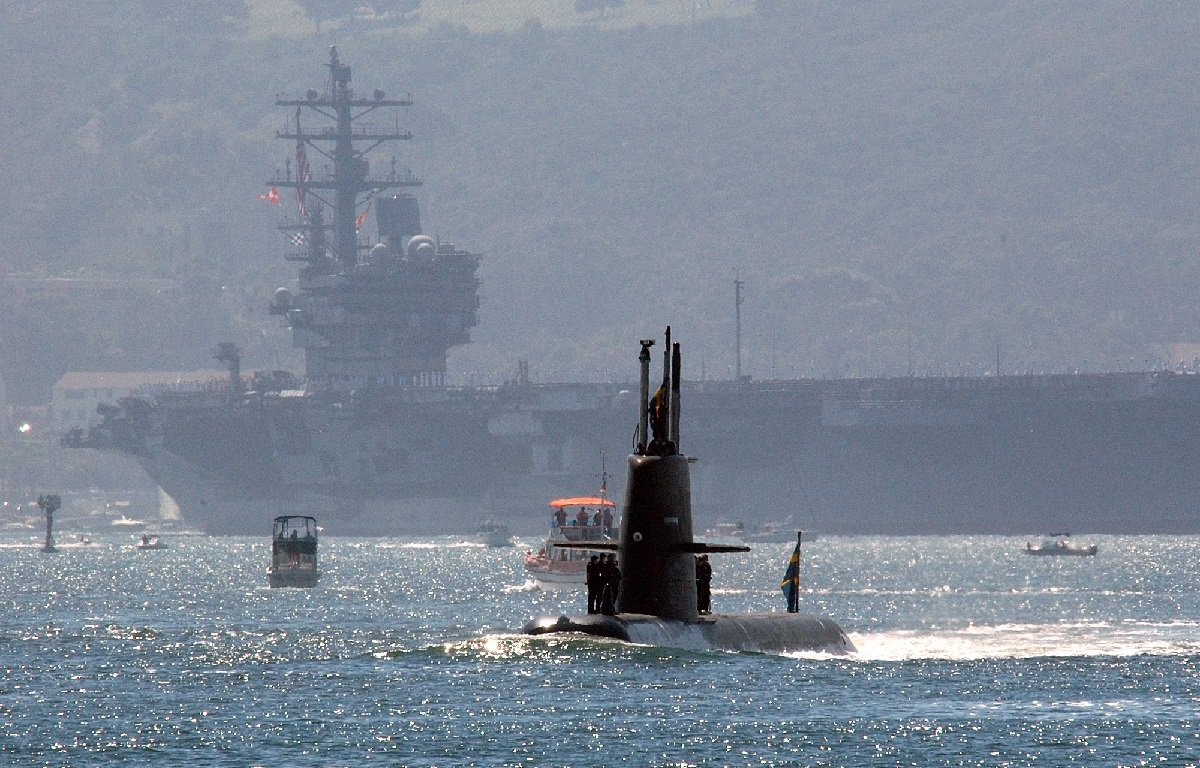
San Diego (Oct. 1, 2005) The Swedish diesel-powered attack submarine HMS Gotland transits through San Diego Harbor with the Nimitz-class aircraft carrier USS Ronald Reagan (CVN 76) following close behind during the ÒSea and Air ParadeÓ held as part of Fleet Week San Diego 2005. Fleet Week San Diego is a three-week tribute to Southern California-area military members and their families. U.S. Navy photo by PhotographerÕs Mate 1st Class Michael Moriatis (RELEASED)
Although the newer Blekinge-class will keep the Gotland-class’s air-independent propulsion, the Blekinge-class AIP system is anticipated to incorporate several improvements that would facilitate longer periods of time underwater. Improvements to the submarine’s sonar-defeating measures are also anticipated.
Saab writes that “The A26 [a designation for the Blekinge-class] submarine’s acoustic signatures are extremely low, also far outside the traditional frequency ranges for submarines. Magnetic signatures are kept to a minimum by an advanced degaussing system that is controlled by the submarine’s own sensors. Static and dynamic electric signatures are predicted and countered by optimized corrosion control and other measures. Target echo strength is minimised by optimized geometry and integrated coating systems without compromising the hydrodynamic signatures.”
Furthermore, “radar, visual and IR surface signatures are also minimised by special coatings on the submarine’s surface and the hull’s design. Saab’s patented Stirling-AIP system plays a crucial role in remaining undetected for long periods of time and is a proven and effective means of ensuring signature management across all the domains.”
Compared to the older Gotlands, the newer Blekinge-class will also be larger, with a length of 66 meters and a displacement of 2,000 tons — though compared to some of the nuclear-powered behemoths in the American or Russian navies, the Blekinge-class will be a rather diminutive class of submarines.
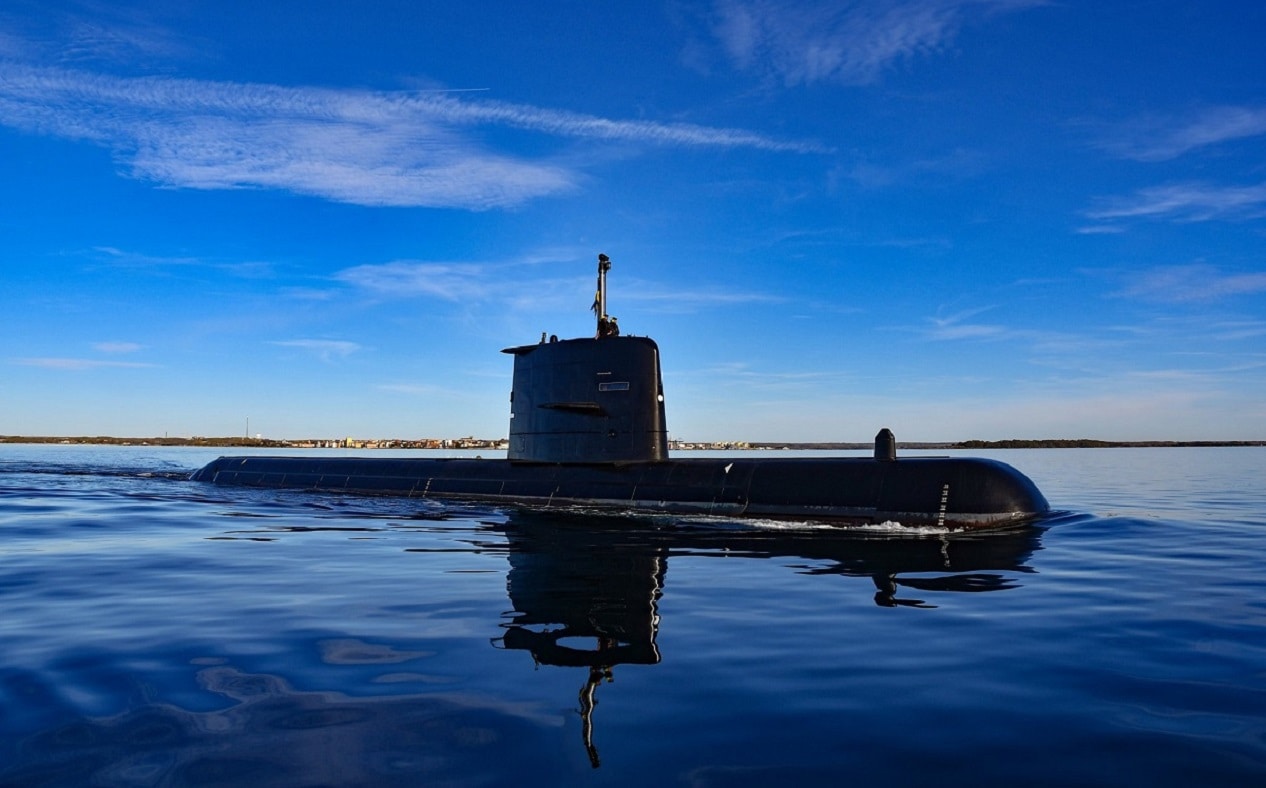
Gotland-class Submarine.
Still, the increase in size over its predecessor could help facilitate the Blekinge-class’s diverse mission range, including anti-surface ship and anti-submarine warfare, as well as operations with special operations forces, intelligence gathering, and surveillance.
About the Author: Caleb Larson
Caleb Larson is an American multiformat journalist based in Berlin, Germany. His work covers the intersection of conflict and society, focusing on American foreign policy and European security. He has reported from Germany, Russia, and the United States. Most recently, he covered the war in Ukraine, reporting extensively on the war’s shifting battle lines from Donbas and writing on the war’s civilian and humanitarian toll. Previously, he worked as a Defense Reporter for POLITICO Europe. You can follow his latest work on X.