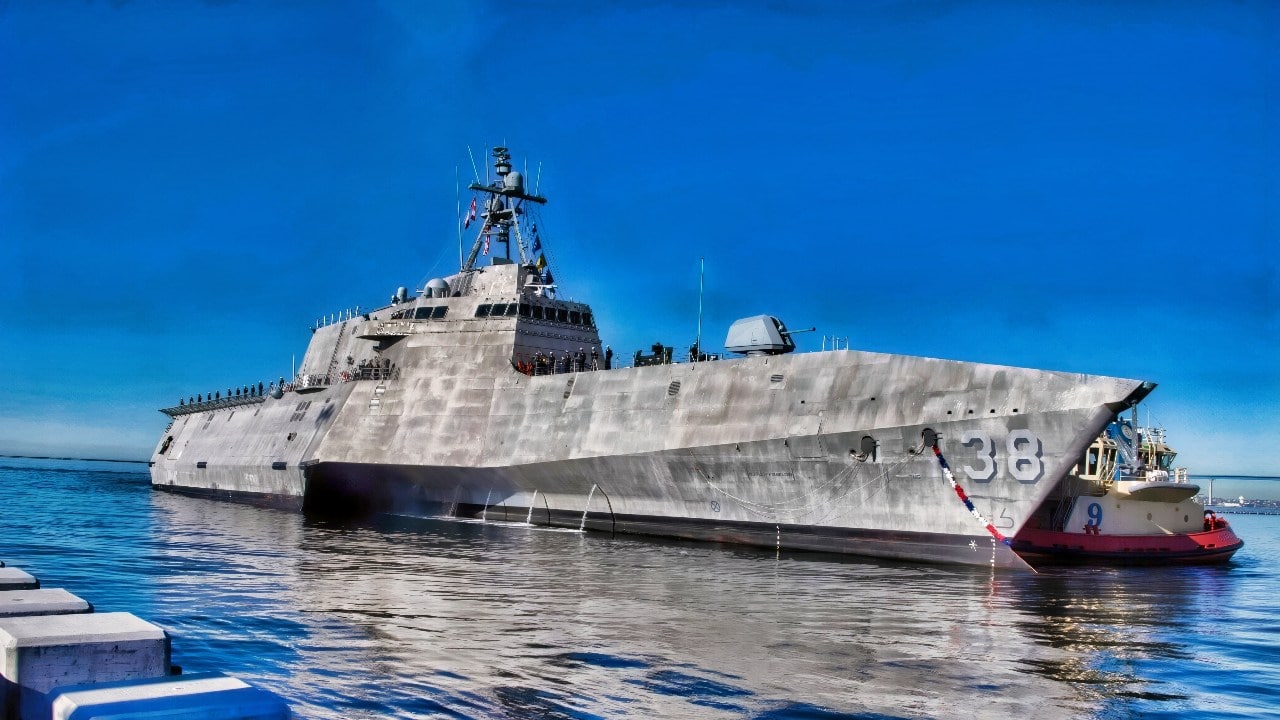
Key Points and Summary – Long derided as under-armed and fragile, the Navy’s Littoral Combat Ship (LCS) has been slated for early retirement and eclipsed by the new Constellation-class frigate – that is now itself in trouble.
-Critics argued the LCS simply could not survive a high-end fight with China, driving a strategic pivot toward more heavily armed blue-water combatants.
-Yet in the Middle East, the USS Indianapolis and other LCS hulls have quietly done what they were built for—shallow-water patrol, drone and helo operations, mine countermeasures, and lower-tier missions that free up destroyers for harder fights.
-The result: a “failed” ship now looks indispensable in the right war.
The Littoral Combat Ship Was Left for Dead. Then the Houthis Happened
The Navy’s troubled Littoral Combat Ship has perhaps been the most criticized surface platform in Naval history, as the vessel received intense, high-level criticism at its inception and was subsequently derided and partially replaced for not being survivable enough.
Years ago, former Defense Secretary Chuck Hagel cut the planned fleet size by roughly a third, in large measure due to a chorus of concern that the ships were not survivable enough to support the kind of blue-water maritime warfare challenges the Navy faced amid great-power threats.
This criticism was the rationale for the Pentagon and Navy launching the FFG Frigate program, a specific effort to engineer a more survivable LCS with space armor, longer-range weapons, over-the-horizon missiles, and a larger, more robust hull.
Littoral Combat Ship Too Weak?
Several years ago, the Navy took its hesitation about the LCS so seriously that former Navy Secretary Carlos Del Toro told the House Appropriations Committee—Defense that a large number of LCS ships need to be retired because they simply cannot hold up against an increasingly advanced Chinese threat in the Pacific.
“The particular problem we are facing on the eight we plan to decommission is the problems with the new ASW (Anti-Submarine Warfare) modules on these ships. The ships were designed to meet a different threat and it will be challenging for these ships to contribute to the high-end fight,” Del Toro told Congress in2022.
Del Toro’s comments were quite significant, as they pertain directly to the Navy’s overall conceptual and strategic shift away from counter-terrorism, counter-piracy, and Visit, Board, Search, and Seizure missions toward massive preparations for great-power war against advanced adversaries on the open seas.
Key elements of this threat-driven mission and readiness shift were supported as early as 2015, when the Navy revved up its distributed lethality concept. This effort was designed to massively upgun the entire surface fleet for great-power warfare on the open ocean.
Ships such as the LCS received new generations of weapons, drones, and anti-submarine technology as part of a strategic fleet-wide initiative to make the surface fleet much more lethal and capable of contributing with key relevance to great power warfare.
LCS to Frigate
Not long after the FFG(X) program was launched, Navy weapons developers sought to plan the ship as more than simply a stronger LCS, but rather a more heavily armed ship, able to be relevant in large-scale open-water maritime warfare.
There is still a great need for the Navy Frigate, especially given the troubles associated with the Constellation-class Frigates.
However, the Grim Reaper may have arrived too early for the LCS, at least to some extent, as the ship has not only been made more lethal and survivable but also designed to meet specific key requirements for surveillance, countermine measures, manned-unmanned teaming, and coastal or closer-in reconnaissance, patrol, drone operations, and mine-clearing.
Regarding coastal surveillance, the LCS has been able to reach critical, high-risk waters that are inaccessible to deeper-draft ships.
This can enable finding and destroying mines, accessing ports unreachable by deep-draft ships, launching drones, and performing littoral reconnaissance closer to the enemy coastline.
The LCS has also been able to launch and recover drones and helicopters, all while still launching anti-submarine, surface warfare, and countermine mission packets, or suites of technology specifically engineered to integrate with ship-based command and control.
LCS mission packages have also shown promise, integrating otherwise disparate systems in a networked, coordinated way for submarine hunting, coastal enemy engagement, and shoreline reconnaissance.
LCS Against Houthis
The controversial and long-criticized Littoral Combat Ship appears to have proven its ability to provide substantial tactical and maritime warfare support to ongoing operations in the Middle East, which is, of course, relevant to the Navy’s ongoing thinking regarding plans for its LCS fleet.
An interesting US Navy essay describing the homecoming of the USS Indianapolis, a Freedom-class variant of the LCS, explains how the ship performed combat-critical diplomatic, logistical, communications, and navigational functions during US Navy combat against the Houthis in the 5th Fleet area of responsibility in the Middle East.
“As the workhorse of the Arabian Gulf, Indy executed the lower tier missions necessary to maintaining good diplomatic relations in the Middle East which allowed Standard Missile shooters to reposition to deal with bad actors in the Red Sea. I think it’s pretty special that we were able to provide the 5th Fleet commander with more tools and options to aid in the free flow of commerce through a contested waterway,” Cmdr. Matthew Arndt, USS Indianapolis’ Commanding Officer, said in a Navy essay.
Littoral Combat Ship Photo Essay
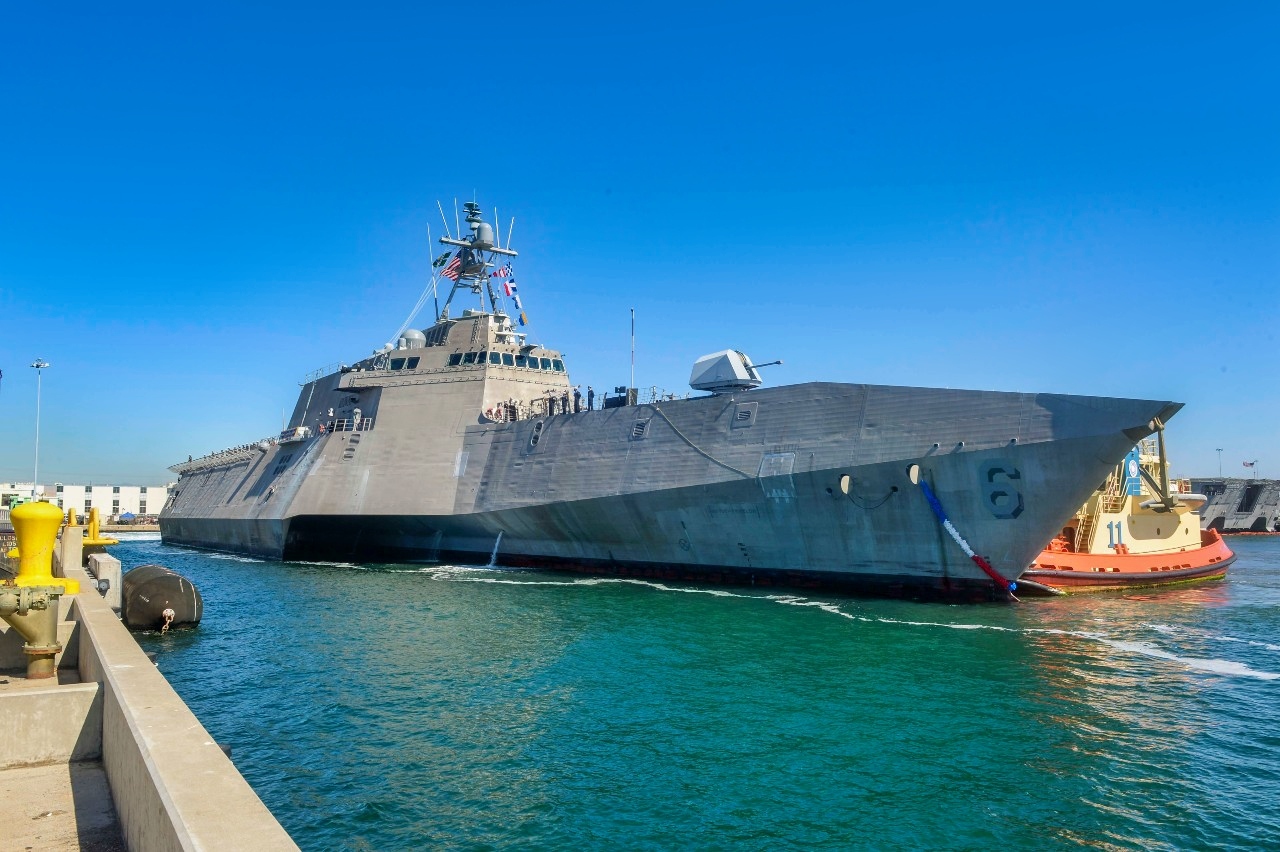
NAVAL BASE SAN DIEGO — The Independence-variant littoral combat ship USS Jackson (LCS 6) returns to its San Diego homeport, Oct. 6, 2023. Littoral Combat Ships are fast, optimally-manned, mission-tailored surface combatants that operate in near-shore and open-ocean environments, winning against 21st-century coastal threats. (U.S. Navy photo by Mass Communication Specialist 1st Class Vance Hand)
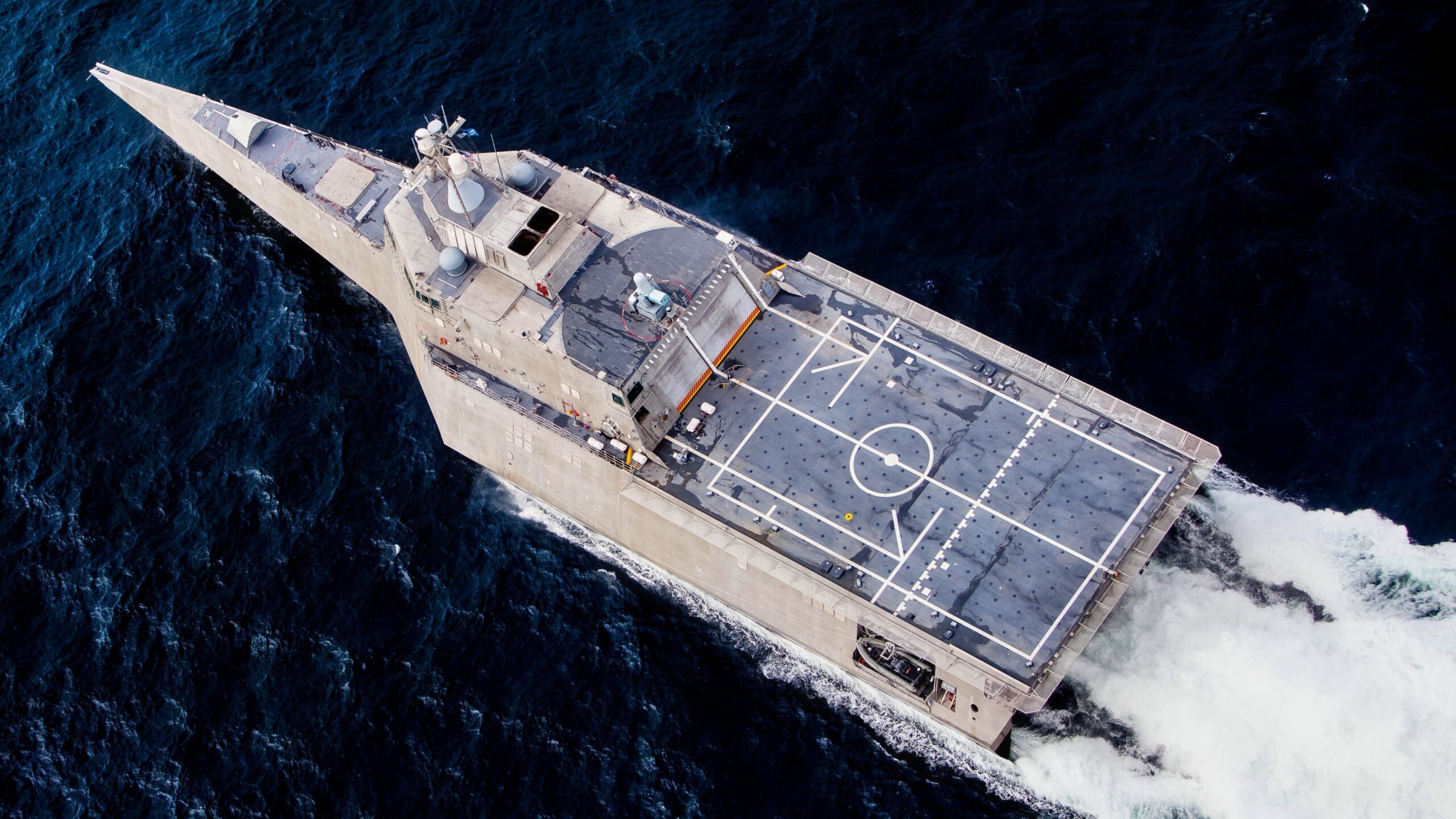
US Navy Littoral Combat Ship. Image Credit: Creative Commons.
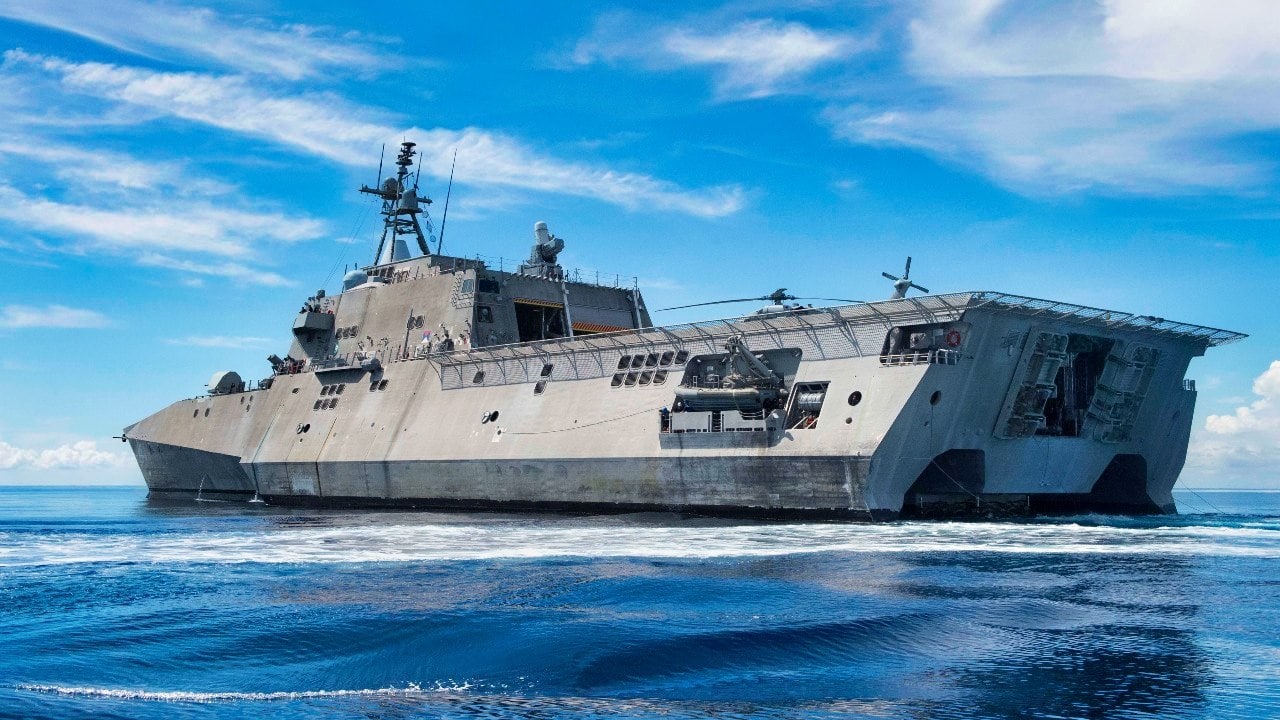
170623-N-PD309-122 BOHOL SEA (June 23, 2017) Littoral combat ship USS Coronado (LCS 4) transits the Bohol Sea during an exercise with the Philippine Navy for Maritime Training Activity (MTA) Sama Sama 2017. MTA Sama Sama is a bilateral maritime exercise between U.S. and Philippine naval forces and is designed to strengthen cooperation and interoperability between the nations’ armed forces. (U.S. Navy photo by Mass Communication Specialist 3rd Class Deven Leigh Ellis/Released)
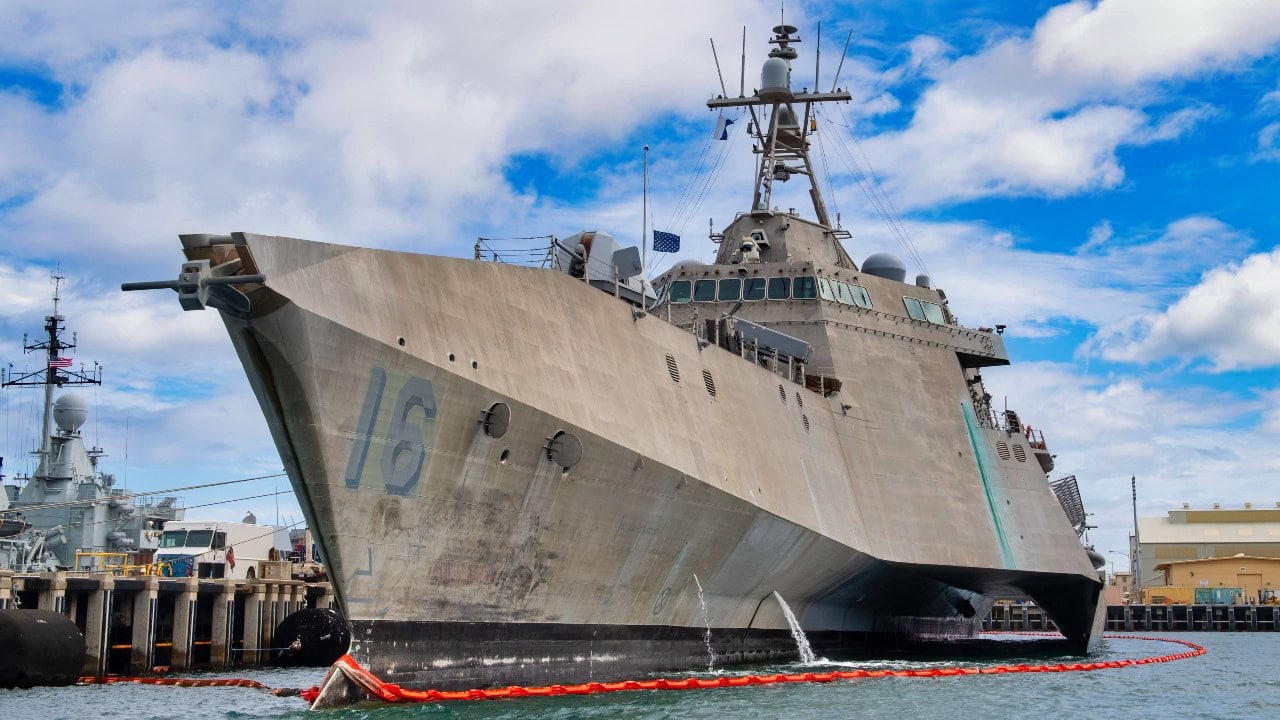
(July 7, 2022) – Independence-variant littoral combat ship USS Tulsa (LCS 16) moored at Joint Base Pearl Harbor-Hickam during Rim of the Pacific (RIMPAC) 2022. Twenty-six nations, 38 ships, four submarines, more than 170 aircraft and 25,000 personnel are participating in RIMPAC from June 29 to Aug. 4 in and around the Hawaiian Islands and Southern California. The world’s largest international maritime exercise, RIMPAC provides a unique training opportunity while fostering and sustaining cooperative relationships among participants critical to ensuring the safety of sea lanes and security on the world’s oceans. RIMPAC 2022 is the 28th exercise in the series that began in 1971. (U.S. Navy photo by Mass Communication Specialist 3rd Class Demitrius J. Williams)
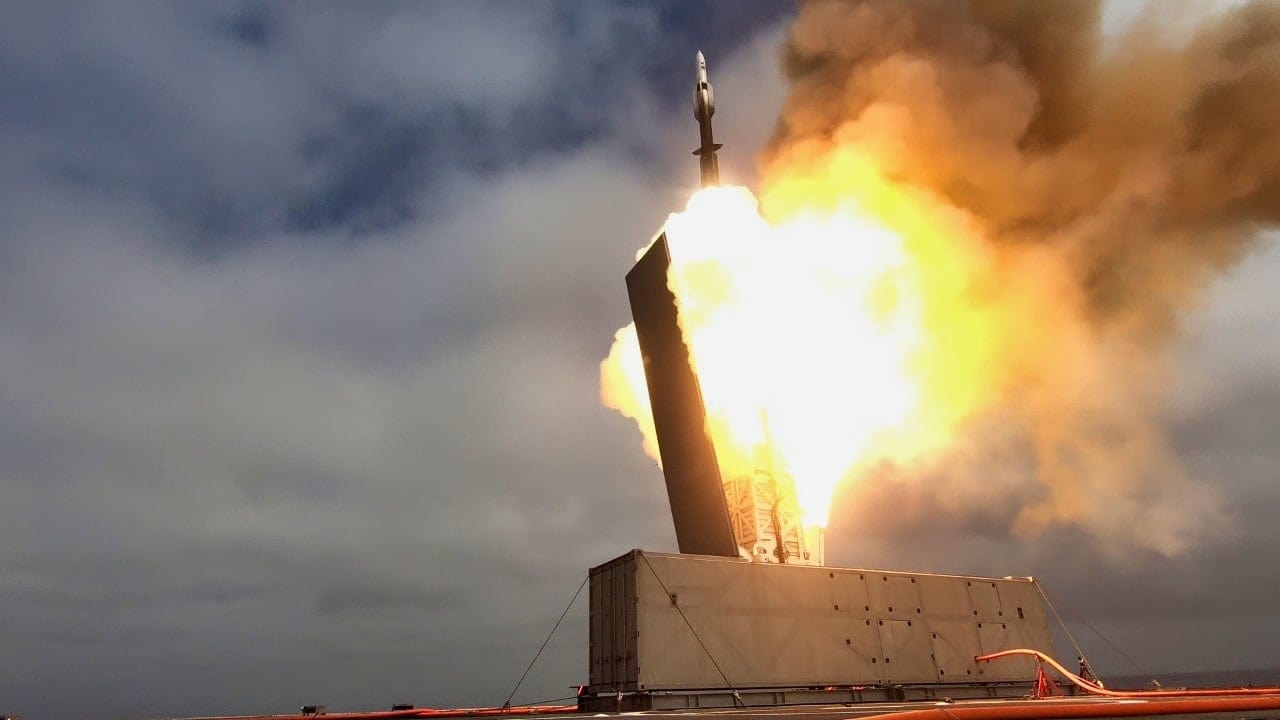
USS Savannah (LCS 28) conducts a live-fire demonstration in the Eastern Pacific Ocean utilizing a containerized launching system that fired an SM-6 missile from the ship at a designated target. The exercise demonstrated the modularity and lethality of Littoral Combat Ships and the ability to successfully integrate a containerized weapons system to engage a surface target. The exercise will inform continued testing, evaluation and integration of containerized weapons systems on afloat platforms.
About the Author: Kris Osborn
Kris Osborn is the President of Warrior Maven – Center for Military Modernization. Osborn previously served at the Pentagon as a highly qualified expert in the Office of the Assistant Secretary of the Army—Acquisition, Logistics & Technology. Osborn has also worked as an anchor and on-air military specialist at national TV networks. He has appeared as a guest military expert on Fox News, MSNBC, The Military Channel, and The History Channel. He also has a Masters Degree in Comparative Literature from Columbia University.