
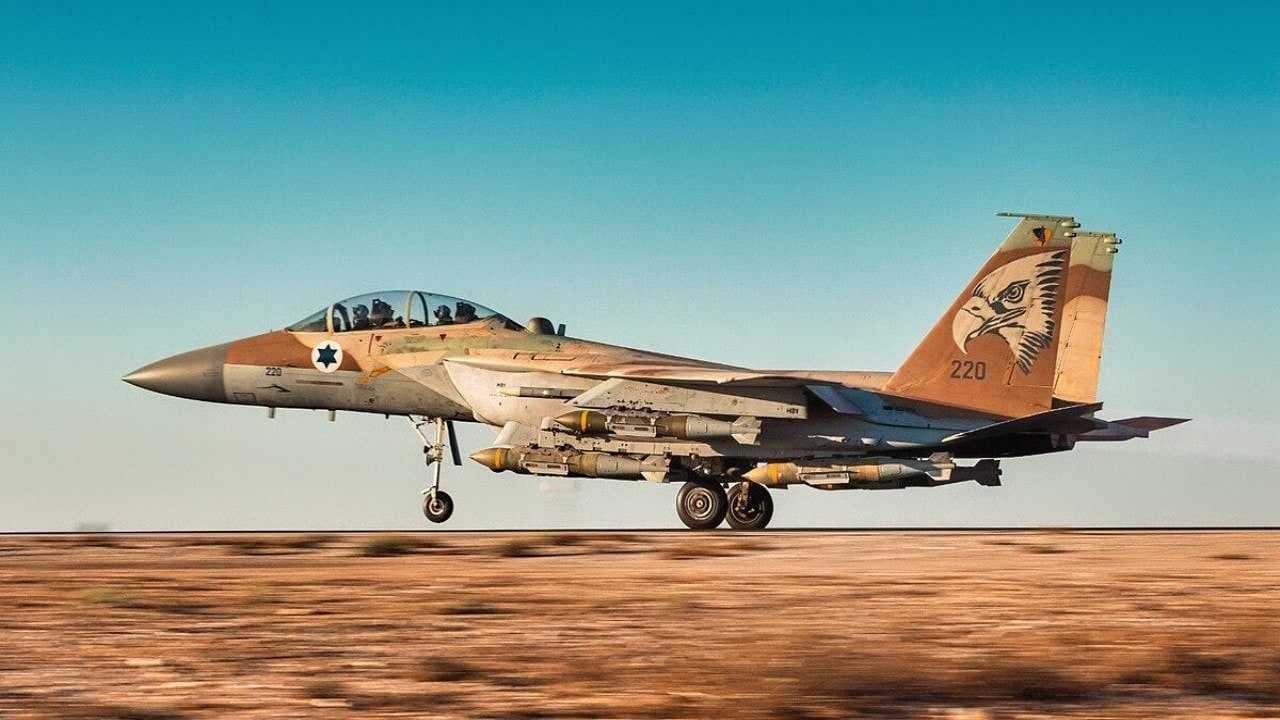
Key Points and Summary – Israel’s F-15IA purchase is framed as a confident, low-risk bet on proven virtues: range, payload, toughness, and a platform the IAF knows intimately.
-Paired with the F-35I, the concept is simple—stealth pushes forward while the Eagle-hauls weapons and helps manage the fight.
-The argument, however, warns that airpower’s center of gravity is shifting.
-As sensors proliferate and targeting cycles compress, large, signature-rich aircraft may become easier to find and harder to protect, especially in prolonged, attritional conflicts.
-The piece urges “sixth-generation thinking” now: distributed architectures, uncrewed systems, redundancy, and resilience—using the F-15IA as a tool, not a foundation.
Why Israel’s F-15IA Purchase Could Slow the Real Airpower Shift
Israel’s decision to acquire the F-15IA has been greeted with a level of enthusiasm usually reserved for combat aircraft that have already earned their stripes. The jet looks and performs like the F-15EX Eagle II, while offering the same enduring promise the Eagle has made for decades: long range, heavy payload, speed, and a reputation for surviving punishment that would ground lesser aircraft.
Those virtues are well understood in Israel. The Israeli Air Force (IAF) is approaching the F-15IA with confidence born of long operational experience, not marketing hype. In a region where aerial combat operations are conducted under an ever-present sense of time pressure, systems with a demonstrated track record have obvious appeal, as they carry a smaller risk premium for novelty. That instinct towards the familiar has served Israel well. The question is whether it will continue to serve Israel well at a time when the very character of air warfare itself is beginning to change.
No one doubts the quality of the F-15IA as an aircraft. Where doubts do creep in is the question of whether another investment in a fourth-generation-plus platform represents the best strategic choice at a moment when airpower is shifting toward a different organizing logic, one defined less by individual performance than by connectivity, resilience, and the ability to operate under persistent observation.
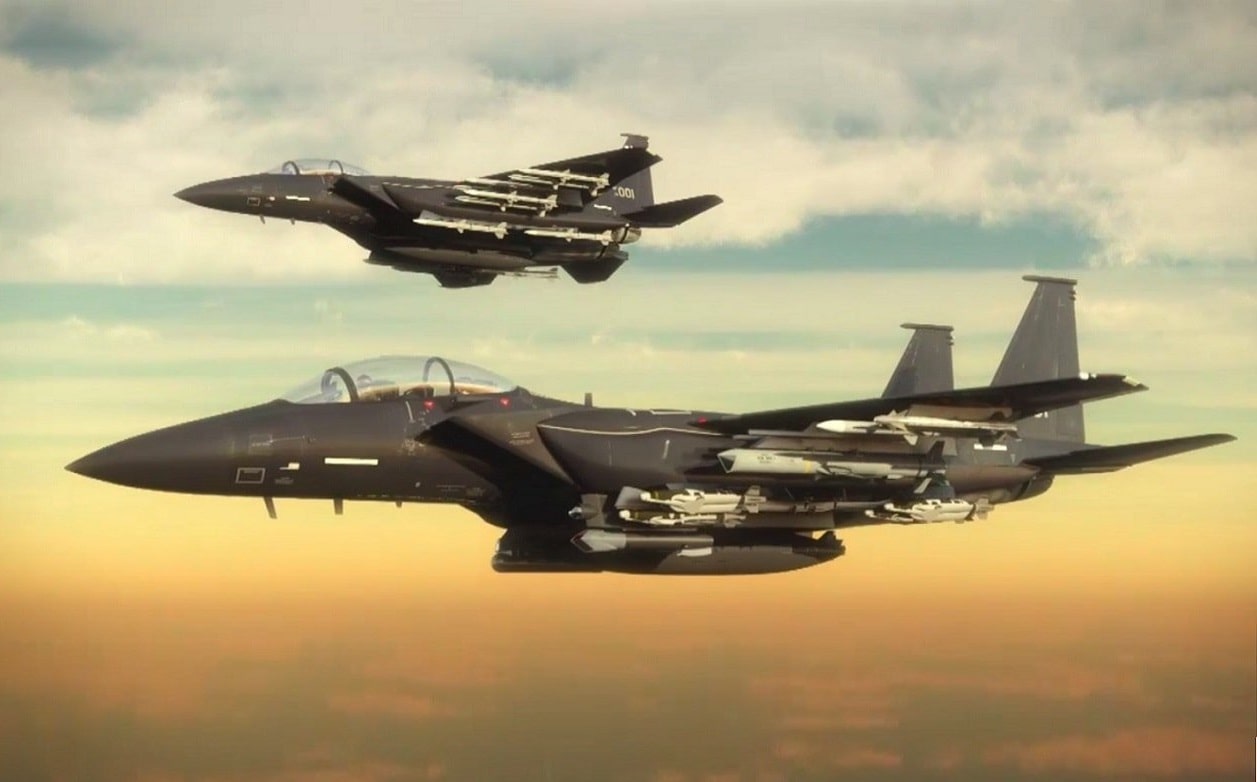
F-15EX Eagle II. Image Credit: Boeing.
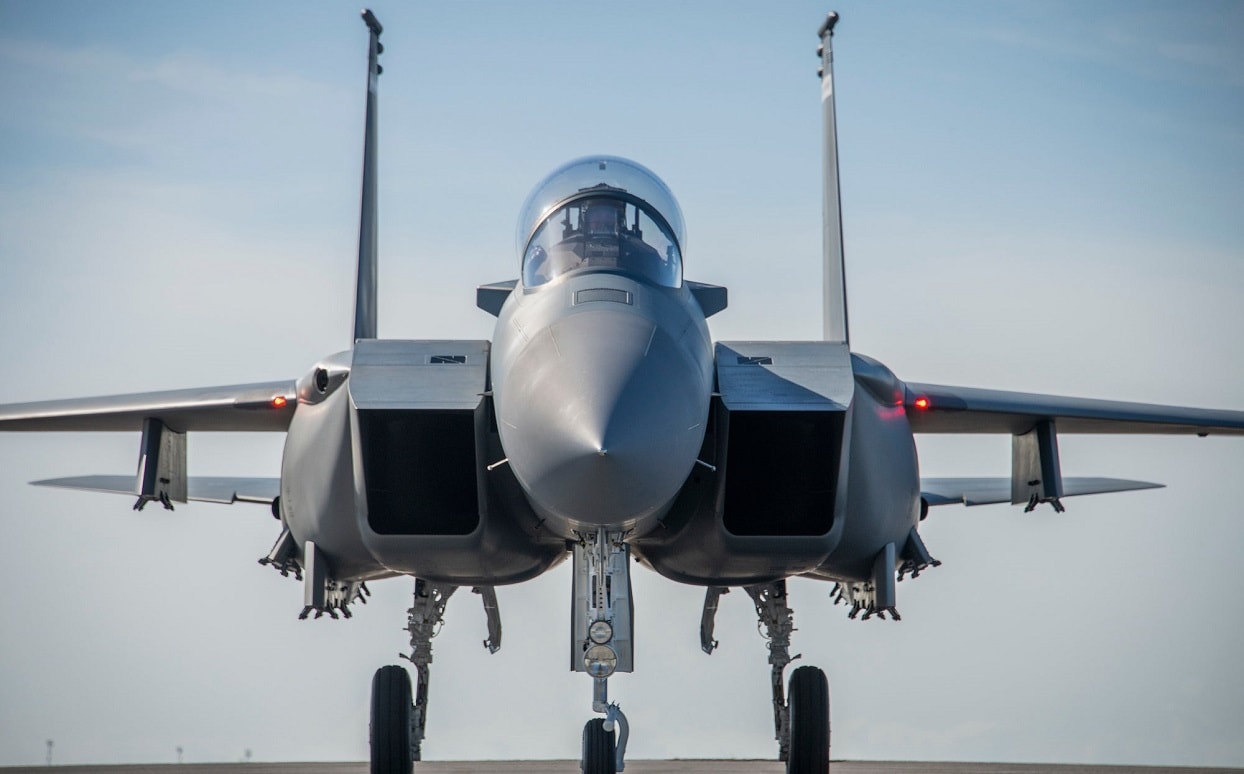
Boeing’s F-15EX fighter. Image Credit: Boeing.
F-15IA and the Comfort of the Known
The Eagle family has served the Israeli Air Force exceptionally well. The various generations of these aircraft have performed admirably as strike aircraft, but also as airborne command centers capable of coordinating long-range missions, managing formations, and shaping the flow of information across the battlespace. The F-15IA will continue those roles, aided by even more advanced sensors, enhanced processing capacity, and a very substantial payload.
When paired with the F-35I, the concept appears straightforward. One aircraft pushes forward into contested airspace while the other manages the fight and carries the bulk of the weapons. Together, they provide reach, striking power, and a measure of redundancy. Both platforms can also contribute to air defense, including against drones, and support operations close to Israel’s borders. On paper, the combination appears well-balanced.
That logic, however, rests on assumptions about how air warfare unfolds that are already beginning to fray.
Transparency as Constraint
Air combat is changing in ways that will likely diminish the benefits associated with stealth and other lethality-enhancing technologies. Sensors are proliferating, targeting cycles are compressing, and attrition is re-emerging as a distinct possibility in high-intensity warfare. This, in turn, means that aircraft optimized for performance will be harder to hide and easier to focus against as time goes by.
The F-15IA is optimized for exactly the opposite: fighting through (rather than around) heavily contested airspace. That’s one reason it seems such a natural fit with the operational patterns the IAF has practiced and perfected for the past four decades. It’s also why the aircraft is so attractive right now, and why it seems such a credible near-term fix.
The question is what happens if the same logic is projected into a future that will demand a far higher tolerance for loss, to disperse rapidly, and to regenerate combat power even as it is being hunted.
The Eagle is still a large and imposing target. While it can be sated, the physical scale and electronic signature it is likely to have will make it ever easier to find as the battlespace gets more transparent. In such an environment, survivability will come at ever-higher operational and strategic costs.
Israel is already beginning to experience the beginnings of that shift. Adversaries are already beginning to rely on drones, rockets, and other precision systems to tax defenses and complicate decision cycles. A future conflict would extend that strategy directly into the air domain, with a heavy premium placed on resilience, redundancy, and the ability to fight through rather than around degradation.
Complementarity Reconsidered
Proponents of the status quo prefer to focus on the benefits of having the F-15IA alongside the F-35I, and in this context, the pairing does make considerable sense. But that is to ignore one critical fact: in the coming years, complementary capabilities will be less about wedding stealth to payload, and more about creating distributed architectures that can sustain losses and still perform capably under continuous stress.
Adaptability has been a key strength of Israel’s airpower since the creation of its first embryonic air force. Adaptability in the future will likely include the further integration of uncrewed systems, loyal wingmen, and crewed aircraft, designed less as self-contained, independent air-to-air fighting platforms and more as managers of distributed kill chains. Heavy investment in another generation of Eagles could risk slowing that transformation. The issue is not that the F-15IA will not be a glorious heir to the Eagle legacy. It will. Instead, the concern is that procurement choices signal what an air force expects to fight with, and those signals ultimately shape how it prepares for future wars.
A force centered on a small number of competent aircraft can dominate brief, decisive engagements. It becomes more fragile in prolonged conflicts, where combat losses accumulate, and the ability to make up for them matters.
Sixth-Generation Thinking Without Waiting
Israel does not need to field a formal sixth-generation fighter to adopt sixth-generation thinking. That approach emphasizes modularity, rapid integration of new capabilities, and fighting as a network rather than as a collection of individual aircraft. It also values operationally meaningful numbers over technical elegance.
From that perspective, the most effective force would build on the F-35I’s strengths without replicating the F-15IA’s vulnerabilities. Placing increased emphasis on uncrewed strike platforms, expendable airborne relays, and command architectures that do not depend on a handful of large aircraft remaining airborne would better suit the conflicts likely to emerge in the 2030s.
The F-15IA still has a place in that force. It should not define it.
Choosing Direction Over Habit
The IAF was not built by sentiment or nostalgia. It was built by necessity and sustained by pragmatism. The Eagle has earned its reputation by its results, not its symbolism. And that history is worth respecting. The danger for today is in presuming that what delivered dominance in one era will be decisive in the next.
Enter the F-15IA. Deploying the F-15IA alongside the F-35I will give the IAF a lethal punch in the near term while doubling down on assumptions about how air warfare is won, just as those assumptions are being challenged. Air superiority is no longer guaranteed by range, payload, or performance in isolation. It is determined by how well your forces adapt when networks are disrupted and systems are under stress.
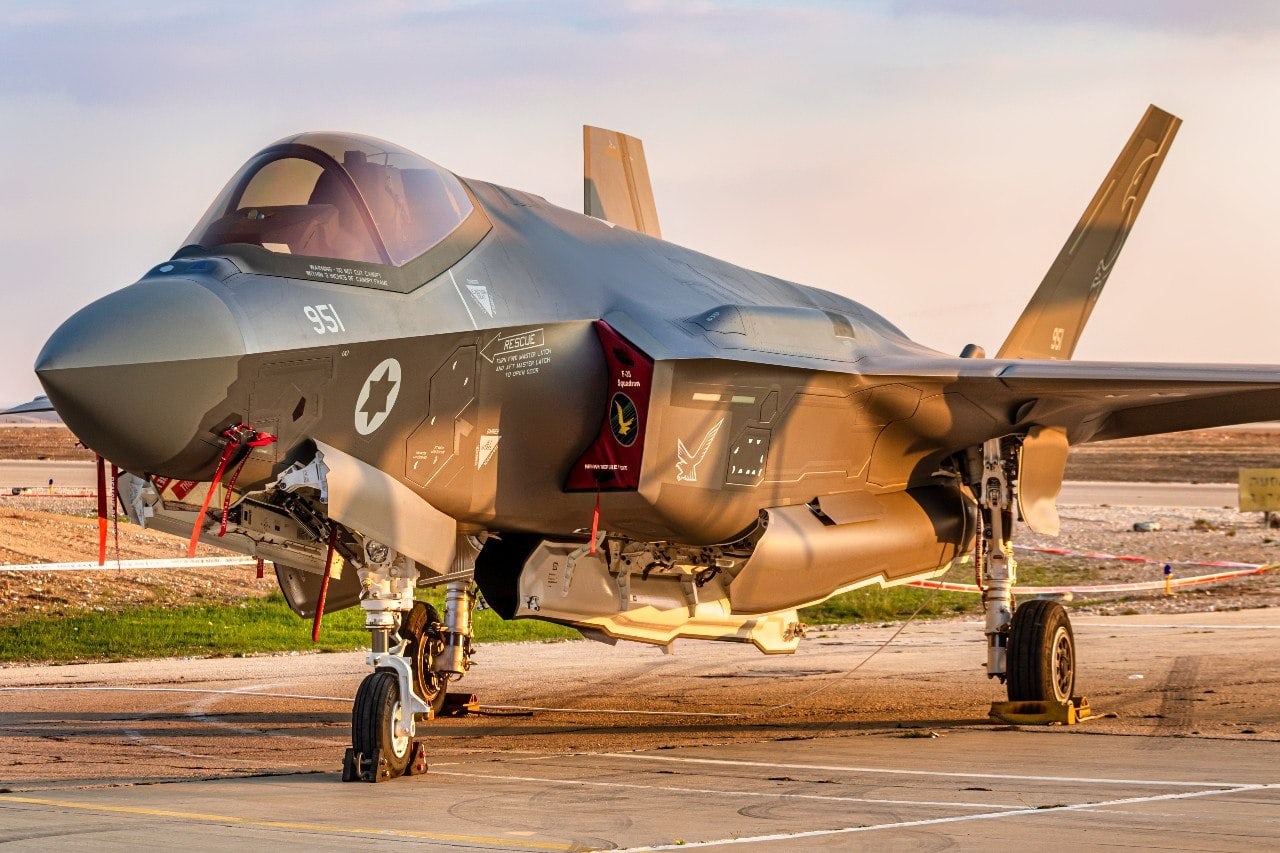
F-35I Adir from Israel. Image Credit: Creative Commons.
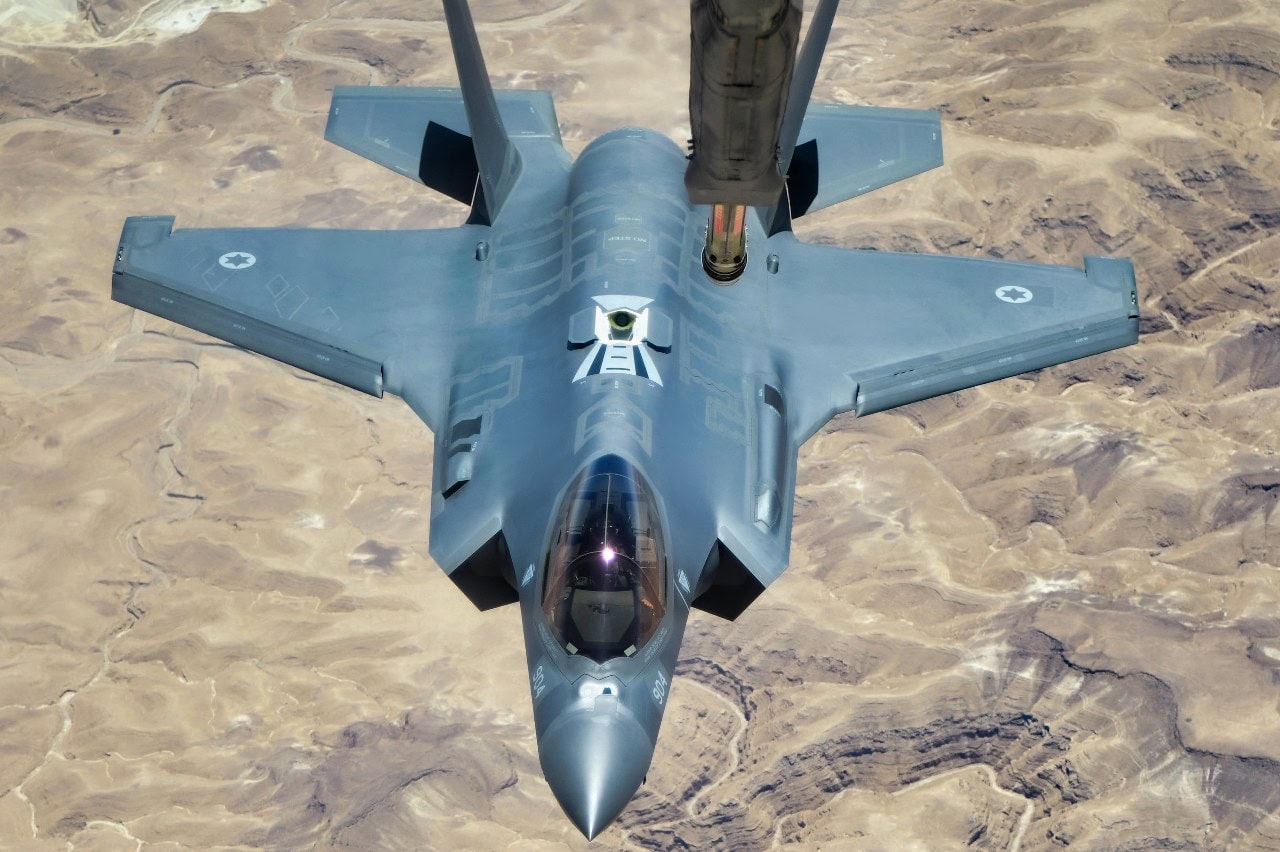
An Israeli Air Force F-35I Lightning II “Adir” approaches a U.S. Air Force 908th Expeditionary Refueling Squadron KC-10 Extender to refuel during “Enduring Lightning II” exercise over southern Israel Aug. 2, 2020. While forging a resolute partnership, the allies train to maintain a ready posture to deter against regional aggressors. (U.S. Air Force photo by Tech. Sgt. Charles Taylor)
The security environment is changing rapidly, mainly through the use of cheap, flexible tools. The IAF has maintained its edge by changing even more quickly. But the next margin of advantage will not be delivered by a 4+ Generation fighter, whatever its provenance. It will come from a hop to a fifth-generation F-35 and a subsequent skip to a sixth-generation system, where the aircraft enable the fight but do not define it. Who knows what the following seventh-generation “jump” will look like? In the interim, though, a successful hop and a skip will determine whether or not Israel remains on top in the next era of airpower.
About the Author: Dr. Andrew Latham
Andrew Latham is a non-resident fellow at Defense Priorities and a professor of international relations and political theory at Macalester College in Saint Paul, MN. You can follow him on X: @aakatham.