
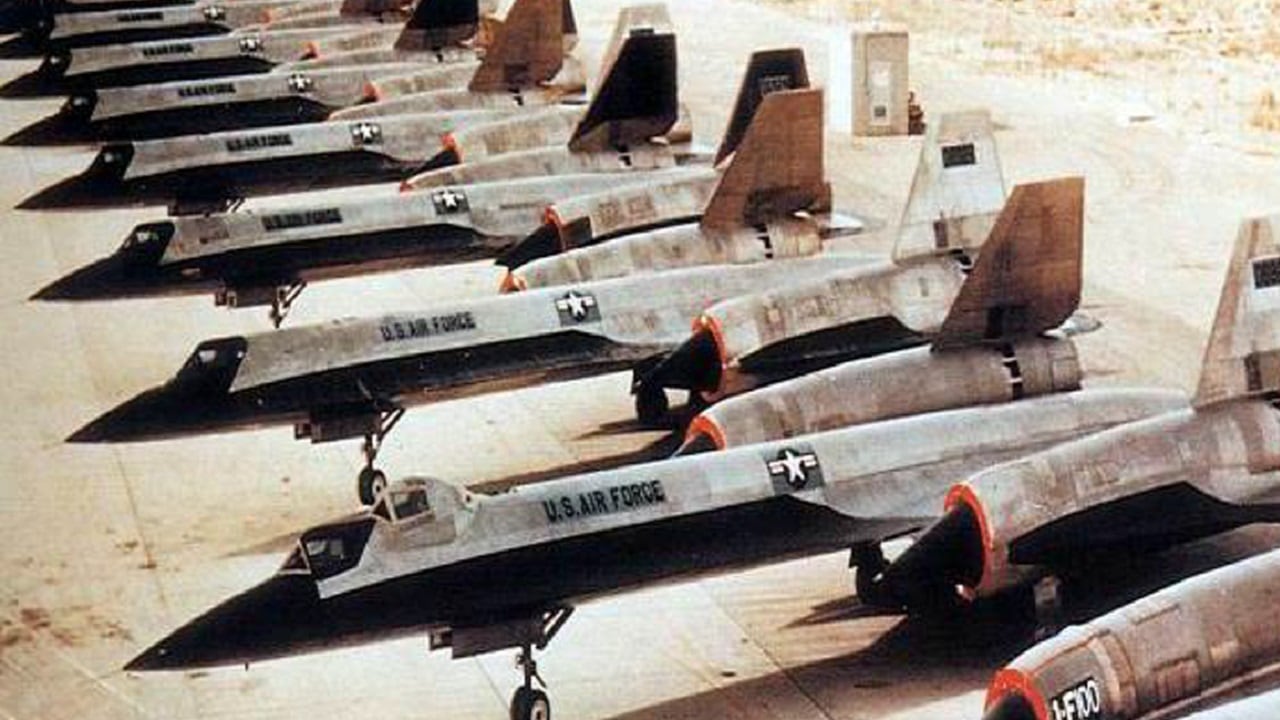
Key Points and Summary – The A-12 Oxcart was the CIA’s secret predecessor to the SR-71 Blackbird, designed under Project OXCART to solve the Cold War dilemma of spying on the Soviet Union without triggering a conflict.
-Built by Lockheed’s Skunk Works with titanium to withstand Mach 3+ speeds and altitudes of 85,000 feet, the single-seat A-12 was faster and lighter than the Air Force’s SR-71 but lacked its range and two-man crew redundancy.

A-12 Oxcart. Image Credit: Creative Commons.
-Although it successfully evaded North Vietnamese missiles by simply outrunning them, the program was retired in 1968 due to high costs and the advent of satellite technology.
Mach 3 and Invisible: How the A-12 Oxcart Solved the CIA’s Critical Cold War Surveillance Crisis
Before the SR-71, there was the A-12 OXCART. And unlike the SR-71, which was built for the Air Force, the A-12 was built for the CIA, designed to solve a singular Cold War problem: how to see inside the Soviet Union without starting an armed conflict.
Operated in total secrecy under Project OXCART, the A-12’s very existence was denied for decades, a machine that represented the peak of Cold War paranoia and the peak of 20th-century engineering.
Why the A-12 was needed
In the late 1950s, the US suffered from an intelligence shortfall: limited insight into Soviet nuclear and missile capabilities. Satellites weren’t reliable yet, offering only limited resolution.
The then-new U-2 Dragon Lady spy plane was initially successful, but soon became vulnerable to improved SAM technology.
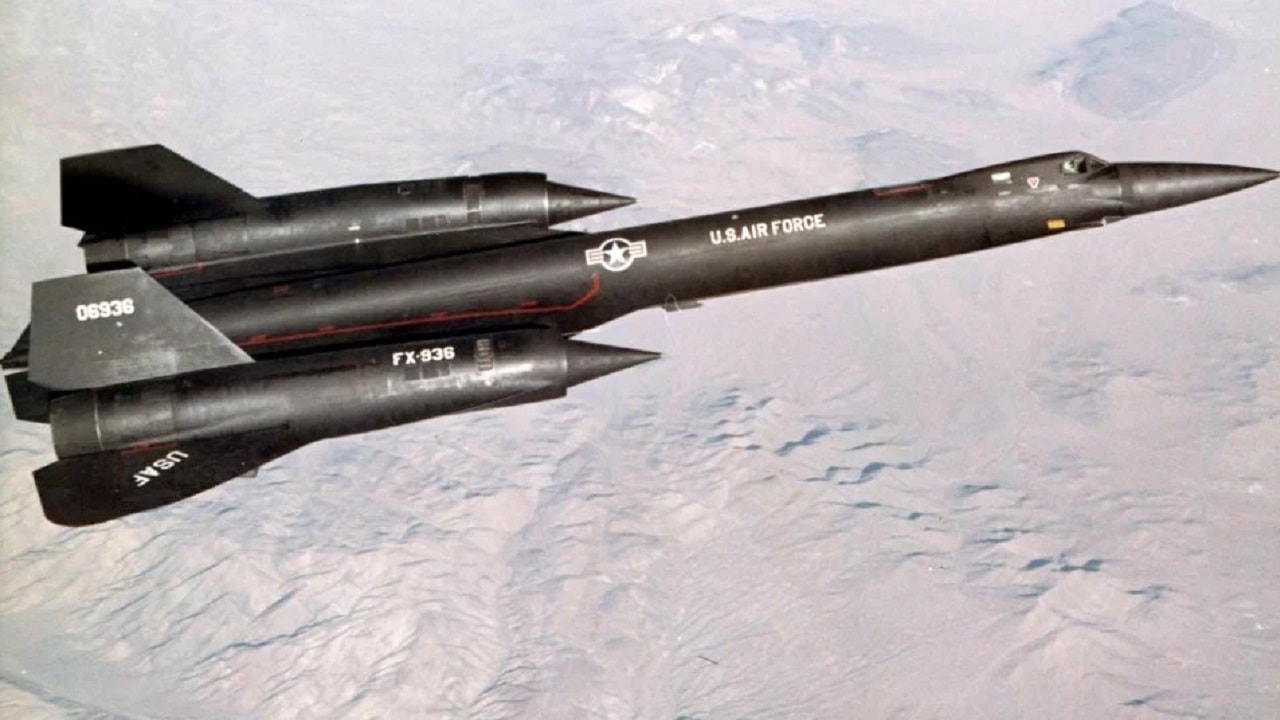
SR-71 Blackbird. Image Credit: Creative Commons.
The US needed something with speed, not just altitude, something invulnerable to the air defense systems of the time. Accordingly, the CIA was tasked with developing something that could not be intercepted. Enter the A-12, an aircraft conceived as a penetrating reconnaissance aircraft, not a deterrent or a weapon.
What the A-12 was
The A-12 was a single-seat, Mach 3+ reconnaissance aircraft.
Designed and built by the legendary Lockheed Skunk Works, under chief designer Clarence “Kelly” Johnson.
The aircraft was built entirely around speed, altitude, and stealth. Oddly, the A-12 was operated by CIA pilots within CIA infrastructure.
The A-12 was distinct from the succeeding, and more well-known, SR-71; the A-12 was smaller, lighter, and faster—optimized for covert intelligence, not sustained operations.
Technical breakthroughs
The A-12 was a technological marvel, capable of sustaining Mach 3+ flight and altitude of 85,000 feet—metrics that would be impressive for a new aircraft today.
The aircraft was built from titanium, which was novel at the time, requiring new manufacturing methods. Stealth elements were included, before the concept was even named, including a reduced radar cross-section shape and radar-absorbing materials.

A-12 Spy Plane. Image Credit: Creative Commons.
For propulsion, the A-12 used Pratt & Whitney J58 turbojets that could transition to ramjet-like behavior.
The fuel used was specially made just for the A-12, a low-volatility JP-7. Onboard, the A-12 featured high-resolution optical sensors for wide-area coverage.
Notably, the aircraft leaked fuel on the ground, sealing only at the heat levels generated during Mach 3 flight. Basically, the A-12 was a materials science experiment that relied on several brand-new technologies to function.
Tactical employment
The primary mission of the A-12 was strategic reconnaissance over denied territory. Operating from Groom Lake (Area 51) and forward bases such as Kadena Air Base, the A-12 missions were planned with precise timing and minimal exposure. Missions overflew North Vietnam and North Korea but never officially overflew the Soviet Union.
Survivability depends on speed and altitude.
If detected, the A-12 simply outran interceptors and outclimbed missiles. In effect, the A-12 didn’t just evade threats; it invalidated threats entirely.
A-12 v SR-71
The A-12 preceded the SR-71. The key difference was that the A-12 was a single-seater while the SR-71 was a two-seater.
The SR-71 was heavier and slower, with a slightly longer range. Each aircraft was made to the preferences of its operating organization. The Air Force wanted redundancy and multi-missions capability; the CIA wanted speed and minimal exposure. That’s why the A-12 was more extreme and less flexible. The SR-71, of course, inherited the A-12’s technology but sacrificed some purity for practicality.
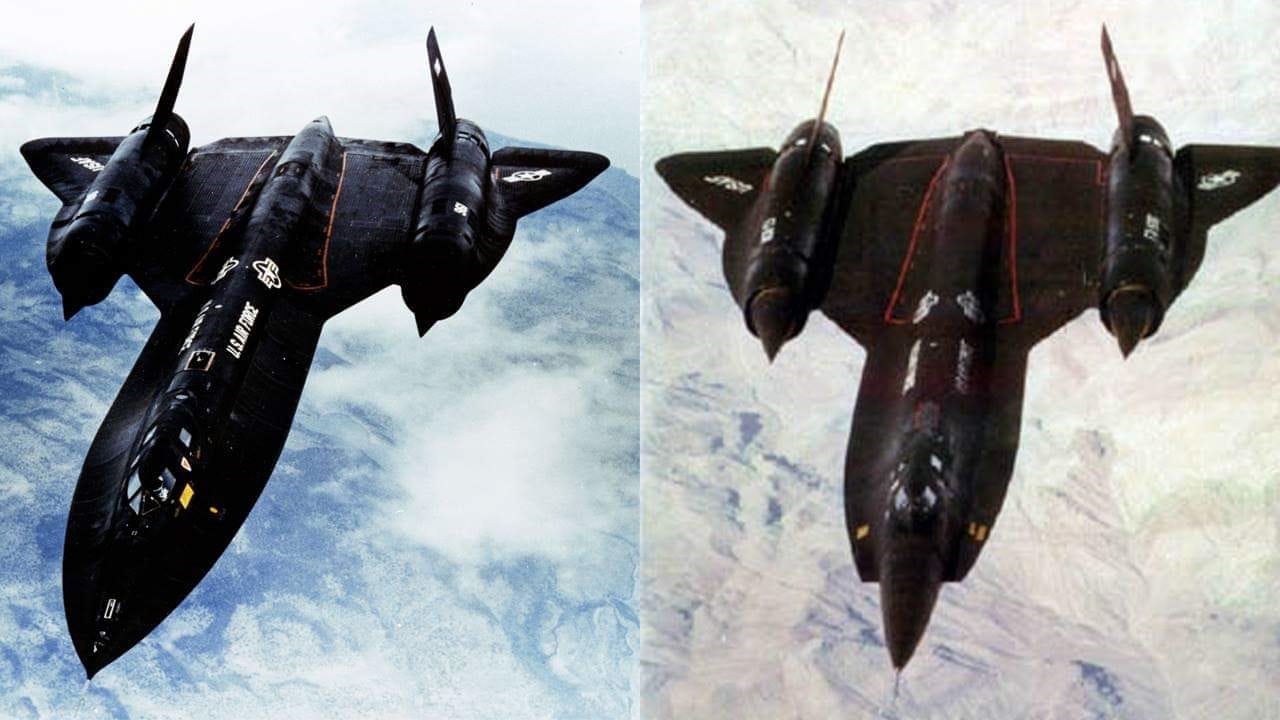
SR-71 and A-12 side by side for comparison.
Strategic implications of the A-12
The A-12 provided the CIA with strategic certainty, reducing worst-case assumptions.
The aircraft enabled arms control verification and crisis stability, reducing pressure for preemptive strikes and demonstrating the idea that technology could substitute for escalation.
The A-12 also showed the limits of air defense systems, which were impotent against the A-12’s speed and altitude. The emergence of the A-12 forced adversaries to invest heavily in improved interceptors and SAMs.
The A-12 was ultimately retired because it was so expensive to operate. Maintenance was intensive. And satellites improved rapidly, making the A-12 less necessary. The SR-71, meanwhile, offered a broader mission set and stronger institutional support.
The CIA withdrew from manned overflight missions, and the program was officially canceled in the late 1960s.
The existence of the program wasn’t even acknowledged until the 1990s, until after the Cold War had ended.
About the Author: Harrison Kass
Harrison Kass is an attorney and journalist covering national security, technology, and politics. Previously, he was a political staffer and candidate, and a US Air Force pilot selectee. He holds a JD from the University of Oregon and a master’s in global journalism and international relations from NYU.