
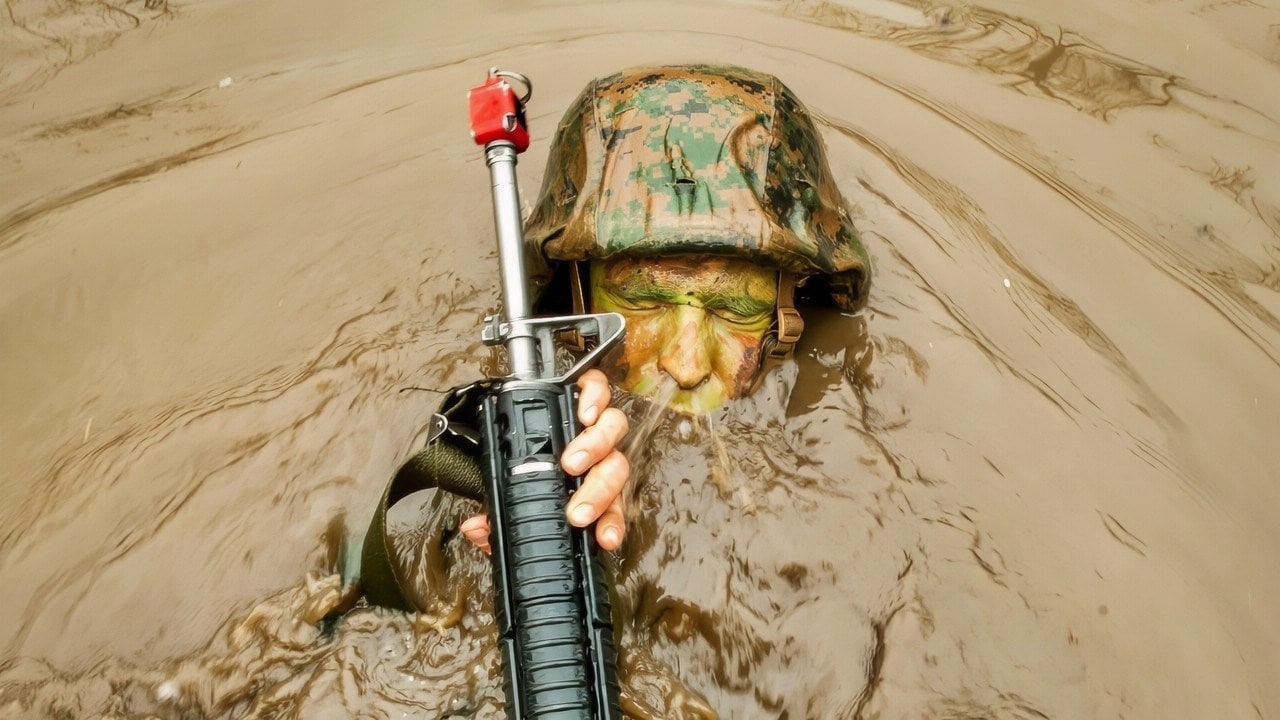
Key Points and Summary – Joining the U.S. Army’s elite Delta Force is a rigorous process unavailable to new recruits, requiring candidates to be seasoned soldiers with at least four years of military experience and a Top Secret clearance.
-Hopefuls—typically ranked E-4 to E-8—must survive a grueling four-week Selection Course in West Virginia, known for its physical endurance tests and “silent treatment” psychological evaluations.
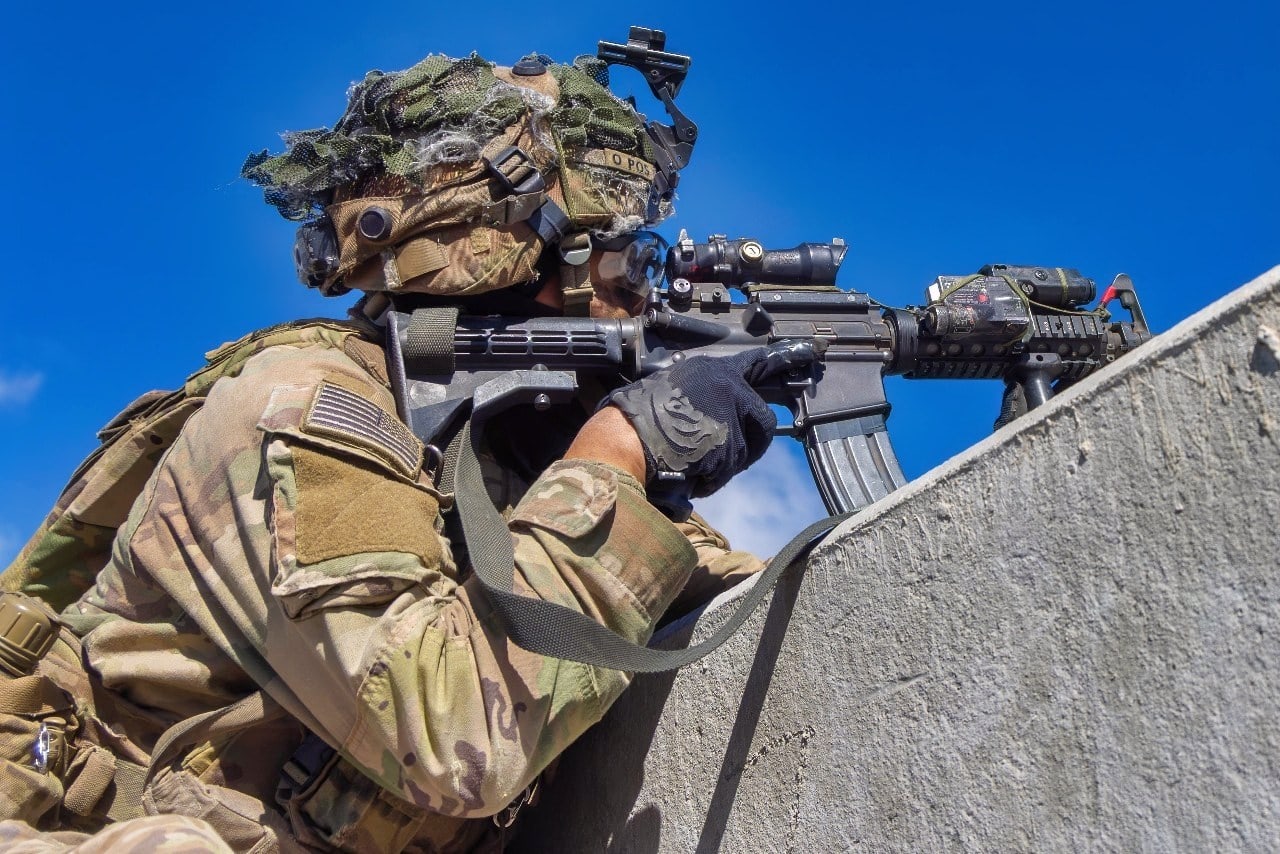
U.S. Army Soldier Pfc. Eric Rivera, assigned to Delta Troop, 1st Platoon, Multipurpose Company, 3rd Squadron, 4th Cavalry Regiment, 3rd Mobile Brigade, 25th Infantry Division, pulls security before a Ghost-X drone conducts reconnaissance. The mission was part of the Joint Pacific Multinational Readiness Center Rotation 26-01, which integrated U.S. forces, multinational partners, and joint capabilities to train tactics, techniques, and procedures required to dominate jungle and archipelagic terrain during large-scale combat operations. (U.S. Army photo by Pfc. Jose Nunez)
-The few who pass move on to the six-month Operator Training Course (OTC), mastering advanced skills like close-quarters battle, tradecraft, and hostage rescue before joining an operational squadron.
What It Takes to Join the US Army’s Elite Delta Force
Despite its secretive nature, the US Army’s elite 1st Special Forces Operational Detachment-Delta (Airborne), better known as simply the Delta Force, is one of the most famous special operations and counterterrorist units in the world.
This is partially due to cinematic fiction, particularly the 1985 movie “The Delta Force” starring Chuck Norris and the late great Lee Marvin.
But more importantly, the fame has been rightfully earned in real-word operations, such as the capture of Manuel Noriega in December 1989 during Operation Just Cause in Panama, the heroic last stand of snipers MSG Gary Gordon and SFC Randy Shughart during the October 1993 Battle of Mogadishu (the infamous “Blackhawk Down” incident), the killing of Islamic State/ISIS/ISIL/Da’esh leader Abu Bakr al-Baghdadi in October 2019, and, most recently, the capture of Venezuela’s Marxist thug (redundant?) Nicolas Maduro.
With this sort of record of badassery, some aspiring military recruits out there might naturally be inclined to ask: What does it take to join the Delta Force?
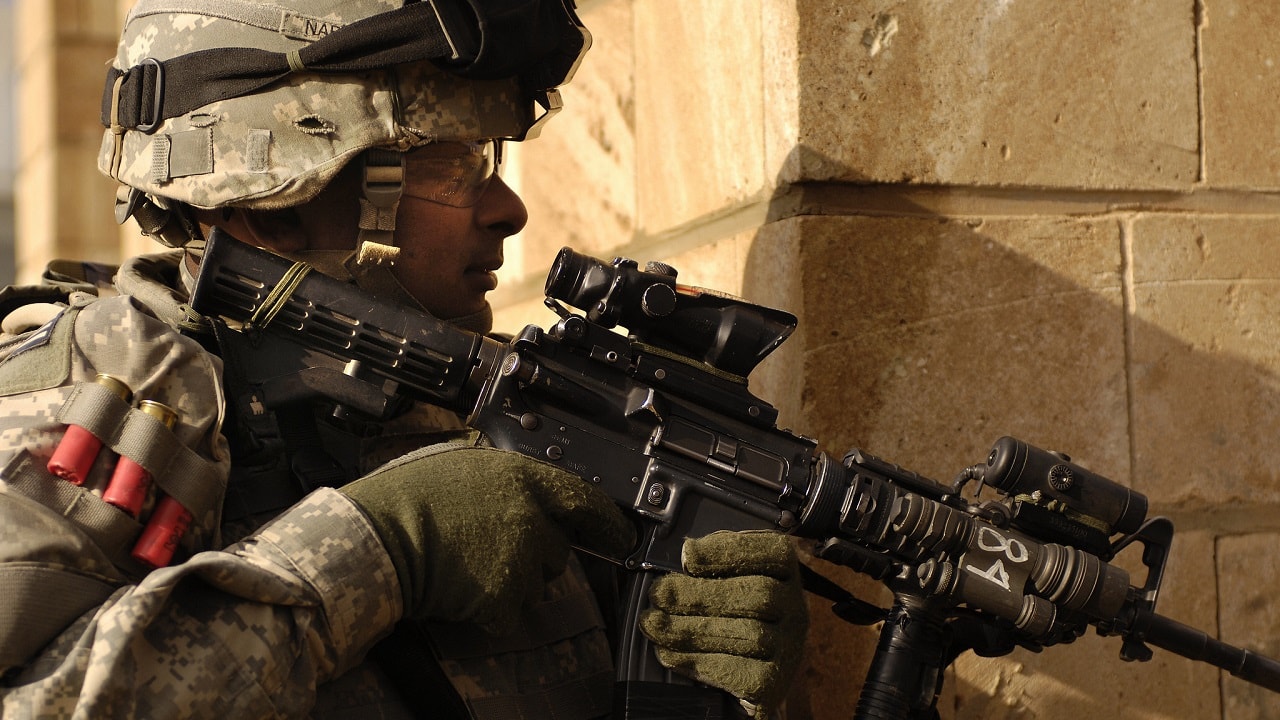
US Army. Image Credit: Creative Commons.
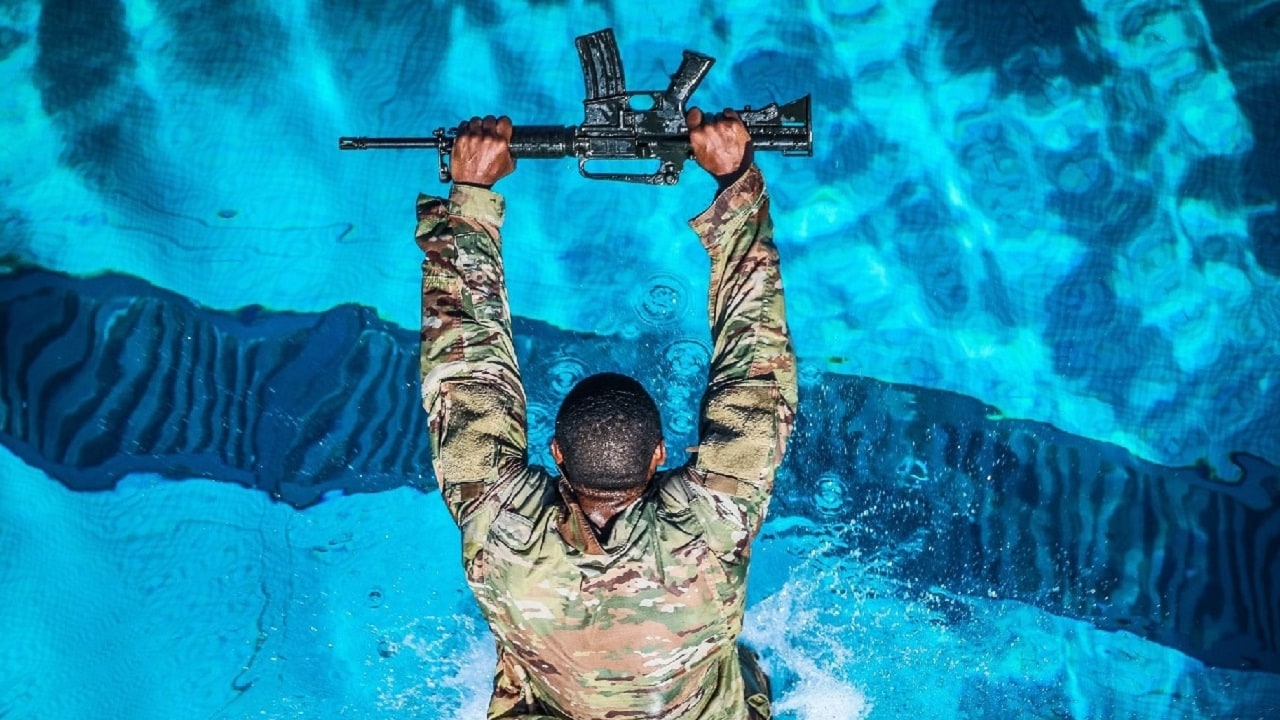
A Soldier completes a swim test at Schofield Barracks, Hawaii, May 14, 2021, while practicing for an upcoming Jungle Operations Training Course.
Image Credit: US Army.
Initial Recruiting and Selection
The short answer? It sure as heck ain’t easy.
As for the longer answer …
Unlike some other teams within the American special operations community, such as the Navy SEALs, Air Force Pararescue Jumpers (PJs), and Combat Controllers (CCTs), one cannot join Delta Force as an initial career field fresh out of basic training.
The barebones minimum requirements are as follows (courtesy of SOF Prep Coach):
- US Citizenship
- Candidates should be 22 or older
- Candidates should have at least four to six years of military experience
- Eligible and sought-after candidates typically hold ranks between E-4 (Specialist/Corporal) and E-8 (Master Sergeant), although exceptions can be made for exceptional Captains (E-3).
- Have at least 2.5 years of service remaining in your enlistment
- Score 110 or higher at the Armed Services Vocational Aptitude Battery
- A Top Secret (TS) clearance is mandatory.
- Be able to pass a HALO/SCUBA exam
- Candidates must meet or exceed the Army Combat Fitness Test (ACFT) standards.
The ACFT is a different animal from the old Army Physical Fitness Test (APFT, which consisted of push-ups, sit-ups, and a 2-mile run). It consists of:
- 3 Rep Maximum Deadlift (MDL) using a 60lbs hex bar and plates
- Standing Power Throw (SPT) using a 10lbs medicine ball
- Hand Release Push-Up – Arm Extension (HRP)
- Sprint-Drag-Carry (SDC) using two 40lbs kettlebells and 90lbs sled
- Plank (PLK)
- Two-Mile Run (2MR)
Prior SpecOps Experience
Not mandatory, but definitely helpful.
A goodly number of operators who’ve successfully made the Delta Force cut have come from the Army’s other elite units, such as the 75th Ranger Regiment and Special Forces (the “Green Berets”).
Some have also come over from the sister services’ SpecOps teams, such as the aforementioned SEALs and PJs/CCTs, as well as USN Special Warfare Combat Crewmen (SWCC) and Marine Forces Special Operations Command (MARSOC) devil dogs.
What Comes Next?
Okay, so you’ve met (and preferably exceeded) all the minimum requirements listed above. Congrats and Hooah! But that was the (comparatively) easy part. Okay, now what?
Now you have to make it through the Selection Course.
According to Christopher Littlestone in a September 7, 2025, article for the Life is a Special Operation website, “The Selection Course is held twice a year at Camp Dawson, West Virginia, and lasts about four weeks. Candidates endure long runs and ruck marches, difficult land navigation exercises, and a 40-mile long walk with a heavy pack. Psychological evaluations and interview boards test mental resilience. Only a fraction of applicants make it through.”
Regarding the psychological evaluations bit, one thing that makes them especially challenging is the largely silent treatment the instructor cadre gives the trainees; they receive very little (if any) feedback on how well (or poorly) they’re performing until the very end.
Former Time Magazine’s Washington bureau correspondent Douglas C. Waller gave a fairly-well detailed (again, factoring in Delta’s secret squirrel nature) about the Delta selection process in his 1995 book “The Commandos: The Inside Story of America’s Secret Soldiers;” however, seeing as how the book is now 31 years old, at least some of the information therein may now be a tad outdated.
Those who survive the Selection Course ordeal move on to the Operator Training Course (OTC), which is six 6 months in length and covers instinctive shooting and close-quarters battle (CQB), breaching and demolitions, integrated hostage-rescue drills, tradecraft, and advanced driving.
Graduates then join an operational squadron but continue training throughout their careers, often alongside allied special-operations units (such as the British SAS, German GSG-9, and so forth).
About the Author: Christian D. Orr, Defense Expert
Christian D. Orr is a Senior Defense Editor. He is a former Air Force Security Forces officer, Federal law enforcement officer, and private military contractor (with assignments worked in Iraq, the United Arab Emirates, Kosovo, Japan, Germany, and the Pentagon). Chris holds a B.A. in International Relations from the University of Southern California (USC) and an M.A. in Intelligence Studies (concentration in Terrorism Studies) from American Military University (AMU). He is also the author of the newly published book “Five Decades of a Fabulous Firearm: Celebrating the 50th Anniversary of the Beretta 92 Pistol Series.”