Summary: Four years into a genocidal war, Vladimir Putin has achieved the exact opposite of his strategic goals. Instead of annihilating the Ukrainian state, his “Special Military Operation” consolidated the Ukrainian nation and birthed Europe’s most capable army.
Putin’s Ukraine War Has Cost Russia More Than Anyone Could Have Imagined
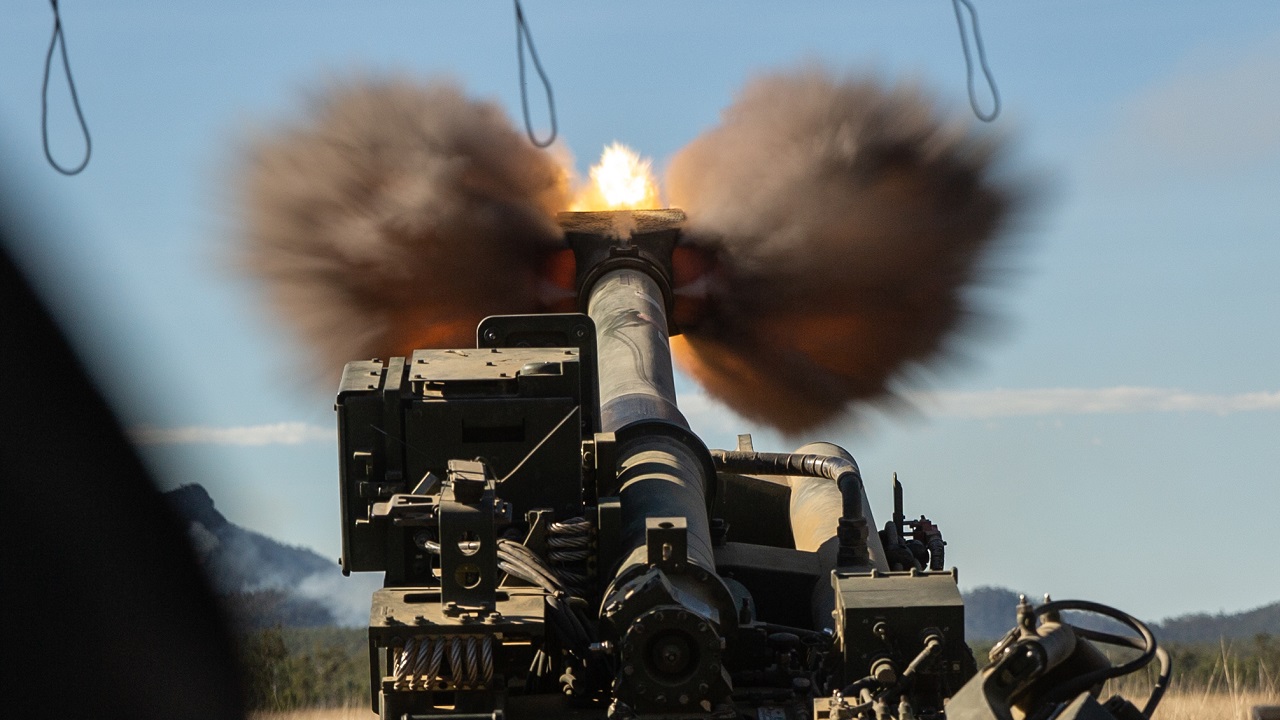
M777 Artillery. Image Credit: Creative Commons.
For a Russian imperialist to have become a Ukrainian nationalist is no easy feat, but Vladimir Putin pulled it off.
After four years of a genocidal war, Russia’s illegitimate president has achieved the opposite of what he intended on February 24, 2022, when he launched one of military history’s biggest blunders, the Special Military Operation against Ukraine.
Putin’s Ukraine War Backfires
The Ukrainian government, state, and nation were supposed to be annihilated.
Russia was to emerge triumphant as a world-class power. Putin was to be recognized as a military genius.
Alas, it wasn’t to be.
Amidst incessant bombardment, death, and destruction, the Ukrainian government survived, the Ukrainian state strengthened, and the Ukrainian nation consolidated. The claim that these well-nigh miraculous developments took place is often attributed to Ukrainian resilience.
True, resilience played a role, but far more important was Putin’s open endorsement of genocide. Faced with the prospect of extermination, Ukrainians fought for survival, for existence.
How Ukraine Fought Back and Beat the Odds
And indeed, the war had several unintended consequences. First, it compelled the Volodymyr Zelensky government to embrace a hierarchical structure (criticized by some Ukrainians as being too hierarchical) and develop Europe’s best army: the two central features of the German sociologist Max Weber’s classic conceptualization of the state as a political organization with a monopoly of legitimate violence in some territory.
The Ukrainian state and armed forces are far from perfect—corruption remains a problem—but there is no doubt that Ukraine’s state has more “stateness” now than four years ago, all thanks to Putin. Ukrainian patriots spent decades striving to achieve what Russia’s dictator pulled off in four years.
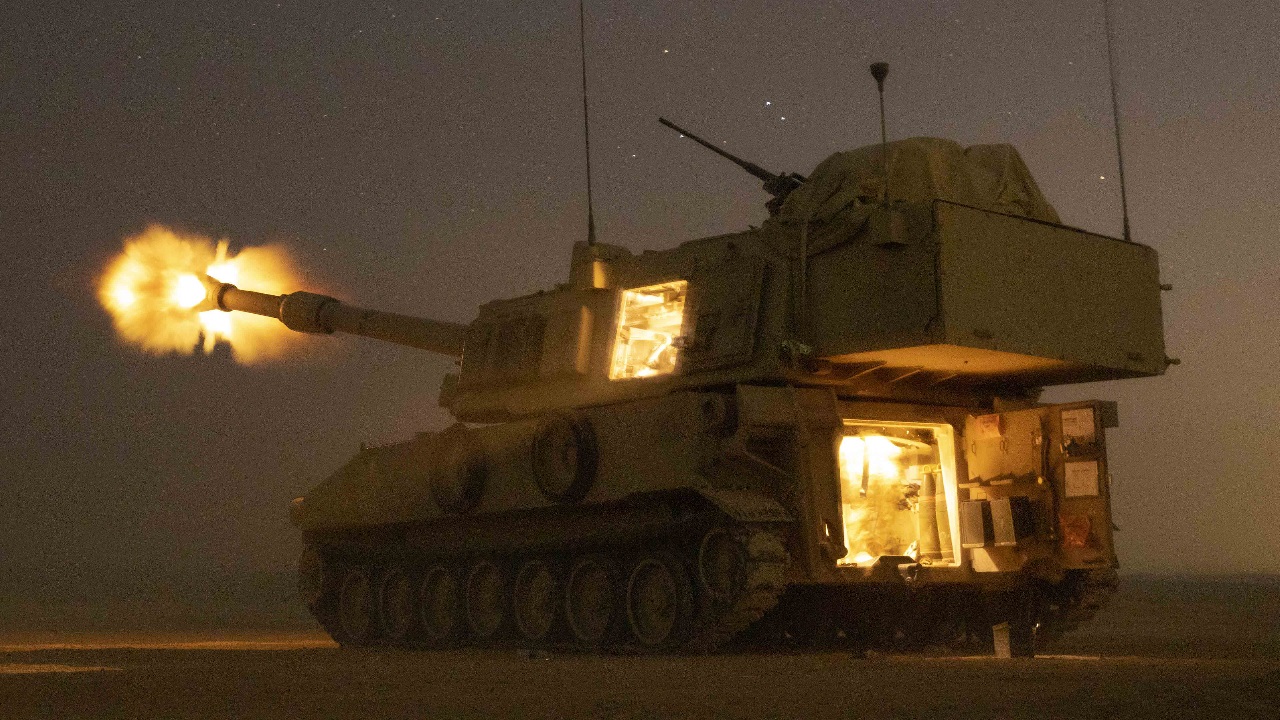
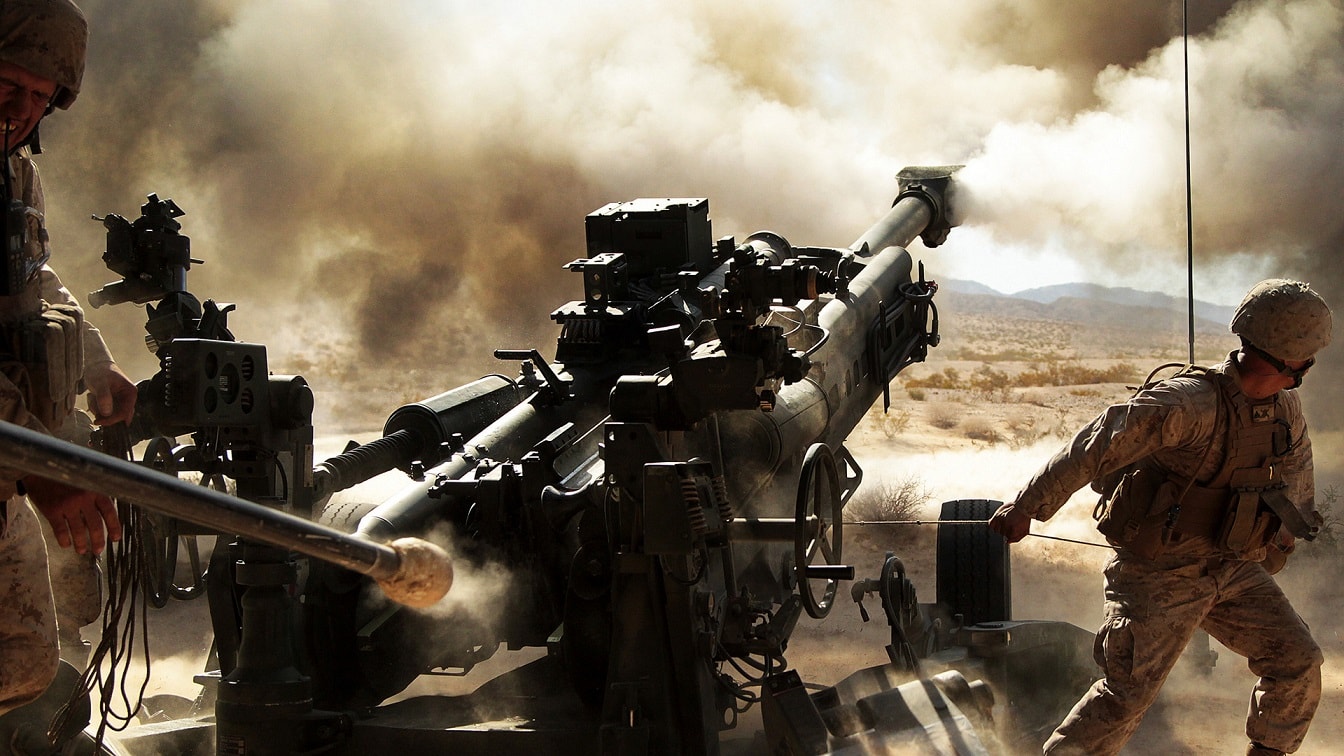
U.S. Army Soldiers assigned to Alpha Battery, 3rd Battalion, 29th Field Artillery Regiment, 4th Infantry Division, fire a M109A6 Paladin in support of the joint training exercise Eager Lion ’19 at Training Area 1, Jordan, Aug. 27, 2019. Eager Lion is an annual, multinational training event in its ninth iteration which enables partnered nations to strengthen military relationships and exchange expertise. (U.S. Army photo by Spc. Angel Ruszkiewicz)
And second, the war hastened the consolidation of the Ukrainian nation. Wars always force people to choose sides; ambivalence and fence-sitting become impossible. One is either with us or with them. In that sense, Putin has the dubious distinction of transforming Russians, for whom a huge majority of Ukrainians expressed affection and respect, into hateful “others”—enemies par excellence.
Thanks to Putin, Ukrainians learned that Russians are out to kill them and that their survival as a people required the rejection of all things Russian—a cultural purging identical to that experienced by Jews vis-à-vis Germans.
A Changed Nation
Better still, since Russians supported Putin, rejecting Russia meant embracing democracy, freedom, and civil society. Small wonder that Kyiv’s Independence Square used to be adorned with a banner proclaiming, “Freedom is our religion.”
By the same token, since Russia defined itself as the anti-West, Ukrainians naturally identified with the West and embraced its better values. Antisemitism was decried, and Ukrainian Jews, such as Zelensky and Ukraine’s best journalist, Vitaly Portnikov, joined the Ukrainian political nation.
Today’s Ukraine is radically different, and better, than what it was four years ago. Thousands have died, but their heroic deaths were not for nothing.
A Battered Russia
In contrast to the 1.25 Russian dead and wounded. Their lives were shortened for the sake of one man’s maniacal aspirations to destroy a supposedly “fraternal” nation. Russia is the largest country in the world, and it doesn’t need Ukraine’s territory.
Nor do Russians need Ukrainians to be dead. Rather, the genocidal plan was Putin and his entourage’s. They are the criminals, while the Russian people—and Western policymakers—who prefer to look the other way are their enablers.
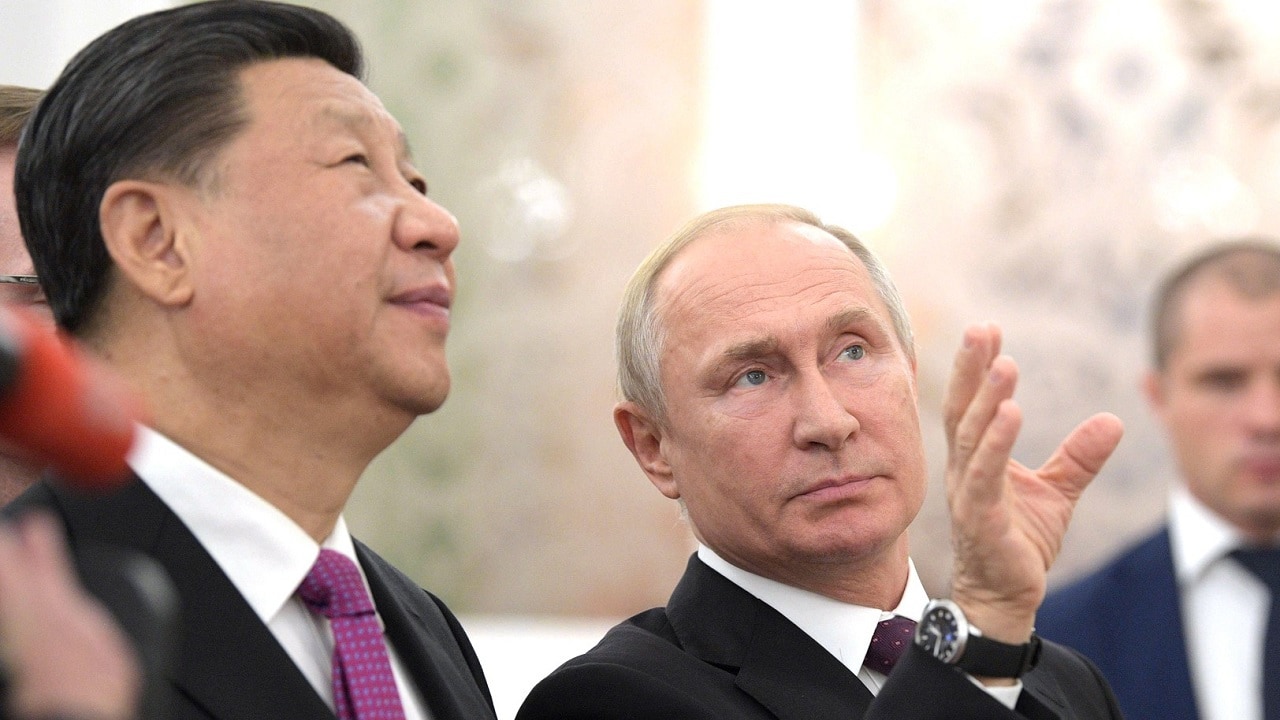
Xi Jinping and Russian President Putin.
But Putin didn’t just kill Russians. He also destroyed the Russian armed forces and economy, emasculated Russian society, and transformed Russia into a vassal state of China and—mirabile dictu—North Korea. He also galvanized and enlarged NATO, helped Donald Trump increase defense outlays, and watched as his allies, Syria, Venezuela, Iran, and Cuba, suffered defeats.
The Russian regime and state collapse have become more than theoretical flights of fancy, all thanks to Putin.
No Ukrainian freedom fighter could have asked for more.
About the Author: Dr. Alexander J. Motyl
Dr. Alexander J. Motyl is a professor of political science at Rutgers-Newark. A specialist on Ukraine, Russia, and the USSR, and on nationalism, revolutions, empires, and theory, he is the author of 10 books of nonfiction, including Pidsumky imperii (2009); Puti imperii (2004); Imperial Ends: The Decay, Collapse, and Revival of Empires (2001); Revolutions, Nations, Empires: Conceptual Limits and Theoretical Possibilities (1999); Dilemmas of Independence: Ukraine after Totalitarianism (1993); and The Turn to the Right: The Ideological Origins and Development of Ukrainian Nationalism, 1919–1929 (1980); the editor of 15 volumes, including The Encyclopedia of Nationalism (2000) and The Holodomor Reader (2012); and a contributor of dozens of articles to academic and policy journals, newspaper op-ed pages, and magazines. He also has a weekly blog, “Ukraine’s Orange Blues.”