Summary and Key Points: Defense expert Kris Osborn evaluates the F-47 NGAD 6th-generation fighter based on recently released Pratt & Whitney imagery.
-Featuring small, curved canards and a tailless blended wing-body, the F-47 aims to merge the broadband stealth of a bomber with the agility of an F-22 Raptor.
-This report analyzes the aircraft’s XA-103 adaptive cycle engine, its enlarged nose radome capable of housing a high-fidelity AESA radar, and its AI-driven computing core.
-Osborn explores the F-47’s 360-degree sensor suite and concludes that its low radar cross-section (RCS) provides a decisive edge in long-range Pacific engagements.
F-47 NGAD ‘Leak’: Analyzing the Pratt & Whitney Side-View of America’s 6th-Gen Fighter
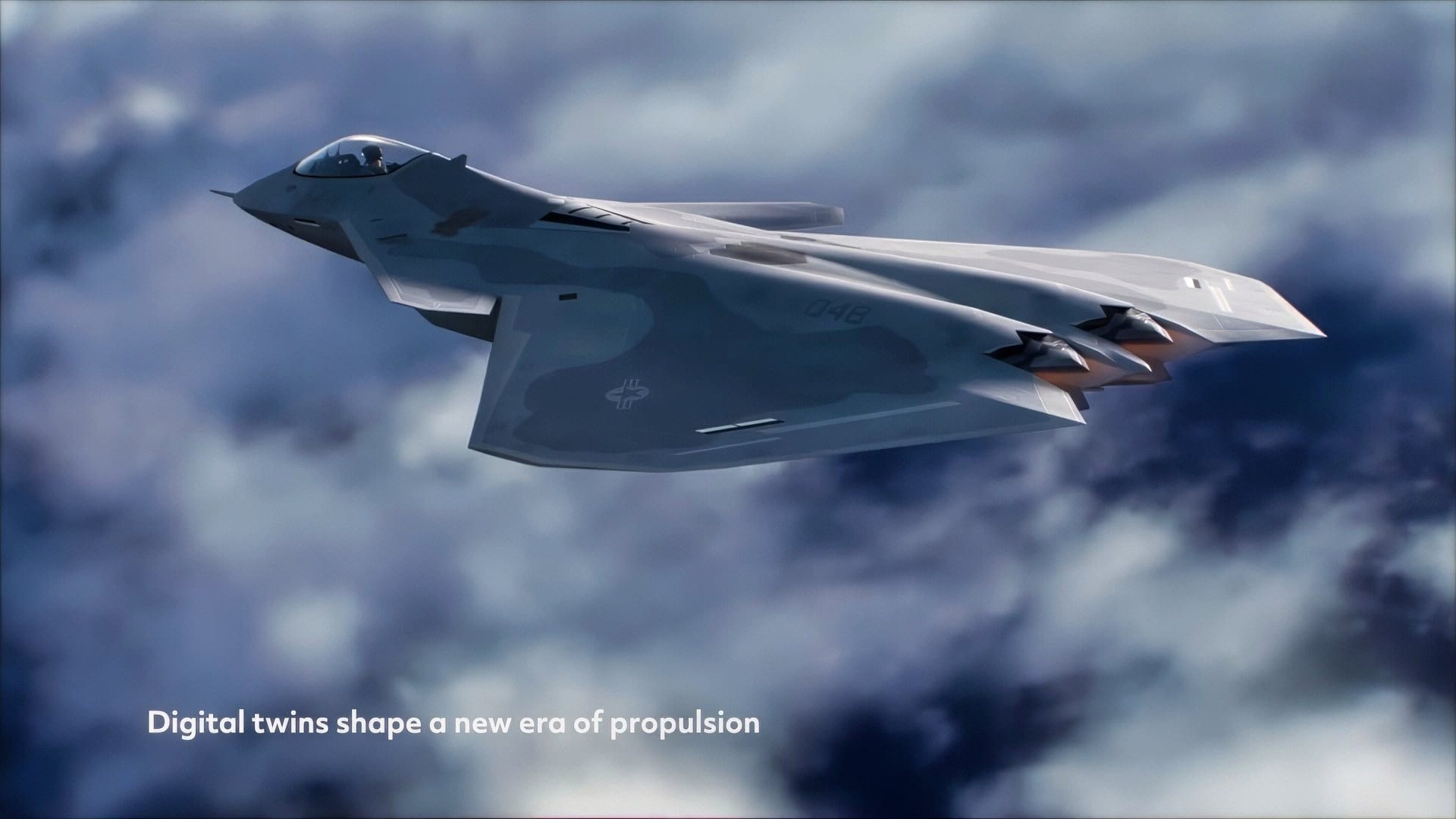
Should the recently much-discussed, recently published Pratt & Whitney photo and video showing a 6th-generation airframe actually depict a model, image, or replica of the emerging F-47, several relevant observations are possible.
Pratt & Whitney released the photo as part of an effort to highlight its XA-103 engine, and it may also have released a first-of-its-kind full side view of the F-47 fuselage.
The side view of the airframe, showing the small canards protruding in front of the main blended wing-body, appears consistent with the front view of the fuselage released by the U.S. Air Force several months ago.
The existence of these canards is significant, as they may improve vectoring, agility, and in-flight maneuvering needed to prevail in close-in air engagements such as dogfighting.
Canards can contribute to “lift” and overall flight stability, which is critical should the aircraft come under attack from air- or ground-based weapons.
The slightly curved F-47 canards might offer a clear operational benefit, enabling high-speed, sharply angled vectoring.
This would be of great tactical significance should the aircraft need to quickly change direction to avoid incoming fire or maneuver into an optimal attack position as targets move.
Stealthy F-47
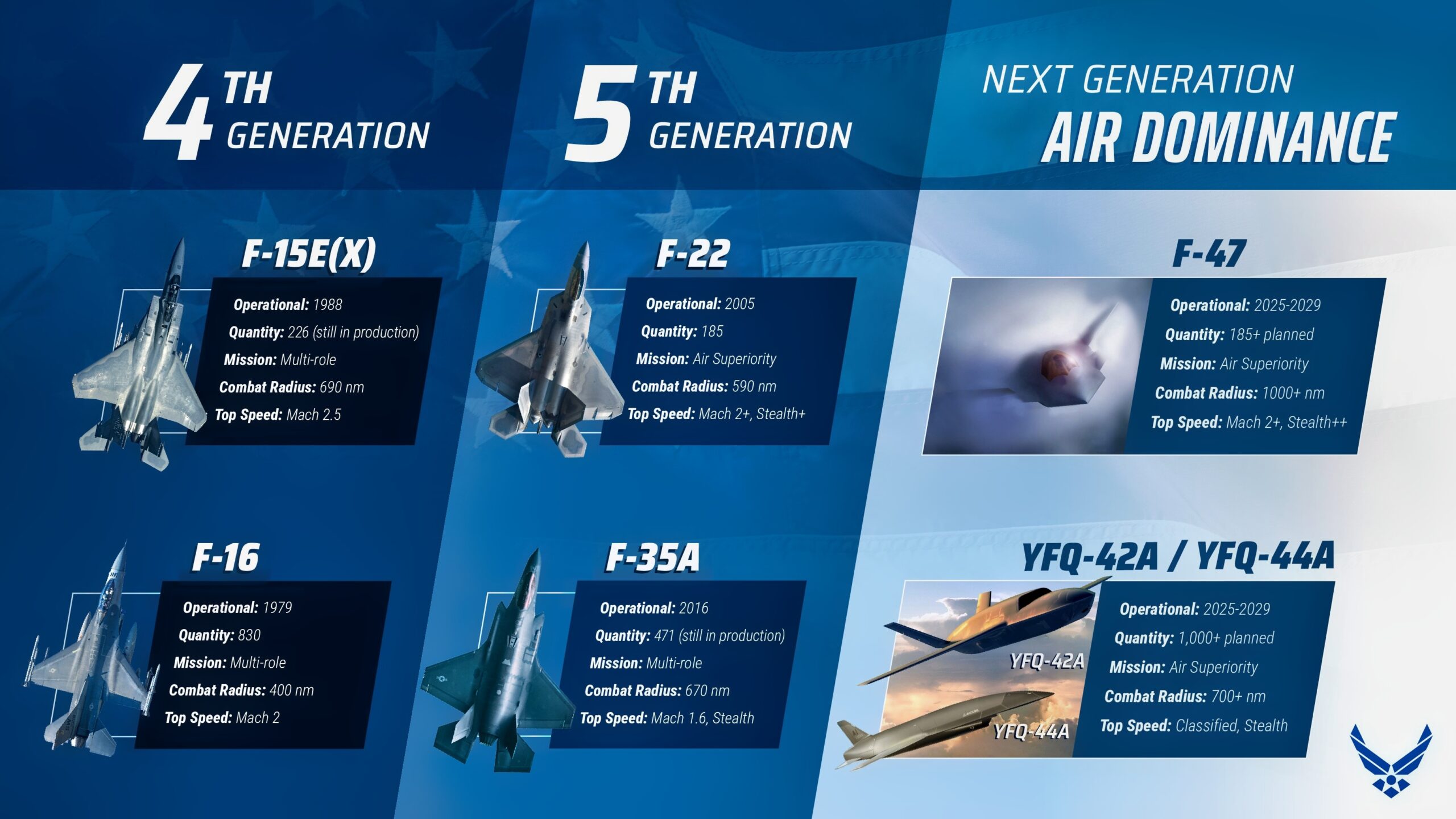
F-47 Infographic. Image Credit: U.S. Air Force
Overall, the fuselage looks quite stealthy with a blended wing-body configuration and, as anticipated, it has virtually no horizontal structures.
The intent here is likely to blend bomber-like broadband stealth with fighter-jet-like speed and agility.
A platform with few to no vertical structures or protruding objects, such as pylons, tails, or vertical fins, presents fewer “edges,” “shapes,” or “structures” likely to generate a return electromagnetic “ping” or rendering to ground-based radar.
The aircraft features an F-22-like dual-engine configuration with embedded exhaust, likely engineered with heat-signature-reducing technologies. The last portion of the fuselage looks similar to that of an F-22, yet without any fins, tails, or vertical structures.
Nose Radome & AESA Radar
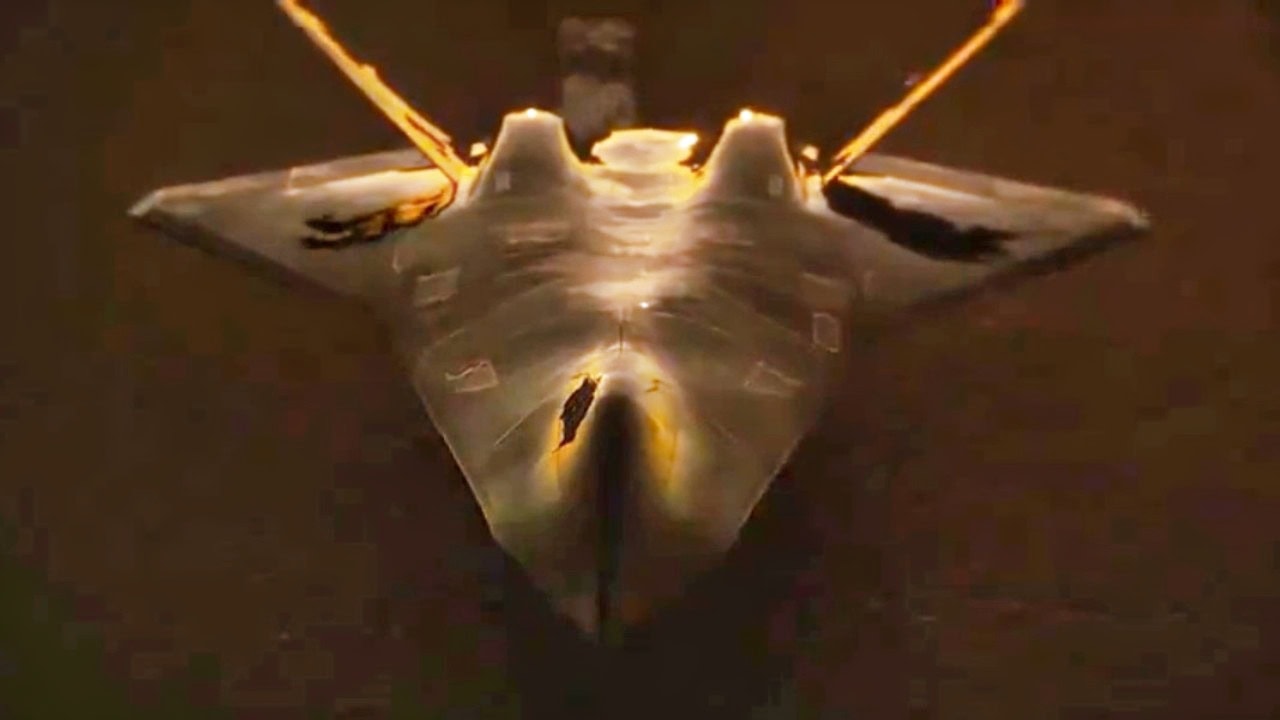
F-47 Fighter from Boeing. Image Credit: U.S. Air Force Screenshot.
Also of note, the nose radome at the front of the aircraft appears large, which could accommodate long-range, high-fidelity radar.
A larger nose radome can increase weight and slightly reduce stealth, yet it can package a much higher concentration of ‘transmit/receive’ modules needed for long-range AESA radar.
This makes sense, given the Concepts of Operation associated with the F-47, as it is likely configured to transit great distances in the Pacific and target enemy aircraft from stand-off ranges.
A longer range AESA could be critical to the F-47 in light of the longer ranges associated with the Chinese J-20. This aircraft also features a larger nose radome and an ultra-long-range AESA radar.
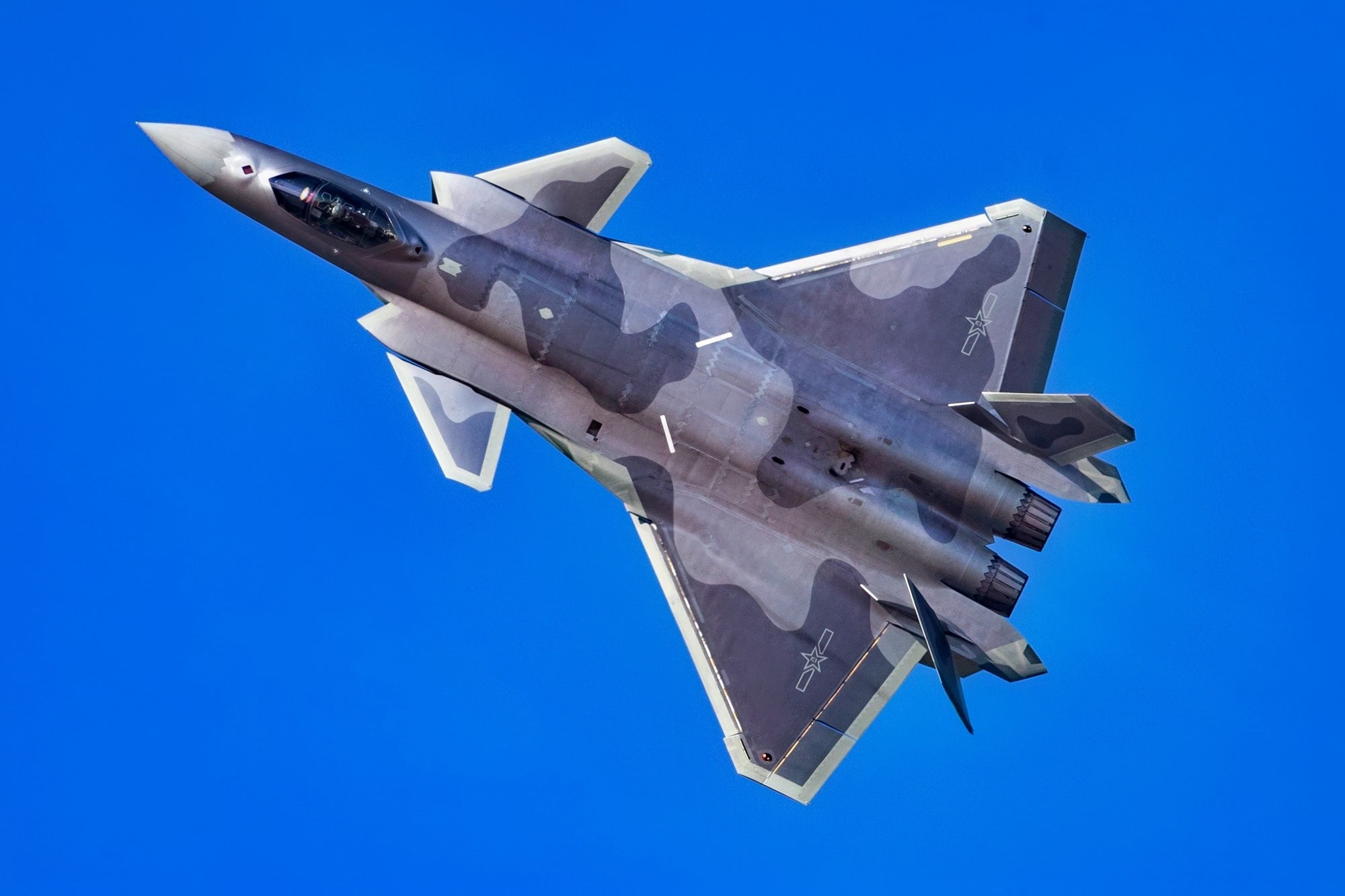
J-20 Fighter from China. Image Credit: Creative Commons.
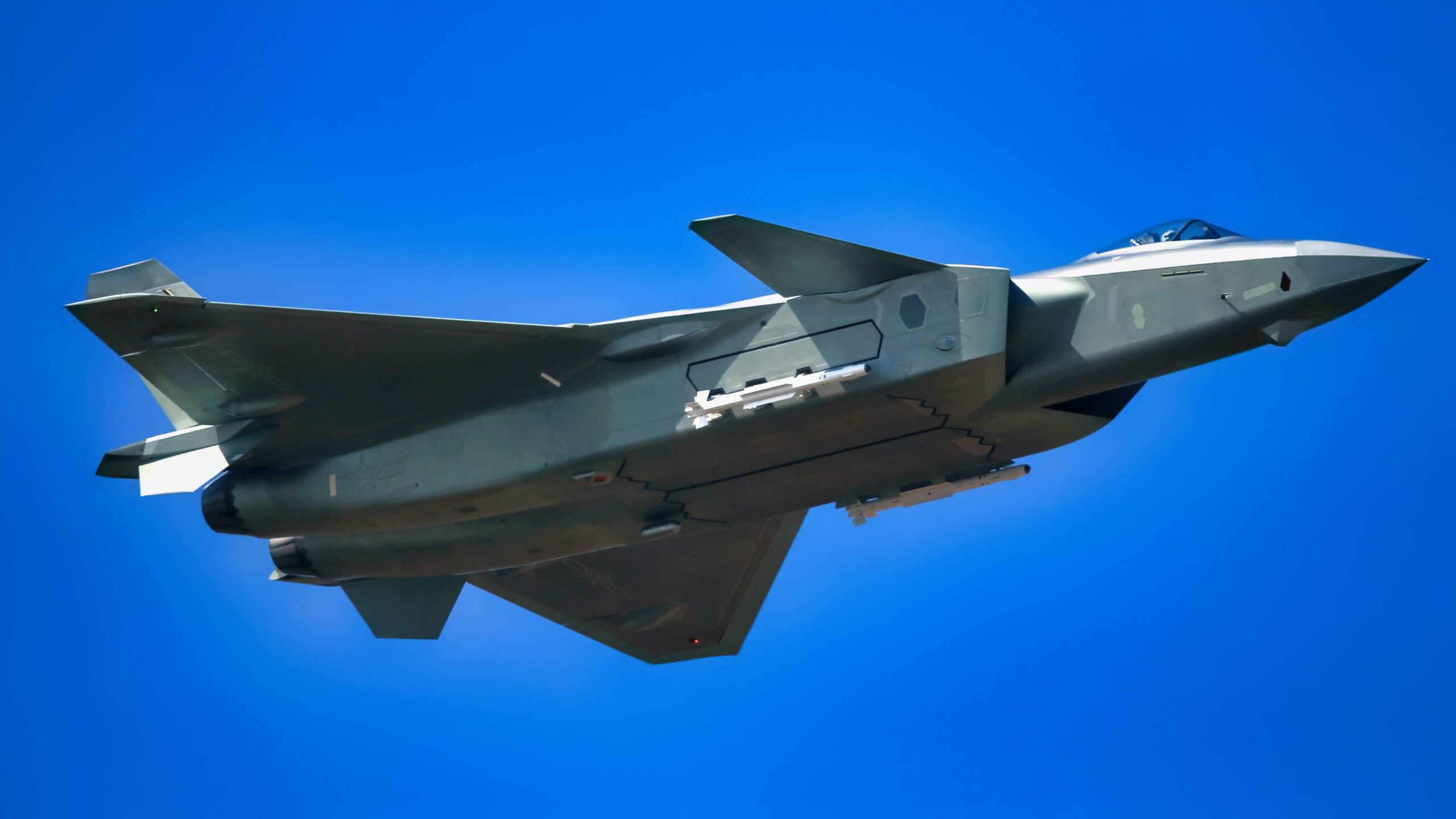
J-20 Fighter. Image Credit: Creative Commons.
The F-47, however, appears stealthier than the J-20, as it has no fins or vertical structures.
AI-enabled Computing
Nonetheless, most of what distinguishes the F-47 is not likely to be easily visible to an observer’s eye.
It is tough to see any “sensors,” “embedded antennas,” or internal weapons bays from the angle shown, yet the 6th-gen F-47 is almost certain to have long-range EO/IR targeting technology and 360-degree cameras like the F-35’s well-known Distributed Aperture System.
Perhaps the largest margin of change may reside in the F-47s “computing,” technology almost certain to accommodate advanced AI-technologies, an extensive threat library larger and more advanced than the F-35s Mission Data Files.
About the Author: Kris Osborn
Kris Osborn is the President of Warrior Maven – Center for Military Modernization. Osborn previously served at the Pentagon as a highly qualified expert in the Office of the Assistant Secretary of the Army—Acquisition, Logistics & Technology. Osborn has also worked as an anchor and on-air military specialist at national TV networks. He has appeared as a guest military expert on Fox News, MSNBC, The Military Channel, and The History Channel. He also has a Masters Degree in Comparative Literature from Columbia University.