

Israel just disclosed that its elite Shayetet 13 naval commandos conducted an operation ‘thousands of kilometers’ from home with no backup and no viable extraction plan — in a location where the unit had never operated before. At the same time, Israeli submarines were simultaneously deployed across three separate theaters at the farthest distances in the fleet’s history.
Israel’s Military Is Getting More Powerful By the Day
On April 16, 2026, the Israel Defense Forces (IDF) disclosed that its elite naval commando unit, Shayetet 13, conducted an “unprecedented” operation during the recent multifront war at a location “thousands of kilometers” from Israel, an area where the unit had never previously operated. The disclosure coincided with Vice Adm. Eyal Harel taking command of the Israeli Navy from Vice Adm. David Saar Salama at a ceremony at Atlit naval base near Haifa.
An Israeli military official said the operation was carried out without backup or a viable extraction plan due to the distance, but was described as successful. No additional details were given on timing, location, or mission profile. The IDF also revealed that, during the war with Iran, one submarine operated at the farthest distance in the fleet’s history while submarines were simultaneously deployed across three operational arenas, each separated by thousands of kilometers.
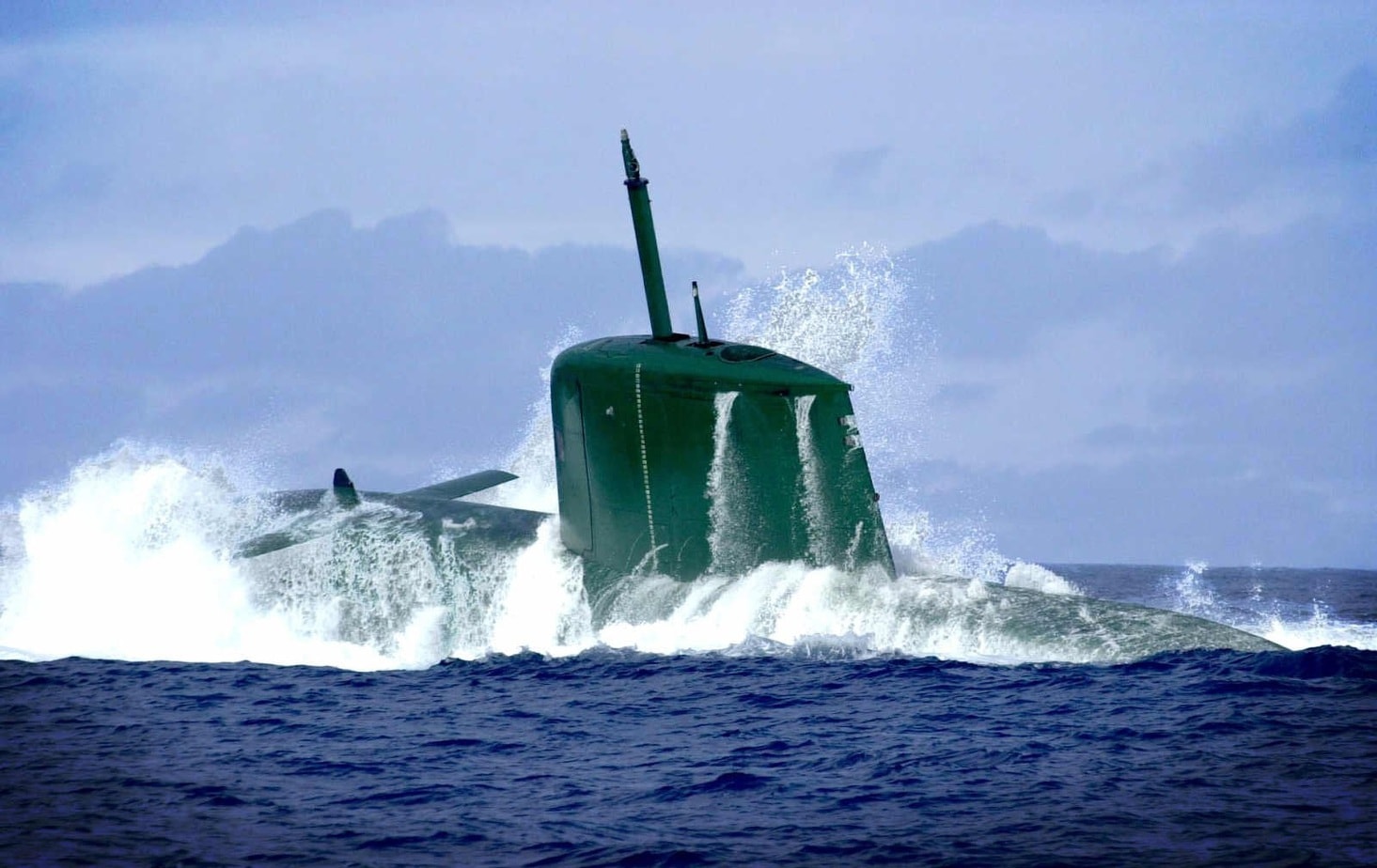
Israel Dolphin-Class Submarine
The announcement included new data showing a significant expansion in the Navy’s role. During the conflict, Israeli naval forces responded to about 40 aerial threats, intercepting dozens of drones from Iran and Lebanon. Warships conducted 53 strikes in Lebanon and six in Gaza, while Navy Intelligence supported planning for around 95 airstrikes in Iran.
The new disclosures offer a rare glimpse into how the Israeli Navy was used during the war, indicating that the service is being repositioned as a long-range, multi-domain arm of the IDF, rather than a force primarily focused on coastal defense.
A Navy Operating Across Multiple Theaters
Perhaps the most curious detail in the new disclosure is not the secrecy surrounding the Shayetet 13 mission, but the scale and distribution of Israeli naval activity during the war. The deployment of submarines across three separate arenas simultaneously indicates that Israel was managing maritime operations across widely dispersed regions rather than concentrating forces in a single theater.
That wide distribution of operations reflects the nature of the conflict; the war with Iran and its regional partners has extended well beyond direct exchanges with Tehran to include Lebanon, Gaza, and maritime domains that encompass shipping routes and offshore infrastructure. The Navy’s involvement in intercepting drones only further demonstrates how maritime platforms have been integrated into Israel’s air defense network.
Earlier in the conflict, the IDF had already demonstrated its ability to conduct operations of this nature. In June 2025, for example, the Navy reported that the Sa’ar 6-class corvette INS Independence – one of its four German-built warships – had intercepted roughly 20 unmanned aerial vehicles launched by Iran. It proves that naval vessels were already contributing to layered air defense operations, and not just operating at sea. And, the intelligence support role here is just as significant. The Navy’s involvement in planning for approximately 95 airstrikes in Iran suggests it was contributing to target development and coordination well beyond its traditional maritime tasks.
The Maritime Threats Driving Israeli Advances
The Israeli Navy is evolving to meet changing threats. During the war, Iranian maritime forces directly countered threats to regional shipping and critical waterways. On March 26, 2026, the IDF announced it had killed Alireza Tangsiri, commander of Iran’s Islamic Revolutionary Guard Corps Navy, in Bandar Abbas. Tangsiri had attempted to close the Strait of Hormuz and overseen attacks on commercial shipping, according to the IDF.
It’s that threat environment that has forced Israel to consider maritime security a core component of its overall defense posture.
Speaking at the April 16 ceremony, IDF Chief of Staff Lt. Gen. Eyal Zamir said the military’s new multi-year plan includes a decision “out of an operational necessity” to expand the Navy and enhance its ability to operate with “greater lethality, at greater depths and longer ranges,” citing its “long-range, lethal, and decisive capabilities, both overt and covert.”
Harel also said that the Navy would strike enemies “wherever they are, or from wherever they threaten the citizens of Israel, freedom of navigation, and our strategic assets at sea,” and added that operations would span “nearby, deep, and distant arenas around the world,” concluding “no place is too far for the Navy.”
It’s clear that there has been a shift in doctrine, with leaders presenting the Israeli Navy as a tool for long-range deterrence, maritime security, and covert operations.
Why This Disclosure, and Why Now?
The timing of the announcement is worth considering, as it coincides with a change in leadership at the very top of the Navy. The news provides an opportunity to publicly reshape the service’s future role and make clear that Israel is committed to adapting to evolving threats nearby and farther away. The limited details about the Shayetet 13 operation are perhaps not surprising. Still, by revealing the unprecedented distances involved in the mission for Israeli forces, undertaken without backup and in a previously unvisited area, the IDF is clearly signaling its capability without revealing its methods or routes.
At the same time, the release included many specifics, such as drone-interception data and strike counts, providing measurable evidence of the Navy’s use during the war.
For adversaries watching Iran closely, the announcement proves that it can operate at a distance and across multiple domains, while for domestic and allied audiences, it reinforces the case for expanding Israeli naval capabilities and perhaps encourages allies to make similar efforts in their long-term defense planning.
The Israeli Navy Is Expanding
The expansion outlined by IDF Chief of Staff Eyal Zamir and incoming Navy commander Eyal Harel focused largely on the Navy’s operational range and underwater capabilities – and it is backed by a pipeline of new submarines and corvettes expected to continue entering service over the next decade.
The Navy is expected to receive its sixth submarine, INS Drakon, this summer after the vessel completed critical testing at a shipyard in Kiel, Germany. The Israeli Ministry of Defense has described Drakon as a strategic combat asset equipped with groundbreaking technologies designed to expand operational reach across multiple arenas. Looking further ahead, Israel plans to begin receiving three new Dakar-class submarines in the early 2030s. The vessels are intended to replace the Navy’s aging first-generation Dolphin-class submarines, which have been in service since around 2000.
The surface fleet is also set to expand. Over the next three to four years, the Navy expects to receive the first of five Reshef-class corvettes, which will replace Sa’ar 4.5-class missile boats that have been in service for roughly four decades. In December 2024, Israel’s Ministry of Defense signed a deal worth roughly $780 million with Israel Shipyards to build the five Reshef-class vessels domestically, a move intended not only to modernize the fleet but to sustain local shipbuilding capacity.
Through a combination of long-range submarine developments and the announcement of long-range, multi-theater operations, it’s clear that the Israeli Navy is operating beyond its traditional role and as part of an integrated military campaign. The planned fleet expansion suggests the role is not temporary.
About the Author: Jack Buckby
Jack Buckby is a British researcher and analyst specializing in defense and national security, based in New York. His work focuses on military capability, procurement, and strategic competition, producing and editing analysis for policy and defense audiences. He brings extensive editorial experience, with a career output spanning over 1,000 articles at 19FortyFive and National Security Journal, and has previously authored books and papers on extremism and deradicalization.