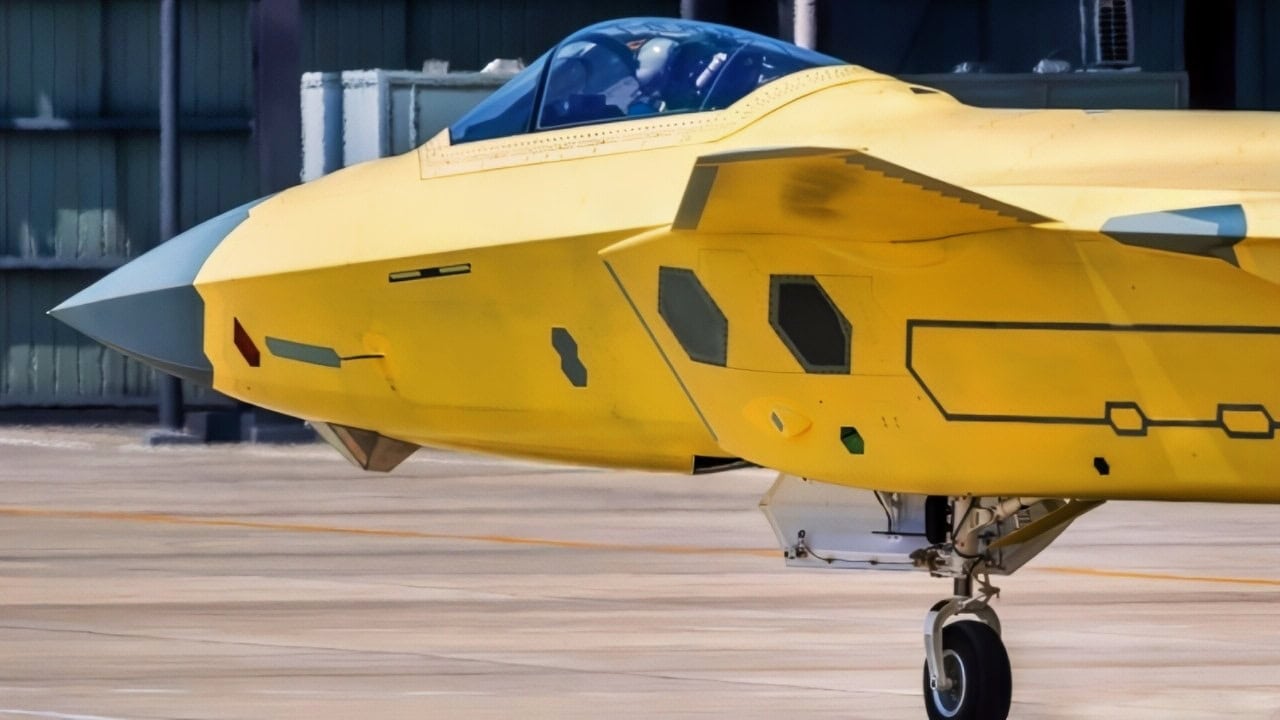
Summary and Key Points: Satellite photographs taken in late June and early July indicate seven J-20 fighters at Hotan Air Base in Xinjiang and four at Damxung Air Base in Tibet, both near the Line of Actual Control with India. Hotan sits roughly 245 kilometers from India’s Daulat Beg Oldie airfield and Damxung around 344 kilometers from Tawang. Beijing has not commented on the mission, operational readiness or deployment duration. India currently operates no fifth-generation aircraft.
The J-20 Fighter Mystery
Tensions around the world are increasing, as the world’s great powers jockey for new areas of influence and challenge each other for control.
While the world is transfixed on events in the Middle East and Europe, China has deployed at least 11 Chengdu J-20 fifth-generation air-superiority stealth warplanes to two high-altitude air bases near the Line of Actual Control (LAC) with India.
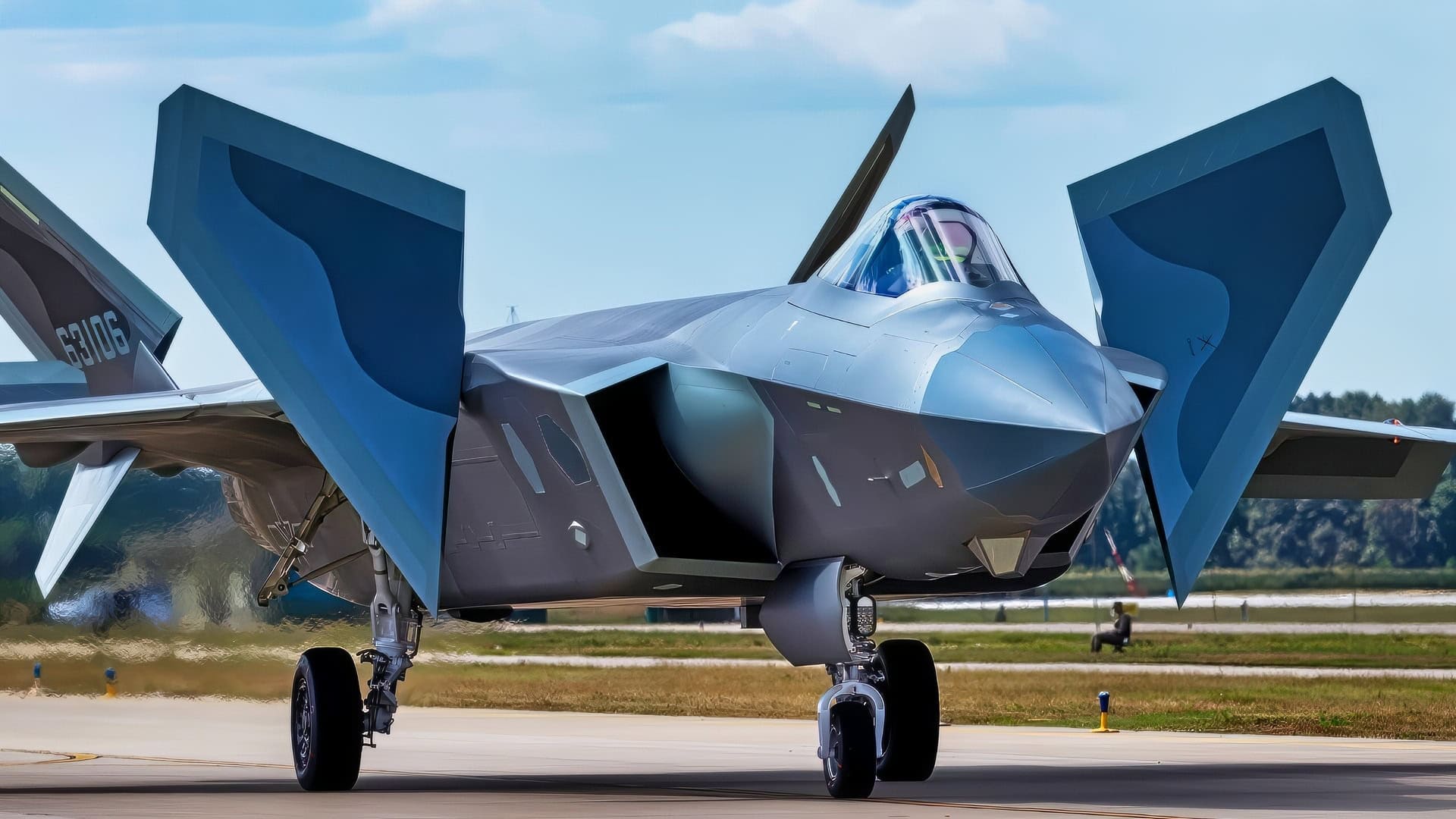
J-20 Fighter 2025 Photo. Image Credit: Creative Commons.
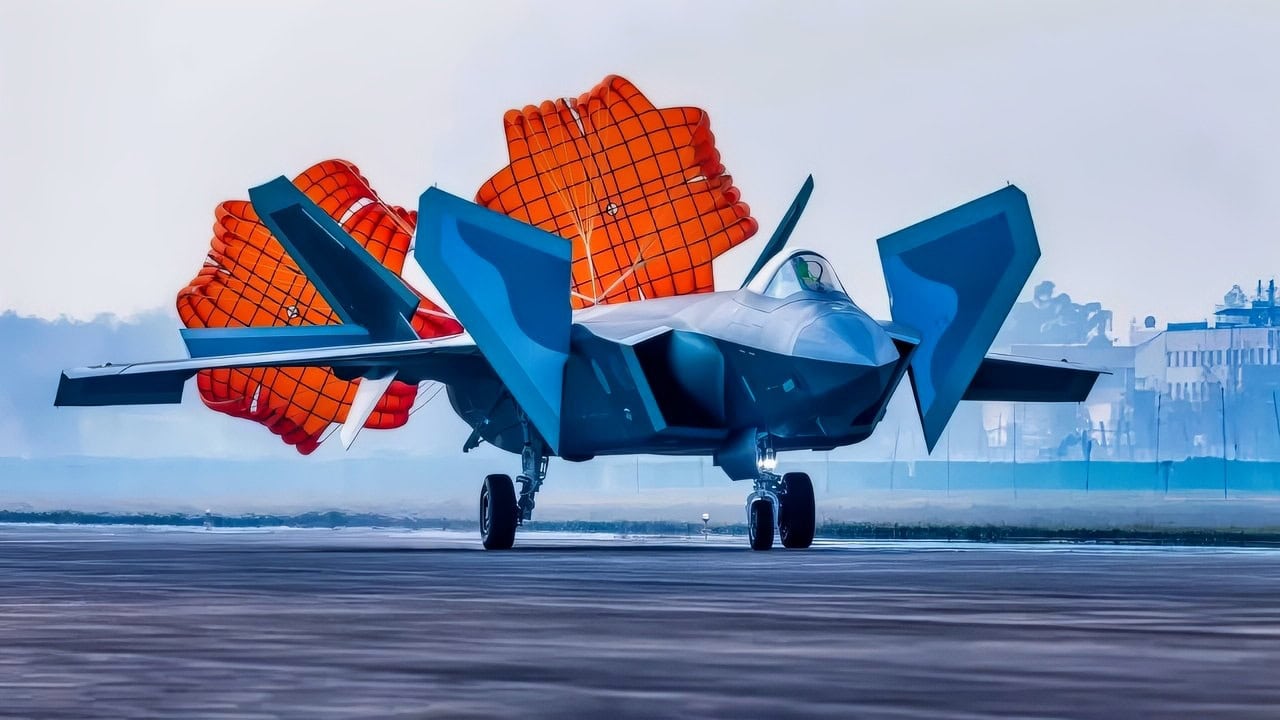
J-20S Fighter from China. Image Credit: Creative Commons.
This move by Beijing marks one of the most significant visible concentrations of fifth-generation warplanes along their disputed frontier with India.
The information about this new Chinese deployment derives from a series of satellite photos taken in late June and early July.
Those photos revealed that seven J-20s had been deployed to Hotan Air Base in China’s Xinjiang region and four more at Damxung Air Base in Tibet.
These deployments place the advanced warplanes within operational range of key Indian military positions, including Daulat Beg Oldie in Ladakh and the Tawang Sector in Arunachal Pradesh.
Of course, there is no word from Beijing on the mission of those 11 J-20s.
Nor is there any official word on the operational readiness or deployment duration of the J-20s. So, it is important not to overreact.
At the same time, the deployment of these aircraft so close to contested regions with India, at a time of heightened global tensions, underscores China’s capacity and intent to challenge Indian air superiority, which should alert policymakers and analysts alike.
Let’s look at the two Chinese bases in question.
The Chinese Airbases Near India
Hotan Air Base sits about 245 kilometers from India’s Daulat Beg Oldie airfield, while Damxung is around 344 kilometers from Tawang.
Together, these two bases provide China with forward operating locations covering both the western and eastern sectors of the disputed border.
Indian military experts do not believe the deployment of the J-20s to those two airbases so near to key Indian locations is a mere demonstration.
The J-20 fleet is constantly growing, and Beijing intends to deploy these greater numbers of its primary fifth-generation warplanes along its frontier.
There exists a dangerous imbalance between the Indian Air Force (IAF) and China’s People’s Liberation Army Air Force (PLAAF).
That’s because China has growing numbers of rapidly advancing J-20 fifth-generation stealth warplanes, while India does not have any fifth-generation planes.
Meanwhile, China’s J-20 was designed as a low-observable air superiority warplane.
That aircraft combines stealth shaping with internal weapons bays and advanced sensors.
These planes also carry China’s PL-15 air-to-air missiles, which engage enemies from beyond visual range (BVR).
Whatever one thinks about the Indian military’s overall performance during the Indo-Pakistani War of 2025, the fact is that Pakistani Air Force (PAF) jets employing the Chinese-made PL-15s were so devastating to Indian forces that the Indians captured the remnants of one of the spent Chinese-made PL-15s for study and potential reverse-engineering.
So, China’s growing number of advanced stealth planes, coupled with their BVR attack capabilities at the high altitudes of the Sino-Indian frontier, give the PLAAF real advantages over their rivals in the IAF.
Problems Facing Chinese Planes in High-Altitude
Operating fifth-generation warplanes at high altitudes, however, comes with its own set of problems.
For instance, thin air reduces engine performance.
It also requires the airbase runways to be longer than normal runways. Then there’s the issue of increased strain on fuel capacity and payload.
Observers caution that despite the complexity of maintaining fifth-generation warplanes at high-altitude bases, the deployment of so many J-20s to Hotan and Damxung demonstrates Beijingis growing confidence in its ability to sustain these advanced systems in forward-deployed roles.
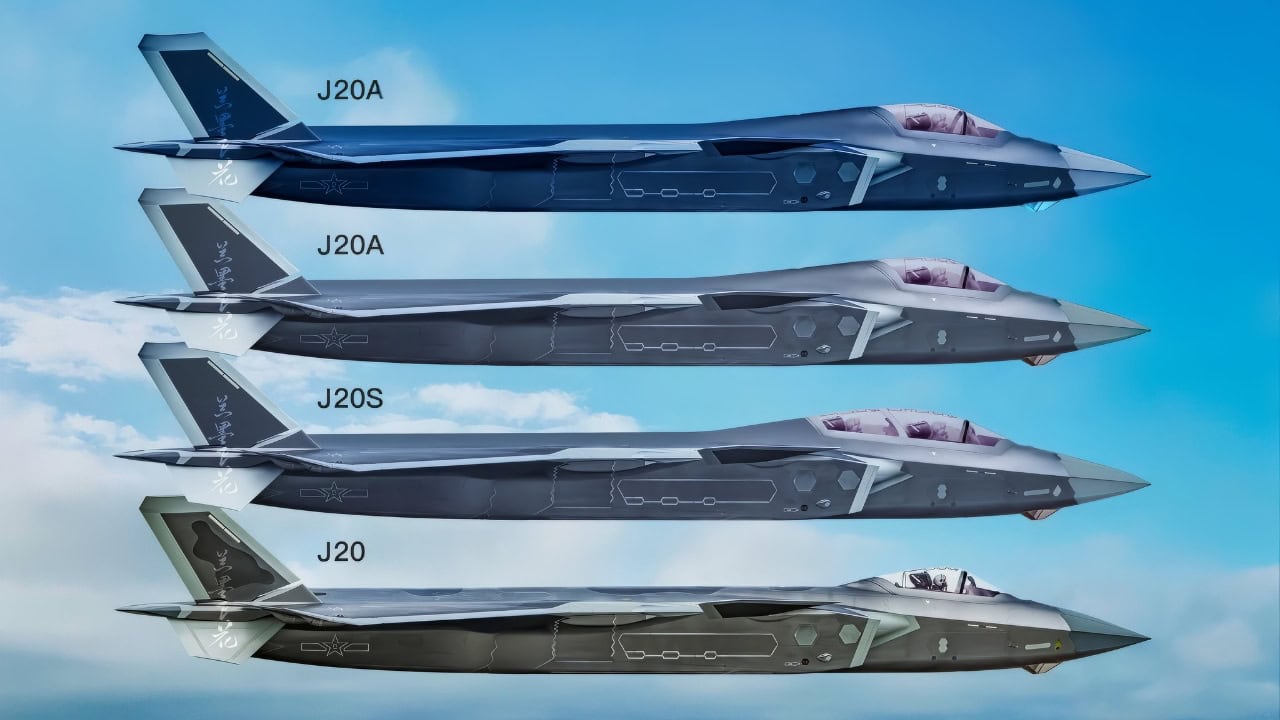
J-20 fighter diagram. Image Credit: Creative Commons.
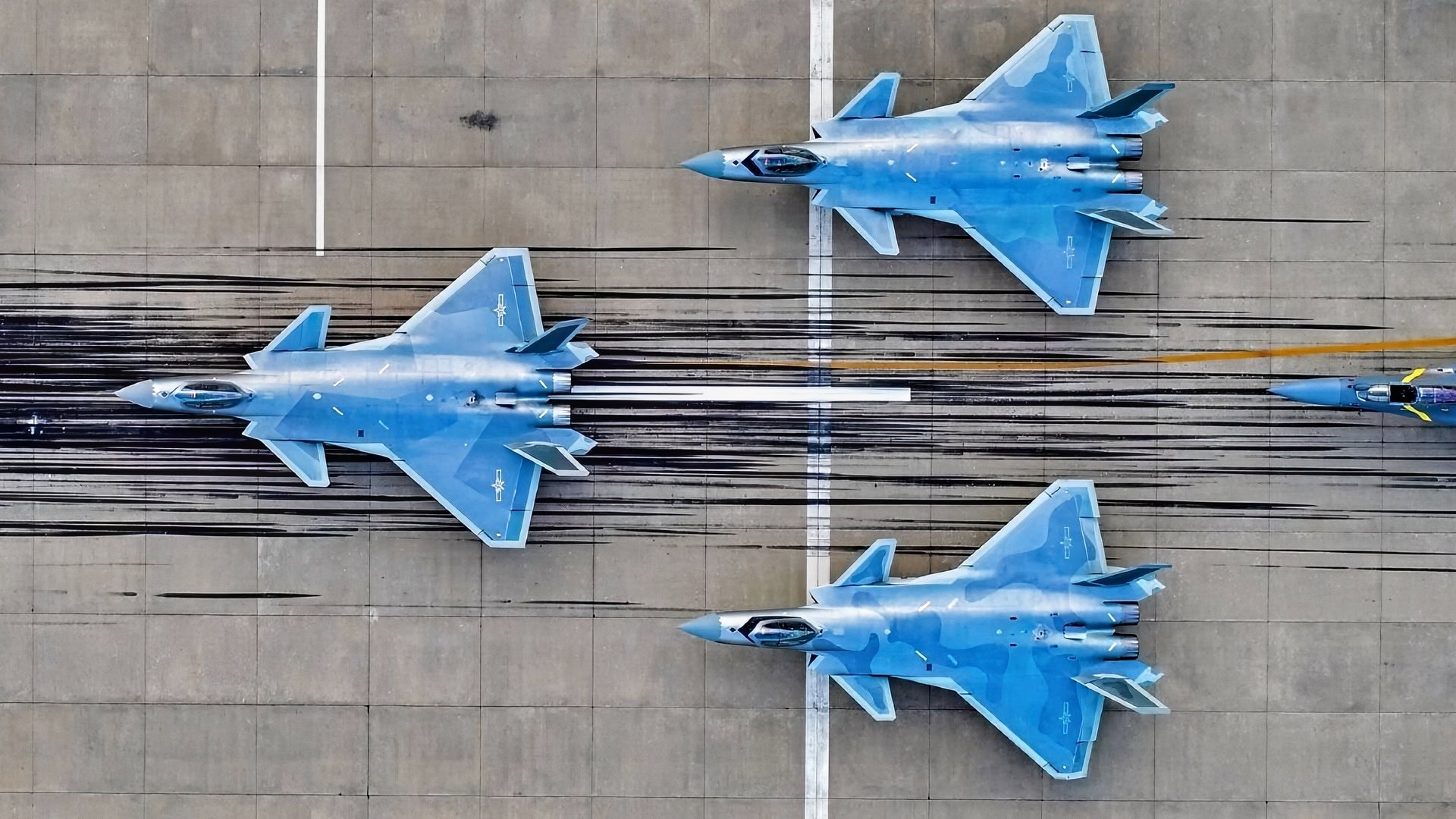
J-20S. Image Credit: Creative Commons.
Strategic Implications for India
Indeed, these deployments are part of a much larger pattern that has evolved over the years.
During the 2020 Galwan border crisis, which saw clashes between the Indian military and Chinese military along that Sino-Indian frontier, J-20s were also observed operating from Hotan (albeit on a more limited basis).
Four years later, satellite imagery showed six J-20s at Shigatse Air Base near the Sikkim border. Earlier this year, 14 J-20s had operated from Shigatse, too.
India continues working on its Advanced Medium Combat Aircraft (AMCA), which might become the country’s fifth-generation warplane.
But it won’t be available for many years.
So, India will rely instead on upgraded fourth-generation warplanes and advanced, layered air defenses (like the Russian S-400) to protect itself from a potential Chinese air attack using the J-20.
About the Author: Brandon J. Weichert
Brandon J. Weichert is the Senior National Security Editor at 19FortyFive.com. He also manages The Weichert Brief on Substack. Weichert also hosts “National Security Talk” on Rumble. He is the author of four bestselling national security books, the most recent of which is A Disaster of Our Own Making: How the West Lost Ukraine (Encounter Books). Follow him via Twitter/X @WeTheBrandon.