
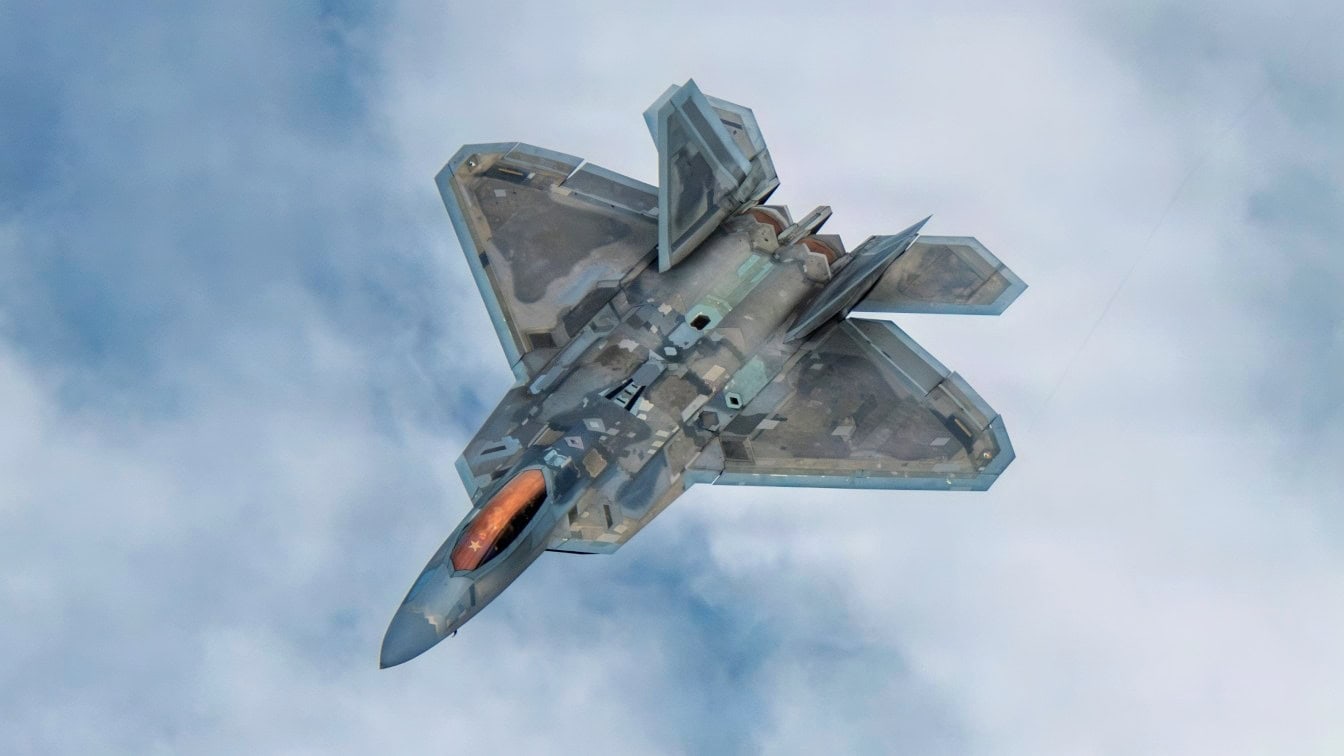
The F-22 Raptor’s Mission-Capable Rate Fell to 40 Percent: The F-22 Raptor remains the U.S. Air Force’s premier air-superiority fighter, yet its latest public readiness figure is alarming. In fiscal 2024, the fleet’s mission-capable rate fell to 40.19 percent, down from 52 percent in fiscal 2023 and 57.4 percent in fiscal 2022. The latest publicly reported fleetwide figure available on July 31, 2026, remained the fiscal 2024 rate.
Mission capable is a lower threshold than fully mission capable. An aircraft receives the designation when it is able to perform at least one assigned mission, not every task expected of the Raptor. The Air Force does not publicly disclose a full-mission-capable rate for the F-22, so the percentage ready for its complete mission set cannot be higher than the published 40.19 percent figure.
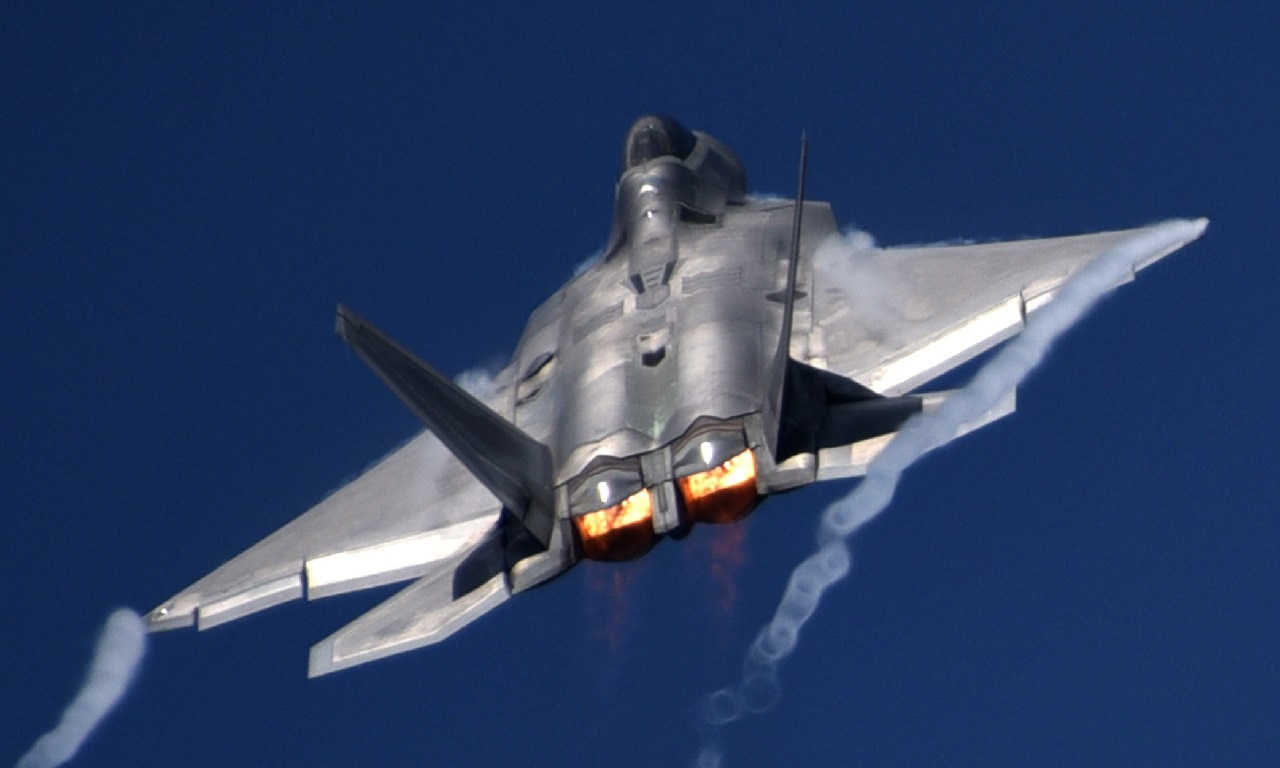
A U.S. Air Force F-22 Raptor assigned to Tyndall Air Force Base, Fla., takes off from the Tyndall flightline as part of an asset evacuation due to Hurricane Irma Sep. 8, 2017. Tyndall evacuated its F-22s, QF-16 Aerial Targets, T-38 Talons, E-9A Widgets and other aerial assets in preparation for Hurricane Irma. (U.S. Air Force photo by Senior Airman Sergio A. Gamboa/Released)
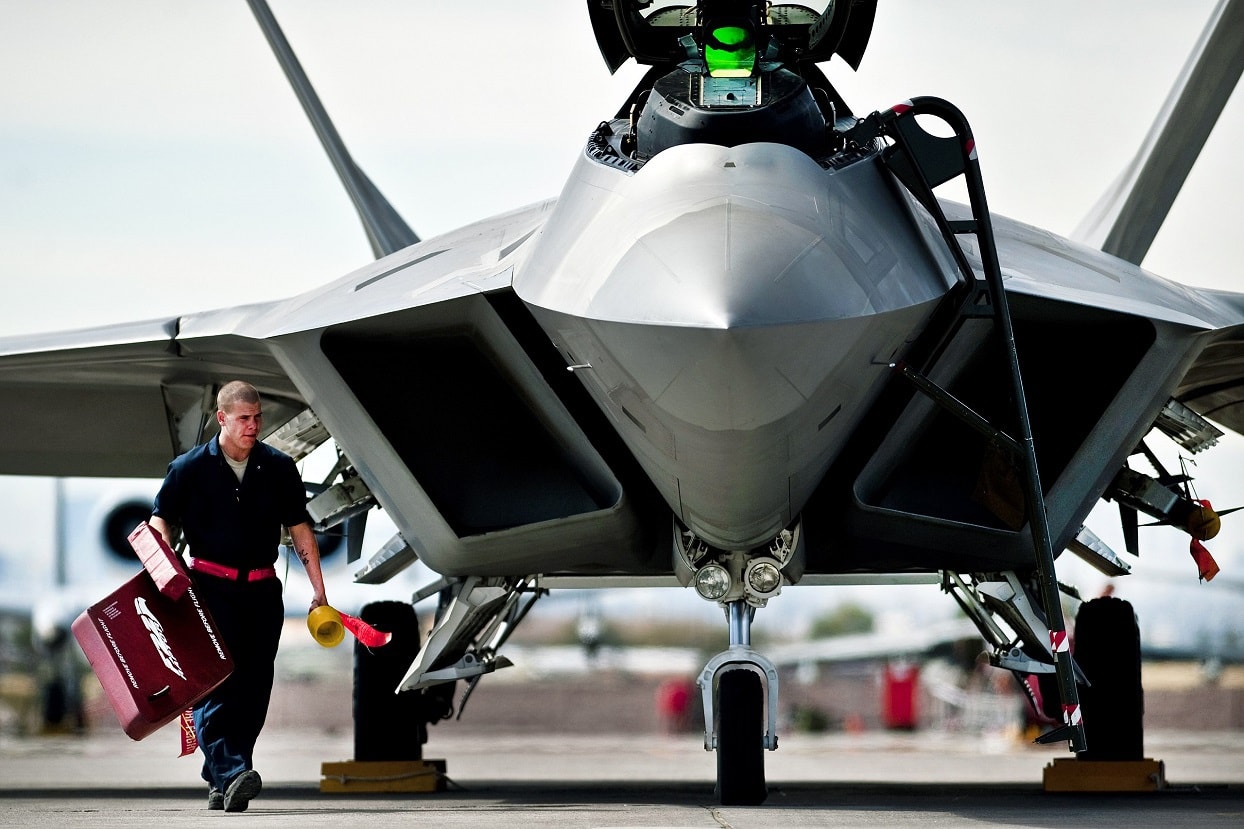
U.S. Air Force Airman 1st Class Jonathan Foster, 49th Aircraft Maintenance Squadron, crew chief, from Holloman Air Force Base, N.M. removes the intake covers of an F-22 Raptor before a training mission during Red Flag 11-3 at Nellis Air Force Base, Nev., March 2, 2011. Red Flag is a realistic combat training exercise involving the air forces of the United States and its allies. The exercise takes place north of Las Vegas on the Nevada Test and Training Range–the U.S. Air Force’s premier military training area with more than 12,000 square miles of airspace and 2.9 million acres of land. (U.S. Air Force photo by Tech Sgt. Michael R. Holzworth/Released).
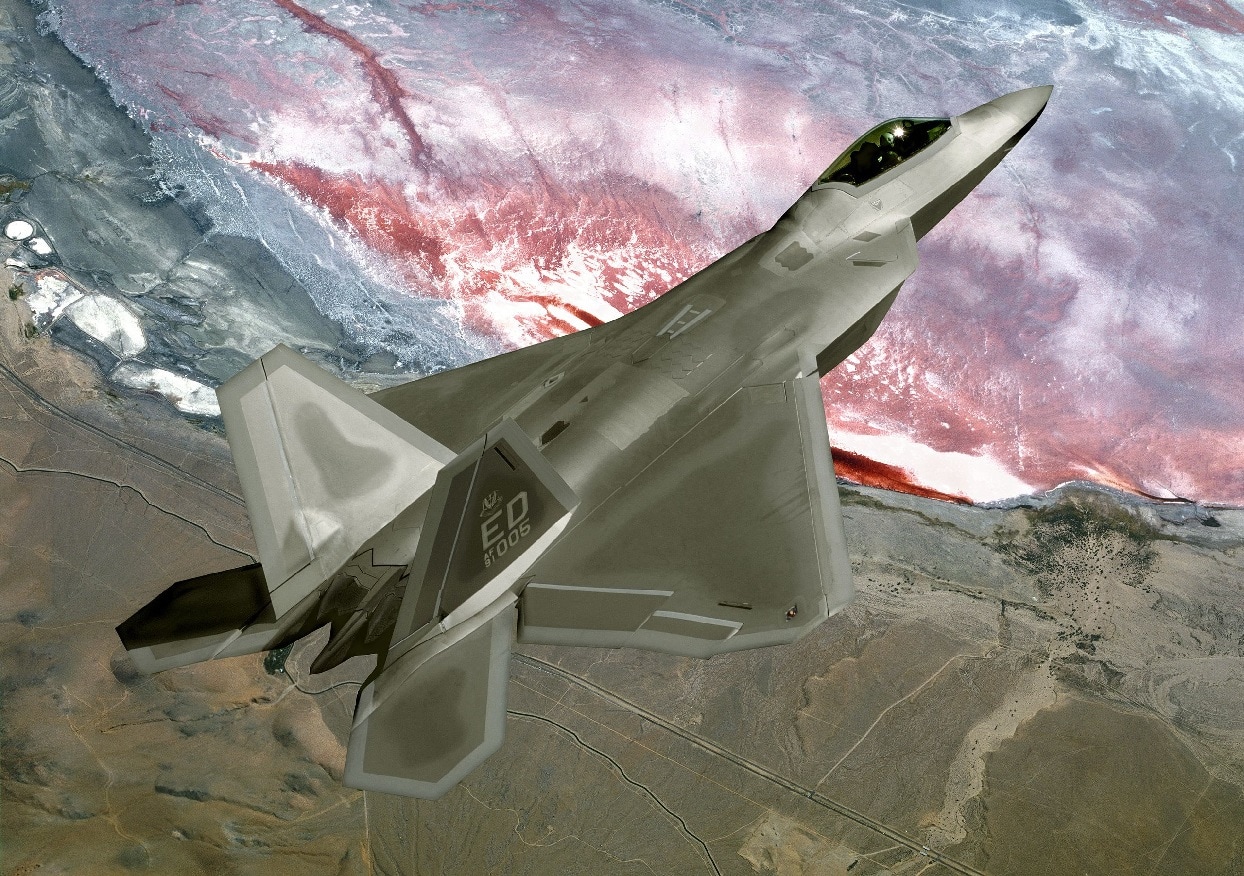
F-22 Raptor. Image: Creative Commons.
The inventory also needs context. The Air Force has 184 F-22s, including combat-coded aircraft, training jets, and test aircraft. A fleetwide percentage cannot be converted into an exact daily count of fighters available for war, especially because deployed units receive priority for spare parts and support. It still shows that the service was losing access to much of a small fleet during routine operations.
The decline has lasted longer than one bad year. The Government Accountability Office found that the F-22 missed its annual mission-capable goal in every year from fiscal 2018 through fiscal 2023. During the same period, the Air Force executed about 106 percent of the operation-and-maintenance funding it had requested for the aircraft.
Global Demand Keeps Reaching a Small F-22 Fleet
Readiness matters because the Raptor remains busy. F-22s from Alaska and Virginia arrived at Kadena Air Base in Japan in May 2026 to sustain a continuous fighter presence in the Indo-Pacific. Another contingent left the Middle East in July after participating in combat operations against Iran. Training, homeland defense, testing, and overseas rotations all draw from the same 184-aircraft inventory.
The fleet cannot add replacements when maintenance takes an aircraft off the schedule. Production ended in 2012 after only 195 aircraft, including test jets, were built, the result of the long reduction from a planned 750 fighters. Restarting the line would require rebuilding tooling, suppliers, and specialized labor, leaving the Air Force dependent on the Raptors already in service and deepening the consequences of closing the production line.
The F-22’s Stealth Coating Consumes Maintenance Time
Low observability gives the F-22 its central combat advantage and creates one of its largest sustainment burdens. Lockheed Martin says about half of F-22 maintenance involves repairing stealth coatings damaged when panels are opened or the aircraft is exposed to operational wear. Earlier GAO work found that a repair taking hours on a conventional fighter can require several days on an F-22 because technicians must restore and cure the coating.
The burden grows as the aircraft ages. Coatings, wiring, avionics, and structures now demand work across an airframe designed in the 1990s. The Air Force’s Reliability, Availability and Maintainability Program is installing more durable low-observable materials, replacing fiber-optic components, and addressing electrical and structural problems, but the fleetwide effort has been extended through fiscal 2027.
Current operational testing identifies another dependency. The Pentagon’s testing office reported that the Raptor’s Release 3 upgrade was not operationally suitable and that Air Force maintainers still relied on Lockheed Martin contractors to diagnose hardware failures. Hardware reliability had improved from the previous release, but the aircraft was not maintainable without contractor support.
Modernization Competes for the Same Aircraft and Technicians
The Air Force is adding passive infrared sensing, improved electronic warfare, jam-resistant navigation, Link 16, a helmet-mounted display, and low-drag external tanks and pylons. Those changes are necessary as China expands its J-20 force and the F-47 remains years from operational service. The current F-22 modernization plan also uses the Raptor to test technology expected to inform its successor.
This does not make modernization the cause of the 40.19 percent rate. It makes recovery harder. The Air Force has to repair today’s aircraft while modifying the same finite fleet for the threats of the 2030s. Using the Raptor as an F-47 pathfinder adds value, though every test and retrofit still draws on aircraft, technicians, and engineering capacity.
Thirty-Two Block 20 F-22s Complicate the Readiness Number
Thirty-two older Block 20 Raptors are used primarily for training and lack the combat capabilities installed on Block 30 and Block 35 aircraft. The Air Force spent several budget cycles seeking permission to retire them, arguing that their sustainment costs should support newer systems. Congress blocked the move while lawmakers and GAO examined whether removing the trainers would force combat-coded aircraft into training and testing roles.
Upgrading the Block 20s offers no quick answer. A contractor’s notional estimate reviewed by GAO put the cost at at least $3.3 billion and the schedule at roughly 15 years. The watchdog also found that the Air Force had not fully documented the cost, training, and readiness effects of either retirement or modernization. As of February 2026, the service had missed an April 2025 deadline for a broader tactical-fighter force-structure report to Congress.
Lockheed Martin has since discussed turning the Block 20s into combat-capable aircraft, but no funded conversion schedule has been announced. Current law prevents the Air Force from retiring an F-22 or reducing the inventory below 184 through September 30, 2027, except for individual aircraft judged uneconomical to repair after accidents or severe degradation.
The House bill would extend that prohibition through September 30, 2032, and the chamber passed its version of the fiscal 2027 defense authorization bill on July 22. The Senate had not moved its version to a floor vote by July 31, leaving the proposed extension and the future of the 32 Block 20 Raptors unresolved.
About the Author: Harry J. Kazianis
Harry J. Kazianis (@Grecianformula) was the former Senior Director of National Security Affairs at the Center for the National Interest (CFTNI), a foreign policy think tank founded by Richard Nixon based in Washington, DC. Harry has over a decade of experience in think tanks and national security publishing. His ideas have been published in the NY Times, The Washington Post, The Wall Street Journal, CNN, and many other outlets worldwide. He has held positions at CSIS, the Heritage Foundation, the University of Nottingham, and several other institutions related to national security research and studies. He is the former Executive Editor of the National Interest and the Diplomat. He holds a Master’s degree focusing on international affairs from Harvard University.

