
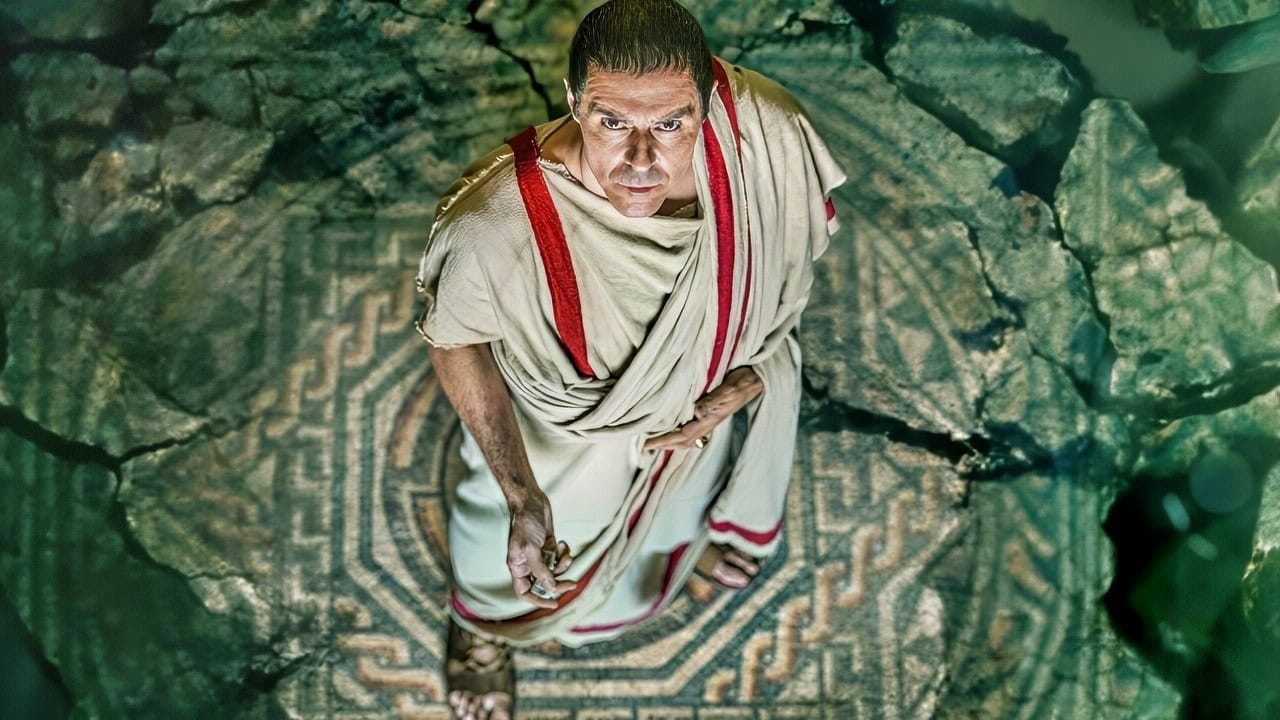
The sentence divides bravery into two different things that most people treat as one. “It is easier to find men who will volunteer to die, than to find those who are willing to endure pain with patience.” The willingness to be killed, it says, is common; the willingness to suffer without relief is rare, and armies are built on the second. The line has come down under Julius Caesar’s name through the tradition of his war commentaries, and this publication’s own Caesar file carries it; the campaign those commentaries describe belongs to 52 BC, which is the detail that matters here, because 52 BC is the year Caesar’s own army proved the sentence true at a hilltop town in Burgundy called Alesia.
Asked to name his greatest victory, historians can defend several answers.

Vercingetorix throws down his arms at the feet of Julius Caesar, painting by Lionel Royer in 1899. Musée Crozatier, Le Puy-en-Velay, France. Imave Credit: Creative Commons.
Pharsalus won him the civil war. Zela took five hours and produced the most famous dispatch ever written.
The answer defended here is Alesia, 2,077 years ago, counted carefully across a calendar with no year zero, because Alesia was won almost entirely by the second kind of courage, the patient kind, and no battle before or since has asked for more of it.
The Year of the Revolt and Julius Caesar
The context was the largest crisis of Caesar’s career.
In early 52 BC, the tribes of Gaul, conquered piecemeal over six years, rose together for the first time under Vercingetorix of the Arverni, a young commander who understood his enemy.
He burned his own country’s towns and grain to starve the legions, harried their foragers, and refused pitched battle.
Caesar took the stronghold of Avaricum after a brutal siege, then attacked Vercingetorix at Gergovia and lost, his first outright defeat in Gaul, with hundreds of legionaries dead below the walls.
The revolt spread on the news; even the Aedui, Rome’s oldest Gallic allies, went over. A commander governed by the first kind of courage might have sought the redeeming battle immediately. Caesar regrouped, joined his lieutenant Labienus, rebuilt his cavalry with German auxiliaries, and waited for the enemy to make the mistake.
In late summer, Vercingetorix, checked in a cavalry action, withdrew into the fortified hill town of Alesia with, by Caesar’s own count, 80,000 infantry and 12,000 horsemen. The town sat on a plateau with rivers on two sides. It could not be stormed. Caesar decided it would not need to be.
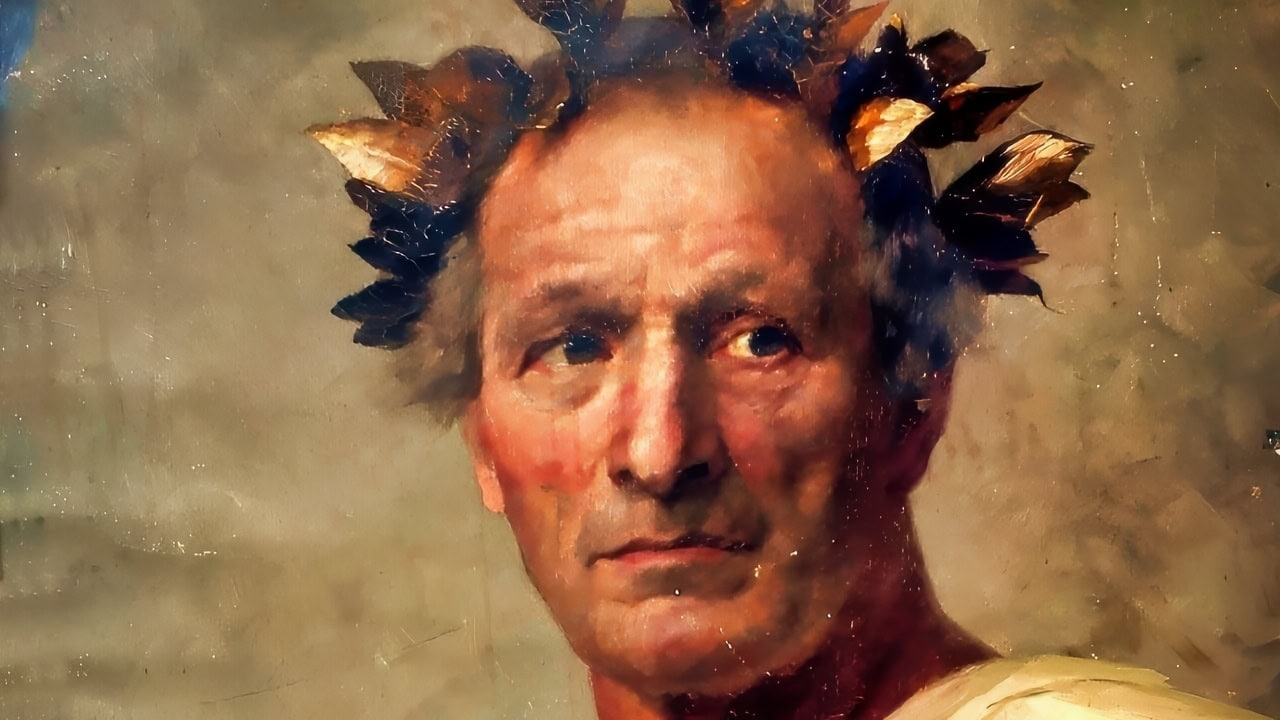
Julius Caesar Painting Creative Commons Image
The Machine of Patience
What the legions built at Alesia over four to five weeks remains the most extraordinary siege work of the ancient world, and the French national museum that curates the excavated remains states the scale plainly: some forty kilometers of fortification in two complete rings.
The inner ring, eleven miles around, faced the town and sealed 90,000 warriors inside. The outer ring, about fourteen miles, faced the other direction, against the relief army everyone knew was coming, because Vercingetorix had sent his cavalry through the unfinished lines with orders to raise all Gaul.
Between the rings ran ramparts twelve feet high, towers at intervals, twenty-three forts, camps for ten to twelve legions, and belts of horrors the soldiers named with grim comedy: concealed pits with fire-hardened stakes they called lilies, buried iron barbs they called spurs, rows of sharpened branches.
Roughly fifty thousand Romans prepared to stand a siege in both directions at once, garrison and besieger simultaneously, rationing their own grain while they starved the town.
The army digging those lines had been beaten at Gergovia weeks before. It dug anyway.
That is the quote in practice: no one in the works was being asked to die in a charge; every man was being asked to endure, shovel by shovel, watch by watch, on short rations in hostile country with enemies on both horizons.
The Battle in Both Directions
The relief army arrived in early autumn, a quarter of a million strong by Caesar’s count, something like a hundred thousand by modern reckoning, enormous by either.
What followed was a series of coordinated assaults over several days, the relief force storming the outer ring while Vercingetorix’s garrison attacked the inner ring, the legions on the wall between them facing alternately out and in.
The worst of it belongs in the record. Inside the town, with the food gone, a Gallic council heard a chieftain named Critognatus argue for survival by eating the dead; the compromise was crueler, and the Mandubii townspeople, expelled from Alesia to save its rations, starved in the no-man’s-land between the walls, refused passage by both sides.
On the final day the Gauls found the one weak seam in the works, a sector below Mont Rea where terrain had forced a gap, and threw sixty thousand picked men at it while the garrison assaulted from within.
The line nearly broke. Caesar fed in his last reserves, sent Labienus to the collapsing sector, and finally rode into the fighting himself, his scarlet cloak visible to both armies, while his German cavalry swung around the attacking column and took it in the rear. Both Gallic assaults broke almost together. The relief army dissolved that night.
The next day Vercingetorix put on his finest armor, rode out of the town, and cast his arms down at Caesar’s feet. He would be held six years for the triumph at Rome and then strangled, and the ancient tradition preserved by Plutarch reckoned the whole Gallic war’s cost in seven figures, dead and enslaved together. The victory ended organized Gallic resistance. It also carried that ledger, and an honest account keeps both.
Why This One
The case for Alesia rests on what it demanded. Pharsalus was a single afternoon of maneuver. Zela, as this series has written, decided little that was not already decided.
Alesia required a beaten army to build twenty-five miles of fortifications in a month, hold them in two directions against a combined enemy that outnumbered it several times over, endure hunger, exhaustion, and the sight of starving civilians it could not admit, and then win the largest battle in Gaul on the day its lines nearly failed, all of it, as the site’s own Alesia file records, under a commander whose response to defeat at Gergovia had been engineering.
Volunteering to die was on offer at Alesia every day, on both sides of both walls.
The victory went to the men willing to endure pain with patience, digging in defeat’s shadow, standing watches facing two horizons, and the man who wrote the sentence had watched them do it.
The distinction he drew has held for 2,077 years. The proof he had in mind held for one autumn on a hill in Burgundy, and it was enough.
About the Author: Harry J. Kazianis
Harry J. Kazianis (@Grecianformula) was the former Senior Director of National Security Affairs at the Center for the National Interest (CFTNI), a foreign policy think tank founded by Richard Nixon based in Washington, DC. Harry has over a decade of experience in think tanks and national security publishing. His ideas have been published in the NY Times, The Washington Post, The Wall Street Journal, CNN, and many other outlets. He has held positions at CSIS, the Heritage Foundation, the University of Nottingham, and several other institutions related to national security research and studies. He is the former Executive Editor of the National Interest and the Diplomat. He holds a Master’s degree focusing on international affairs from Harvard University.

