
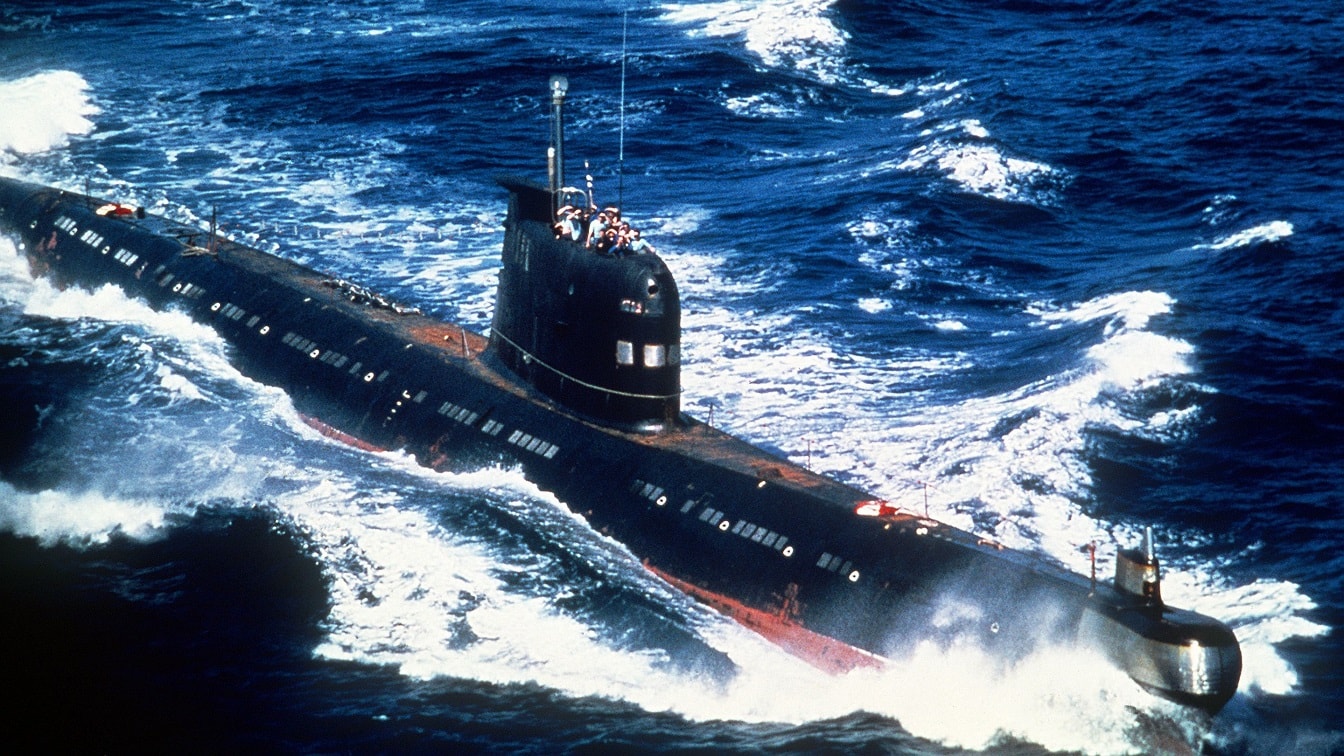
The Foxtrot-Class Submarine Carried the Cold War’s Most Dangerous Moment. It Ended as Beach Museums and Scrap in Mexico – The closest the world has ever come to nuclear war was decided inside a diesel submarine with dying batteries, a failing ventilation system, and a crew broiling in heat that reached 50 degrees Celsius in the berthing spaces. The boat was B-59, and she belonged to the class NATO called Foxtrot, the Soviet Union’s Project 641.
Seventy-five of them were built between 1957 and 1983. They served six navies on four continents, shadowed American fleets from the Mediterranean to the Indian Ocean, gave India its first submarine and its Submarine Day, and one of them, on October 27, 1962, hosted the argument over whether to fire a nuclear weapon at the United States Navy.
My Foxtrot Submarine Experience: I even boarded a museum Foxtrot-class submarine in Providence, Rhode Island, when she was there for tourists, back in the 2000s (sorry, can’t remember the exact year). I was impressed by how well she held up after years of decay, but she surely had seen better days.
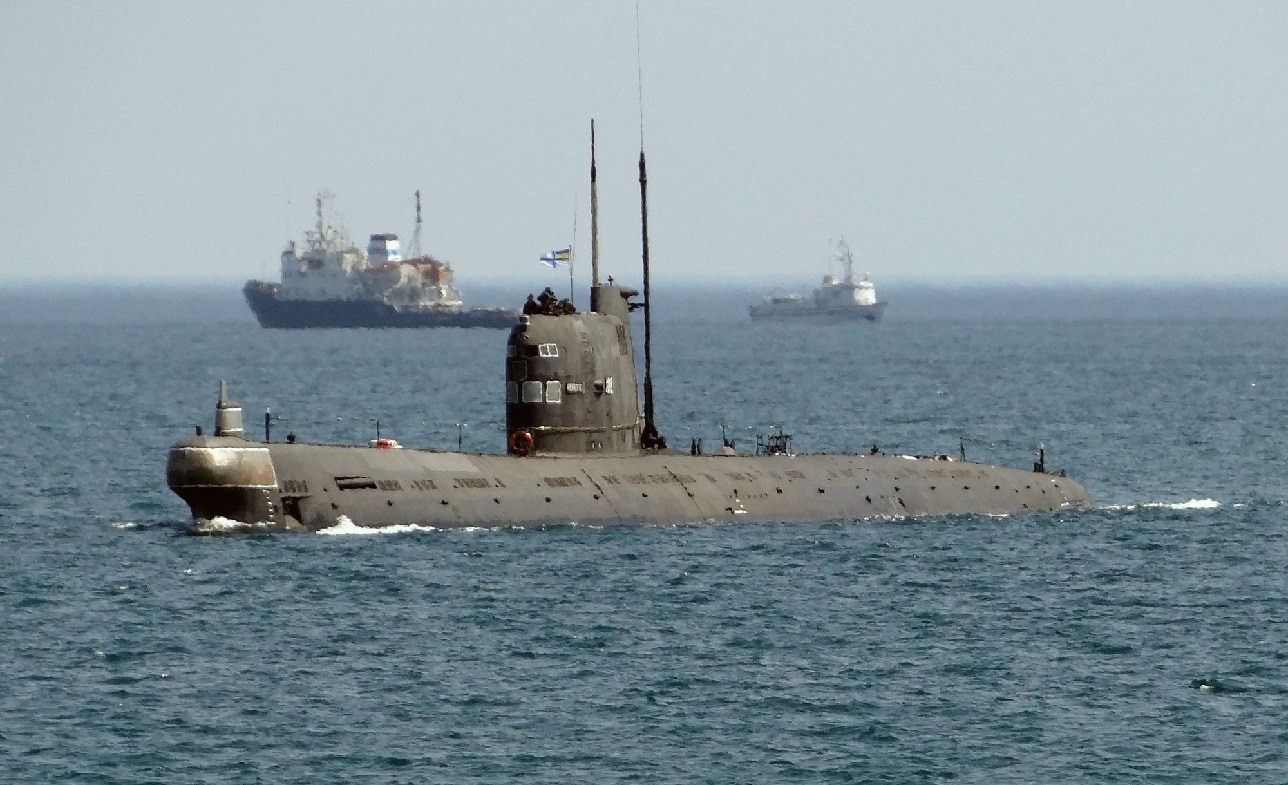
Foxtrot-class submarine. Image Credit: Creative Commons.
The last of them left naval service more than a decade ago. Their history closed not in battle but on beaches and in scrapyards, which is its own kind of ending for the most consequential diesel submarine of the Cold War.
The Foxtrot existed because its predecessor failed. The Soviet Union’s first postwar ocean-going submarine, Project 611, known to NATO as the Zulu and derived from German wartime technology, suffered structural weaknesses and harmonic vibration problems severe enough to limit how deep and how fast it could safely run. The navy cut the Zulu program short and ordered a revised design from TsKB-18 in Leningrad, the bureau that would later become Rubin and, decades later, would design the Kilo.
The requirement was the classic one for a long-range Soviet diesel boat: patrol far from home, interdict NATO’s sea lanes, lay mines, scout, and hunt other submarines. Early planning called for 160 of them.
The first keel went down at the Sudomekh yard in 1957, the first boat commissioned in 1958, and the nuclear revolution then cut the buy short: roughly sixty served the Soviet Navy, with the rest of the seventy-five hulls built for export, because the Foxtrot turned out to be one of the most sellable weapons the Soviet Union ever made.
A Design From the Last Age Before the Teardrop
The Foxtrot was among the final Soviet submarines drawn before the teardrop hull changed everything, and it shows in every line.
The boat is long and slender, 91 meters and about 1,957 tons surfaced, built to cruise on the surface and dive to fight — the philosophy of 1944 refined rather than replaced. Three Kolomna diesels drive three shafts through three electric motors, with a small auxiliary motor for silent creep, and the three six-bladed screws that gave the design its endurance also gave it its fatal flaw: noise.
Western sonar operators found the Foxtrot far easier to hear than the single-screw boats that followed. Inside the double hull were three decks, two of them given over to batteries, and the numbers those batteries bought tell the story of the era: some 20,000 nautical miles of range on the surface at eight knots, nine knots when snorkeling, and only about 380 miles fully submerged.
A Foxtrot could cross an ocean, but underwater it was a sprinter on a short leash, forced to snorkel constantly, and every hour with the diesels running was an hour it could be found.
Diving depth ranged from roughly 250 to 280 meters, with the crew at about 75 men living among the machinery and the torpedo racks.
The class paid its dues in peacetime too: one boat, B-37, was destroyed with terrible loss of life in a torpedo-loading explosion at the Polyarny base in January 1962.
Ten Tubes, Twenty-Two Torpedoes, and One Special Weapon
The armament was the heaviest torpedo battery the Soviet diesel force ever carried. Ten 533-millimeter tubes, six in the bow and four in the stern, served a magazine of twenty-two torpedoes, or up to forty-four mines loaded in their place, a reminder that mining NATO’s harbors and chokepoints sat in the design brief from the beginning. Later boats and the export refits carried the SET-65 and SAET-60 families of homing torpedoes. There were no missiles and no elaborate combat system; the Foxtrot was the pure gun-submarine of its generation. But in the autumn of 1962, four of them sailed with something extra. Each carried, alongside its conventional loadout, a single T-5 torpedo with a nuclear warhead of roughly ten kilotons, in the range of the Hiroshima bomb, and orders vague enough to be terrifying.
Four Boats Off Cuba
On October 1, 1962, the submarines B-4, B-36, B-59, and B-130 of the 69th Submarine Brigade left the Kola inlet for the Caribbean, part of the vast Soviet deployment to Cuba that triggered the missile crisis. The National Security Archive’s published records show what almost nobody knew for forty years afterward: each carried one nuclear-armed torpedo.
The boats themselves were the mission’s first victims. Designed for northern waters, they broiled in the tropics, ventilation failing and fresh water rationed, while American anti-submarine forces, destroyers and patrol aircraft in overwhelming numbers, hunted them across the quarantine line and dropped practice depth charges as a signal to surface, a procedure Washington had announced through diplomatic channels. The notification never reached the submerged boats, which had been out of reliable contact with Moscow for days.
On October 27, the most dangerous day of the crisis, B-59 was at the end of her endurance, batteries nearly exhausted, when the signaling charges began detonating around her. By the account of Vadim Orlov, the boat’s radio-intercept officer, published three decades later, Captain Valentin Savitsky concluded that war had begun above him and, in fury, ordered the nuclear torpedo made ready, reportedly vowing, “We will sink them all, but we will not disgrace our navy.” The political officer concurred. The third senior officer aboard, and the reason B-59 has a place in history, was Vasily Arkhipov, chief of staff of the brigade, who happened to be riding this boat rather than any of the other three. Arkhipov, who a year earlier had lived through the K-19 reactor disaster as that submarine’s deputy commander, withheld his consent, argued the boat was being signaled rather than attacked, and prevailed. At 8:50 that night B-59 surfaced into the searchlights of an American destroyer group and eventually turned for home. Honesty requires the caveats: the exchange is reconstructed from participant accounts published decades after the fact, historians still argue over how close the launch truly came, and some evidence suggests the officers understood the charges were signals.
What is documented is that the torpedo stayed in its tube, that the story was suppressed for forty years until the participants began talking, that Arkhipov implicitly confirmed the near-use at a 1997 conference, and that when the record finally surfaced in 2002, Robert McNamara concluded nuclear war had been closer than anyone in Washington ever knew. Arkhipov died in obscurity in 1998; in 2017 his family accepted the inaugural Future of Life Award on his behalf. Three of the four Foxtrots were forced to the surface that week; only B-4 evaded the hunters. The class had failed its mission off Cuba and, in one officer’s refusal, performed the greatest service any warship ever has. It remains the most famous moment any diesel submarine ever produced.
Twenty Years of Shadowing the West
Cuba was the class’s worst week, not its whole career. For two decades afterward, the Foxtrots were the workhorses of the Soviet Navy’s forward presence. They formed the bulk of the Soviet submarine force in the Mediterranean through the 1960s and 1970s, trailing the US Sixth Fleet from anchorages off Egypt and Syria, and the Pacific Fleet boats out of Vladivostok ran patrols along the west coast of the United States and Canada, into the Indian Ocean, and, after the Vietnam War, made regular port calls at Danang.
It was unglamorous, grinding work, weeks of surface and snorkel transits punctuated by battery-creep stalking, and it made the Foxtrot the Soviet submarine that Western navies encountered more than any other. The hunters knew the three-screw sound signature by heart, which was precisely the problem the next generation would be designed to erase.
The Export Boat: India First, Then Half the World
The export market extended the line for another twenty years. India became the first foreign customer and the most important one. INS Kalvari, a Foxtrot, was commissioned at Riga on December 8, 1967, as the first submarine the Indian Navy ever operated, a date the service celebrates every year as Submarine Day. Eight boats followed in two batches, the Kalvari and Vela classes, generally described as delivered to full Soviet specification, unusual for export sales.
They served into 2010, and the name outlived them: when India commissioned its new French-designed Kalvari in 2017, the 92-year-old commander of the first one attended the ceremony. Libya took six boats in the late 1970s and early 1980s, which decayed into dereliction within a generation. Cuba, fittingly, received three, among them the last Foxtrot ever built, the production line ending its run in the waters where the class made history. Poland acquired two secondhand Soviet boats in 1987 and 1988 as a budget alternative after canceling Kilo orders, and operated them until 2003. And when the Soviet Union dissolved, one Foxtrot passed to Ukraine.
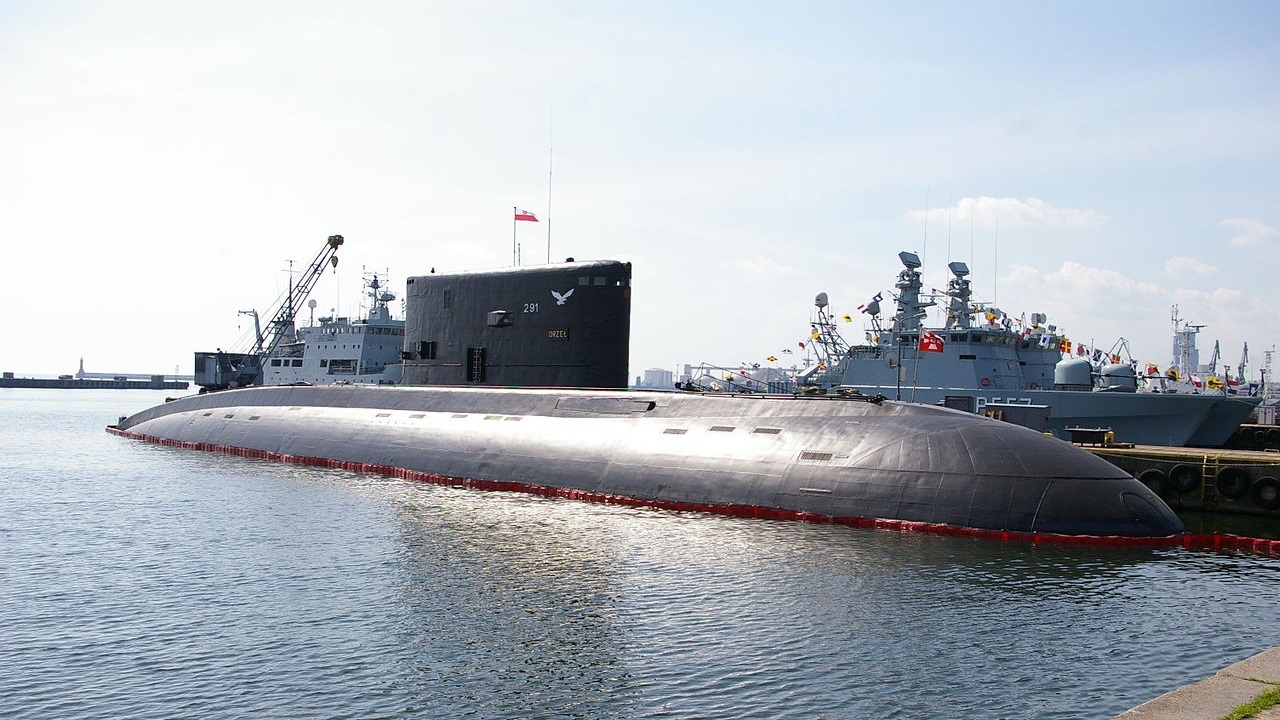
Polish Navy submarine, Kilo-Class.
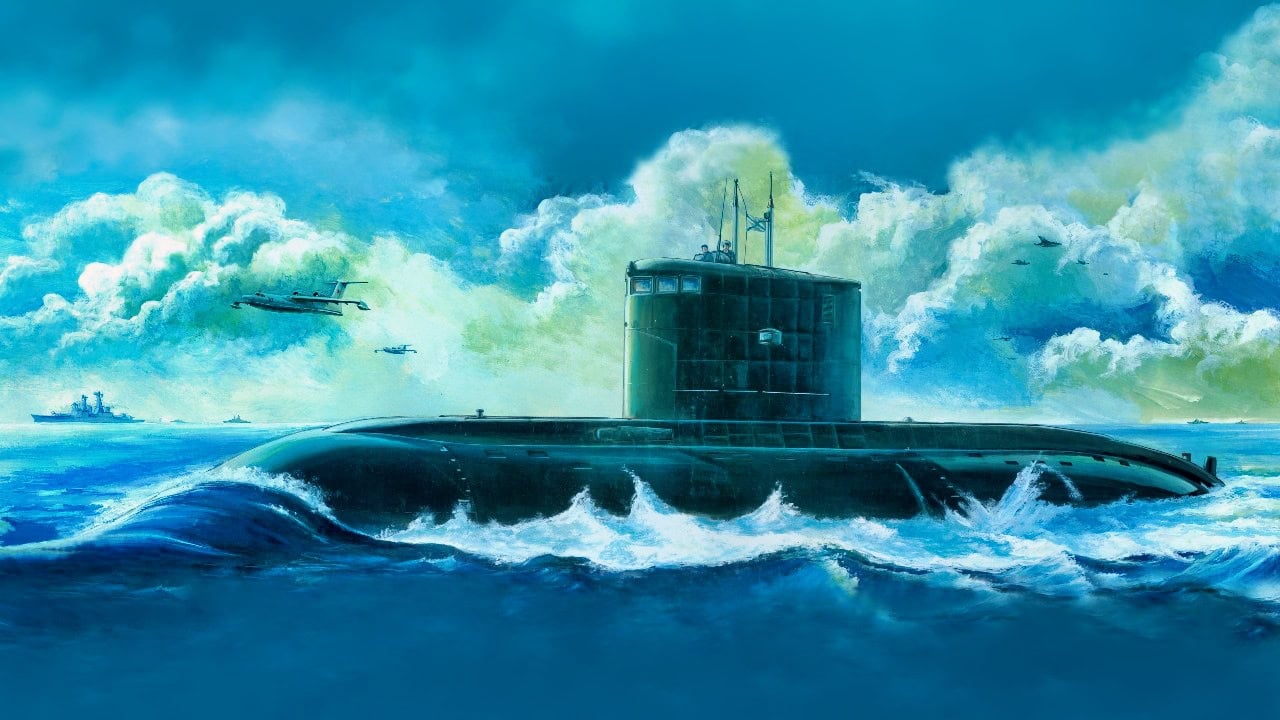
Kilo-Class Submarine
The Upgrade That Never Came
The Foxtrot’s upgrade story is short, because the Soviet answer to an aging design was a new one.
The class received sonar and weapons refreshes but no transformation; instead TsKB-18 produced the Tango, Project 641B, a quieter interim boat, and then the design that made the Foxtrot obsolete overnight: the Kilo, the teardrop-hulled, anechoic-tiled successor from the same bureau, so quiet NATO called it the Black Hole, and so successful it was sold across the world to many of the same customers, China and Iran included.
Everything the Foxtrot was, long-ranged, torpedo-armed, cheap, exportable, the Kilo was while being nearly impossible to hear, and the comparison explains both boats: the Foxtrot taught the Soviet Union how to build and sell an ocean-going diesel submarine, and the Kilo perfected the product.
Soviet Foxtrots spent their final years as training targets for anti-submarine forces, teaching the hunters to find the boat that was easiest to detect, and Russia retired its last examples between 1995 and 2000.
The Foxtrot-Class Is Done
As of late August 2026, no navy on Earth operates a Foxtrot. The last one on any naval register was Ukraine’s Zaporizhzhia, the country’s only submarine, seized by Russian forces at Sevastopol in March 2014; she never sailed again under any flag.
The survivors are exhibits, and the exhibits themselves are dying. B-39, the boat that drew crowds on the San Diego waterfront for seventeen years, rusted past saving and was towed to Ensenada for scrapping in February 2022 after winter storms tore sections of her outer skin away.
The Scorpion, B-427, has sat closed to visitors beside the Queen Mary at Long Beach since 2015, streaked with rust while her owners weigh removal. B-413 receives visitors at Kaliningrad’s Museum of the World Ocean, B-440 sits preserved at Vytegra, and INS Kursura draws steady crowds on Ramakrishna Beach at Visakhapatnam, a submarine parked on the sand of the nation she taught to run submarines. Seven of the seventy-five survive in any form.
And every December 8, the Indian Navy marks another Submarine Day, counting its years from the cold morning in Riga in 1967 when a Foxtrot made it an undersea service.
About the Author: Harry J. Kazianis
Harry J. Kazianis (@Grecianformula) was the former Senior Director of National Security Affairs at the Center for the National Interest (CFTNI), a foreign policy think tank founded by Richard Nixon based in Washington, DC. Harry has over a decade of experience in think tanks and national security publishing. His ideas have been published in the NY Times, The Washington Post, The Wall Street Journal, CNN, and many other outlets. He has held positions at CSIS, the Heritage Foundation, the University of Nottingham, and several other institutions related to national security research and studies. He is the former Executive Editor of the National Interest and the Diplomat. He holds a Master’s degree focusing on international affairs from Harvard University.

