
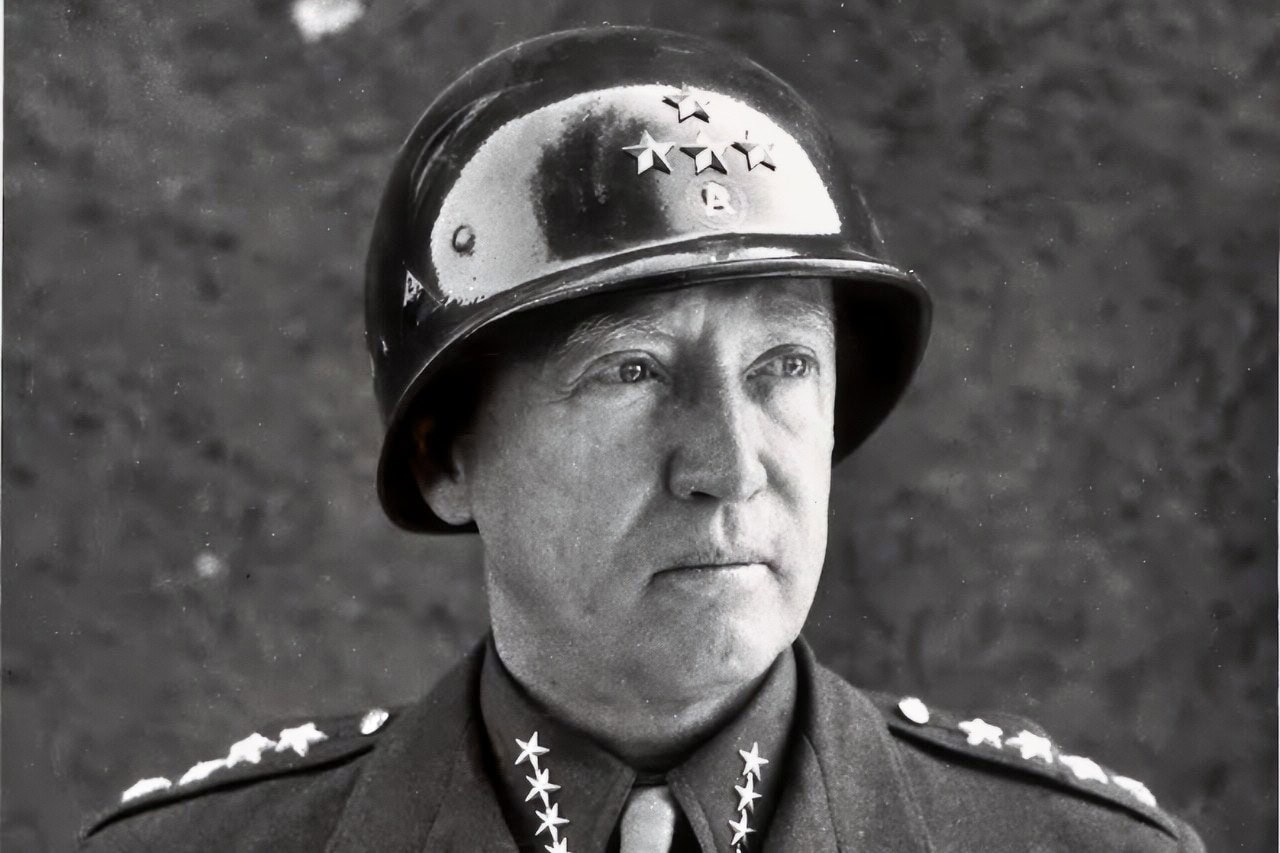
In the second week of December 1944, the commander of the United States Third Army ordered a quarter of a million copies of a prayer printed on wallet-sized cards and handed one to every soldier he commanded. No American general before or since has issued anything like it. The order’s origin is documented by the man who wrote the prayer, Chaplain James H. O’Neill, whose own account, preserved by the Patton Society, fixes the details: the telephone rang in his office at Third Army headquarters in Nancy, France, at about eleven on the morning of December 8, and General George S. Patton asked whether he had a good prayer for weather, because something had to be done about the rains if the war was to be won.

General Patton Portrait. Image Credit: Creative Commons.
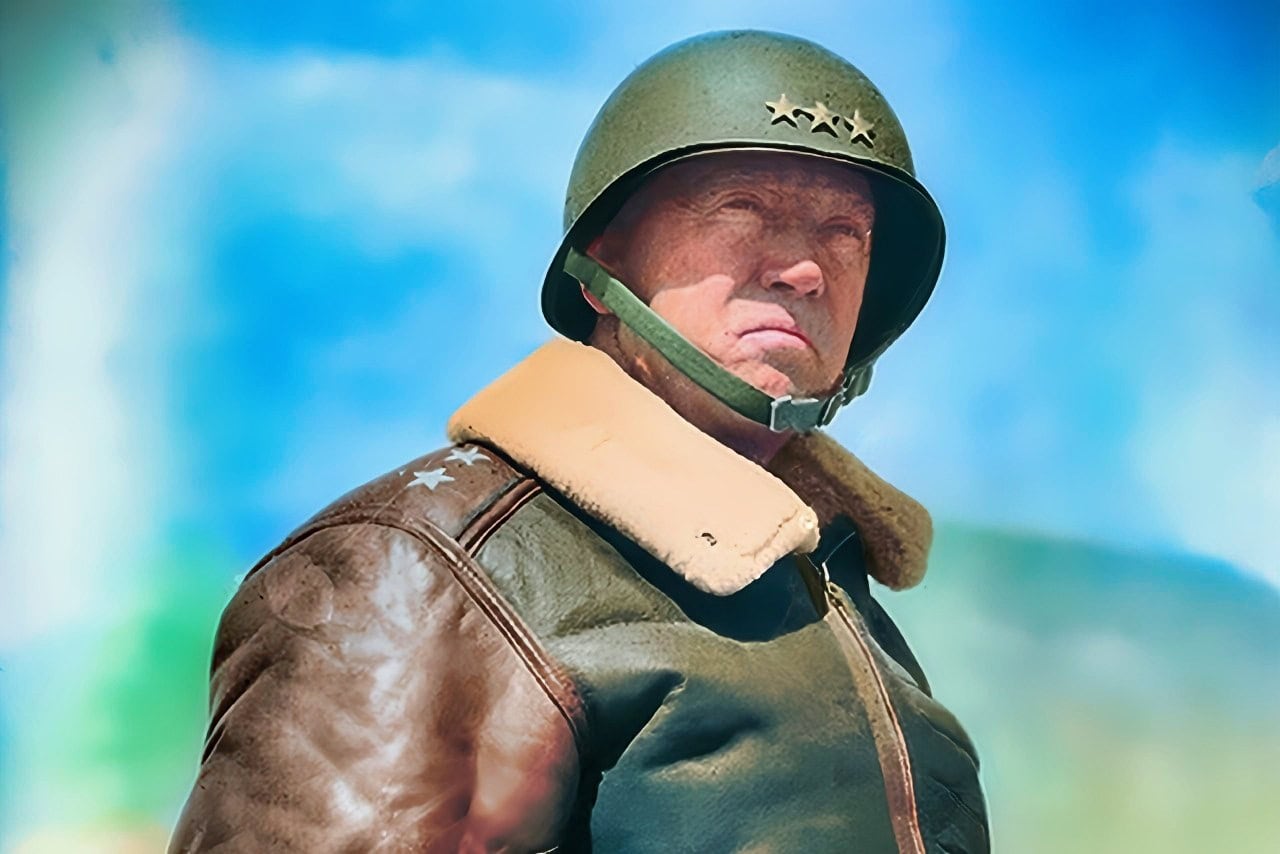
George Patton U.S. Army Photo
Patton wanted the prayer for the rains that had mired his Saar campaign since September.
Eight days later, the Germans handed the prayer that the battle would be named forever.
The Card
O’Neill searched his prayer books, found nothing suitable, and composed his own on a three-by-five card, a sixty-word petition asking the Almighty to restrain the immoderate rains and grant fair weather for battle.
Anticipating that Patton meant to circulate it, and with Christmas near, the chaplain added a suggestion of his own: the reverse side should carry the Army commander’s Christmas greeting to his troops.
Patton approved both sides, and the print run began: 250,000 cards, one per man, distributed through mid-December.

U.S. Army General George Patton. Image Credit: Creative Commons.
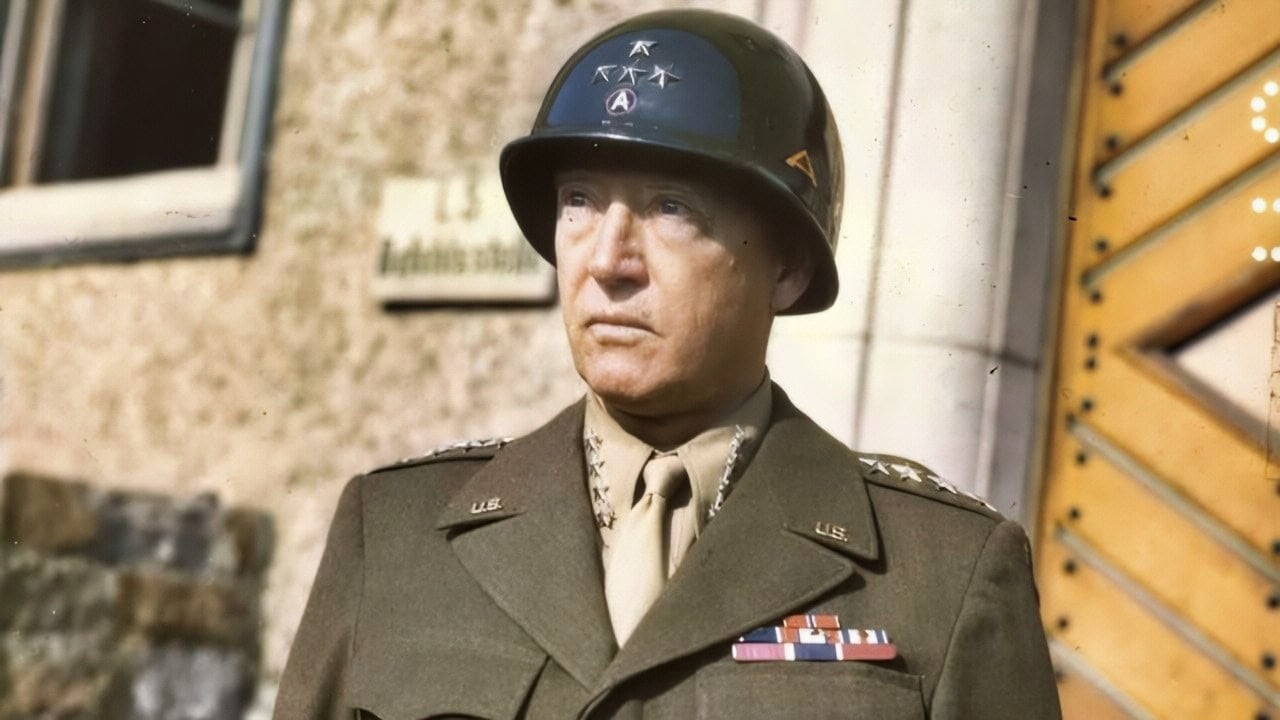
General George Patton U.S. Army Photo
The prayer was an official Third Army printing of 1944 and belongs to the public record:
“Almighty and most merciful Father, we humbly beseech Thee, of Thy great goodness, to restrain these immoderate rains with which we have had to contend. Grant us fair weather for Battle. Graciously hearken to us as soldiers who call upon Thee that, armed with Thy power, we may advance from victory to victory, and crush the oppression and wickedness of our enemies, and establish Thy justice among men and nations. Amen.”
The cards were half of a campaign.
On December 14, Patton also directed that O’Neill’s Training Letter No. 5, an instruction on the importance of prayer, go out not merely to the chaplains but to every Third Army commander down to regimental level.
Patton’s theology, as O’Neill recorded it, was characteristically practical: he ranked prayer with planning and training as a component of victory, a current a soldier plugged into.
The Battle
On December 16, more than 200,000 German troops smashed through the thinly held Ardennes front in the war’s last great western offensive, and the weather the prayer addressed became a weapon.
Thick overcast grounded Allied air power, the one advantage the Germans could not match, and their columns drove west beneath a protective ceiling of cloud.
The road junction of Bastogne, where seven paved routes met, became the battle’s hinge; the 101st Airborne Division and attached armor were trucked in ahead of the tide, and by December 21, the town was surrounded.
The defenders fought in deep cold, short of ammunition and medical supplies, and the same overcast that hid the German columns made aerial resupply impossible.
On December 22, offering surrender terms, the acting commander, Brigadier General Anthony McAuliffe, returned the one-word reply that entered legend. Relief was already moving.
At the Allied crisis conference at Verdun on December 19, Patton had promised to disengage three divisions, wheel his army ninety degrees, and attack north within days, a pivot his staff had drafted in advance and his troops executed through freezing rain and snow, the cards riding in their pockets.
December 23
Then the sky opened.
On December 23, a high-pressure system swept in, the overcast broke, and the air forces flew: hundreds of C-47s dropped ammunition and medicine into the Bastogne perimeter while fighter-bombers fell on the German columns that had moved untouched for a week.
The defenders held through the heaviest assaults on Christmas Eve and Christmas Day, and on December 26, the 4th Armored Division’s lead tanks broke through to Bastogne, the spearhead of the army-sized pivot, the day after Christmas.
The siege was lifted; the Bulge took another month to erase.
Patton’s reaction is recorded in O’Neill’s account and Kershaw’s history: the chaplain, he declared, had done some potent praying, and he wanted to pin a medal on him. O’Neill received the Bronze Star.
He retired years later as a brigadier general, and one of the original cards sits in a museum case in Georgia today.
The Strangest Order at 81
Armies have prayed before battle for as long as there have been armies.
What no army had done was this: a formal staff product, drafted on request, approved by the commander, printed in an edition of a quarter million, and issued to every soldier like ammunition.
The card was pure Patton, the same officer who calculated his profanity and costume for effect and taught that a pint of sweat saves blood, treating heaven as one more echelon to be coordinated.
Meteorologists correctly note that the December 23 clearing was a forecastable high-pressure system.
The men in the perimeter, watching the C-47s arrive under a blue sky with the cards in their pockets, may be forgiven their own conclusion.
The order stands alone in American military history, eighty-one years on: a general who, told the weather could not be commanded, put the request through channels anyway, in writing, in an edition of 250,000.
About the Author: Harry J. Kazianis
Harry J. Kazianis (@Grecianformula) was the former Senior Director of National Security Affairs at the Center for the National Interest (CFTNI), a foreign policy think tank founded by Richard Nixon based in Washington, DC. Harry has over a decade of experience in think tanks and national security publishing. His ideas have been published in the NY Times, The Washington Post, The Wall Street Journal, CNN, and many other outlets. He has held positions at CSIS, the Heritage Foundation, the University of Nottingham, and several other institutions related to national security research and studies. He is the former Executive Editor of the National Interest and the Diplomat. He holds a Master’s degree focusing on international affairs from Harvard University.

