
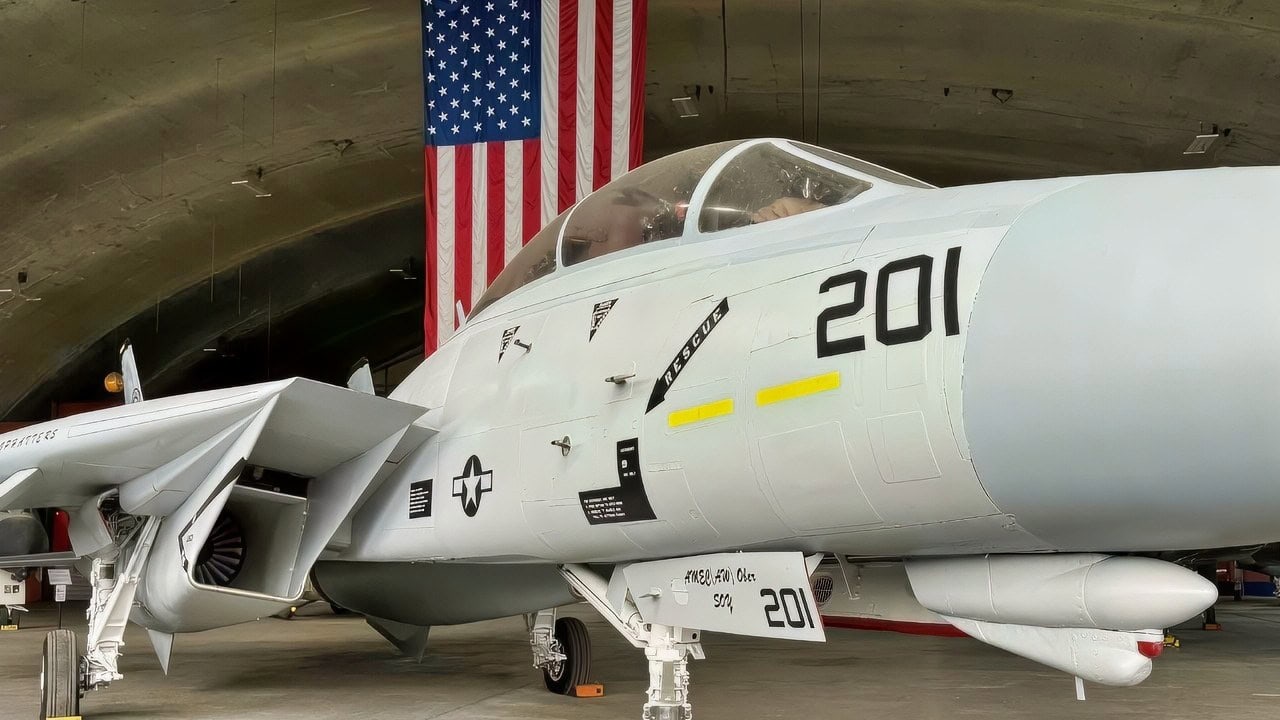
The Pentagon Shredded Retired F-14 Tomcats to Keep Their Parts From Iran – In 2007, a contractor at Davis-Monthan Air Force Base used a 100,000-pound mechanical shear and a 120,000-pound shredder to reduce retired F-14 Tomcats to pieces roughly two feet square. The Pentagon paid at least $900,000 to demolish 23 airframes, then inspected the wreckage for anything that might still be usable. The policy was aimed at one country: Iran.
The Navy retired the F-14 in September 2006 after 36 years of service. Iran was the only foreign customer. The Shah ordered 80 aircraft, and 79 reached Iran before the monarchy fell in 1979. The revolution ended American technical support, training, weapons deliveries, and the legal flow of replacement parts.

F-14 Tomcat. Image Taken by 19FortyFive.com
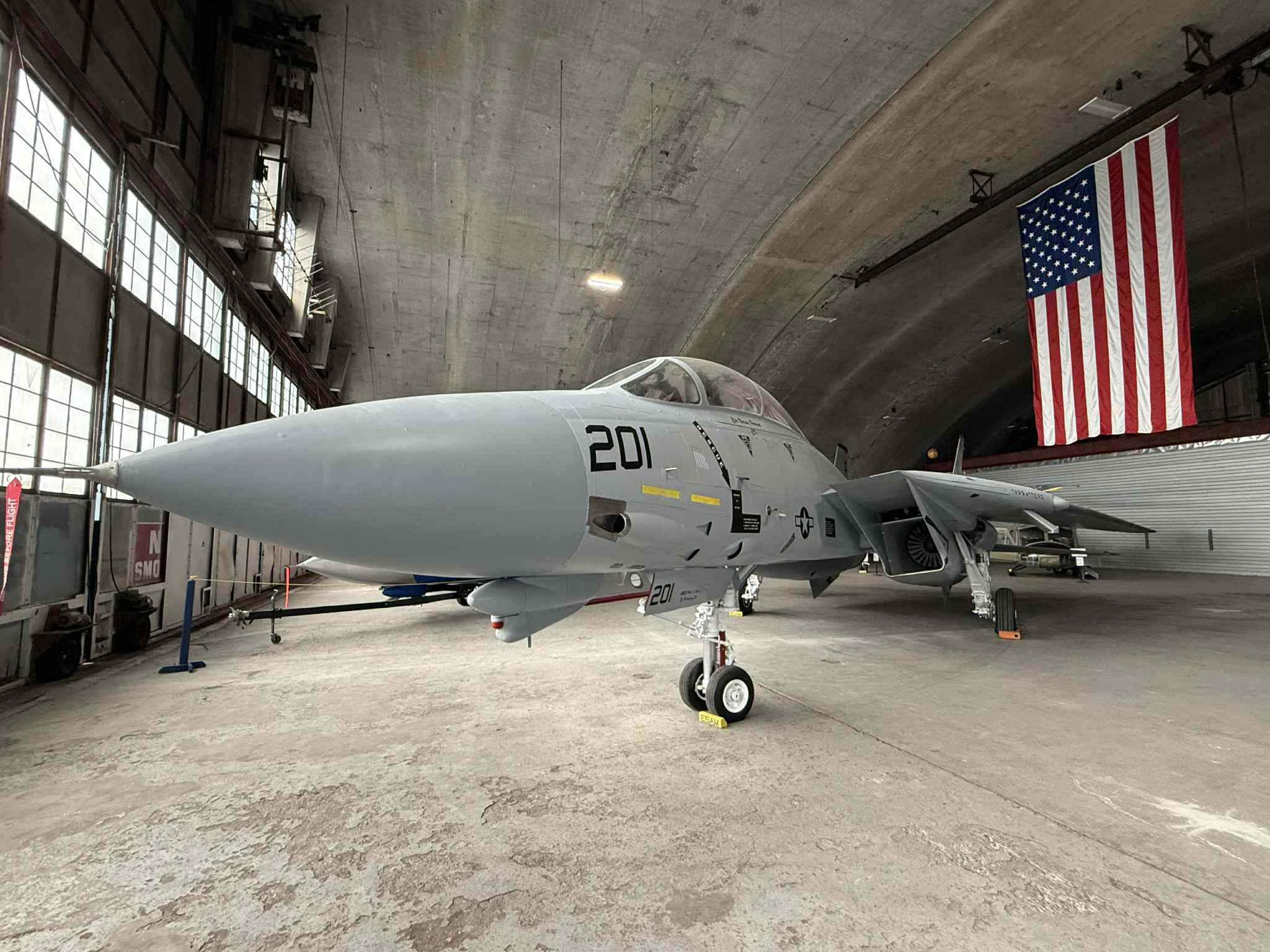
F-14 Tomcat. Image Taken by 19FortyFive.com
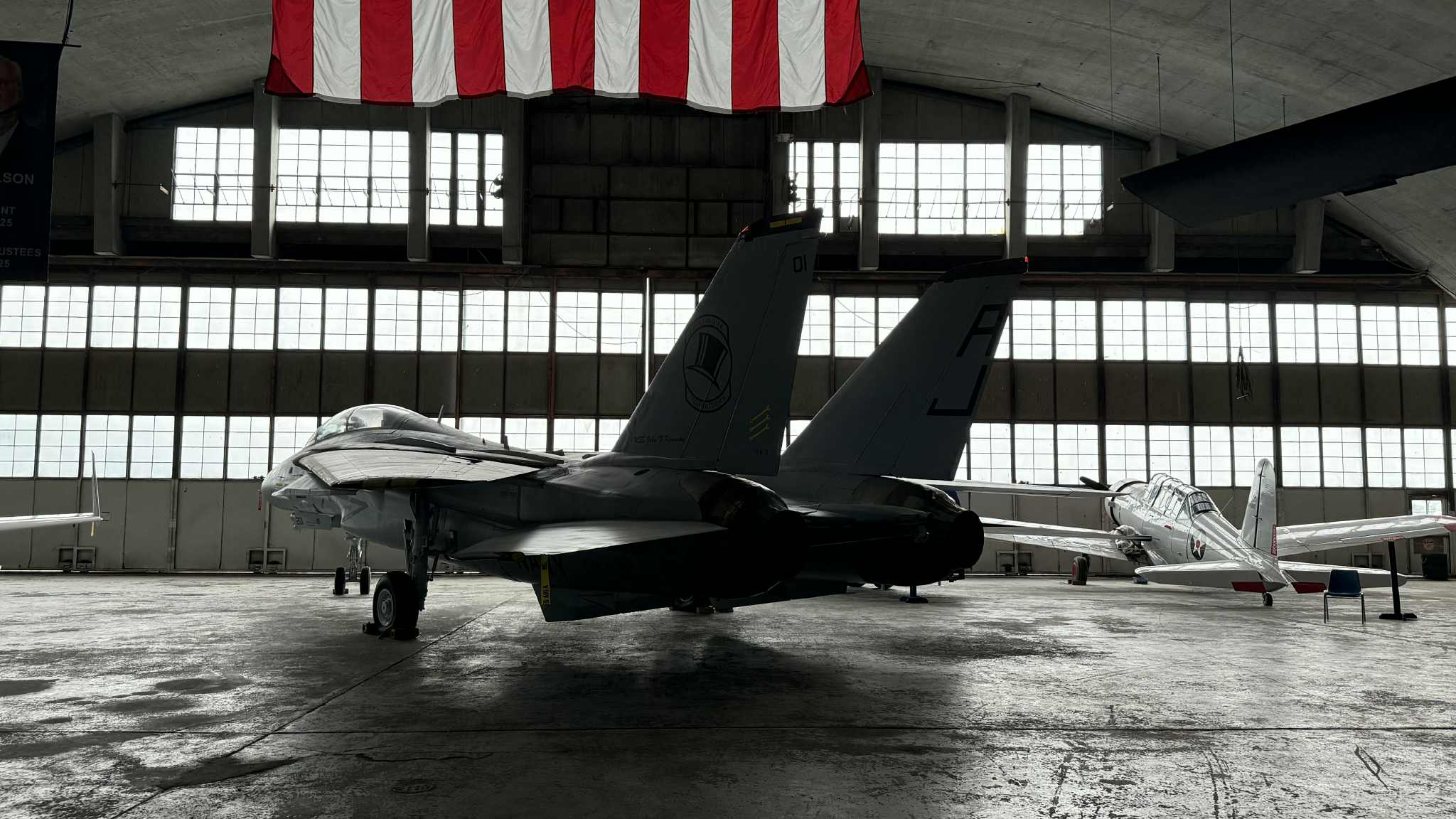
F-14 Tomcat. Image Taken by 19FortyFive.com
The Tomcats did not disappear. Iran returned a limited number to service during the Iran-Iraq War and used them as long-range interceptors, radar platforms, and defenders of oil infrastructure. The exact victory total remains disputed because wartime records were repeatedly altered. Operational strength fell from a target of about 60 aircraft to 40 in 1984 and 25 in 1986, driven by intensive flying and a shortage of qualified maintenance personnel.
By the time the Navy retired its fleet, Washington faced a second problem: its own disposal system. The Government Accountability Office found that 295 items requiring demilitarization, including F-14 parts, were sold in September 2006. A later database failure allowed roughly 1,400 newly controlled items identified as usable on the Tomcat to enter public sales in February 2007.
Iran Built Its Air-Defense Strategy Around the F-14
Iran originally bought the Tomcat to stop Soviet MiG-25 reconnaissance aircraft flying over its territory. The F-14’s AWG-9 radar and AIM-54 Phoenix missile offered detection and engagement ranges unavailable from Iran’s other fighters. The same complexity made the aircraft dependent on specialized electronics, hydraulic components, engines, tires, actuators, and radar parts.
Tehran answered the embargo through cannibalization, domestic manufacturing, and illicit procurement. Iranian technicians produced simpler items such as tires and brake components, removed equipment from grounded aircraft, and worked to reproduce harder systems. The result was a combat fleet sustained without normal factory support, although the number of fully mission-capable aircraft remained far below the original delivery total.
The Pentagon’s Surplus Market Became the Weak Point
Retired military equipment often passed through public auctions after the services decided it had no further use. Export controls were supposed to stop sensitive components from leaving the country. Investigations showed that coding errors, weak databases, and middlemen created openings between a Pentagon auction and the final overseas buyer.
The Defense Logistics Agency halted every F-14 parts sale in January 2007. Reuters reported that the catalog contained roughly 76,000 parts. About 60 percent were common aircraft hardware, 10,000 were unique components marked for destruction, and another 23,000 also fit other aircraft and required review. A blanket halt was easier to enforce than asking every auction employee to distinguish a harmless fastener from a flight-critical Tomcat component.
The Pentagon Chose Destruction Over Long-Term Storage
The Davis-Monthan demolition made the policy physical. Contractors tore off wings, broke fuselages and cut landing gear with torches before the metal entered the shredder. Not every American F-14 was destroyed. Museums retained demilitarized aircraft, but the government no longer treated recoverable boneyard airframes as ordinary surplus.
Congress made the restriction permanent in the 2008 defense authorization law. Section 1035 prohibited Pentagon sales of F-14 aircraft, unique parts, tooling and dies and barred export licenses to non-U.S. buyers. The law preserved an exception for American museums and historical organizations.
Shredding Raised the Cost of Every Iranian Repair
The American action did not ground Iran’s fleet overnight. Tehran already possessed airframes, stored components, and decades of experience maintaining the aircraft. It continued to display overhauled Tomcats and claimed new electronics and weapons, part of the long effort to keep the last foreign F-14 force in service. The scale and reliability of those upgrades have never been transparent.
Destroying the U.S. airframes still removed the easiest reservoir of engines, landing gear, wing mechanisms, radar modules, and cockpit equipment.
Every unavailable American part forced Iran to cannibalize another jet, manufacture a substitute, or use a smuggling network.
That pressure shaped Iran’s repeated overhaul programs and its attempt to replace aging Phoenix stocks with local weapons.
The Phoenix system’s long-range reach explains why Tehran invested so heavily in preserving the aircraft.
Iran Still Has Not Published an Airworthy Count
Any surviving F-14 remains a 1970s design with a large radar signature, old engines, and a maintenance burden no local modification fully removes. Iran’s pursuit of newer fighters reflects the limits of sustaining the Tomcat indefinitely.
The Navy had already reached the same conclusion when it replaced the aircraft with the F/A-18E/F Super Hornet, a decision shaped by cost, reliability, and the burden of an aging swing-wing fleet.
Commercial satellite imagery showed several F-14s destroyed at Isfahan after Israeli strikes in March 2026, but it did not establish the fate of the entire inventory. Iranian state media later released footage presented as a surviving aircraft.
The age and provenance of that footage remain disputed, and Tehran has not published a current combat-ready count.
About the Author: Harry J. Kazianis
Harry J. Kazianis (@Grecianformula) was the former Senior Director of National Security Affairs at the Center for the National Interest (CFTNI), a foreign policy think tank founded by Richard Nixon based in Washington, DC. Harry has over a decade of experience in think tanks and national security publishing. His ideas have been published in the NY Times, The Washington Post, The Wall Street Journal, CNN, and many other outlets worldwide. He has held positions at CSIS, the Heritage Foundation, the University of Nottingham, and several other institutions related to national security research and studies. He is the former Executive Editor of the National Interest and the Diplomat. He holds a Master’s degree focusing on international affairs from Harvard University.

