
The Pentagon’s advanced research agency is starting to build a new generation of hypersonic cruise missiles that will fly farther and faster–as well as possibly higher–than the current spate of weapons entering the US military’s arsenal today.
This comes at a time when the US has lagged the Russians, the Chinese, and even possibly the Iranians and North Koreans, when it comes to the deployment of usable hypersonic weapons.
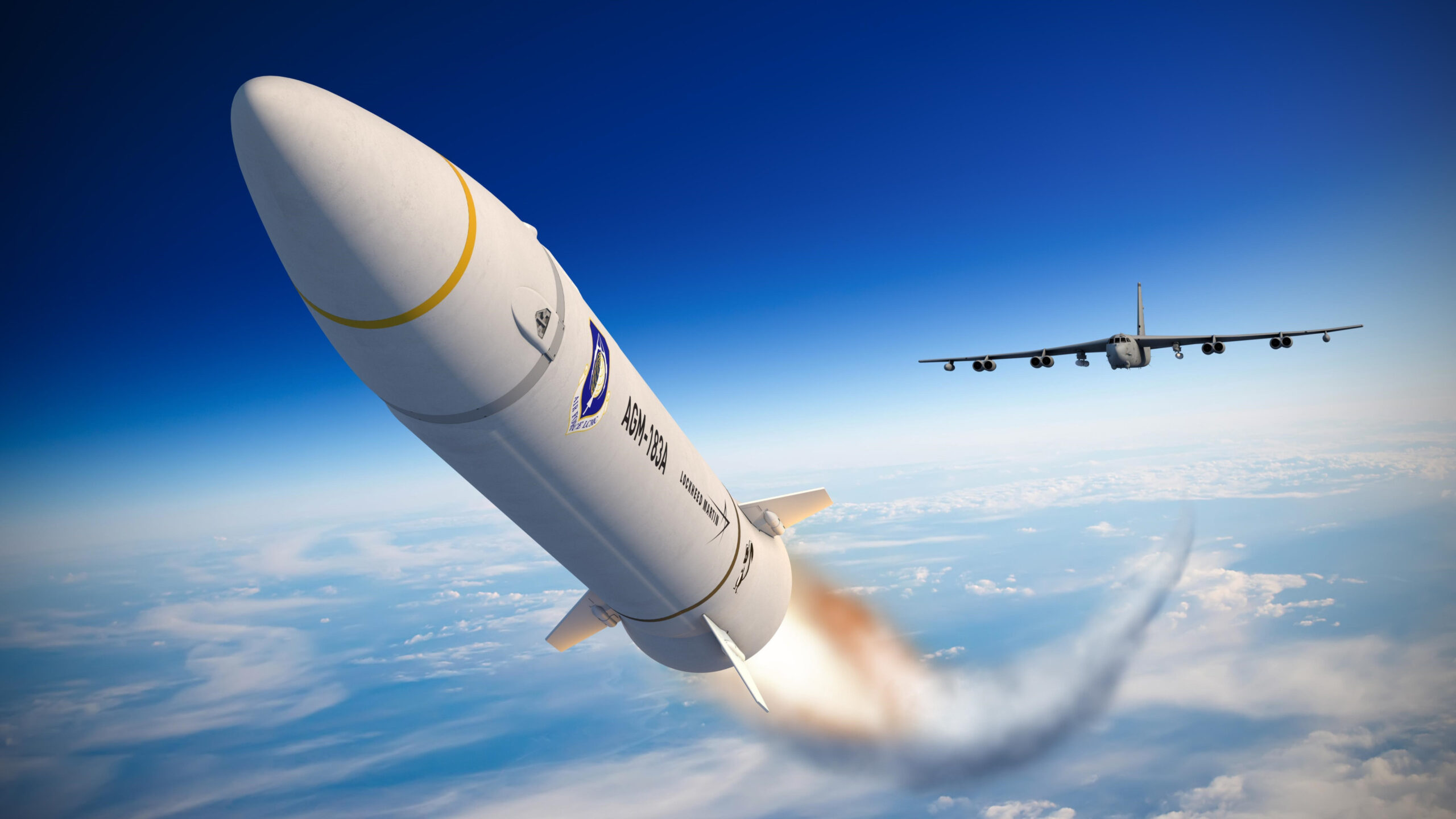
Hypersonic Missiles fired from B-52. Image Credit: Creative Commons.
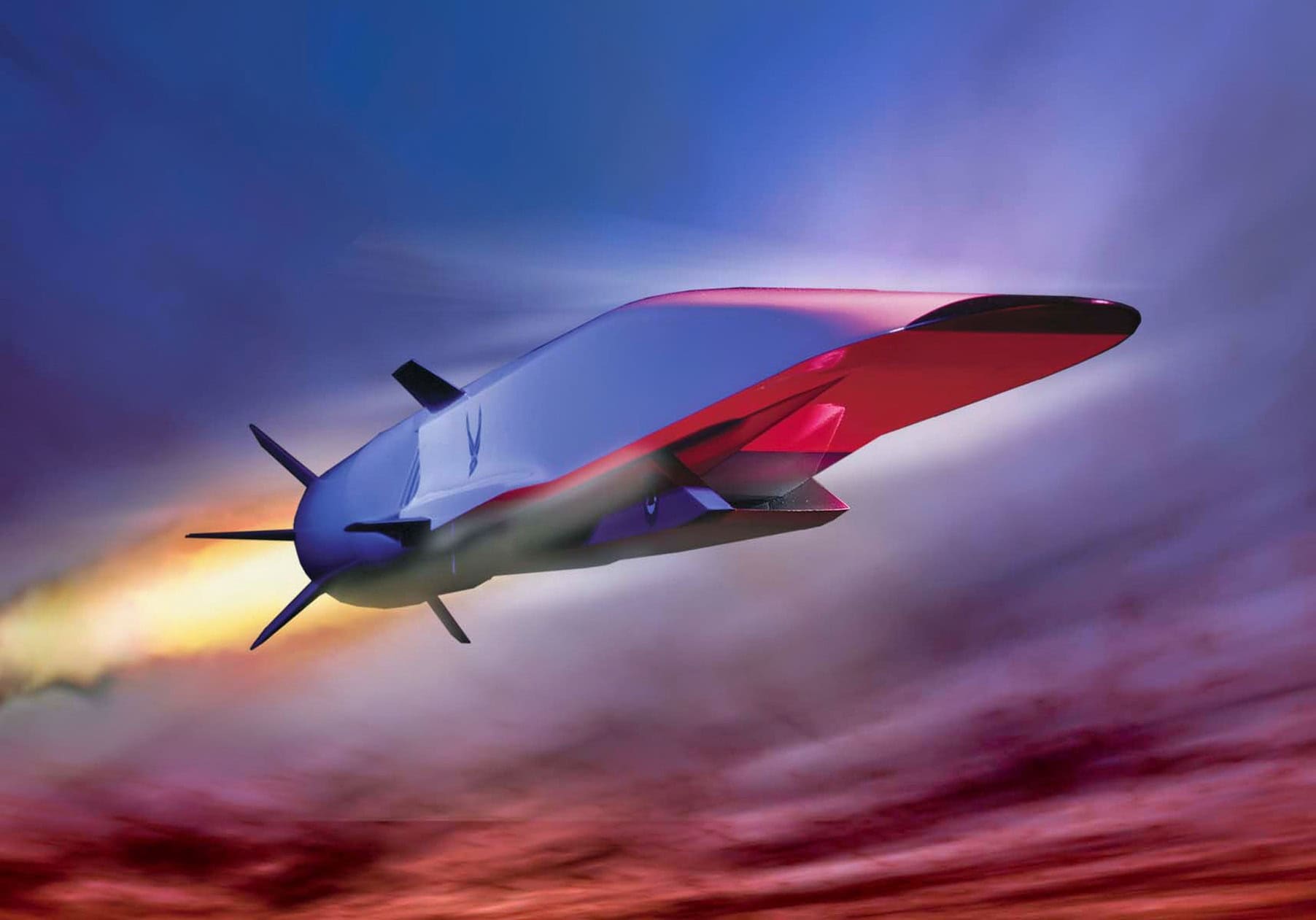
The X-51A Waverider is set to demonstrate hypersonic flight. Powered by a Pratt Whitney Rocketdyne SJY61 scramjet engine, it is designed to ride on its own shockwavem and accelerate to about Mach 6. (U.S. Air Force graphic)
The Defense Advanced Research Projects Agency, DARPA, issued a notice to defense contractors last week for a system they’ve taken to calling the “Next-Generation Hypersonic Cruise Missile” (NGHCM). The objective is eventually to design, build, and flight-test a fully integrated missile demonstrator.
DARPA wants a real improvement in the range, cruising speed, and altitude of the hypersonic missile. Current iterations in America’s arsenal allegedly hit above Mach 5. DARPA requires something more than this.
America’s new NGHCM would be used against targets deep within heavily defended enemy territory while remaining difficult for enemy air defenses to either track or intercept.
DARPA is also interested in enhancing its midcourse maneuverability and reducing the missile’s detectable signature. So, they’re trying to make a long-range, high-flying, stealth hypersonic cruise missile.
The New Wave of Hypersonic Weapons
The program is meant to be the next stage of hypersonic weapons development.
Of course, the first stage of hypersonic weapons, as noted above, has not really hit the mark for the United States (compared to many of its American rivals).
DARPA wants to blast beyond the incremental design improvements and create something next-level — but affordable.
Indeed, the expense of transitioning experimental hypersonic weapons technology into systems that can be meaningfully scaled has presented its own set of problems for widespread adoption by the United States Armed Forces.
DARPA is therefore examining high-risk, high-reward technologies that can produce much larger improvements in overall performance.
Building on work initially conducted under DARPA’s earlier Hypersonic Air-Breathing Weapon Concept (HAWC), DARPA worked alongside the United States Air Force (and defense contractors) on the HAWC design during the early 2020s. Indeed, several successful flight tests occurred, too.
Air-breathing hypersonic cruise missiles employ scramjet engines. Unlike other systems that use rockets to accelerate a glide vehicle before it travels toward its intended target, scramjet-powered weapons “breathe in” oxygen from the atmosphere while flying.
Thus, air-breathing missiles are smaller and more efficient, allowing aircraft to carry more of them.
HACM Comes First
This effort by DARPA to create a better hypersonic weapon comes as the Air Force prepares to field its first operational air-breathing hypersonic cruise missile (the “Hypersonic Attack Cruise Missile,” or HACM).
Raytheon has stepped up to become a major player in the HACM project. HACM is scheduled for production next year.
The Air Force’s fiscal 2027 budget request contains over $1 billion for HACM funding, including $404 million for production and $805 million for research and development of this weapon.
The F-15SE Strike Eagle will be the first aircraft equipped with the HACM, although the missile will eventually be integrated into other Air Force airframes.
Other Hypersonic Systems
The Air Force is also developing the Air-Launched Rapid Response Weapon (ARRW), a larger boost-glide system intended for bombers.
The ARRW struggled through earlier test complications. But the Air Force requested another $797 million for the ARRW program, indicating a clear commitment to building an arsenal of hypersonic weapons in various sizes.
Meanwhile, the Army and Navy are developing variants of a boost-glide hypersonic weapon.
DARPA’s new project will not replace these other systems under development.
Instead, DARPA is thinking of the second generation of these weapons. Unlike the first generation, where the Americans got outpaced by their rivals, DARPA wants to ensure that the United States pioneers the next iteration of these devastating systems.
Simply reaching Mach 5 with hypersonic weapons is clearly not enough.
The Pentagon is now looking toward hypersonic missiles capable of traveling farther, maneuvering more effectively, and surviving increasingly sophisticated air defenses.
About the Author: Brandon J. Weichert
Brandon J. Weichert is the Senior National Security Editor at 19FortyFive.com. He also manages The Weichert Brief on Substack. Weichert also hosts “National Security Talk” on Rumble. He is the author of four bestselling national security books, the most recent of which is A Disaster of Our Own Making: How the West Lost Ukraine (Encounter Books). Follow him via Twitter/X @WeTheBrandon.