
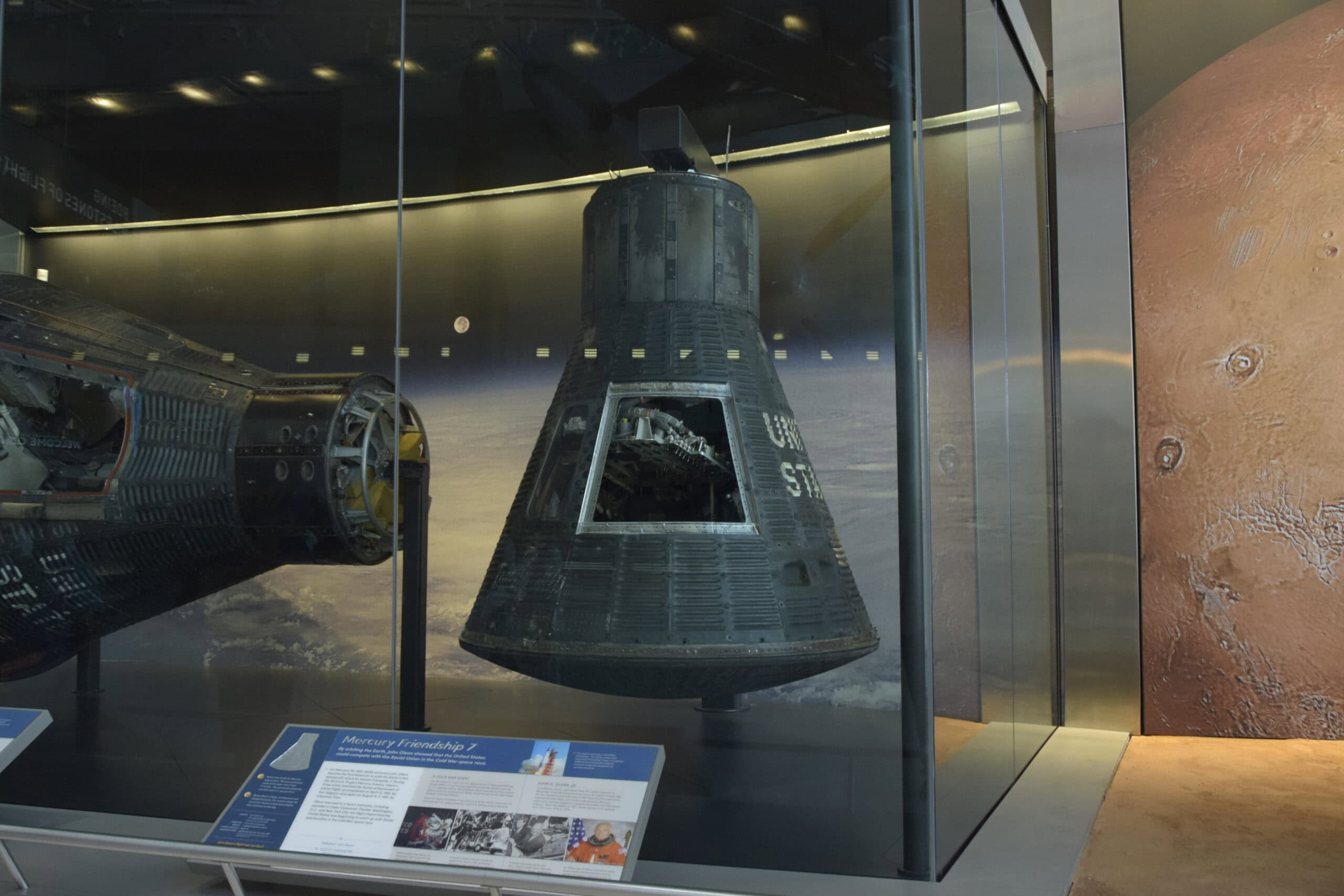
Sixty-one years ago today, on August 28, 1965, ten men swam down 205 feet to a steel cylinder resting on the edge of an undersea canyon off La Jolla, California, and moved in. The habitat was SEALAB II, the United States Navy’s boldest experiment in living on the ocean floor, and the man leading the first team through the hatch was Commander Malcolm Scott Carpenter, one of the original Mercury Seven astronauts, three years removed from orbiting the Earth.
Three teams of ten would rotate through in fifteen-day shifts over a 45-day program.
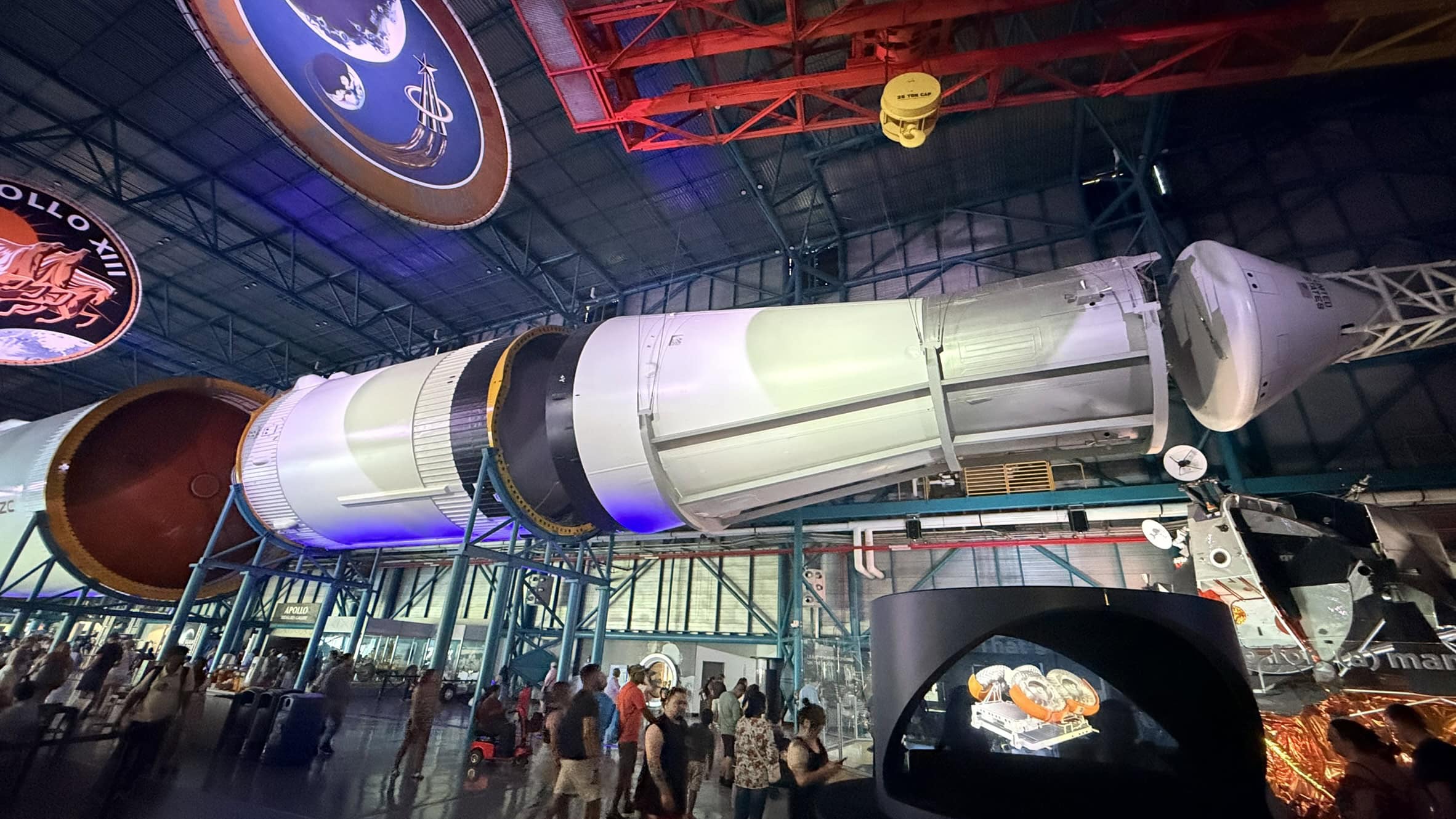
Apollo 11 and Saturn V Exhibit at the Kennedy Space Center. Taken on 6/28/2026 by 19FortyFive.com
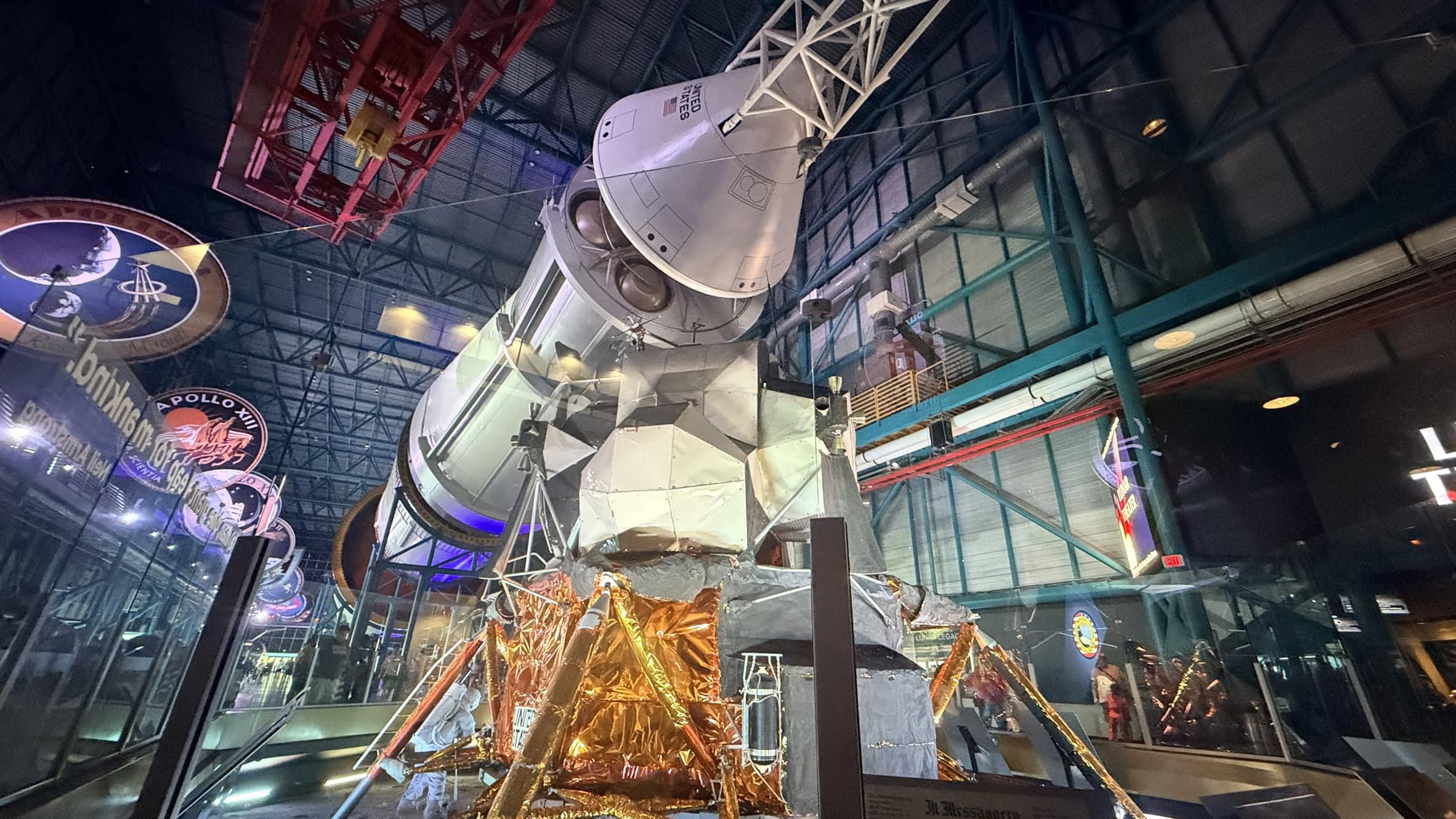
Apollo 11 and Saturn V Exhibit at the Kennedy Space Center. Taken on 6/28/2026 by 19FortyFive.com
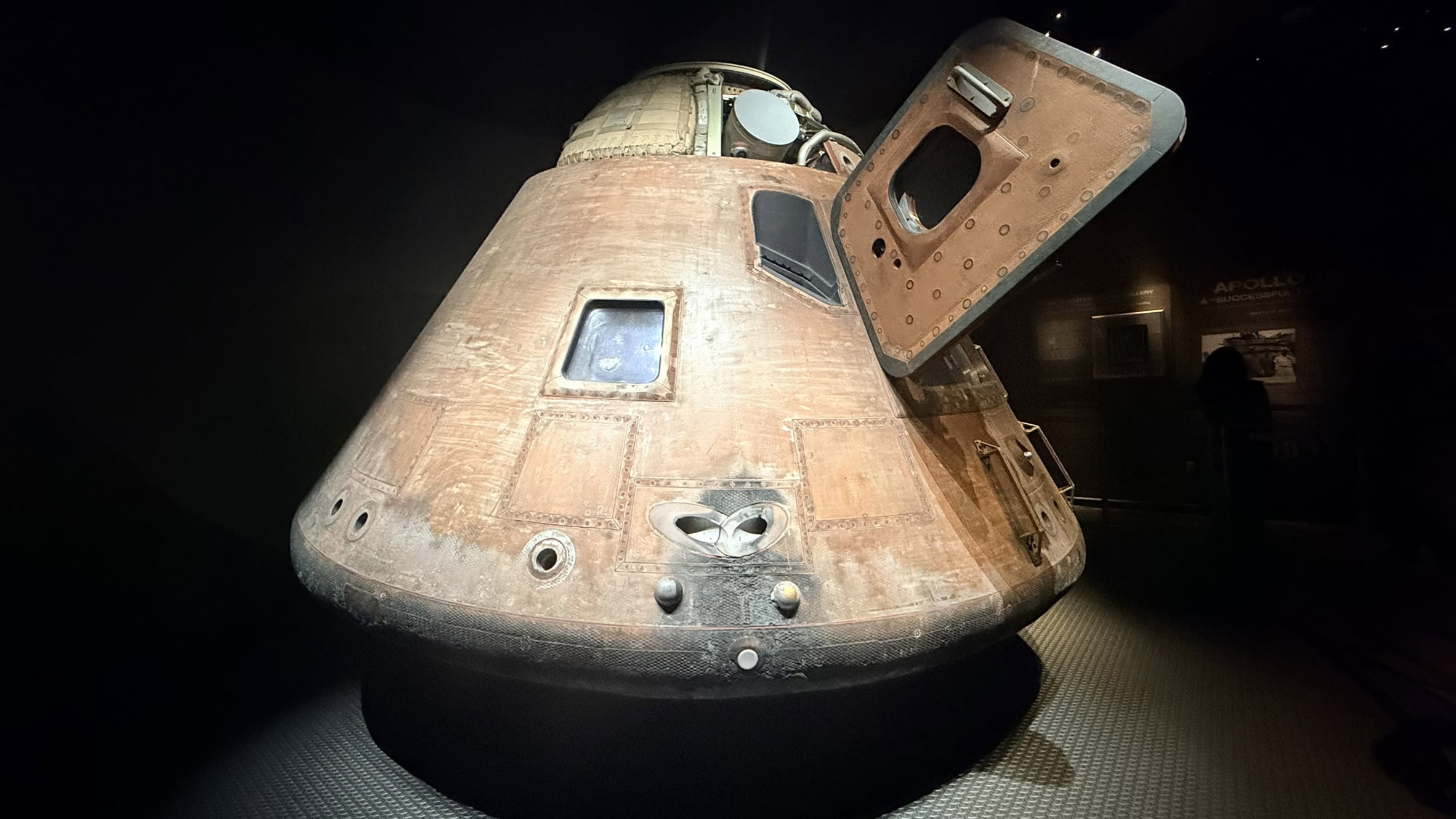
Apollo 11 Capsule. NASA Kennedy Space Center 19FortyFive Image Taken on June 28, 20226.
Carpenter stayed down through two of them, thirty consecutive days on the bottom of the Pacific, a record at the time and a number no astronaut mission of the era came close to matching.
The Tiltin’ Hilton
The Navy had proven the concept the year before with SEALAB I, a small habitat that kept four divers alive for eleven days off Bermuda, and the program’s father, Captain George Bond, the Navy doctor the aquanauts called Papa Topside, scaled the second experiment up deliberately: colder water, murkier visibility, a working depth of 205 feet, conditions chosen to resemble real military diving rather than a demonstration.
The 57-foot cylinder his teams occupied was luxurious by comparison with its predecessor, with a science lab, hot showers, sleeping quarters, curtains on its eleven portholes, and a shark cage at the door, but the canyon ledge it landed on gave the whole structure a permanent list that sent loose objects sliding, and the first team christened it the Tiltin’ Hilton. Life inside was defined by the atmosphere.
To live at seven times surface pressure without nitrogen poisoning the mind, the aquanauts breathed a mix that was mostly helium with only a few percent oxygen, at roughly 103 pounds per square inch; the helium stripped heat from their bodies so quickly the habitat was kept around ninety degrees, it wrecked watches and instruments by seeping through their seals, and it pitched every voice up into cartoon register, so that the most consequential undersea experiment of the decade was conducted by men who sounded like Donald Duck.
The Point of It All
The science underneath the comedy was saturation diving, the idea that transformed undersea work.
A conventional diver at 205 feet owes a long decompression debt for every short visit; a saturated diver’s tissues absorb all the gas they can hold, after which the debt stops growing, and a man can live and work at depth for weeks and pay for the whole stay with a single decompression at the end. SEALAB II existed to prove that principle at working scale, and its teams spent their shifts diving in near-freezing darkness outside the habitat, testing salvage methods, tools, and an electrically heated drysuit, running physiology studies that became a standard reference, and working with a bottlenose dolphin named Tuffy, trained by the Navy’s marine mammal program to carry tools and lines from the surface to divers below.
Carpenter, who had flown Aurora 7 around the planet in 1962, wrote that the two frontiers should not be compared too quickly, that the sea’s explorers were years behind the astronauts in equipment and technique, which was precisely why the Navy wanted the experiment.
The month delivered one moment of perfect symbolism anyway: on August 29, Carpenter spoke by radiotelephone with Gordon Cooper and Pete Conrad aboard Gemini 5 as they orbited overhead, the first conversation between astronauts in space and an aquanaut on the seafloor, one American record-holder talking to two others past the entire habitable world.
Carpenter later placed a congratulatory call to President Lyndon Johnson from the decompression chamber, his helium-pitched voice so unintelligible that the tape circulated among Navy divers for decades as a treasured joke.
Thirty Days
Carpenter’s thirty straight days on the bottom made him the only human being of his era to hold endurance credentials in both frontiers, an astronaut who had circled the Earth and an aquanaut who had lived beneath the sea longer than anyone.
The program’s momentum carried over to SEALAB III in 1969, planned for triple the depth, where the death of aquanaut Berry Cannon ended the experiment and the habitat series.
What survived was everything the Tiltin’ Hilton proved: saturation diving became the foundation of commercial offshore work and Navy undersea operations worldwide, and NASA itself eventually sent astronauts to live in an undersea habitat to rehearse for space, the descendants of a crossover Carpenter invented in person.
Sixty-one years ago today, ten men swam down into the cold off La Jolla, and the one leading them had already been to space and decided the ocean was the harder frontier. He stayed a month to prove it could be lived in.
About the Author: Harry J. Kazianis
Harry J. Kazianis (@Grecianformula) was the former Senior Director of National Security Affairs at the Center for the National Interest (CFTNI), a foreign policy think tank founded by Richard Nixon based in Washington, DC. Harry has over a decade of experience in think tanks and national security publishing. His ideas have been published in the NY Times, The Washington Post, The Wall Street Journal, CNN, and many other outlets. He has held positions at CSIS, the Heritage Foundation, the University of Nottingham, and several other institutions related to national security research and studies. He is the former Executive Editor of the National Interest and the Diplomat. He holds a Master’s degree focusing on international affairs from Harvard University.

