The last thing Russia’s embattled ‘president’ Putin needs is more bad news. The war is going badly, the economy is tanking, antiwar sentiment is on the rise, and Muscovites and Saint-Petersburgers may soon have to be drafted into the ranks of the living dead. Only Vladimir Putin’s genocidal designs are progressing satisfactorily, as Russian missiles kill Ukrainian civilians every day.
Now, along comes the Kyiv International Institute of Sociology’s latest poll on Ukrainian attitudes toward war and peace.
Details follow below, but the bottom line is that Ukrainians remain unfazed by Putin’s savage bombardments and are committed to keep on fighting.
If Putin and his criminal cabal were hoping to demoralize Ukrainians and force them to surrender, they were sorely mistaken.
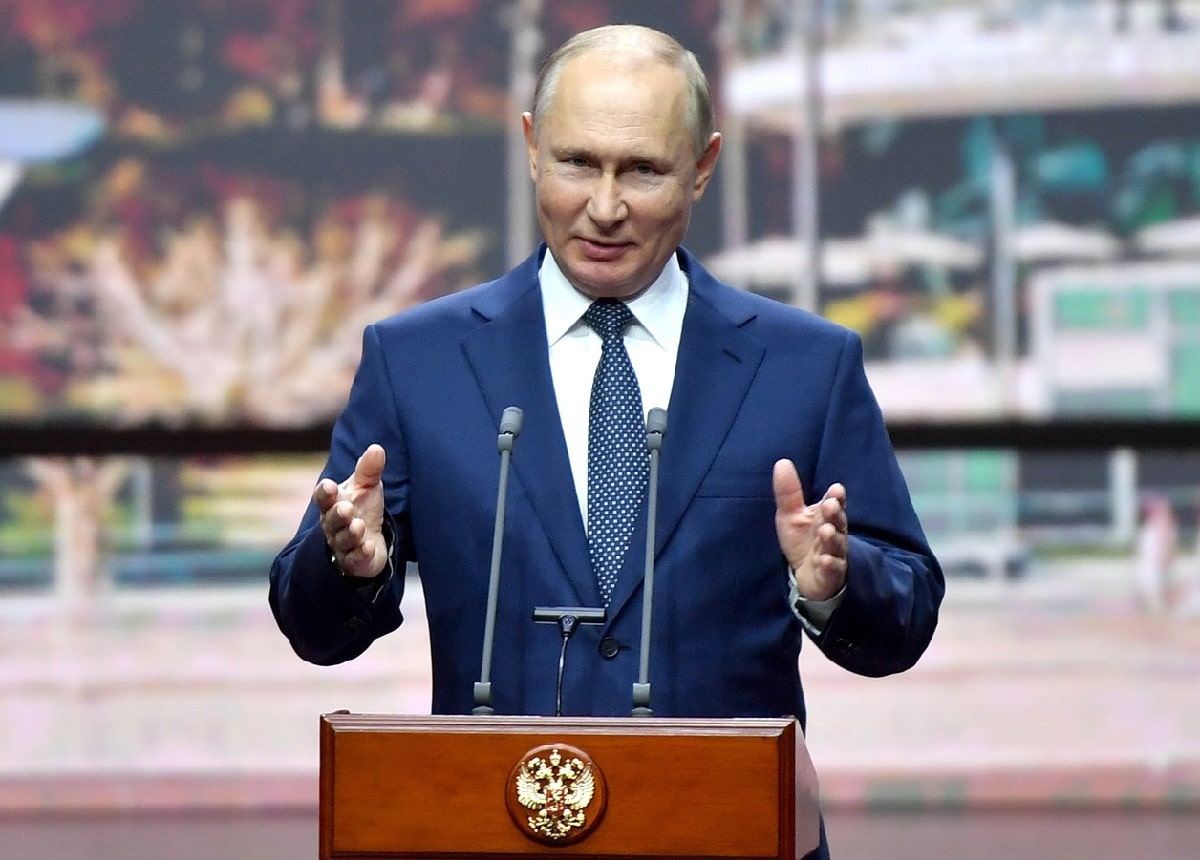
Russian President Putin. Image Credit: Creative Commons.
As the KIIS executive director put it:
“Our survey took place in a rather controversial period…. However, given the totality of circumstances, we see that Ukrainians still retain optimism and the intention to continue resisting the enemy. Although the Russian campaign of air strikes (especially with ballistic missiles) causes pain and suffering to Ukrainians, it does not break our will. Ukrainians understand that Russia and Russians are an existential threat, so the fight must continue.”
Here are some of the poll’s key findings:
-“The absolute majority of respondents – 77% – share the view that although Russia is advancing, it is [doing so] slowly and with heavy losses, and Ukraine is able to continue effective resistance.”
– “60% of respondents consider it categorically unacceptable to transfer the entire Donbas under Russian control in exchange for security guarantees…. Compared to April, fewer Ukrainians express readiness to approve this scenario.”
-A “majority rejects the proposal to withdraw Ukrainian troops in exchange for security guarantees…. Despite the merciless campaign of bombing Kyiv city with ballistic missiles and other means, the readiness of the city’s residents to approve the proposal has even decreased – from 34% to 26%. On the other hand, the number of those who are categorically against it has increased from 62% to 69%.”
-Regarding “’freezing’ the war on the current front line in exchange for security guarantees in the form of significant funding and weapons supplies, 59% are ready to approve it (although also mostly reluctantly). Categorically against this scenario – 31%.”
-“Only 21% of Ukrainians expect the war to end at least by the end of this year. And only 15% expect the war to end at least in the first half of 2027. Instead, 45% expect the war to end either in the second half of 2027 or later.”

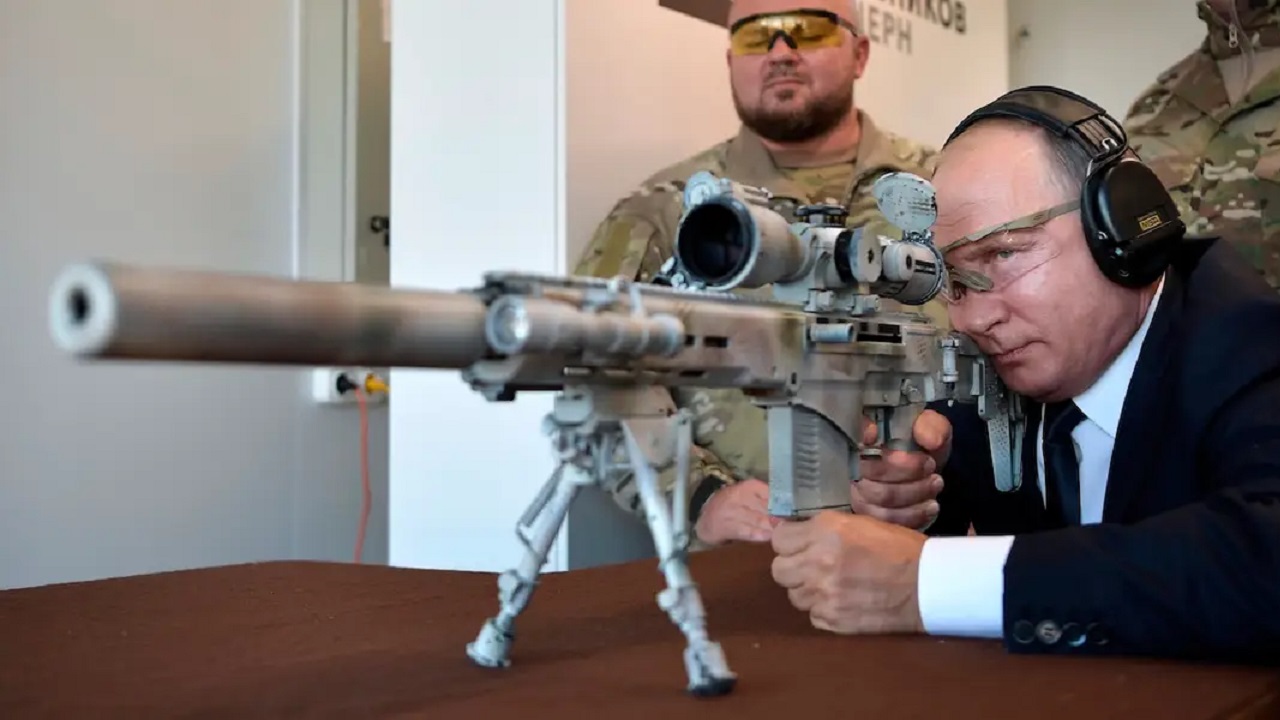
Russian military. Image: Creative Commons.
To repeat, despite (or because of Putin’s genocidal war, Ukrainians are determined to fight for as long as it takes. They’re willing to compromise, but they’re unwilling to commit suicide by accepting Putin’s (and quite possibly Donald Trump’s) terms. After all, if the choice is fighting or being killed, it’s hardly surprising that Ukrainians choose to fight.
Ukrainian determination to survive Putin is bad enough for him. Making matters worse is a recent podcast by one of Russia’s best exiled commentators, Michael Naki. Erudite and astonishingly well informed, Naki is resolutely opposed to Putin’s war and is unafraid to ask tough questions, such as the heading of an August 5 program, “What stands in the way of Putin’s being killed?”
Naki discusses three scenarios—an elite coup, a mass uprising, and a foreign assassination—and concludes they’re all unlikely. What makes his comments of great importance, however, are two things.
First, he dares to broach such a sensitive topic publicly, saying that his viewers have asked him to do so for the past two years. If Naki and his followers are asking this question, so must thousands of other Russians.
If nothing else, that’s a clear sign of Putin’s growing illegitimacy.
Second, and arguably more important, is Naki’s insight that speaking openly of a dictator’s demise is one way of routinizing that issue, raising doubts among elites and masses, and thereby hastening Putin’s end. The writing may be on the wall for the man who managed to turn what Naki terms Russia’s diamonds into coal.
Americans and Europeans should take heed. The war will continue as long as Putin continues it.
He started it, and only he can stop it or be compelled to stop it.
About the Author: Dr. Alexander Motyl, Rutgers University
Dr. Alexander Motyl is a professor of political science at Rutgers-Newark. A specialist on Ukraine, Russia, and the USSR, and on nationalism, revolutions, empires, and theory, he is the author of 10 books of nonfiction, including Pidsumky imperii (2009); Puti imperii (2004); Imperial Ends: The Decay, Collapse, and Revival of Empires (2001); Revolutions, Nations, Empires: Conceptual Limits and Theoretical Possibilities (1999); Dilemmas of Independence: Ukraine after Totalitarianism (1993); and The Turn to the Right: The Ideological Origins and Development of Ukrainian Nationalism, 1919–1929 (1980); the editor of 15 volumes, including The Encyclopedia of Nationalism (2000) and The Holodomor Reader (2012); and a contributor of dozens of articles to academic and policy journals, newspaper op-ed pages, and magazines. He also has a weekly blog, “Ukraine’s Orange Blues.”