
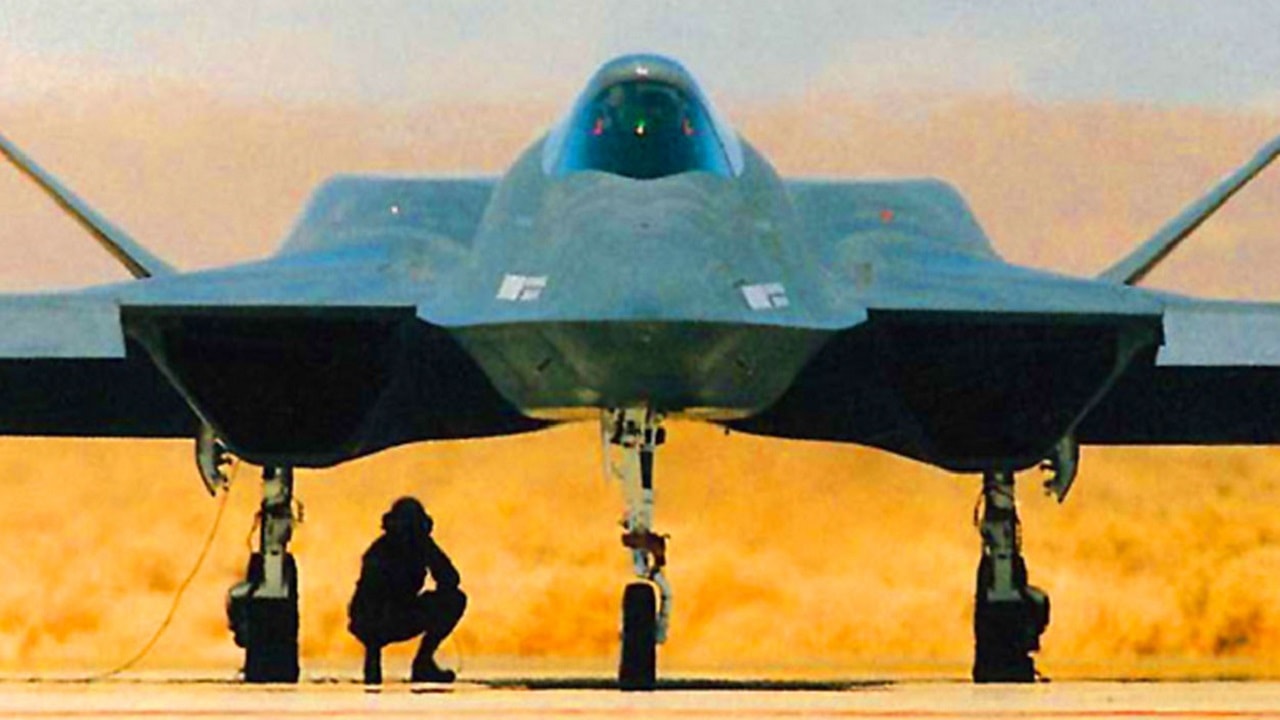
On April 23, 1991, the U.S. Air Force selected Lockheed’s YF-22 and Pratt & Whitney’s F119 engine for the Advanced Tactical Fighter program. Northrop’s YF-23 lost, yet the aircraft has gained supporters during the 35 years it has spent outside operational service.
The argument usually begins with three claims: the YF-23 was stealthier, faster in supercruise and better suited to long-range missions. Some of that case rests on official test history. Some rests on classified performance figures, proposed production designs and assumptions that cannot be verified publicly. An Air Force directive prevented any pilot from flying both prototypes, limiting direct handling comparisons.
The comparison is uneven. The F-22 became an operational aircraft and accumulated the costs, maintenance problems, and compromises attached to decades of service. The YF-23 remained two test vehicles that never faced production or fleet sustainment.
Both designs met the Air Force’s requirements. Northrop emphasized low observability, efficient high-speed flight, and reduced signatures. Lockheed emphasized maneuverability, visible weapons demonstrations, and a development plan the Air Force judged less risky.
The Air Force was not staging a simple dogfight tournament. It was a full-scale development program expected to produce hundreds of aircraft and serve for decades.
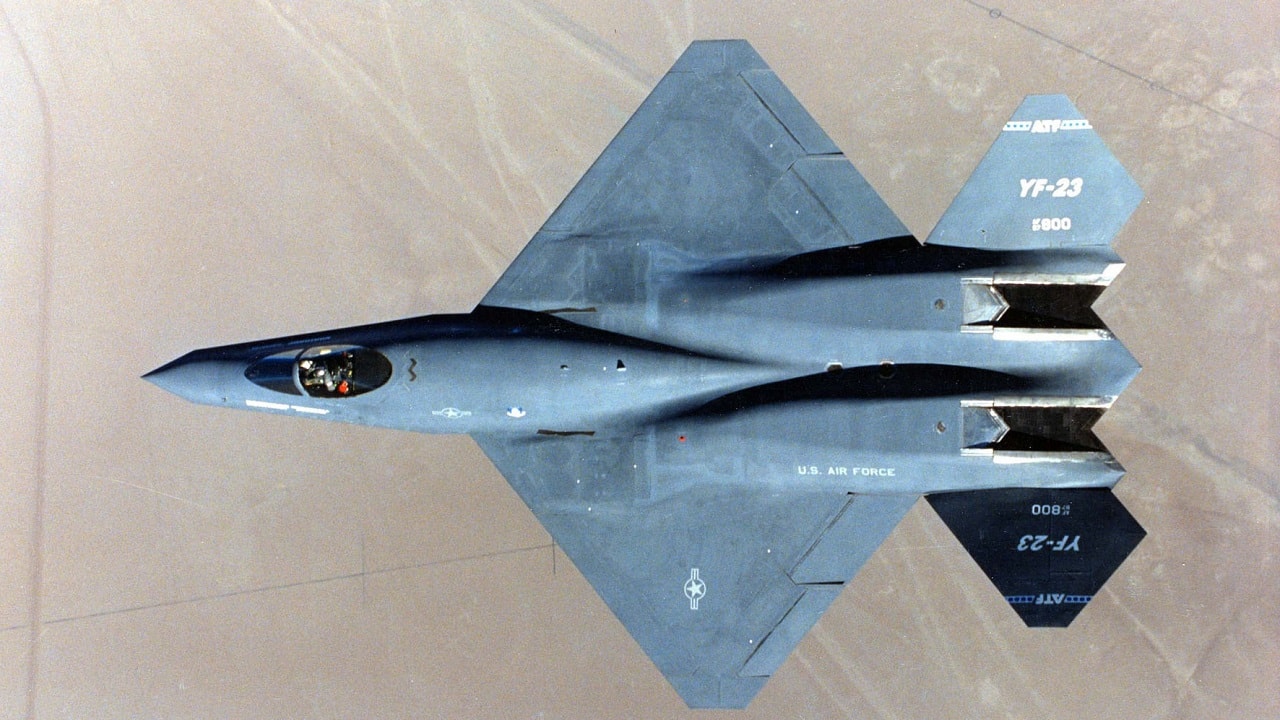
Image of YF-23, which looks similar to the fictional F-52 in Call of Duty.
1. The YF-23 Put Stealth Ahead of Thrust Vectoring
The YF-23’s diamond-shaped wing, aligned edges, widely separated engine bays, and sharply canted tails gave it one of the most distinctive planforms ever flown. Its exhausts sat in long troughs, and Northrop omitted thrust-vectoring nozzles to reduce weight and simplify rear-aspect signature control.
The National Museum of the U.S. Air Force says the design emphasized stealth. That supports the broad judgment, not the precise claims often repeated online. Radar-cross-section data remain classified, and no public record establishes a dependable percentage advantage over the YF-22.
Northrop accepted less control authority from the exhaust system in exchange for cleaner shaping and signature treatment. That choice remains central to the argument that the YF-23 was the more stealth-focused contender.
2. Its Supercruise Performance Built the Strongest Part of the Legend
The first YF-23 flew on August 27, 1990. During the climb, its F-16 chase aircraft needed afterburner while the Northrop prototype remained in military power. The program qualified for aerial refueling on its fourth flight and entered supersonic testing on its fifth.
Air Force Materiel Command’s history says the YF-23 tested supercruise through Mach 1.5. The first aircraft later reached Mach 1.8 during a flutter test. The maximum supercruise speed of the General Electric-powered second prototype remains classified; the official account says it was significantly higher than PAV-1’s.
The secrecy leaves room for exaggeration, but the achievement is firm. The YF-23 combined low drag with sustained supersonic flight without fuel-hungry afterburners. That performance drives the continuing debate over how fast the Black Widow II went.
3. The Design Appears Well Suited to Today’s Pacific Distances
Exact combat-radius comparisons remain unavailable. Neither prototype carried a production radar, complete mission systems, or an operational weapons load, and the proposed F-23 would have changed during engineering development. Claims assigning it a precise range advantage over the F-22 deserve caution.
The design still attracts attention because its priorities fit the current geography. Efficient supercruise, low drag, a large airframe, and reduced infrared exposure matter when aircraft must cover long distances and operate against layered sensors. Those traits look increasingly useful across the Western Pacific.

YF-23 Stealth Fighter. Image taken by Harry J. Kazianis for 19FortyFive.
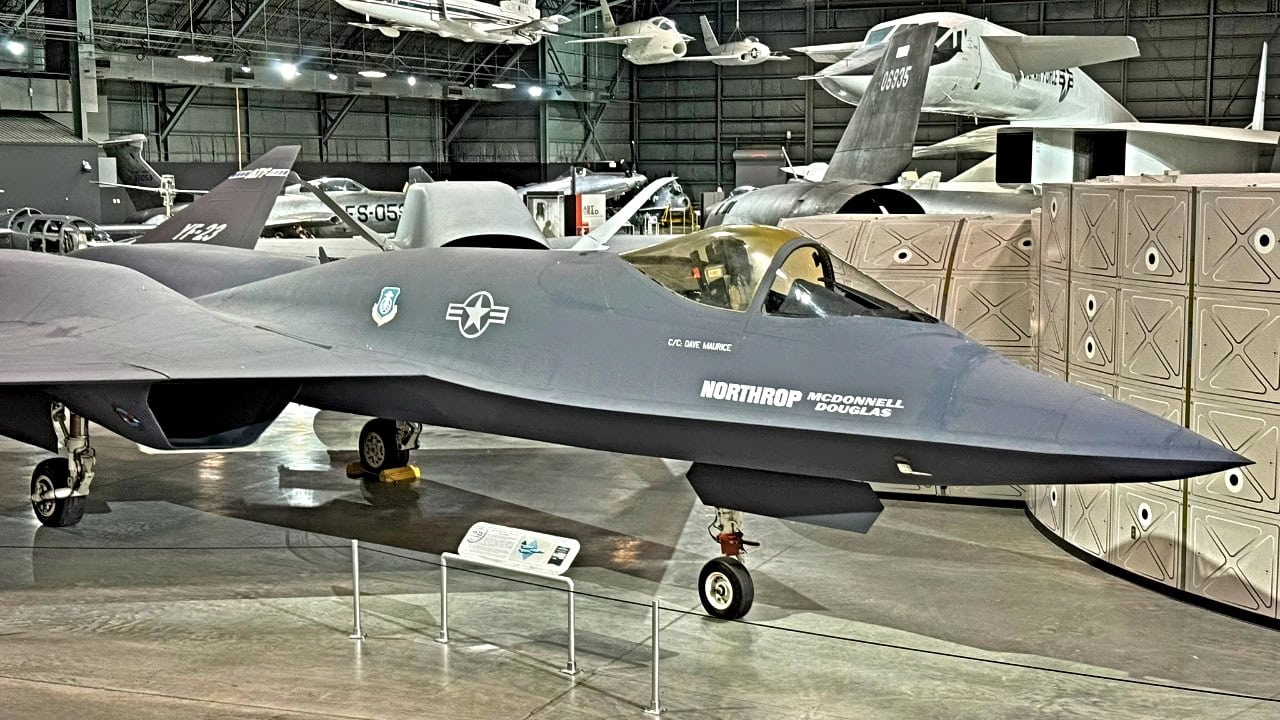
YF-23 Stealth Fighter. Image taken by Harry J. Kazianis for 19FortyFive.
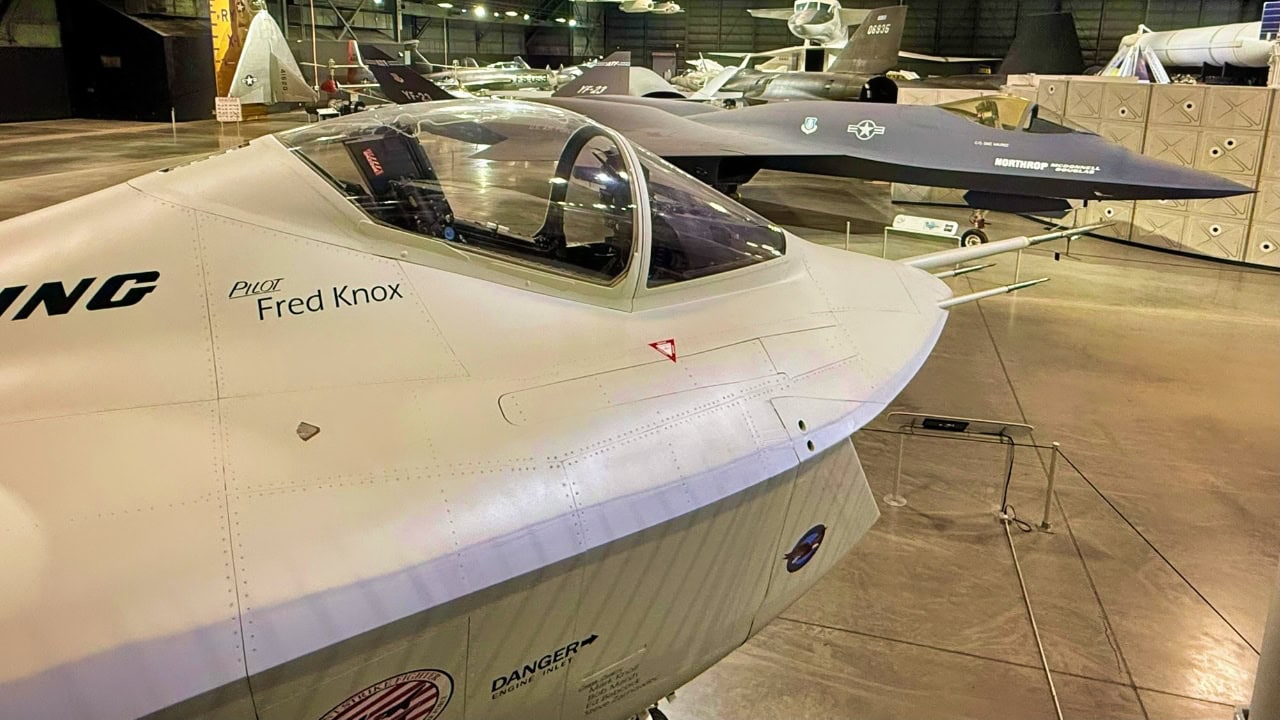
X-32 and YF-23 Together at U.S. Air Force Museum. 19FortyFive.com Image.
That does not turn a 1990 demonstrator into a ready answer for a 2026 requirement. It explains why the airframe continues to appear in discussions about future long-range carrier aviation and other hypothetical revivals. The attraction comes from the mission emphasis, not from a production blueprint waiting to restart.
4. The YF-23 Was More Agile Than Its Reputation Suggests
A common retelling reduces the contest to stealth and speed against dogfighting ability. That goes too far. In that official test-pilot discussion, YF-23 pilot Paul Metz described the aircraft as extremely agile. Its large V-tails and relaxed aerodynamic stability gave the flight-control system substantial authority.
The YF-22 delivered the stronger low-speed demonstration. Its two-dimensional thrust-vectoring nozzles helped it remain controlled at a 60-degree angle of attack and fire AIM-9 and AIM-120 missiles from internal bays during the test period.
Northrop performed no comparable live launch. Regardless of the formal scoring weight, the Lockheed demonstrations provided evaluators with additional evidence on bay operation, missile separation, and integration. That distinction helps explain why a capable Northrop fighter lost to a more extensively demonstrated proposal.
5. The YF-23 Never Had to Survive Production Reality
Only two YF-23s existed. They flew for less than four months in 1990, and neither carried the complete avionics, radar, or electronic-warfare system expected in combat. A selected F-23 would have gained weight, changed shape, and confronted the same cost and schedule pressures affecting every advanced fighter.
That unfinished status protects its reputation. The F-22 is measured through operational readiness, sustainment bills, modernization delays, and a production run capped at 187 operational aircraft. The YF-23 is measured through its best test points and an imagined production model without documented maintenance failures.
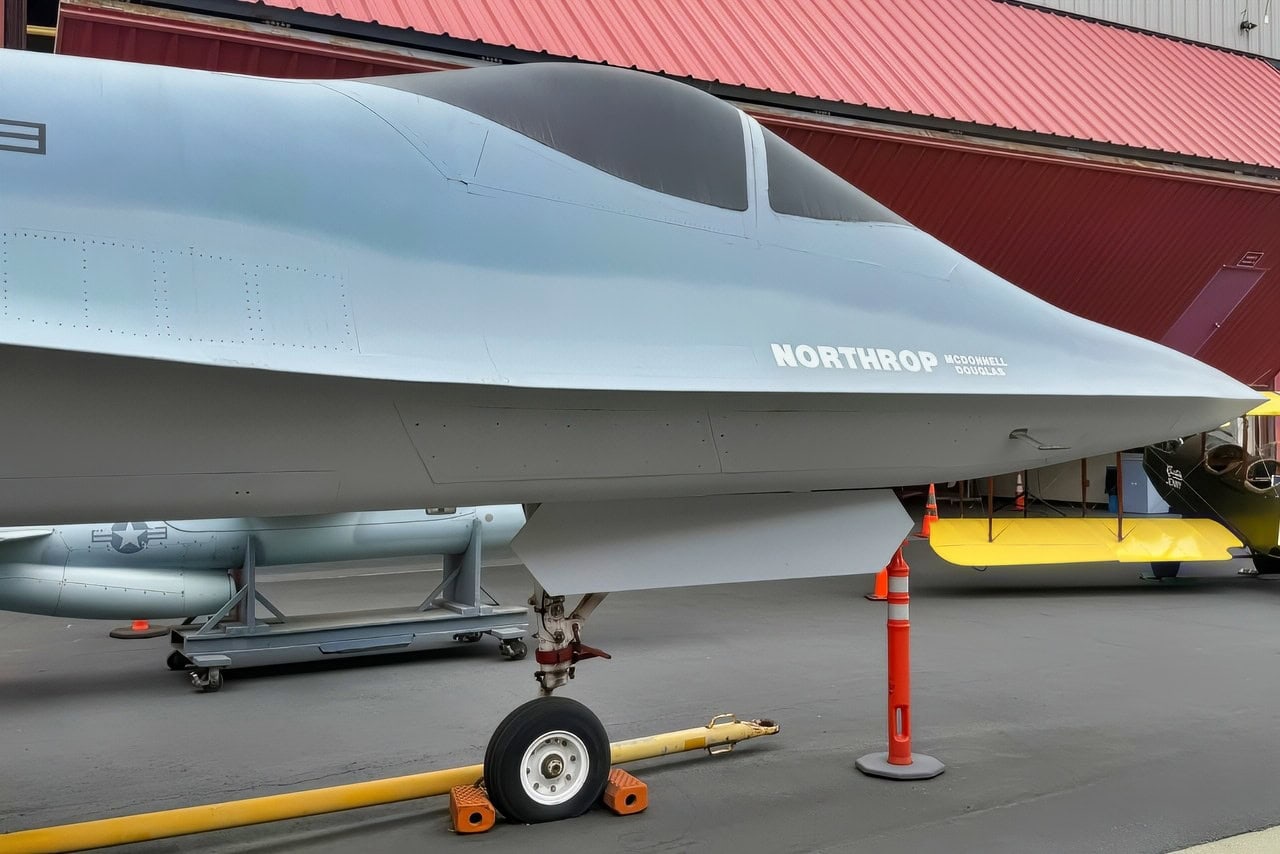
YF-23 Stealth Fighter. Image taken by Harry J. Kazianis for 19FortyFive.

YF-23. Image Credit: Harry J. Kazianis.
The imbalance fuels claims that the Air Force rejected the superior fighter. An F-23 might have delivered greater range or lower signatures. It also might have suffered cost growth, software trouble, or redesigns that erased part of its projected advantage. No flight-test record settles those questions.
6. The Aircraft Still Looks More Radical Than Its Successor
Its diamond wing, exhaust channels, and butterfly tail resemble later low-observable concepts. The aircraft looks newer than its 1990 first flight, suggesting that Northrop offered a design a generation ahead.
Appearance is not combat performance. The planform says little by itself about sensor fusion, electronic warfare, sortie generation, weapons reliability or the cost of maintaining low observability. The production F-22 developed those functions through years of engineering and testing that the YF-23 never received.
The two surviving prototypes reinforce the fascination. One is displayed at the National Museum of the U.S. Air Force in Dayton, Ohio. The other remains at the Western Museum of Flight in Torrance, California. Their different conditions and missing engines have become part of the YF-23’s museum-era story.
The F-22 Won Because the Air Force Selected a Weapons Program
The Advanced Tactical Fighter decision covered far more than the two prototypes. The Air Force evaluated the proposed production aircraft, engines, avionics, manufacturing approach, cost, schedule, and ability of each industry team to manage engineering development. The prototypes supplied evidence; they were not the complete products being purchased.
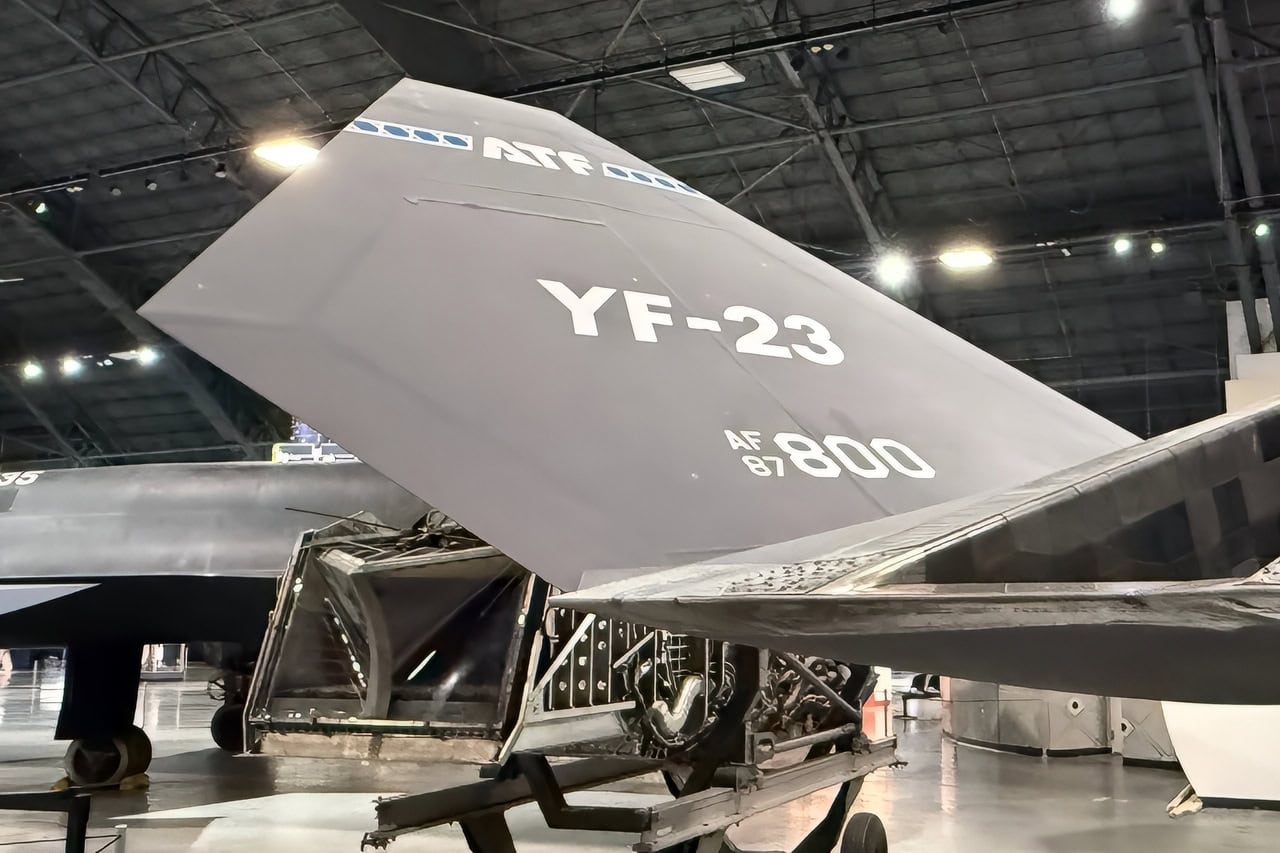
YF-23 Back End. 19FortyFive.com image.
The YF-22 made its strengths evident. It demonstrated thrust-vectoring control at extreme angles of attack, fired two missile types, and presented a configuration evaluator associated with lower development risk. The eventual F-22 combined stealth, integrated avionics, supercruise and thrust vectoring in an operational air-dominance aircraft. Those demonstrations shaped the fighter competition that changed the Air Force.
Management confidence carried equal weight. An Air University history says both contenders met the requirement, but evaluators considered the Lockheed team more likely to deliver. Northrop was struggling with B-2 problems, while McDonnell Douglas had suffered the cancellation of the over-budget A-12.
Lockheed’s victory did not establish that the YF-23 was slower, less stealthy or a poor fighter. It established that the YF-22 proposal scored better across the source-selection criteria used in 1991. Later F-22 cost growth and the early production cutoff keep the alternate-history argument alive.
The service chose the program it expected to turn into squadrons, not the prototype with the most compelling silhouette. Air Force Secretary Donald Rice said Lockheed offered “better capability with lower cost” and rated higher on almost every key criterion. “I would not describe it as a split decision.”
About the Author: Harry J. Kazianis
Harry J. Kazianis (@Grecianformula) was the former Senior Director of National Security Affairs at the Center for the National Interest (CFTNI), a foreign policy think tank founded by Richard Nixon based in Washington, DC. Harry has over a decade of experience in think tanks and national security publishing. His ideas have been published in the NY Times, The Washington Post, The Wall Street Journal, CNN, and many other outlets worldwide. He has held positions at CSIS, the Heritage Foundation, the University of Nottingham, and several other institutions related to national security research and studies. He is the former Executive Editor of the National Interest and the Diplomat. He holds a Master’s degree focusing on international affairs from Harvard University.

