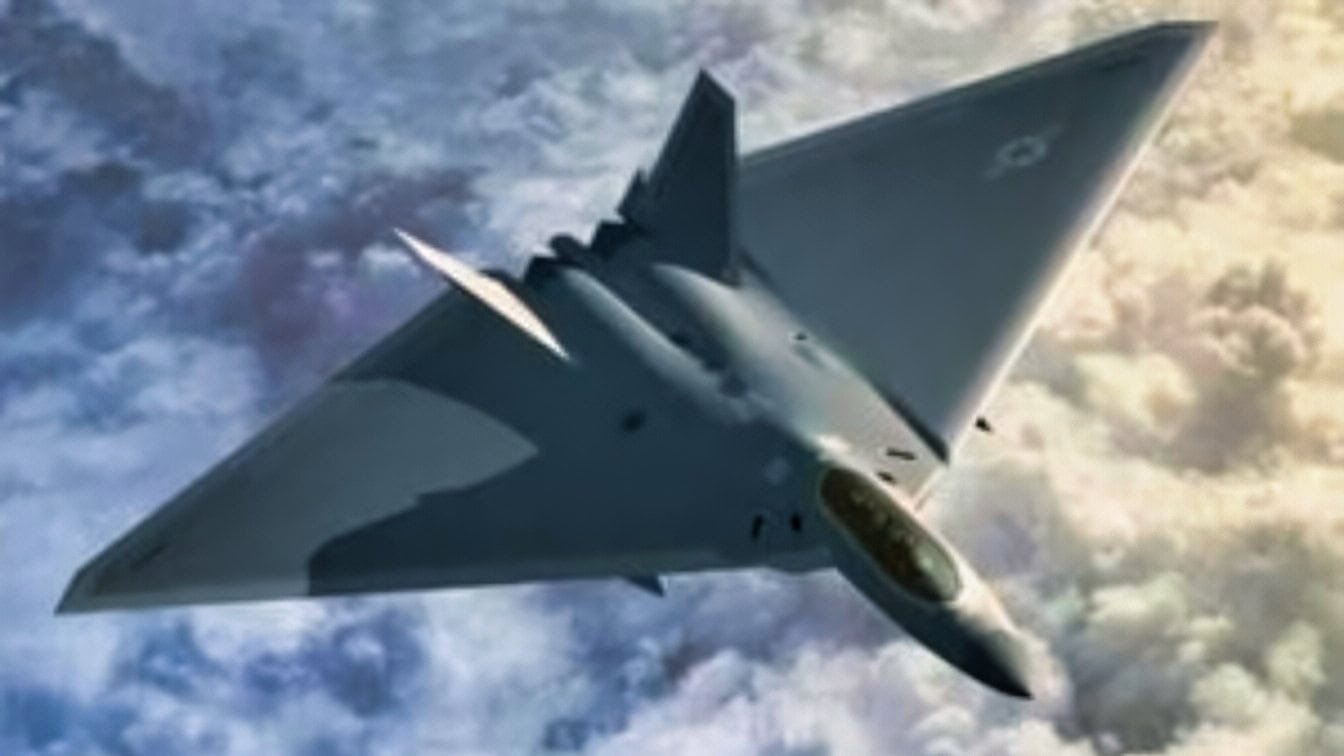
Aviation history is full of what-ifs. One of the more prevalent of these hypotheticals is: what if the United States Air Force had taken Lockheed up on its pitch to transform the baseline F-22 Raptor stealth fighter into a stealth bomber? Had the United States Air Force developed and eventually accepted a hypothetical FB-22 into service, it may have been a useful — but very much a regional — penetrating bomber strike force.
Meet the FB-22 or F-22 Stealth Bomber
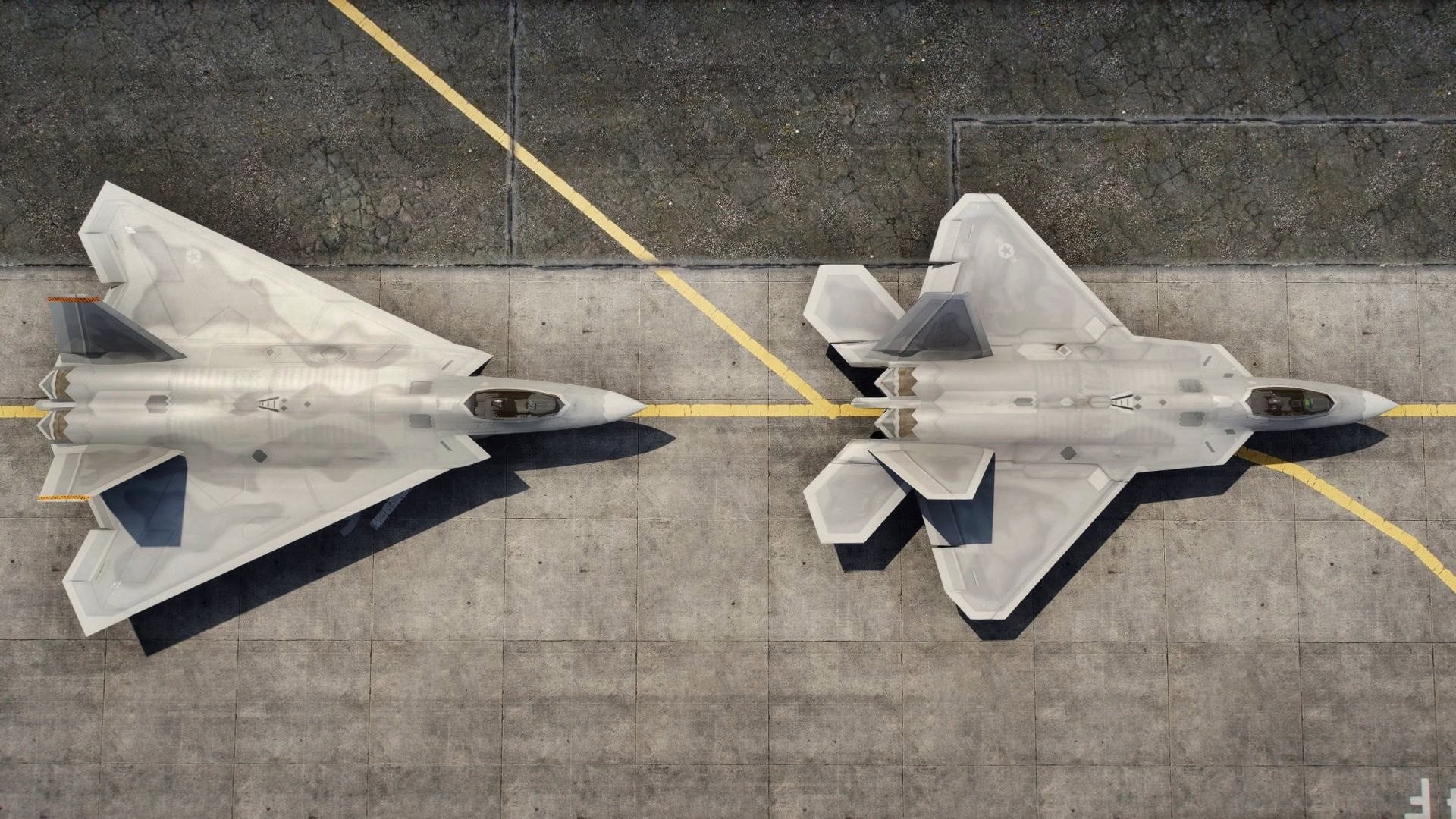
FB-22 and F-22. Image Credit: Computer Generated Image.
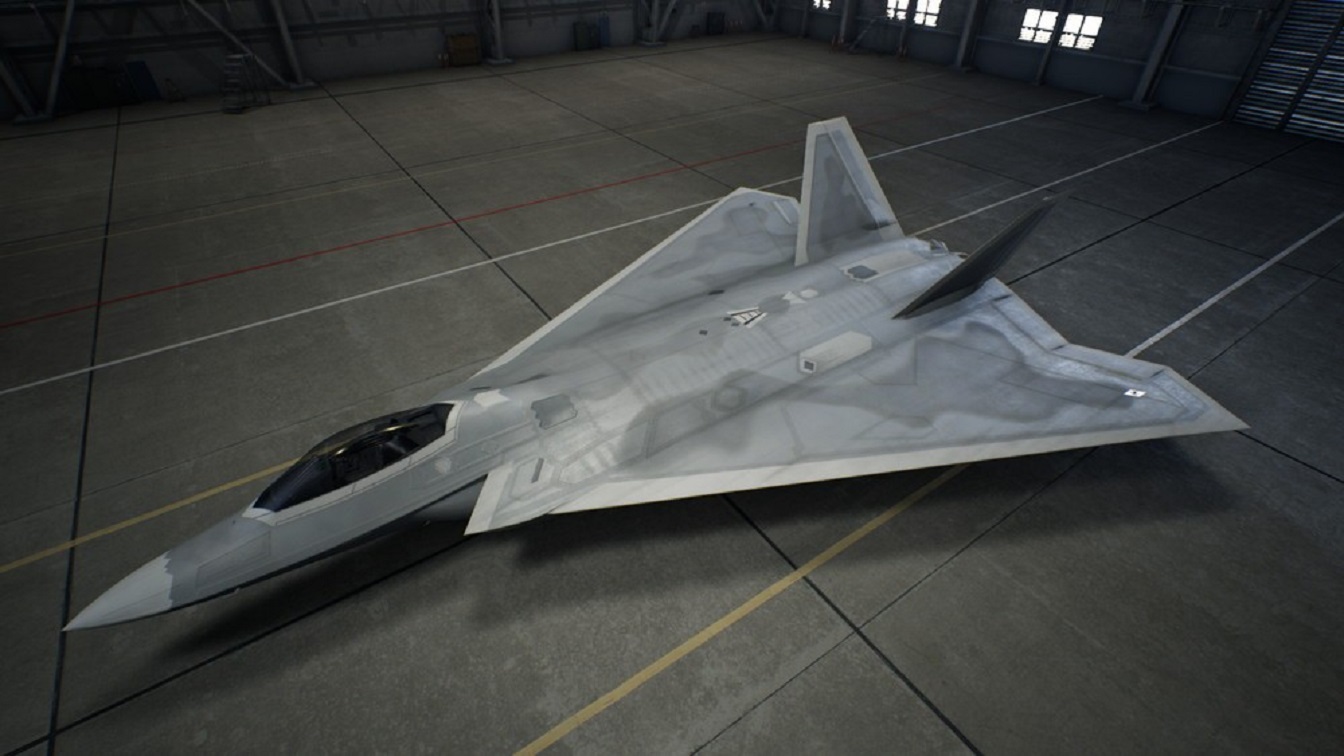
FB-22. Image Credit: Artist Rendition – Creative Commons.
While it certainly would be more survivable than the legacy bomber force that preceded it, it would have lacked the range and payload capacity of much larger stealth bombers like the B-2 Spirit or B-21 Raider.
The FB-22 could have enjoyed some post-Cold War success, but it would have come at an immense cost to overall U.S. Air Force fighter numbers, tanker capacity, and, eventually, perhaps, the B-21 Raider program.
The cost: $30,000,000,000. And that’s one of the many reasons the FB-22 never flew.
Not Just a Raptor?
The proposed FB-22 was not simply a Raptor with an expanded payload capacity.
The conceptual bomber from Lockheed retained much of the F-22’s avionics and engines but incorporated a large, fuel-carrying wing, much larger weapons bays, and perhaps a second crew position.
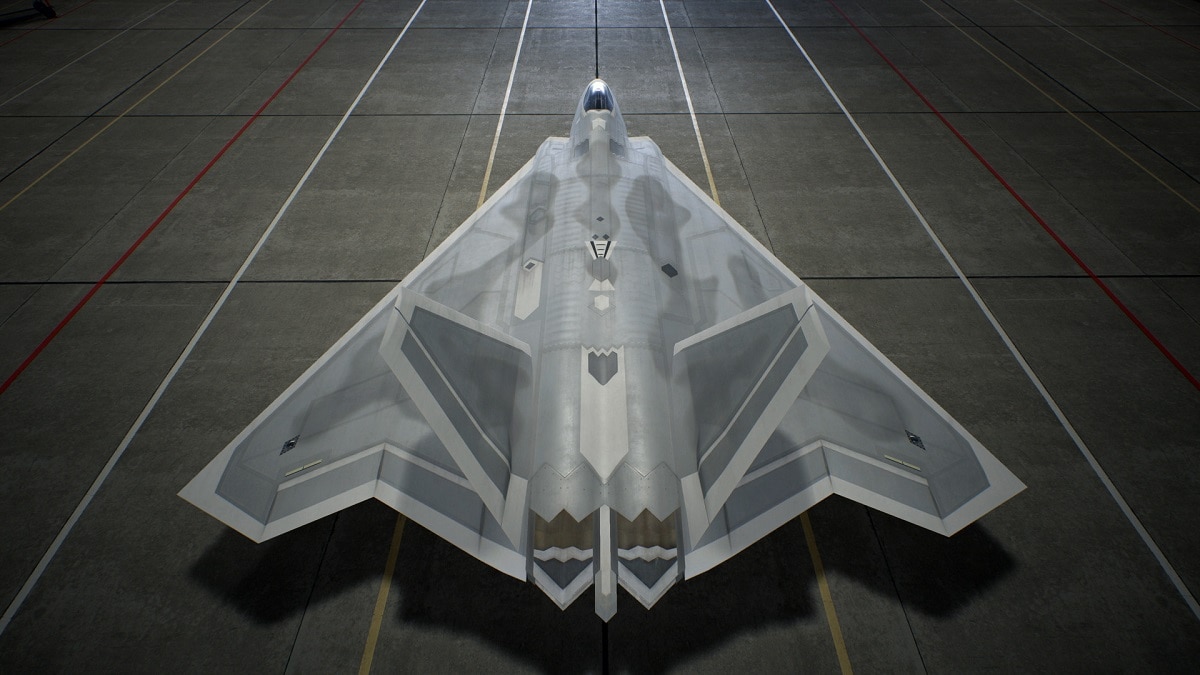
FB-22. Image Credit: Artist Rendering.
It would have leveraged the fighter’s extreme agility and supercruise capability for reach, persistence, and internal carriage of weapons and fuel.
The result, as Lockheed advertised, was formidable on paper.
A combat radius of roughly 1,800 miles, 15,000 pounds of weapons in a low-observable configuration, and perhaps 30 to 35 Small Diameter Bombs, compared to just eight for an F-22 Raptor.
But the proposed bomber could also have accommodated much heavier weapons, including 2,000-pound bombs and perhaps even a 5,000-pound penetrator.
A Much Different Force Posture
A fleet of around 150 FB-22s, the figure that was then talked about, would have given the U.S. Air Force something it still lacks in quantity: a stealth strike aircraft able to arrive quickly, defend itself better than a conventional bomber, and the ability to attack many discrete targets from bases outside an immediate war zone.
That would have been most useful in the Western Pacific and Europe.
A medium bomber capable of penetrating closer to defended airspace could complement stand-off missile carriers.
It could hunt mobile air defense systems, strike command nodes, and attack targets that emerge after an opening salvo.
Its air-to-air missile capability and speed would have made it less dependent on escort than the B-2, at least in the narrower sense of surviving enemy fighters.
The most meaningful gain to the U.S. Air Force would have been the suppression and destruction of enemy air defenses.
In a conflict with China or Russia, the FB-22 could have sat between short-range tactical aviation and an intercontinental bomber force as a kind of theatre stealth bomber rather than a strategic-reach bomber.
A Potent Force, But One without Reach
The Air Force’s notional requirement at that time was about a 2,500 nautical mile combat radius, but the FB-22’s best configuration had a range about 700 nautical miles short of that requirement.
More recent analyses note that existing long-range bombers have an unrefueled radius of about 3,400 to 4,400 nautical miles.
That matters more today than it did during the early 2000s.
A war against China would put tankers under pressure and regional bases under missile threat.
An FB-22 force would need access to forward or intermediate airfields and substantial aerial refueling—the very infrastructure and adversary capabilities the adversary would aim to disrupt.
The program might therefore have produced an elegant aircraft for a basing architecture that is now less secure.
Nor would the proposed bomber have matched the magazine depth of a genuine heavy bomber.
Thirty SDBs are a potent load for carefully selected targets, but they are not mass.
One report contrasted that prospective load with a projected 320 SDBs for the B-2, while noting that long-range bombers could loiter longer and carry a broader catalog of weapons.
The Trade-off in Procurement
The central question in this hypothetical is what the U.S. Air Force would have had to give up to move forward with the FB-22.
The F-22 ultimately ended at 187 operational aircraft, far below earlier projections, and an FB-22 procurement would almost certainly have competed with the F-22 Raptor program for scarce tactical air and long-range strike funding.
A sensible decision was a limited buy-in, two air wings, to keep the F-22 industrial base warm, exploit its sensors and low-observable manufacturing, and prove a bridge to a later bomber.
But the alleged commonality could be overstated too.
The wing, weapons integration, structural loads, aerodynamic shaping, and low-observable treatment would have made it a substantial development program rather than an affordable derivative.
As a consequence, the B-21 Raider could have arrived later, appeared in smaller numbers, or faced a stronger political case for delay.
That would have been rather unfortunate, as the B-21’s central value is not just stealth, but the combination of stealth, long range, large internal volume, and freedom from reliance on nearby bases, all qualities that the FB-22 could not provide in full.
The U.S. Air Force may thus have gained a very small operational tool in the FB-22 world, postponing and minimizing the much more important strategic possibilities encapsulated in the B-21.
While perhaps most dangerous in the opening stages of a regional war, the FB-22 would not have provided the U.S. Air Force with a long-range strike capability.
About the Author: Caleb Larson
Caleb Larson is an American multiformat journalist based in Berlin, Germany. His work covers the intersection of conflict and society, focusing on American foreign policy and European security. He has reported from Germany, Russia, and the United States. Most recently, he covered the war in Ukraine, reporting extensively on the war’s shifting battle lines from Donbas and writing on the war’s civilian and humanitarian toll. Previously, he worked as a Defense Reporter for POLITICO Europe. You can follow his latest work on X.